On the night of September 21, 1945, in the desert cold of Deming, New Mexico, a 24-year-old German corporal named Georg Gärtner made a decision that would define the rest of his life. He was a prisoner of war at Camp Deming, captured in Tunisia in 1943 and shipped across the Atlantic to the American Southwest, where he had remained behind barbed wire ever since. The war in Europe had ended four months earlier; the war in the Pacific five weeks before. That morning, a notice had been posted in the camp announcing what every man there had waited two years to hear: they were going home.
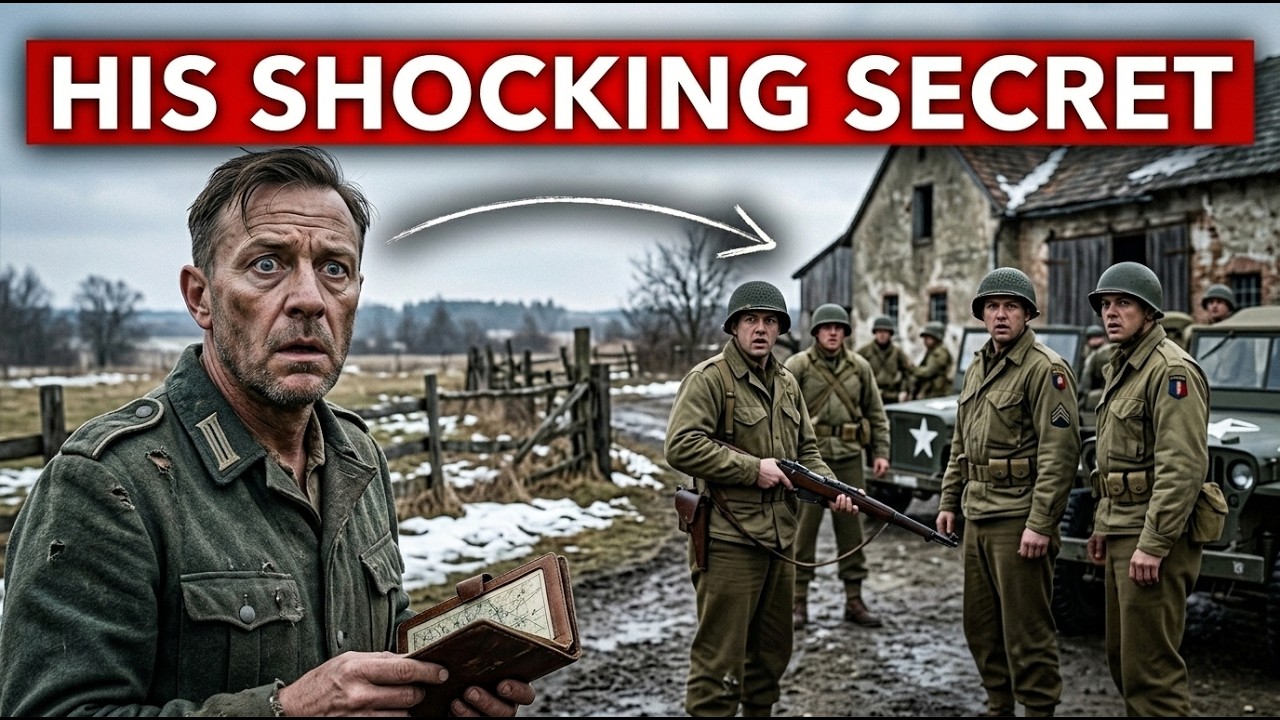
Some men wept. Others began trading cigarettes for souvenirs to carry with them. Gärtner read the notice, returned to his barracks, and understood something most of the men around him had not yet faced. That night, Gärtner crossed the wire.
He carried a canvas bag, a few dollars in canteen scrip, what English he had picked up from cheap Western novels, and a rumor overheard from the guards. He had no forged papers, no network, no escape line. He had a destination and roughly eleven hours of darkness. He walked into the desert, found the Southern Pacific railroad line, waited for a freight train to slow on a grade, and climbed into an empty boxcar.
From the fence at Camp Deming, the Mexican border lay about thirty miles south. A strong young soldier could walk it in a night and a day. Beyond it waited a neutral country, a coastline, and for a bold man, a route back to Europe. Prisoners had escaped across harder ground for lesser reasons.
Gärtner ran the other way. He climbed aboard a train heading north and west, deeper into the United States, into the country that held him captive. He kept going in that direction for the next forty years. The FBI opened a file on him.
His photograph went out to field offices; his name appeared on wanted lists. For a time, agents genuinely expected to find him working on a farm in Nebraska or trying to talk his way onto a ship in San Francisco. They never found him. Not in 1946.
Not in 1955. Not in 1970. Georg Gärtner became the last German prisoner of war still at large in the United States. He remained free for four decades, through Korea, the moon landing, Vietnam, eight presidencies.
He did not spend those years hiding in a basement. He spent them working, marrying, paying rent, and standing in line at the post office like anyone else. That detail matters. In September 1985, a man in his sixties walked into a television studio in New York, sat down on the set of the Today Show before a live national audience, and revealed who he was.
He came with a secret, but it was not the secret the FBI had imagined for forty years. He carried no microfilm, no code, no network, no cell of unrepatriated fanatics awaiting orders that would never come. He had served the war as a corporal in a desert camp and had never been privy to anything more sensitive than the mess hall schedule. The secret lay in the direction he had run the night he crossed the wire, and in the fact that nearly every German prisoner who escaped into America had taken the same road.
Between 1942 and 1946, the United States held 371,683 German prisoners of war on its soil. Roughly 2,200 of them attempted escape. Most were recaptured within a day or two. The detail historians have studied ever since is this: almost none of them were trying to get out of the country.
They were escaping into it. Every escape attempt needs a destination, and geography determines it. An American pilot shot down over Germany and held in Sicily had a route: neutral Switzerland, Sweden, or the advancing front. The escapee runs toward something.
That is what makes him an escapee. A German soldier behind barbed wire in Nebraska had no such point on the map. The nearest German-held territory was an ocean away. There was no front to reach, no neutral border to cross and return from.
Mexico and Canada would not send him to Berlin. By 1943, both were allied with the Allies. No submarine was coming for him. He spoke the enemy’s language poorly or not at all.
In most cases, he was hundreds of miles from a coast in a country with an efficient police system, national identification documents, gasoline rationing, and a newspaper in every town. To get home from Iowa in 1944, a German prisoner would have needed to cross three thousand miles of hostile continent and then three thousand miles of hostile ocean. Escape from American camps meant something different than it did anywhere else in the war. It was not a journey home.
It was an unauthorized entry into American life. The numbers show the prisoners understood this perfectly. Of 371,683 men, roughly 2,222 escape attempts were recorded, less than one percent. The escape rate from American federal prisons in the same years was higher.
Men who had fought across North Africa sat in camps in Texas and Kansas behind fences that would not have delayed a determined man for twenty minutes. The escapes that did occur read as
