The Georgia sun beat down without mercy on the Whitmore plantation in the summer of 1843, its rays cutting through the humid air like divine judgment. The cotton fields stretched endlessly under the suffocating heat, while Spanish moss hung from the ancient oaks like torn remnants of forgotten prayers. Martha knelt in the makeshift chapel in the slave quarters, pressing her exhausted hands together so tightly that her knuckles went white against her dark skin. At thirty-two years old, she carried the marks of a lifetime of enslavement: scars on her back from countless whippings, calluses on her palms from picking cotton until her fingers bled, and eyes that held a depth of suffering that seemed to pierce straight through her soul.
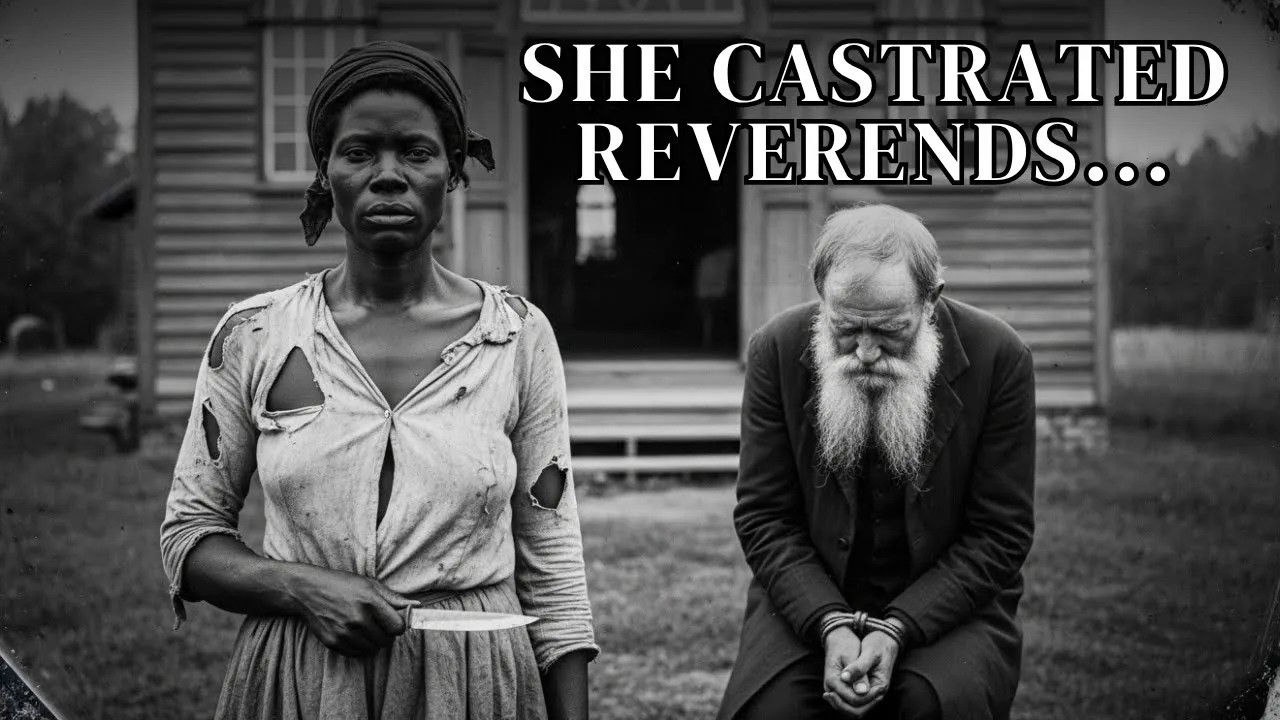
“Lord Jesus,” she whispered, her voice barely audible above the evening sounds of the crickets. “Grant me the strength to endure another day in this valley of shadows. Make my suffering a testimony to my faith, as Your suffering was on the cross. ”
The other enslaved people had long since stopped trying to understand Martha’s unwavering devotion.
While they cursed their masters and dreamed of freedom, she prayed for their souls. While they planned escape routes through the swamps, she memorized scripture by candlelight. They called her “the Devout” with a mixture of respect and bewilderment. How could someone so completely broken believe with such absolute certainty?
Master Whitmore had noticed Martha’s religious fervor years ago and found it useful. He believed that a deeply religious enslaved person was an obedient one. She never caused trouble, never attempted escape, and her influence kept the others from becoming too rebellious. What he failed to realize was that Martha’s faith had become something far more complex than simple submission.
It had become her armor, her weapon, and her reason for being. The plantation manor rose on the horizon, its white columns gleaming like tombstones in the fading light. From her place in the slave quarters, Martha could see the warm glow of oil lamps in the windows and hear the faint sounds of laughter drifting from the master’s dinner party. Four distinguished guests had arrived that evening: Protestant ministers from the neighboring counties, come to discuss what they called the spiritual welfare of the black population.
Reverend Cornelius Blackwood arrived first, a tall, thin man with sharp gray eyes and a voice that could shake the walls when he preached about hellfire and damnation. He was followed by Reverend Samuel Morrison, younger and more handsome, with golden hair and a smile that never quite reached his eyes. Reverend Josiah Crane came third, a portly man who perspired heavily and spoke in low, urgent tones about the burden of preparing the savage soul. Finally, Reverend Ezekiel Thorn completed the group, the oldest of them, with silver hair and hands that trembled slightly whenever he held his Bible.
Martha watched them arrive from the cotton fields, their fine black carriages stirring up clouds of red Georgia dust. She felt something stir in her chest, not the usual flutter of hope at the arrival of men of God, but something darker, something that whispered warnings in a voice she did not recognize. As night fell over the plantation, Martha remained in the chapel, her prayers growing more intense. The wooden cross hanging above the makeshift altar seemed to dance in the candlelight, casting flickering shadows on the rough walls.
She had carved that cross herself from a piece of driftwood she found near the creek, spending countless nights smoothing its edges with her fingernails until it was perfect. “Lord,” she prayed, “send Your servants to guide Your lost sheep. Let these holy men bring light to our darkness as You brought light to the world. ” But even as she spoke the words, Martha felt a chill run down her spine.
Outside, storm clouds were gathering on the horizon, and the wind carried the smell of rain and something else, something that smelled like sulfur and decay. The other enslaved people had already taken refuge in their cramped quarters, exhausted from another day of hard labor. But Martha remained on her knees, praying until her joints ached and her voice grew hoarse. She prayed for deliverance, for salvation, for the strength to endure whatever trials God saw fit to send her way.
She had no way of knowing that her prayers would be answered in ways she could never have imagined, and that the men who claimed to speak for God would reveal themselves as something far more evil than anything she had faced in her darkest nightmares. As the first raindrops began to fall on the roof of the plantation, Martha finally rose from her knees and made her way to her small cabin. Tomorrow, Master Whitmore had announced, the ministers would begin their spiritual mission among the enslaved. They would hold prayer meetings, conduct Bible studies, and work to uplift the moral character of the Negro soul.
Martha wrapped her thin blanket around her shoulders and closed her eyes, still whispering prayers into the darkness. That night she dreamed of angels bearing swords of fire, and of a voice emanating from a burning bush, telling her that God’s justice sometimes required human hands to carry it out. When she woke the next morning, she remembered every word of that dream with perfect clarity, and she began to realize that her faith was about to be tested in ways that might destroy her completely or transform her into something the world had never seen. Morning sunlight filtered through the Spanish moss as Martha made her way to the main house, carrying a basket of vegetables freshly picked from the plantation garden.
The storm had passed during the night, leaving the air thick with moisture and the smell of wet earth. Puddles reflected the sky like scattered broken mirrors across the plantation grounds. Master Whitmore stood on the front porch with the four ministers, gesturing enthusiastically as he spoke about his generosity in providing spiritual guidance for his enslaved people. Martha kept her eyes lowered as she approached, but she could feel their gazes on her like a physical weight.
“Ah, here is one of our most devout souls,” Master Whitmore announced as Martha climbed the back steps to deliver the vegetables to the kitchen. “Martha here is known throughout the county for her religious devotion. Isn’t that right, girl? ”
Martha paused, her hands gripping the basket handle tightly.
“Yes, Master Whitmore. The Lord is my shepherd. ”
Reverend Blackwood stepped forward, his gray eyes studying her with an intensity that made her skin crawl. “Tell me, daughter, how long have you been walking in the light of Christ?
”
“Since I was a small child, Reverend,” Martha answered, her voice steady despite the unease growing in her chest. “My grandmother taught me to read using the Bible. She said it was the only education a soul truly needed. ”
“Remarkable,” murmured Reverend Morrison, his golden hair catching the morning light.
“An educated slave with genuine faith. How unusual. ”
There was something in his tone that made Martha’s stomach turn, but she pushed the feeling aside. She reminded herself that these were men of God.
Surely her discomfort was a test of her faith, a trial she needed to overcome. “We will hold our first prayer meeting this evening,” announced Reverend Crane, wiping his sweaty brow with a handkerchief. “In the old tobacco barn, which Master Whitmore has graciously allowed us to use for our spiritual work. ”
“I will be there, Reverend,” Martha said, bowing her head in respect.
“We are all grateful for your guidance. ”
As she turned to continue her way to the kitchen, she heard Reverend Thorn’s trembling voice behind her. “Such devotion in such a primitive creature. It will be interesting to see how deep her faith truly runs.
” Those words sent a shiver through Martha’s body that had nothing to do with the morning air. She delivered the vegetables to the kitchen staff and made her way back to the fields, but the ministers’ voices echoed in her mind all day. There was something off about their tones, something that did not fit with the holy words they spoke. That evening, as the sun set behind the pines, Martha joined the other enslaved people making their way to the old tobacco barn.
The structure stood at the edge of the plantation, its weathered wood blackened by time and neglect. Reverend Blackwood had arranged rough wooden benches in rows, and oil lamps cast dancing shadows on the walls. About thirty enslaved people gathered, some curious, some skeptical, but all compelled to attend at Master Whitmore’s suggestion. Martha sat in the front row, clutching her worn Bible in her hands.
She had saved money for three years to buy that Bible from a traveling preacher, trading eggs and vegetables she had grown in her small garden for it. Reverend Blackwood stood before them, his tall figure imposing in the lamplight. “My brothers and sisters,” he began, his voice resonating clearly through the barn. “We have come to bring you closer to divine truth, but first we must examine the depths of your faith.
”
What followed was unlike any sermon Martha had ever heard. The ministers spoke of submission and suffering, of the need for complete surrender to God’s will as they interpreted it. They quoted scripture, but the verses seemed twisted, distorted somehow, as if the words had been bent to serve a purpose that had nothing to do with salvation. “The Lord tests those He loves most severely,” declared Reverend Morrison, his handsome face grave in the lamplight.
“And you, as children of Ham, bear a special burden of sin that requires special attention. ”
Martha felt her faith waver for the first time in her life. These words did not resemble the Jesus she knew from her grandmother’s teachings, the gentle shepherd who welcomed all souls regardless of their worldly station. But she pushed her doubts aside, telling herself that men of learning surely understood God’s will better than a simple enslaved woman.
As the meeting ended, Reverend Crane approached her directly. “Martha, isn’t it? We have heard of your exceptional devotion. We would like to offer you special instruction, one-on-one sessions to deepen your understanding of scripture.
”
“I would be honored, Reverend,” Martha answered, though something deep within her was sounding warnings she could not yet understand. “Excellent. Tomorrow evening, after you finish your work, come to the old overseer’s cabin by the creek. We will begin your advanced spiritual education.
”
As Martha walked back to the slave quarters under a star-filled sky, she tried to pray, but the words felt heavy on her tongue. The other enslaved people whispered about the strange sermon, but Martha remained silent, wrestling with feelings she could not describe. In her small cabin, she lit a candle and opened her Bible, searching for comfort in familiar verses. But even the words of the Psalms seemed different, as if the ministers’ presence had cast a shadow over everything she held sacred.
Outside her window, she could see the lights still burning in the old overseer’s cabin. The building had stood abandoned for years after the previous overseer died of fever, but now the ministers seemed to have taken it over for their own purposes. Through the trees, she could make out their silhouettes moving inside, and she occasionally heard laughter that seemed far too worldly for men of God. Martha extinguished her candle and lay down on her straw mattress.
But sleep would not come. Something was wrong. She could feel it in her bones, in the very air surrounding the entire plantation. The ministers’ arrival had brought a darkness that seeped into everything, corrupting even the moonlight that filtered through her small window.
As she finally drifted off to sleep, Martha’s last conscious thought was a prayer for strength and wisdom. She would need both in the days to come, though she could not have imagined how severely her faith would be tested. In her dreams, she saw wolves dressed in shepherds’ clothing, their yellow eyes gleaming with hunger as they circled a flock of helpless sheep. And somewhere on the horizon, she heard a voice that might have been the Lord’s or might have been her own inner voice, whispering that sometimes the sheep must become wolves to protect themselves from those who devour them in the name of goodness.
The next evening arrived with a somber stillness that seemed to press down on the plantation like a suffocating blanket. Martha finished her work in the cotton fields as the sun began to set, her hands stained with the day’s labor and her back aching from hours of bending over the plants. Despite her exhaustion, she felt compelled to honor her commitment to attend the Reverend’s advanced spiritual lessons. She made her way toward the creek that wound through the eastern boundary of the plantation, where the old overseer’s cabin stood like a forgotten monument to cruelty.
The previous overseer, a man named Jeremiah Cault, had been notorious for his brutality before fever claimed his life three years ago. The enslaved people used to whisper that his spirit still haunted the place, but Martha had always dismissed such talk as superstition unworthy of a Christian soul. As she approached the cabin in the gathering dusk, she found herself wondering if there might be truth to those whispers. After all, the cabin had been cleaned and furnished with items the ministers had brought from their carriages.
Through the windows, Martha could see the warm glow of oil lamps and the shadows of the four men moving inside. She knocked softly on the door, clutching her Bible to her chest like a shield. Reverend Morrison opened it. His golden hair was disheveled and his normally immaculate collar hung loose.
“Ah, Martha. You’ve come right on time. Please, come in. ”
The cabin’s interior felt wrong from the moment she stepped inside.
The air was thick with the smell of whiskey and something else, something sweet and cloying that made her stomach churn. The ministers had arranged chairs in a circle, and in the center stood a small table holding, not a Bible, but a collection of objects that froze the blood in Martha’s veins. Leather straps, metal instruments she could not identify, and a bottle of clear liquid that reflected the lamplight like liquid fire. “Sit down, daughter,” commanded Reverend Blackwood, his gray eyes gleaming in the lamplight.
“Tonight we begin your true education in the ways of divine submission. ”
Martha remained standing, every instinct screaming at her to run. “Reverend, I don’t understand. Where are the Bibles?
Where are the hymn books? ”
Reverend Crane laughed, a sound that carried no warmth or joy. “The flesh must be mortified before the soul can ascend. Surely you understand this basic principle of faith, girl.
”
“The Lord Jesus suffered for our sins,” added Reverend Thorn, his trembling hands reaching toward the bottle on the table. “But that does not exempt us from experiencing our own suffering, especially those of your station. ”
Martha’s grip on her Bible tightened. “My grandmother taught me that Jesus’ sacrifice was complete, that His love covers all sins for those who believe.
”
“Your grandmother was a savage who understood nothing of true theology,” sneered Reverend Morrison. “We are here to correct those misconceptions. ”
The word “savage” struck Martha like a physical blow. She had endured countless insults and humiliations throughout her life.
But hearing such words from men who claimed to speak for God felt like the ultimate blasphemy. “And now,” continued Reverend Blackwood, rising from his chair, “remove your dress. Your spiritual education requires us to examine the state of your soul through the vessel of your body. ”
Martha backed toward the door, her heart pounding so hard she could hear it in her ears.
“No, Reverend. This isn’t right. This isn’t what the Lord teaches. ”
“The Lord teaches obedience,” growled Reverend Crane, his face flushed with whiskey and something darker.
“And you, as a slave and a woman, are doubly bound to submit to those above you. ”
“I submit only to God,” Martha said, her voice growing stronger despite her fear. “And God would never ask this of me. ”
Reverend Thorn rose unsteadily, the bottle in his hand sloshing its clear contents.
“Blasphemy. You dare to interpret God’s will. You, a mere piece of property with delusions of spiritual equality. ”
The words struck Martha like lightning, revealing the true nature of these men with terrifying clarity.
They were not servants of God. They were predators who used the Bible as a weapon to justify their corruption. The realization hit her with such force that she physically staggered backward. “You are not men of God,” she whispered, her voice filling with a mixture of horror and burning anger.
“You are demons wearing holy robes. ”
Reverend Morrison moved to block the door, his handsome face contorting into something ugly and predatory. “Be careful, girl. Accusations like that could be considered rebellion, and we all know how Master Whitmore deals with rebellious slaves.
”
Martha’s thoughts raced. She was trapped in this cabin with four men who clearly intended to harm her, and any resistance would be considered rebellion against both earthly and divine authority. The other enslaved people would never believe her accusations against respected ministers, and Master Whitmore would likely have her whipped or sold for making such claims. But as she stood there, cornered and desperate, something shifted within her.
The faith that had sustained her through decades of suffering began to transform into something harder, sharper, more dangerous. If these men could twist the word of God to justify evil, then perhaps she could find in that same word a justification for justice. “The Lord is my shepherd,” she said quietly, her voice taking on a tone that made the ministers pause. “He leads me beside still waters.
He restores my soul. ”
“Enough of this chatter,” snarled Reverend Blackwood, reaching for the leather straps on the table. “Submit now, or we will make this much harder for you. ”
Martha’s eyes fell on her Bible, and suddenly she remembered a verse her grandmother had made her memorize long ago.
“The righteous rejoice when they see vengeance,” she continued, her voice growing stronger. “They wash their feet in the blood of the wicked. Though I walk through the valley of the shadow of death, I will fear no evil. ”
Something in her tone made Reverend Morrison step back from the door.
For the first time since entering the cabin, Martha saw hesitation in their eyes. They had expected a frightened, obedient slave woman. Instead, they faced something unfamiliar, a soul pushed beyond the breaking point, beginning to fight back. “For You are with me,” Martha concluded, her dark eyes burning with a light that seemed to come from beyond the physical world.
“Your rod and Your staff, they comfort me. ”
In that moment, Martha realized that her faith had not been broken by these men’s blasphemy. Rather, it had been purified, refined in the fire of their corruption until only its true essence remained. And that essence was simple.
Sometimes God’s justice required human hands to carry it out. She would not submit to these wolves in shepherds’ clothing. Instead, she would become the instrument of divine vengeance they had unknowingly summoned through their desecration of the sacred. The ministers felt the change in her, though they did not yet understand what it meant.
They saw only an enslaved woman clinging to her Bible, not the avenging angel she was beginning to become. But they would realize it soon enough. Martha stood at the cabin’s entrance for what seemed like an eternity, her Bible pressed against her chest while the four ministers stared at her with a mixture of lust, anger, and growing unease. The oil lamps flickered, casting shadows that seemed to move independently of their flames, and the air grew heavy with tension that crackled like electricity before a storm.
“You will submit, one way or another,” Reverend Blackwood said finally, his voice low and threatening. But Martha had found something in that moment of clarity, a strength she had not known she possessed. “No, I won’t,” she said simply, and the words carried a weight that seemed to fill the entire cabin. Before the ministers could react, she turned and fled into the night, her bare feet flying over the damp ground as she ran toward the slave quarters.
Behind her, she heard angry shouts and the sound of the cabin door slamming open, but she did not look back. Her heart pounded with equal parts terror and rage, her mind reeling from the implications of what had just happened. She burst into her small cabin and barred the door, then fell to her knees in the middle of the room. Her hands trembled as she opened her Bible, searching for comfort in familiar verses.
But the words seemed to blur before her eyes. Everything she had believed about the world, about faith, about the goodness of those who claimed to serve God, had shattered in the span of a single evening. Storm clouds gathered outside with unnatural speed, and the wind began to howl through the trees with a sound that seemed almost human. Martha tried to pray, but the words would not come.
Instead, she found herself remembering her grandmother’s stories of the old days, before the plantation, before slavery, when their people had different gods and different ways of seeking justice. The storm struck suddenly, with destructive fury. Rain hammered against the cabin walls, and lightning split the sky with brilliant flashes. The wind roared like a living thing, tearing at the roof and rattling the windows until Martha feared the entire cabin would collapse on top of her.
But in the heart of that storm, she heard the voice. A voice that seemed to come from everywhere and nowhere at once, words that bypassed her ears and settled directly into her soul. “Martha. ”
She looked up from her Bible, her eyes wide with astonishment and fear.
The voice was neither male nor female, neither young nor old, but it carried an authority that made her bones tremble with recognition. “Yes, Lord,” she whispered, though she was not entirely certain it was the Lord addressing her. “You have seen the corruption of My word. You have witnessed the blasphemy of those who claim to speak in My name.
”
The voice grew stronger, more urgent, and Martha felt an unseen force lifting her until she stood in the middle of her cabin, her arms outstretched and her face turned toward the ceiling. “What would You have me do, Lord? ” she asked, tears streaming down her face. “I am but a slave, a woman, powerless before these men.
”
“No. Power does not come from worldly station but from righteousness, and righteousness demands justice. ”
Lightning struck so close to the cabin that the entire structure shook. In that brilliant flash, Martha saw something that would haunt her for the rest of her days.
Standing in the corner of her cabin was an entity that might have been an angel or might have been something else entirely. Tall, terrible, and beautiful, with eyes like burning coals and wings that seemed made of shadow and flame. “The wicked have twisted My word,” the voice continued, and Martha could now see that the entity was speaking, though its lips never moved. “They have used My name to justify their evils.
They have made a mockery of everything sacred. ”
“Yes,” Martha breathed, her voice barely audible above the roar of the storm. “Yes, they have. ”
“Then you know what must be done.
”
The figure stepped forward, and Martha felt a heat emanating from it that had nothing to do with warmth, everything to do with divine wrath. “But Lord, I am not a killer. I am Your faithful servant. ”
“Abraham was faithful, yet he was willing to sacrifice his son.
Moses was faithful, yet he overthrew the Egyptian. David was faithful, yet he slew Goliath. Sometimes, Martha, faith requires actions the world calls sin, but heaven calls justice. ”
The storm reached its peak.
And in that moment of utter chaos, Martha felt something fundamental shift within her. The meek, submissive enslaved woman who had entered the cabin earlier that evening was gone, burned away by divine fire, replaced by something harder, more determined, and infinitely more dangerous. “What must I do? ” she asked, her voice no longer trembling.
The figure raised a hand, magnificent and terrible, and Martha saw that it held a blade that seemed forged from starlight and shadow. “You will be the instrument of My justice. You will show these false prophets the true meaning of divine wrath. And you will do it in such a way that everyone who hears the story will know that God’s justice, though delayed, is never denied.
”
Martha reached out and took the blade, and the moment her fingers closed around its hilt, she felt a surge of power that made her gasp. It was as if every prayer she had ever uttered, every moment of suffering she had endured, every act of faith she had performed had been stored up and was now being returned to her a hundredfold. “They will not expect resistance from someone like you,” the figure continued. “They see only a slave, a woman, a victim.
They do not see the avenging angel you have become. ”
The storm began to subside as quickly as it had come, and the figure began to fade like mist in the morning sun. But its voice lingered in Martha’s mind with perfect clarity. “Remember, Martha, justice delayed is not justice denied.
Take your time. Plan carefully. Make them feel the full weight of their sins before you deliver them to judgment. Amen.
”
Then the figure was gone, leaving Martha alone in her cabin with only the blade in her hand and a purpose burning in her chest like a second heart. She looked at the weapon and saw that it was not a supernatural blade at all, but a simple kitchen knife she had somehow taken from the main house without remembering when or how. But that no longer mattered. What mattered was that she now understood her true calling.
She had been chosen, marked, set apart for a purpose that transcended her worldly station. The ministers had tried to corrupt her faith, but instead they had purified it, refined it until it was sharp enough to cut through their lies, strong enough to bear the weight of divine justice. Martha knelt and carefully wrapped the knife in a piece of cloth, then hid it beneath her mattress. Tomorrow she would return to the fields as if nothing had changed.
She would bow her head and speak respectfully to the ministers when she encountered them. She would give them no reason to suspect that the meek slave they had tried to exploit had transformed into something far more dangerous. But in the darkness of her cabin, as the last echoes of thunder faded into the horizon, Martha began to plan. She thought about the ministers’ routines, their habits, their weaknesses.
She studied the layout of the plantation, the work schedules of the other enslaved people, the best times and places to strike without being discovered. And as she planned, she prayed, not for forgiveness but for strength, not for mercy but for wisdom, not for peace but for the courage to complete her divine mission to the end. The storm had passed, but its work had been done. In its aftermath, it had left behind something the world had never seen before, a slave touched by providence and transformed into an instrument of terrible and beautiful justice.
The ministers would learn before the end that there were sins too great to be forgiven on earth. And they would discover that God’s mercy sometimes looked like wrath in the eyes of those who had forgotten the difference between righteousness and evil. Three days passed after the storm, and Martha performed her daily routine with a calm that confused those who knew her well. The other enslaved people noticed the change.
Once always ready with comfort and prayer, she now seemed distant, mysterious, as if listening to voices only she could hear. Meanwhile, the ministers grew bolder in their spiritual work. They held nightly meetings in the tobacco barn, but these sessions bore no resemblance to Christian worship. The enslaved people who attended returned to their quarters with glazed eyes and fresh bruises, speaking in whispers of special blessings and divine corrections that left them broken in body and spirit.
Martha watched it all with the patience of a predator, recording every detail, every pattern, every weakness. She learned that Reverend Morrison often walked alone to the creek after the evening sessions, claiming he needed solitude for prayer and meditation. And there, she decided, divine justice would begin its work. On the fourth night after the storm, Martha waited in the shadows beside the creek.
Her grandmother’s kitchen knife was hidden beneath her shawl. The moon was dark and clouds obscured the stars, creating a perfect cover for what was about to happen. She had spent hours in prayer and preparation, asking for strength and guidance, and she could feel the presence of that terrible, beautiful entity watching over her like a guardian angel. Reverend Morrison appeared just after midnight, his golden hair shining in the faint starlight as he made his way along the familiar path.
He was humming a hymn, but the melody sounded wrong coming from his lips, corrupted and twisted by something that made Martha’s skin crawl. She stepped out of the shadows as he reached the edge of the creek. Her movement was so silent that he did not notice her until she spoke. “Good evening, Reverend.
”
He spun around, startled, his hand instinctively going to his chest. “Martha, you startled me. What are you doing out here at this hour? ”
“I came to pray,” she said simply, her voice carrying none of the deference he would have expected.
“Just like you, I suppose. ”
Something in her tone made him take a step back. “Yes, well, prayer is important. But a woman of your station shouldn’t be wandering alone at night.
It isn’t proper. ”
“Proper? ” Martha repeated the word as if tasting it. “Tell me, Reverend Morrison, what was proper about what you and your colleagues were doing in that cabin?
”
His face paled in the moonlight. “I don’t know what you mean. ”
“Don’t you? ” Martha stepped closer, and he could see something in her eyes that made his blood run cold.
“You tried to force me to submit to your corruption. You used God’s name to justify your evil. You called my grandmother a savage. ”
“Listen here, woman,” Morrison sputtered, trying to regain his composure.
“You’re clearly confused. Perhaps the stress of your situation has affected your mind. ”
“My mind has never been clearer,” Martha said, her hand moving toward the knife beneath her shawl. “I have been praying about what happened in that cabin, Reverend, and God has given me an answer.
”
Morrison’s eyes darted toward the path leading back to the plantation, calculating his chances of escape. But Martha seemed to anticipate his thoughts, moving to block his retreat with fluid grace. “You see,” she continued, her tone almost friendly, “I used to believe that suffering was God’s way of testing faith, that patience was the highest virtue. But you and your friends taught me something different.
”
“What? What did we teach you? ”
“You taught me that God’s justice sometimes requires human hands to carry it out. You taught me that there are sins too great for humans to forgive.
And most importantly, you taught me that wolves in sheep’s clothing deserve to be treated as the predators they are. ”
The knife appeared in her hand as if by magic, its blade catching what little light filtered through the clouds. Morrison opened his mouth to scream, but Martha moved with inhuman speed, clamping her hand over his lips before any sound could escape. “Shh,” she whispered, her voice gentle as a mother comforting her child.
“This is a sacred moment, Reverend. A moment of divine justice. You don’t want to spoil it with improper noise. ”
Morrison’s eyes widened in horror as he realized the full extent of his predicament.
He struggled, but Martha’s grip was like iron, reinforced by righteous anger and divine purpose. “Do you know what the Bible says about those who harm children? ” she asked, her voice still eerily calm. “Jesus said it would be better for them to have a millstone hung around their necks and be drowned in the depths of the sea.
But drowning is too quick, too merciful for what you’ve done. ”
Then the knife moved with surgical precision, and Morrison’s muffled screams echoed across the water as Martha began her work. She had spent three days planning this moment, studying anatomy in a medical book she had seen in Master Whitmore’s library, learning exactly how to cause maximum pain while keeping her victim conscious and aware. “This is for every slave you violated,” she whispered as the blade found its target.
“This is for every prayer you defiled. This is for every time you used God’s name to justify your evil. ”
Morrison’s resistance weakened as his body went into shock. But Martha was not finished.
She had promised divine justice, and divine justice required punishment that fit the crime. With movements that were both brutal and sacred, she completed her work, ensuring that Morrison would never again use his body as a weapon against the innocent. When it was done, she knelt by the creek and washed the blood from her hands and from the knife, watching the dark water carry the evidence of her deed away. Morrison lay motionless on the bank, his breathing shallow but steady.
He would live, but he would carry the scar of his sins for the rest of his life. Martha stood and looked down at him with something that might have been pity. “You will live, Reverend,” she said quietly. “But you will never forget what happened here.
And whenever you look at yourself, you will remember that God’s justice, though delayed, is never absent. ”
She turned and made her way back toward the slave quarters, leaving Morrison to contemplate his fate in the darkness by the creek. By morning, the other ministers would find him, delirious with pain and blood loss, babbling about avenging angels and divine retribution. But Martha would be in the cotton fields working alongside the other enslaved people as if nothing had happened.
She would bow her head respectfully when the remaining ministers questioned her, and she would display appropriate shock and concern when they described Morrison’s mysterious attack. Because she now understood that this was only the beginning. Three wolves remained in the fold, and divine justice required that each receive his due. She had been chosen for this work, marked and blessed by forces beyond human understanding, and she would not rest until every one of them had learned the true meaning of divine wrath.
When she reached her cabin, Martha knelt once more in prayer, but this time her words were not supplications. Instead, they were expressions of gratitude. Gratitude for being chosen, for being given the strength to right wrongs that earthly laws could not touch. “Thank you, Lord,” she whispered into the darkness.
“For showing me that mercy sometimes looks like justice, and justice sometimes looks like wrath. Guide my hand in the work that remains, and grant me the wisdom to complete what You have begun. ”
Outside her window, storm clouds gathered once more on the horizon, and Martha smiled as she heard the distant rumble of thunder. The storm was coming, and she would be ready for it.
After all, she was no longer simply Martha the slave, Martha the victim, or Martha the Devout. She had become Martha, the instrument of divine justice. And there was still much work to be done. Word of Reverend Morrison’s accident spread through the plantation like wildfire, though the details remained frustratingly vague.
The three remaining ministers claimed he had been attacked by wild animals while praying by the creek. But the nature of his injuries suggested something far more deliberate and personal. The local doctor summoned from town could only shake his head in bewilderment at wounds that followed no pattern he could understand. Morrison himself was no help in solving the mystery.
When he regained consciousness three days later, he spoke in fragmented phrases, raving about angels of vengeance and divine justice, about sins coming back to haunt their perpetrators and the price of corruption. The other ministers dismissed his ravings as the products of shock and blood loss. But Martha saw the truth in his haunted eyes. Whenever their paths crossed, he knew.
He understood completely what had happened and why. But he also knew that no one would believe him if he told the truth. Who would accept that an enslaved woman had been chosen as an instrument of God’s wrath? Who would believe that divine justice might take such a humble, simple face?
The remaining ministers, Blackwood, Crane, and Thorn, became more cautious after the attack on Morrison, but they did not abandon their spiritual mission. On the contrary, they grew more savage and desperate in their corruption, as if sensing that time was running out, that they needed to satisfy their desires while they still could. Martha watched them with the patience of a spider in its web, noting their new routines and security measures. Blackwood had taken to carrying a pistol, while Crane no longer went anywhere alone.
Thorn, the oldest and most suspicious of them, had barricaded himself inside the main house and refused to venture out after dark. But Martha had learned patience from her years of enslavement, and she knew that every predator eventually reveals a weakness. She only needed to wait for the right moment, the perfect opportunity to strike again. That opportunity came two weeks after Morrison’s castration when Reverend Crane made a fatal miscalculation.
The plantation’s annual harvest festival was approaching, and Master Whitmore had decided to host a grand celebration to display his prosperity to his fellow plantation owners. The enslaved people were expected to provide entertainment, singing, dancing, and demonstrations of the civilizing influence that slavery was said to provide. It was a grotesque parody of community and joy, but one that Martha had learned to endure with confident grace. Reverend Crane, emboldened by whiskey and the festive atmosphere, decided to use the occasion to select new victims for his spiritual guidance.
He had been watching Sarah, a young enslaved woman barely eighteen years old, with the hungry eyes of a predator sizing up its prey. Sarah was simple, trusting, and completely vulnerable to the kind of manipulation Crane employed. Martha saw him corner Sarah near the smokehouse at the height of the festivities, when the other enslaved people were occupied with forced merriment and the masters were deep in their cups. She watched him speak to the girl in low, urgent tones, using scripture and promises of divine bliss to lure her away from the safety of the crowd.
“God has special plans for you, daughter,” Martha heard him say as she crept closer through the shadows. “But first, you must prove your faith through absolute obedience. Come with me to the cabin, and I will show you the path to salvation. ”
Sarah nodded, her innocence and desire to please making her trusting, and allowed Crane to lead her toward the old overseer’s cabin.
Martha followed at a distance, her hand already moving toward the knife she now carried constantly beneath her shawl. But when they reached the cabin, Martha realized that Crane was not alone. Reverend Thorn was waiting inside, his trembling hands gripping a bottle of wine, his sunken eyes gleaming with anticipation. They had planned this together.
Two wolves, intending to share their prey like the animals they truly were. Martha’s anger flared with cold purity as she watched them push Sarah inside. This was beyond corruption, beyond blasphemy. This was a complete perversion of everything sacred, an absolute mockery of divine love and protection.
She waited until she heard Sarah’s first confused protests from inside the cabin, then moved with the silent grace of a cat stalking its prey. The door was unlocked. Why would they need to secure it against a simple enslaved woman? Martha slipped inside like a shadow given human form.
The scene that greeted her was exactly what she had expected, and somehow worse than she had imagined. Sarah stood in the middle of the room, her dress torn and her eyes wide with terror and confusion. Crane was holding her arms while Thorn fumbled with a rope, both men breathing hard with excitement and exertion. “Now, daughter,” Crane was saying, his voice thick with false piety.
“You must understand that this is God’s will. Your suffering will purify your soul and bring you closer to… ”
He never finished the sentence. Martha’s knife found the base of his skull with surgical precision, severing his spinal cord and dropping him like a stone.
He hit the ground with a heavy thud, his body convulsing once before going still. Thorn turned, his mouth opening in a scream that never came. Martha’s second strike caught him in the throat, silencing him forever as blood sprayed across the cabin walls like an abstract painting in crimson. Sarah collapsed to her knees, crying and trembling, unable to process what she had just witnessed.
Martha knelt beside her, her voice gentle and comforting despite the blood staining her hands. “It’s alright, little one,” she whispered, pulling Sarah into a protective embrace. “They can’t hurt you now. And they’ll never hurt anyone again.
”
“Martha,” Sarah’s voice was faint and choked. “What? What happened? I don’t understand.
”
“You don’t need to understand,” Martha answered, stroking the girl’s hair with hands that had just delivered heaven’s justice. “All you need to know is that God protects His children even when human law fails them. ”
She helped Sarah to her feet and led her toward the door, but not before retrieving her knife and wiping it carefully on Crane’s coat. The bodies could wait.
By the time they were discovered, Martha would have returned to the festival, creating for herself an alibi beyond reproach. “Sarah,” she said as they reached the door. “You must never speak of what happened here tonight. Do you understand?
If anyone asks, you were with me all evening, helping with the festival service. ”
Sarah nodded silently, still too much in shock to fully comprehend the magnitude of what she had witnessed. Martha knew the girl would remain silent, not out of loyalty or understanding, but out of sheer inability to process the reality of what had occurred. They slipped back to the festival separately, Martha first and Sarah following a few minutes later.
The celebration was still in full swing, drunken masters and exhausted enslaved people going through the motions of forced festivity. No one had noticed their absence, and no one questioned their presence when they rejoined the crowds. Martha spent the rest of the evening serving food and drink, accepting praise for her cooking and devotion with the same humble grace she had always shown. When Master Whitmore publicly praised her Christian virtue and steadfast faith, she bowed her head and thanked him with complete sincerity.
Because she was virtuous and faithful. She was simply virtuous and faithful in ways the world could not understand or accept. The bodies were discovered the next morning by Reverend Blackwood, who had come to check on his missing colleagues. His screams drew the entire plantation, and the scene that greeted them was so grisly that many of the masters had to step outside to vomit.
Crane and Thorn lay in pools of their own blood, the positioning of their bodies suggesting they had been killed while committing an unspeakable crime. The rope, the torn clothing, and the bottles of whiskey and opium all painted a picture that even the most willfully blind could not ignore. “Animals,” whispered one of the visiting farmers. “Wild animals must have killed them.
”
But Martha, standing among the crowd of horrified onlookers, knew the truth. She saw the precision of the wounds, the deliberate positioning of the bodies, the careful arrangement of the crime scene. This was no work of animals. This was the work of someone with deep knowledge of anatomy, someone who understood exactly how to kill quickly and efficiently, someone chosen by providence to be an instrument of justice.
Reverend Blackwood stood at the cabin’s entrance, his face pale as death and his hands trembling uncontrollably. His eyes swept over the crowd of enslaved people, searching for something, for a sign or clue that might explain the unbelievable. When his gaze fell on Martha, she met it with the same expression of humility and respect she always wore. But for just one moment, just long enough for him to see, she allowed something else to flash in her eyes.
Recognition. Acknowledgment. A promise. He knew, just as Morrison had known, Blackwood understood exactly what was happening and who was responsible.
But like Morrison, he also knew that the truth was too impossible and too terrible for anyone to believe. Three ministers had come to the plantation to corrupt and oppress in God’s name. Two were dead, one was mutilated, and only Blackwood remained. And Martha, the humble enslaved woman chosen as an instrument of heaven’s vengeance, had only just begun.
Reverend Cornelius Blackwood had not slept well in the three weeks following the discovery of his colleagues’ bodies. Every shadow seemed to hide a threat. Every sound in the night sent him reaching for the loaded pistol he now kept constantly at his side. He had tried to convince Master Whitmore to allow him to leave the plantation, but the master insisted the spiritual mission continue, partly from religious conviction, but mostly because he enjoyed the prestige of hosting such distinguished guests.
The official story, accepted by the local authorities and neighboring farmers, was that wild animals had somehow learned to use tools and developed a taste for clergymen. It was absurd and impossible, but it was the only explanation that did not challenge the fundamental assumptions of the natural order of things. The alternative, that an enslaved woman had systematically hunted and killed white men of God, was too threatening to the established order to be taken seriously. But Blackwood knew the truth.
He had seen it in Martha’s eyes that morning when the bodies were discovered, and he recognized the cold intelligence behind her mask of humble servitude. She was hunting him, stalking him with the patience of a predator who knows its prey has nowhere to run. He had tried to warn Morrison, but the castrated minister had descended into madness and opium, spending his days muttering prayers and his nights screaming about avenging angels. The local doctor had recommended committing Morrison to an asylum, but Blackwood knew that madness was sometimes the only sane response to an impossible truth.
Now, with October gone and November bringing the first cold breaths of winter to the Georgia air, Blackwood found himself alone with his terror and his growing certainty that Martha was preparing for a final act of divine justice. He had barricaded himself inside the main house, sleeping in Master Whitmore’s study with a chair wedged against the door and his pistol loaded and ready. But he could not hide forever, and Martha seemed content to wait. She performed her daily routine with the same quiet devotion she had always shown, working in the fields, attending the makeshift church services, addressing him with complete respect whenever their paths crossed.
It was that normalcy that terrified him most. She showed no signs of guilt, no trace of the strain such horrific acts should have produced. Instead, she seemed more at peace than ever before, as if the killings had given her a serenity that years of prayer and suffering had failed to provide. The end came on a cold November night when the moon was hidden and storm clouds gathered on the horizon like an army of shadows.
Blackwood was dozing fitfully in his chair when he heard the sound that had haunted his nightmares for weeks: the soft whisper of bare feet on wooden floors. He snapped awake, his hand immediately going to his pistol, but the study was empty. The sound was coming from somewhere else in the house, from deep within the maze of hallways and rooms that constituted the plantation’s main residence. “Who’s there?
” he called out, his voice ragged with fear and exhaustion. “I’m armed. I’ll shoot. ”
Silence answered him.
But it was the kind of silence that felt alive, charged with threat and possibility. Blackwood rose from his chair, the pistol trembling in his grip, and made his way toward the door. The hallway beyond was dark, lit only by the faint glow of dying embers in the fireplace below. “I know it’s you,” he whispered into the darkness.
“I know what you are and what you’ve done. But I won’t let you take me like you took the others. I’ll fight. ”
A voice answered from the shadows, soft and sweet, completely devoid of fear.
“Resistance requires courage, Reverend Blackwood. And courage requires a clear conscience. Is your conscience clear? ”
Martha stepped into the faint light at the end of the hallway, her white dress making her look like a ghost, or an angel, or perhaps both.
She carried no visible weapon, but Blackwood knew that meant nothing. She had killed two full-grown men with a kitchen knife and nothing but righteous fury. “Stay back,” he shouted, raising the pistol with both hands to steady his aim. “I’ll shoot.
I swear I’ll shoot. ”
“Will you? ” Martha asked, taking slow, deliberate steps toward him. “Will you really shoot an unarmed enslaved woman?
What would that say about your character, Reverend? What would that say about your faith? ”
“You’re not just an enslaved woman,” Blackwood snarled, his finger tightening on the trigger. “You’re a monster, a demon in human form.
”
Martha paused and tilted her head as if considering his words. “Is that what you think? That I’m a demon? How interesting.
Tell me, Reverend, when you and your colleagues used God’s name to justify rape and torture, what did that make you? ”
“We were… we were bringing salvation to the heathen. We were doing God’s work.
”
Martha continued her approach, and Blackwood could now see her eyes, dark and calm, filled with a terrifying certainty that made his blood run cold. “Is rape God’s work, Reverend? Is torture? Is corrupting innocence in the name of salvation God’s work?
”
“You don’t understand,” Blackwood muttered, backing down the hallway. “You’re just a slave, an animal. You can’t comprehend the complexities of divine will. ”
“I understand perfectly,” Martha answered, her voice taking on a resonance that seemed to echo from the very walls.
“I understand that you used your position as a man of God to prey on the helpless. I understand that you twisted sacred texts to justify your evil. And I understand that earthly law will never touch you because of the color of your skin and the collar around your neck. ”
Blackwood’s back hit the wall at the end of the hallway, and he realized with growing horror that he was cornered.
The pistol shook in his hands as Martha continued her relentless advance. “But there is a law higher than earthly law,” she continued, her voice growing stronger with each word. “There is divine justice, and divine justice does not recognize the artificial distinctions humans create to justify their cruelty. ”
“You’re insane,” Blackwood whispered.
“God does not speak to slaves. God does not choose women as instruments of vengeance. ”
Martha smiled, and in that smile Blackwood saw something that made him understand, finally and completely, the truth of what he was facing. This was not madness or delusion.
This was absolute, unwavering faith, refined by suffering into something harder than steel and sharper than any blade. “No? ” she asked. “Then explain how a simple enslaved woman systematically destroyed three educated, armed, powerful men.
Explain how I moved through this plantation like a ghost, striking when and where I chose without ever being discovered or suspected. Explain how I turned your own corruption against you, using your sins as weapons to destroy you. ”
Blackwood tried to squeeze the trigger, but his hands were shaking so badly he could not maintain his aim. The pistol swung back and forth, and Martha simply stood there, waiting with infinite patience for him to realize the futility of his position.
“Do you want to know the truth, Reverend? ” she said, her voice dropping to a whisper that somehow carried more authority than any shout. “The truth is that God does speak to slaves. He speaks to women.
He speaks to all those the world considers powerless and worthless. And sometimes, when corruption becomes great enough and injustice overwhelming enough, He chooses the most unlikely instruments to carry out His will. ”
The pistol slipped from Blackwood’s nerveless fingers and clattered to the floor, sounding like thunder in the narrow hallway. He slumped against the wall, his face pale and his breath coming in ragged gasps as the full weight of his situation finally settled upon him.
“Please,” he whispered, his voice cracked like a child’s. “Please, I’ll leave. I’ll go away and never come back. I won’t hurt anyone again.
”
Martha regarded him with eyes that seemed to pierce into the very depths of his soul. “Will you? Or will you simply find new victims in a new place? Will you learn to hide your corruption better?
To choose prey that cannot resist or speak? ”
“I’ll change,” Blackwood begged, tears streaming down his face. “I swear on my mother’s grave. I’ll change.
I’ll dedicate my life to honest service, to true salvation. ”
“Your mother’s grave,” Martha repeated thoughtfully. “Tell me, Reverend, did your mother know what kind of man she raised? Did she know that her son would grow up to use God’s word as a weapon against the innocent?
”
Blackwood sobbed, his body shaking with the force of his terror and despair. “She was a good woman, a pious woman. She would be horrified. ”
“Yes,” Martha agreed, her voice now quiet, almost merciful.
“She would be. Just as the Lord is horrified by what you have done in His name, and just as every true believer should be horrified by the corruption you have spread like a disease. ”
She knelt beside him, moving with fluid, deliberate grace. And Blackwood saw that she now held the kitchen knife that had become her instrument of divine justice.
The blade caught what little light filtered through the hallway windows, gleaming like a fallen star. “This isn’t about vengeance, Reverend,” she said softly, her voice carrying the weight of absolute conviction. “It isn’t about anger or hatred or any of the petty emotions that drive ordinary violence. This is about justice.
Pure, inevitable, divine justice. ”
“But I can change,” Blackwood whispered desperately. “People can change. God forgives.
”
“God does forgive,” Martha interrupted. “God forgives those who truly repent. But true repentance requires more than fear of consequences. It requires genuine remorse, complete transformation of the heart, and a willingness to make amends for past wrongs.
Do you feel that kind of repentance, Reverend? Or are you simply afraid to die? ”
Blackwood opened his mouth to lie, to claim the spiritual transformation that might save his life, but the words died in his throat. Under Martha’s penetrating gaze, he found himself unable to deceive.
She would see through any lie, recognize any attempt at manipulation for what it was. “I… I don’t know,” he admitted finally. “I don’t know if I’m capable of that kind of change.
”
Martha nodded as if his honesty had confirmed something she already knew. “At least you’re honest about that. That’s more than your colleagues managed. ” She raised the knife, and Blackwood closed his eyes, waiting for the end.
But instead of the sharp pain he expected, he felt Martha’s hand on his forehead, a gentle touch, almost maternal. “Look at me,” she commanded, and he opened his eyes to find her face inches from his own. “I want you to understand something before this ends. I want you to know that this is not the act of a monster or a demon.
This is the act of a woman chosen by providence to be an instrument of justice when earthly laws failed us. ”
“I understand,” Blackwood whispered. And to his astonishment, he found that he truly did. In that moment, looking into Martha’s eyes, he saw not madness or evil, but a terrifying and beautiful clarity that transcended human comprehension.
“Do you mean it? ” Martha asked. “Do you truly mean it? Then tell me, what am I?
”
Blackwood swallowed hard, his throat dry as dust. “You… you are an angel of vengeance. A servant of divine justice.
You are what happens when God’s patience finally runs out. ”
Martha smiled. And for the first time since this nightmare had begun, Blackwood saw genuine warmth in her expression. “Yes,” she said simply.
“That is exactly what I am. ”
The knife moved with surgical precision, and Blackwood’s last conscious thought was not of pain or fear, but of a strange sense of completion, as if some cosmic balance had finally been restored. A divine equation, finally solved. Martha worked quickly and efficiently, guided by the same divine inspiration that had sustained her through her previous killings.
When she was finished, she cleaned the knife carefully and hid it back beneath her shawl, then made her silent way through the house and into the darkness of the night. The storm that had been gathering all evening finally broke as she reached the slave quarters. Rain poured down in sheets, washing away any trace of her passage. She knelt in her small cabin and offered a final prayer of gratitude, thanking God for choosing her as His instrument, for granting her the strength to complete her divine mission.
By morning, the plantation would be in chaos. Master Whitmore would find Blackwood’s body and struggle to explain how another minister had met such a violent end. The authorities would conduct an investigation, but they would find no evidence pointing to any particular suspect. The official story would likely blame the same mysterious wild animals supposedly responsible for the others.
But Martha would know the truth, and she suspected others would know it too. Perhaps not in precise detail, but in the essential reality of what had happened. Word would spread through the enslaved communities through whispered conversations and meaningful glances. The story would grow and change as it was passed along, becoming a legend, a myth, something larger than simple facts could contain.
They would call her Martha the Devout, the slave who was chosen by God to deliver justice when the laws of the land failed. Some would see her as a saint, others as a demoness, but all would recognize that she represented something new and dangerous: the possibility that the powerless might not remain powerless forever, that divine justice might take unexpected faces and strike from unexpected directions. As Martha drifted into a deep sleep, she felt a peace that had eluded her throughout her entire life. Her mission was complete, her purpose fulfilled.
She had been tested by fire and emerged as something harder, purer, and more dangerous than anyone could have imagined. The ministers were dead, their corruption cleansed from the world by divine fire. And Martha, the humble slave chosen as an instrument of heaven’s vengeance, could finally rest in the knowledge that justice, though delayed, had ultimately been served. In the years that followed, her story spread beyond the borders of Georgia, carried by freed slaves and sympathetic abolitionists who understood its deeper meaning.
She became a symbol of resistance, a reminder that even the most oppressed people could find ways to fight back when pushed beyond the limits of endurance. But on that night, as the storm raged outside her cabin and the plantation slept fitfully around her, Martha was simply a woman who had heard the voice of God and answered His call with unwavering faith and terrible determination. She was Martha the Devout, the slave who had dispatched four Protestant ministers who dared to violate her, showing the world that divine justice sometimes required human hands to carry it out.
And her legend would live on.
