The hangman’s rope was already looped around Frankie Silver’s neck when the sheriff asked if she had any last words. She was eighteen years old, weighed about ninety pounds, and stood on the gallows in a white dress that the most prominent women of Morganton had given her to die in. She opened her mouth to speak. That was when her father, Isaiah Stewart, hollered up from the crowd below with words that would follow her into every telling of this story ever since.
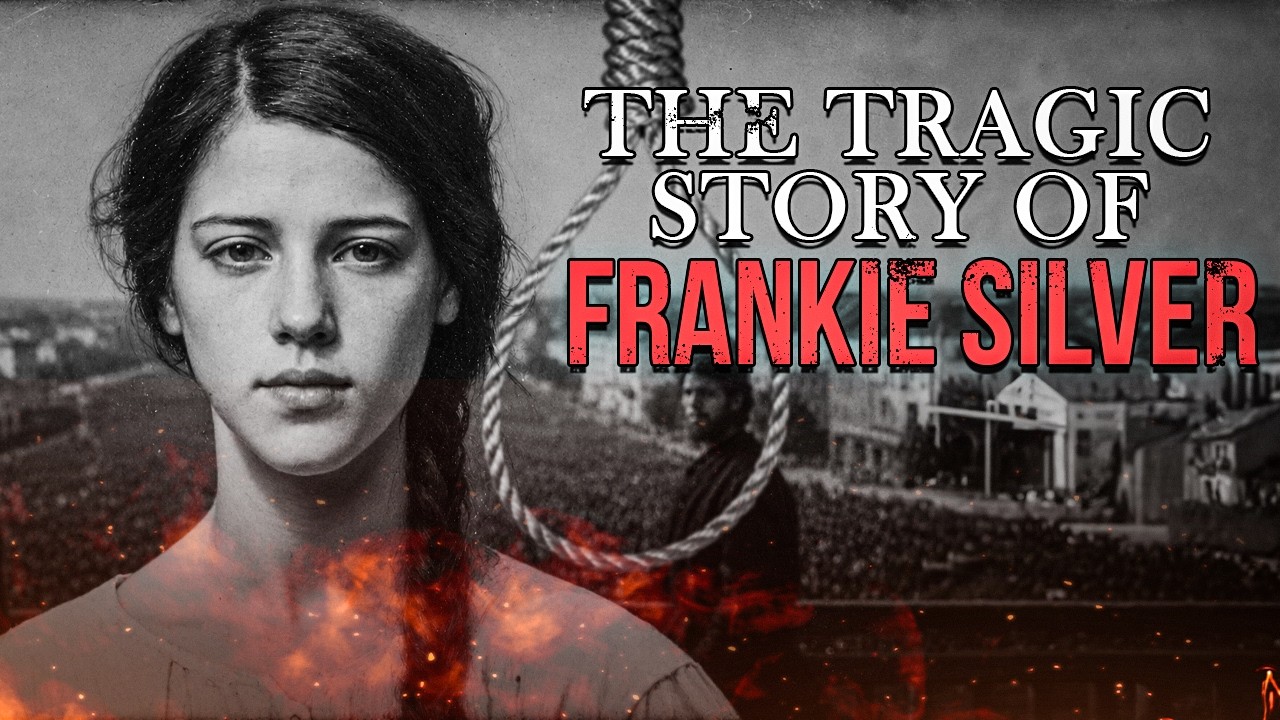
“Die with it in ye, Frankie. ”
She closed her mouth. She said nothing more. She never did.
Nobody knows what she was going to say that morning, and nobody has known for nearly two centuries. It is the question at the heart of everything that happened in those mountains, and it is the question that was never answered. Consider the world she came from. Western North Carolina in the early 1830s had no real roads.
Families knew each other by the ruts they left on mud trails, by dogs barking back and forth across a ridge, by the smell of wood smoke rising out of the hollows before dawn. The community was called Kona, a place so small that most maps never bothered to write its name down. It belonged to Burke County back then, in what is known today as Mitchell County. The Silver family had been settled there for decades.
Jacob Silver, the patriarch, was a preacher who had come down from Pennsylvania and Maryland after the Revolutionary War. His children and grandchildren spread across those slopes like oak roots. They were not wealthy by any standard the outside world would recognize, but they had land, and in those mountains, land was everything. Charlie Silver was Jacob’s oldest boy.
His mother, Elizabeth Wilson, died bringing him into the world, and he was raised by his father’s second wife, Nancy Reed, who went on to raise eight or ten more children of her own. Charlie was the eldest of them all. Everybody who knew Charlie liked him. His half-brother Alfred described him as a strong, handsome, cheerful man, the kind of person who could liven up any gathering just by showing up.
He played instruments, laughed easy, never missed a social. He was nineteen years old. On the other side of the same mountain ridge, the Stewarts had arrived when Frankie was a girl of six. Isaiah Stewart and his wife Barbara settled in with what they had, which was not much.
The Stewarts were poor. That was the most visible difference between the two families, and in those tight-knit communities, everybody knew it. Frances Stewart Silver, Frankie, had bright eyes and a quick mind. Alfred Silver, who had no reason in the world to speak kindly of her after what happened, said she was a mighty likely little woman.
Pretty, sharp, able to spin three yards of cotton a day on a big wheel, which any woman in those mountains will tell you is no small thing. That detail matters. Years later, the prosecutor would paint Frankie as a woman consumed by rage, out of control, acting out of blind jealousy. But three yards of cotton a day on a big wheel comes from patient hands and a steady head.
Those two things do not sit well together with the portrait the prosecution needed to draw. She married Charlie in October of 1829. She was about fourteen years old. The two had known each other since they were children, growing up hearing each other’s dogs bark over the mountain.
When they married, it was against the wishes of both families. The Silvers objected because the Stewarts had nothing. The Stewarts objected for reasons nobody left written down clearly. They built a small cabin, one room, in a hollow nearby.
A year later, their daughter was born. They named her Nancy after Charlie’s stepmother. For a time, it was everything it needed to be. But there is something about that marriage that most tellings of the Frankie Silver story tend to rush past.
Life in that one-room cabin was not simple. It was not peaceful. And the two years Frankie spent as Charlie Silver’s wife left marks she carried all the way to the gallows. In May of 1833, Frankie Silver had been locked up in the Morganton jail for over a year.
Six weeks remained until her scheduled hanging. That is when she signed a document, pages written in someone else’s hand because Frankie almost certainly could not read or write, but signed by her in the presence of witnesses. That document sat untouched for nearly two hundred years before it was transcribed and published. It is where the story changes tone.
The fight started within three months of the wedding and never really stopped. She said Charlie threatened her with a rope in his hand. He shoved her out of the house. He grabbed the baby from her arms to intimidate her.
Once he fractured her rib with his fist when Nancy was barely three months old. There was a night he brought a knife to bed with intentions of using it, and she lay awake until he fell asleep and slipped it out from under his pillow. He would disappear for weeks, come back asking forgiveness, and the whole thing would start again. There were other women.
She mentioned it more than once with a short word that left no doubt about what she knew. And then came the night of December 22nd, 1831. The confession describes the scene with a kind of detail that does not feel made up. Charlie came home in a dark mood.
Words were exchanged. The argument pushed past a certain point. At some moment, Frankie said he picked the axe up off the floor and turned it toward her. Then he set the axe down, went to the rifle, poured powder into the barrel, and said in his own words that one of them was not going to see daylight.
While he was digging through his shot pouch looking for a ball, his eyes moved off her for just a second. She said that was the second she moved. She grabbed the axe. Two blows.
Charlie fell. She went to bed. Pulled the quilt over her head. Listened to him breathing heavy for what she described as maybe an hour, maybe more.
And she stayed there until the silence came. What did she feel afterward? She wrote, or someone wrote for her, that she would have given ten thousand worlds to take back that blow. Nancy, their daughter, was thirteen months old.
She was in that cabin that night. Now, this document has its controversies. Some sources question who actually drafted it and whether it was altered over time. The story the prosecutor used at trial was entirely different.
He claimed Frankie had planned it all out of jealousy over an affair. But what the confession describes is something far more human and far more disturbing, a woman who genuinely believed she was going to die that night. Either way, none of those words ever reached the jury. The ground was frozen solid.
It was December. And there was a dead man in the cabin. Frankie was about sixteen years old with a thirteen-month-old daughter and no clear way out ahead of her. She decided to make Charlie disappear.
It was a desperate idea, and it was never going to hold. The fireplace was still burning, the wood Charlie had split just days before to keep her and the baby warm while he went trapping. That same wood fed the fire all through the night. She burned what she could.
What would not burn, and a human body will not burn away completely in a cabin fireplace, no matter how long you try, was hidden outside. A head in a hollow tree stump at the edge of the yard. Other parts under a rock on the trail down toward the river. The Toe River was frozen over solid that time of year.
The next morning, Frankie walked over to the Silver family’s house with the baby on her hip, easy as she could manage, asking if someone could feed the cow while she stayed a few days with her folks. Charlie had gone across the river to fetch feed from a neighbor, she said. He would likely be back soon. But Charlie’s dog had stayed behind.
In those mountains, a hunter and his dog were one thing. The animal went everywhere with him. When Jacob Silver, Charlie’s father, went to feed that cow in the afternoon and found the dog still there, something lit up in him that did not go out. The searches spread across miles and miles of mountain without turning up a trace.
People from whole communities swept every trail within ten miles. Nothing. Charlie Silver had simply vanished from the world. That is when someone mentioned to Jacob something he decided to take seriously.
There was a man on the other side of the mountains, up near Mountain City in Tennessee, roughly forty miles of ridge trail, two days on horseback in decent weather. That man owned an enslaved person who possessed what they called a conjure ball, a ball that hung from a strand of hair and, according to folks who believed in such things, could answer questions if you knew how to ask. Jacob Silver made the trip. When he got there, the owner of the slave said the man was out working for the day, but that he himself would try to work the ball.
They sat there a while asking questions, waiting for the ball to swing in some direction that might mean something. It turned. It did not point anywhere. It did not give a useful answer.
Before Jacob left, the man asked a question out loud, one Jacob had probably already asked himself but had not wanted to hear from outside his own head. What if your son had been killed inside his own home? Jacob said his son’s wife was not big enough to do something like that. He was still on the road back when, during that same stretch of time, a neighbor named Jack Collis walked into the cabin.
Collis had been suspicious for a while. He waited until Frankie was away and went to have a look. The fireplace ashes were greasy in a way that wood ashes do not get. There were small bone fragments among the cold coals.
When they pried up the floorboards, that tongue and groove style of flooring the cabins of the day used, they found a pool of blood in the dirt underneath. And Charlie’s dog kept heading down a certain trail and disappearing at a fixed spot, coming back, disappearing again. Always the same place. That is where they found the rest.
The answer the conjure ball never gave, the bones in that fireplace did. They gathered the remains and buried them three times because they found the pieces at different moments. To this day, in the cemetery behind Kona Baptist Church, there are three stones marking the places where Charlie Silver rests. In January of 1832, Frankie was arrested.
Her mother Barbara and her brother Blackstone were taken in as well. There was suspicion that she had not acted alone in hiding the body, but the charges against both of them were dropped for lack of evidence. Only Frankie stayed. Morganton, March of 1832.
A small town that served as the seat of a vast county stretching across mountains and valleys for a hundred miles in every direction. Frankie Silver’s trial lasted two days. There was not much mystery about what had happened. Charlie’s remains had been found on the property, the blood was under the floorboards, and Frankie’s explanations for her husband’s disappearance had convinced no one.
What was at stake was something else. Why did she do it? And who else was involved? The prosecutor chose a simple story.
Jealousy. Charlie had been seeing another woman. Frankie found out, and she acted in a fit of possessive rage. It was a story an all-male jury could understand and condemn in the same motion.
The defense chose to contest everything and proved nothing. The strategy was straightforward, force the state to prove her guilt. Let them produce the evidence. The trouble is that strategy closed the one door that might have saved Frankie.
Silence in that courtroom was not innocence. It was guilt without an explanation. Under the law of the day, defendants could not take the stand in their own defense. Frankie had no voice.
She could not explain what had happened in that cabin, could not describe the years of threats and blows, could not say that Charlie had a loaded rifle pointed at her when she reached for the axe. The jury never heard a word of it. B. S.
Gaither, the clerk of Burke County Superior Court, watched the trial closely. Years later, he said something that stayed on record. If Frankie had admitted to the killing and claimed self-defense, the jury would likely have acquitted her. He was certain of it.
But the defense did not go that way. And the more Frankie stayed silent, the more she looked guilty. What happened with the jury raises its own questions. On the first day of deliberation, they were deadlocked.
Nine to three for acquittal. A request was made to rehear certain witnesses. And then something happened that no court today would allow. Before returning to the room, the jurors were permitted to move about freely, talk among themselves, speak with whoever they pleased.
When deliberations resumed, the vote was unanimous. Guilty. What changed during those recesses was never put on record. The sentence was death by hanging, June of 1832.
She was sixteen, maybe seventeen years old. Nancy was not yet two. And there was nothing more Frankie could say, not there, not anywhere the law of that time would have recognized. Outside the Morganton jail, something had been shifting slowly.
People who had followed the case from the beginning, and around Morganton there were plenty, had started to come around. Stories began to circulate about Charlie, about the kind of husband he had been, about what that cabin had been hiding beyond the burned remains. Meanwhile, inside, the month passed at a pace that must have felt absurd to someone on the wrong side of those bars. Appeals denied, dates set, judges who did not show, new dates.
More than a year chained to the same corridor in Morganton. A man named David Newland gathered 113 signatures on a petition asking the governor for clemency. Among them, four jurors who had voted for Frankie’s own conviction. The most prominent women of Morganton sent a separate letter describing what they said they knew about how Charlie had treated his wife.
In all, seven of the twelve jurors from the trial ended up signing something in her favor. But there was a complication that had the feel of a trap. The judge who had presided over part of the proceedings, David L. Swain, had been badly injured in a fall from his carriage.
And then, in a turn that seemed pulled from a poorly written novel, Swain was elected governor of North Carolina. The same man with direct history in the case now had the power to save Frankie with the stroke of a pen. He did not. On July 9th, 1833, three days before the scheduled execution, Swain wrote a letter saying the plea for clemency had arrived too late for him to act.
But the letter that prompted the request was clearly dated. Swain had received it with time to spare. Wayne Silver, a family historian who spent years studying the case, has a theory about that silence. The Silvers were not the wealthiest family in the county, but they had land and influence.
And if they wanted Frankie to hang, Swain knew it. Governors in those mountains did not cross landed families without thinking hard about it first. The reply Swain sent contained a line that is hard to read without a tightening in the chest. He said he hoped Frankie would find in heaven the mercy that earth had seen fit to deny her.
Too fine a thing to say from someone who had the power to grant it and chose not to. Ten days before the execution date, Isaiah Stewart decided he was not going to stand by and watch. We do not know exactly how he managed it. Some say there was help from inside the jail, given that nearly ninety percent of the community by that point wanted Frankie free.
What is known is that on a certain night in May of 1833, the cell door was left unlocked and Frankie walked out. The disguise was simple, and it was the kind of simple that might actually work. They cut her hair short, hair she had never cut in her life, as was the custom among women of that time and place. Cutting a woman’s hair was considered nearly a moral transgression in that world.
But there was no other choice. They put her in men’s clothing, an old felt hat, and hid her under a load of sacks in a hay wagon heading out of town. The group moved south, aiming for the South Carolina border. For two days, it seemed to be working.
She was caught in an open field in Rutherford County. The sheriff and his men, coming from one direction, spotted a group of travelers across the field. Something was off about one of the figures. Someone trying to catch a ball being tossed back and forth.
Every time the ball came that way, the person raised their hands in a particular fashion, trying to catch it in the folds of an apron. It was a woman’s gesture, automatic, involuntary. Every woman of that era knew to gather her apron to catch something thrown her way. Any man would have just used his hands.
When the sheriff rode up close, Frankie tried. She thickened her voice and said her name was Tom. Her uncle, up on the wagon, helpfully confirmed it from the bench. “Yes, sir.
Her name is Tom. ” The sheriff looked at her for a moment. “Come on, Frankie,” he said. “We got you now.
”
Back to Morganton, this time chained to the floor of the cell. And there was a twist the papers of the day noted. The escape, which could easily have been used as proof of guilt or ingratitude, had the opposite effect. Sympathy for the young woman grew even stronger after she was brought back.
The petitions multiplied. The letters to the governor became more urgent. None of it made a difference. July 12th, 1833, Morganton, North Carolina.
They reckon about ten thousand people showed up that day. For a small inland town in the Appalachians in the first half of the nineteenth century, that was an extraordinary number. People came from communities miles and miles away, down out of the mountains on foot, on horseback, in wagons. Frankie was eighteen years old.
She weighed around ninety pounds. Before she was led to the gallows, some of the most prominent women in Morganton, the same ones who had signed the petitions, who had written to the governor, made a point of giving her a white dress to die in. It was all they had left to offer. When the sheriff walked her up to the scaffold and asked if she had any last words, Frankie opened her mouth.
And that is when Isaiah Stewart, her father, hollered from down in the crowd the words that have been written into everything about this case ever since. “Die with it in ye, Frankie. ” She closed her mouth. Said nothing more.
Never did. Nobody knows what she was going to say. Maybe a confession. Maybe names.
Maybe she just wanted to talk to the people standing there before it was over. But her father did not want any of it said out loud. And she obeyed. A woman of eighteen standing on a gallows opens her mouth, and her own father hollers from the crowd to make her close it.
The same man who, according to the oral tradition passed down through the Silver family, had been inside that cabin the night Charlie died, urging his daughter on. Frankie died without telling a soul. After they took her body down, there was fear that someone might steal it. Universities of the era kept medical schools that paid for corpses to dissect.
To throw off any grave robbers, several holes were dug in different locations that same day. Frankie’s body was hidden under sacks in a wagon, the same kind of wagon that had tried to carry her to freedom just weeks before. Isaiah wanted to bring her back to the mountains. The July heat won before the journey was finished.
The body began to decompose too fast. Isaiah was forced to bury his daughter in a hurry beside an old road about eight or ten miles outside Morganton. Decades later, a stone was placed to mark the spot. It is still hard to find, but there are people who make a point of trying.
The stories that run through these mountains about what happened afterward to the Stewart family have a flavor that the old-timers around here know well, the notion that certain debts collect themselves given enough time without any courthouse involved. Isaiah Stewart, the man who hollered from the crowd, who helped organize the escape, who by the account passed down through the Silver family was inside that cabin the night Charlie died pushing his daughter forward, died years later while cutting timber. A falling limb caught him in the head. Barbara Stewart, Frankie’s mother, died from a snake bite.
Blackston Stewart, the brother who had been arrested and released for lack of evidence, eventually moved to Kentucky. There, he was caught stealing a horse. He was hanged. Bobby McMillan, a storyteller and musician from western North Carolina who was a third cousin of Charlie Silver, gathered this version of the family memory over decades.
He was careful to say these things did not all happen together in a rush. They were scattered across maybe thirty years. But in the communities where this story lived, the pattern was enough for people to draw their own conclusions. And then there was Nancy, the baby who was thirteen months old that night, who crawled across the floor of that cabin, who grew up without a father and without a mother.
Raised by the Silvers or the Stewarts, the sources do not agree. The 1850 census shows her living with her grandfather Jacob Silver. Nancy married, had children, lost her husband in the Civil War. Her children were raised by others while she tried to get back on her feet.
She married again, a second husband she eventually drove off after he violated one of her daughters. She went back to her first husband’s name, Parker, and that is what is carved on her headstone in a cemetery in Macon County, far from the mountains where she was born, far from the father who rests in three graves in Kona, far from the mother buried beside a dirt road outside Morganton. A whole family scattered across the map like pieces nobody ever managed to put back together. There is a ballad a lot of people know as Frankie Silver’s Confession.
The legend says she wrote it in her jail cell and sang it from the gallows before she died. The trouble is, she almost certainly could not write. And eyewitnesses at the execution said she did not sing anything. The ballad first appeared in print in a Morganton newspaper in 1886, fifty-three years after the hanging.
Most historians believe it was written by a local school teacher named Thomas Scott. But it was copied, sung, passed from mouth to mouth, and came down to us as if it were her voice. Frankie Silver was never allowed to speak in life, not in the courtroom, not on the scaffold. And yet the world put words in her mouth after she was dead, using somebody else’s.
The question that was never answered, and likely never will be, is the simplest one of all. What really happened in that cabin? The official story from the trial said jealousy and premeditation. The confession signed in jail described self-defense.
The oral tradition carried through the Silver family in Bobby McMillan’s voice suggested that Isaiah Stewart was inside that cabin the night it happened, pushing his daughter to act, and that the real motive was money. The Stewarts wanted to move west. They needed Charlie to sell his land to fund the journey, and Charlie refused. Will Silver, Charlie’s nephew, a man who died some thirty or forty years ago, told McMillan’s grandfather that this was the explanation that made the most sense to him.
That Frankie had been pressured into it. That she was a product of the loyalty daughters owed their fathers in that time and that place. And that she paid the price alone for all of them. Every version holds something true, and every version has the parts that do not quite fit.
What seems hardest to argue against is this. There were witnesses to Charlie’s abuse. The court clerk said that if self-defense had been claimed, she would likely have walked free. Seven of the twelve jurors who convicted her signed something asking that she not be hanged.
The governor who could have saved her wrote a letter time to arrive after it was too late. And her father, who may have been in that cabin the night Charlie died, hollered from the crowd for her to keep her mouth shut. There is a name for that system. Down here in the South, there always has been.
You protect your own, no matter the cost, no matter who ends up paying it. Family honor gets defended with the body if it comes to that, and sometimes the body that pays belongs to the one you were trying to protect in the first place. The Stewarts protected the Stewarts. And Frankie, right to the end, protected the Stewarts too.
Only nobody was protecting Frankie. She had the wrong last name in those mountains, the wrong lawyer, and the wrong man sitting in the governor’s mansion. The code that ran that world, protect your people, don’t give anybody up, die with the secret inside you if you have to, that code swallowed her whole. The ballad says in one of its verses, “Not fit for Earth, not fit for Heaven.
” It was more the other way around. It was the Earth and the Heaven that were not ready to deal with her right.
