The house in Queens sat quiet at eight in the evening on January 14th, 1979. Tommy DeSimone walked through the door expecting a ceremony. He had been told he was getting made—inducted into the Lucchese crime family, the call he had been waiting for his entire life. The room should have been full of made men, wine, cigars, respect.
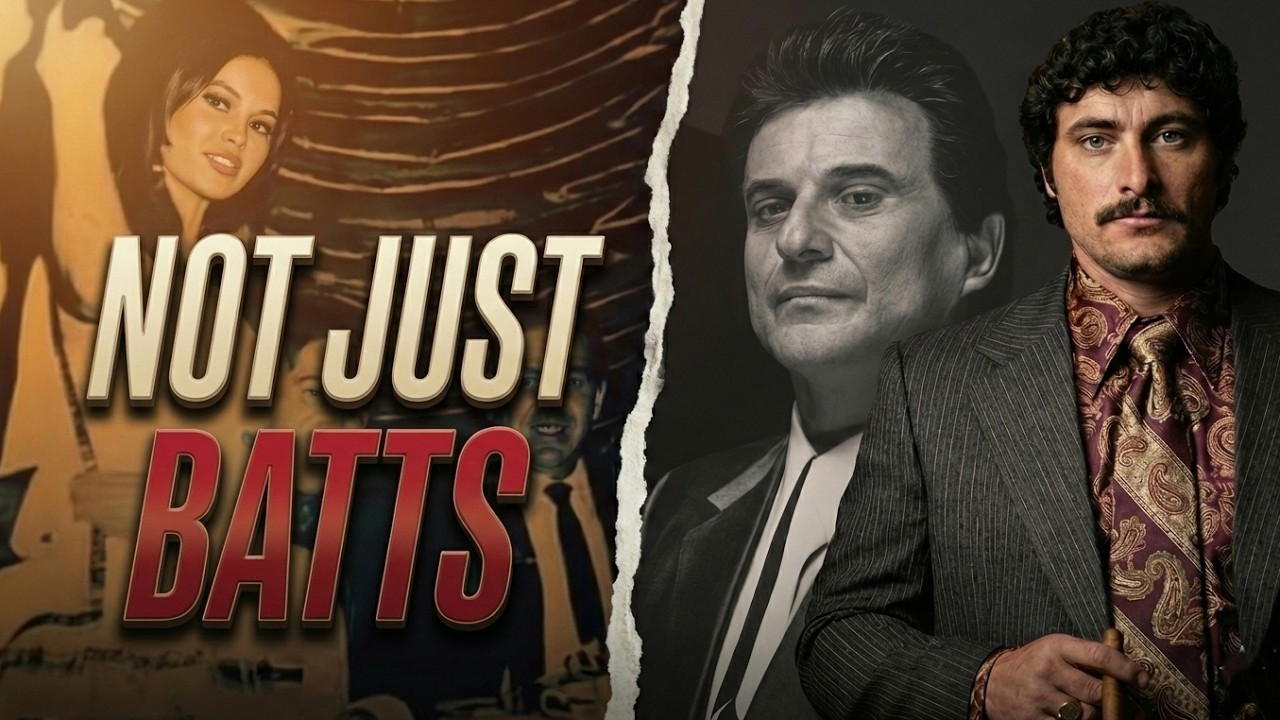
Instead, it was empty. Just shadows. A chair, and men he did not recognize moving toward him. He understood instantly.
This was not a making ceremony. It was an execution. The door closed behind him. Tommy DeSimone, twenty-eight years old, prolific killer, violent psychopath, died in that room.
Multiple gunshots. His body was never found. The reason he was there is not simply the murder of Billy Batts. Tommy DeSimone was not killed for one killing.
He was killed for a pattern, a track record of unsanctioned violence that crossed family lines and violated the one rule you cannot break in organized crime: you do not touch connected guys without permission. Billy Batts put Tommy on the list, but four years earlier, another killing kept him there—a killing the movie Goodfellas never mentions, a killing that mattered almost as much. Ronald Gerote, known as Foxy, was a Gambino associate connected to John Gotti. Tommy killed him in December 1974.
That murder was not business. It was personal. And it was unforgivable. This is the story of how Ronald Gerote’s death sealed Tommy DeSimone’s fate.
How a dispute over a woman—or an insult, or a threat, depending on who is telling it—turned into a problem the Gambinos never forgot. And how Tommy’s inability to control his violence made him too dangerous to let live. Tommy was not executed just for killing a made man. He was executed for being a serial line-crosser, a man who killed whoever offended him regardless of rank or affiliation.
Ronald Gerote was proof of that. And when the Gambinos finally got their revenge, they were not just avenging Batts. They were settling multiple debts. Ronald Gerote was born in the 1940s in New York.
By the 1970s, he was a Gambino associate working with the Bergen Hunt and Fish Club crew—John Gotti’s crew. Gotti was not boss yet. He was a rising capo, ambitious, respected, violent when necessary, and Gerote was one of his guys. Gerote had the nickname Foxy, possibly for his looks, possibly for his street smarts.
The sources do not specify. What matters is this: Gerote was not a nobody. He was not expendable. He was connected.
And in the mafia, connection is armor. You cannot kill a connected guy without consequences. Gerote appears in The Sinatra Club, a memoir by Salvatore Polisi, a Colombo family associate who ran an illegal gambling operation in the 1970s. Polisi describes Gerote as a Gambino associate who moved in legitimate circles, socialized with other wise guys, and carried himself with confidence.
He was not a made man, but he had protection by association. That protection should have kept him safe. It did not. Thomas Anthony DeSimone was born on May 24th, 1950, in Cambridge, Massachusetts, and grew up in New York.
By his teens, he was already involved in crime. His brothers were connected. His family knew the life, and Tommy had a gift for violence—not strategic violence, not calculated violence, but impulsive, brutal, personal violence, the kind that gets you killed. He was six-foot-two, and according to Henry Hill, built like a bull, athletic, strong, intimidating.
The movie version, Tommy DeVito, is small and wiry. The real Tommy was massive, and he had a reputation. By the time he was in his twenties, Tommy had killed multiple people—some for business, most for personal reasons. A bartender who insulted him.
A made man who disrespected him. Anyone who crossed him. He did not think about consequences. He reacted.
In the mafia, that is a fatal flaw. Tommy worked with the Lucchese family as an associate of Paul Vario, a powerful capo who ran operations out of Brooklyn and Queens. Tommy ran with Jimmy Burke and Henry Hill, pulling hijackings, loan sharking, and gambling operations. He was a good earner, but he was also unstable, and everyone knew it.
By 1974, Tommy had already killed many people. In 1970, he killed Billy Batts, a Gambino made man, after a bar fight. Tommy beat Batts unconscious. Jimmy Burke helped finish him.
They buried the body. The Gambinos suspected Tommy but had no proof—not yet. Here is where the story gets murky. Multiple sources agree on the basics: Tommy DeSimone killed Ronald Gerote.
The motive is disputed. The most persistent version, repeated in street lore and secondary sources, goes like this. Tommy was dating Gerote’s sister. The relationship went bad.
Tommy assaulted her, beat her up. When Gerote found out, he threatened to kill Tommy. Word got back to Tommy. And Tommy, being Tommy, went to Gerote’s apartment and killed him first.
That version has never been confirmed by court records or sworn testimony. There is no wiretap, no deposition, no FBI file spelling it out. It is street knowledge, passed down through mob circles, repeated by guys who knew guys. Salvatore Polisi mentions Gerote in The Sinatra Club but does not detail the killing.
Henry Hill, the primary source for most Tommy DeSimone stories, did not witness this one. So we are left with rumors—but those rumors have endured for decades. In the mafia, rumors become truth when enough people believe them. Whether the dispute involved a sister, a personal insult, or something else entirely, the outcome is not disputed.
On December 18th, 1974, Tommy DeSimone went to Ronald Gerote’s apartment and shot him. Gerote was killed. His body was found. And the Gambinos knew who did it.
This is where the politics matter. Billy Batts was a made man. Killing him was an automatic death sentence. But Gerote was not made.
So why did his death matter? Because of who he was connected to. John Gotti was a rising star in the Gambino family—respected, feared, connected to powerful people. Gerote was his guy.
Killing Gerote was an insult, a violation, a message that Tommy DeSimone did not respect Gambino boundaries. The Gambinos did not act immediately. They could not. Tommy was with the Lucchese family.
You cannot just kill another family’s associate without approval. There is protocol, politics. You have to go through channels. But the Gambinos logged it.
They remembered. And when they finally got the chance, they made sure Tommy paid. In the years between 1974 and 1979, Tommy kept killing. He was a liability to everyone.
Charles Carneglia, a Gambino hitman and associate of John Gotti, later confirmed what insiders already knew: Tommy was not killed just for Billy Batts. Gerote mattered too. According to multiple mob sources, including testimony and interviews conducted years later, the Gambinos had a list. Tommy had violated them multiple times.
Batts was the big one—the made man, the unforgivable act. But Gerote was on that list too. And when the Gambinos finally got permission to kill Tommy, they cited both. By late 1978, the Gambinos had been waiting nine years for revenge for Billy Batts.
Nine years is a long time. But in the mafia, patience is power. You wait for the right moment, the right opportunity. In December 1978, that moment came.
Tommy had just participated in the Lufthansa heist, the biggest cash robbery in American history. $5. 8 million stolen. Tommy was one of the shooters.
He wore a mask. He pistol-whipped guards. He did his job. But in the aftermath, he killed Parnell Edwards for screwing up.
That killing drew FBI attention. It made Tommy visible, and visibility gave the Gambinos leverage. Paul Vario, Tommy’s boss in the Lucchese family, knew Tommy was a problem. He knew the Gambinos wanted him dead.
According to mob historians and cooperating witnesses, Vario made a calculation: Tommy was not worth protecting anymore. He had crossed too many lines, killed too many people, created too many problems. So when the Gambinos asked for permission, Vario gave it. Or at least, he did not object.
On January 14th, 1979, Tommy got the call. He was being made. It was time. Tommy showed up at the house in Queens expecting a ceremony.
He walked in, the door closed, and the men inside—likely including Gambino hitmen connected to John Gotti—opened fire. Multiple shots. Tommy died instantly. His body was never recovered.
Tommy DeSimone was officially a missing person, but everyone in the mafia knew he was dead, and everyone knew why. So what does Ronald Gerote’s death reveal? It reveals the accumulation principle. In organized crime, one violation might be forgiven, explained away, negotiated.
But multiple violations create a pattern, and patterns cannot be ignored. Tommy killed Billy Batts. He killed Ronald Gerote. He killed Parnell Edwards.
Each killing crossed a line. Each one created an enemy. Eventually, the enemies outnumbered the allies. Gerote’s murder mattered because it showed Tommy did not respect boundaries.
He did not care about family politics. He did not think about consequences. If Tommy got mad, Tommy killed. That made him too dangerous to tolerate.
The Gambinos could not let the Gerote killing go. Not because Gerote was indispensable, but because letting it go would signal weakness. It would tell every other crew that Gambino associates were fair game—that you could kill their guys without consequences. The Gambinos waited.
They built their case. They got approval. And when they finally acted, they cited everything: Batts, Gerote, the pattern of unsanctioned violence. Tommy’s execution was not revenge for one act.
It was collection for multiple debts. John Gotti’s involvement in Tommy’s killing is speculated but not confirmed. Multiple sources place Gotti at the scene or close to it. Gotti was Gerote’s mentor.
He had reason to want Tommy dead. And by 1979, Gotti was powerful enough to make it happen. Whether Gotti personally pulled the trigger or simply approved the hit, his fingerprints are on it. That matters—because Gotti remembered, and Gotti collected.
Henry Hill survived because he flipped. In 1980, Hill entered witness protection. He testified about Tommy, about the Lufthansa heist, about the murders. He told the FBI that Tommy killed Gerote, that Tommy killed Batts, that Tommy was out of control.
Hill’s testimony confirmed what law enforcement suspected. But by then, Tommy was already dead. There was no one to prosecute, nobody to find. Just a story—a cautionary tale about what happens when you cannot control your violence.
Jimmy Burke, Tommy’s mentor and partner, survived longer. Burke was never charged with Tommy’s death. He went to prison for other crimes—the Lufthansa aftermath murders, point shaving. He died in prison in 1996.
He never talked about Tommy, never admitted what he knew. But insiders believe Burke knew the hit was coming, that he either approved it or stayed silent because protecting Tommy was not worth the cost. Paul Vario, Tommy’s capo, also went to prison. He was convicted of multiple charges in the 1980s.
He died in 1988. Like Burke, he never publicly discussed Tommy’s fate. But his silence was confirmation. If Vario had objected, the Gambinos could not have acted.
The fact that Tommy died means Vario let it happen. In organized crime, every action creates a debt, and debts do not disappear just because you forget them. The other side remembers. They log it.
They wait. And when the opportunity comes, they collect. Tommy DeSimone thought he was untouchable. He thought his reputation, his violence, his willingness to kill would protect him.
It did not. It made him a target. Ronald Gerote’s name does not appear in Goodfellas because the movie focused on the story Martin Scorsese and Nicholas Pileggi wanted to tell: the rise and fall of Henry Hill, the Lufthansa heist, the betrayals, the spectacle. But the real story is deeper, messier, more political.
Tommy was not killed because of one barroom beating. He was killed because he was a serial violator, a man who could not stop crossing lines. Ronald Gerote was one of those lines. Tommy DeSimone was not unlucky.
He was overdue. The Gambinos had been waiting since 1970—waiting for permission, waiting for the right moment. When it came, they acted. Not out of rage, not out of passion, but out of necessity.
Tommy had become a problem that could not be solved any other way. Ronald Foxy Gerote is not famous. His name does not appear in the movie. But his death mattered.
It mattered to John Gotti, it mattered to the Gambino family, and it mattered to Tommy’s fate.
