Sarah Ferguson is not supposed to be here. That is the first thing worth understanding. If you had asked a royal correspondent in 1992 whether the Duchess of York would still be a meaningful presence in royal life thirty years later, the answer would have arrived so quickly it might have sounded rehearsed. Of course not.
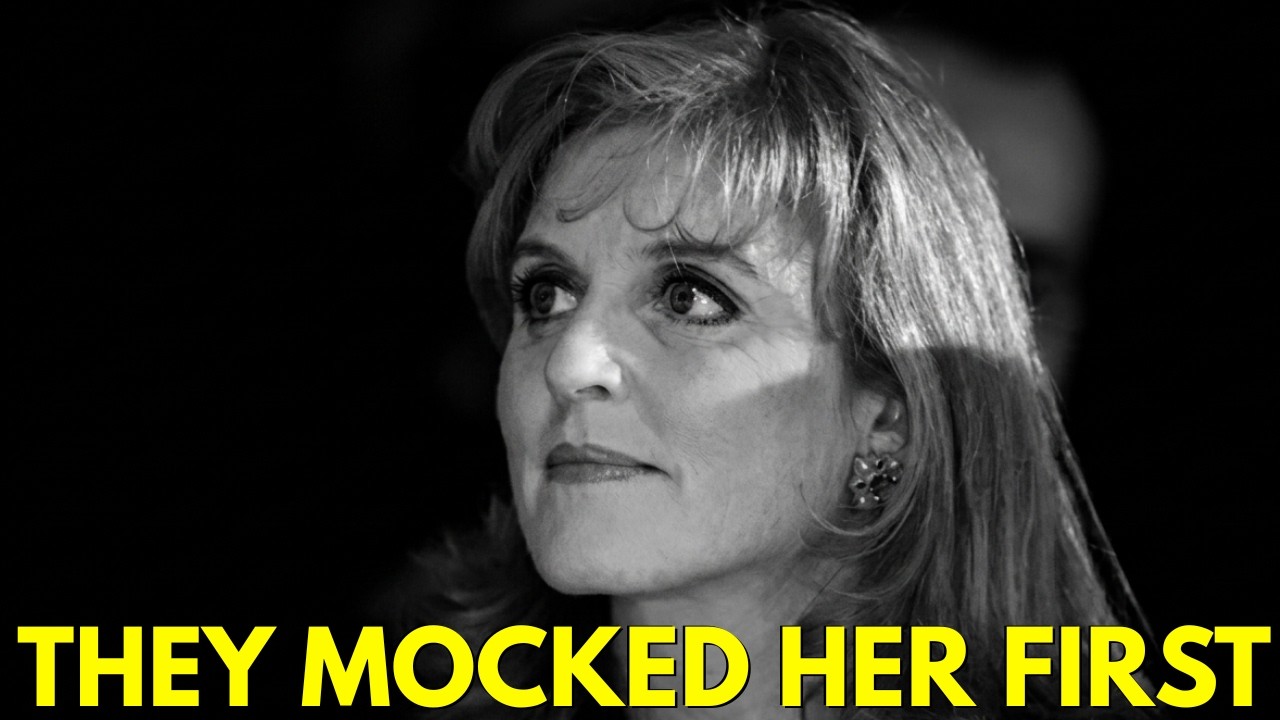
The photographs had already happened. The marriage was collapsing. The newspapers had discovered she sold copies better than almost anyone in Britain, provided the story involved humiliation. And humiliation, unfortunately for Sarah Ferguson, had become one of the country’s favorite spectator sports.
By 1996, she was divorced. By 2010, she was caught in a hidden camera sting apparently offering access to Prince Andrew in exchange for half a million pounds. By the time the footage aired, even people who had defended her for years struggled to find an argument. The woman looked finished.
Institutionally finished. Publicly finished. Historically finished. And yet history has a habit of refusing to cooperate with first impressions.
Fast forward to the early 2020s, and something strange begins to happen. The woman who spent decades being treated as the royal family’s embarrassing relative starts appearing again. Christmas services, family gatherings, royal events, photographs, public support from people who had spent years keeping their distance. Nothing dramatic.
Nothing officially announced. No grand restoration. No triumphant return. Just a slow and unmistakable shift.
Sarah Ferguson was back. Not fully, but undeniably. What changed? The obvious answer is that Sarah changed.
She matured. She learned. She survived her scandals. There is truth in that explanation, just not enough.
Because the more interesting story is not what happened to Sarah Ferguson. It is what happened to the monarchy around her. Over the course of thirty years, the institution that once viewed her as one of its greatest liabilities gradually discovered that many of the people it considered safer were capable of creating much larger problems. The embarrassing Duchess became easier to tolerate when compared with constitutional crises, family feuds, television interviews, memoirs, lawsuits, and public relations disasters operating on a completely different scale.
Something else happened too, something the institution probably never anticipated. Sarah Ferguson never left. That sounds simple. It isn’t.
Most people who spend decades being ridiculed decide they have had enough. Most people who feel excluded eventually stop showing up. Most people who believe they have been treated unfairly eventually start talking. Sarah Ferguson did none of those things.
She remained loyal to Prince Andrew long after doing so became unfashionable. She remained loyal to Queen Elizabeth II. She remained loyal to the monarchy. Most remarkably of all, she remained loyal during periods when that loyalty appeared to offer almost no practical benefit whatsoever.
That loyalty would eventually matter. Not immediately, not in a way visible to the public, but institutions notice endurance. Particularly old institutions. Particularly institutions that have spent centuries watching people arrive enthusiastically and leave angrily.
Sarah Ferguson stayed. And in the end, staying turned out to be one of the rarest qualities in modern royal life. This is not an attempt to transform her into a misunderstood saint. The evidence does not support that version of events.
She made mistakes, some of them spectacular, some expensive, some impossible to defend. But she occupies a peculiar position inside modern royal history. She was never the most disciplined member of the royal family, never the most polished, never the most institutionally reliable. Yet she outlasted expectations.
She survived public humiliation that would have destroyed many careers. She survived financial disasters. She survived divorce. She survived exclusion.
She survived becoming a punchline. And eventually, she survived long enough to watch the institution that once viewed her as an embarrassment discover that it had fewer dependable people than it thought. The story begins long before the scandals, long before the photographs, long before the hidden camera sting. It begins with a girl growing up in Hampshire who spent much of her childhood worrying that people she loved might leave.
That fear shaped almost everything that followed, including the choices that made her famous, the mistakes that nearly ruined her, and the reason she ultimately found her way back. The central paradox of her life is this: the very qualities that made her difficult for the monarchy to manage were often the same qualities that made her impossible to completely discard—warmth, openness, emotional loyalty, and an almost reckless determination to keep believing in people. Those traits created problems. They also created survival, and survival, over a sufficiently long timeline, has a way of changing how history remembers you.
There is a moment in almost every royal story when the institution quietly stops asking, “How do we support this person? ” and starts asking something colder, “How do we contain them? ” It rarely arrives with ceremony. There is no announcement, no formal decision, no visible rupture, just a gradual tightening of language, a shift in tone from affection to caution, from protection to distance.
For Sarah Ferguson, that shift begins earlier than most people assume—not in 1992, when the photographs of her in a compromising situation at a villa in the south of France were published, not in 1996 when her divorce from Prince Andrew became final, but much earlier, inside the first years of her marriage. When the palace began to understand something it did not know how to say out loud: she was not going to behave like a royal, not in the way they expected, not in the way the institution required, and worse than that, she did not seem able to see why she should. When Sarah Ferguson married Prince Andrew in 1986, she entered a system that had already defined its operating rules over centuries. Royal life was not simply public life, it was controlled visibility.
Every gesture calibrated, every statement filtered, every emotional display moderated through layers of private advice and institutional caution. Diana, Princess of Wales, had already begun to expose the emotional cost of those rules, but Sarah was different. Where Diana internalized the pressure and later redirected it into controlled public messaging, Sarah reacted in real time, openly, visibly, sometimes impulsively, and the palace, which relied on predictability more than almost anything else, struggled to adjust. At first, this difference was mistaken for charm.
Sarah was described as refreshing, unfiltered. In the language of royal public relations, these were not neutral descriptions. They were early-stage tolerances. They meant, “We can manage this for now.
” But institutions are slow to revise their assessments once a pattern has been established, and by the late 1980s, a pattern was already forming. Sarah Ferguson did not behave like a controlled asset. She behaved like a public-facing individual with her own instincts. One of the earliest tensions concerned her relationship with visibility.
She liked it, not in a strategic sense, but in an instinctive one. She engaged with crowds too freely. She spoke too openly in interviews. She laughed too loudly in environments that expected composure.
To the public, this was part of her appeal. To the palace, it was a problem that could not be easily categorized. Royal communication depends on consistency, not just in message, but in emotional tone. A senior royal is not simply a person; they are a stable signal, a reference point the public can interpret without confusion.
Sarah introduced variability into that system. Sometimes she was composed, sometimes exuberant, sometimes candid to the point of discomfort. Unpredictability in a monarchy is not just a personality trait. It is a risk factor, and risks in royal life are rarely tolerated indefinitely.
There is another element that quietly intensified the palace’s discomfort: timing. Sarah entered the royal family at the same moment Diana had already become the most visible woman in Britain. That comparison was unavoidable, and from the palace’s perspective, it created a structural imbalance. Diana learned quickly how to turn public attention into controlled narrative influence.
Sarah did not, or perhaps more accurately, she did not try to. Where Diana developed a careful distance between private emotion and public expression, Sarah allowed the two to overlap. That difference became the foundation for a media narrative that would define both women for years. Diana became the controlled tragic figure.
Sarah became the unpredictable one. The comparison was never fair, but fairness is not a requirement of media systems or institutional perception. Once the framing took hold, it became self-reinforcing. Everything Sarah did was filtered through it.
Every mistake magnified, every success downplayed, every public appearance interpreted as evidence of either instability or lack of seriousness. And the palace did not correct the narrative, because correcting narratives requires investment, and investment requires belief. By the end of the 1980s, belief in Sarah Ferguson as a stable long-term asset was beginning to erode. Inside Buckingham Palace, decisions are rarely recorded in the language of rejection.
There are no memos that say she will no longer be supported. Instead, there is subtraction. Fewer briefings. Less informal protection.
Reduced access to narrative correction. A gradual withdrawal of institutional buffering. For Sarah Ferguson, this process began quietly. When early press difficulties arose, the response was measured, not defensive in the way it might have been for other senior royals, not aggressive, simply restrained.
And restraint in this environment is not neutral. It is informative. It tells journalists something very specific: this person is no longer fully protected. Once that signal is received, it becomes self-amplifying, because British tabloid journalism in the late 1980s and early 1990s was not simply reporting on the royal family, it was negotiating with it.
Protection was part of the system, and withdrawal of protection changed the entire equation. Sarah Ferguson, unlike more senior royals, never fully benefited from long-term narrative shielding, which meant she was exposed earlier than others and more completely. There is another dimension that rarely receives enough attention in early accounts of her marriage: money. Not scandal money, not later debts or commercial deals, but structural financial expectation.
Royal life comes with visibility but not independence. Official allowances cover duties, not autonomy. Sarah had been raised in a world where earning, spending, and maintaining lifestyle were personal responsibilities. Inside the royal framework, those responsibilities became complicated.
Certain income sources were discouraged, others constrained. Opportunities that might have been natural in another life became reputational risks. A tension emerged. Sarah had expectations shaped by an ordinary upper-middle-class professional background.
The institution required something closer to controlled dependency. That mismatch would not explode immediately, but it would create pressure, and pressure in royal life rarely stays contained. By the early 1990s, the pattern was becoming clearer to those paying close attention. Sarah Ferguson was increasingly operating at the margins of institutional comfort, not formally excluded, but not fully supported either.
Her public image was beginning to drift away from the carefully maintained tone of royal consistency. She was still appearing at events, still performing duties, still technically within the system, but something had changed in how the system related to her. There was less correction, less guidance, less informal protection. And that absence would matter more than any single scandal that came later, because royal reputations are not destroyed in moments.
They are shaped in gaps. Sarah Ferguson was entering a growing gap between expectation and support, a gap that would eventually define her entire public trajectory. Then, in 1992, that gap became visible to everyone. There is a kind of scandal that destroys a public figure instantly, and then there is another kind, the kind that does something more corrosive.
It doesn’t just damage reputation, it removes protection. For Sarah Ferguson, the photographs published in 1992 did not simply create a scandal, they finalized a decision the institution had been slowly approaching for years. A decision that was never formally announced, but immediately understood. She was no longer worth defending.
The images are now part of royal history in the way certain photographs become permanent fixtures in public memory. They do not need to be described in detail to be recognized. A private villa. A holiday atmosphere.
A financial advisor present. A sequence of intimacy that should never have become public. And the most damaging element was not even what was photographed, but the perception of access—not just personal access, but institutional access. Because in 1992, Sarah Ferguson was still the Duchess of York.
Still connected to Prince Andrew. Still adjacent to the monarchy. And that adjacency was the entire problem. What made the situation worse was the broader media environment that had produced it.
By the early 1990s, British tabloid journalism had entered a phase of aggressive pursuit of royal vulnerability. The relationship between press and palace had always been tense, but it had also been symbiotic. Information flowed both ways. Protection was negotiated.
Boundaries were understood even when they were not written down. Sarah Ferguson existed at the point where that system stopped functioning as intended. Once a royal figure is no longer fully protected, they become structurally exposed. And once structurally exposed, the logic of exposure begins to escalate.
When the photographs were published, Buckingham Palace did not respond in the way the public might have expected. There was no strong defense. No attempt to reframe the narrative. No coordinated campaign to stabilize her position.
Instead, there was distance, carefully constructed, precisely phrased, institutionally familiar. And that distance communicated everything that needed to be understood. The palace was not going to absorb this. It was not going to contain it.
It was not going to redistribute the damage across the institution. Sarah Ferguson was now on her own. This is one of the most important moments in her entire story, not because of what was said, but because of what was no longer said. Royal protection is often invisible until it disappears, and when it disappears, the absence is louder than any statement.
One of the most misunderstood aspects of this period is the assumption that the photographs destroyed the marriage. They did not. They accelerated a process already underway. By the early 1990s, Sarah and Prince Andrew were already living increasingly separate lives.
Not in the dramatic sense that tabloids prefer, but structurally. Different schedules, different obligations, different emotional rhythms. Andrew’s naval career had always kept him partially absent, and absence, over time, becomes a form of distance that does not easily reverse. What the photographs did was not create rupture, they removed ambiguity.
They made public what had already become private reality, and once ambiguity is gone, institutions move quickly. The palace response to Sarah in this period is often described as cold, but coldness is not the most accurate description. Precision is. Royal institutions do not typically express anger in direct terms; they express adjustment.
And adjustment, in this case, took the form of quiet reduction. Reduced visibility in official contexts. Reduced emphasis in public communications. Reduced willingness to intervene in media narratives.
It was not punishment in the emotional sense, it was classification. Sarah Ferguson had moved categories, from protected insider to managed liability. This shift is subtle in language, but absolute in consequence. Once classification changes, everything else follows.
With institutional protection reduced, the media narrative became dominant, and that narrative was not interested in complexity. Sarah Ferguson was now defined through a simplified lens: the scandalous duchess, the careless royal, the woman who embarrassed the institution. The tone hardened quickly, and once hardened, it became self-sustaining. Every public appearance was interpreted through it, every financial decision scrutinized, every mistake amplified, every silence filled with speculation.
What had begun as a single set of photographs evolved into a permanent identity, and identities in modern media systems are extremely difficult to reverse. There is a detail that often gets overlooked in discussions of this period: the speed. From private life to global visibility, from controlled royal environment to uncontrolled media circulation almost overnight. For most people, reputational damage is local, contained within social circles or professional environments.
For someone like Sarah Ferguson, it was planetary. Her private life became global material. Her mistakes became international content. Her emotional reactions became public property.
And this creates a very specific psychological environment, one in which every action is potentially observable, every decision potentially interpreted, every relationship potentially reframed. It is difficult to overstate how destabilizing that kind of visibility can be, not because of fame itself, but because of loss of control over narrative. Perhaps the most important institutional fact of this entire episode is what did not happen next. There was no rehabilitation effort, no structured attempt to rebuild her public position, no coordinated long-term strategy to stabilize her image.
This absence is significant because the monarchy is capable of long-term narrative management when it chooses to be. But in Sarah Ferguson’s case, it did not choose to be, and that decision would define the next decade of her life. Without institutional narrative support, she was forced into a different kind of survival strategy, one based not on protection, but on adaptability. By the time the divorce was finalized in 1996, Sarah Ferguson had already transitioned into a new role within the public imagination.
She was no longer a working royal in any meaningful sense, but she was not fully outside the royal ecosystem either. She existed in a hybrid space, connected but unsupported, recognized but not protected, visible but not stable. That position is far more difficult to occupy than either inclusion or exclusion, because it requires constant reinvention without institutional backing. And reinvention in her case would become both a survival mechanism and a source of further instability.
The palace had not expelled her. It had simply stopped absorbing her. And in royal life, that difference is everything. There is a misconception about royal divorce that comes from watching it too closely through the lens of drama.
The assumption is that divorce is the ending, a clean rupture, a definitive exit from the system. But in the case of Sarah Ferguson, the divorce in 1996 did something more complicated. It did not end her relationship with the royal family. It changed its terms quietly, irreversibly, and without offering her a replacement structure in return.
When Sarah Ferguson and Prince Andrew formally ended their marriage, the language was carefully neutral. No public hostility. No theatrical breakdown. No scorched earth statements.
From the outside, it looked almost procedural. But procedure can conceal a deeper reality. While the legal relationship ended, the institutional relationship did not fully dissolve. They shared children.
They shared proximity. And perhaps most importantly, they shared a position inside a system that never fully reclassified either of them in a clean way. Andrew remained a prince. Sarah remained Duchess of York in public language, even without the operational role that once gave that title meaning.
This ambiguity would define everything that followed. After the divorce, Sarah Ferguson entered a category that the monarchy has historically struggled to manage. Not a working royal, not a private citizen, not fully excluded, not fully included. She existed adjacent to the institution.
Close enough to remain recognizable, far enough to lose protection. This is paradoxically one of the most exposed positions in the entire royal ecosystem, because inclusion comes with structure, and exclusion comes with distance. But adjacency comes with neither. You are still visible, still referenced, still associated, but no longer buffered.
And buffering in royal life is everything. The public version of Sarah Ferguson’s financial problems tends to be compressed into a simple narrative: overspending, lifestyle maintenance, poor business decisions. While there is truth in all of that, it misses the structural dimension. The deeper issue was not simply spending, it was the loss of institutional support that had previously made her life financially sustainable.
Royal life is expensive, not just in consumption, but in expectation—appearances, staffing, travel, security, public representation. These costs do not disappear after divorce, but the mechanisms that once absorbed them become fractured. Sarah Ferguson found herself navigating a life that still required high visibility without the same level of institutional infrastructure that had once supported it. The result was predictable, but slow.
Debt does not arrive all at once; it accumulates silently, then suddenly. By the late 1990s and early 2000s, Sarah Ferguson began doing something that would redefine her public identity. She started monetizing visibility. Not in the modern influencer sense, but in a transitional form that predated it.
Television appearances, brand partnerships, paid speaking engagements, book deals, endorsements. Each of these decisions can be read in isolation as pragmatic, but collectively they represent something more significant: a shift in category, from institutional figure to commercial personality. And this shift was not merely financial, it was symbolic. Once a royal figure becomes commercially active, they enter a different moral framework in the public eye.
They are no longer evaluated primarily on duty or service, but on consistency, marketability, and perceived authenticity. And that transition is rarely sympathetic. Something else happened during this period that is often overlooked: the media adapted. Once Sarah Ferguson became commercially visible, she also became narratively useful.
She could be positioned in multiple ways depending on editorial need—as cautionary tale, as comic relief, as scandal survivor, as royal leftover, as an unpredictable variable in an otherwise tightly controlled institution. And once a public figure becomes narratively flexible, they stop being stable in public perception. This is where her reputation begins to fragment, not into a single identity, but into competing versions of herself, some sympathetic, some critical, some openly hostile, and none fully dominant. There is a psychological dimension to this period that is often described too superficially: resilience, survival, reinvention.
These words are true, but incomplete, because they flatten the ongoing pressure of being permanently visible without institutional containment. Every public appearance carries historical weight. Every interview becomes an opportunity for reinterpretation. Every mistake reactivates older narratives.
There is no reset point, no neutral ground. The accumulation over time becomes exhausting in ways that are not always visible from the outside. Even after divorce, Sarah Ferguson never fully detached from Prince Andrew in the public imagination. This mattered more than most people realized, because Andrew was not simply her ex-husband.
He was her anchor to institutional relevance. Every mention of her still passed through him. Every article still linked them. Every public perception still framed her in relation to the monarchy through his position.
This created a paradox. She was no longer part of the institution, but she was still defined by it. And that definition limited her ability to fully reconstruct her identity outside it. By the early 2000s, something subtle begins to change.
Not in public perception at first, but in institutional utility. Sarah Ferguson becomes useful in a way she had not been before. Not as a representative of the monarchy, but as a familiar external presence. Someone who can appear in controlled contexts.
Someone who understands royal etiquette but is no longer bound by its strictest constraints. Someone who can be present without formally representing the institution. This is a crucial distinction, because institutions sometimes need figures who can operate at the boundary—not inside, not outside, but in the space between. And Sarah Ferguson, by circumstance rather than design, occupies exactly that space.
Looking back at this period, it is tempting to interpret her trajectory as decline followed by partial recovery, but that framing is too simple. What actually occurs is more complex: a gradual transformation from protected royal figure to exposed public personality to flexible institution-adjacent actor. Each stage loses something—protection, stability, clarity—but each stage also adds something: autonomy, adaptability, durability. By the time she reaches the late 2000s, Sarah Ferguson is no longer the person she was in the 1980s.
Not because she has successfully reinvented herself in a deliberate way, but because she has been repeatedly forced to adapt to environments that do not remain stable long enough for a single identity to hold. Then, in 2010, the system that had been slowly redefining her for two decades produces a moment that seems at first like final collapse. A hidden camera. A financial offer.
A transaction framed as access. And a public reaction that suggests once again that Sarah Ferguson has reached the end of her relevance. But this time something different happens, because institutions do not only judge failure, they also measure usefulness. There are scandals that damage a reputation.
And then there are scandals that seem to confirm it. The 2010 hidden camera episode involving Sarah Ferguson belongs to the second category, because by the time it happened, the public did not need convincing that she was vulnerable to financial temptation. They already believed it. What they did not yet know was how far that belief would carry her downward, or more unexpectedly, how it would eventually fail to define her final position within the royal ecosystem.
The recording that emerged in 2010 did not come from nowhere. It came from a media environment that had been evolving for decades. By the late 2000s, investigative tabloids had become increasingly willing to blur the line between journalism and entrapment—not in the abstract sense, but in practical operational terms. Hidden cameras.
Sting operations. Actors posing as intermediaries. Scenarios designed not just to observe behavior, but to provoke it. Sarah Ferguson was in many ways a predictable target for this kind of approach, not because she was uniquely corrupt, but because she occupied a structurally exposed position: financial pressure, public familiarity, residual royal association, a long history of media narrative framing her as unstable, impulsive, and financially vulnerable.
In other words, she fit the profile of someone the public already believed might say yes, and in media logic, belief is often enough to justify pursuit. The footage, when it was released, was short—less than three minutes—but it carried disproportionate weight, not because of what it showed in complexity, but because of what it appeared to confirm: a meeting in a hotel suite, a financial intermediary, a discussion framed around access to Prince Andrew, a large sum of money referenced as part of the arrangement. The language was transactional, carefully phrased, conditional. And that conditionality became irrelevant once the footage entered the public sphere, because public interpretation rarely waits for nuance.
It extracts conclusions first, details later, or not at all. The reaction was swift and familiar. Tabloids framed it as confirmation of long-held assumptions. Television panels debated it as moral failure.
Commentary columns treated it as inevitable. And perhaps most damaging of all, it did not introduce a new narrative. It reinforced an existing one. Sarah Ferguson was not redefined by the sting.
She was reaffirmed in a role the public already understood: the embarrassing royal, the financially careless duchess, the figure at the edge of institutional respectability. And when narratives reinforce rather than transform, they become harder to escape, because reinforcement feels like truth arriving late rather than perception arriving early. Buckingham Palace’s response followed a familiar pattern: not engagement, not elaboration, distance. The language was measured, carefully constructed to avoid contamination.
This is one of the most consistent features of modern royal communication strategy. When a figure becomes too volatile, the institution does not debate the volatility. It isolates it. And isolation is communicated through restraint, not amplification.
No extended defense. No emotional intervention. Just enough acknowledgement to establish separation. Sarah Ferguson, once again, was repositioned outward.
Not expelled, but contained at distance. A familiar pattern by now in her life. At the time, many observers interpreted the 2010 scandal as the end point of Sarah Ferguson’s public relevance. On the surface, that interpretation made sense.
It appeared to complete a long arc: royal bride, tabloid subject, divorced outsider, commercial figure, scandal recurrence, final collapse. It looked linear, predictable, closed. But linear narratives in royal history are often misleading, because institutions do not operate on emotional closure. They operate on utility, and utility can shift faster than reputation.
By the late 2000s, Sarah Ferguson’s financial and social position was structurally fragile. Not collapsed, not stable. Held together by a combination of brand residuals, intermittent media work, and proximity-based opportunity. And that is where the vulnerability enters, because people in that position do not usually fall due to a single decision.
They fall due to a sequence of small acceptances that each feel reversible. A conversation here, a meeting there, a proposal framed as harmless, an opportunity framed as easy, an introduction framed as safe, and crucially, access framed as normal. That last one is the most important, because for someone whose entire adult life has been defined by proximity to power, the idea of normal access to powerful people feels unremarkable even when it is not. The 2010 sting operation conducted by journalists from the News of the World did not begin with a hidden camera.
It began with credibility construction. The journalist did not present himself as a reporter initially. He presented himself as an intermediary, a fixer, a connector, someone with access to influential networks. The key psychological mechanism was not deception in the crude sense, but role reinforcement.
Sarah Ferguson was placed into a familiar environment: a negotiation framed around access, a discussion framed around introductions, a transaction framed as networking. None of this felt foreign to her, because her entire post-royal life had been structured around similar exchanges, some legitimate, some ambiguous, many socially normalized within elite-adjacent circles. The difference was that this time the incentives were artificial and the stakes were recorded. What is striking when you analyze the recorded exchange is not simply what is said, but how naturally it is said.
The language is not theatrical. It is procedural. It reflects a worldview in which proximity itself is the commodity. Access.
Introductions. Open doors. Influence pathways. And this is where her history becomes unavoidable, because Sarah Ferguson has spent decades inside a system where proximity to power is the primary economic and social resource.
She did not invent that logic. She was formed inside it. The monarchy is, at its core, a structured hierarchy of proximity, and she never fully exited that logic after divorce. She simply began operating within its informal version.
When the footage was later released, the public reaction was immediate and absolute, but inside the palace, the response was something more controlled. Not surprise, not confusion, containment. Because by this point, Sarah Ferguson was not institutionally central. She was reputationally adjacent.
A liability, but not a structural threat. The official response was therefore minimal, precise, and carefully worded. Distance was reaffirmed. Association was limited.
The boundary was restated. But nothing more. No expansion. No deeper engagement.
Because engagement would mean reopening the entire question of how proximity to the royal family is monetized, negotiated, and informally maintained outside official channels. And that question is larger than Sarah Ferguson, so it is not asked. The public interpretation of the sting focuses on scandal, but institutionally, the more important detail is something else entirely. It reveals the persistence of a system she never fully left—not legally, not formally, but behaviorally.
The exchange is not an anomaly. It is continuity, a continuation of decades spent navigating proximity as currency. What changes is not the behavior itself, but the visibility of it. And visibility in royal context is what transforms tolerated ambiguity into unacceptable liability.
And here is where the story turns, subtly, almost uncomfortably. Because despite the distancing, despite the statements, despite the controlled reputational separation, there is something the institution quietly still needs from her. Not as an insider, but as a buffer. Sarah Ferguson occupies a strange role after 2010.
She is no longer fully inside the monarchy, but she is still connected enough to function as a relational bridge, to soften transitions, to maintain informal ties, to stabilize certain narratives without formal involvement. She becomes, in effect, a controlled perimeter figure. Not protected, not erased, but useful in limited, specific ways. And that is the final irony of her trajectory.
The same proximity that made her vulnerable is never fully severed. It is simply reclassified. By the time the headlines cool down, something unusual happens. Not redemption, not forgiveness, not even recovery.
What happens instead is something more bureaucratic than emotional. Sarah Ferguson becomes usable again. Not fully, not officially, but selectively, by a system that has learned how to keep certain people at arm’s length while still benefiting from their existence. In most public scandals involving proximity to power, there is a clean outcome: removal.
Distance is increased, access is cut, the individual becomes permanently external. But the British royal system rarely operates in clean outcomes. It operates in layers of association. So after 2010, Sarah Ferguson does not disappear from the ecosystem.
She is filtered. Some doors close permanently, others remain half open, and a few quietly and informally stay usable when required, because the monarchy does not only manage reputation, it manages continuity. And continuity sometimes requires people who have already survived rupture. To understand why Sarah Ferguson remains partially within orbit, you have to understand the unresolved core that never goes away: Prince Andrew.
Even after divorce, their lives never fully disentangle—not emotionally, not logistically, and most importantly, not socially within elite British circles where shared history is its own form of currency. They share events, they share family structures, they share public spaces, and increasingly, they share reputational burden. When Andrew’s association with Jeffrey Epstein becomes a global crisis, the institutional pressure around him intensifies dramatically. But here is the key detail often missed in simplified narratives.
Containment does not only apply to Andrew; it extends outward. The ecosystem around him—former partners, adjacent figures, family members—becomes part of the reputational perimeter. And Sarah Ferguson sits directly on that perimeter line. Too connected to ignore, too separate to fully absorb.
That is the institutional problem, and institutional problems are rarely solved. They are managed. By this stage, Sarah Ferguson’s public identity is no longer individual, it is relational. She is defined less by her own actions than by her position within a network of associations: former royal spouse, mother of royal children, former daughter-in-law of the monarch, long-term associate of Prince Andrew, occasional participant in charitable and media events in royal circles.
This is not accidental. It is how monarchy-adjacent figures function in modern media systems. Identity becomes distributed rather than anchored in personal narrative. And a distributed identity is easier to absorb into institutional strategy, because it can be activated or muted depending on need.
By the 2020s, the institution is operating under a very specific logic regarding Sarah Ferguson. She is not a representative. She is not a threat. She is not a protected insider.
She is a controlled adjacency. That means three things at once. She is not publicly endorsed. She is not publicly rejected.
And she is occasionally selected for indirect acknowledgment when it serves stability. This is not affection. It is not reconciliation. It is risk management, and risk management is the deepest language of monarchy.
The paradox of Sarah Ferguson’s later life is that the same institution that once quietly distanced itself from her never fully completes that separation, because full separation would create new problems. It would force clarity about past proximity. It would invite questions about informal access. It would destabilize narratives about who is inside and who is outside royal influence.
So instead, ambiguity is preserved. And in ambiguity, something unexpected happens. Utility survives. Not in a formal sense, but in a situational one.
She becomes someone who can appear in controlled contexts: charity spaces, public-facing events with historical continuity, soft narrative environments where the monarchy benefits from familiarity without direct endorsement. She is not central, but she is available. And availability in institutional systems is its own form of value. From the outside, it is easy to interpret a story in binary terms: rejected or accepted, inside or outside, royal or non-royal.
But none of those categories fully describe her position. Because her life after scandal is not defined by reintegration, it is defined by partial retention. She remains attached to the monarchy in ways that are social, symbolic, and occasionally functional, but never fully official. And that is why her presence never fully disappears from public life, because she exists in the space institutions do not cleanly define.
The margin where connection is maintained without ownership. There is a temptation in stories like this to search for closure—a final break, a final rejection, a final redemption. But Sarah Ferguson’s story does not provide that. Because the system she moved through does not produce clean endings for people who once carried proximity value.
Instead, it produces something more unsettling: long-term ambiguity. A life lived partially inside someone else’s architecture even after formal exit. A reputation that never fully detaches from its original structure. An identity that remains indefinitely in negotiation between independence and association.
If you strip away the headlines, the scandals, the reinventions, and the cycles of public judgment, what remains is not a story of collapse. It is a story of persistence inside constraints. Sarah Ferguson entered a system that did not fully know what to do with her energy. She adapted by over-engaging.
The system responded by gradually withdrawing protection. She exited formally, but never fully structurally. And decades later, after every scandal cycle and every attempted reinvention, she remains where she has always been in relation to the monarchy: not inside it, not outside it, but close enough that neither side ever fully stops accounting for her existence.
That is the real ending, and it is not clean, because it was never designed to be.
