The coastal fog had already begun rolling in over central California when nineteen-year-old Kristen Smart left a party near California Polytechnic State University, San Luis Obispo, in the early hours of May 26, 1996. She had been drinking heavily and was unsteady on her feet. A fellow freshman named Paul Flores, who lived in the same dorm complex, offered to walk her home safely. Witnesses saw the two of them leave together, Kristen visibly intoxicated and Paul appearing sober.
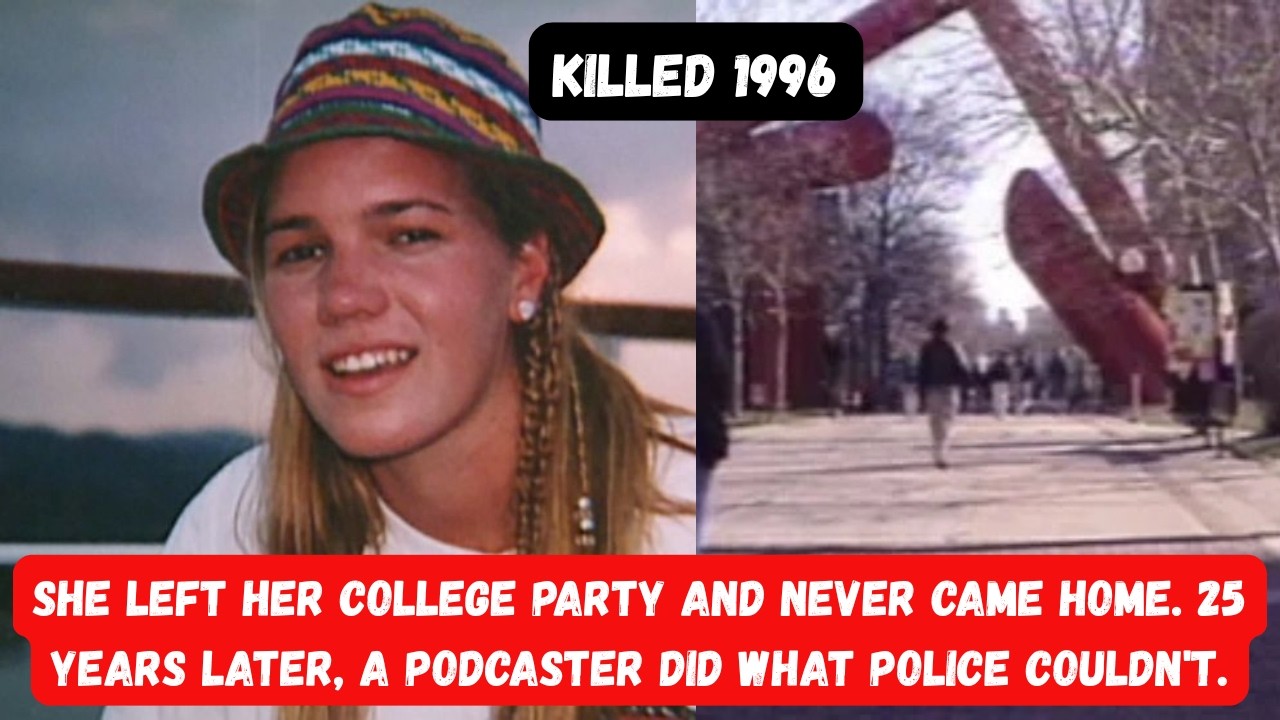
He told those around him that he would make sure she got back to her dormitory. The walk was short, only a few minutes through the quiet campus. Kristen Smart never arrived. Paul Flores returned to his dorm alone that night.
When questioned, he claimed he had walked Kristen to the lawn outside her dormitory, that she had been fine, and that he had left her there. Over the next twenty-five years, he would repeat that same story with remarkable consistency. But his account was riddled with inconsistencies, and there was another detail investigators could not ignore: Flores had a fresh bruise under his eye. When asked about it, he gave different explanations to different people, saying it was a sports injury or a fall, nothing serious.
Those who heard his stories remembered them for years. Kristen Smart was not reported missing for three days. Her roommate initially saw nothing alarming. College students do spontaneous things; perhaps Kristen had gone home for the weekend.
But when she failed to show up for her Monday final exam, alarm bells should have sounded. Kristen had never missed a final. She was the kind of student who showed up, who threw herself into campus life, who made friends easily and lit up any room she entered. On May 28, three days after she was last seen alive, officials finally filed a missing person report.
During those seventy-two hours, whatever physical evidence might have existed on that warm California night had time to disappear. It did. Kristen was an architecture student, the daughter of Stan and Denise Smart, and had grown up in a military family that moved frequently before settling in Stockton, California. She was five foot nine, athletic, and confident, the kind of presence people noticed.
Her friends called her fearless, not reckless, but bold. She was in her first year at Cal Poly San Luis Obispo, living out a future she had designed for herself and barely been given the chance to begin. At the time of her disappearance, she had not even completed a full academic year. The investigation that followed compounded the tragedy.
The three-day delay in filing the missing person report, the initial handling by campus police rather than the county sheriff’s office, and the awkward transfer of responsibility between agencies wasted critical early hours. When investigators finally searched Paul Flores’s dorm room, they found it had been cleaned. Not just tidied, but scrubbed, the kind of deep cleaning done by someone who wants to erase traces. What happened in that room, what forensic evidence might have existed, was gone before authorities ever saw it.
Cadaver dogs were brought in. Ground-penetrating radar was used. Search teams dug at locations near campus. Nothing was found.
Stan Smart, Kristen’s father, spent the next decades conducting his own parallel investigation, following tips, making calls, consulting psychics when legitimate leads ran dry. The family never stopped pressing, never let the world forget the name Kristen Smart. Yet the case grew cold. Paul Flores left Cal Poly, moved to the Los Angeles area, and lived openly.
Law enforcement consistently identified him as a suspect. They knew he was the last person seen with Kristen. They knew about the bruise, the inconsistencies, the shifting explanations. But without a body, without physical evidence, without a confession, they could not build a case that met the burden of proof.
Flores continued his life, had relationships, moved freely through the world. To anyone who did not know his name, he was just another ordinary man. But in San Luis Obispo and Stockton, in the communities that remembered Kristen Smart, his name carried an unshakable weight of suspicion. In 2011, investigators conducted another extensive search near the Cal Poly campus using ground-penetrating radar and cadaver dogs.
The Smart family waited with the particular painful hope of people who have been disappointed so many times that hope itself becomes complicated. The search yielded nothing definitive. Silence returned. Online forums and true crime communities kept the story alive.
People theorized, constructed timelines, analyzed known facts, and always pointed to the same name: Paul Flores. But online discussion, however passionate, is not evidence. It cannot compel a trial or produce a body. Twenty-three years passed between the night Kristen Smart vanished and September 30, 2019, when a man named Chris Lambert released the first episode of a podcast called Your Own Backyard from a small apartment in Arcata, California.
Lambert was not a detective or a journalist. He was a musician who had grown up in the region and knew the story the way everyone in the area knew it, as background noise, a local legend with no ending. But something about it refused to let him go. Lambert spent a year and a half collecting everything available before recording a single episode.
He gathered newspaper clippings, reports, every piece of writing about the case. He built a chronological binder that turned a fragmented story into a complete archive. Then he began making phone calls. Lambert did not theorize.
He contacted witnesses, people who had attended that party at Crandall Way, people who had lived in the dorms, people who had known Paul Flores or Kristen or both. Some had never spoken to law enforcement. Some had told investigators things that were not taken seriously. Some carried memories that had never surfaced, waiting unknowingly for someone to ask the right questions.
Lambert interviewed more than two hundred people. He approached the Smart family with preparation, a binder of organized research, not promises. Slowly, cautiously, they opened the door. Your Own Backyard went viral almost immediately, reaching number three on the iTunes chart with no marketing budget, no network, no advertising.
The story spread by word of mouth. It reached people in their cars, on their morning runs, in their kitchens. People who had held information for two decades suddenly heard the story told with care, names and dates arranged in sequence, and felt, for the first time, that someone was genuinely listening. New witnesses came forward.
New details emerged. On April 13, 2021, twenty-five years after Kristen Smart walked away from that party and never returned home, Paul Flores was taken into custody at his home in the Los Angeles area and charged with first-degree murder. The same day, his father, Ruben Flores, was arrested on charges of being an accessory after the fact. The sheriff of San Luis Obispo County credited Chris Lambert directly.
The podcast had given the case a national audience, generated new information, and brought forward witnesses and leads that investigators had never had. A man with a microphone and a dining room table accomplishes what badges and authority and decades of official investigation had not. Ruben Flores’s trial was heard by a judge without a jury, and in May 2022 he was acquitted, the evidence falling short of the required standard. Paul Flores’s trial began in Salinas, California, moved due to extensive publicity.
The case proceeded without a body, without DNA, without forensic certainty. Prosecutors built their case from twenty-five years of accumulated evidence, witness testimony, cadaver dog alerts, cell phone data, and the testimony of behavior. A picture assembled patiently from dozens of small pieces. On October 3, 2022, the jury returned.
Paul Flores was found guilty of first-degree murder. He was sentenced to twenty-five years to life in state prison, eligible for parole after twenty-five years. The man who had walked free for a quarter century will now spend at least twenty-five years behind bars. Kristen Smart’s remains were never recovered.
Her family knows what happened to her. The jury determined what happened to her. Paul Flores was convicted for it.
But she was never brought home.
