The night of November 12, 1952, was drab and damp in Belfast, Northern Ireland. Patricia Curran, a nineteen-year-old first-year social sciences student at Queen’s University, had played squash that afternoon at the university drill hall and left on the five o’clock bus for her home in the village of Whiteabbey, five miles away. When she did not arrive, her family grew anxious. Her brother Desmond returned to the house at nine that evening, walked up the long drive, and noticed nothing unusual.
He went to bed around eleven. At half past one in the morning, his mother woke him in distress: Patricia was still not home. Mrs. Curran and Desmond drove to a neighbor’s house to make inquiries, found nothing, and called the police.
A constable, Edward Rutherford, arrived and found the father and brother searching the grounds with a torch, moving in a zigzag through the shrubbery. Suddenly Desmond called out. He had found a body. It was Patricia.
She lay on her back, her head turned to the left, her right arm flexed, legs together. As Desmond tried to raise her, she seemed to make a noise as if to breathe. Hopeful that she might still be alive, the family lifted her into a friend’s car and drove her to a local doctor. It was hopeless.
Dr. Kenneth Wilson, who examined her at 2:20 a. m. , found her body cold and limbs stiff with rigor mortis.
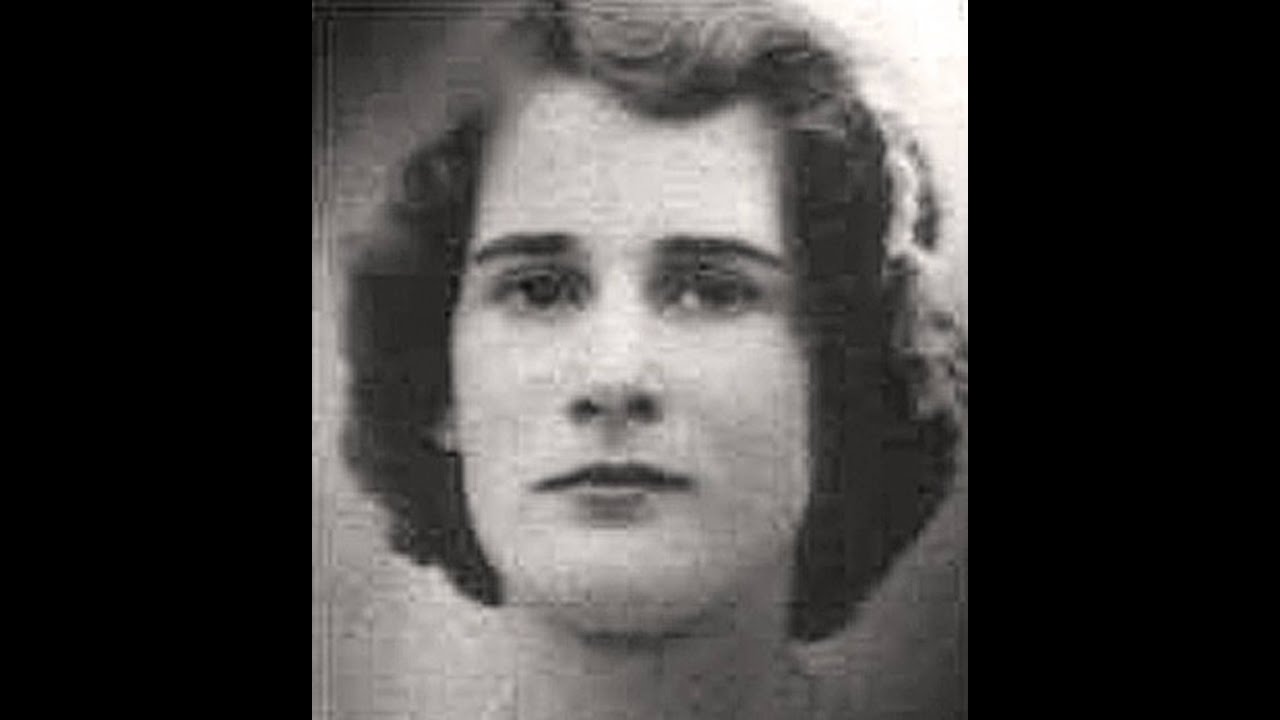
He estimated she had been dead between four and eight hours. Patricia Curran had been born in Belfast on April 3, 1933, the daughter of Lancelot Curran, a high court judge, former MP for Carrick, and privy counsellor for Northern Ireland, and his wife Doris. Both of her elder brothers, Michael and Desmond, were barristers. She was intelligent, attractive, sporty, and outgoing, known in the community through her family’s standing.
She had a casual boyfriend, John Steel, a university student who had seen her off on that final bus ride. Her family were strict Presbyterians, conservative and well connected. She had been living at Glen House, the family home in Whiteabbey, since January 1947. Inspector Alfred Kennedy of the local constabulary took charge.
Some ten yards from where the body lay, police found Patricia’s books and a portfolio for drawings placed on the ground. Though it was initially thought she had been killed by a shotgun because her wounds were multiple and widespread, the postmortem revealed she had received thirty-seven stab wounds from a narrow-bladed implement. Major organs were damaged by blows delivered with considerable violence. A rib was cracked.
She had died of internal hemorrhage and blood loss. Any one of eight of the wounds would have proved fatal. She had not been sexually assaulted — she was still a virgin — but her underwear had been interfered with. It appeared she had resisted her attacker.
Police reconstructed Patricia’s movements. Passengers on the bus remembered her sitting alone. She had alighted at the stop outside the post office at about 5:20 or 5:25 p. m.
, a quarter of a mile from where her body was found and half a mile from her home. It seemed she had been attacked on her way up the long, dark, tree-lined drive to Glen House. This was peculiar, because Patricia never walked up that drive alone at night. It was a forbidding, six-hundred-yard avenue where the trees met overhead and cut out the light.
She would always phone home and have someone drive down to collect her. If no one was home, she would ask someone in the village for a lift. That evening she had done neither. A forty-foot drag mark, traces of blood, and three buttons torn from Patricia’s coat were found near the body.
It appeared she had been attacked, then dragged to where she was found. Her books and portfolio had been placed on the ground, not dropped or thrown; items within the portfolio had not been dislodged, and later experiments showed they would have been if the portfolio had been thrown. The Inspector General of Police, Sir Richard Pim, took a personal interest in the case. On November 16 he told the press he was “particularly anxious to find out if anyone saw her go into the gate of her home about 150 yards from the bus stop.
I am not absolutely convinced that the murder occurred where the body was found. ” The following day, he decided to seek the assistance of Scotland Yard. Detective Superintendent John Capstick and Sergeant Dennis Hawkins were ordered to Belfast immediately. The nearby RAF Edendork station, just half a mile from the bus stop, housed many servicemen.
Inquiries were initiated into the movements of all personnel on the evening of the murder. A conference with the Northern Ireland pathologist established that the knife used had been narrow and long, probably something like a stiletto. Police issued a notice for a man seen in Patricia’s company, about six feet tall, around thirty years old, with a scar on his face. A disheveled man who appeared to be a rough sleeper was also sought.
November passed. Five thousand statements were taken; eleven thousand interviews conducted. A confession from a man in Manchester caused a flurry of excitement, but it was a false alarm. The police said publicly that the net was closing, but by mid-December it had caught nothing.
In the New Year, a reward of £1,000 — about £36,000 in 2024 terms — was offered for information leading to the arrest of the killer. There were no takers. Then, in early January, Superintendent Capstick, reviewing statements from the RAF Edendork servicemen, had his attention drawn to a twenty-year-old leading aircraftman named Ian Hay Gordon. Gordon was from Dollar, Clackmannanshire in Scotland, though he had been born in Burma, where his father worked as an engineer for an oil company.
At the outbreak of war with Japan he had spent time in a refugee camp and made a fraught journey by boat to Britain under constant threat from U-boat attacks. In 1949 he commenced his national service in the RAF and was posted to Edendork, where he worked as a clerk. He was hardworking and eager to please, but also given to sudden bursts of anger; he had once punched his fist through a glass window. Gordon had been among the many servicemen interviewed, and four days after the murder he had written out a statement saying he knew the Curran family, particularly Desmond, and that Patricia had struck him as a lively, intelligent girl.
He and Desmond had met at the Whiteabbey Presbyterian Chapel in 1951, shared a pew, and Gordon had dined at the Curran home several times. Patricia had made dinner for him and engaged him in conversation by the fireplace. According to Desmond, Gordon had telephoned him on December 23 and was anxious to meet. Over coffee at a Belfast cafe, Gordon offered his sympathies, said he had been in his billet at six o’clock on the evening of the murder — seemingly offering an alibi — and asked whether Patricia had mentioned him or kept a diary.
He suggested Patricia had been killed because she had found out something. He said he could not understand why the killer had continued to inflict a further twenty blows even though Patricia had been killed with the fourth. Desmond asked how he knew the fourth blow had killed her. Gordon said it was in the newspaper.
It was not. Gordon was an obvious suspect. He was odd, awkward, a loner who did not fit in. Asked to account for his movements on November 12, he said he had taken mail to Whiteabbey post office between 4:15 and 4:30, returned to camp about five, had tea until 5:15, changed into civilian clothes at 5:30, remained in his billet until six, then went to practice typing in the camp registry before bed at 9:30.
Inquiries revealed Gordon had tried to persuade some in his billet to provide him with an alibi. They had debated it, but decided the matter was too serious to lie about. Corporal Connor said Gordon had asked him to say they had tea together on the 12th; Connor had refused. Evidence soon gathered.
A woman had seen Gordon coming down the drive from Edendork camp at 5:10 p. m. , a time that would have placed him near the bus stop when Patricia alighted. Another woman had seen him coming out of the Glen House avenue just after six, soon after the murder would have occurred.
Capstick interviewed Gordon on January 14, telling him he was not satisfied about his whereabouts on the evening of the murder, and demanded the truth. Gordon insisted he had told it. He was released and asked to return the following morning. At that second interview, Capstick suggested his account was untruthful and read him his earlier statement.
Gordon asked if he might think about it. Capstick agreed. Gordon returned and said: “My Lord and my mother know that I can speak the truth, and I am now going to do so. I am very sorry I have told you lies about the murder.
”
He then made a detailed confession. He had left camp shortly after four to deliver mail to the Whiteabbey post office, collected the camp newspaper, placed a bet at a bookmaker’s, and had tea at about five. He changed into his civilian clothes and walked back to Whiteabbey alone. He met Patricia between the Glen and the post office.
She said hello, and asked him to escort her home up the drive, because it was dark and no one from the family was at the gate to collect her. They walked up together. He held her hand or arm; she did not object. In the dark, where the street lamp’s light did not reach, he asked if he could kiss her.
She laid her things on the grass. She was not keen, but consented. He kissed her once or twice, then let his hands slip down her body between her coat and her clothes. She struggled and said, “Don’t, don’t, you beast.
Let me go or I will tell my father. ” He lost control. She fell, appeared to faint. He dragged her into the shrubbery.
He believed he stabbed her once or twice with a knife he carried in his trouser pocket. He may have pushed her scarf against her mouth to stop her shouting. He was disturbed by a noise or a light, crossed the road, and threw the knife into the sea. He returned to camp at about 6:30, scrubbed blood from his flannels with soap and water, and went to the registry to type.
He did not mention to the RAF police that he had been with Patricia. He had asked several people to provide him with an alibi; they had refused. When the statement was finished and read back to him, Gordon said he would like to think about it before signing. He returned a quarter of an hour later and agreed to sign, adding the words: “I am very sorry for having killed Patricia Curran.
” He signed, initialed the alterations, and was arrested and charged with murder. The trial of Ian Hay Gordon opened on March 2, 1953, before Lord Chief Justice McDermot. An eleven-year-old newspaper boy testified he had delivered a paper to Glen House at 5:45 p. m.
on November 12 and heard a noise in the bushes as he came down the drive; frightened, he ran away. The wife of a wing commander from Edendork said she had seen Gordon coming down the camp drive at 5:10. Another woman, Mrs. Hetty Little, had seen a man leaving the Glen House avenue at around 6:05 or 6:10; she later identified Gordon in a lineup.
A policeman who escorted him at the magistrates’ court said that when a knife found on the foreshore was produced, Gordon said, “That is not it, they haven’t found it yet. ” Traces of blood were found in both pockets of Gordon’s sports jacket and flannels, which had been cleaned. The central plank of the prosecution case was the confession. The defense argued that all tests of fairness had been infringed.
Gordon was not yet twenty-one, and in 1952 that made him a minor; an RAF officer or parent should have been present during questioning. There had been references to homosexual acts, coupled with discussions of his family, which led to the supposition that this information would be conveyed to his parents. The confession, the defense said, could not be considered voluntary. They called witnesses to testify to Gordon’s social incompetence; he would burst into tears if reprimanded.
Doctors spoke of hypoglycemia that could lead to blackouts and sudden outbursts of temper. Another doctor gave the opinion that Gordon had a split personality. The defense asked the jury to disbelieve the confession, but also argued that if it were true, Gordon had acted as an automaton with no control over his actions. The Lord Chief Justice left the question of the confession’s value to the jury, noting they might take into consideration Gordon’s failure to enter the witness box to give his own account.
He said the jury needed to decide whether the blackouts played any part, and whether Gordon was insane within the meaning of the M’Naghten Rules: the defense must prove he did not understand that what he did was wrong. But he suggested there seemed to be some evidence that his mind was affected at the time of the murder. The jury was absent for two hours and returned its verdict at eleven o’clock on the evening of March 7. Ian Gordon was guilty of murder but insane.
The Lord Chief Justice ordered him detained at Her Majesty’s pleasure at a secure mental institution. The verdict was generally well received, and there was relief that it had not been an unqualified guilty verdict, which would have carried a mandatory death sentence. Yet there were, as the defense had argued, many grounds on which fairness had been infringed. Gordon was under twenty-one and should have had a parent or commanding officer present during interviews.
Detectives claimed such an offer had been extended and declined. It was unsatisfactory: as a legal minor, he was not in a position to make that determination. During the interviews culminating in his confession, he had been passed from one officer to another, inviting suspicion that he was being coerced. He was plainly troubled and uncertain whether to confess, and at critical moments he was exposed to the advice of officers whom he was persuaded were acting in his interests.
That could not have happened in the presence of a parent or commanding officer. The structure of the confession itself also suggested it had been constructed from answers to questions, steered toward a desired conclusion. Gordon spent the next seven and a half years in Holywell Hospital. He was released at twenty-eight, still a young man, and returned to Glasgow, where he worked for a publisher and changed his name from Ian to John.
He lived unobtrusively until the 1990s, when he retired and decided to seek to overturn the guilty verdict. A journalist, John Linklater, and others took up the case. It was believed the confession should never have been admitted, and that without it the case was weak. It was also believed Gordon had been led to confess out of fear that a homosexual act would become known to his mother if he did not sign.
The matter came before the Criminal Cases Review Commission and was referred to the Northern Ireland Court of Appeal in 2000. The crown admitted the confession could not be relied upon. Lord Chief Justice Sir Robert Carswell said the judges concluded that the jury’s verdict could not stand. “There can be no question of ordering a retrial after this length of time,” he said, “and we therefore allow the appeal and quash the finding of guilt.
” Ian Hay Gordon, now sixty-eight, said: “At long last my name has been cleared. ”
He died on September 14, 2012, at the age of eighty, sixty years after the death of Patricia Curran.
