On September 2, 1883, at Luxembourg Palace near Vienna, Archduchess Elizabeth Marie of Austria was born into a position of extraordinary weight. Known within the family as Erzsi, she was the only legitimate grandchild of Emperor Franz Joseph, the sole child of Crown Prince Rudolf of Austria-Hungary and Princess Stephanie of Belgium. In a dynasty that had ruled for centuries, she represented continuity and hope for the imperial line, yet she was also a living reminder of her parents’ failure to produce a male heir. Her childhood unfolded within a household marked by profound unhappiness.
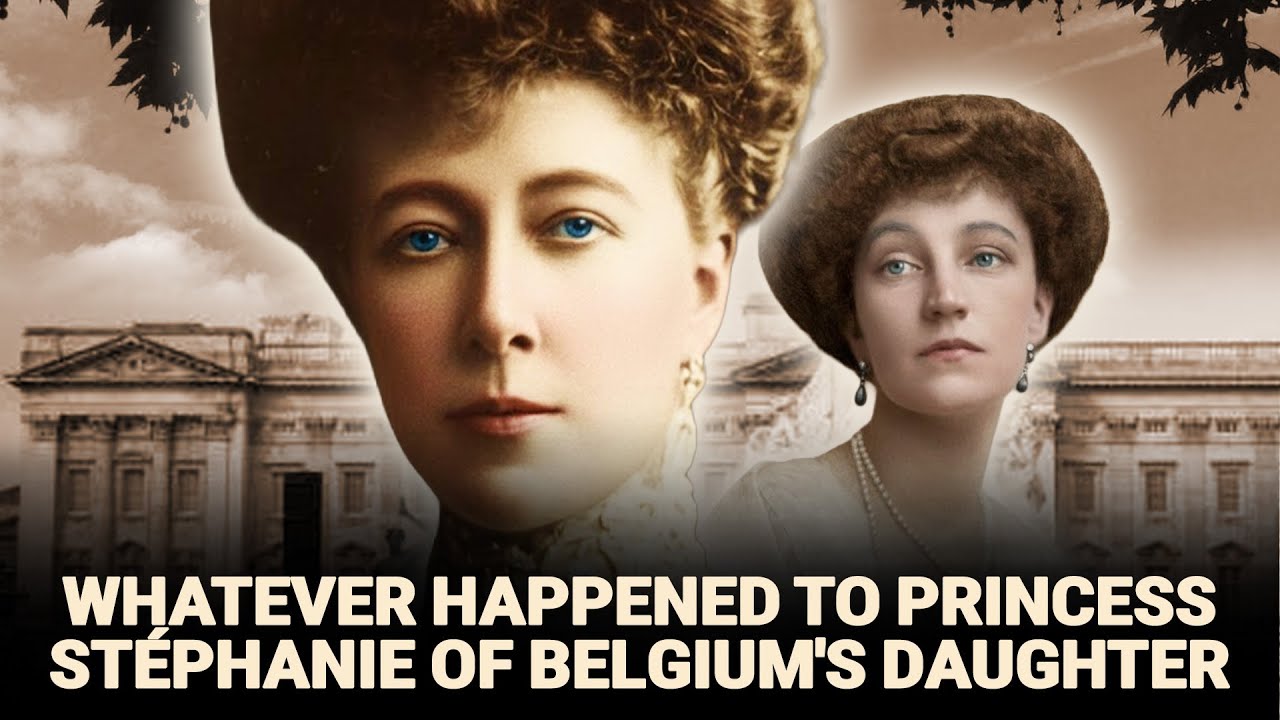
Her parents’ marriage had soured almost from the start, their incompatibility an open secret in imperial circles. Crown Prince Rudolf, brilliant but troubled, found little comfort in marriage. Princess Stephanie, earnest and beautiful, struggled to bridge the emotional distance between them. Young Erzsi witnessed this dysfunction firsthand, raised in an atmosphere of formality punctuated by parental discord, groomed for a role in the elaborate hierarchy of European royalty.
On January 30, 1889, when Erzsi was just five years old, her world shattered. Her father was found dead at his hunting lodge in Mayerling alongside his young mistress, Baroness Mary Vetsera. The scandal rocked Europe and forever altered the course of Habsburg history. Her grandfather, Emperor Franz Joseph, assumed direct guardianship over her, drawing her even more firmly into the rigid structure of court life.
Her relationship with her mother became strained by grief, court politics, and Stephanie’s eventual remarriage to Count Elmar Lonyay in 1900. Erzsi grew up forever known as Rudolf’s orphaned daughter, the living reminder of the tragedy that had robbed the empire of its heir. Educated by tutors and fluent in German, Hungarian, French, and English, she was raised with a thorough Catholic upbringing that emphasized duty and piety. As the only legitimate grandchild of the emperor, her behavior was scrutinized constantly.
In 1902, at the age of nineteen, she married Prince Otto zu Windisch-Graetz, a member of the high Bohemian nobility. The match was considered controversial, as Otto did not belong to a reigning dynasty, but for Erzsi the marriage represented escape from the suffocating atmosphere of the Viennese court. Between 1904 and 1909, the couple had four children who would carry forward Princess Stephanie’s line into the twentieth century. Their first child, Prince Franz Joseph zu Windisch-Graetz, was born in 1904, named for his great-grandfather.
The following year brought Prince Ernst. In 1907, Prince Rudolf arrived, named for the grandfather he would never know. Finally, in 1909, Princess Stephanie was born, named for her grandmother. These four children carried Habsburg blood through Erzsi, Belgian royal blood through Princess Stephanie, and the heritage of the old Bohemian nobility through their father.
But the marriage itself was not destined to last, strained by personality differences and Erzsi’s growing desire for independence. By the 1920s, Erzsi’s life had taken an extraordinary turn. She had separated from Otto, and more shocking still, she entered into a relationship with Leopold Petznek, a Social Democratic politician and commoner, earning herself the nickname the Red Archduchess. In 1924, following a contentious encounter in Prague involving a shooting incident, her estrangement from the aristocratic world became complete.
She openly sided with socialist causes, advocated for workers’ rights, and rejected many of the privileges of her birth, horrifying her former peers. In the aftermath of World War II, she finally married Petznek, formalizing a partnership that had endured for decades. She spent her final years in Vienna, a city transformed beyond recognition. Archduchess Elizabeth Marie died on March 6, 1963, at the age of seventy-nine.
She was buried not in the Imperial crypt with her Habsburg ancestors, but in a simple grave that reflected the choices she had made in life. Her eldest son, Prince Franz Joseph, was born in Prague in 1904 and raised to understand his position as heir to the Windisch-Graetz name and estates. His early childhood was spent in a world of privilege and tradition, educated by tutors and trained in the expectations of his class. But his parents’ deteriorating marriage marked his youth, and by the time he was a teenager, they were living essentially separate lives.
Everything changed in 1918. Franz Joseph was fourteen when the Habsburg Empire collapsed after World War I. The new Czechoslovak Republic had no use for aristocratic titles, and land reforms stripped away much of the family’s wealth. The inexhaustible fortune of his childhood evaporated.
In the 1930s, he married Countess Gizela Daros-Isenbühl, and the marriage produced several children, including a daughter, Princess Stephanie zu Windisch-Graetz, born in 1939. This younger Stephanie grew up to become an important keeper of family memory, preserving the stories of her grandmother Erzsi and great-grandmother Princess Stephanie of Belgium. She survived until 2019, becoming one of the last living links to the world of the Habsburgs. Most remarkably, Franz Joseph eventually relocated to Africa, settling in Kenya.
The reasons for this dramatic move are not entirely clear from historical records, but it represented a pattern common among displaced European nobility in the mid-twentieth century, some seeking new opportunities, others escaping a Europe that held too many painful memories. Prince Franz Joseph zu Windisch-Graetz died in Nairobi in 1981 at the age of seventy-six, buried far from the estates of Bohemia and the imperial splendor of Vienna. His life traced an arc from imperial privilege to African exile, from a world of crowns and titles to one of adaptation and reinvention. Prince Ernst zu Windisch-Graetz was born on May 17, 1905 in Prague, the second son.
As a younger son, he was afforded slightly more freedom than his older brother, but he still received the education appropriate to his station. He was a teenager during World War I, watching the certainties of his childhood crumble. The skills of a Bohemian nobleman had no application in the new Czechoslovak Republic, and the family’s reduced circumstances meant he could not rely on inherited wealth. His first marriage to Ellen Skinner produced children but proved unsustainable, with the reasons for the separation and eventual annulment not fully documented.
Such outcomes were not uncommon among displaced aristocracies struggling to adapt. In 1947, in the aftermath of World War II, he married Baroness Eva von Isbary, a member of the Austrian nobility, and this second marriage appears to have been more stable. Ernst had to navigate between respect for his increasingly radical mother and the expectations of his own aristocratic identity. He died on October 11, 1952 in Vienna at only forty-seven years old, his life cut short by causes not clearly documented.
He was buried near his mother, not in the imperial grandeur of the Habsburg crypt, but in ground reflecting the reduced circumstances of the post-imperial aristocracy. Prince Rudolf zu Windisch-Graetz was born on January 13, 1907, named after his tragic grandfather. The choice of name connected him to the most famous and tragic figure in the family’s history, a constant reminder of the scandal that still haunted the family decades later. As the third son, he was removed from the responsibilities placed on his older brother, but the name ensured he would never be entirely free of his family’s complex past.
He came of age during the interwar period, and the traditional paths that might have been open to him, military service in the Imperial Army, a position at court, had all vanished with the monarchy’s fall. Information about his early adult life is limited in historical records. He appears to have lived quietly, without the prominence that would have preserved details of his daily life. Prince Rudolf zu Windisch-Graetz died young, though the exact date remains subject to conflicting sources, with some records placing his death around 1930 and others suggesting 1939.
What is certain is that he died unmarried and without children. His branch of the family ended with him. Princess Stephanie zu Windisch-Graetz was born on May 15, 1909, the fourth and final child, named for her grandmother. She was the only granddaughter of Princess Stephanie of Belgium and would grow up to become the longest-lived of all her grandchildren.
She was only nine when the Habsburg Empire collapsed, and her childhood memories were more defined by change than by continuity. Her parents’ formal separation in the early 1920s meant her upbringing was divided between different worlds, spending time with her mother in Austria and maintaining connections to Belgium through her grandmother. In 1933, at the age of twenty-four, she married Count Pierre Delcanta de Kervyn, connecting her to Belgian nobility. The marriage was built on more solid foundations than her mother’s disastrous union, and the couple had one son.
The marriage ended through death or separation, and in 1945, as World War II was ending, she married Carl Axel Björklund, connecting her to Scandinavian lineage. This second marriage produced another son. Stephanie spent her later years in Uccle, a prosperous Brussels suburb, engaging in social work and charitable activities. Unlike her mother, her approach was conventional, working within existing structures rather than challenging them.
She lived with relative quietness, with no scandals and no headlines. As the decades passed, she became a living connection to the nineteenth century. She had known her grandmother personally, remembered the fall of the empire as a child, and lived through both world wars, the Cold War, and the fall of the Berlin Wall. Princess Stephanie zu Windisch-Graetz died on May 16, 2005 in Uccle.
She was the last surviving grandchild of Princess Stephanie of Belgium, having outlived all her siblings by decades. Princess Stephanie of Belgium began with one child, Archduchess Elizabeth Marie. Through Erzsi came four grandchildren, and from those four, the line spread into Belgium, Austria, Scandinavia, and even to Africa. The descendants of Princess Stephanie transitioned from imperial privilege to the ordinary realities of the twentieth century, from palaces to middle-class existence, from titles that commanded automatic respect to names that marked them as relics of a discredited past.
Some adapted successfully, building new lives and finding new purposes. Others struggled with the loss of everything their family had represented. The story of Princess Stephanie’s children reflects the broader collapse of the old European order. The certainties of the nineteenth century, that empires would endure, that aristocracy had divine sanction, that the social order was eternal, all proved illusory.
Yet through it all, the bloodline continued. The descendants of Princess Stephanie are alive today, living across Europe and beyond, ordinary citizens of the twenty-first century carrying within them the genetic heritage of Belgian kings, Habsburg emperors, and Bohemian nobility.
