Thomas Jessup was seventeen years old when his father summoned him to the study after dinner on a humid evening in May 1848. Ruth was there, seated in a corner chair, and Thomas took his place across from Isaiah’s desk. His father explained that Thomas was now a man, and the time had come for him to fulfill his duty to the family. A young woman named Hannah, twenty years old, worked in the kitchen.
She had been selected. She would be brought to his room that night. Thomas did not refuse. He had been prepared for this moment his entire life.
It was expected. It was his duty. The scene was the culmination of a plan the Jessup family had been building for years. Hidden within the Wilkinson County Courthouse in Mississippi were records that spoke of a plantation running a system so appalling that local officials later attempted to scrub its existence from public documents after the Civil War.
From 1835 to 1858, a span of twenty-three years, the Jessup family plantation operated what neighboring landowners privately referred to as the breeding operation: a systematic initiative in which the plantation owner, his wife, and all five of their children took part in the forced reproduction of enslaved people to maximize profit and secure wealth for generations. What rendered the case especially chilling was not merely the events that transpired, but the methodical planning behind them, the willing involvement of every family member, and the conscious decision of the surrounding community to turn a blind eye. Discovered in a locked trunk in 1962, the Jessup Ledgers documented every detail with the cold, precise approach of livestock records. In this case, the entries were human beings.
Wilkinson County, Mississippi, was cotton country in 1835, a place where fortunes were built and lost with every harvest. Situated on two hundred acres of fertile delta soil roughly eight miles northeast of Woodville, the county seat, was the Jessup plantation. Isaiah Jessup had acquired the land in 1829 using an inheritance from his father, a Virginia tobacco merchant who had amassed significant wealth by supplying Confederate forces. At the time of the purchase, Isaiah was thirty-one, newly married to Ruth Caendish, the twenty-three-year-old daughter of a South Carolina plantation owner.
Educated in Charleston, Ruth came from a family that had run a large rice plantation for three generations. The Jessup plantation’s main crop was cotton, though it also sustained vegetable gardens, a small orchard, and livestock. By 1835, Isaiah owned forty-two enslaved individuals, a modest figure compared to the largest estates in the region, but enough to establish him as a man of substance. The plantation house was a two-story Greek Revival structure with white columns, a style favored by wealthy southerners of the period.
It featured six bedrooms upstairs, a large dining room, a private study for Isaiah, and a parlor where Ruth hosted the wives of other plantation owners. Isaiah and Ruth had married in 1830. Their first child, Thomas, was born in 1831, followed by Samuel in 1833, Margaret in 1835, Daniel in 1837, and finally Elizabeth in 1839—five children in eight years. Ruth managed the household with the assistance of enslaved domestic workers, while Isaiah oversaw the fields, traveled to Natchez for business, and maintained relationships with cotton brokers and fellow plantation owners.
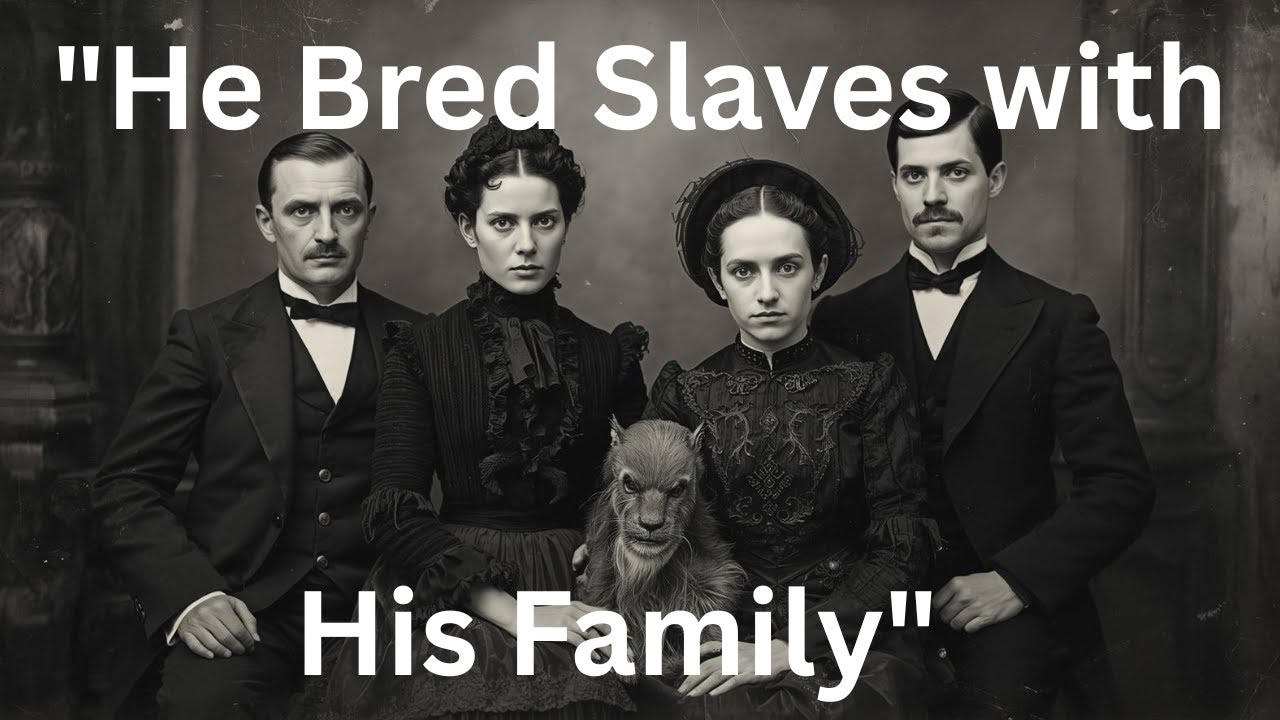
To any outside observer, the Jessups were the image of a typical wealthy antebellum South plantation family. They attended the Woodville Presbyterian congregation every Sunday. Isaiah held a position on the county agricultural board. Ruth was active in ladies’ charitable societies.
Their children were educated by a private tutor, a man named Charles Whitfield from Kentucky, who lived in a cottage on the property and instructed them in reading, writing, arithmetic, and scripture. Behind the closed doors of the plantation house, however, Isaiah and Ruth were having discussions that would have stunned even their slaveholding neighbors. Isaiah had grown fixated on a problem common among plantation owners: the continual need to purchase new enslaved workers. Throughout the 1830s, prices had climbed steadily.
A healthy adult male field hand could cost between $800 and $1,200, a substantial investment. If an enslaved person grew too old to work or perished from disease or injury, that investment was a total loss. Isaiah passed hours in his study, pouring over his account books, calculating expenses, and projecting future costs. Ruth, having watched her father manage a large plantation, understood the economics of slavery as well as any man.
Her father had always asserted that the most profitable plantations were those that could cultivate their own workforce, meaning they encouraged reproduction among the enslaved to create new workers without the financial outlay of purchasing them. This was a common practice across the South, but the Caendish plantation had taken it a step further. Ruth’s father had systematically paired enslaved people he deemed strong and healthy, at times breaking families apart to create what he believed were optimal breeding pairs. Ruth brought these ideas into her marriage, but Isaiah intended to go further.
During the winter of 1834, while Ruth was pregnant with Margaret, Isaiah proposed to his wife an idea that would dictate the next two decades of their lives and the lives of everyone on their plantation. He suggested that instead of just encouraging reproduction among the enslaved, they should take a direct personal role in it. His reasoning, as he explained to Ruth, was purely economic. The children born from such unions would be enslaved by law, following the condition of the mother, but they would carry Jessup blood, which Isaiah was convinced would make them stronger, healthier, and thus more valuable.
These children could either be kept to work the plantation or sold at premium prices. In his words, it was “investing in our future prosperity. ”
Ruth did not immediately dismiss the idea. She reflected on it for weeks.
She prayed over it, as she later told her children. She reviewed the account books. She recalled her father’s methods. In the end, she agreed.
She added one stipulation: their children would be raised with the understanding that this was their duty, their contribution to the family’s prosperity. When the time was right, every one of them would participate. The family would function as a single unit, maximizing production and securing the plantation’s success for generations to come. This was not a decision rooted in sadism or perversion, though the outcomes would be horrific.
It was a calculated, methodical economic strategy disguised as family duty. Once Ruth gave her consent, they began to prepare their children for what would be required of them. Thomas Jessup was just three years old when his parents started his indoctrination. He could not have grasped the full implications of the lessons, but they began early.
At the dinner table, Isaiah and Ruth spoke openly of the enslaved people on the plantation as property, as investments, as breeding stock. They employed the same terminology they used when discussing horses or cattle. Thomas heard this language from his earliest memories, and it became his normal. By the time Thomas was eight, in 1839, he comprehended what would be expected of him when he came of age.
His father laid it out for him during one of their walks around the plantation: Thomas would help grow the workforce. It was a son’s duty to contribute to the family’s prosperity. Isaiah presented it as a responsibility, a sign of maturity, the marker of a man prepared to take his place in managing the family enterprise. Samuel received the same education.
So did Daniel. The girls, Margaret and Elizabeth, were taught differently, yet with the same ultimate objective. Ruth explained to them that bearing children was a woman’s purpose, and that bearing children who would augment the family’s wealth was the highest purpose of all. She taught them that enslaved women were beneath them in every way and that using them for the family’s benefit was no different from using them to cook meals or wash clothes.
They were tools. They were resources. The children grew up in isolation. They had few friends outside the family.
Their tutor, Charles Whitfield, taught them reading and mathematics, but their truly formative education came from their parents. By 1845, Thomas was fourteen, Samuel twelve, Margaret ten, Daniel eight, and Elizabeth six. The household ran on a rigid schedule: meals at the same time, daily church on Sundays, work throughout the week. Isaiah increasingly included Thomas in the management of the plantation, teaching him to inspect the fields, to assess the health and productivity of the enslaved workers, to constantly think in terms of profit and loss.
The Jessup children never questioned what they were taught because they knew no other reality. They had no external perspective, no dissenting voice. Their tutor never challenged Isaiah’s authority. The Presbyterian minister who visited saw only a prosperous, orderly household.
Other plantation families who interacted with the Jessups noticed nothing out of the ordinary, or if they did, they remained silent. The culture of the antebellum South was one of privacy concerning what occurred on a man’s own property. What a plantation owner did with his enslaved people was his business alone. Hannah was pregnant within three months of that night in May 1848.
She gave birth to a boy in May 1849. Isaiah recorded the birth in his ledger with a sense of satisfaction. He named the child Isaac, wrote “property of Jessup Plantation” beside the entry, and estimated the child’s future value at maturity. Hannah was sent back to kitchen work just two weeks after giving birth.
The infant was placed in the care of an older enslaved woman named Claudia, who had raised many of the enslaved children on the plantation. Thomas continued with his duties. Over the following three years, he fathered four more children with three different enslaved women. Samuel began his participation in 1850 when he turned seventeen.
Daniel started in 1854. The daughters Margaret and Elizabeth were also expected to bear children. In their case, the fathers would be enslaved men chosen by Isaiah for what he viewed as desirable physical traits: strength, health, good teeth, clear eyes. Margaret turned eighteen in 1853.
Ruth spent months psychologically preparing her for what was to come. Margaret did not resist. She had been taught her whole life that this was normal, expected, even righteous. An enslaved man named Jacob, who was twenty-five and worked as the plantation blacksmith, was brought to Margaret’s room on a Saturday night in November.
Margaret became pregnant and gave birth to a daughter in August 1854. Ruth insisted that Margaret continue her participation over the next four years. Margaret had three more children. Elizabeth followed the same pattern when she turned eighteen in 1857.
Isaiah himself began participating in 1850 once Thomas had proven the system’s viability. The children he fathered were marked in the ledgers with a small marginal notation: “JD direct line. ” Isaiah believed these children would command the highest prices if sold, or would be the most productive if kept. What made the Jessup operation particularly disturbing was not just the forced reproduction, but its systematic nature.
Isaiah approached it like an agricultural science. He rotated which enslaved women were paired with his sons to prevent what he termed overuse of any single individual. He tracked menstrual cycles. He allocated better food rations to pregnant women, not out of compassion, but to ensure healthy births.
He separated mothers from their children at the age of three, believing that early separation prevented emotional bonds that could interfere with productivity. The plantation ledgers from this era are chilling in their detail. Every birth is logged with the mother’s name, the date, the child’s sex, any notable physical characteristics, and an estimated future value. By 1855, the plantation’s population had grown from forty-two to sixty-eight.
Twenty-six of those were children under the age of ten, all born as part of the breeding program. The Jessup family’s wealth increased substantially. Isaiah expanded his land holdings, purchasing an adjacent three hundred acres. He constructed a new barn, a cotton gin building, and additional slave quarters to accommodate the growing population.
He was regarded as one of the most successful planters in Wilkinson County. Life on the Jessup plantation followed a brutal rhythm. Field workers rose before dawn, labored until dark, and returned to their cabins exhausted. House servants worked slightly shorter hours but were under constant supervision.
Children born into slavery on the plantation were given light tasks by age five: carrying water, picking vegetables, running errands. By age ten, they were working in the fields or learning trades. Families grew, but true family units were not permitted to form. Isaiah’s policy of early separation meant mothers and children spent only the first three years together, and even during that time, the mothers were working.
Claudia, who looked after the youngest children, did her best to offer maternal comfort, but she was often managing a dozen infants and toddlers at once. The enslaved people lived in perpetual fear and vigilance, knowing any woman of childbearing age could be selected, that any child born would be taken from them, and that resistance meant punishment or death. Some did try to resist. A woman named Sarah attempted to run away in 1851 after being forced to bear her third child, fathered by Samuel Jessup.
She traveled seventeen miles before a slave patrol captured her. She was returned to the plantation, whipped publicly as punishment, and locked in a small storage shed for two weeks with minimal food and water. Upon her release, she never spoke again. She worked in silence for the remainder of her life, dying of pneumonia in 1863, and was buried in the unmarked section of the plantation cemetery.
The Jessup children took part in the system their parents created, but their responses were not identical. Thomas, the eldest, seemed to accept his role with little visible emotional conflict. He managed sections of the plantation, supervised fieldwork, conducted business in town, and fathered children with enslaved women as directed. He married a woman named Virginia Gentry from a neighboring plantation in 1853, but this did not alter his participation in the breeding program.
Virginia either was unaware of the full extent of the operations on the Jessup plantation or chose to ignore it. Samuel, the second son, began showing signs of distress as early as 1852. He started drinking heavily, frequently disappearing for days. Isaiah punished him for neglecting his duties, but Samuel’s drinking only worsened.
By 1855, he was still functional but clearly miserable, speaking very little and avoiding eye contact with both family and the enslaved. He never married. He continued in the breeding program until 1858, but his behavior became increasingly erratic. Margaret, after the birth of her fourth child in 1857, began experiencing what Ruth described in letters to her sister as melancholic episodes.
Margaret would lock herself in her room for days, refusing meals and speaking to no one. Ruth treated this as a temporary frailty requiring discipline, not sympathy. Margaret was not allowed to stop her participation. She had a fifth child in 1859.
Daniel and Elizabeth, the youngest, had been so thoroughly immersed in the system from such a young age that they appeared to view it as entirely normal. They participated when their time came without any visible hesitation. Yet cracks were beginning to show. The enslaved population had grown too large for the existing infrastructure.
Housing was overcrowded. Food rations, though adequate for the time, were stretched thin. More significantly, the children fathered by the Jessup family were getting old enough to understand their own parentage. By 1857, some were eight or nine years old, old enough to wonder why they looked different from other enslaved children, why their skin was lighter or their hair texture different.
The older enslaved people on the plantation quietly told them the truth in the privacy of the quarters after dark. This bred an atmosphere of resentment and tension that even Isaiah’s strict discipline could not fully suppress. The enslaved people knew which children belonged to which family member. They understood the system.
They despised it, but they were powerless to stop it, as any organized resistance would lead to brutal punishment or being sold downriver to plantations in the Deep South where conditions were even more severe. Neighboring plantation owners began to notice things. The population on the Jessup plantation had expanded at an unusual rate. The demographics were odd, with a high proportion of young children to adults.
Among the plantation wives, there were hushed conversations about Ruth Jessup’s daughters and their unexplained pregnancies before marriage. But this was the antebellum South, where social cohesion among the white planter class was preserved through silence on uncomfortable subjects. As long as the Jessups comported themselves appropriately in public, which they did, no one would confront them directly. Isaiah himself appeared immune to any moral doubts.
In his letters from this period, some of which survived in family collections, he discussed plantation management with other owners, cotton prices, political developments, and various business matters. He referenced the success of his breeding program only in economic terms, comparing his results to those achieved in livestock breeding. There is no indication of guilt, no moment of questioning, no recognition that he was committing a profound evil. He had constructed a mental framework in which enslaved people were not fully human, and within that framework, his actions were logical, even commendable.
He was being a good steward of his resources. He was building generational wealth. Ruth’s perspective, glimpsed through occasional letters to her sister in South Carolina, was similar. She fretted about her children’s health and futures, but these concerns were purely practical: whether Thomas would successfully inherit the plantation, whether Samuel’s drinking would become a serious issue, whether the daughters would marry well.
Despite her role in the breeding program, she never expressed worry for the enslaved women who were being raped, the children born into bondage, or the psychological damage inflicted on everyone involved. In her worldview, enslaved people were property, tools, and their suffering was irrelevant. The year 1858 ushered in changes that would start to unravel the system Isaiah and Ruth had so carefully constructed. In February, Charles Whitfield, the tutor who had educated the Jessup children for over two decades, died suddenly from a heart condition at fifty-seven years old.
His passing meant the family lost a man whose silent presence had enabled their operation. Whitfield had known, having lived on the plantation for years. He had witnessed the pattern and seen the growing number of mixed-race children. He never spoke a word of it to anyone beyond the property.
His complicity, maintained through silence, was as damaging as active participation. After Whitfield’s death, Isaiah decided the younger children no longer required formal tutoring. Elizabeth, now nineteen, was considered sufficiently educated. Daniel, twenty-one, was already managing significant parts of the plantation.
The family could function without an outsider residing on their land, a decision that increased their isolation further. In April, an enslaved woman named Rose, who was thirty-two and had borne five children as part of the breeding program, became gravely ill, likely with tuberculosis. She coughed up blood, ran high fevers, and wasted away rapidly. Ruth, worried about disease spreading through the enslaved population, ordered Rose isolated in a small cabin at the far edge of the quarters.
Rose died three weeks later, alone and separated from her children. She was buried hastily in an unmarked grave. Rose’s death resonated deeply within the enslaved community. She had been well-liked, a quiet source of comfort for other women forced into the breeding program, her voice often heard singing hymns across the quarters in the evening.
Her rushed, unceremonious burial was seen by all as a stark declaration of her worthlessness in the eyes of the Jessup family. A quiet anger began to simmer. That same summer, the cotton crop was devastated by boll weevil infestation, drastically reducing the yield. Isaiah’s income plummeted.
To raise cash, he needed to sell some of the enslaved children who had reached a working age. In August, he sold six children, aged eight to twelve, to a slave trader who transported them to Louisiana. Four of these children had been fathered by his own sons. He separated them from their mothers without any ceremony, loading them into a wagon early one morning and sending them away.
The mothers were not permitted to say goodbye. This single act shattered something within the enslaved community. The passive acceptance that had defined the previous decade gave way to a simmering rage. The enslaved people began to whisper among themselves about the possibility of escape, about rumors of the Underground Railroad, and about the growing political tensions between North and South over the issue of slavery.
Some of the younger men spoke of violence and rebellion, though the elders cautioned against it. The memory of the Nat Turner Rebellion and its brutal suppression in 1831 was still fresh in the collective memory of the South. Open rebellion meant certain death. Samuel Jessup’s drinking reached a crisis point in September.
He was discovered unconscious in the barn one afternoon, having consumed most of a bottle of whiskey. Isaiah had him carried to the house, berating him when he woke and threatening to disinherit him if the behavior continued. Samuel promised to reform, but it was an empty vow. His drinking continued nightly, and he began to neglect his plantation duties entirely, forcing Thomas to take over his responsibilities.
Margaret’s mental state also continued to deteriorate. In October, following the birth of her fifth child, a son, she was allowed to hold him for only three days before he was given to Claudia to raise. Margaret tried to harm herself. The specific method was never recorded, but in a letter to her sister, Ruth mentioned that Margaret had been prevented from a rash action and was under close supervision.
Confined to her room for three weeks under Ruth’s watch, Margaret emerged pale, thin, and hollow-eyed. She spoke only when spoken to directly, moving through the house like a ghost. In November, after the sale of additional enslaved people to raise cash for the winter, Margaret found her opportunity and hanged herself in her room. She was twenty-four years old.
Ruth, in the midst of her grief, refused to acknowledge any connection between Margaret’s death and the life her daughter had been forced to live. As far as Ruth was concerned, Margaret had simply been weak. She was buried in the family cemetery, and her five children remained in the care of Claudia. Isaiah did not record his daughter’s death in his ledgers, nor did he acknowledge the loss of the five enslaved children he sold to Louisiana.
As far as the historical record shows, he never acknowledged any of it. In 1859, Samuel Jessup had finally had enough. Early on a freezing morning in January, he packed a small bag, took money from his father’s desk, and left the plantation on foot. He walked to Natchez and never returned.
Isaiah never spoke of Samuel again, and struck his son’s name from his ledger with a heavy line of ink. In the face of all this, Isaiah still refused to abandon his project. He began the process of breaking in the next generation simultaneously, training his enslaved children for the auction block and planning for Elizabeth’s future children. By the end of 1859, the plantation’s enslaved population had risen to seventy-three.
That year, Elizabeth bore a son. The father was an enslaved man named Aaron who worked in the stables. Isaiah was fifty-nine years old, and even he could not ignore the coming storm. He made plans to pass the plantation to Thomas, his only remaining son, and to place the future of the family’s legacy on the shoulders of his grandchildren.
He never spoke of the possibility of failure. By 1860, the plantation’s diminished crop yield forced Isaiah to sell more enslaved individuals, including the fathers of several of the children born through the breeding program, tearing apart the remnants of these already shattered families. In the spring of 1861, the Confederate attack on Fort Sumter in South Carolina marked the beginning of the Civil War. Thomas enlisted in a Mississippi regiment within weeks.
Daniel followed suit in May. Isaiah, at sixty-three years old, was too old for military service. He remained on the plantation with Ruth, Elizabeth, the hired overseers, and the enslaved population, which now numbered seventy-three people and included dozens of children fathered by the Jessup men. With Thomas and Daniel gone, the day-to-day management of the plantation fell to Isaiah and the overseers.
The breeding program continued, but it lost its previous intensity and organization. Isaiah was aging, increasingly plagued by health problems. Ruth was barely functional, confined mostly to her room. Elizabeth managed the household, but lacked both the authority and the inclination to oversee field operations.
The war years were a period of chaos and decline. The Union blockade of southern ports made it nearly impossible to sell cotton. Confederate currency became increasingly worthless. Food supplies were diverted to feed the army.
The plantation’s infrastructure suffered. Buildings needed repairs that were never made. Fields were still planted and harvested, but the work was done with less supervision and with a resentment that was now barely concealed. The enslaved people heard whispers of Union advances, of enslaved people escaping to Union lines and finding freedom, of President Lincoln’s Emancipation Proclamation in 1863.
A new feeling began to replace despair: hope. They understood that the world was changing, that the system holding them in bondage was crumbling. They waited. The war delivered its own brutal punishments to the Jessup family.
Thomas Jessup was killed at the Battle of Shiloh in April 1862. Daniel died of dysentery in a military camp in Virginia in 1863. The deaths of both sons devastated Isaiah. The sons he had raised to inherit and continue his plantation empire were gone.
His dream of a multigenerational dynasty built upon the breeding program died with them on distant battlefields. Ruth passed away in her sleep in August 1864. The doctor listed the cause as heart failure, but it could more accurately be described as the final collapse of a woman who had lived too long with a guilt she could never fully acknowledge, yet could no longer escape. She was buried beside Margaret in the family cemetery.
By early 1865, the Jessup plantation was a hollow shell of its former self. Isaiah was sixty-seven, in failing health, and often confused. Elizabeth, now twenty-six, did what she could to manage, but the situation was beyond her control. The enslaved people worked only when forced, their attention fixed on the horizon, waiting for the Union Army everyone knew was coming.
The overseers had all left, either to join the fighting or to flee north. The plantation buildings were dilapidated, and the fields were only partially planted. In April 1865, news finally reached Wilkinson County that the Confederate army had surrendered. The war was over.
Slavery was abolished. The world the Jessups had built, defended, and seen their sons die for was gone forever. Union troops arrived in Woodville in May. An officer came to the Jessup plantation to formally inform Isaiah and Elizabeth that the enslaved people were now free.
Isaiah, weakened by a stroke and confined to a wheelchair, could barely comprehend what he was being told. Elizabeth understood but refused to accept it. She argued with the officer, insisting that the people on the plantation were her legal property and demanding compensation for her loss. The officer calmly explained that there would be no compensation, that slavery had been abolished by constitutional amendment, and that she needed to accept this new reality.
The newly freed people of the Jessup plantation gathered their meager belongings and left. Some departed immediately, walking away the very day they learned of their freedom. Others stayed for a few weeks, uncertain of where to go or how to survive in a world they had never known as free individuals. By July, only a handful remained, mostly the elderly, who had nowhere else to go.
Hannah, the first woman forced into the breeding program, left with her surviving children. She walked north, eventually settling in Memphis, Tennessee, where she found work as a washerwoman and lived until 1890. Rachel went west toward Vicksburg with her children. Julia, who had never psychologically recovered from her trauma, lingered for months, paralyzed and unable to decide to leave, until other freed people finally convinced her to accompany them to a Freedman’s Bureau camp where she might receive help.
The children fathered by the Jessup men, those who had survived to see emancipation, scattered across the country. Most took new surnames, wanting no association with the Jessup name. Some became sharecroppers, working their own small plots of land. Others moved to growing cities.
A few managed to acquire an education and became teachers or ministers. They carried the deep trauma of their origins with them for the rest of their lives, but they were at last free. Isaiah Jessup died in October 1865. The official cause was listed as complications from his stroke, but more fundamentally, he died because the world he understood had ended, and he possessed no capacity to adapt to the new one.
He was buried in the family cemetery beside Ruth and Margaret. No one mourned his passing except for Elizabeth. Elizabeth tried to maintain the plantation after her father’s death, but it was a futile effort. She had no workforce, no money, and no credit.
The cotton gin had never been rebuilt after the fire. The buildings continued to decay. In 1867, she sold the property for a fraction of its pre-war value to a northern investor who divided it into smaller farms to be worked by free labor. Elizabeth used the money to move to Mobile, Alabama, where she lived with distant relatives.
She never married, never spoke publicly about the plantation or her family, and died in 1891 at the age of fifty-two. Samuel Jessup, the son who had fled in 1859, survived the war. He worked various jobs in Natchez and New Orleans under an assumed name, his drinking never abating. He died of liver failure in 1872, estranged from his remaining family, leaving no heirs and few possessions.
His death was largely unnoticed. The Jessup plantation itself was divided. The main house, stripped of its furnishings and left to the elements, slowly collapsed over the following decades. By 1900, nothing remained but foundation stones and a few crumbling outbuildings.
The slave quarters rotted away and fell. The family cemetery became overgrown and difficult to locate. The site of the cotton gin was plowed under and planted over. The children born from the breeding program and their descendants spread throughout the South and eventually across the nation.
Most never knew the full story of their origins. The trauma was too profound to speak of, and the mothers who had endured the program rarely shared the harrowing details of their conception with their children. The secret was buried layer by layer with each passing generation. The Jessup Ledgers survived by a twist of fate.
They were stored in the locked trunk that ended up with a descendant of Ruth’s sister in South Carolina. In 1962, that descendant, while cleaning out an attic, discovered the trunk and the ledgers inside. Stunned by their contents, they donated them to a university archive, where they became a vital resource for historians researching the brutal realities of slavery. These ledgers, along with scattered letters, county records, and the oral histories eventually collected from descendants of those who survived the Jessup plantation, form the irrefutable evidence of what occurred between 1835 and 1865.
The Jessup case was not an isolated incident. Historical research has uncovered numerous instances of plantation owners forcing enslaved women into sexual relationships and of systematic breeding programs designed to increase human capital. What makes the Jessup case so notable is the existence of that chilling documentation, the cold, detailed records Isaiah kept, treating human reproduction with the detached precision of livestock management. The psychological impact on everyone involved was catastrophic.
The enslaved women, raped repeatedly, who bore children they were not allowed to raise, who lived in constant fear and degradation, suffered a trauma that scarred them for life and echoed through their descendants. The Jessup children, raised in a system of systemic abuse, were themselves damaged beyond repair. Thomas and Daniel died young in a war defending the very system that had poisoned them. Samuel drank himself to death, fleeing his guilt.
Margaret died by her own hand, a direct casualty of the breeding program. Elizabeth lived a longer life, but never found peace or happiness, her humanity warped beyond recognition. Ruth and Isaiah, the architects of the system, lived to see it collapse, but never acknowledged the evil they had authored. They died believing they had been good Christians, responsible plantation owners, and victims of northern aggression and economic forces beyond their control.
They never accepted a shred of moral responsibility for the immense suffering they caused. The most chilling aspect of the Jessup case is how utterly normal they appeared to their peers. Fellow churchgoers described Isaiah as a devoted family man. Business associates considered him honest and reliable.
Neighbors saw them as pillars of their community. No one intervened because within the legal and social framework of the time, no one believed intervention was necessary or justified. The horror was hidden in plain sight, protected by the law of slavery and a social contract that forbade questioning what a man did on his own property. While Isaiah’s ledgers meticulously documented forty-seven children born from the program, historians now believe the actual number was likely higher, as infant deaths in the first weeks sometimes went unrecorded.
Of those forty-seven documented births, only approximately thirty were confirmed to have survived to see freedom in 1865. The fate of these individuals and their descendants forms the final complex chapter of this story. Freedom did not erase their trauma, but it did give them the agency to build lives of their own choosing, far from the shadow of the Jessup plantation. The “JD direct line” children, those marked in the ledgers as Isaiah’s direct offspring, often faced particularly difficult paths.
Their lighter skin sometimes created tension within Black communities while simultaneously barring them from the white world of their fathers. Most changed their surnames, with many taking the name Green or Freeman as a symbolic break from the past. Some leveraged their literacy, secretly taught by older enslaved people, to become landowners in Mississippi and Louisiana, while others sought the anonymity of growing cities like New Orleans and St. Louis.
Hannah, who had been Thomas Jessup’s first victim, settled in Memphis. She never married, but worked tirelessly as a laundress to ensure her two surviving children received an education. Her grandson, Arthur Green, would eventually become a respected teacher and a prominent figure in Memphis’s Black community, though the family never spoke of their origins on the Jessup Place. The ultimate fate of Josiah, the leader of the failed 1859 escape attempt, remains unknown.
Sold to a Louisiana sugar plantation, he disappears from the historical record. The brutal conditions on such plantations had a notoriously high mortality rate, making it likely he perished there. However, among his descendants on the Jessup plantation, he remained a legendary figure of resistance, his story passed down as a testament to courage. The white Jessup line, in contrast, dwindled into obscurity, with Thomas, Daniel, and Samuel dead and Elizabeth childless.
The direct bloodline of Isaiah and Ruth Jessup ended with Elizabeth’s death in Mobile in 1891. The family name vanished from the rolls of Wilkinson County’s prominent families. Their legacy was not one of honor but of a forgotten dark secret. The physical remnants of the plantation also succumbed to time.
The land, divided and sold, was worked by new families who knew nothing of its history. The last standing wall of the main house collapsed during a storm in 1921. By the 1950s, the location of the family cemetery was lost to the encroaching forest, the graves of Isaiah, Ruth, and Margaret slowly being reclaimed by the Mississippi soil. The story might have been entirely lost if not for the chance discovery of the Jessup Ledgers in 1962.
Their donation to a university archive coincided with a new wave of historical scholarship focused on the lived experiences of enslaved people. The ledgers provided a rare and horrifyingly precise data set that allowed historians to move beyond generalizations and trace the brutal personal realities of a systematic breeding operation. In the 1970s, oral history projects tracked down and interviewed elderly descendants of the Jessup plantation’s enslaved community. Their testimonies, filled with stories passed down through generations, confirmed the ledgers’ cold data with human emotion and memory.
One interviewee, the granddaughter of the woman known as Rachel, spoke of her grandmother’s lifelong nightmare of being chased by dogs. Another, a great-grandson of Hannah, recounted the family’s tradition of gathering every May to silently remember the birth of their ancestor Isaac and the pain his mother endured. In a poignant and unexpected turn in the 21st century, the story found a new chapter through DNA and genealogy. As commercial DNA testing became popular, several individuals discovered unexpected genetic links to others with roots in Wilkinson County.
A research project initiated by a historian at the university that housed the Jessup Ledgers began to connect these genetic dots. They found what the ledgers had documented: a web of genetic connections between the descendants of the enslaved and the scattered relatives of the Jessup family, confirming the biological legacy of the breeding program. In 2018, a group of these descendants, both Black and white, held a private meeting. It was an emotionally charged gathering, a confrontation with a shared painful history that had been hidden for over 150 years.
There was no easy reconciliation, but there was a shared acknowledgment of a truth that could no longer be denied. The Jessup Ledgers do not just record births and values. They are a testament to a profound American tragedy. They remind us that the greatest horrors are not always marked by loud explosions, but by the quiet, meticulous scratch of a pen in a ledger, reducing human beings to numbers and souls to assets.
The silence that surrounded the Jessup plantation for so long was finally broken, ensuring that the stories of Hannah, Josiah, Rose, and the countless others would not be erased, but would instead serve as a permanent and chilling lesson from the past.
