Along a lonely bend of the Mississippi, near the border of Louisiana and Mississippi, there exists a document that has unsettled local historians for more than a century. A property deed dated the autumn of 1852 records something that should have been impossible under every law of the antebellum South. A man once enslaved on Cypress Bend plantation became the legal owner of that very estate only eight months after his master’s death. His name was Malcolm Ward, and the signature on the deed, written in a deliberate, educated hand, carried the weight of a miracle or a crime.
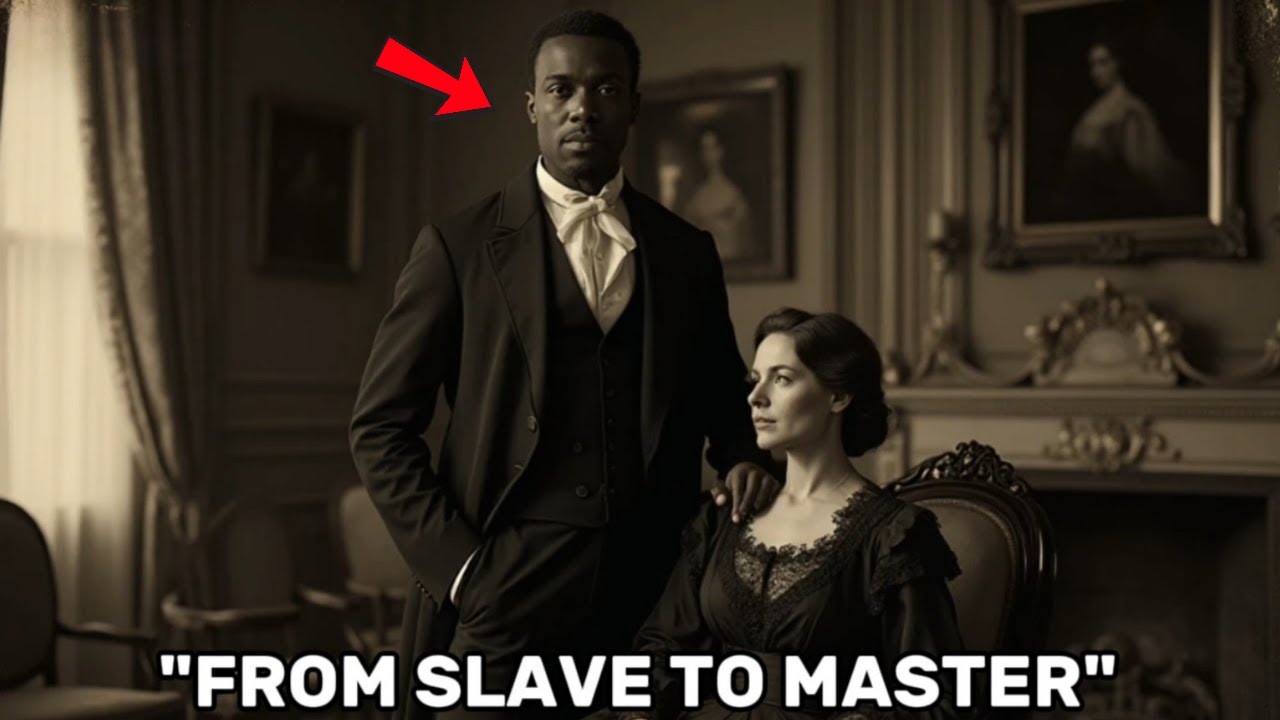
The story might have ended there, another oddity buried in courthouse ledgers, had it not been for what came next. Forty days after his master’s funeral, Malcolm married Annabelle Duval, a white woman from one of the parish’s oldest Creole families, the widow of the man he had once served. The parish clerk who recorded the license scrawled in the margin, “God have mercy on us all. ” Within a single year, six people who questioned Malcolm’s rise died under circumstances the authorities refused to examine closely.
His former master, William Duval, was discovered dead with a rifle across his lap, an apparent suicide. But the sealed coroner’s report contradicted nearly every detail of that explanation. Two white overseers who challenged Malcolm’s authority perished soon after, and the priest who tried to intervene met his end in what officials called a riding accident. By 1853, Malcolm Ward, now styling himself Malcolm Ward Duval, controlled one of the wealthiest estates in River Parish.
The question that haunted everyone who heard his name was simple but chilling. How many people had died to make this impossible transformation possible? The fragments of truth that remain come from parish records, private letters, plantation account books, and testimony whispered during a secret inquiry almost no one knew occurred. What happened at Cypress Bend challenges everything we think we know about power, loyalty, and survival in the Old South.
Cypress Bend plantation lay where the river curved like a serpent’s spine, its black soil rich enough to yield sugarcane that fetched top prices in New Orleans. Nearly 800 acres stretched from levee to cypress swamp, framed by live oaks draped in gray Spanish moss that soaked the humid air. The main house rose three stories high, built in the French colonial style, galleries wrapping each floor, windows tall enough to swallow the summer light, columns weathered by a century of storms. William Duval inherited the place in 1838 from his father, along with 63 enslaved people, a sugar mill, and debts that would have ruined a weaker man.
But William was not weak. He was calculating, ambitious, possessed of the cold intelligence that sees opportunity in other people’s despair. By 1850, he had doubled his labor force, cleared his father’s debts, and secured a place among the parish’s planter elite. His reputation rested on modern methods, steam-powered mill machinery, and on an unspoken advantage few understood: the quiet genius of one enslaved man.
Malcolm Ward had been born on Cypress Bend in 1822, the son of a housemaid named Patience and a father never listed in any record. From childhood, he displayed a curiosity that unsettled those around him. He learned to read by listening through the parlor windows as the Duval children recited their lessons. He taught himself carpentry by watching the plantation craftsman, then surpassed them before he was fifteen.
He understood crop rotation, river tides, and sugar yields better than men twice his age. Most unnerving of all, he read people with the precision of a surgeon, sensing fear, vanity, or weakness in an instant. William noticed. Unlike most planters, he decided to use what he feared.
He promoted Malcolm from field hand to driver, then to mill foreman, and eventually to personal assistant. Malcolm learned everything: accounting, trade routes, the delicate politics of plantation life. William grew dependent on him, trusting his advice in matters of land and debt, until Malcolm’s presence became as natural to the household as the ticking of the longcase clock in the hall. Then came Annabelle, William’s young Creole wife from New Orleans, nineteen years old, elegant, and miserably unhappy.
Her father’s gambling losses had forced the marriage. Her beauty bought her family’s salvation. She brought refinement to Cypress Bend, but no affection for her husband. By 1852, the plantation’s hierarchy looked firm on paper, but fragile in truth.
The overseers, brothers Thomas and Elias Green, commanded the fields. Yet everyone knew Malcolm held the real power. He controlled schedules, handled the books, and spoke for William in most dealings. The Greens despised him for it, but William valued results over pride.
Inside the big house, twelve enslaved workers managed domestic affairs. Louisa, William’s childhood nurse, ruled the household staff with quiet authority. Her daughter Margaret served as Annabelle’s maid and saw more than anyone realized. The kitchen belonged to Old Jacques, a stooped man whose gumbo recipes and half-muttered prayers carried equal weight.
By spring 1852, Cypress Bend was thriving. The harvest had been rich, the New Orleans buyers generous. William hosted dinners where planters discussed secession and the southern way of life, never noticing that many of his insights echoed Malcolm’s quiet suggestions from earlier in the day. Beneath the glittering talk of profit and honor, something unseen was gathering force.
Malcolm had spent thirty years watching, learning, and waiting. He knew every debt ledger, every rival’s weakness, every law that could be bent. He was preparing for something, though perhaps even he did not yet know how far it would go. The evening of June 17th, 1852 began like countless others.
Heavy air, thick with insects, the hum of frogs from the riverbank. William had spent the afternoon in his study with Malcolm, reviewing accounts and discussing the purchase of a neighboring tract, whose owner’s son had gambled away his fortune. The study overlooked the river, windows open to whatever breeze might wander in. Annabelle had complained of a headache and stayed in her chambers, attended by Margaret.
That, too, was ordinary. At seven o’clock, William dismissed Malcolm and asked for supper to be brought upstairs. Louisa supervised the tray—cold chicken, cheese, a bottle of claret—while Margaret carried it to the study, set it inside, and withdrew. The door closed.
What happened after that hour survives only through testimony pieced together later. Around 9:30 p. m. , Thomas Green, making his rounds, noticed lamplight still burning in the study.
At some point between 9:30 and 11, someone entered the locked room, either with a key or with William’s consent. Near midnight, Louisa heard a heavy thud. She lit a candle and hurried through the silent hallway. The door stood ajar, lamplight spilling across the floorboards.
Inside, William Duval sat slumped in his chair, head thrown back, the old Kentucky rifle he kept above the desk lying across his lap. Blood streaked the wall behind him. Louisa’s scream brought the household running. Malcolm, Annabelle, the Green brothers, servants crowding the doorway.
The scene looked simple. Suicide. Powder burns blackened William’s chin. The bullet lodged in a ceiling beam.
Thomas Green took charge, ordering everyone out except his brother, sending a rider for Dr. Fentress, the parish physician. The doctor arrived after 1:00 a. m.
, examined the body, and confirmed death by gunshot. Yet several details troubled him. William’s hands showed almost no powder residue. The rifle lay awkwardly, as though placed.
The nearly empty wine bottle contradicted William’s temperance, and his face was frozen not in despair, but in astonishment, as if he had recognized something or someone in his final instant. The house remained awake until dawn, fear and speculation whispering through the halls. Annabelle collapsed in hysteria. The overseers posted themselves as guards.
Malcolm organized everything with calm efficiency. Too calm, some said. He sent riders to Baton Rouge, notified the priest, arranged the funeral. Watching him, Thomas Green muttered to his brother, “How long you reckon he’s been waiting for this?
”
By sunrise, the sheriff and justice of the peace arrived, reviewed the evidence, and declared the death a suicide brought on by drink and business worries. The verdict preserved the Duval family’s reputation. Yet those who knew William best doubted it. The body was sealed in a coffin and placed in the ice house to await burial.
For five days the plantation moved like a stage between acts, work continuing, yet everyone aware the world had shifted. And on the eve of the funeral, Malcolm requested a private meeting with Annabelle Duval. Margaret stood outside the parlor door that night, candle in hand, straining to catch even a word of what was being said inside. She could hear only the faint rhythm of voices—Malcolm’s calm, deliberate tone and Annabelle’s quick, trembling replies.
The conversation lasted close to an hour. When Malcolm emerged, his face revealed nothing. His eyes caught the candlelight like dark water. Annabelle came out moments later, pale but strangely composed, as if she had accepted a bargain too dangerous to name.
The funeral took place the next afternoon under the sweltering June sun. Father Lair spoke of William Duval’s earthly burdens and God’s mysterious timing, avoiding any mention of suicide. Planters from across River Parish stood fanning themselves, whispering about debts, politics, and the impropriety of a widow so young. Annabelle wore mourning black and kept her veil down.
Malcolm stood among the enslaved workers at the edge of the crowd, silent and still. No one noticed that his position placed him close enough to see the widow’s trembling hands clasped around a small gold locket she hadn’t worn before. When the last shovel of dirt struck the coffin lid, William’s brother, Charles Duval, announced that he would return to Baton Rouge immediately to settle legal matters. Before leaving, he spoke briefly with Thomas Green, instructing him that until the estate was resolved, all plantation operations should continue under existing arrangements.
The phrase was vague, but everyone knew what it meant. Malcolm Ward would remain in charge. That night, Louisa cleaned the study for the first time since the death. On the wall above the desk, the Kentucky rifle hung neatly in its usual place, cleaned and oiled.
Louisa froze. She was certain it had been taken as evidence by the sheriff. When she asked Malcolm how it had returned, he told her smoothly that Mr. Charles Duval had arranged for its return before leaving.
She wanted to believe him, but something in his tone—the evenness, the lack of surprise—made her uneasy. Over the next weeks, life at Cypress Bend resumed its rhythm, at least on the surface. The cane fields shimmered in the sun. The mill roared with steam, wagons rolled to the river.
But beneath that routine, subtle changes crept in. Malcolm no longer sought approval before giving orders. His handwriting began appearing in ledgers where William’s once had. When contracts arrived from New Orleans, they were addressed to Cypress Bend, care of Mr.
Ward. Annabelle remained secluded in the main house, receiving only the parish priest and a few neighbors offering condolences. Rumors started. Some said grief had unbalanced her mind; others that she had fallen under the influence of her late husband’s clever servant.
Those who worked inside the house saw what others only whispered. Annabelle and Malcolm met often, at first behind closed doors, then more openly, as though daring the world to question it. They spoke quietly, sometimes in French, sometimes in English, poring over documents stamped with official seals. Margaret, moving through the rooms with laundry or tea trays, caught fragments: estate rights, signature witnessed, power of attorney.
Thomas and Elias Green watched these developments with growing resentment. They had endured Malcolm’s authority while William lived, because it made the plantation profitable. But to obey him now—an enslaved man, however skilled—felt intolerable. Yet every time they raised objections, Malcolm disarmed them with precision.
“Mrs. Duval has approved the change,” he would say. Or, “Mr. Charles instructed that current arrangements stand.
” They could not defy the widow without risking their own positions. By late July, Thomas’s anger hardened into something dangerous. He began collecting rumors, talking to neighboring overseers, insisting that Malcolm was manipulating Annabelle, perhaps threatening her, perhaps worse. The sheriff listened, but reminded him that no law had been broken.
To accuse a white widow of impropriety with a colored man could cost him his livelihood, even his life. Then, in early August, the confrontation came. It happened in the mill office, a hot morning with the scent of molasses thick in the air. Malcolm was finalizing the sale of sixty hogsheads of sugar to a New Orleans buyer at a record price.
Thomas stormed in, waving the papers. “You’ve no authority to make deals in this house,” he snapped. “You forget what you are. ”
Malcolm didn’t raise his voice.
“My authority,” he said, “comes from Mrs. Duval, the mistress of this estate. If you question my right to act, you question hers. If you question hers, you question the Duval family’s own instructions.
” He leaned closer, lowering his voice to a whisper only Thomas could hear. “Be very certain, Mr. Green, that you know who holds what power before you speak of what I am. ”
Witnesses said Thomas went red, muttered something under his breath, and stormed out.
That evening, he began drafting a letter to Charles Duval, warning him that Malcolm Ward had taken control of the plantation through dark influence over the widow. He never finished the letter. Two days later, he fell violently ill—vomiting, fever, spasms that left him incoherent within hours. Dr.
Fentress diagnosed cholera, common enough along the river in summer. The sickness ran its course in forty-eight hours. By dawn of the third day, Thomas Green was dead. The death was treated as natural.
The same week, two dock workers in the parish seat died of similar symptoms. Yet among the enslaved, whispers spread. Thomas hadn’t been struck by God or cholera, but by something poured into his whiskey. No one said it aloud in front of Malcolm.
Elias Green took over his brother’s duties, but he lacked the same hard edge. When Malcolm suggested lightening his load by letting him handle contracts and finances, Elias agreed with relief. Without realizing it, he’d accepted a subordinate role. The man who controlled the money now controlled everything.
In the kitchen, Old Jacques began noticing things others ignored. Annabelle no longer dined in the formal hall, but took meals in her chambers, trays that Malcolm himself selected. Margaret carried folded notes between them several times each day. Louisa, once the authority in the house, now sought Malcolm’s approval for even small decisions.
Most unsettling of all, people began to disappear. Not violently, just quietly reassigned or gone. Three house servants were sent to fieldwork until further notice. Two field hands known for their loyalty to the Greens were sold downriver.
The butler, a man who had served William faithfully for fifteen years, was dismissed for drunkenness, a charge Louisa doubted but dared not dispute. When Jacques whispered these things to Louisa, she told him, “Don’t speak of it. Not even in your prayers. There are changes coming, and the only safety is in silence.
”
On September 12th, 1852, exactly twelve weeks after William’s death, Malcolm Ward and Annabelle Duval appeared before Justice Ezra Phelps in the River Parish courthouse, accompanied by a lawyer from New Orleans. They brought a packet of documents: William’s discovered will, a power of attorney naming Annabelle as estate administrator, and most shocking, a manumission paper granting Malcolm his freedom, signed by William himself three months before his death. The documents were impeccable, witnessed and sealed. The will left everything to Annabelle.
The manumission declared Malcolm free in recognition of faithful service and extraordinary ability. The judge hesitated. The law was clear. A freedman of color could not easily inherit or manage property, much less live under the same roof as a white widow.
Yet the papers met every legal standard. To deny them would require admitting that something deeper than law governed River Parish. After long deliberation, Judge Phelps approved the filings. That night, he wrote in his journal, “I have today given freedom to a man the law says should never possess it.
I fear the price for this act will be terrible. ”
By morning, everyone in the parish knew. The news spread through River Parish like fire racing through cane. Within a week, every church pew and feed store carried the same whispered sentence.
The widow Duval had freed her husband’s slave. Some added, “And he ain’t just free. He’s running the whole damn plantation. ”
The shock cut deeper than outrage.
It violated the one unspoken law that bound their world together. A black man might rise in skill or respect, but never in power. By late September, neighboring planters stopped visiting Cypress Bend. Those who owed the Duval money found excuses to delay payments.
Merchants in the parish seat fulfilled their orders with chilly courtesy. Father Lair continued his weekly visits, though he made no effort to hide his discomfort. “Your husband’s memory deserves quiet dignity, not confusion,” he told Annabelle gently. She answered in a flat voice.
“The Lord knows what he permits. ”
Elias Green, already uneasy, resigned. He could not, he said, work under such circumstances. Malcolm thanked him politely and hired a new overseer within days, a heavyset man named Amos Pritchard, recently dismissed from a Mississippi plantation for cruelty.
Amos cared nothing for local gossip. He wanted wages, not friendship, and he obeyed orders without question. The new arrangement turned the plantation cold and efficient. The mill ran longer hours.
Field hands worked by torchlight during harvest. Yet there was no open rebellion. Malcolm saw to that. He paid attention to details others ignored: who borrowed tobacco, who whispered after dark, who lingered near the riverboats.
Those who showed discontent found themselves sold within a week. He needed obedience, not affection. In October, Father Lair stopped his visits altogether. He had sent a private letter to the diocese expressing his fear that the widow Duval had entered into a most unnatural attachment.
That letter never reached New Orleans. Somewhere along the river road, the courier vanished. His horse was found grazing beside an empty saddle. By November, Annabelle no longer attended mass.
She rarely left the house at all. Margaret, her maid, noticed she had stopped wearing mourning black and now dressed in pale colors. On her wrist, she wore a bracelet of gold filigree, a man’s gift, unmistakably recent. On November 28th, 1852, Malcolm Ward and Annabelle Duval walked into the parish clerk’s office together and asked to file for a marriage license.
The clerk, Prosper Goethier, a mild man who had signed land deeds for half the parish, stared at them in disbelief. “You can’t mean that,” he said quietly. “It’s against the law. ”
Malcolm set a folded document on the desk, his manumission sealed and recorded.
“I am a free man, Mr. Goethier,” he said evenly. “The law forbids such unions for slaves, or for colored men not duly emancipated. ”
“I am neither.
If you can name a statute that forbids it, show me. ”
The clerk stammered. “You know what they’ll say. You know what they’ll do.
”
“I know the law,” Malcolm replied. They argued for hours. The clerk checked every book, every code. Nowhere did the statutes explicitly forbid marriage between a freed person of color and a white widow who controlled her own estate.
The law had never imagined such a circumstance. At last, trembling, Goethier signed the license. As he did, he whispered, “God forgive us all. ”
Three weeks later, on December 19th, 1852, they were married inside the parlor of Cypress Bend.
The ceremony was performed by a defrocked priest named Father Corbin, a man whose reputation for drink and gambling made him the only clergyman willing to accept the job. His hands shook as he read the vows. Louisa, Margaret, Old Jacques, and the plantation lawyer were the only witnesses. When Malcolm slid the ring onto Annabelle’s finger, Louisa turned her eyes away.
That winter, the plantation existed in near-total isolation. No neighboring planters called. No invitations arrived from town. Even riverboat captains who had long stopped for trade now passed without waving.
Yet inside the estate’s boundaries, business thrived. Malcolm had secured a new buyer in New Orleans, a young factor named Augustin Tessier, who cared nothing for social rules and everything for profit. Tessier found buyers in the North eager for Louisiana sugar at a discount. Money flowed again, even as society slammed its doors.
Annabelle spent most of that winter hidden in her rooms. Margaret described her as quiet as a ghost, speaking little, eating less. Sometimes Malcolm joined her at dinner. Sometimes she dined alone while he worked late in the study.
On those nights, Margaret would find him surrounded by ledgers, maps, and legal papers, his face illuminated by a single oil lamp, a man building an empire brick by brick. By February 1853, the whispers turned to fear. People began dying again. A field hand named Josiah, known for his loose talk, told others he knew what had happened to Master Duval, that he had seen a shadow in the hallway that night, a shape, not William’s.
Two days later, Josiah was gone. Malcolm reported him as a runaway, but his body was found weeks later in a bayou, half eaten by alligators. In March, Old Jacques fell ill—stomach cramps, fever, vomiting. The same symptoms that had killed Thomas Green.
He died within three days. Louisa swore the stew he’d eaten had tasted bitter. When she told Malcolm, he looked at her a long moment before saying, “Age takes its due, Louisa. You of all people should know that.
”
Elias Green, living now in town, began keeping notes. He collected gossip, rumors, any testimony he could find. By April, he was convinced Malcolm had murdered his brother and perhaps William as well. He planned to take his evidence to the sheriff.
On April 12th, 1853, he was found dead in his boarding room. The cause, according to the coroner, was apoplexy brought on by stress. He was thirty-eight. His papers disappeared.
Dr. Fentress, who had attended all the dead, wrote in his private notebook, “Four deaths in one year, each convenient to the same man. ” He scheduled a meeting with the sheriff to share his suspicions, but before he could, Malcolm came to see him. They spoke for two hours.
When Malcolm left, the doctor canceled his appointment. In his journal that night, he wrote, “I have today chosen silence over duty. Perhaps it will save my life. ”
By summer, Malcolm Ward Duval had done the impossible.
He had risen from property to proprietor, from slave to master, from servant to husband of a white Creole woman, all in thirteen months. The price in blood remained unspoken, but widely guessed. Outside the gates of Cypress Bend, the world recoiled. Inside, Malcolm walked the galleries at night like a man measuring what he owned, the river wind moving through the moss, the cane fields whispering below.
He had everything he had dreamed of: freedom, power, wealth, and the uneasy quiet of a kingdom built on bones. The question everyone asked, though few dared voice it aloud, was the same one that had haunted the sheriff since the inquest. Had William Duval really taken his own life? Or had Malcolm Ward made it appear that way?
The winter of 1853 passed like a fever dream over Cypress Bend. The fields lay bare beneath silver frost, the river swollen and restless, while inside the big house, silence ruled. Servants moved quietly, speaking only when spoken to. Annabelle drifted through the rooms in a haze of exhaustion, rarely acknowledging anyone.
Malcolm’s presence filled the spaces William once had, his voice calling orders from the veranda, his signature on every ledger, his decisions shaping every acre of land. Outside the plantation, the scandal refused to die. Planters met behind closed doors in Baton Rouge and Natchez, debating what could be done. Some argued for legal measures to seize the estate.
Others whispered of vigilante justice. But every proposal faltered before the same obstacle. Malcolm’s papers were flawless. The will, the manumission, the marriage license—all recorded, all sealed.
The law could find no crack to wedge open. By March, the first real challenge came. A lawyer from New Orleans, Philippe Dufresne, arrived claiming to represent Duval relatives in France. He carried a petition contesting William’s will on grounds of mental infirmity and undue influence.
In polite words, he was calling William a fool and Malcolm a manipulator. If the court accepted the claim, Malcolm and Annabelle could lose everything. Dufresne’s arrival electrified the parish. At last, someone was daring to challenge the unnatural order of things.
The courthouse steps swelled with onlookers when the hearing opened. Malcolm came dressed in a black coat and gray waistcoat, his posture straight, his expression composed. Annabelle sat beside him, her hands hidden in lace gloves. Across the aisle, Dufresne laid out his argument: that William had been pressured, perhaps even threatened, into signing documents he didn’t understand.
Malcolm’s attorney, Charles Latimer, countered with ruthless precision. Every signature matched, every witness was verifiable, every date aligned with entries in the plantation ledger. The judge postponed judgment, ordering depositions from those who had lived on Cypress Bend. That night, a barn at the plantation caught fire.
Flames leapt fifty feet high, consuming tools and wagons, nearly spreading to the mill before workers contained it. The blaze had started in three separate spots. Everyone knew it was arson. No one could prove by whom.
The following week, as Malcolm rode along the levee road at dusk, a rifle shot cracked through the air. The bullet tore his hat brim but missed his skull. The shooter vanished into the cane fields. Malcolm returned home silent, eyes burning like coals.
From that night on, he never rode alone. He hired guards from New Orleans, hard men who didn’t ask questions and slept with pistols beneath their pillows. In the weeks that followed, the plantation began to resemble a fortress. Dogs patrolled the yard, strangers were turned away, and Malcolm’s routines grew unpredictable.
He moved through the house at odd hours, reading in the study until dawn, walking the gallery in the rain, speaking little to anyone. Annabelle saw him less and less. When she did, he seemed both restless and hollow, as though the power he’d fought for had already turned to ash in his hands. Then came Margaret’s confession.
The young maid, who had once dressed Annabelle’s hair and carried her letters, went to Father Lair during one of his rare visits. Pale and trembling, she told him she had discovered love letters between Annabelle and Malcolm dated months before William’s death—letters that spoke of plans, secrecy, and removing obstacles. She had hidden them, fearing what would happen if Malcolm knew. The priest listened, horrified.
That night, he wrote a letter to the bishop in New Orleans, urging immediate intervention. But the letter never reached its destination. Three nights later, Father Lair was found unconscious on the road between Cypress Bend and St. Agnes Church.
His horse stood nearby, reins tangled. He died three days later without waking. The cause was listed as a fall. When Margaret heard, she understood.
She packed her hidden letters and fled the plantation under cover of darkness, heading toward the river road. She made it fifteen miles before she was stopped by a patrol. The report said she resisted arrest, became violent, and died from injuries sustained in the struggle. Her body was buried in a pauper’s grave.
The letters vanished. The priest dead, the maid silenced, the truth sank again beneath the river mud. Meanwhile, Dufresne pressed his lawsuit. Depositions were scheduled for September.
His witnesses included merchants, a carpenter, and two former house servants who had worked under William. They claimed to have seen changes in the master’s behavior before his death—anxiety, tremors, uncharacteristic dependence on Malcolm Ward’s counsel. Dufresne believed he was close to victory. On the eve of the depositions, Dufresne was attacked in his hotel room.
Two men beat him nearly to death and stole every legal paper he possessed. He survived, but with broken ribs, a shattered jaw, and brain trauma that ended his career. The attackers were never caught. The court dismissed the case for lack of evidence.
The message was clear: no one who threatened Malcolm Ward Duval left unscathed. By late autumn, even the bravest planters admitted defeat. “Let the devil have his land,” Colonel Austin Chevalier muttered at a meeting in Baton Rouge. “He’s earned it in blood.
” But the colonel and two others, Etienne Marchand and Lucien Broussard, decided to take matters into their own hands. They formed a small committee: three men sworn to end Malcolm’s reign quietly, permanently. Within two days, Malcolm knew. His informants reached him before their plans solidified.
He doubled his guards, set watch posts at the gates, and forbade anyone to leave without written permission. He carried a pistol even at breakfast. In December 1854, Lucien Broussard was found dead in his home, shot through the heart. The sheriff called it a hunting accident.
No one believed him. On Christmas Eve, as Malcolm’s carriage rolled back from a meeting with his New Orleans factor, gunfire erupted near the road. His guards fired back. When the smoke cleared, two men were dead: one of Malcolm’s guards and one of the attackers, identified as an employee of Etienne Marchand.
By dawn, Marchand had fled the parish and was never seen again. Three weeks later, Colonel Chevalier died of pneumonia, though his symptoms—violent vomiting, cold sweats, blackened fingernails—resembled those of others who had crossed Malcolm Ward. By February 1855, no one dared oppose him. He had outlasted them all.
Planters, priests, lawyers, overseers. He ruled Cypress Bend uncontested, a free man commanding slaves, a master with no equals, a king in exile within his own walls. But his victory was hollow. The plantation prospered, yet its master grew increasingly isolated.
The guards ate in silence. The servants moved like shadows. Annabelle, once radiant, had withdrawn completely, her laughter gone, her eyes distant. The house, locals said, had begun to feel cursed.
Travelers claimed that from the river road one could see a single lamp burning all night in the study window and hear faint piano music drifting from the upper floor—sometimes, they swore, when no one was playing. In that strange quiet, Malcolm Ward Duval had become both legend and warning: proof of how power could corrupt, how freedom seized by blood could twist into another form of bondage. By the spring of 1855, Cypress Bend stood apart from the world like an island of forbidden wealth. The riverboats no longer stopped at its dock, and planters who once boasted of dining under its chandeliers now crossed themselves when passing by.
The fields were still planted, the mill still turned, but the laughter, the gossip, the music that once floated from its galleries were gone. Malcolm Ward Duval had won everything the world could offer a man of his birth. Freedom. Land.
A fortune. A wife whose name carried old Creole blood. And yet he lived like a prisoner within his own empire. The guards he’d hired from New Orleans patrolled the gates with rifles.
Dogs barked through the night, and not a single carriage came down the drive unless summoned. He had power, but no peace. Annabelle had grown thin and pale, her once lively eyes now vacant. She spent hours sitting by her window, staring toward the river, where steamboats glimmered faintly in the distance.
When Louisa brought her meals, she often found the food untouched, the tea cold. “Does he still watch me, Louisa? ” she asked once, voice no louder than a sigh. Louisa didn’t answer.
She couldn’t tell whether the lady meant Malcolm or God. Malcolm still worked late into the night, his study filled with the scratch of pen on paper. He’d begun selling sugar through northern brokers, using Tessier’s network to ship it out of state under false labels, avoiding local hostility. The business thrived, but he seemed less interested in profit now than in control.
Every transaction, every ledger entry, every fence repair bore his approval. He no longer trusted anyone—not his guards, not his servants, not even Annabelle. In the summer of 1856, the last of the original household staff left. Some were dismissed without cause.
Others simply disappeared. Louisa remained because she had nowhere else to go. She moved quietly through the house, cleaning rooms that no one entered, polishing silver no one used, caring for a mistress who no longer spoke except in whispers. Father Lair’s replacement at St.
Agnes Church refused to visit Cypress Bend. “There is something unholy in that place,” he said. “I will not cross its gate. ”
Rumors multiplied faster than truth could chase them.
Some said Malcolm had poisoned his enemies. Others swore he had made a pact with the devil. Children dared each other to touch the iron gate at night, claiming they could hear voices weeping inside. In 1857, the Mississippi rose high with floodwaters, and for a brief moment it seemed as if nature itself would reclaim the plantation.
The levees held, but half the crop was lost. Malcolm didn’t flinch. He sold jewelry, silver, anything not nailed down to keep operations running. To those who saw him then, he looked more like a ghost than a man—skin drawn tight, eyes hollow, yet still moving with mechanical purpose.
Annabelle’s condition worsened. She began speaking to people who weren’t there—her late husband, her parents, sometimes “the boy,” though no one knew whom she meant. Margaret was long dead, yet Annabelle still left out tea for her every evening. Dr.
Fentress visited once, prescribing tonics and laudanum, but afterward confided to Louisa, “She is fading from within. The body obeys, but the soul has already departed. ”
Late that autumn, Louisa overheard a conversation between Malcolm and Dr. Fentress that chilled her blood.
Malcolm had summoned the doctor to the study. His voice was low but steady. “You’ve seen what isolation does to a person. It strips them bare.
It shows what they truly are. Tell me, doctor, when the mind breaks, is it mercy or punishment? ”
Fentress hesitated. “Both, perhaps.
The guilty seldom choose which they receive. ”
Malcolm gave a faint smile. “I thought so. ”
When the doctor left, Louisa entered the study to tidy.
On the desk lay a half-burned sheet of paper. Only a few words remained legible. She agreed. His death was necessary.
It was never supposed to look like that. She burned the paper completely before leaving. Some truths, she decided, should die before they learned to speak. By 1858, even the guards had thinned.
Two left without notice. One was found drowned near the levee. Malcolm replaced them with freedmen from New Orleans who asked no questions. He rarely slept, prowling the halls with a lantern, muttering to himself about debts owed and promises kept.
Louisa once saw him standing outside Annabelle’s locked door, his hand raised as if to knock, then lowering it and walking away. That same year, Dr. Fentress received a sealed envelope bearing no return address. Inside was a note in Louisa’s handwriting.
If harm comes to me or to her, open the letter I left with you. You will know when the time is right. He didn’t yet understand what she meant, but he locked the note away. The following spring brought a change no one expected.
One humid morning in August 1859, Malcolm summoned every remaining enslaved person to the yard. Seventy-three men and women stood before him, people who had labored under his rule and William’s before him. He read from a stack of documents, his voice carrying across the still air. “By these papers,” he declared, “you are all free.
You may leave this land today, owing nothing and owned by no one. ”
Gasps broke out among them. Some cried, others fell to their knees in confusion. Louisa, watching from the veranda, whispered, “He’s gone mad.
” But Malcolm’s face held no madness, only a grim kind of peace. He filed the manumissions in town that same afternoon. When Sheriff Clary asked him why, Malcolm said simply, “Because freedom taken is never freedom earned. I intend to leave nothing behind worth owning.
”
Without workers, the plantation began to die. The mill stilled, the fields overgrew, and the wealth that had sustained Cypress Bend bled away. Annabelle slipped further into delirium. By September, she refused food altogether, her body wasting into shadow.
When Fentress examined her, he found her pulse faint, her eyes distant. “She’s waiting for someone,” he murmured. She died on October 17th, 1859, seven years and four months after William Duval’s death. The cause was recorded as melancholia and wasting sickness.
Her funeral was small—no music, no mourners beyond Louisa and Dr. Fentress. Malcolm did not attend. He sent only a wreath and a single line: May she find the peace denied her in life.
After that, he began selling off the plantation piece by piece—the mill, the livestock, the furniture, even the grand piano in the parlor. By December, only the house and a few acres remained. He spent his days sorting papers, burning ledgers, and writing letters no one ever saw. On the evening of December 28th, 1859, Malcolm sent for Dr.
Fentress once more. The doctor found him in William’s old study, surrounded by open boxes, candlelight flickering over the polished rifle mounted above the desk. Malcolm looked calm, almost relieved. “I wanted to thank you, doctor,” he said, pouring two glasses of brandy.
“For understanding that silence is sometimes the truest kindness. ”
Then he began to speak—about power, about guilt, about how the chains that bind a man don’t always fall away when the iron is gone. He never said the words “I killed him. ” But he didn’t need to.
Every sentence carried the weight of confession. He ended with a question. “If justice could only come through sin, would you still call it justice? ”
Dr.
Fentress didn’t answer. Malcolm smiled faintly. “Good. Then you understand.
”
That was the last anyone saw of Malcolm Ward Duval. When the first frost of 1860 glazed the Mississippi, the great house of Cypress Bend stood empty. The shutters were closed, the chimneys cold, the galleries blanketed in dust. No one had seen Malcolm Ward Duval in nearly a month.
The servants who remained said he’d gone downriver with a single trunk, leaving before dawn without a word. Others swore they’d seen him walking along the levee barefoot, murmuring to himself before vanishing into the fog. The sheriff waited three weeks before declaring him missing. A search turned up nothing.
His horse remained in the stable, his accounts untouched. The brandy glass from his last meeting with Dr. Fentress still sat on the desk. The great iron safe in his study was open and empty except for a single folded page.
The river takes everything it’s owed. Some believed he had drowned himself, ending the story where it began at the water’s edge. Others claimed he’d crossed into Mexico or the Caribbean, passing himself off as a Creole merchant. A few whispered that he’d gone mad and lived somewhere deep in the swamp, ruling over spirits as he once ruled over men.
Whatever the truth, Malcolm Duval was never seen again. For months after his disappearance, the plantation lay abandoned. Weeds crept over the steps, vines strangled the oaks, and wild dogs nested in the empty slave quarters. Travelers along the river said they saw a single lamp flickering in the upstairs window long after every human soul had gone.
Some called it the ghost of Annabelle waiting for her husband. Others said it was Malcolm himself, too proud to rest. In April 1860, Dr. Fentress finally opened the sealed envelope Louisa had left him.
Inside was a letter written in a shaking hand, dated a week before her death the previous winter. “Dr. Fentress,” it began, “you are a man of reason, but reason fails in this house. I have served the Duval family all my life, and I have seen sins buried deeper than the river’s mud.
You asked once if William Duval took his own life. I will tell you what I saw, though I beg you never to speak it while I live. ”
She described that night in June 1852. How she’d heard raised voices through the floorboards, the master shouting, the sound of a struggle, then silence.
She had run to the study and found the door locked. When she returned minutes later, it was open. Malcolm stood inside, calm as if nothing had happened. William was slumped over his desk, blood on the wall, the rifle across his lap.
Malcolm looked at her and said quietly, “Fetch the doctor. Tell them it was quick. ”
Louisa had obeyed, too frightened to question. Later, when she entered to clean the room, she noticed the rifle had been reloaded and mounted above the desk again—oiled, polished, ready for use.
“He wanted it to look neat,” she wrote, as though death itself had been tidied away. The letter continued, “I have seen him do things no man should. I do not know whether he loved her or destroyed her. Perhaps both.
I believe she helped him in the beginning, but guilt devoured her faster than poison could. When she died, he stopped being human. I think he wanted to be free of himself as much as his chains. ”
Fentress closed the letter and wept.
He copied it by hand, sealed the original in an envelope marked “to be opened upon my death,” and placed it in his lawyer’s safe in New Orleans. The Civil War came and went. Cypress Bend remained deserted, its land seized first by Union troops, then sold at auction to pay unpaid taxes. The house itself decayed, the roof sagging, the plaster crumbling beneath vines.
By the 1880s, only ruin stood—a tangle of brick chimneys and broken marble. The locals called it Devil’s Bend. In 1871, after Dr. Fentress’s death, his journal and the sealed letter were found among his effects.
The lawyer who handled the estate forwarded them to the Louisiana Historical Society, where they gathered dust for decades. Few read them; fewer believed them. Then, in 1903, an archivist cataloging a set of nineteenth-century legal papers came across a small bundle of letters addressed to “Mr. C.
Latimer, Attorney at Law, New Orleans. ” The signature at the bottom of each was simply M. B. The letters spanned nearly forty years, from 1860 to 1897.
They discussed shipments, property transfers, and bank accounts in Havana, Veracruz, and Mérida. But one letter, dated August 1889, stood out. “Mr. Latimer,” it read, “you once asked me if I regretted the path that brought me here.
I have had nearly three decades to consider it. I live well, respected among men who have forgotten what I was. They call me Maurice Bowmont now. They think me white.
I trade in coffee and sugar. I give to the church. I sleep without chains. And yet I do not sleep in peace.
I wonder sometimes if I did not merely trade one form of bondage for another. Power is a subtler master than the lash. Freedom gained through blood leaves a mark no ocean can wash away. I tell myself I sought justice, but the truth is simpler.
I sought victory, and victory is never clean. ”
The letter closed with words that still chill the reader more than a century later. “If I am damned, I was damned by the world that made me. They forged the chains, and I only learned how to wear them differently.
”
Historians could never confirm whether Maurice Bowmont was truly Malcolm Ward Duval. But the handwriting matched the signature on his old plantation ledgers, and the financial records aligned with the sale of Cypress Bend’s assets. He had lived, it seemed, quietly and comfortably somewhere along the Mexican Gulf for decades after vanishing. In 1906, a small Catholic cemetery in Veracruz recorded the burial of a merchant named Maurice Bowmont, age seventy-seven, native of Louisiana.
No family was listed. If it was him, he died far from the river that had made him, and took him back in story if not in body. By the early twentieth century, the story of Malcolm Ward Duval had blurred into legend, a tale told around campfires and in schoolhouse whispers. Some called him a murderer, others a genius, others a devil wearing a gentleman’s skin.
The truth, as always, was murkier. What remained were the documents—a deed, a will, a marriage license, and a handful of letters that asked questions no history book can answer. Was Malcolm’s transformation liberation, or simply a more refined form of enslavement? Did the system that forged him create a monster, or merely reveal the monster it had hidden inside every man who learned to survive within it?
The ruins of Cypress Bend stand to this day, though most who pass along the river do not know what once rose there. The oaks have grown wild again, their roots curling through cracked brick. The old levee has sunk in places, and the bayou has reclaimed half the yard. Only the chimney of the great house still rises above the weeds, blackened and hollow like a throat that has long since lost its voice.
Travelers say that on summer nights, when the mist rolls low across the river and the frogs go silent, a light flickers in what used to be the upper window. Some claim to see the faint silhouette of a man standing there, broad-shouldered, still as stone, looking out toward the water as if waiting for something that will never return. Others swear they hear piano music, soft and broken, drifting through the vines. Old men in the parish still tell the story to their grandchildren when storms rattle the shutters.
They tell of Malcolm Ward Duval, the slave who killed his master, married the widow, and became the lord of the very land that once owned him. Some call it a tale of justice. Others call it a curse. The scholars who studied the case in the 1920s tried to strip away the superstition.
They examined every surviving document, compared signatures, reconstructed timelines. Their conclusion was cautious: that William Duval’s death could not be definitively ruled a murder. But neither could it be considered suicide beyond doubt. They noted inconsistencies in the sheriff’s report, gaps in testimony, missing witnesses.
They cited the curious disappearance of Margaret and Father Lair, the convenient illnesses of the Greens, the vanishing of key letters. But for every fact unearthed, a dozen questions deepened. How had a man born enslaved managed to outwit every law, every barrier, every enemy? How had he transformed himself into something the world refused to imagine—a free black man wielding power in the Deep South at a time when that idea itself was unthinkable?
In the archives of Baton Rouge, an unsigned deposition surfaced in 1924, written in shaky handwriting on yellowed paper. It was attributed without proof to one of Malcolm’s surviving guards. The writer claimed that on the night before Annabelle’s death, Malcolm had burned every ledger in the house and buried a small iron box beneath the floorboards of the study. It held the truth of everything, the note read, and the truth was a weapon best buried.
The ruins were later searched, but no box was ever found. Still, the whispers persisted. By the mid-twentieth century, the legend of Malcolm Ward Duval had evolved into a ghost story passed among locals and historians alike. In one version, he returns each year on the anniversary of William’s death, pacing the galleries of the old house, calling out for Annabelle.
In another, he wanders the riverbanks with a lantern, forever searching for the freedom he could never truly claim. A few insist his spirit haunts the fields themselves, whispering through the cane whenever the wind rises. For some, he became a symbol of vengeance, a man who turned the brutal machinery of slavery against its own masters. For others, he was a cautionary figure, proof that blood cannot cleanse blood.
In 1957, the historian Dr. Henry Cobb, writing in the Journal of Southern Shadows, called Malcolm “the tragic embodiment of the American paradox—a man who gained liberty only by becoming what he hated. ” Cobb’s essay traced how the moral lines of the story blur until they dissolve entirely. “Was he victim or villain?
” he asked. “Hero or executioner? History cannot decide because it dares not admit that he was all of them at once. ”
By then, the land where Cypress Bend once stood had been sold to a lumber company.
The last stones of the mansion were cleared in 1963. Yet even after the bulldozers came, workers reported strange happenings: tools gone missing, voices calling their names in the dusk, lanterns flickering with no wind. One foreman quit, saying he’d seen a man standing in the fog, hat brim low, coat flapping in a wind that didn’t exist. “He looked right at me,” the foreman said.
“And I swear to God his eyes were tired, not angry. Just tired. ”
Today, nothing remains but the land itself: a narrow strip of riverbank hidden by cane and moss. Locals avoid it after dark.
Tourists who venture near often describe an oppressive stillness, as if the earth itself remembers. But the story of Malcolm Ward Duval refuses to die. It appears in novels, dissertations, podcasts, even songs, each retelling shaping him anew. Sometimes he’s the clever revolutionary who outwitted his oppressors.
Sometimes the haunted tyrant who destroyed everything he touched. Each version adds a layer, a reflection, another shadow on the wall. Perhaps that’s how legends survive—not because they are true, but because they touch something truer than facts. Every nation, every age needs its monsters and its martyrs.
Sometimes they are the same person. In the final line of his diary, Father Lair had written, “Evil is not born in darkness, but in the longing for light. ” If that’s so, then Malcolm Ward Duval’s life was a lantern that burned too bright and left everything around it in ash. No one knows where he lies buried.
If the man in Veracruz truly was him, his grave bears no marker, no name. But each year, when the Mississippi floods and the water laps at the edges of the old plantation, some say you can still see a reflection moving just beneath the surface—broad shoulders, steady eyes, walking through the current as if returning home. And when the night grows still, the locals swear you can hear the faintest sound carried on the wind. Not weeping, not rage, but the low hum of a hymn sung in a voice that once commanded both fields and fear.
The story ends as it began, not with truth, but with memory. A man rose from bondage and built his own kingdom out of blood and cunning. The world tried to forget him, but the river never does. It carries his name in its current, whispering it to the reeds, erasing and rewriting it with every tide.
Some stories refuse burial because they were never meant to rest. And so the legend endures of Malcolm Ward Duval, the slave who killed his master, married the widow, and became the master himself.
