In early 1855, a photograph of a seven-year-old girl with fair skin and light features began circulating across America. She looked unmistakably white. Her name was Mary Mildred Williams, and she had just been freed from slavery in Virginia. The image had been distributed by Senator Charles Sumner of Massachusetts, a leading abolitionist, who hoped the sight of this child would shock the nation and strengthen the movement against slavery.
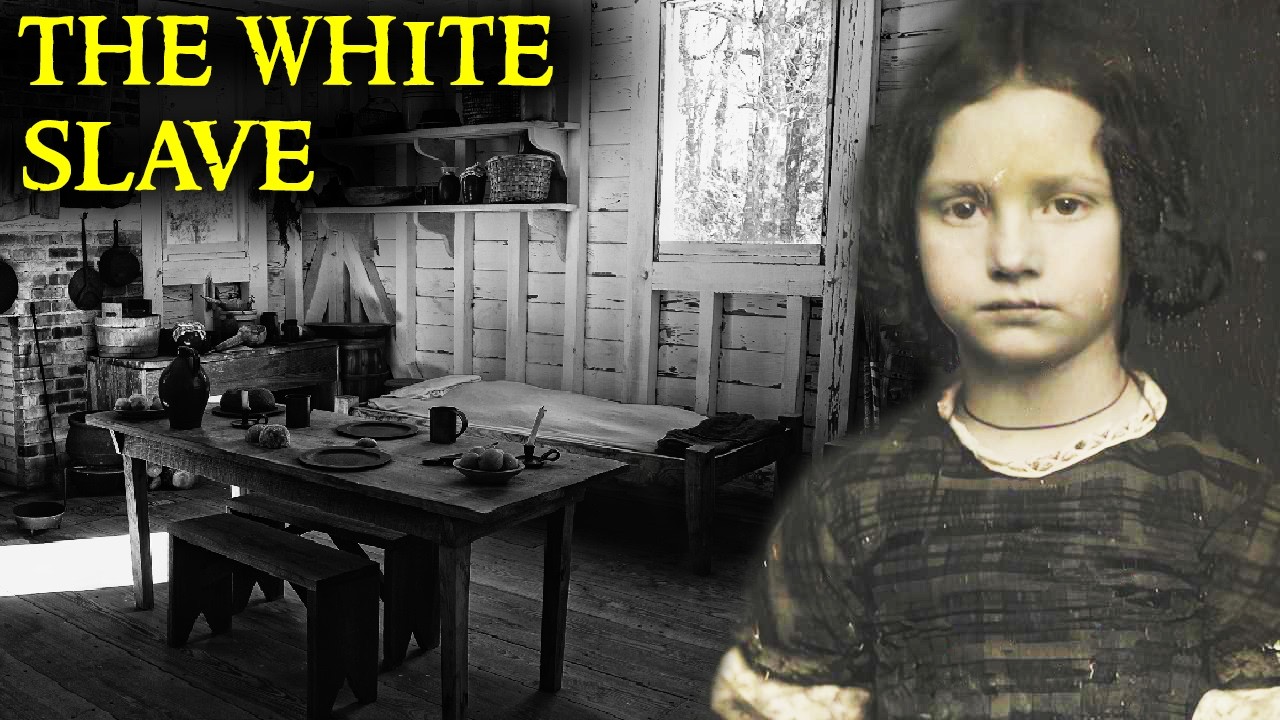
But the story behind the photograph was far more complicated than the public ever knew. Mary had been born into slavery in 1847, near the small village of Washington in William County, Virginia. Her father was believed to be Seth Bots, an enslaved man. Her mother was Elizabeth Nelson, also enslaved, and the daughter of her own enslaver, Thomas Nelson.
Elizabeth had grown up enslaved by her father, who was white. Her mother had been mixed race, which meant Elizabeth was light-skinned herself, a person the nineteenth century would have classified as a quadroon or octoroon depending on the precise reckoning of her ancestry. Seth Bots was also of mixed ancestry, the illegitimate son of a free white man. His own father was thought to have been a member of the Bots family, a prominent political clan in Virginia.
John Bots, for instance, had served in the United States House of Representatives from 1846 to 1850. Elizabeth and Seth married when she was in her early twenties. Their first child, a boy named Oscar, was born in 1845. Mary followed two years later, and a second daughter, Adelaide, was born in 1849.
But something about the two girls drew attention. While both parents were enslaved, Mary and Adelaide looked entirely white. Rumors spread. Questions arose about whether Seth was truly their father.
There were reasons for the doubt. Late in 1845, Elizabeth’s father, Thomas Nelson, died, and the following year she, her mother, and her sisters were passed into the ownership of her father’s brother-in-law, J. C. Weeden.
It was during this period that Mary and Adelaide were born. Given the timing and their appearance, many assumed Weeden was their father. But the truth was murkier. Seth Bots had continued to see Elizabeth after she left the Nelson farm, and the timing of those visits could have aligned with the conception of both girls.
In the tangled dynamics of slavery, such uncertainty was not unusual. Enslaved women were frequently exploited by their enslavers, and the paternity of their children was often unclear. For the first seven years of Mary’s life, she, her mother, and her siblings remained in a kind of legal limbo at the Weeden plantation. Weeden wanted to sell off many of the slaves he had inherited, but the courts blocked him because of a complicated dispute over legal ownership of Elizabeth and her children.
So the family stayed, suspended between the claims of different men who each asserted some right over them. In 1850, Seth Bots decided he could wait no longer. With the help of Henry Williams, a freed slave, he forged freedom papers and fled Virginia. He traveled north on the Underground Railroad, the secret network that guided escaped slaves to safety, and eventually reached Boston.
There he threw himself into work, driven by a single goal: to buy the freedom of his wife and children. With support from abolitionist allies, he raised enough money by early 1855 to secure their release. Once united, the family took the surname Williams, the name that had appeared on the forged papers that made Seth’s escape possible. Mary Mildred Bots became Mary Mildred Williams, a free girl living in Boston.
It was at this point that Senator Charles Sumner entered her life. Sumner had been among the founders of the Republican Party in 1854, a new political force that made abolition a central mission. He had heard about Mary and Adelaide, two enslaved girls who looked completely white, and he recognized the power of their story. In a nation deeply divided over slavery, the image of a white-looking child who had been born into bondage could serve as living proof of the institution’s moral corruption.
Sumner arranged for a daguerreotype photograph of Mary to be taken, likely choosing her because she was the elder sister. The image was soon published in the Boston Telegraph and the New York Daily Times, accompanied by editorials that asked a pointed question: how could a girl who looked so clearly white have ever been enslaved? The photograph became a sensation. It spread quickly across the country, making Mary Mildred Williams one of the first child icons of the abolitionist movement, barely a decade after photography had been introduced to the public.
Sumner took Mary on a speaking tour across the North. In speech after speech, he used her story to expose the brutal realities of slavery, particularly the ways in which generations of sexual exploitation had blurred the boundaries of race itself. Mary’s face did not just reflect one girl’s story. It reflected the hypocrisy and abuse at the heart of the Southern system, and it helped push the nation closer to the breaking point.
Mary was so young that she likely had little understanding of the national controversy swirling around her. After the tour ended, the immediate furor died down, and she returned to live quietly in Boston with her family. But the political impact of her story lingered. On May 22, 1856, just over a year after her photograph had first appeared, Senator Charles Sumner was attacked on the floor of the United States Senate by Preston Brooks, a congressman from South Carolina and a fervent defender of slavery.
Brooks beat Sumner with a cane, nearly killing him. Sumner suffered a severe spinal injury and only recovered after undergoing experimental surgery in Europe in 1858. The attack on Sumner is widely regarded as a pivotal moment in the collapse of relations between North and South. It was a violent symbol of the deepening divide that would erupt into the American Civil War in 1861.
The war ended four years later with the Confederacy defeated, the Emancipation Proclamation issued, and the ratification of the Thirteenth Amendment, which abolished slavery throughout the United States. With the formal end of slavery came the long and painful process of dismantling the system of exploitation that had shaped Mary’s complex ancestry. But her own story did not end with the war. After her brief moment of national fame, she quietly disappeared from public view.
Mary continued to live in Boston for the rest of her life. In the decades after the war, the Williams home became a refuge for former slaves migrating from the South to the industrial cities of the North. Among those who lived with the family were Josephine and Joseph Jackson, a freed couple from Louisiana, and Henry Clay, a nineteen-year-old former slave from North Carolina. The household served as a way station for people trying to establish themselves in a new life.
In time, the family began to drift apart. Mary and her mother, Elizabeth, moved to a house in Hyde Park, a predominantly white neighborhood in Boston. In 1882, Mary found respectable work as a clerk in the registry of deeds office, earning an annual salary of seven hundred and eighty dollars, a decent sum at the time. She moved to an apartment on Tremont Street in 1888 to be closer to her job and remained there until she retired in the early years of the twentieth century.
Mary never married and had no children. In adulthood, she chose to identify as white, and official census records list her as such. The 1900 federal census also records her living with a woman named Mary Maynard, who was forty-five at the time. They lived together in the Beacon Hill district of Boston, an area known at the time for tolerating relationships between women as long as they were not openly acknowledged.
It is probable that Mary Maynard was Mary Mildred Williams’ partner, which would explain why she never married. Mary Mildred Williams died in 1921, in Boston, in her mid-seventies. It was a quiet end to a life that had once captured the attention of an entire nation.
The girl whose photograph had challenged the moral foundations of American slavery faded into obscurity, remembered only in the records of census takers and the fading pages of abolitionist newspapers.
