The letters began arriving within days of the party, unsigned, unstamped with any return address, and written in a hand that no one seemed to recognize. They described what had happened that night at the Grunewald hunting lodge, the skating party and dance that had seemed so ordinary when Charlotte of Prussia hosted it in January 1891. They dug up old gossip. They threatened to name who had been there.
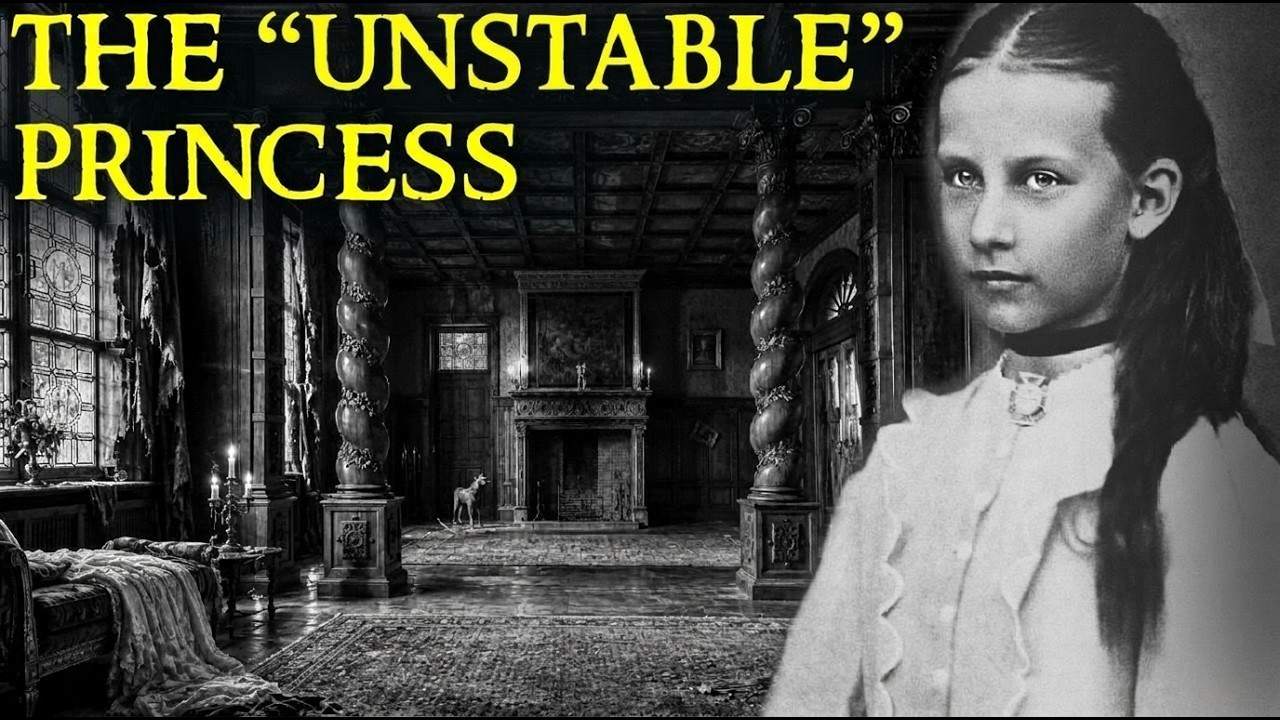
Some even included crude collages and drawings meant to make the receiver feel exposed. Within weeks, dozens of Berlin’s most powerful people had opened their mail and found their secrets laid out in ink. At the center of it all stood Charlotte, the Kaiser’s sister, Queen Victoria’s granddaughter, a woman the court already called unstable long before anyone knew what that word would cost her. And the mystery of who wrote those letters would drag on for four years, produce three military trials and two duels, and leave one man dead.
Everyone assumed Charlotte was the author. She had a reputation for a sharp tongue and a sharper pen, and the gossip spread through the palace like a fire no one could put out. Strangely, she had also received one of the letters herself. Some people decided she had simply mailed it to her own address to cover her tracks.
The affair grew for months, then for years, until it reached the Reichstag, where politicians debated it openly. Then it became something else entirely: a criminal investigation, a forensic examination, and finally a matter of honor settled at gunpoint. To understand how a stack of anonymous letters could destroy so much, you have to go back to the beginning, to a baby who would not stop crying. Charlotte was born on the 24th of July 1860 at the New Palace in Potsdam, near Berlin.
Her father was Prince Frederick William of Prussia, who would one day reign as Emperor Frederick III. Her mother was Victoria, the eldest daughter of Queen Victoria of Great Britain, known in the family as Vicki. Charlotte had the most powerful grandmother in the world, the woman who ruled the British Empire from 1837 to 1901. You would think that made her life easy.
It did not. She was the second child, and her older brother Wilhelm took all the attention. Wilhelm had been born in a long, difficult delivery that left his left arm damaged. He was the future emperor, and every worry in the household turned toward him.
Charlotte, the girl, was easy to overlook, and Charlotte did not like being overlooked. When Charlotte was just twenty-one months old, her mother was already writing letters to complain about her tantrums. She could barely walk. By the age of two, the family had nicknamed her “sweet naughty little Dida.
” At three, her mother wrote about hyperactivity and sudden swings of mood. Charlotte would become the hardest of the eight children Vicki raised. Picture a small girl in a palace, nervous, jumpy, tugging at her clothes. She bit her nails so badly that her parents made her wear gloves.
Even that did not work for long. Queen Victoria wrote from London, telling Vicki to be more patient. In another letter, the old queen wrote that she was appalled to hear Charlotte was biting her things, and that grandmama did not like naughty girls. In 1863, nobody had a good answer for how to handle such a child.
Today, a pediatrician might ask about sleep, about stress, about family history. Back then, there was only a stern mother and a worried grandmother. And that matters for this story, because those letters between Vicki and her mother are the closest thing Charlotte has to a childhood medical record. Historians today read them the way a doctor reads a patient chart.
Many survive in the archives, and they show a nursery from more than 160 years ago, where the family around Charlotte was breaking in places no one could see. Vicki raised eight children. Two of her sons died young. Prince Sigismund died in 1866 before his second birthday.
Prince Waldemar died in 1879 at only eleven years old. Those deaths shattered Vicki, and afterward something changed in how she loved. She stayed strict with her three eldest children, Wilhelm, Charlotte, and Henry. But with her three youngest surviving daughters, Victoria, Sophie, and Margaret, she became soft and warm.
Step back for a moment. This is not a story about a spoiled princess throwing tantrums. This is the nursery of a family that, within a few decades, would help push a continent into the First World War. And there was something else going on with Charlotte, something her mother could not see.
In 1877, just before her seventeenth birthday, Charlotte’s engagement was announced, and people were surprised. She was not marrying a foreign prince. She was marrying her second cousin, Bernhard, the hereditary prince of Saxe-Meiningen, a soldier who had fought in the Franco-Prussian War and a scholar who loved books. He was quiet and careful.
Charlotte was loud and bright and impatient. They could not have been more different. Their love story started on a fairground ride in Berlin. Charlotte’s brother Wilhelm, being Wilhelm, told the driver to speed up.
Charlotte was frightened and grabbed onto Bernhard. According to the story, that was the beginning. Was it really romance, or was it escape? One woman from the imperial court, Princess Catherine Radziwill, later claimed that Charlotte herself pushed hard for the marriage, even at that young age, because she wanted to get away from her mother.
A teenager so desperate to leave home that a wedding looked like freedom. Vicki had her own hopes, writing that at least once Charlotte was married, her wicked qualities would not be able to cause any harm. Imagine reading that about yourself. They married on the 18th of February 1878 in the chapel of the Berlin Palace.
Charlotte was seventeen. Bernhard was twenty-six. Guests whispered about how well the bride looked. But behind the doors, she was said to be ill, and she fainted several times that day.
Remember that detail. A bride who looks radiant on the outside and collapses on the inside. On the 12th of May 1879, Charlotte gave birth to her only child, a daughter named Theodora. She was Queen Victoria’s very first great-grandchild, a title any mother would be proud of.
But Charlotte disliked pregnancy, and after Theodora, she seems to have made a private decision: no more children. Before long, she was back in Berlin, in the glittering world of parties, fashion, and long holidays, admired for her style and feared for her tongue. In March 1888, her father became Emperor Frederick III. His reign lasted just ninety-nine days.
Throat cancer took him. Charlotte’s brother Wilhelm became Kaiser Wilhelm II. And just like that, Charlotte was the sister of the most powerful man in Germany. Every guest list she wrote, every party she hosted, was now watched.
Which brings us back to January 1891. Charlotte hosted what was meant to be an ordinary evening: a skating party and a dance at the Grunewald hunting lodge just outside Berlin. The guest list was the cream of German high society, including Duke Ernst Günther of Schleswig-Holstein and Prince Frederick Charles of Hesse, among others. Much of what happened that night has been buried under rumor and legend.
What is known is this: there was heavy drinking, and there were, to put it politely, several secret affairs happening at the same time. Within days, dozens of people began to receive the letters. No signature. No return address.
The letters described what had happened that night, dug up old gossip, and threatened to name who had been there. Whoever wrote them wanted the receivers to feel exposed. The affair grew for months, and then for years. It reached the Reichstag, where politicians debated it openly.
Then the story changed from gossip into something like a crime investigation. A man named Leberecht von Kotze, a master of ceremonies at the Imperial Court who had been at that very party, came under suspicion. Investigators believed he had made at least the collages. They found blotting paper in his desk.
They compared the handwriting. It looked nearly identical. In plain language, this was one of the early forensic document examinations. Experts studied ink, paper, and the tiny habits of a person’s hand.
But in the late nineteenth century, handwriting was far less uniform than it is today, which made it nearly impossible to prove anything beyond doubt. A single set of loops and slants could belong to a dozen people in the same office. Kotze said he was innocent. A military court, after reviewing more than a thousand pages of documents, found no evidence strong enough to convict him.
He went free. But freedom did not feel like freedom. His name was ruined. He was convinced that people at court were still calling him a liar and a criminal.
So he did what a proud Prussian aristocrat did in the 1890s: he challenged his accusers to duels. The first duel left him with only minor injuries. The second, in 1896, was against a man named Baron Schrader, who had publicly accused him. Kotze shot him in the abdomen.
Schrader died of the wound. The historian Isabel Hull has described the whole affair as dragging on for four years, with three court-martial proceedings and two duels, one of them fatal. Now zoom in. Picture Charlotte alone in her room, reading the newspapers.
According to one account of the affair, the author of the letters had somehow gotten hold of her private diary, full of secrets about the imperial family. She may not have written a single line, but her own carelessness may have helped make the whole thing possible. And the punishment came anyway. Her brother Wilhelm never forgave her.
Bernhard was transferred to a regiment in Breslau, far from Berlin, which was a polite way of exiling the couple. Wilhelm also limited their ability to travel abroad without giving up their royal privileges. So who really wrote the letters? Nobody has ever proved it.
Investigators at the time pointed fingers at several people, and later historians have pointed to others. Some suspected Charlotte. Some suspected a woman from the same circle. The question is still open today.
That is why the label “unstable” has followed her for so long. When there is no proof, people reach for a character. A reckless, spiteful woman is an easy story to tell. But in the twentieth century, a very different explanation arrived, one that said her behavior was not a flaw of her character at all, but something written into her blood.
The idea goes like this. Back in the 1960s, two British doctors, Ida Macalpine and Richard Hunter, published a paper arguing that King George III, Charlotte’s great-great-grandfather, had not simply gone mad. They said he had a rare inherited disease called porphyria. In plain language, porphyria is a group of conditions where the body struggles to make a key part of blood, and certain chemicals build up and poison the nerves, the gut, and the skin.
A follow-up study traced the same illness through the royal houses of Stuart, Hanover, and Prussia. Prussia, Charlotte’s house. Later, the historian John Rohl and his colleagues argued in the late 1990s that Charlotte and her daughter Theodora might have carried it too. And when you read Charlotte’s own words, it is hard not to feel the pull of the theory.
She wrote long letters to her doctor describing depression, severe itching, rashes, swelling, nausea, dizziness. Later, she wrote of partial paralysis in her limbs. She wrote that her urine had turned dark. One night in 1909, she screamed and ranted for hours until her doctor sedated her.
Dark urine. Hold on to that clue. So now you probably believe the story. You believe the unstable princess was not a villain at all.
You believe she was sick, cursed by an inheritance she could never see, and that history judged a patient as a sinner. It is a beautiful, sad, satisfying story. It lets us forgive her. And it may be wrong.
Think about how many famous people over the centuries have been given a diagnosis by someone who never met them. A letter is found, a symptom is listed, and a doctor two hundred years later says, “Ah, I know exactly what this was. ” It feels like detective work. But it is also a bit like trying to rebuild a whole song from three lost notes.
In the last fifteen years, a team of researchers decided to test the porphyria theory with modern tools. They did not start with Charlotte. They started with the man at the root of the whole theory: King George III. In 2010, Professor Timothy Peters and a colleague, David Wilkinson, published a careful re-examination of the historical evidence.
Their conclusion was blunt. The evidence for porphyria, they argued, was thin, and parts of the old interpretation were seriously flawed. Even the old theory had its high-tech moment. In 2005, a team of scientists including Timothy Cox and Martin Warren published a study in the Lancet reporting very high levels of arsenic in a sample of King George’s hair, and suggested it could have triggered porphyria attacks.
It made headlines around the world, but critics argued that the evidence was not conclusive, and the debate went on. Then in 2017 came a study that was one of the most striking uses of artificial intelligence in historical research. Vasiliki Rentoumi, Timothy Peters, Jonathan Conlin, and Peter Garrard, working with St. George’s University of London, did something no one could have done in the 1960s.
They took letters written by King George III and fed them into machine learning programs. The program was not reading for meaning. It measured the language itself: words used, words repeated, how predictable each sentence was. What it found was this.
The letters written during the king’s periods of illness were measurably different from the letters written when he was well. In the sick periods, his vocabulary shrank. He repeated himself more. His writing became more predictable.
The researchers also checked whether stress, like political crisis or even the time of year, could explain the change. It could not. Political uncertainty and the seasons had no effect on his language. A machine reading two-hundred-year-old handwriting saw the shape of a mind in trouble.
And the shape it saw fits the modern picture of acute mania, a symptom of bipolar disorder, far better than it fits porphyria. The researchers were careful to say that more work would be needed to confirm it. But the old explanation, the one that made so many royal stories feel complete, started to come apart. For more than half a century, a medical theory about kings shaped how we read the lives of their descendants.
Then a computer reading old letters quietly pulled the pillar from beneath it. The same tool has since been used on writers. The same neurologist, Peter Garrard, once studied the novels of the British author Iris Murdoch and found measurable changes in the language of her final book, written before anyone knew she was ill. Writing can carry a quiet medical signal long before a person or a doctor can see it.
Charlotte’s letters may hold the same kind of signal. We are only just learning how to listen. So what about Charlotte? If George III did not carry porphyria, then the neat family chain that explained Charlotte starts to look like a rope with a missing link.
That does not mean Charlotte was well. It does not mean she was healthy. It certainly does not mean she was a villain. It means that for more than a hundred years, we may have explained her suffering with the wrong ancestor.
And that leaves a far more urgent question. If it was not a famous royal curse, then what was happening to Charlotte and her daughter Theodora? Why did a mother and a daughter who could barely be in the same room suffer such similar symptoms? The person who may have kept the best clue was not a historian.
It was Charlotte’s own doctor. Charlotte had written down everything: the itching, the swelling, the numb limbs, the darkened urine. A modern physician looking at that list would not leap to a single diagnosis, but would immediately recognize a pattern worth testing. Some forms of porphyria really do cause belly pain, nerve problems, mood changes, skin reactions, and dark urine.
Those are real, well-documented features. At the same time, many other illnesses can cause some of the same symptoms. And in Charlotte’s day, tools to tell them apart simply did not exist. A living patient today can have a urine test that looks for the telltale chemicals within hours.
In 1909, a doctor could only listen, write, and guess. A woman is suffering. She is clear enough to describe it. She has a doctor who writes it down.
And the tests that could have helped her are decades away. Now consider her daughter, Theodora. Theodora was nineteen when she married Prince Heinrich the Thirtieth Reuss, a man of thirty-three who was neither rich nor particularly high-ranking. To the imperial family, the match was beneath her.
Charlotte was furious. The rift between mother and daughter turned bitter. By 1900, Theodora was telling friends that her mother was spreading ugly gossip about her at court, including a rumor that she had caught a disease from her husband. The truth was heartbreaking.
Theodora had not caught anything. She was struggling to have a child. She underwent a series of painful, dangerous procedures, desperate for a baby. Imagine going through that, and then hearing that your own mother is telling the court a lie about your body.
Both women were also quietly ill. Theodora had many of the same symptoms as Charlotte, and by some accounts, hers appeared even more advanced at a younger age. A mother and a daughter who could not be in the same room without a fight, and yet whose bodies seemed to be writing the same sad story. Genetics adds one more layer.
Some forms of porphyria are inherited in a way that means a single faulty copy of a gene passed from one parent can be enough. But carrying the gene does not always mean getting sick. Many people who carry it never have a serious attack. A family history is a clue, never a verdict.
That is exactly why Charlotte’s case is so hard, and why anyone who tells you it is solved is rushing. Maybe that is the real tragedy here. It was not only that they were sick. It was that they were sick in an age that called illness a flaw.
They had a word for women like this. They called it hysteria. Charlotte’s health kept sliding through the 1900s and into the 1910s. These were hard years for the whole imperial family.
Her brother, the Kaiser, suffered a kind of nervous collapse in the late 1900s after another court scandal, the Eulenburg affair, raised questions about his own private life. His reckless foreign policy pushed Germany toward conflict with Britain and France, and helped bring about the First World War in the summer of 1914. Just before that war began, Charlotte’s husband Bernhard became Duke of Saxe-Meiningen. For one strange moment, the woman the court had punished was on a throne.
The New York Times ran a headline that said, “The Kaiser’s cleverest sister is now on a throne. ”
Imagine reading that after twenty-three years of whispers. Cleverest, not cruelest, not unstable. Cleverest.
For a moment, the world saw her the way she may have always wanted to be seen: not as a problem to be managed, but as a mind worth noticing. Then the war came, and the headline faded. By the winter of 1917, Charlotte was reporting kidney pain and stomach trouble, and she could hardly move. She spent more and more time in a clinic, relying more and more on morphine to dull the pain.
She was also a heavy smoker, a detail that sits uneasily beside all the theories. Medicine is rarely about one cause. In November 1918, her brother abdicated. Germany had lost the war.
A revolution swept through the country, and under pressure from a local workers’ and soldiers’ council, Bernhard gave up his title. In a few weeks, Charlotte went from a duchess to a private citizen in a collapsing world. She spent her last year moving between clinics and houses. On the 1st of October 1919, she had a heart attack in Baden-Baden.
She was fifty-nine years old. She was buried at Schloss Altenstein in Thuringia, and her husband was buried beside her when he died nine years later at seventy-six. What about Theodora? There is no evidence that the two women ever made peace.
Theodora lived until 1945. And like her mother before her, she died not long after a world war had ended. A mother and a daughter, each unwell, each lonely, each hurt by the other. Theodora lived through the First World War and then a second, still carrying a family story that never explained her.
What does a person do with an unfinished argument that outlives both people in it? She did what most of us do. She lived with it. Here is what we know and what we do not.
We know Charlotte hosted a party in 1891. We know letters followed. We know a man died in a duel five years later. We do not know who wrote the letters.
We do not know for certain what illness shadowed Charlotte and her daughter. And we should be wary of anyone, including anyone who claims otherwise, who tells you the answer is clear. The human body is an astonishing piece of design. Every second, trillions of chemical reactions run in perfect balance inside you.
A single missing enzyme can tip the whole system. That should make us humble. It should make us slow to call someone mad or wicked when we do not know what their body was carrying. Yet the tools keep changing.
In 2013, a newspaper in London revealed that a crime novel by a new author named Robert Galbraith had really been written by J. K. Rowling. How did they know?
A computer scientist named Patrick Juola at Duquesne University ran the text through software that compares writing habits, the small unconscious patterns of word choice that nobody thinks about when they write. The program saw her fingerprints even though she had tried to hide. Every one of us has a hidden signature in the way we write, and modern programs can measure it. Now think about the Kotze letters, the surviving pages written by someone who thought they would never be found.
The author could disguise a name. They could not so easily disguise a habit. As far as is known, no published study has ever put those letters through that kind of analysis and told us what it found. The case that scared Berlin more than a century ago might still have an answer, sitting quietly in an archive, waiting for someone to ask the right question of the right machine.
Charlotte spent her life being judged by people who had no tools to understand her. A mother who called her naughty. A court that called her wicked. Doctors who called her hysterical.
Historians who called her spiteful. Every generation found a word for her. And every generation, it seems, was a little too confident. Maybe what her story really teaches is how easily we turn the things we do not understand into character flaws.
We do it with strangers. We do it with family. Sometimes we do it with ourselves. A restless child in gloves.
A bride who fainted on her wedding day. A mother who could not make peace with her own daughter. Behind each one there may have been a body and a mind asking for help in a language no one around them could read. That, in the end, is the human part of the mystery.
Not who wrote the letters. But how many people in every age have been remembered for what their illness did instead of who they were. A woman who was called unstable. A disease she may never have had.
A set of letters still unsigned. And a machine that might one day tell us whose hand held the pen. If Charlotte had been born today, with a doctor who listened and a test that could name what was wrong, do you think her story would be remembered as a royal scandal, or as a medical mystery?
Nobody has solved it yet.
