The city of London roared its thanksgiving on a summer afternoon in 1708, and at the heart of the celebration rode two women who had once been everything to one another. The Queen of England, Anne, was carried in state toward St. Paul’s Cathedral, where the nation would give solemn thanks for yet another victory won by the Duke of Marlborough, the greatest soldier of the age. At her side in the coach rode his wife, Sarah, Duchess of Marlborough, the favorite who had ruled the queen’s heart for nearly thirty years, who held more high offices at court than any woman before her, and who that day noticed, with a fury she could not contain, that the queen had not put on the jewels Sarah had laid out for her.
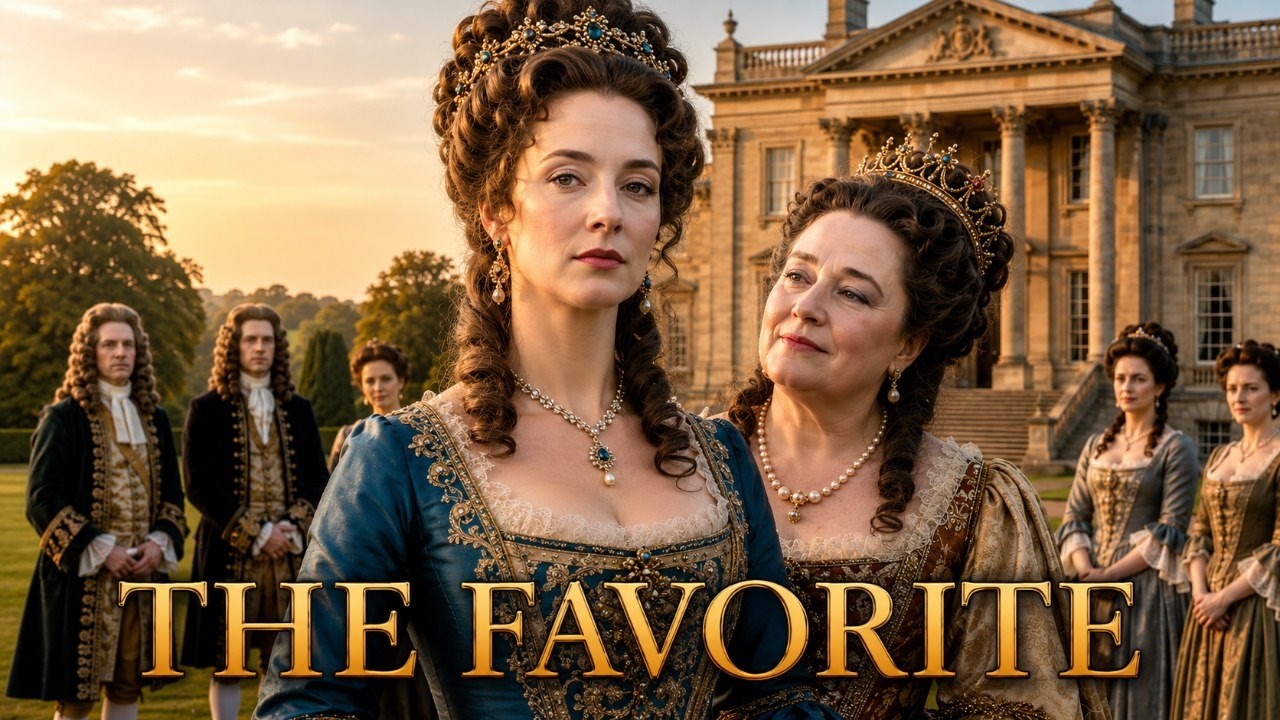
It was the work of Abigail Hill, Sarah was certain, the quiet cousin she herself had brought to court out of charity, who had somehow crept into the queen’s confidence. The two women quarreled in the coach as the crowds cheered. And on the very steps of the cathedral, before the leading men of the realm and the watching multitudes, Sarah Churchill, forgetting entirely who she was addressing, told the Queen of England to be quiet. That single word on the steps of St.
Paul’s was a thing beyond forgiveness. And though the story may have grown in the telling, it captured perfectly the impossible position the two women had reached: the favorite still treating the queen as the friend she might scold, the queen no longer willing to be scolded by anyone. They never spoke again in friendship after that day. To understand how two people who had loved one another as deeply as these two women, who had signed their letters Mrs.
Morley and Mrs. Freeman, who had fled into the night together and grieved together and risen together to the heights of the world, could come to such an end, the story must begin far earlier, in a house of warm red brick standing among water meadows on the edge of the old town of St. Albans in the green county of Hertfordshire, north of London. The year was 1660, and England was changing its skin.
For more than a decade the country had lived under soldiers and stern men, under the long gray discipline of the Commonwealth. And now, that very spring, the old order had come flooding back. Charles II had been welcomed home to his throne amid bonfires and bells and wine running in the conduits, and a whole people half starved of color and music and laughter had set about enjoying itself again. Into this loosened, festive, uncertain new world a daughter was born in the house by the water on the fifth day of June in the year 1660.
Her name was Sarah Jennings, and almost nothing about that quiet birth suggested the height she would one day reach. The Jennings had been people of standing in Hertfordshire for a long time, the kind of family whose men served as members of Parliament and whose name was known the length of the county. But standing is not the same as wealth. The family’s means were modest, its affairs not always easy, and the world little Sarah grew into was one in which appearances had to be kept up on an income that did not always stretch to keep them.
It was an excellent schooling, though no one intended it as one. A child who grows up watching her elders manage carefully and worry quietly learns early what things cost and what security is worth. She was born too into a country still raw from upheaval, where the wounds of civil war and the killing of one king and the rule of soldiers were within living memory. Beneath the gaiety of the Restoration ran a current of fear, of plots and rumors of plots, of the old religious hatred between Protestant and Catholic, that would, before Sarah was thirty, tear the throne apart once more.
A girl of spirit growing up in such a world absorbed without being taught it the lesson that nothing was fixed, that fortunes turned, that the great could fall and the obscure could rise, and that the only safety lay in nerve and in knowing one’s own mind. Sarah Jennings absorbed it more deeply than most, and she would live her whole long life as though she had never for a moment forgotten it. Her father, Richard Jennings, sat in Parliament and managed his estates with the ordinary worries of a country gentleman who has more name than fortune. Her mother, Frances, was a woman of strong character and, it was said, a sharp tongue, qualities her daughter would inherit in full measure and then some.
There were several children in the household. An elder sister, Frances, named for their mother, was the family beauty of the first rank, celebrated for her looks, painted and admired and talked of at court. That example mattered, for it showed the younger girl that a clever and handsome woman of no fortune might still make her way upward through the one market open to her, the market of the court, where a face and a manner and a ready tongue could be worth more than acres of land. Sarah herself received almost no formal education, for almost no pains were spent on the schooling of girls in her station, and she carried a faint embarrassment about her spelling to the end of her days, when she was one of the richest women in Europe and could have commanded any tutor in the land.
What she had instead was something that no schoolroom could have taught her. She had a quick, fearless, restless mind. She had a tongue that said exactly what it thought to anyone of any rank, without the small hesitations that governed everyone around her. And she had beauty of a striking, clear, fair-haired kind that turned heads in a room and held them.
Even as a girl, she seems to have understood without being told that the world could be argued with, that people in high places were only people. The world she was about to enter was the most glittering and the most dangerous in England, and it lay only a day’s ride to the south. The restored court of Charles II was a world of wit and beauty and pleasure, of poets and gamblers and royal mistresses, of fortunes made overnight by a clever word in the right ear and lost as quickly by a wrong one. Behind the silk and the music it was also a place of cold calculation, where everything turned on access, on favor, on who could get near the people who mattered.
It was, in other words, a setting that might have been designed for a girl exactly like Sarah Jennings, if only she could find her way in through the door. The door, when it opened, opened through her sister and through the household of the king’s own brother, James, Duke of York, the man who would one day, briefly and disastrously, be king himself. Around the year 1673, when Sarah was about thirteen, she was brought to court and placed in that household. The Duchess of York at this time was Mary of Modena, a young Italian princess, very beautiful and very Catholic, who had just been married to the widowed Duke.
And it was here, among the maids of honor and the ladies of the bedchamber, that Sarah Jennings began her education in the only subjects that would ever truly matter to her: power and people, and how the two were joined. Life as a maid of honor was a curious mixture of glamour and hazard. The young women were lodged together within the palace, attended the great ladies through the long rituals of the day, appeared at the masques and the card tables where the whole court gathered, and were in effect on permanent display before the men who would choose or seduce or ruin them. A girl who made a good marriage from such a place might rise for life, while one who made a false step might be sent home in disgrace with her prospects gone.
It was a finishing school in which the only subjects were judgment, nerve, and the reading of other people, and Sarah excelled in all three. She learned that the great were merely people, vain and frightened and biddable like everyone else, and that the appearance of indifference to their favor was paradoxically the surest way to win it. Above all, she learned the value of her own unusual armor, her refusal to dissemble, in a place where almost everyone dissembled all the time. Where another girl might have schooled herself to flatter and please, she schooled herself in the opposite direction, and the sheer nerve of being blunt in a world of courtiers marked her out.
In a place where everyone flattered everyone, a young woman who would not flatter stood out like a clear note in a noisy room. It was in this household, when she was still only a girl, that Sarah first came to know the person who would become the center of her life for thirty years. Among the children of the Duke of York was his younger daughter, the Princess Anne. Anne was a few years younger than Sarah, a plump, quiet, short-sighted child, often unwell, often overlooked, standing always in the shadow of her elder sister Mary.
She was not clever in the way Sarah was clever, and she was not beautiful, and she was painfully shy, and she suffered all her life from poor eyesight that made her seem to peer out at the world from somewhere far inside herself. What she had, and what almost no one troubled to notice, was a deep and lonely capacity for love, a need to fasten her whole heart onto one person and to be loved entirely in return. When that quiet, neglected princess looked at the dazzling, fearless, golden-haired older girl who attended her stepmother, something in her reached out and held on, and did not let go for the better part of three decades. Before that bond flowered fully, though, Sarah had her own heart to lose.
His name was John Churchill, and when she first came to notice him, he was one of the most admired young men at the court of Charles II. He was about ten years older than she was, the son of a royalist gentleman from Devon whose family had been ruined in the Civil Wars for their loyalty to the crown, and who had nothing to leave his son but a good name and a debt of gratitude owed by the restored king. John had been given a place as a page in the household of the Duke of York, and from there he had gone into the army, and in the army he had found the thing he was made for. He was brave to a degree that struck even hardened soldiers as remarkable, cool under fire, courteous, careful, and quietly, relentlessly determined to rise.
He was also, by every account that survives, beautiful to look at, with an easy grace of manner that charmed men and women alike. He was poor, he was ambitious, and he was looking, as a man in his position had to look, for a marriage that would advance him. There was talk of a match with Catherine Sedley, a great heiress, plain but immensely rich, exactly the sort of bride that cold good sense would have chosen for an ambitious man. His parents pressed him hard towards the money.
By every rule of the world they both lived in, he and Sarah Jennings should not have married each other at all. He needed money, and she had almost none. And yet, against all of that, stood one thing: he had fallen completely and permanently in love with a penniless maid of honor who answered him back. The courtship was stormy, and we know a surprising amount about it because some of the letters survived.
John’s letters to Sarah are the letters of a man undone, pleading, adoring, wretched when she is cold to him, transported when she is kind. Hers, by contrast, are wary, sharp, demanding, full of suspicion that he is trifling with her, or that his family will win and he will throw her over for the heiress. She made him work. She doubted him out loud.
She accused him of inconstancy and warned him that she would not be made a fool of, and the more she held him at arm’s length, the more completely he was hers. It is the same pattern as with the lonely little princess, the same quality in Sarah that drew people who could have anyone towards the one person who would not simply fall at their feet. Sometime in the winter of 1677 and 1678, they were quietly married. No record was kept of the exact day, which tells its own story, because the marriage was a secret one.
If it became known that Sarah had married, she would lose her place as a maid of honor, and the place was for the moment her only standing in the world. For a time the young couple kept their union hidden, meeting as they could, with only a few trusted people in the secret, among them importantly the Duchess of York herself, who knew and gave her protection to the match. The years of the secret marriage were also years of great danger for the whole household, for they were the years of the Popish Plot and the long crisis over whether the Catholic Duke of York should be allowed to inherit his brother’s throne. A wave of anti-Catholic panic swept the country.
Men were put to death on the word of perjurers, and Parliament fought again and again to bar the Duke from the succession. To have tied one’s fortunes to the Catholic heir in that time was a perilous wager, and the Churchills, Protestants both, had to walk a careful line. Then, as so often happens, fortune shifted the ground beneath them. In 1677, Sarah’s only brother, Ralph, died young.
With him gone, she and her sisters became the heirs to the Jennings estates in Hertfordshire and Kent. The portionless girl was suddenly not quite so portionless after all. The marriage could come out of the shadows, and it did at last, in the autumn of 1678, when Sarah’s condition made concealment impossible, for she was expecting their first child. Sarah Jennings became openly, and for the rest of her life, Sarah Churchill.
The early married years were lived in the cracks of other people’s households. John was often away at sea or on the king’s service or abroad, and the long separations bred the habit of letters that would become one of the treasures of the age. Children came quickly, and with them the ordinary terror of that century, in which a healthy infant could be carried off in a week. Their first daughter did not live.
But more children followed who did live, daughters who would grow into great matches, and a longed-for son named John for his father. As the years passed, Sarah attached herself ever more closely to the household of the Princess Anne. To understand the bond between the two women, you have to understand first how very lonely Anne was. She had lost her mother as a small child.
Her father, the Duke of York, was a remote and rigid man who turned to the Roman Catholic faith and so set himself at odds with almost the whole of Protestant England. Her elder sister Mary, the bright and favored one, had been married away to a Dutch prince and lived across the sea. Anne herself was sickly from girlhood, troubled with the eye complaint that half blinded her, and with the recurring illnesses that would plague her whole life. She did not want a glittering circle of friends.
She wanted one person utterly her own, who would love her for herself and not for her rank. And into that aching particular need walked Sarah Churchill, who happened to be everything Anne was not: bold where Anne was fearful, quick where Anne was slow, certain where Anne wavered. Anne fell in love with her friend in the deep, dependent, all-consuming way that lonely people sometimes do. What made the friendship possible in the rigid world of a royal court was a private fiction the two women invented to hold the difference in their ranks at bay.
Between themselves, in their letters and in private, they agreed to set aside who was princess and who was servant and to be simply two friends, equals on level ground. Anne chose to be called Mrs. Morley, and Sarah was to be Mrs. Freeman, the name picked because it suited Sarah’s free and outspoken nature.
And so the heir to the throne of England signed herself in hundreds of letters as Mrs. Morley and wrote to her dear Mrs. Freeman with a warmth and a need that are almost painful to overhear across the centuries. Anne wrote to her not as a princess to a servant, but as a lover almost, begging for her company, wretched at her absences, declaring that she would rather live in a cottage with her friend than reign in a palace without her.
Sarah’s side of the friendship was warmer than her enemies allowed and cooler than Anne’s, the affection of a strong nature for a weaker one. Fond, protective, a little impatient, and entirely confident of its own power. It was also, and she would have seen no contradiction, both genuine and useful. To be the chosen favorite of the person who stood next in line after Mary to the throne of England was to hold something beyond price, a private channel straight to power that no office could buy and no rival could easily seize.
Anne was generous to those she loved, pressing upon her dear friend not only her affection but the solid currency of court life: places, pensions, and the steady advancement of the whole Churchill connection. The friendship deepened and was formalized when Anne herself married. In the summer of 1683, the Princess Anne was given in marriage to Prince George of Denmark, a stolid, kindly, unambitious man, fond of his food and his drink and his wife, who asked nothing of the world but to be left in peace. Crucially, the marriage gave Anne her own household, separate from her father’s and answerable to herself.
And the first thing Anne did with that household was to bring Sarah Churchill into the very heart of it. She was made one of the ladies of Anne’s bedchamber. The bedchamber in a royal household was the inner sanctum, the place where the public mask came off, where private words were spoken and private decisions half-formed before they were ever announced to the world. To control access to the bedchamber was to control the most precious commodity in the whole machinery of power: nearness to the source.
Sarah now held that nearness with the heir to the throne, and held it not as a cold office but warmed through and through by genuine love. These were the years in the middle of the 1680s when the whole question of the succession came to its crisis. In 1685, the old king died, and the Catholic Duke of York came to the throne at last as James II. Within months, the new king faced a rebellion led by his nephew.
When the rebellion came, John Churchill placed his military skill at the king’s service. But the security of the Churchills under James was an illusion, for James set about his disastrous campaign to advance his religion, and every month that passed drove a deeper wedge between the king and the nation, and between the king and his own Protestant daughter. Anne, watching her father’s course with growing alarm, drew ever closer to the one person she trusted entirely. The household at the Cockpit, Anne’s London lodgings, became a refuge of Protestant feeling within a court turning Catholic.
In the summer of 1688, Mary of Modena gave birth to a son, a Catholic prince, a male heir, who would take precedence over both his Protestant half-sisters. That birth was the spark that lit the train. With it came the rumor, eagerly believed because it was so badly needed, that the child was no true prince at all but an impostor smuggled into the bed in a warming pan to cheat the Protestant heirs of their inheritance. The slander was almost certainly false, but its very wildness measured the desperation of a nation that could not stomach a Catholic dynasty.
The invitation went out across the sea, and in November of 1688, William of Orange landed in the west of England with his army and began his slow advance. Almost no one fought for the king. The desertions began among the great and spread through the ranks. When John Churchill rode out of the royal camp to join the invader, he carried with him not only his own sword but a signal to many waverers that the cause was lost.
It was treason if the gamble failed, and the man who had owed everything to the house of Stuart now staked everything on its fall. And while John was deserting the father, Sarah was at the side of the daughter, managing a desertion of her own. When the news came that John had gone over to William, James’s anger turned towards his own daughter, and Anne feared with reason that she would be seized and held as a hostage. A flight was arranged in secret by night.
Down a back staircase of the palace at Whitehall, in the dark, the Princess Anne crept away from her father’s house, with Sarah Churchill at her side and a small party of trusted companions, and was carried off to safety beyond the king’s reach. A princess fleeing her own father into the night with her favorite holding her hand fixes the whole nature of the bond. In the great crisis when thrones were falling, it was not to a statesman or a husband that Anne turned, but to Mrs. Freeman.
James, broken in nerve and abandoned by his people, fled to France. The throne was declared vacant, and in the settlement that followed, William and his wife Mary, Anne’s elder sister, were made joint sovereigns. The Churchills had backed the winning side and backed it early. John Churchill was raised to the peerage as Earl of Marlborough, and Sarah became a countess.
But the very triumph carried a poison in it. The new king was a cold and watchful man who never quite trusted the clever general who had betrayed one master and might betray another. And for all that William and Mary were on the throne, the new king and his sister-in-law Anne did not love one another, and the two royal sisters fell into a coldness that hardened into open estrangement. At the very center of that estrangement, accused by the queen of being its cause, stood Sarah, Countess of Marlborough.
Queen Mary believed, and she was not wholly wrong, that Sarah Churchill had acquired an unhealthy dominion over her younger sister. Mary pressed Anne, as a sister and as a queen, to dismiss her favorite from her service, and Anne refused. She refused flatly, repeatedly, and with a stubbornness that astonished everyone who thought of her as a weak and yielding woman. Then, in the early 1690s, the Marlboroughs fell suddenly and hard from the king’s favor.
John, Earl of Marlborough, for all his services in bringing William to power, was a man the king never quite trusted, and with reason, for Marlborough was already, like many cautious men of that uncertain age, keeping a quiet line open to the exiled court of James II across the channel in case the wheel should turn again. In 1692, Marlborough was abruptly stripped of all his offices and dismissed from court in disgrace. Worse followed. He was accused of conspiring with the exiled king, arrested, and committed to the Tower of London.
The charge rested in part on forged papers and came to nothing in the end, and he was released after some weeks. But the message was plain. When the queen, furious at the disgrace of the Marlboroughs, renewed her demand that Anne dismiss her favorite, Anne again refused, and this time the refusal cost her dearly. She was in effect driven from court, made to give up her lodgings, deprived of the guards and honors due to her rank, left isolated and slighted by her sister the queen.
And through all of it, she would not give up her friend. The two women drew closer in adversity than they had ever been in prosperity. Then, in the last days of 1694, Queen Mary caught the smallpox and died within days. With Mary gone, the chief author of the quarrel was removed, and a reconciliation of a cool and formal kind became possible.
Anne was restored to her honors. And in time, though William never warmed to Marlborough, the ban on the disgraced earl began to ease. The years that followed were marked above all by a long and terrible private grief that bound Sarah and Anne together in a different way. Across nearly two decades, the princess conceived again and again, and again and again the pregnancies ended in loss: children stillborn, infants who lived a few hours or a few days, miscarriage after miscarriage.
The count ran to something like seventeen pregnancies. Out of all of them, only one child lived past infancy into boyhood. That child was William, Duke of Gloucester, born in 1689, a bright, brave, sickly little boy on whom the hopes of a whole dynasty came to rest. In the summer of 1700, just days after his eleventh birthday, the boy fell ill of a fever, and within a few days he was dead.
The death meant that Anne, now plainly never to raise an heir of her own body, was the last Protestant Stuart, and that after her the crown must pass to the distant German relations of the royal house. A great act of Parliament, the Act of Settlement, was passed the next year to fix that succession in law. For Anne, the loss was simply the death of her last child, and once again it was to Sarah that she turned in her desolation. Whatever Sarah’s faults, she did not fail Anne in those rooms of sorrow.
In March of 1702, King William, worn out and ailing, was thrown from his horse when the animal stumbled on a molehill, broke his collarbone, and, weakened, took a chill and died. And so at last the moment the Marlboroughs had staked their lives upon arrived. Anne became Queen of England, Scotland, and Ireland. The plump, short-sighted, much-grieved woman who had crept down a back staircase into the night was now the anointed queen of a great kingdom at the dawn of a new age of war, and Sarah Churchill stood now at the very summit of the world, the closest confidant of the queen of England.
Within days of her accession, Anne heaped upon Sarah a cluster of the greatest offices a woman could hold at court. She was made Groom of the Stole, the head of the queen’s bedchamber and the most intimate of all the royal household posts. She was made Mistress of the Robes. She was made Keeper of the Privy Purse, which put into her own hands the management of the sovereign’s private money.
And she was made Ranger of Windsor Great Park. The salaries alone made her rich, but the salaries were the least of it. What these posts truly conferred was total, daily, unrivaled access to the person of the Queen of England. The government that took shape at Anne’s accession rested on a partnership of three.
Marlborough led the armies and managed the foreign alliance. His close friend Sidney, Lord Godolphin, the Lord Treasurer, found the money and steered the business of the kingdom. And Sarah held the queen, the living link that bound the whole arrangement together. Contemporaries spoke of the two men as the great managers of the reign, and behind them, less visible but no less essential, stood the Duchess, for it was her hold on Anne’s affection that gave the partnership its access to the crown.
Yet from the very beginning there was a flaw in the design. Sarah was a Whig to the marrow, fierce for the war, fierce for the moneyed men who financed it, fierce against the Tories and the high church party. Anne was a Tory by every instinct of her heart, devoted to the Church of England above all things, and longing to reign above the parties rather than be captured by one of them. Sarah did not merely advise.
She pressed, she argued, she lectured, she tried to bend the queen by sheer force of will to her own party. The plain speaking that Anne had once loved as a refreshing honesty began to feel like hectoring. The friend who had once soothed her now wearied her. Slowly, almost invisibly at first, the warmth between Mrs.
Morley and Mrs. Freeman began to cool. The reign of Queen Anne was above everything else a reign of war. The war was the great War of the Spanish Succession, a vast struggle to prevent the mighty king of France, Louis XIV, from joining the crowns of France and Spain and so dominating the whole continent.
At the head of the Allied armies was placed John Churchill, now raised to the rank of Duke of Marlborough. He proved to be one of the supreme commanders in the history of war, a general of such patience, daring, and care for his men that they came to call him the Old Corporal. The greatest of his victories came in the summer of 1704, far up the river Danube in the heart of Germany, near a village called Blenheim, where Marlborough, after a march of breathtaking audacity across the length of Europe, fell upon the French and Bavarian army and broke it utterly, capturing its commander and tens of thousands of men. When the fighting was over, he scribbled a few hurried words in pencil on the back of a tavern bill and sent them racing across Europe.
The message was addressed not to a minister but to his wife. Two years after Blenheim came the victory at Ramillies. Two years after that, Oudenarde. And the year after that, the terrible battle of Malplaquet, the bloodiest day of the whole war, a victory so dearly bought that it shook the nation’s stomach for the fighting.
In gratitude for the victory at Blenheim, Queen Anne gave the Duke one of the most magnificent rewards ever bestowed upon a subject. She granted him the old royal manor and park of Woodstock in Oxfordshire, many thousands of acres of fine country, and promised the money to raise upon it a vast house, a palace built at the nation’s expense, to be named Blenheim after the battle. The man chosen to design it was Sir John Vanbrugh, a brilliant, theatrical, expansive man who conceived Blenheim not as a comfortable house but as a heroic monument, vast, dramatic, more like a temple to glory than a place to live. Sarah wanted a house her family could live in.
She thought the whole conception ridiculous, the expense monstrous, the delays endless, and she suspected that the architect and the builders were cheating her at every turn. She fought Vanbrugh over every stone and each bill, season after season, with a ferocity that wore both of them down, until at last the two were barely on speaking terms, and when in his old age Vanbrugh came to look upon his masterpiece, he was turned away from the gate by her servants, and not permitted even to enter the park. While her husband won the war abroad, the ground shifted beneath them at home. Long wars grow unpopular.
The taxes mounted, the casualty lists lengthened, and the country gentlemen who paid for it all began to grumble that the war was being prolonged for the profit and glory of the general. The Tories made this grievance their own, and the queen, who had never loved the war as Sarah loved it, listened. And Sarah herself kept making the strain worse, because she simply could not let the queen alone. She argued with Anne about politics relentlessly.
She wrote long, scolding letters when the queen would not do as Sarah thought she should. And increasingly she simply was not there. She found the daily round of attendance on the queen tedious, and she had her own great affairs to manage, her family, her building, her vast estates, so she absented herself from court for long stretches, leaving Anne alone. Into the empty space she left behind, day by day, quietly, attentively, with none of Sarah’s heat and all of the soft compliance that Sarah scorned, there stepped a poor relation whom Sarah herself had brought to court.
Her name was Abigail Hill. Sarah, in a rare act of charity, had taken pity on the impoverished cousin and found her a humble place as a chamberwoman in the queen’s household. Abigail Hill was everything Sarah was not. Where the Duchess was dazzling, Abigail was plain and unobtrusive.
Where Sarah was fierce and demanding, Abigail was gentle, patient, and endlessly obliging. Where Sarah lectured and argued and absented herself, Abigail was always there, quiet at the queen’s side, soothing, attentive, asking nothing. To a tired, ailing, lonely queen, worn down by years of being hectored by her brilliant friend, the soft and undemanding company of the chamberwoman was balm, and slowly, without anyone marking the moment it happened, Anne transferred to Abigail the trust and the affection she had once given wholly to her old friend. There was politics in it as well as feeling, for Abigail had a kinsman of her own, a subtle and ambitious Tory politician named Robert Harley, who saw in his quiet cousin’s growing closeness to the queen a golden road to power.
Through Abigail he now had a private channel straight to the queen’s ear, a channel that bypassed Sarah entirely. In the year 1707 came a sign of how far the new intimacy had gone, when the queen attended Abigail’s quiet wedding to a gentleman of the household, a small private matter of which Sarah, the great cousin who had raised Abigail from poverty, knew nothing until afterward. To learn that the queen had been present at the secret marriage of her own poor relation, and had given the bride money from the privy purse that Sarah herself was supposed to keep, struck the Duchess like a blow. When at last Sarah understood what had happened, her reaction was not the calm reckoning of a wise woman but the fury of a betrayed one.
She raged. She confronted the queen with bitter accusations. She wrote long, wounded, accusing letters. And in her rage she made every possible mistake, for the more she stormed and reproached, the more she proved to the weary queen exactly why the gentle company of Abigail was the greater comfort, and the faster she drove Anne into the arms of her rival.
Then, in the autumn of 1708, came a grief that should have drawn them back together and instead tore them finally apart. Prince George of Denmark, the queen’s faithful husband of twenty-five years, fell ill and died. Anne was plunged into a deep and genuine mourning. The Duchess came to her at Kensington in her hour of loss, but she came, even then, unable to set aside her own purposes and resentments.
She pressed the grieving queen on practical matters when Anne wanted only to sit with her sorrow. She is said to have ordered the removal of the dead prince’s portrait from the queen’s room, thinking it would ease the pain, when Anne wished it left. And when Anne, even in her grief, asked for Abigail to be sent to comfort her, Sarah refused and reproached her instead. Whatever was left of the old love did not survive that season.
The personal breach ran alongside a great turning of the public mood. The long war had soured, and a wave of feeling for the church and the old Tory cause swept the nation. The queen, who had never loved the Whigs the Marlboroughs served, read the public mood as her own deliverance, and with the quiet Abigail at her side and the subtle Harley guiding her hand, she began to dismantle the whole structure of power that had rested upon her old friend. In this great shift, the fall of the favorite and the fall of the ministry became a single movement.
In the spring of 1710, the Duchess obtained one last private interview with the queen at Kensington, hoping even then to win back what was lost. It did not go as she wished. Anne, unpressed and reproached, would say almost nothing, only repeating over and over with the flat stubbornness of a woman whose mind is wholly made up that the Duchess might put anything she had to say in writing, and that she, Anne, would give her no answer. And so they parted, the two women who had loved each other for thirty years, who had been Mrs.
Morley and Mrs. Freeman, who had fled into the night together and grieved together and risen together to the heights of the world. They never saw one another again. The following winter, the queen sent word that the Duchess was to give up her offices and surrender the gold key that was the badge of her place in the bedchamber.
The Duke, Sarah’s husband, came on his knees to the queen to beg even a little delay, a few days’ grace, and Anne would grant nothing. Sarah, in a last gesture of the proud temper that had carried her so high and brought her so low, took the gold key and flung it down, and bade her husband carry it back to the queen at once. With that small, hard sound of metal on the floor, the greatest friendship of the age was over. The fall of the favorite was followed quickly by the fall of the whole connection that had rested upon her.
Godolphin was dismissed. The Whigs were turned out. And at the end of the year 1711, the queen brought down the greatest man of the age himself. The Duke of Marlborough, the victor of Blenheim and a dozen other fields, was dismissed from all his commands, accused by his political enemies of taking money corruptly from army contracts, charges that were largely a pretext to be rid of him.
The general who had won the war was cast aside before it was even ended, so that the new ministers could make their peace with France. Out of office, out of favor, watched with suspicion by a hostile government, the Duke and Duchess of Marlborough at length decided to leave England altogether. In the last years of Queen Anne’s reign, the greatest soldier in Europe and his fierce fallen duchess packed up their lives and went abroad into a kind of voluntary exile, living for a time in the great merchant city of Antwerp and in the towns of the continent, where the old soldier was received with the respect that England had denied him. It was in its way a strange and not wholly unhappy interlude, the two of them thrown back upon one another’s company as they had not been for years.
But it was exile all the same, and they watched from across the sea, waiting for the wheel to turn. What they were waiting for was a death. The queen was ailing, and the queen had no heir of her body. When Anne died, the crown would pass by the Act of Settlement to the Protestant House of Hanover in Germany, and the elector of Hanover had no love at all for the Tory ministers who had made a separate peace with France.
Sarah and her husband, watching from abroad, understood this perfectly and kept their lines open to Hanover. Anne, Queen of Great Britain, for so she had become after the Union of England and Scotland in her reign, died on the first day of August in the year 1714. She was only forty-nine, but she was worn out, her body broken by the long stretches of illness and the seventeen heartbreaking childbirths that had left her with no living child. She died with her kingdom at peace and the Protestant succession secure, but she died estranged from almost everyone who had once been close to her.
She went to her grave without ever having spoken again to Sarah Churchill. The two women had not met since that last cold interview at Kensington four years before. The friendship that had been the great love of Anne’s life and the foundation of Sarah’s greatness simply ended in silence, and the silence was never broken. The new sovereign was George I, who knew very well who his friends and his enemies in England were.
The Tory ministers fell at once from power, and the Whigs, the party of the Marlboroughs, came back into favor. The Duke and Duchess returned to England, not as disgraced exiles but as honored friends of the new king. The Duke was restored to his offices and his honors. Sarah was a different woman now.
She set her formidable will to the finishing of the great half-built palace at Woodstock. The Duke was aging and would soon be unable to manage anything at all, and the task fell in large part to her. She battled the workmen over their bills. She battled the architect Vanbrugh until he abandoned the project altogether.
She economized and disputed and drove the work forward by sheer force of will, and slowly the great pile of stone rose to its full height, the most enormous private residence in England. In the year 1716, the Duke of Marlborough suffered the first of a series of strokes. The disease took not his courage or his fame but his speech and his power of mind, leaving the greatest commander of the age dependent, diminished, a shadow of the towering figure who had directed armies across a continent. He lingered on for some six years, and through all that time Sarah nursed him.
Whatever her ferocity towards the rest of the world, towards John she was tender to the last. The end came in the summer of 1722. The old Duke died in the early morning of the 16th of June, at one of their houses near Windsor, with Sarah and two of their surviving daughters beside him. He was seventy-two years old.
He had been, by any reckoning, one of the greatest soldiers his country ever produced. For the Duchess, his death was the loss of the one human being who had loved her without reserve and without interruption for the whole of her adult life. She was sixty-two years old, and she would live for another twenty-two years. She never married again, though she had offers enough.
The fortune she was left to command was almost beyond reckoning. Sarah Churchill, the portionless maid of honor from the house by the water, was now one of the wealthiest women in all of Europe. She managed her affairs with a skill that would have done credit to any merchant in the city of London, overseeing her estates herself, scrutinizing every account, lending money at interest, buying land cheaply and improving it, until by the end of her life she was richer by far than she had ever been at the height of her power at court. She quarreled, it sometimes seems, with very nearly everyone.
She quarreled with her own daughters, bitterly and lastingly. She quarreled with the architects and builders she employed on her various houses, suing them, abusing them, accusing them of fraud. She quarreled with ministers of state and with the royal family of the new dynasty. And yet there was grandeur in her independence, as well as harshness.
When the Duke of Somerset, one of the proudest noblemen in England, sought her hand, she refused him, and she refused him in words that ring down the years. She would not, she said, were she young and beautiful again instead of old, give to the Duke of Somerset that heart and hand that had once belonged to John, Duke of Marlborough. She would not put it in any man’s power to call himself master of the widow of the greatest soldier in Europe. As she aged, she set herself to a task that would occupy much of her last years: the task of telling her own side of the story.
She had kept her letters, all those hundreds of letters in which Anne had once poured out her love to her dear Mrs. Freeman, and she would use them now. In the year 1742, when she was past eighty years old, she published a book that set out her version of the great affair of her life, under a long title that began with the words “An Account of the Conduct of the Dowager Duchess of Marlborough. ” It was the case for the defense, the old woman’s argument delivered to the public after most of the other actors in the drama were long dead: that she had been a faithful and honest servant of a queen who had been weak, ungrateful, and led astray by lesser people.
It caused a great stir. As history, it must be read with caution. As a portrait of a personality, it is beyond price, for the woman springs off the page exactly as she must have been in the room: certain, scornful, wounded, magnificent, never for one sentence in any doubt that she had been right and the rest of the world wrong. Old age did not soften her, but it did here and there reveal the warmth that her long wars had hidden.
She lavished a real and tender love on certain of her grandchildren, and above all on one granddaughter, Lady Diana Spencer, a gentle and charming girl whom the old Duchess doted on. She kept her mind to the very end, sharp and clear and unforgiving, dictating letters, managing her affairs, altering her will, holding court in her vast houses as a kind of living monument to a vanished world. The end came on the 18th day of October in the year 1744. Sarah Churchill, Duchess of Marlborough, died at last at Marlborough House, the great London mansion she had built, in the eighty-fifth year of her life.
She had outlived the queen who cast her off by thirty years, and the husband who never did by twenty-two, outlived her enemies and many of her friends and several of her own children. She was carried at last to Blenheim, and there she was laid to rest, and there in time her husband was brought to lie beside her. What she left was a good deal. She left one of the largest private fortunes in the kingdom.
She bequeathed Blenheim Palace, finished at last by her own hard will, one of the wonders of England, where her descendants live to this day. She passed on her memoirs and her thousands of letters, an unmatched record of a great age seen from the very center of power. And from the union of the Churchills and the Spencers, through the granddaughter she doted on, descended a great swath of the English governing class, and from the same stock generations later would come the most famous Churchill of all, born within the walls of the very palace that Sarah had finished in her grief. She was difficult, domineering, suspicious, quarrelsome, and proud past all reason.
She drove away her queen, her children, her architect, and half the people who came within her reach. And yet she was also brave, honest to the point of recklessness, loyal where she gave her loyalty, devoted to her husband through forty years and beyond. She refused to flatter in a world built on flattery. She refused to be ruled in a world that gave women little choice but to be ruled.
The fearless plain speaking that had charmed a lonely princess was the same plain speaking that drove away a weary queen. The relentless will that built a palace and a fortune was the same will that could not let a quarrel go or yield a single inch. She rose by being utterly herself, and she fell by being utterly herself. She had answered a princess back as a girl, and she was still answering everyone back in print at the age of eighty-two.
Whatever else she was, Sarah Churchill was never anything but free.
