The night of September 30, 1974, found the Stanley Hotel nearly empty, its long hallways dark and silent, its dining room set for a single table. Most of the staff had already gone home, and the hotel was preparing to close for the winter. Among the last guests were a struggling writer named Stephen King and his wife, Tabitha. They had been driving through Colorado and decided to stop at the grand white hotel perched above Estes Park.
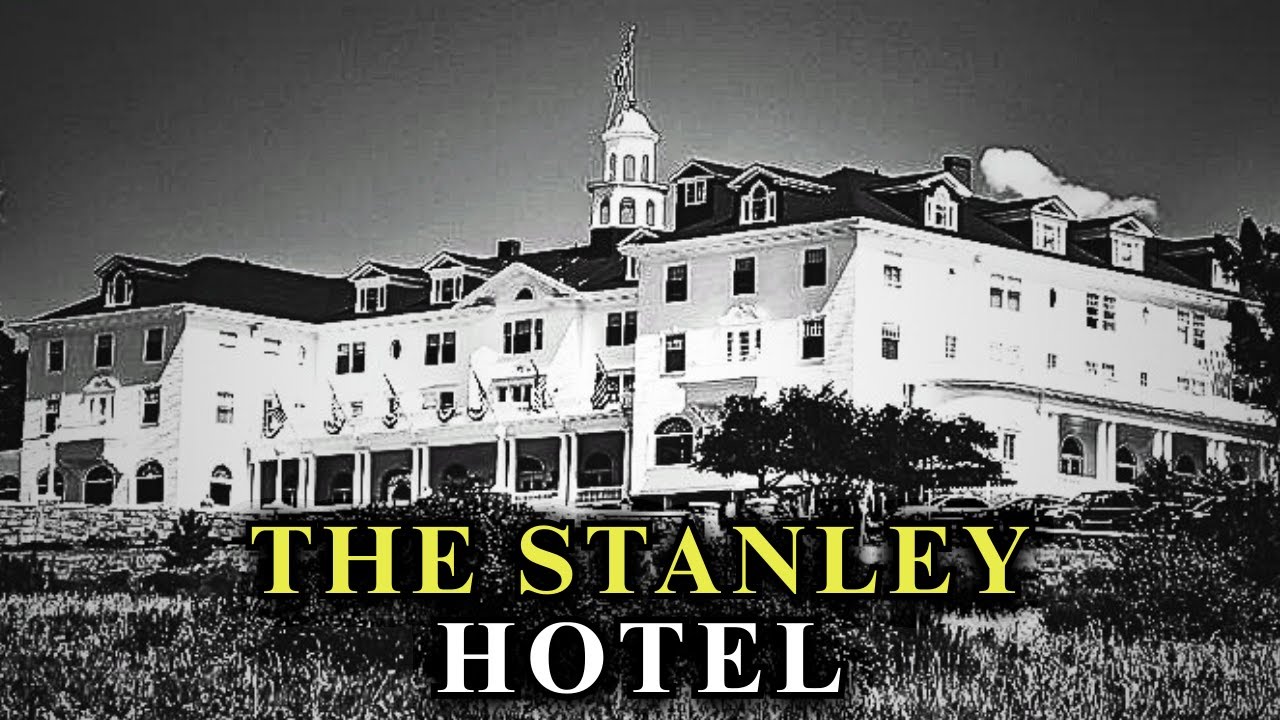
By nightfall, they were the only guests in the entire building. After dinner, King wandered the empty corridors. He walked through the carpeted hallways lined with closed doors, climbed the grand staircase with his footsteps echoing in the silence, and explored the music room and the billiard room. The isolation was complete.
The building felt both alive and empty at once, as if it were waiting for something. That night, King went to bed in room 217 and had a nightmare. He dreamed that his young son was running through the halls of the hotel, chased by something monstrous. He dreamed of fire hoses that came to life, of rooms that should never be opened, of a hotel that was not merely haunted but malevolent.
He woke in a cold sweat, his heart pounding. By sunrise, he had the outline of a novel about a struggling writer who takes a job as the winter caretaker of an isolated hotel, a hotel filled with tragic history and restless spirits that slowly drives the man to madness. He called it The Shining. King later said the Stanley Hotel was the direct inspiration for the Overlook Hotel in his book.
The isolation, the grandeur, the sense of being watched, all of it came from that single night. But the story he dreamed did not emerge from nothing. The darkness King sensed was already there, woven into the walls, waiting in the silence. To understand how a struggling writer’s nightmare found a permanent home in a Colorado mountainside, one has to go back to the beginning, to the man who built the hotel out of desperation and the disease that drove him there.
In the late 1800s, tuberculosis was a devastating illness in the United States. It struck indiscriminately, taking young and old, rich and poor. The disease attacked the lungs, causing victims to waste away slowly, coughing blood, struggling for breath, fading inch by inch until there was nothing left. Doctors had no cure.
Medicine could offer little more than hope, rest, and a change of air. The wealthy who contracted the disease often fled to sanatoriums in dry, high-altitude climates, chasing the belief that mountain air could heal what medicine could not. Freeland Oscar Stanley was one of those desperate people. Born in 1849 in Maine, F.
O. Stanley, as he was known, was an inventor and entrepreneur. Together with his twin brother Francis, he founded the Stanley Motor Carriage Company, makers of the famous Stanley Steamer automobiles. These steam-powered cars were marvels of engineering, quiet, fast, and far more advanced than many of their gasoline-powered competitors.
By the turn of the century, the Stanley brothers were wealthy men, respected in business circles, living comfortable lives in Massachusetts. But in 1903, F. O. Stanley received the diagnosis every person of that era feared.
The doctors told him he had months, perhaps a year if he was lucky. The prescription was simple and brutal: leave home, go west, and hope the mountain air would slow the disease. Stanley, then fifty-four years old and facing his own mortality, packed his belongings and traveled to Colorado. He arrived in Estes Park, a small mountain town surrounded by jagged peaks, clear streams, and forests of pine and aspen.
The air was thin, clean, and cold. The landscape was raw and beautiful. And somehow, miraculously, Stanley began to feel better. The improvement was not immediate, but it was real.
The higher altitude seemed to ease his breathing. The clean air soothed his damaged lungs. Slowly, over months and then years, Stanley regained his strength. The man who had come to Colorado expecting the worst found himself living again.
But instead of leaving, he stayed. He fell in love with the place that had saved him and decided that if the mountain air had given him his life back, it could do the same for others. He would build something grand, a hotel where the wealthy and the sick could come to heal, to breathe, to escape the suffocating cities of the East. It would be a palace in the wilderness, a place of light and hope perched high above the world.
In 1907, Stanley purchased 160 acres of land on a hillside overlooking Estes Park. The location was stunning, but also isolated. There were no paved roads leading into the mountains. The nearest railroad was twenty-two miles away.
Reaching the site required traveling by horse-drawn wagon over rough trails. Most people thought Stanley was mad to build a hotel in such a remote place. But Stanley had faith. He believed that the automobile, the very invention he had helped perfect, would change everything.
He imagined a future where people could drive their own cars into the mountains, where the wilderness would no longer be inaccessible, where his hotel would become a destination for those seeking both luxury and healing. Stanley hired the architectural firm of Theelman Robert Weaguer and spared no expense. The design was colonial revival, elegant and imposing, with white clapboard siding, tall columns, and wide verandas. The hotel would have forty-eight guest rooms, a grand dining hall, a music room, and a billiard room.
Most remarkably, it would be one of the first hotels west of the Mississippi to be entirely powered by electricity. Stanley built his own hydroelectric plant on nearby Fall River, bringing modern luxury to the edge of the wilderness. Construction took two years and cost over half a million dollars, an enormous sum at the time. Workers hauled materials up the mountain by wagon and horseback, cleared the land, laid foundations in the rocky soil, and raised the massive white structure piece by piece.
On July 4, 1909, the Stanley Hotel officially opened its doors. The event was celebrated with great fanfare. Guests arrived by carriage, dressed in their finest clothes, eager to see the miracle in the mountains. The hotel gleamed in the summer sun.
Inside, electric lights illuminated polished wood floors, elegant furnishings, and luxurious rooms. The dining room served fine meals. The music room hosted concerts. Outside, guests could walk the grounds, breathe the clean air, and gaze at the spectacular mountain views.
For a moment, it seemed Stanley’s vision had succeeded. The hotel was a triumph, a symbol of American ingenuity and optimism. But that moment did not last. Stanley had built his hotel on a gamble, and the gamble was failing.
The problem was timing. In 1909, automobiles were still rare and expensive. Most Americans could not afford them, and even those who could faced a brutal reality. The roads leading to Estes Park were little more than dirt trails, rutted and dangerous.
The trip from Denver, only sixty miles away, could take an entire day. Guests arrived exhausted, covered in dust, their vehicles battered and broken. Worse, the hotel was only accessible during the summer months. Winter in the Rockies was harsh and unforgiving.
Snow blocked the roads. Temperatures plummeted. The hotel had no choice but to close from October to May, nearly half the year. Stanley had hoped tuberculosis patients would come year-round seeking the healing air, but most could not make the journey, and those who did found the isolation overwhelming.
The hotel was beautiful, but it was also lonely. Guests who arrived expecting a bustling resort found a nearly empty building. The grand dining room echoed with the footsteps of a handful of visitors. The hallways stretched silent and dim.
At night, the wind howled through the mountains, and the building creaked and groaned like a living thing. The Stanley Hotel began to feel less like a place of healing and more like a place of exile. Financial troubles mounted quickly. Heating the building, staffing it, maintaining the grounds, and running the hydroelectric plant required constant investment, but revenue was inconsistent.
Summer seasons brought some guests, but never enough. By the time the hotel closed each October, Stanley was losing money. He poured his personal fortune into keeping the doors open year after year, hoping the next season would turn things around. The next season never came.
Employees began to notice something strange. During the long empty winters when the hotel was closed, those who stayed behind to maintain the property reported unsettling experiences. Footsteps echoed through empty hallways. Doors that had been locked would be found standing open.
In the middle of the night, they heard music drifting from the music room, even though no one was there. Some claimed to see a woman in old-fashioned clothes walking through the halls, her figure disappearing when approached. Others spoke of laughter, faint and distant, coming from rooms that had been empty for months. At first these stories were dismissed as the product of isolation, long nights, and overactive imaginations, but they persisted, and over time a pattern emerged.
The hotel was not just empty. It was occupied by something that had never left. The most famous ghost story of the Stanley Hotel began not with tragedy, but with an accident. In 1911, a violent storm rolled through the mountains.
Lightning split the sky. Thunder shook the building. Rain hammered against the windows. During the storm, a bolt of lightning struck the hotel, causing a gas leak.
In room 217, a housekeeper named Elizabeth Wilson was lighting the gas lamps when the room exploded. The blast knocked her through the floor into the room below. She survived, but her injuries were severe, and she spent weeks recovering. When she returned to work, Elizabeth continued her duties at the hotel for many more years.
She eventually retired and lived a long life. But according to countless guests and employees who came after, Elizabeth never truly left. Room 217 became the center of the hotel’s haunting. Guests staying in the room reported their luggage being unpacked while they were out.
Clothes that had been neatly folded in suitcases were found hanging in the closet. Shoes were lined up by the bed. Lights turned on and off by themselves. Some guests woke in the middle of the night to see a shadowy figure standing at the foot of their bed, watching them.
When they turned on the lights, the figure vanished. Elizabeth Wilson, it seemed, was still doing her job, still caring for the room, still ensuring everything was in order. Her presence was not malicious, but it was undeniable. Over the decades, room 217 became the most requested room in the hotel, not because it was the most luxurious, but because guests wanted to experience the haunting for themselves.
But Elizabeth was not alone. Other spirits seemed to inhabit the Stanley Hotel, drawn perhaps by the building’s isolation, its history, or something deeper. In the music room, guests and employees reported hearing piano music late at night. The music was elegant and skilled, not the random banging of a prank, yet when they entered the room, no one was there.
The piano keys were still. The music stopped. The source of the music, many believe, is Flora Stanley, F. O.
Stanley’s wife. Flora was an accomplished pianist, and during the hotel’s early years she often performed concerts in the music room. She loved the hotel and spent many happy summers there, playing for guests and hosting social events. After she passed in 1939, the music began.
Employees working late at night would hear the familiar melodies she used to play. Some claimed to have seen her sitting at the piano, her hands moving over the keys, her face serene. When they approached, she faded away, leaving only silence. F.
O. Stanley himself is also said to remain. Guests have reported seeing a well-dressed man with a kind face standing in the lobby or on the grand staircase. He smiles, nods, and then disappears.
Others have seen him in the billiard room, standing near the tables, watching games that are no longer played. He appears most often during the summer months, as if still checking on his guests, still ensuring that his hotel is running smoothly. His presence is not frightening. It is almost comforting, the ghost of a man who loved his creation too much to leave it behind.
But not all the spirits at the Stanley Hotel are peaceful. On the fourth floor, particularly in room 401 and the surrounding hallways, guests and staff report far more unsettling encounters. Laughter echoes through the corridors late at night, high-pitched, joyful, and innocent, but it comes from empty rooms. Guests have heard the sound of small feet running down the hallways, back and forth, playing games that no one can see.
Some have woken to find small handprints on mirrors and windows. Others have felt small hands tugging at their blankets in the middle of the night. Who these spirits are, no one knows. Some paranormal investigators believe the fourth floor, which was originally used to house the younger guests of wealthy families, has retained the energy of decades of young visitors.
Others believe something darker, that the isolation and loneliness of the hotel attracted lost spirits, souls with nowhere else to go. The activity is most intense during the winter when the hotel is closed and the building sits silent and cold. Employees who work through the off-season report that the hauntings increase when the hotel is empty, as if the spirits grow bolder without the presence of the living. They hear footsteps above them when there should be no one there.
They find rooms rearranged, furniture moved, objects placed in strange locations. Some have quit after a single winter, unable to bear the oppressive feeling of being watched, of never being truly alone. For decades, the Stanley Hotel struggled. F.
O. Stanley passed away in 1940, never seeing his vision fully realized. His wife Flora had gone the year before. Ownership changed hands multiple times.
Each new owner tried to make the business profitable, but the fundamental problem remained. The hotel was too isolated, too difficult to reach, and too expensive to maintain. Estes Park slowly grew into a tourist destination, especially after Rocky Mountain National Park was established in 1915, but even as visitors came to the area, many chose to stay in smaller, cheaper lodges rather than the grand but aging Stanley Hotel. By the 1970s, the hotel was in serious decline.
The building needed repairs. The rooms felt outdated. The hotel opened each summer and closed each winter, limping along season after season, a relic of a bygone era. During the winter months the building sat empty, dark and silent.
The only occupants were the caretakers who kept the furnaces running and the pipes from freezing. It was during one of these lonely off-season nights that the Stanley Hotel found its place in history. When The Shining was published in 1977, it became a massive success. When Stanley Kubrick’s film adaptation was released in 1980, it became a cultural phenomenon.
The Overlook Hotel, with its haunted halls, its ghostly bartenders, and its terrifying corridors, became iconic. Kubrick did not film at the Stanley Hotel, using other locations instead, but the connection was made. People wanted to visit the real Overlook. They wanted to see the place that had inspired such terror.
The Stanley Hotel found itself transformed. What had been a financial burden became an attraction. What had been isolation became mystique. Guests began requesting room 217, hoping to experience what Stephen King had felt.
Ghost tours were organized. Paranormal investigators descended on the property. Television shows like Ghost Hunters and Ghost Adventures filmed episodes there, reporting strange phenomena, capturing unexplained sounds and images, and fueling the legend. In 1997, Stephen King himself returned to the Stanley Hotel.
He was producing a television miniseries adaptation of The Shining, and this time he insisted on filming at the real location. For weeks, the Stanley Hotel became the Overlook once again. Actors moved through its hallways. Cameras captured its staircase, its rooms, its lobby.
The hotel that had inspired a story about isolation and madness was now playing itself, forever linked to a fiction that felt more real than the truth. Jim Carrey’s experience at the hotel, though brief, has become part of the legend. In 1994, he was in Colorado filming Dumb and Dumber. The production arranged for him to stay at the Stanley Hotel.
Carrey checked in, was shown to his room, and settled in for the night. But according to reports, he did not stay long. Sometime in the middle of the night, he left the hotel. He checked into a different hotel and refused to discuss what had happened.
Years later, in interviews, Carrey acknowledged that he had an experience at the Stanley Hotel that deeply unsettled him, but he never provided details. The hotel does not confirm which room he stayed in, but many believe it was room 217. Paranormal investigators who have studied the hotel extensively argue that it displays characteristics of what they call an intelligent haunting. Unlike a residual haunting, which is essentially a recording of past events that plays over and over like a loop, an intelligent haunting involves spirits that are aware of the living and can interact with them.
At the Stanley Hotel, numerous reports suggest this kind of interaction. Lights turn on when people ask them to. Objects move in response to requests. The spirits seem to react to the presence of guests, sometimes playfully, sometimes protectively, occasionally with what appears to be frustration.
One of the most documented phenomena involves the elevators. The Stanley Hotel has old-fashioned elevators that require an operator or at least someone to push the buttons. Yet frequently the elevators move between floors on their own, stopping at specific levels, opening their doors, and then continuing their journey. Staff members have watched this happen countless times, always when the elevators are empty, always following the same pattern.
The elevators stop most frequently on the second floor, where F. O. and Flora Stanley had their suite, and on the fourth floor. On one occasion, a paranormal investigation team set up cameras in the elevator overnight.
The cameras were motion-activated and timestamped. When they reviewed the footage the next morning, they found exactly what they were looking for. Over the course of the night, the elevator had moved multiple times with no one inside. The footage showed the doors opening on the second floor, remaining open for approximately thirty seconds as if someone were getting on, and then closing.
The elevator then moved to the fourth floor, where the doors opened again, remained open briefly, and then closed. The elevator returned to the lobby. This sequence repeated several times throughout the night, always following the same pattern, always stopping at the same floors. The investigators could find no mechanical explanation for the behavior.
The elevator was not malfunctioning. It was operating exactly as it would if someone were riding it, pushing buttons, deliberately choosing those floors. But no one was there. One night auditor who worked at the hotel for over fifteen years described his experience in an interview years after leaving.
He had always dismissed the ghost stories as marketing gimmicks designed to attract tourists. But during his first winter working overnight shifts, he began to notice things. He would hear footsteps on the floor above him when he knew, absolutely knew, that no one else was in the building. He would lock doors at the end of his shift only to find them standing open when he returned.
Once, while working alone in the early hours of the morning, he heard laughter and running in the hallway outside his office. He got up, opened the door, and found the hallway empty and silent. The most unsettling incident happened in his third year. He was conducting his nightly rounds, checking each floor to ensure everything was secure.
When he reached the fourth floor, he saw a small figure, perhaps five or six years old, standing at the end of the hallway. The figure was wearing what looked like a nightgown from another era, white and flowing. It was staring at him. He called out, asking if help was needed, if parents were nearby.
The figure did not respond. It simply turned and walked around the corner. He rushed after it, but when he reached the corner, the hallway was empty. There was no place anyone could have gone.
All the doors were locked. He searched every room on that floor. There was no one. He never told management about the incident.
He knew how it would sound. But from that night on, he avoided the fourth floor whenever possible, and when he could not avoid it, he worked quickly, finishing his rounds and leaving as fast as he could. He said the fourth floor had a different quality than the rest of the hotel, a heaviness, a sense of being watched that made him deeply uncomfortable. He was not a superstitious man.
He did not believe in ghosts, but he believed what he had experienced, and he had no explanation for it. Stories like this are common among people who work at the Stanley Hotel. The phenomenon is so widespread that new employees are given informal warnings by their colleagues. They are told which areas to avoid, which rooms require extra caution, which shifts are the most difficult.
The warnings are delivered half-jokingly, but behind the humor is genuine concern. Because the people who work at the hotel night after night, alone in the building when the guests are gone, know something that visitors do not. They know the Stanley Hotel is not an ordinary place. Today, the Stanley Hotel is more popular than ever.
It is listed on the National Register of Historic Places. It hosts weddings, conferences, and special events. Every night, ghost tours take visitors through the hallways, telling stories of Elizabeth and Flora and F. O.
, of room 217 and the fourth floor and the music room. The tours are booked weeks in advance. Guests come from around the world, drawn by the legend of The Shining and the promise of the paranormal. Room 217 remains the most requested room.
Guests who stay there report a range of experiences, from the benign, luggage unpacked, belongings moved, to the unsettling, shadows at the edge of vision, cold spots that move through the room, the feeling of someone standing beside the bed in the dark. Some laugh it off as imagination. Others leave in the middle of the night, unwilling to stay any longer. The fourth floor continues to echo with sound.
Maintenance workers avoid going there alone. Cleaning staff report that they work quickly, eager to finish and return to the lower floors, where the presence feels less intense. Guests who stay in rooms on the fourth floor often request to be moved. They cannot explain exactly what frightens them, only that they do not feel safe, that the air feels wrong, that they cannot sleep.
In the music room, the piano still sits in its place. During the day it is silent, a beautiful antique that guests admire and photograph. But at night, when the hotel grows quiet, some say the music returns, soft at first, almost too faint to hear, and then clearer, the notes of a song that Flora Stanley used to play. The music does not frighten those who hear it.
Instead, it fills them with sadness, with the sense of something lost and longing to be remembered. F. O. Stanley built his hotel believing in the future, in progress, in the power of technology and ambition to conquer the wilderness.
He built it believing that people would come, that the mountain air would heal them, that his vision would succeed. And in a way, it did. People did come. The hotel did survive.
But not in the way he imagined. The Stanley Hotel endures not because it is luxurious or modern or convenient. It endures because it is haunted, because it is lonely, because it carries the weight of all the hopes and dreams and sorrows that have passed through its doors over the course of more than a century. It endures because it refuses to be forgotten.
On quiet nights, when the guests have gone to bed and the hallways are empty, the hotel returns to what it has always been. A place between worlds. A place where the living and those who have passed walk the same floors. A place where time moves differently.
A place where the past is never truly passed. The lights in the hallways flicker. A door clicks open somewhere on the fourth floor. In the music room, a single note sounds, soft and clear.
And somewhere in room 217, Elizabeth Wilson straightens the covers on an empty bed, making sure everything is in order, making sure everything is ready. Because at the Stanley Hotel, there are always guests coming, and some of them never leave.
