The man behind the youth center’s counter never fought a single monster, never wore a helmet, and never piloted a giant robot. Yet Richard Janelle, the actor who played Ernie in Mighty Morphin Power Rangers, became one of the most quietly beloved figures in a global phenomenon that reshaped children’s television. For the kids who watched in the 1990s, Ernie’s juice bar was the calm heart of a universe filled with superheroes and rubber-suited villains. He was the dependable adult who kept things normal while teenagers saved the world.
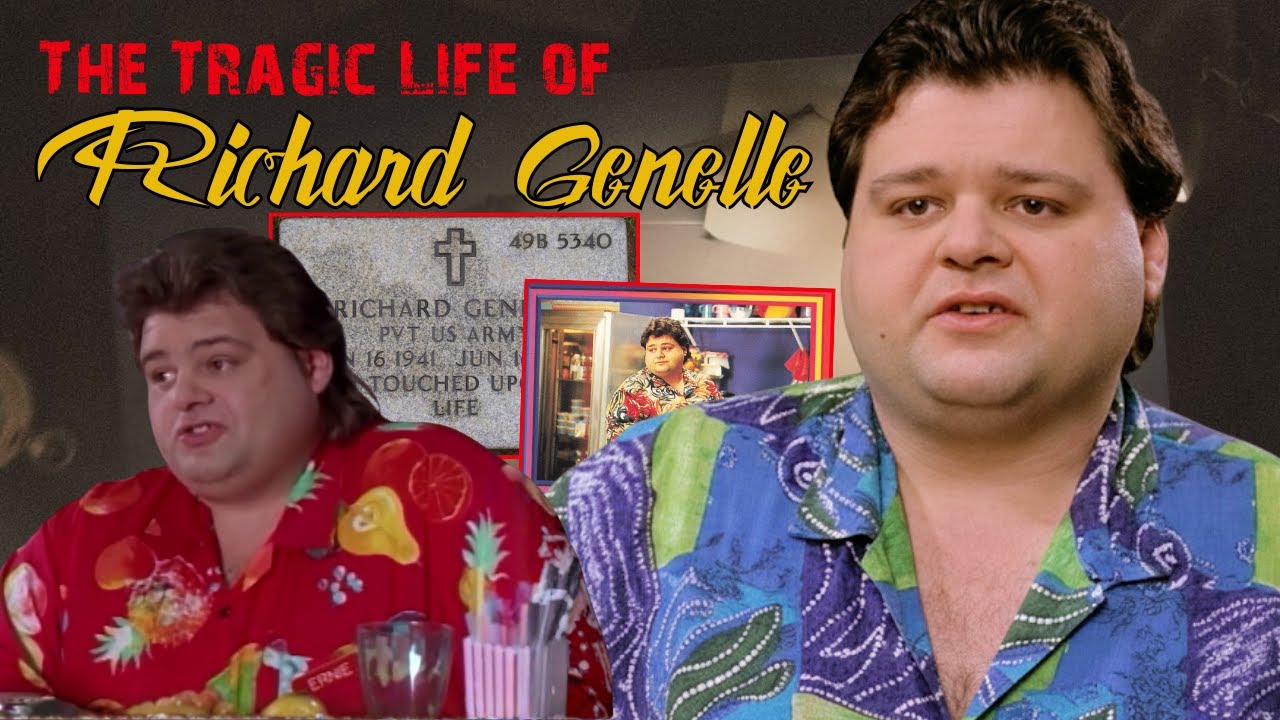
But the life of the man who gave that character his warmth unfolded far from the spotlight, and it ended much too soon. Born in New York City on January 12, 1961, Richard Michael Janelle was not a product of the Hollywood machine. He was an ordinary man pursuing a difficult dream, one of thousands of hopefuls who moved to California each year with a headshot and little else. He took small roles and worked side jobs while waiting for the phone to ring.
When the casting call went out for a non-union kids’ show called Mighty Morphin Power Rangers, it seemed like just another audition. The project was cheap, the premise strange, and the pay low. Janelle, then in his early thirties, was not trying out to be a superhero. He was auditioning for the part of the man who owned the place where the heroes hung out.
The character of Ernie was written as a simple stock figure, the friendly proprietor of the Angel Grove Youth Center gym and juice bar. But Janelle brought something more to the role. He infused Ernie with a genuine warmth that radiated through the screen. In a show defined by high-octane action and exaggerated villains, Ernie was the gentle, grounded counterpoint.
Clad in loud Hawaiian shirts and always smiling, he was a comforting visual cue that everything would be all right. The youth center served as the Rangers’ unofficial headquarters, the only place where five teenagers could simply be kids rather than soldiers in an intergalactic war. Ernie never knew their secret, and that was the entire point. His cheerful ignorance protected the normalcy they fought so hard to maintain.
Life on the set was grueling, especially in the early days. The five young actors who played the original Rangers were plucked from obscurity and catapulted into global superstardom, working brutal sixteen-hour days for shockingly low pay. They were mobbed by children wherever they went, their faces plastered on lunchboxes and merchandise. In that chaotic environment, Janelle, a decade older than most of them, became more than a co-star.
He was one of the few stable, professional adults on set. The cast would later remember him as funny, kind, and dependable. He showed up, knew his lines, and treated everyone with respect. In a sense, he was playing a version of himself.
The warmth was not an act. The franchise exploded into a billion-dollar empire. The movie released in 1995 cemented the Rangers’ place as cultural titans. Through it all, Ernie’s juice bar remained the emotional anchor of the series.
Janelle’s role was small but significant. He organized events, offered comic relief, and provided a listening ear. His character represented the stability that was rapidly vanishing from the young actors’ own lives. But behind the bright lights, the foundation was cracking.
The show’s non-union status and shoestring budget had become a source of intense friction. The five principal actors were the faces of a billion-dollar franchise, yet earned around sixty thousand dollars a year with no share of merchandising profits. The breaking point came midway through the second season. Austin St.
John, Walter Jones, and Thuy Trang, the original Red, Black, and Yellow Rangers, requested a pay raise commensurate with the show’s success. The producers refused to negotiate, and the three actors walked off the set. The writers scrambled, using old footage and body doubles, and eventually wrote the characters out by sending them to a fictional peace conference in Switzerland. The departure was a trauma for the cast and crew.
Janelle witnessed the schism firsthand, then welcomed the new Rangers with the same steady presence he had always offered. He remained the anchor, but the ship was now in turbulent waters. The show continued to evolve. By the fourth season, rebranded as Power Rangers Zeo, the team had new powers and new costumes, and Ernie was still there, redecorating the youth center into a tiki-themed resort.
But his scenes grew shorter, his lines fewer. His final on-screen appearance came in an episode titled A Season to Remember. After that, he was conspicuously absent. In the opening scenes of the 1997 movie Turbo, a single line of dialogue explained that Ernie had left Angel Grove to do volunteer work in South America.
After four years and nearly two hundred episodes, one of the show’s most foundational characters was written off in less than ten seconds. There was no scandal behind his departure. By all accounts, Janelle chose to leave. He had been with the show for four years, and the grind of a weekly series was exhausting.
The fame that came with the role was peculiar: instantly recognizable to millions, but not a Hollywood A-lister. He left acting to pursue a more stable path, reportedly starting a limousine and transportation service. Later, he moved into IT technical support. He settled in Corona, California, a suburban community far from the glitz of Hollywood.
He was no longer appearing at conventions or signing autographs. He was a private citizen with a mortgage and a job. But his health was beginning to betray him. He was a heavy smoker and struggled profoundly with his weight.
The portly figure that had been part of Ernie’s charm became something more concerning in real life. Years of smoking and obesity were taking a silent toll on his heart. There were no dramatic public interventions, no tearful pleas for help. He lived quietly in the suburbs while his body quietly gave up on him.
He had escaped the pressures of fame, but he could not escape himself. In the final years of his life, the rising wave of nineties nostalgia pulled him back into the orbit of the universe he had left behind. The fan convention circuit had exploded into a mainstream industry, and for the original cast of Power Rangers, it offered a new chapter. After nearly a decade of anonymity, Janelle began making occasional appearances.
He would sit at a folding table with photos of Ernie laid out before him, ready to sign. Fans who met him between roughly 2005 and 2007 described a man who was every bit as warm and gracious as the character he had played. But they also saw something impossible to ignore. He was visibly unwell.
He was extremely overweight, moved with difficulty, and often seemed tired. His warm smiles sometimes failed to mask the weariness in his eyes. On December 30, 2008, at his home in Corona, Richard Janelle suffered a massive heart attack. He was forty-seven years old.
The news did not break on national networks. It rippled slowly through Power Rangers fan forums, where many initially treated it as a cruel rumor. Then official confirmation came, and a quiet wave of grief rolled through the fandom. His former castmates expressed genuine sorrow.
David Yost remembered him as a sweet, kind man and an integral part of their on-set family. Walter Jones echoed those sentiments. Their tributes painted a picture of a friend and mentor who had offered stability and kindness when they were young and overwhelmed. His death became part of a larger, darker narrative that fans came to call the Power Rangers curse.
Thuy Trang had died in a car accident in 2001 at age twenty-seven. Robert L. Manahan, the voice of Zordon, died of a heart aneurysm in 2000. Jason David Frank, the most famous Power Ranger of all, died by suicide in November 2022 at age forty-nine.
The list was long and heartbreaking. But Richard Janelle’s story did not fit the dramatic mold of a curse. He was not the victim of an accident or a sudden illness. He died from the direct consequences of long-term smoking and obesity.
These were not the makings of a Hollywood hex. They were the grim realities of everyday life. His legacy is a dual one. There is the immortal legacy of Ernie, etched in the collective memory of a generation.
He represented a kind of quiet, dependable goodness. In a world of flashy heroes, he was just a nice guy who created a space where kids felt welcome and safe. He never fought a monster, but he helped the monster fighters feel human again after every battle. And then there is the legacy of the man himself, more complex and cautionary.
He achieved a level of fame most actors only dream of, but that fame did not insulate him from the struggles of ordinary life. His death at forty-seven is a reminder of how precious and precarious life truly is. The most enduring image of Richard Janelle is not one of tragedy, but of simple kindness. It is the image of Ernie behind the counter, a bright Hawaiian shirt, a beacon of warmth in a chaotic world, leaning forward with a friendly smile, offering a drink or a word of encouragement.
His superpower was his humanity. The juice bar is closed now, but the memory of its kindest keeper lives on.
