In May 1940, Thomas Row suffered a heart attack in the lobby of the hotel he had spent twelve years building. The sixty-seven-year-old refused to be taken to a hospital. He would not leave the pink palace by the Gulf of Mexico that bore the name of the opera hero who had won the heart of the woman he loved. Three days later, in a suite overlooking the water, he died.
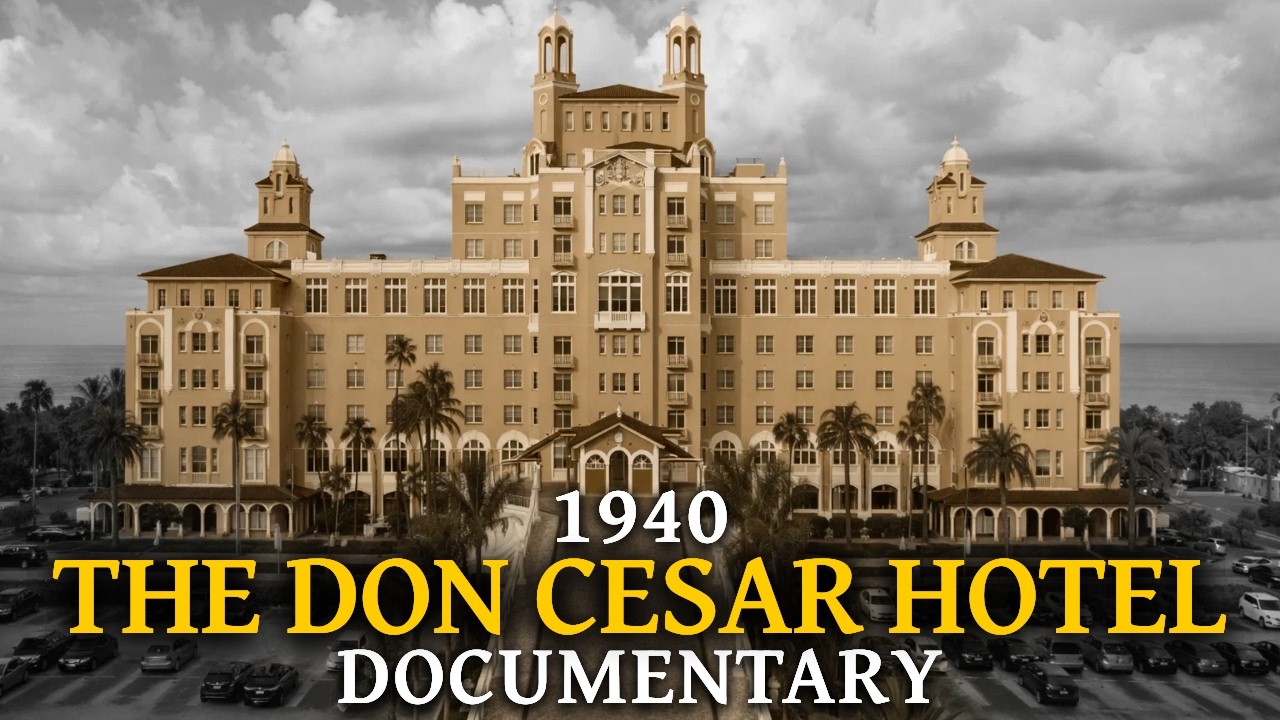
The hotel he had created as a monument to a lost love would soon be taken from his control, converted into a military hospital, stripped of its elegance, and eventually marked for demolition. The wrecking ball was coming, and only a small group of determined citizens stood between the Pink Palace and oblivion. Row was born in Massachusetts in 1872 and orphaned by the age of five. Sent to Ireland to be raised by an uncle, he later studied in London, where a single night at the opera changed his life.
He attended a performance of Maritana, a romantic tale set in seventeenth-century Madrid, and fell in love with the Spanish soprano playing the lead. According to the legend that would later surround the hotel, her name was Lucinda. They met in secret beside a fountain near the opera house, and they planned to elope. Her family discovered the plot and took her back to Spain.
Row returned to America, married a woman named Mary, and built a career in real estate, but he never stopped writing to Lucinda. Every letter was returned unopened. Finally a letter arrived from her deathbed, enclosing a newspaper clipping announcing her death and promising they would find each other again in the next life. In 1919, with his health failing, Row moved to St.
Petersburg, Florida. The land boom of the 1920s was in full swing, and Row saw an opportunity. In 1924 he purchased eighty acres of beachfront land on what is now St. Pete Beach.
His business partner thought the purchase was madness and dissolved their partnership. Row hired an architect and a contractor and began building a hotel that Florida had never seen. The project grew from a planned six-story, 110-room resort into an eight-story, 220-room palace. The cost soared from an estimated $450,000 to $1.
25 million. He named it the Don Caesar, after the hero of the opera where he had first seen Lucinda. He commissioned a replica of the London fountain in the lobby, chose Mediterranean architecture to honor her Spanish heritage, and painted the exterior pink, a color some said reminded him of the blush on her cheeks. The engineers worried the massive structure would sink into the soft Florida sand, but the contractor devised a floating concrete pad and pyramid footings that distributed the weight evenly.
The technique worked so well that nearly a century later the building has not settled from its original elevation. On January 16, 1928, the Don Caesar opened with a grand celebration. The famous arrived almost immediately. F.
Scott Fitzgerald stayed there. Al Capone was a guest. Lou Gehrig walked the halls alongside department store magnates, and Franklin D. Roosevelt would later visit.
The hotel operated seasonally from December through April, drawing wealthy northerners fleeing the cold. Rooms cost $24 a night, a small fortune at the time. Row lived on the fifth floor, a perfectionist who inspected the kitchens and greeted guests personally. Then came October 1929.
The stock market crashed, and the Great Depression threatened to destroy everything Row had built. Many Florida hotels closed forever, but Row cut costs, negotiated with creditors, and asked his staff to wait for their wages, always paying them in full. His salvation came from the New York Yankees, who needed a spring training location. For three years the team made the Don Caesar their preseason home, and the arrangement kept the Pink Palace afloat.
By the late 1930s the worst had passed. Row had paid off his debts, and the hotel was thriving again. He was sixty-seven, his health declining, but he still walked the halls every day. On May 2, 1940, he suffered a heart attack in the lobby.
He refused to leave his hotel. He died three days later in a fifth-floor suite. Row had prepared a will leaving the hotel to his beloved employees, but the document was never properly signed. The Pink Palace passed to Mary, the wife he had never loved.
She lacked his passion and his connection to the staff and guests. The magic began to fade. Then came Pearl Harbor. America entered World War II, travel became difficult, and the wealthy guests stopped coming.
The government condemned the Don Caesar through eminent domain. Mary was given $440,000, a fraction of what Row had spent building the hotel, and told to go away. In December 1942, the Pink Palace reopened as an army hospital. The elegant interiors were torn out.
The ballroom became a movie theater for recovering soldiers. The pink walls were covered in a dull shade called government green. By 1943, eighteen hundred sick calls were being logged daily from military bases across the region. The building proved impractical as a major medical facility, and in February 1944 it was repurposed as a convalescent center for Army Air Corps pilots suffering from combat fatigue, what is now called post-traumatic stress disorder.
The warm sunshine, gulf breezes, and sound of the waves became part of the treatment. Patients swam, went boating, received counseling, and even published their own newspaper. A Reader’s Digest article praised the program. The war ended, and the military mission was ordered to cease in June 1945.
By September the building was vacant, and the Veterans Administration took control. It became the largest VA regional office in Florida, with over 1,400 federal employees processing GI Bill applications and disability claims within its walls. The transformation was brutal. The grand lobby became a waiting room filled with metal chairs.
The luxurious suites became cramped offices. The pink paint faded to a dull gray, and the salt air ate away at the concrete. In 1961, engineers discovered the concrete was deteriorating badly. The government spent $235,000 on emergency repairs, just enough to keep the building standing a few more years.
By 1967 the VA had outgrown the building, and by the spring of 1969 it stood completely vacant for the first time in its history. The General Services Administration made its decision: the Don Caesar would be demolished. The prime beachfront land would be sold to developers. A small group of citizens refused to accept that fate.
At the center was June Hurley Young, a professional writer who understood the power of words. She formed the Save the Don Committee and organized a campaign of letters to newspapers and politicians. She published an article titled Pink Elephant or Sleeping Beauty that caught the attention of readers across the region. The committee organized tours of the property, helping visitors imagine what the hotel could become.
Public pressure mounted. Politicians who had been ready to sign demolition permits faced angry constituents demanding preservation. In 1971 the federal government agreed to sell the property. The buyer was William Bowman Jr.
, a Missouri hotelier who owned more than a dozen Holiday Inns. He had read Young’s article, visited the property, and immediately fell in love with its potential. Through negotiations orchestrated by the Save the Don Committee, the city of St. Pete Beach purchased the property in early 1972 and immediately transferred the keys to Bowman.
His purchase price was $460,000. One of his first acts was to remove the hyphen from the hotel’s name. The Don Caesar would henceforth be known as the Don CeSar. The restoration took eighteen months and cost more than $3.
5 million. Engineers discovered that beneath the decay, the building was remarkably sound. Carlton Beard’s innovative foundation had done its job. Electricians rewired the building, plumbers replaced corroded pipes, and woodworkers studied photographs from the 1920s to restore every detail to match the original vision.
Workers rebuilt the grand staircase and the lobby fountain. The exterior required 12,000 gallons of fresh pink paint. When the color returned, longtime residents wept with joy. On November 23, 1973, the Don CeSar reopened.
Dinner was served that night for six hundred guests. Two years later, in 1975, the hotel was added to the National Register of Historic Places. But the restoration came at tremendous personal cost. Bowman had poured his entire fortune into saving the Pink Palace and was deeply in debt.
He owed $170,000 to the IRS, and his mortgage holders moved to take control of the property. Though he was allowed to stay on as manager, the hotel had nearly ruined him financially. In the years that followed, the Don CeSar reclaimed its place as the premier resort on Florida’s Gulf Coast. New owners added a spa, a signature restaurant, and a second pool.
The hotel became a charter member of Historic Hotels of America in 1989. Hollywood returned. Robert De Niro, James Woods, and Tuesday Weld filmed scenes for Once Upon a Time in America there in 1982. Tom Petty and the Heartbreakers shot a documentary on the rooftop in 1985.
Every president from Gerald Ford onward, with the exception of Ronald Reagan, stayed at the hotel at some point during their careers. Almost immediately after the hotel reopened in 1973, staff members began reporting strange occurrences. Lights flickered in empty hallways. Doors opened and closed on their own.
Footsteps echoed through corridors where no one was walking. Most persistently, guests and employees reported seeing a figure in a white linen suit and Panama hat, the fashion of a bygone era. He would be seen strolling through the lobby, pausing by the fountain, or walking along the beach at sunset. When approached, he would smile warmly and then vanish.
Witnesses described him the same way every time: an older man with kind eyes, perfectly at ease, as if he belonged there more than anyone else. Those who knew the hotel’s history recognized him immediately. It was Thomas Row. The sightings were most common on the fifth floor, where Row had lived.
Over time, witnesses reported a second figure accompanying him: a beautiful woman in a flowing Spanish gown with dark hair. The staff knew who she must be. Lucinda, the opera singer Thomas had loved and lost in London. According to the legend that grew around the hotel, Thomas Row had finally found his Lucinda in death.
The lovers who had been torn apart by her family, separated by an ocean, and divided by mortality itself had somehow reunited within the walls of the pink palace. Other spirits have been reported as well. During its years as a military hospital and convalescent center, thousands of wounded soldiers passed through its halls, and some of them never left, at least not in spirit. Guests have reported hearing military commands in empty stairwells and seeing figures in olive drab uniforms walking through walls.
Rooms 318 and 264 have earned reputations as the most actively haunted in the hotel. The hotel has never hidden these stories. The haunted reputation has become part of the Don CeSar’s charm, and ghost tours are offered to curious visitors. The hotel has faced challenges in the modern era as well.
In 2024 and 2025, hurricanes Helene and Milton forced the hotel to close for months of repairs. But in March 2025, the Pink Palace reopened once again, just as it had reopened after the depression, after the war, and after decades of abandonment. Today the Don CeSar stands as one of the most iconic landmarks on Florida’s Gulf Coast, its pink towers rising above the white sand beaches, visible from miles away. The hotel offers 277 guest rooms, world-class dining at the Maritana Grill, and a full-service spa.
The restaurant carries the name of the opera that brought Thomas and Lucinda together so long ago, surrounded by 1,500 gallons of saltwater aquariums. The fountain that once stood in a London courtyard still bubbles in the Florida lobby. According to the witnesses, Thomas Row and his Lucinda still walk the halls together, the opera singer and her devoted admirer, finally at peace. The pink palace has survived economic collapse, world war, government seizure, decades of neglect, threatened demolition, financial ruin, and hurricanes.
Through it all, the spirit of Thomas Row has endured, waiting beside the fountain, keeping faith with a promise made more than a century ago.
