In the summer of 1977, at Royal Ascot, a twenty-two-year-old woman named Sarah Spencer caught the attention of Prince Charles, the thirty-year-old heir to the British throne. Charles was on a desperate quest to find a suitable bride, and Sarah, the eldest daughter of the Spencer family, seemed to fit the part. They began dating, and for the first time in years, Sarah felt her own importance return. She was no longer the rejected girl abandoned by a duke; she was the girlfriend of the Prince of Wales, and the press documented every moment of their courtship with breathless excitement.
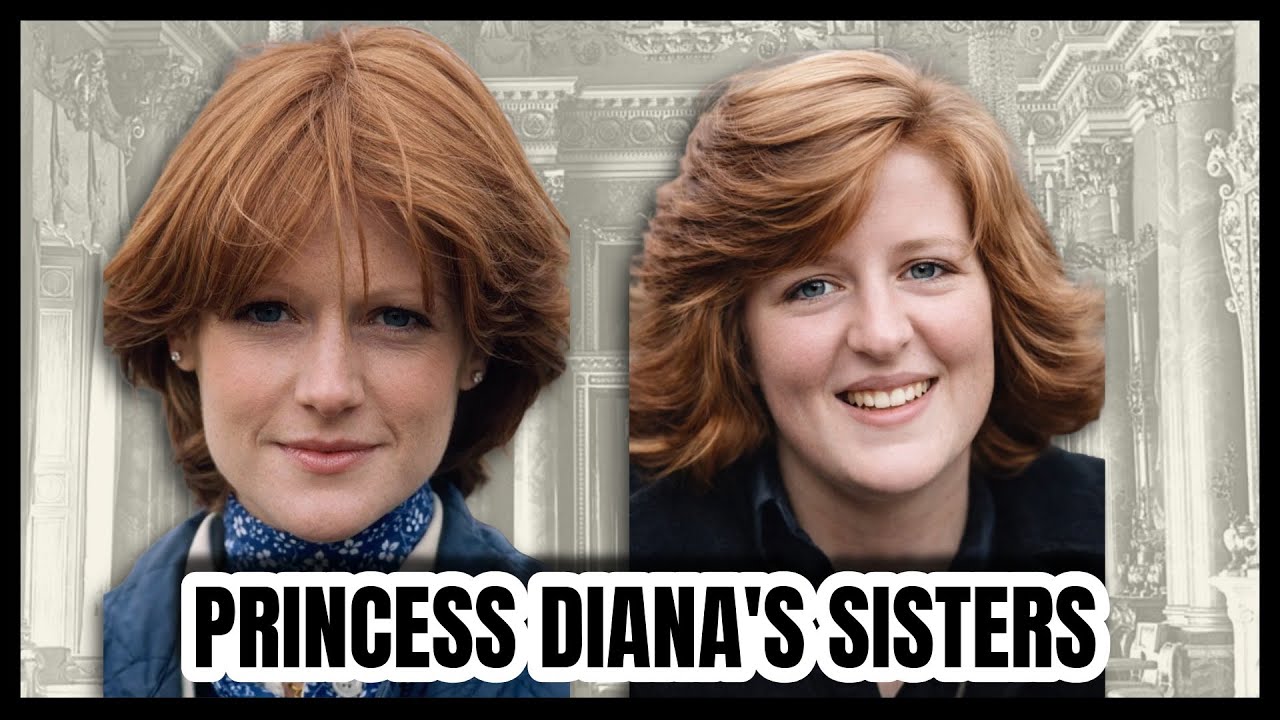
But Sarah, still emotionally unstable and desperate to hold the media’s attention, made a catastrophic error of judgment. She gave an interview to two reporters, James Whitaker and Nigel Nelson, and spoke with startling candor about things meant to remain forever private. She admitted to having struggled with anorexia, to having thousands of boyfriends, to past problems with alcohol, and to keeping scrapbooks of press clippings about her romance with Charles that she planned to show her future grandchildren. And most damaging of all, when asked if she would marry him, she said, “There is no chance of my marrying him.
I’m not in love with him. And I wouldn’t marry anyone I didn’t love, whether he were the dustman or the King of England. ”
When Charles learned of the interview, he was reportedly furious, not merely angry but coldly, distantly furious, in a way that would define his response to emotional transgression for the rest of his life. He told Sarah, according to witnesses, “You’ve just done something extremely stupid.
” With those words, he walked out of her life, and Sarah, at just twenty-three, watched her final chance at a fairy tale ending disappear. Yet that was not the end of her story. It merely transformed into something far more complicated, involving the sister who would one day marry the man Sarah had lost, and the middle sister whose silence would come to define an estrangement none of them could undo. Elizabeth Sarah Lavinia Spencer was born on March 19, 1955, the eldest daughter of Edward John Spencer, the future eighth Earl Spencer, and Frances Ruth Burke Roche.
She entered the world as a child of immense privilege, a daughter of old English nobility with bloodlines reaching back centuries, born at Park House on the Sandringham Estate, where her father served as equerry to the royal household. From her earliest years, Sarah was marked by beauty, charm, and an untamed spirit that would come to define her tumultuous youth. The glittering facade of aristocratic life, however, concealed a deeply fractured family. Sarah’s parents’ marriage deteriorated into a bitter, publicly humiliating power struggle that would scar all three Spencer daughters for life.
In 1967, her parents separated, and in 1969, when Sarah was fourteen, they divorced in a custody battle played out in the press and in the courts with a brutality unusual even for the era. Their grandmother, Lady Fermoy, a lady in waiting to the Queen Mother and the supposed guardian of royal propriety, testified against her own daughter, Frances, in court, choosing institutional loyalty over maternal bonds. That act of betrayal was a watershed moment for the Spencer children. It taught them that family meant nothing when weighed against duty to the Crown, that blood could be sacrificed for appearances, and that the women they should have been able to trust would instead become their executioners.
Sarah responded to this chaos with rebellion. At West Heath boarding school in Kent, she cultivated a reputation as the wild, reckless daughter, rebellious, sexually adventurous, prone to emotional volatility. According to contemporary accounts, she was expelled from West Heath after a drinking incident involving vodka, a scandal that would have destroyed most girls but which Sarah wore like a badge of honor among her peers. She had tasted freedom through transgression, and the experience left her craving more.
Yet beneath the rebellious exterior lay a deeply wounded girl struggling with profound mental health crises that no one around her could adequately address. In her early twenties, Sarah descended into a vicious cycle of bulimia and anorexia nervosa, eating disorders that ravaged her body and mind. She dropped to a dangerously low weight, her body eating itself from the inside out, a physical manifestation of the emotional anguish she could not articulate in any other way. The trigger for this descent was romantic devastation.
In 1976 and 1977, Sarah had been involved in a passionate, consuming relationship with Gerald Cavendish Grosvenor, the man who would become the sixth Duke of Westminster, reportedly one of the wealthiest men in England. It was a romance that seemed destined to end in a royal wedding, a story that had all the hallmarks of aristocratic triumph. But Gerald Grosvenor ended the relationship, and Sarah was cast aside. The pain of this rejection was so overwhelming, so catastrophic to her sense of self-worth, that it tipped her into clinical illness.
Friends of Sarah would later speak of her blaming the breakup entirely for the onset of her eating disorder, a raw honesty about emotional damage that was shocking even in its transparency. It was shortly after this period of recovery that Sarah’s path crossed once again with a man who represented everything she had lost with Grosvenor, glamour, power, proximity to the throne. Then came the summer of 1977, Royal Ascot, and Prince Charles. Within a few years, Charles reconnected with Diana Spencer, Sarah’s youngest sister, and by 1980 they were engaged to be married.
When the engagement was announced, Sarah made a public statement to journalists, saying with what must have been mingled pride and bitterness, “I introduced them. I’m Cupid. ” Whether this was genuine support or a strategic attempt to maintain relevance and control over the narrative is something only Sarah truly knows. In May 1980, just a year before Diana would become the Princess of Wales, Sarah married Neil Edmund McCorquodale, a distant cousin whose family connections linked him to the royal household through various aristocratic channels.
Neil was no Gerald Grosvenor, no Prince Charles. He was a country gentleman, a safe choice, a retreat from the spotlight into the quiet countryside of Lincolnshire. The wedding took place at St. Mary’s Church near Althorp, away from the glittering pageantry that would characterize Diana’s nuptials just a year later.
Yet even as Sarah was securing her own marriage, the knowledge that her sister was about to marry the man she had once dated, the man who had perhaps been her last real chance at greatness, must have been a constant, knowing source of pain. Friends close to Sarah would later speak of complex and oscillating emotions, genuine love for her sister mixed with sharp, cutting jealousy that Diana had won what Sarah could not. One source close to the family would later recall, “Sarah is incredibly competitive. Despite her love for Diana, their relationship was complex, often oscillating between love and resentment.
Even at their closest, it was always on the verge of strife. I don’t believe Sarah ever truly forgave her sister for winning. ”
Over the years, Sarah and Neil had three children together, Emily, George, and Celia, and they settled into a life as country gentry in the heart of hunting country near Grantham, Lincolnshire. Sarah became a master of the Belvoir Hunt, served a year as High Sheriff of Lincolnshire, and all outward appearances constructed a stable, respectable life far from the media glare.
Yet this retreat was in many ways an exile. Sarah had chosen, or been forced by circumstance, to step away from the center of power and glamour, and to watch from a distance as her younger sister ascended to a throne that might have been hers. In the early 1990s, as Diana’s marriage to Charles deteriorated into open warfare, Sarah began to play a more active role in her sister’s life. Diana, isolated and desperate, needed family support, and she turned to her older sister.
Sarah became one of Diana’s ladies-in-waiting, a formal position that paradoxically made their relationship even more fraught with tension. Sarah was supposed to serve her sister, to support her in her royal duties, yet she was doing so as a woman whose own chances at such glory had been systematically destroyed by circumstances and by her own reckless tongue. The real turning point came when Diana, in collaboration with journalist Andrew Morton, gave extensive recorded interviews that would form the basis for the 1992 bombshell book, “Diana: Her True Story. ” In that book, Diana revealed the full extent of her suffering, her bulimia, her suicide attempts, her husband’s infidelity with Camilla Parker Bowles, the emotional cruelty of the royal household.
It was, to the palace and to many in the aristocratic establishment, an act of unforgivable betrayal. From Jane’s perspective, married as she was to Robert Fellowes, the Queen’s private secretary, it was a catastrophe. Yet for Sarah, there was a different kind of betrayal embedded in Diana’s revelations. Diana had spoken openly about her eating disorder, about her mental health struggles, things that Sarah herself had battled for years.
But Diana had done so from a position of immense power and sympathy. The public wept for Diana’s suffering, while Sarah’s identical struggles had been dismissed or hidden away. And in Diana’s narrative, she emerged as a victim of the system, while Sarah, who had warned her against the marriage by admitting to Charles that she wouldn’t marry him, had been forgotten, erased from the story of Diana’s tragedy. Cynthia Jane Spencer, born on February 11, 1957, was the middle daughter.
From childhood, she cultivated a very different response to family chaos than her older sister. Where Sarah was explosive and attention-seeking, Jane was controlled and measured. At West Heath, Jane was noted as an outstanding student, a school prefect, academically gifted in ways that neither of her sisters could match. She won a hatful of O levels and A levels, mastering the academic curriculum with a diligence that would serve her well in navigating aristocratic institutions and the corridors of power.
If Sarah responded to family dysfunction with rebellion and self-harm, Jane responded with order, structure, and an almost obsessive commitment to institutional loyalty. She learned early that the way to survive the chaos was not to fight it, but to embrace it, to find your place within the system and make yourself invaluable to those who controlled it. On April 20, 1978, just two years after Sarah’s expulsion from West Heath, and two years before Sarah’s marriage to Neil McCorquodale, Jane married Robert Fellowes, then the assistant private secretary to the Queen. The wedding took place at the Royal Military Chapel in Wellington Barracks, a formal state occasion that reflected the status of the groom.
Diana, then just sixteen years old, served as a bridesmaid. Robert Fellowes was a man of impeccable breeding and absolute discretion, the ideal consort for a woman seeking to navigate the highest levels of royal service. He was connected through distant family ties to David McCorquodale, the royal equerry, linking him further into the web of aristocratic and royal family connections. As Robert climbed steadily through the ranks of the royal household, Jane climbed with him.
By 1990, Robert Fellowes had been appointed the Queen’s private secretary, one of the most powerful positions in the British monarchy, a man who would have regular access to the sovereign, who would advise on matters of state, and who would be present at the most sensitive moments of royal decision-making. This appointment made Jane something unique among the Spencer sisters. She was now married to the machinery of the Crown itself. She lived on the Sandringham estate, moved in the closest circles to the royal family, and inhabited a world where discretion, loyalty, and absolute obedience to institutional demands were not merely virtues, but requirements for survival.
She was a woman whose every loyalty was divided, whose every sympathetic gesture to her suffering sister was interpreted through the lens of her husband’s position and responsibilities. The breaking point came gradually, then all at once. As Diana’s marriage deteriorated, she and Jane grew closer, or so it seemed on the surface. They were neighbors at Kensington Palace, living just blocks apart.
Diana in apartments eight and nine, Jane in a house called the Old Barracks. They could have been sources of support for one another, two sisters trying to navigate the impossible pressures of royal life and aristocratic expectation. But the moment Diana decided to cooperate with Andrew Morton, the moment she made the decision to take her private pain and broadcast it to the entire world, everything between Jane and Diana began to shift. Jane had not been consulted.
Diana had not warned her. And more importantly, Diana had violated the one cardinal rule of the world in which Robert Fellowes lived: the rule of silence, the code that what happens within these walls remains within these walls. For Robert Fellowes, Diana’s decision to go public was a professional catastrophe. It was an attack on the institution he served.
It was an act of disloyalty to the Crown. And for Jane, watching her husband’s face as he learned about the Morton book, watching his stress increase as he was pulled into the war between the princess and the palace, she faced an impossible choice. Where Sarah had chosen to support her sister by being a lady-in-waiting, Jane had chosen, or been forced, to stand on the other side of an increasingly hostile divide. By 1992 and 1993, the sisters were not speaking, not communicating.
The emotional distance that had always existed between them, driven by their different personalities and their different responses to childhood trauma, had hardened into something that looked like estrangement. Diana believed, according to her associates, that Jane had chosen her husband over her sister. She believed that Robert Fellowes was spying on her, that he was reporting her movements and her words back to the Queen, that he was part of the machinery designed to contain and neutralize her. And perhaps he was.
There is no way to know with certainty what Robert Fellowes told the Queen, what advice he gave, what information he shared. What is clear is that by 1995, when Diana gave her explosive Panorama interview to Martin Bashir, an interview recorded without the knowledge or consent of her husband or the royal family, the die was cast. In that interview, Diana spoke of her bulimia, her suicidal ideation, her paranoia about being monitored, her belief that “there were three of us in this marriage” because of Charles’s ongoing relationship with Camilla Parker Bowles. For Robert Fellowes, as the Queen’s private secretary, the interview was a constitutional crisis.
For Jane, it was a personal tragedy. Her sister had gone public with accusations that could only be read, in certain circles, as an indictment of men like her husband, men of gray suits and institutional loyalty, who prioritized the Crown above all else. And Jane, caught in the middle, made a choice that would define the rest of her life. She said nothing.
She did not defend Diana. She did not condemn her. She simply withdrew further into silence. It was likely Jane’s silence that hurt Diana more than any active betrayal could have.
Diana had expected her family to fight for her, to choose her blood over institutional demands. Instead, she was met with an absence, not hostility, but the cold, blank wall of professional neutrality. After Robert Fellowes was promoted to Baron Fellowes in 1999 and his tenure as the Queen’s private secretary ended, the formal barrier between Jane and Diana never truly dissolved. Diana had moved on to other confidants, other sources of support, other people who seemed less compromised by their connection to the machine that was destroying her.
The relationship between Jane and Diana never recovered before Diana’s death in August 1997. According to Paul Burrell, Diana’s former butler, the sisters had not spoken in years. According to others, including Diana’s childhood nanny Mary Clark, the relationship was strained but not entirely severed. They were neighbors after all, and they shared a traumatic history that could never be entirely erased.
What is certain is that Jane was not consulted about Diana’s death in the early hours of August 31, 1997. It was Jane herself who informed their father, the Earl Spencer, of the crash. It was Jane who accompanied her sister Sarah and Prince Charles to Paris to bring Diana’s body home. And it was Jane who, at the funeral of the century, watched by over a billion people around the world, read a poem by Henry Van Dyke Jr.
from the pulpit of Westminster Abbey. Her hands trembling, her voice steady, her words a tribute to a sister she had not spoken to in years and would never speak to again. Jane’s decision to remain silent about Diana after her death was not a simple choice. It was the culmination of years of divided loyalties, of professional pressures, of a fundamental disagreement about how the world should be navigated.
Where Diana had chosen to speak, to go public, to shatter the code of silence, Jane had chosen the opposite. And that choice meant that she would never tell her side of the story, would never explain the pressures her husband faced, would never elaborate on the reasons Diana felt betrayed. She simply withdrew into Norfolk, into a life of private grief and public silence. A woman who knew more about Diana’s final years than almost anyone else alive, yet chose to keep those secrets locked away forever.
Yet the questions remained. Did Jane choose institutional loyalty over sisterly love? Or was she a victim of impossible circumstances, caught between a sister she loved and a husband whose professional duties put them on opposite sides of an irreconcilable divide? Did she believe that Diana was wrong to go public?
Or did she secretly sympathize but lack the courage to act on that sympathy? Was her silence a betrayal or an act of integrity, a refusal to take sides in a war that she knew would destroy everyone involved? After Diana’s death, Sarah took on a public role in managing her sister’s legacy. She became president of the Diana, Princess of Wales Memorial Fund, overseeing the distribution of millions of pounds to various charities in Diana’s name.
It was, in many ways, a redemptive role. A chance for Sarah to show the world that she was more than just the forgotten sister, the one who had dated the prince and gotten it wrong, the one whose personal scandals had been overshadowed by her sister’s tragedy. Yet even this role was fraught with complications. Managing Diana’s memory meant being a gatekeeper, deciding who got access to Diana’s image and legacy, controlling the narrative around how the princess would be remembered.
Some of Diana’s closest friends and associates felt that Sarah was too protective, too controlling, too quick to shut down projects or interviews that didn’t align with her vision of how Diana should be remembered. It was a role that gave Sarah power, but power built on tragedy, power that could never truly compensate for the opportunities and glories she had lost. Jane, by contrast, disappeared from public life almost entirely. She attended Prince William’s wedding to Catherine Middleton in 2011.
She attended Prince Harry’s wedding to Meghan Markle in 2018, where she delivered a reading. She was present at key moments in the lives of her nephews and her brother Charles’s children. But she gave no interviews, wrote no memoirs, participated in no documentaries about Diana. She remained what she had always been, the invisible sister, the one who knew everything and said nothing, the keeper of secrets that would likely die with her.
The distance between the sisters extended to the next generation as well. William and Harry grew up aware that their Uncle Charles and their mother had been divorced because of his relationship with Camilla. They grew up knowing that their father had significant roles in that final chapter of their mother’s life. And perhaps they understood, in ways that only children can understand, that some family wounds were simply too deep to ever fully heal.
Laura Fellowes, Jane’s daughter, became a godmother to Princess Charlotte, William’s daughter, a role that kept Jane connected to the royal family and to William, but in a formal bounded way that acknowledged the complicated history without requiring anyone to speak about it directly. Today, Lady Sarah McCorquodale lives a relatively private life near Grantham, Lincolnshire. Still married to Neil McCorquodale after more than forty years of marriage, mother to their three grown children and grandmother to their grandchildren, she has aged into a woman of dignity and composure. The wildness of her youth has been channeled into charity work and private endeavors.
Yet she remains haunted, perhaps by the path not taken, the path where she married Gerald Grosvenor, or where she simply told Charles no and meant it in a way that would have prevented all that followed. Lady Jane Fellowes, now Baroness Fellowes by virtue of her husband’s peerage, lives a quiet life in Norfolk surrounded by family, defined by the privacy she has so carefully cultivated over decades. She remains one of the most enigmatic figures in the history of the royal family, a woman whose life was lived entirely in the shadow of the men around her, yet who wielded more influence over Diana’s final years than perhaps anyone else. Her decision to remain silent has preserved her dignity and protected her privacy, but it has also meant that her side of the story, whatever that might be, will likely never be told.
The two sisters, once bound by shared childhood trauma and aristocratic bloodlines, grew apart not because of hatred or cruelty, but because they made different choices about how to survive a system that demanded everything of them and gave nothing back. Sarah chose honesty and paid for it with humiliation. Jane chose loyalty and paid for it with the loss of her sister. Neither choice was right or wrong.
They were simply the choices that seemed necessary in the moment, the choices that seemed like survival strategies, the choices that might have seemed, at the time, like the only options available to women born into a system designed to contain and control them. Their stories, Sarah’s wildness and Jane’s silence, tell something profound about the true cost of royal life, about the hidden casualties who stand behind the scenes while the crown takes all the accolades and the tragedy. They were not the princess everyone loved, and they were not the prince everyone hated. They were simply women caught in impossible circumstances, trying to survive, trying to be loyal to something, whether that was family or institution.
And in the end, all they had were the choices they made and the silences they kept.
