When the motorcade finally reached Parkland Memorial Hospital, Paul Landis did what any agent protecting the first lady would do. He scanned the chaos for Jacqueline Kennedy, made sure she was safe, and then his eyes fell on the back seat of the presidential limousine. There, wedged against the upholstery where the president had been sitting, was a bullet. Landis, a Secret Service agent assigned to guard Mrs.
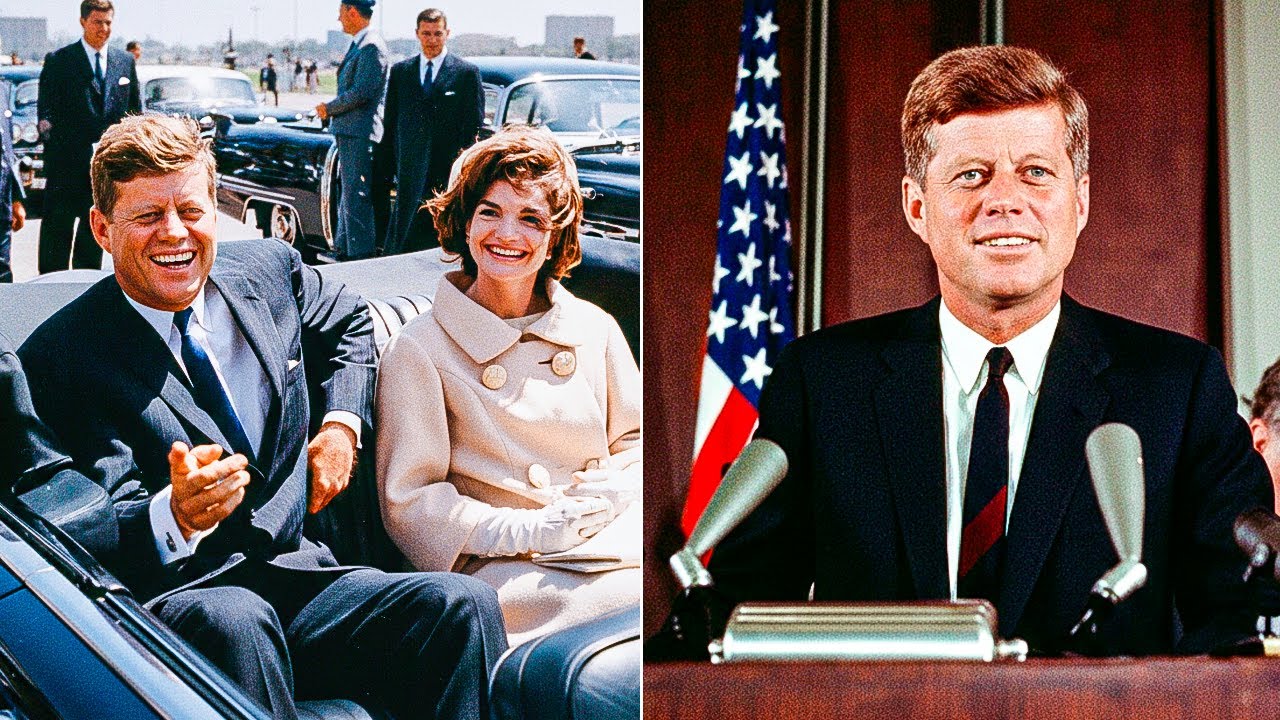
Kennedy that day, reached in and picked it up. Realizing it was crucial evidence, he carried it into the hospital and placed it on the stretcher beside the president’s body. His intention was simple: keep the evidence safe, keep it from being lost in the pandemonium. For sixty years, he told no one.
It was only in 2023, at the age of eighty-eight, that Landis finally published his account of what he had done that afternoon in Dallas. And his recollection threatened to unravel the single most important piece of evidence in the official story of John F. Kennedy’s assassination. Because the bullet Landis says he placed on Kennedy’s stretcher was, according to the Warren Commission, the same bullet later found on Governor John Connally’s stretcher—the so-called “magic bullet” that supposedly passed through both men.
If Landis’s memory was accurate, then the bullet never passed through anyone. It had simply been sitting in the car, and he had moved it. The cornerstone of the single-bullet theory, the explanation for how one shot could wound two men, may have been nothing more than a chain of good intentions and terrible confusion in a hospital hallway. The morning of November 22, 1963, had begun as an ordinary Friday.
Breakfast in Fort Worth, a short flight to Dallas, smiling crowds waving from the curbs. Behind the scenes of that tragic day, however, lay a series of strange details most people never heard: the president’s final meal was a simple boiled egg, a bundle of curtain rods ignited decades of controversy, a bloodstained suit remained hidden until 2011, and a presidential car carried four more presidents after the assassination. From puzzling lost evidence to eerie coincidences that still baffle investigators, the strangest aspects of Kennedy’s final hours reveal just how surreal that day truly was. In the presidential suite of the Texas Hotel in Fort Worth, John F.
Kennedy woke up and ordered what would become his last meal. The order, placed through his valet to the waiter Marvin Lavh, was remarkably specific: a five-minute boiled egg, crisp bacon, fresh orange juice, buttered toast, and coffee with hot milk instead of cream. Kennedy also requested orange marmalade for the toast, which Lavh made sure to add to the tray. The president ate this simple breakfast in his room while Jackie Kennedy, still recovering from exhaustion and a cold, rested.
Nutritionally, it was a balanced meal—protein from the egg, carbohydrates from the toast, vitamin C from the juice. Nothing complicated, nothing exotic; any American kitchen in 1963 could have produced it. Later that same morning, Kennedy attended a public breakfast hosted by the Fort Worth Chamber of Commerce in the hotel’s grand ballroom, where tickets cost just three dollars per person. The menu there consisted of scrambled eggs, ham, and fried potatoes with biscuits and rolls.
But for his private breakfast upstairs, Kennedy had chosen something far simpler. The pink suit Jackie Kennedy wore on November 22, 1963, became one of the most iconic and haunting images in American history. The bloodstained outfit is now locked in a climate-controlled vault at the National Archives in College Park, Maryland, stored flat in a special acid-free box alongside other artifacts from the assassination, including the original windshield of the presidential limousine and more than five million pages of related records. What makes this even more astonishing is that the suit will not be available for public display until at least 2103—140 full years after the assassination.
The suit itself was not technically an original Chanel design, despite being commonly described as one. First ladies were expected to wear American-made clothing to avoid criticism, so Jackie ordered the outfit from a New York salon called Chez Ninon, which used a licensed copying system. Chanel in Paris supplied the fabric, buttons, and trim, but the actual manufacturing was done in the United States. The raspberry-pink wool bouclé suit with dark blue trim was said to be a favorite of President Kennedy’s; Jackie had worn it at least six times before that November morning.
After the shooting, she famously refused to change out of the bloodstained suit, even when aides offered her clean clothes at Parkland Memorial Hospital and again aboard Air Force One. “I want them to see what they have done to Jack,” she told Lady Bird Johnson. She wore it during Lyndon Johnson’s swearing-in ceremony and kept it on for the flight back to Washington. The suit was eventually placed in a bag, supposedly by Jackie’s personal maid, and sent to the National Archives with a handwritten note from Jackie’s mother reading: “Jackie’s suit and bag, worn November 22, 1963.
” The only missing pieces are her small pink hat and white gloves, which disappeared in the chaos following the assassination and were never found. In 2003, Caroline Kennedy signed a deed of gift stipulating that the suit must remain hidden to avoid insulting her father’s memory or causing unnecessary grief to family members, making it one of the most protected artifacts in American history. In the final moments before the gunshots rang out in Dealey Plaza, President Kennedy’s last words were surprisingly ordinary and casual. As the motorcade wound through downtown Dallas, the crowds lining the streets were enormous, far larger than anyone had expected.
Nellie Connally, the wife of Texas Governor John Connally, sat directly in front of the president in the jump seat of the Lincoln Continental. She turned to speak to him as they passed the cheering onlookers. “Mr. President, you certainly can’t say that the people of Dallas haven’t given you a nice welcome,” she said.
Kennedy smiled and replied, “No, you certainly can’t. ” Those five words were the last President Kennedy ever spoke. Within seconds, the first shot rang out from the Texas School Book Depository, and the motorcade descended into chaos. What makes the exchange so strange is how utterly ordinary it was—a polite acknowledgment of a friendly reception, the kind of small talk you might have with anyone on a pleasant drive through town.
Kennedy had no idea he was uttering his final words. For years after the assassination, some people mistakenly believed Kennedy’s last words were “My God, I’ve been hit,” but medical experts later confirmed this was impossible due to the nature of his injuries and the damage to his throat from the first bullet. Nellie Connally herself confirmed the conversation in multiple interviews throughout her life. Earlier that morning, before Air Force One touched down in Dallas, President Kennedy’s day had begun in Fort Worth under a gray, rainy sky.
Thousands of Texans stood outside the Texas Hotel in a cold, steady rain, many since before five in the morning, huddled together in the parking lot across from the hotel, soaked to the bone waiting for a glimpse of their president. Around eight o’clock, Kennedy emerged and walked toward a temporary platform set up in the parking lot. The crowd erupted in cheers despite the miserable weather. Noticing his wife’s notable absence from the platform, Kennedy addressed it with his characteristic wit.
He told the crowd that Mrs. Kennedy was still upstairs getting ready, adding with a smile that she was taking a little longer than usual, but naturally she looked better than everyone when she finished. The crowd loved it, laughing and applauding in the rain. Kennedy continued with impromptu remarks about national security, military strength, and Fort Worth’s vital role in aircraft production.
“There are no faint hearts in Fort Worth,” he told the assembled Texans, a line met with more cheers. It was the last time the American public would hear President Kennedy speak. That same morning, Lee Harvey Oswald did something unusual. Normally, he traveled from Dallas to Irving only on Friday evenings to visit his estranged wife, Marina, who was staying with a friend named Ruth Paine.
But on Thursday, November 21, Oswald asked his coworker, Wesley Frazier, for a ride to Irving a day early, claiming he needed to pick up some curtain rods for his room in the boarding house he rented in Oak Cliff. The next morning, when Frazier arrived at his sister’s house around 7:15 to pick up Oswald, he noticed his passenger was carrying a long package wrapped in brown paper. Frazier asked what was inside. Oswald replied casually that it contained curtain rods, just as he had said the day before.
The two men then drove to the Texas School Book Depository, where they both worked filling textbook orders, listening to music and news on the radio during the twenty-minute drive. And here is where things get strange. Both Frazier and his sister, Linnie Mae Randle, who also saw Oswald carrying the package that morning, insisted the package was only twenty-four to twenty-seven inches long. Frazier specifically remembered how Oswald held the package, one end in his hand and the other tucked under his armpit.
This detail became crucial because Oswald’s Mannlicher-Carcano rifle, when disassembled, measured 34. 8 inches. Frazier had previously worked in a department store handling and installing curtains, so he was familiar with the shape and typical length of curtain rods. Even stranger: when Oswald entered the book depository that morning, another employee named Jack Dougherty testified before the Warren Commission that Oswald was not carrying anything in his hands when he arrived.
The Warren Commission concluded that a brown paper bag found on the sixth floor, measuring thirty-eight inches long, was the same package Oswald had carried that morning and that it had contained his rifle, not curtain rods. But the discrepancy in size between what witnesses described and what investigators found fueled decades of debate over whether Oswald actually brought the murder weapon to work that day, or whether the rifle had been hidden in the building beforehand. One of the most enduring myths about the Kennedy assassination is that the president might have survived if the car’s clear plastic bubble top had been in place that sunny November morning in Dallas. The weather had improved significantly after the morning rain in Fort Worth, reaching a pleasant sixty-eight degrees with clear skies, so the Secret Service decided to leave the transparent roof panels stored in the trunk of the Lincoln Continental.
For decades, people wondered whether that single choice made all the difference between life and death. But the truth is more mundane than most realize. The plastic top was never designed to stop bullets or provide any kind of ballistic protection. According to Gary Mack, a curator at the Sixth Floor Museum in Dallas’s Dealey Plaza, the plastic panels were simply meant to keep rain and wind off the passengers during parades and motorcades.
Nothing more. Despite all the extravagant modifications made to the presidential car—including high-tech features like radio telephones, a public address system, and custom engineering that cost more than $200,000—the vehicle had no armor anywhere in it. Mack described Kennedy’s famous Lincoln as essentially just an expensive luxury limousine rather than the armored fortress people might imagine for a presidential vehicle. What makes this even more surprising is that some people at the time seemed to believe the plastic top provided protection.
A Secret Service agent reportedly described it as bulletproof in an FBI summary report dated November 29, 1963, though Mack suspects the agent simply didn’t want another agency knowing the top’s true characteristics, or was perhaps trying to save face about the vehicle’s vulnerabilities. The shots that killed President Kennedy came from above and behind, fired from the sixth floor of the Texas School Book Depository, and the thin plastic top would have done absolutely nothing to deflect or slow those bullets. In fact, had the top been in place, it might have created additional hazards by causing bullet fragments to ricochet or deflect in unpredictable directions. What happened to President Kennedy’s car after that terrible day in Dallas seems almost unbelievable by modern standards.
Instead of retiring the vehicle with respect or preserving it as evidence, the government immediately put the bloodstained car back into service for future presidents. The Secret Service launched an urgent project they called “Quick Fix,” aimed at providing President Lyndon Johnson with an armored car as fast as possible. The logic was straightforward but grim: building a custom presidential car from scratch takes about four years, and they needed one immediately. So instead of starting over, they decided to rebuild the very car in which Kennedy had just been killed.
The Lincoln Continental was returned to Ford and their partner company, Hess & Eisenhardt of Cincinnati, Ohio, where workers completely disassembled and transformed it. They added a permanent hard bulletproof roof to replace the open design, placed armor plating throughout the body, upgraded the glass with bulletproof materials, and made numerous other security modifications. President Johnson had one specific demand for the rebuilt car: he insisted the color be changed from the presidential metallic blue to standard black, because he felt the blue would be too directly associated with the assassination and would bring back painful memories for everyone who saw it. The rebuilt car returned to service by late spring 1964, less than six months after the assassination.
Astonishingly, the car remained in the presidential fleet for another thirteen years, serving Presidents Johnson, Nixon, Ford, and even into the first year of Jimmy Carter’s term. It wasn’t retired until late 1977, when Ford finally donated it to the Henry Ford Museum in Dearborn, Michigan. The car remains one of the museum’s most popular exhibits to this day, and staff report that every November 22, some visitors leave flowers near the vehicle. President Kennedy was scheduled to deliver a major speech at the Dallas Trade Mart on November 22, 1963, addressing more than two thousand members of Dallas’s business community and local leaders.
The speech had been carefully prepared on thirty-seven note cards that included handwritten comments by the president himself, and was meant to be a significant address covering national security, America’s role in the world, and the importance of leadership guided by science and logic. The timing of this event makes it particularly haunting: the luncheon speech was scheduled to begin at exactly 1:00 p. m. Central Time, which was the precise moment doctors at Parkland Memorial Hospital pronounced John F.
Kennedy dead. The undelivered speech contained what would become one of its most distinctive and prophetic lines. Kennedy had written: “We in this country, in this generation, are—by destiny rather than choice—the watchmen on the walls of world freedom. ” The speech also warned against those who confuse rhetoric with reality, the plausible with the possible, and emphasized that America’s leadership must be guided by the light of science and logic.
In another especially striking passage, Kennedy planned to say: “There will always be dissident voices heard in the land, expressing opposition without alternatives, finding fault but never favor, perceiving gloom on every side. ” At the event venue, the guests had already been seated and served lunch—ironically, steak, which required a special dispensation since it was Friday and Catholics normally ate fish. When Kennedy didn’t arrive on schedule, someone stepped to the podium and suggested people begin eating, explaining there would be a delay. The Reverend Luther Holcomb, executive secretary of the Dallas Council of Churches, led the stunned crowd in prayer after news of the shooting arrived.
The speech cards Kennedy prepared for that day remain preserved in the John F. Kennedy Presidential Library, a silent witness to words that were meant to be heard but never spoken. When Abraham Zapruder stood on a concrete pedestal in Dealey Plaza on November 22, 1963, he had no idea his home movie camera would capture the most analyzed film footage in American history. The Dallas dress manufacturer filmed the presidential motorcade for just 26.
6 seconds, recording 486 frames of standard 8mm Kodachrome film. What he saw through his viewfinder that day would haunt him for the rest of his life, especially one particular frame showing the exact moment President Kennedy was struck by the fatal bullet. Frame 313 became the single most controversial image from that tragic afternoon, capturing the precise instant the president’s head exploded from the force of the impact, showing horrific details Zapruder himself could barely process. After the shooting, he was heard screaming, “They killed him!
They killed him! ” as he stumbled around the plaza in shock. Later that same day, after promising Secret Service agents the film would be used only for official investigation purposes, Zapruder had his footage developed at the nearby Eastman Kodak plant, where three copies were made. The very next day, November 23, 1963, Life magazine purchased the film rights from Zapruder for $150,000.
But Zapruder imposed one non-negotiable condition: Frame 313, showing the fatal head wound, could never be published. That image gave him nightmares, and he insisted it stay out of public view out of respect for the Kennedy family and the horrific nature of what it showed. Life magazine honored this agreement for more than a decade. While they published around thirty frames from the film in black and white in the weeks following the assassination, Frame 313 was carefully excluded from every publication.
The American public could see the frames immediately before and after the fatal shot, but the actual moment of impact remained invisible. It wasn’t until March 6, 1975, that the film was shown in full, including the forbidden frame, when reporter Geraldo Rivera aired it on his television program “Good Night America. ” By then, Abraham Zapruder had been dead for five years, having passed away in 1970, still haunted by what he had seen through his camera lens. When you think of the car that carried the President of the United States, you might assume the government spent millions to own a custom, state-of-the-art presidential limousine.
But here is the strange part: the White House didn’t actually own the car in which John F. Kennedy was assassinated. They leased it from the Ford Motor Company for just $500 a year. Five hundred dollars annually for the presidential limousine—an amount that seems incredibly cheap even by 1963 standards.
The car began life as a regular four-door Lincoln Continental convertible that came off Ford’s assembly line in Wixom, Michigan. The retail price for a standard version of this model was $7,347, a high figure at the time but not exorbitant. What made this car special wasn’t the base model but what happened next. The Secret Service sent the Lincoln to a specialized elite coachbuilding company called Hess & Eisenhardt in Cincinnati, Ohio.
The company had worked on vehicles for some of the most powerful figures in the world, including the Queen of England, so they knew exactly how to transform an ordinary car into something befitting the presidency. The modifications cost $200,000, equivalent to more than two million dollars today. The Secret Service gave the car special code names, calling it SS100X or simply X100. The modifications included raising the floor, lengthening the frame, adding special seats, installing two radio telephones, a rotary dial phone, an AM/FM radio system, a public address system, an electronic siren, and remote-controlled door locks.
The car also received a high-compression, hand-assembled V8 engine that increased its power by 17 percent. Because all these additions made the car much heavier—weighing 9,800 pounds instead of its original 7,822 pounds—the team installed what they called the largest air conditioning unit built for a passenger car at that time, powerful enough to cool an average-sized home. The car also came with three different removable roof options: a standard folding cloth top, a lightweight metal top, and a clear plastic bubble top. These tops could be switched and combined depending on the weather and the president’s preferences.
But here is what makes it even stranger: despite all that money spent on modifications, the car had no armor or bullet protection anywhere. The plastic bubble top that people often ask about was not bulletproof or even bullet-resistant. Amid the chaos and horror at Parkland Memorial Hospital on November 22, 1963, Jackie Kennedy made a deeply personal gesture that most people have never heard about. While her husband lay on the emergency room table, after his death was pronounced at 1:00 p.
m. , she quietly removed her wedding ring and placed it on his finger, ensuring the symbol of their marriage would stay with him forever. That moment occurred in the terrible minutes after doctors stopped trying to save the president’s life. Jackie had been at his side throughout the frantic resuscitation attempts, even kneeling on the bloodstained floor to pray.
When it became clear nothing more could be done, she asked for a moment of privacy with her husband. During this private farewell, she removed the gold ring she had worn since their wedding day in 1953 and placed it on his hand. This wasn’t the only personal item Jackie left with her husband. She also placed a pair of cufflinks and a PT-109 tie clasp in the casket, pieces that held special meaning from his naval service during World War II.
But the wedding ring carried the deepest significance, representing the ten years they had spent together through good times and bad. What makes this gesture even more poignant is that Jackie had already suffered a devastating personal loss that year. Just three months earlier, in August 1963, their infant son Patrick had died only two days after his premature birth. The Texas trip was one of Jackie’s first public appearances since that terrible loss, and she had only agreed to accompany her husband on the political trip to help repair their relationship and support his 1964 re-election campaign.
The wedding ring remained on President Kennedy’s finger when he was buried at Arlington National Cemetery on November 25, 1963. It was a final act of love and devotion Jackie wanted to keep secret, but those present in the hospital that day later shared the story. The radio transmissions from the motorcade that day may hold crucial evidence about the assassination. Every vehicle in President Kennedy’s motorcade was equipped with sophisticated radio communications equipment connected through a central network.
The Secret Service established a monitoring station at the Adolphus Hotel in downtown Dallas, where agents listened to all conversations between motorcade vehicles as the president made his way through the city streets. These transmissions were also relayed in real time to Air Force One, parked at Love Field, and supposedly to the White House Communications Agency in Washington. This meant that multiple recordings should have been made of everything said over the radios during those critical minutes when the shots rang out in Dealey Plaza. According to Gary Mack, the late curator of the Sixth Floor Museum in Dealey Plaza, these tapes might contain absolutely critical evidence about the assassination.
One Secret Service agent riding in the presidential car later testified that he was actually using his radio telephone during part of the assassination itself. If his microphone was open and broadcasting at that moment, it might have captured the sounds of gunfire, which would help investigators determine exactly how many shots were fired and from which direction they came. Such audio evidence could answer some of the biggest remaining questions about what happened that day. But here is the strange part: no one knows where those tapes are.
Despite extensive searches by researchers, investigators, and the Assassination Records Review Board, the recordings have simply vanished. Mack shared this troubling information with the Review Board during their 1994 research visit to Dallas, when they were gathering testimony from several people connected to the case. The board tried to track down the lost broadcast but found nothing. To this day, more than sixty years after the assassination, the tapes remain one of the ongoing mysteries surrounding President Kennedy’s death, leaving researchers to wonder what crucial information might be locked inside those missing recordings.
And Deputy Press Secretary Malcolm Kilduff, who announced Kennedy’s death to the world, had been on the phone with the president moments before the shooting, trying to get a message to him about scheduling. Those lost tapes, like so much else from that day, remain silent.
