The obituary arrived at the offices of The Times in London in 1943, ready to be filed away until the day it would be needed. The subject was a man who was still very much alive, the most photographed young man in the world, a king for 327 days. Before the newspaper could hold it, the writer sent the draft to the man who knew him best, the private secretary to the King, asking for his comments. Tommy Lascelles read it, then wrote in his diary that no article of that kind could ever be entirely satisfactory.
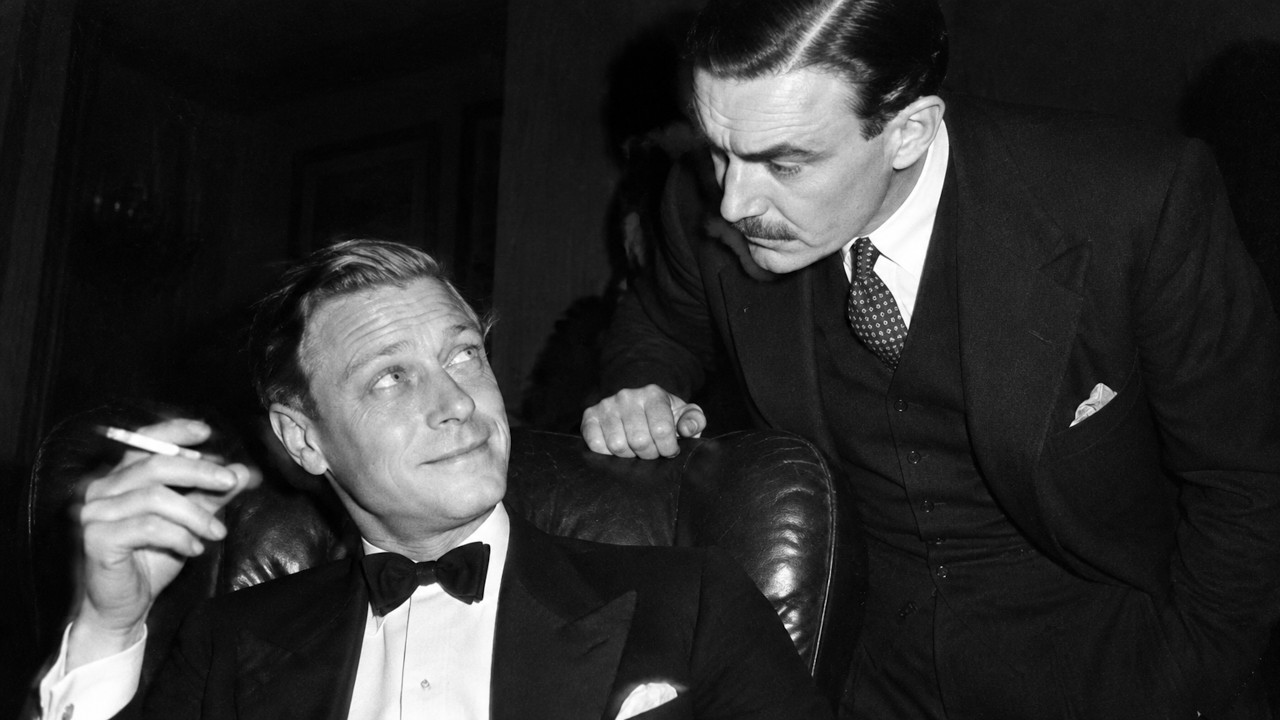
He had served this man for eight years. He believed the man’s natural mental growth had stopped completely when he reached adolescence, and that every choice came down to a single question: “Can I get away with this? ” Lascelles kept his diary bound in black leather with silver locks, meant for his eyes alone. What had he seen in the golden prince to make him write such things?
In 1920, a young officer just returned from India received a letter that would tie his life to the heir to the throne. The friend who carried it, according to one account, was Lettie Elcho. The letter offered him a position in the household of Edward, Prince of Wales. His name was Alan Frederick Lascelles, known to everyone as Tommy.
He was born on 11 April 1887 in Sutton Waldron in Dorset, the youngest of six children and the only surviving son of Commander Frederick Canning Lascelles. His grandfather had been the fourth Earl of Harewood, a peer of the realm. He studied at Marlborough and then at Trinity College, Oxford. In the Great War he won the Military Cross.
When the war ended, he went to India as military secretary to his brother-in-law, George Lloyd, the Governor of Bombay. An officer in the personal service of a great man, carrying his letters and arranging his days. It was good training for what came later. On 16 March 1920, he married Joan Thesiger, daughter of Lord Chelmsford, the Viceroy of India.
When he came home from India that year, he was a married man of thirty-three, with a Military Cross and an Oxford education, and still had to secure his livelihood. The offer, when it came, had a clear appeal. One reason, it was said, was geographical. St James’s Palace, where the Prince kept his court, lay about half a mile from Lascelles’s house and a quarter of a mile from his club.
Had the post not come, the same account said, he intended to apprentice himself to a firm of printers. Instead, by the end of 1920, he became Assistant Private Secretary to the Prince of Wales. The records differ on the month, some putting it in November, others in December, but the year is certain. The royal private secretary is the senior official who stands between a member of the royal family and the government.
He controls the papers, the schedule, and who is allowed in. The assistant private secretary is his deputy, the man who does much of the actual work. The Prince’s household lived at York House within St James’s Palace. Above Lascelles was the private secretary, Godfrey Thomas, who had held the post since 1919.
In the same month Lascelles arrived, Admiral Sir Lionel Halsey became the Prince’s comptroller, in charge of his money and household. Then there were the equerries, the officers who accompanied him personally. The Prince’s first equerries, Piers Legh, known as Joey, and Claud Hamilton, were, as he later put it, “shock absorbers for my blows. ” And at the heart of it all was the man himself.
Edward was born in 1894, the eldest son of King George V and Queen Mary. In the 1920s he was the most photographed young man in the world. Newsreels followed him everywhere. He was sent on long tours of the Empire, to Canada and the United States, to India and Africa and South America.
Crowds came out to see the smiling prince who would one day be their king. Lascelles was not immune to that charm. He was a serious, intelligent, dry, and strict man, but he fell under the Prince’s spell like everyone else. In a 1920 letter he wrote: “I have a very deep admiration for the Prince, and I am convinced that the future of England is as much in his hands as in those of any other individual.
” He went further. He wrote: “The Prince was the most attractive man I have ever met. ” Long afterwards, when everything had changed, he never denied it. He wrote: “For years after I joined his staff in 1920, I had a great affection and admiration for the Prince of Wales.
” What he wanted then, and always, was a monarchy worthy of the loyalty people gave it. In those early years he thought he had found its future. Lascelles wrote constantly. Letters to his family, letters to his friends, and a diary in which he recorded what he saw and what he thought.
He wrote with a good style and a sharp eye for essential detail. For years those pages stayed private. Long after his death they were gathered and published, and through them we can follow, year by year almost, how admiration turned into something else entirely. The work went well at first.
In 1926, Lascelles wrote the speech the Prince gave to the British Association, the venerable scientific body, at its meeting in Oxford. It was a great success. In the same year, Lascelles received a personal honour from the King, membership of the Royal Victorian Order. He said later that he met George V only once, on the day the King gave him the honour.
He described it as “the hardest earned decoration of my life. ” The Prince remembered that speech too. A quarter of a century later, in very different circumstances, he would write about it in one sly line, the only public word he ever published about Tommy Lascelles. Within a year of that Oxford speech, the man who wrote it began to see his master very differently.
The Prince’s great love in those years was a married woman named Freda Dudley Ward, and Lascelles wrote about it with genuine sympathy. The affair began in 1918 and continued for years. Lascelles wrote: “He fell in love with Mrs Dudley Ward, and then, in a passion of emotion, he fell, God knows, as deep as any poor boy in love could fall. ” There is no mockery in that sentence.
Lascelles understood love, and understood loneliness, and the Prince’s position was a lonely one. Not everyone had the same patience. In February 1921, Winston Churchill wrote to his wife about the Prince and Freda: “People are beginning to get bored with the affair. They think the door should be either open or shut.
”
What worried Lascelles was everything surrounding that great love. Years later he summed up the pattern in a sentence of cold precision. There was always one great affair, and, concurrently, as I know to my own cost, a continuous succession of small affairs, conducted in any roads or lanes of the Empire he happened to be touring at the time. In September 1924, the Prince sailed to the United States on the Berengaria for the international polo match and stayed at a house called Woodside near Syosset on Long Island.
Lascelles gave the American reporters an answer worthy of a courtier: he was here to play. His Royal Highness was entitled to some enjoyment. The tours exhausted even the most devoted staff. Godfrey Thomas, the Prince’s private secretary, described one programme in South Africa in 1925 as the most soul-destroying and spiritless programme I have ever carried out.
The records do not show whether Lascelles was on that trip. In private, his notes became drier. A small scene from his diary captures the gulf between them better than any speech. After a weekend with the Prince, Edward showed him a small book recommended by Lady Desborough and asked whether he had ever heard of it.
Lascelles recorded the answer with complete seriousness. That remarkable little book was Jane Eyre. He concluded in one line: reading meant no more to him than music does to someone tone-deaf. For a man from Marlborough and Oxford, this was a shocking discovery.
The prince he had called the future of England needed to be recommended one of the most famous novels in the language. By 1927, the admiration had faded. He expressed it later in words that became famous: by 1927 my idol had feet, and more than feet, of clay. The conviction that one could not serve loyally a man one had come to regard as vulgar and selfish was still in the future.
In that summer, Edward travelled to Canada for the Diamond Jubilee of Confederation, celebrating sixty years of Canada as a nation. He sailed from Southampton on the Empress of Australia on 23 July 1927, accompanied by his brother Prince George, Prime Minister Stanley Baldwin, and his wife. The Prince later remembered that the voyage brought him into close contact with Baldwin for the first time: “We four crossed the Atlantic together. ” The visit was enormous by the standards of the time.
The party arrived at the end of July and stayed until 7 September, about six weeks in all. They visited Quebec, Ottawa, Toronto, and the Peace Bridge on the American border, and went west to Calgary, Edmonton, Vancouver, and Winnipeg. Lascelles crossed the continent beside the Prince, one of two similar trips he made with him across Canada. And somewhere in the middle of the journey, in Ottawa specifically, Lascelles did something unusual.
By his own account, he asked for a private conversation with the Prime Minister one evening at Government House. In the small sitting room, Lascelles told him that in his considered opinion, the heir to the throne, in his wild pursuit of wine and women, and whatever selfish whims occupied him at the moment, was heading rapidly towards the abyss, and unless he mended his ways, he would soon be unfit to wear the British crown. Then he went further. He told Baldwin that sometimes, while sitting at York House waiting for the result of a point-to-point race in which the Prince was riding, he could not help thinking that the best thing that could happen to him and to the country would be if he broke his neck.
Baldwin’s response, as Lascelles recorded it, was calm. The Prime Minister said: “God forgive me, I have often thought the same thing myself. ”
This exchange needs a pause. Lascelles recorded this conversation years after it happened.
His editor, Duff Hart-Davis, noted that it was written down well after 1927, and that no contemporary letter or diary entry survives to confirm it. One reviewer who examined the evidence concluded that some kind of exchange did take place at Government House, and there is no need to doubt it. But the exact words are the memory of one man, written down much later. Baldwin promised, according to Lascelles’s account, to speak frankly to the Prince.
He never did. As Lascelles wrote: “Not until October 1936, too late, too late. ”
Lascelles himself had decided to leave. He made the decision to resign that summer.
Then he changed his mind. “For family reasons,” he wrote, “I postponed it. ” Kenneth Rose told the story in more detail when reviewing the published letters in 1989. According to his account, Lascelles’s wife Joan persuaded him to change his mind, upset that he had made the decision without consulting her.
So he stayed in place. The tours continued, and the Prince kept smiling for the cameras. But the courtier standing behind him had already told the Prime Minister, by his own account, that the heir to the throne was heading for the abyss. The next year, on a hot night on the other side of the world, he would witness something that made it impossible for him to stay.
The royal train stood in the station at Dodoma in the heart of Tanganyika, and in one of its carriages a secretary was decoding telegrams. It was November 1928. The Prince of Wales was on a long tour of East Africa, and Tommy Lascelles was with him. The tour had begun in September.
It took the Prince through Kenya and Uganda, then south into Tanganyika, the territory now known as Tanzania, where he spent the second half of November, heading towards Zanzibar on the coast. He was accompanied by his younger brother, Prince Henry. At Lake Albert, his friend J. Trotter nearly died of a heart attack.
He recovered, and a few months later the Prince sent him on a very different mission. Lascelles later remembered it as a trip in which he camped and walked beside the Prince through central Africa. Thousands of miles away at home, the Prince’s father had fallen ill. On 21 November, George V noted in his diary that he had caught a cold with a touch of fever.
That was what they called it. It was much worse. The infection spread to his blood and an abscess formed on his lung. Prime Minister Stanley Baldwin began sending telegrams to the heir in Africa.
What happened that night comes down to us in two very different accounts, and both deserve to be heard. The first is Lascelles’s own. He wrote: “It was a hot night when our train stopped at Dodoma station. ” He was decoding the latest and most urgent telegrams from Baldwin, which made clear that the King was gravely ill.
He took the message to the Prince. According to this account, the Prince brushed it off. “I don’t believe a word of this,” he said. “It’s just an election dodge of old Baldwin’s.
It means nothing at all. ” The words carried a sting. Baldwin was the Prime Minister, and the Prince, in this account, was accusing him of inventing a royal illness for political gain. Lascelles replied, by his own account, with one sentence: “Sir, the King of England is dying.
If that means nothing to you, it means a great deal to me. ” The editions of his papers differ slightly here. One gives the last words as “means a great deal to me,” another as “means a great deal to us. ” The force of the reply is the same.
Then, according to Lascelles’s account, came the part that exhausted his patience. Lascelles wrote: “He looked at me, and walked out without a word, and spent the rest of the evening successfully seducing Mrs Barnes, the wife of the local commissioner. He told me so himself the next morning. ” It is an astonishing accusation, and it rests on a single witness.
The lady’s name appears differently in different places. One early edition leaves the name blank; the historian Alexander Larman calls her Mrs Marjorie Barnes. Lascelles described the Prince’s behaviour, his incredibly callous behaviour, as “the last straw. ” But the seduction is his claim, and his alone.
The second account belongs to the Prince. Years later, in his memoirs, he told the story of that November with no mention of any of this. He wrote that he first learned of his father’s illness from a Reuters news report, and sent an immediate telegram to the Palace. At Dodoma, he found letters waiting from the royal physician, Lord Dawson, from the Prime Minister, from Admiral Halsey, and from Godfrey Thomas.
In his account, he moved quickly. He took the Governor’s train to the coast at Dar es Salaam. On 2 December he boarded HMS Enterprise. He reached Brindisi in Italy in 8 days, crossed Europe on a train provided by Mussolini, and was met at Folkestone by Baldwin himself.
His memoirs make no mention of Lascelles at Dodoma, no election dodge, no commissioner’s wife. Here the two records part company completely. In one, a son sneers at news of his father’s danger and spends the night with another man’s wife. In the other, a son races home across two continents.
Perhaps both accounts are partly true. A young man could dismiss bad news at night, and hurry towards it in the morning. What is certain is the story Lascelles believed, and what he did about it. It is worth remembering when each man wrote.
The Prince’s memoirs appeared in 1951, more than twenty years after Dodoma, when he had become King, abdicated, and gone into exile. Lascelles’s account of those years was also recorded much later. Neither was writing that same night. Each wrote with the whole question behind him, and each had his reasons for remembering it his own way.
There is a reason that night affected him so deeply. Lascelles was a man who believed in the old law of service, centred on the Crown. The idea of the Crown itself, more than any person wearing it at the time. The King represented the Crown.
For Lascelles, to have the heir to the throne treat the King’s danger as a political trick was a failure in the one thing a Prince of Wales was not allowed to fail. The pursuit of pleasure he had complained about in Ottawa was mere weakness. This, in his eyes, was emptiness where duty should have been. The race home was long, and his calculations were harsh.
The illness began on 21 November. The Prince stayed in Tanganyika until the end of that month, followed by one day in Zanzibar. He boarded HMS Enterprise on 2 December, spent 8 days at sea to Italy, then crossed all of Europe by train. He reached his father’s bedside, as the press reported at the time, on 11 December, almost three weeks after the King first fell ill.
At Folkestone, Lascelles remembered, Baldwin had grim news. “When we met Stanley Baldwin at Folkestone,” he wrote, “he told us that His Majesty might not survive the night. ” The King survived. On 9 February 1929, he was moved to Bognor on the coast to recover.
The crisis passed, but for Tommy Lascelles something had broken in the heat of Africa and would never be mended. He had decided to leave once before and been persuaded to stay. This time, he would not be persuaded. Even before the King was moved to Bognor, he would hand in his resignation in writing, and tell the Prince of Wales to his face exactly why.
Before the end of January 1929, Lascelles sent a note to the Prince saying he wished to resign. “One evening,” he wrote, “I sent the Prince a message that I wished to resign. ” The Prince’s first move was typical of him. The next morning he sent a friend to do the talking for him, Brigadier Gerald Trotter, known as J.
, the same man who had nearly died at Lake Albert. Trotter was one of the Prince’s friends, the man about whom the Prince once wrote that he had learned that life should be lived to the full. Now he came to try to persuade the assistant private secretary to change his mind. Lascelles refused to discuss it, so the Prince summoned him.
“What followed,” Lascelles said, “was the most exhausting experience I have ever had. ” The Prince asked him why he wanted to leave. So Lascelles told him. He wrote: “I paced up and down his room for nearly an hour, telling him, as I would tell a younger brother, my opinion of him and his whole approach to life, predicting with an accuracy that perhaps surprised me at the time, that he would lose the throne of England.
”
It is difficult to imagine that scene without a kind of awe. A court official of 41, paid by the man standing before him, pacing the room for nearly an hour to tell the heir to the throne that he was unfit for it. And the heir sat and listened. Lascelles wrote that the Prince listened to him without hardly interrupting.
When it was over, the Prince spoke. “Well, good night, Tommy, and thank you for that talk. I suppose the truth is that I am quite the wrong sort of person to be Prince of Wales. ” Lascelles recorded that sentence.
He wrote that it was so pathetically sincere that it nearly melted my heart. The next morning, the Prince accepted the resignation. Then he did something that tells us as much as any other detail in the whole story. He said he would like to give Lascelles a car, as a sign that we parted as friends.
The records do not say whether Lascelles accepted the gift. Think about what happened in that room. A man was told, at length and with passion, that his entire way of life was wrong, and that it would cost him his throne. He thanked the speaker, admitted in one sentence that he was not the right person, and then offered him a present.
For the Prince, that hour seems to have been a quarrel between friends, to be smoothed over with kindness. For Lascelles, it was a final judgment. It is hard not to see in that gift a sign that the judgment had not landed. Charm and attractiveness had carried the Prince through all his tours and among all his crowds.
It is easy to see why he reached for them now. That gap was never to be bridged. Edward’s way with people rested entirely on charm. He was affable.
He was generous in small things. He avoided confrontation. In all their years together, Lascelles later admitted, the Prince never said a harsh word to him. But as his later judgments on the Prince’s idea of monarchy showed, Lascelles understood that charm does not replace doing the job.
After years, in his own memoirs, Edward wrote a sentence about private secretaries that reads like an epitaph for both of them. A king should have absolute loyalty from his private secretary. The private secretary, for his part, should have the king’s trust and confidence. In the winter of 1929, neither half of that sentence was true.
The formal letter of resignation was polite and brief. Few men can go on being private secretaries all their lives, he wrote, and I am not one of them. He also reached for a quotation from Shakespeare. In the history plays, Prince Hal becomes king and coldly casts off his old companion, the fat knight Falstaff.
Lascelles described himself as a reversed Falstaff, the companion who rejects the prince, leaving Hal to face his fate alone. Later, recalling it, he summed up his reasons in one sentence: one cannot serve loyally a man one has come to regard as vulgar and selfish, and certainly not a prince. The price he paid was real. He had a wife and a young family, and no other post waiting.
He was paid, by his own account, one thousand pounds a year. He later wrote that he retired into obscurity at the age of forty-two, “losing my salary of £1,000 a year. ” By the dates, he was actually forty-one. He remained unemployed for two years.
It was said he spent them reading and tending his garden with his family in the country, a man of real abilities with nothing to do but wait. He was not the only one with doubts. Kenneth Rose wrote that both Godfrey Thomas and Admiral Halsey, senior to Lascelles in the household, had confessed to him that they too had been thinking of resigning for a long time. Neither left.
Lascelles was the one who actually walked out of York House. He left without a job, without prospects, and with a judgment he would carry and polish for the rest of his life. Many years later, in a moment of astonishing honesty, he considered those years the best of his life, and yet wasted. But the Prince was not done with him.
Edward, who had always been good at getting people back, was about to try twice more to bring Tommy Lascelles back. In Ottawa, between 1931 and 1935, the former courtier received two letters from London. Both came from the Prince of Wales. Both carried the same message.
Lascelles had found work at last. In March 1931, he became secretary to the Governor-General of Canada, the Earl of Bessborough, the King’s representative in Ottawa. It was a distinguished post, far from York House, and he held it for more than four years. Far away in England, the Prince’s life was changing too.
Since 1934, there had been one woman who mattered to him above all else, an American named Wallis Simpson. While Lascelles was in Ottawa, the Prince reached out to him. Lascelles wrote: “He sent me two messages on two occasions, saying he would be glad to have me back working with him whenever I wanted. ” That was his usual charm, offered across the ocean.
The man Lascelles had told he would lose the throne of England wanted him back on his staff. Lascelles stayed where he was in Canada, holding to his own ideas about what royal service should be. He recorded it in a letter to Joan in 1935 in a sentence that could stand for his whole creed: “There is no use wandering around the world saying ‘God Save the King’ if one is not prepared to help God when needed. ”
In October 1935, his appointment in Canada ended and he came home.
Almost immediately, Sir Clive Wigram, the private secretary to King George V, got in touch. Wigram wanted him back in royal service, this time on the King’s own staff. Lascelles hesitated for an obvious reason. He told Wigram he would be in a strange position if the King died and the Prince of Wales succeeded him.
Wigram brushed the concern aside. The old King, he said, had never been better in his life. He was good for at least another seven years. So Lascelles agreed.
It was a strange bargain. He had come back to serve the father, while the son he had left waited in the wings. Shortly after his return, the Prince of Wales summoned him. Lascelles described that meeting in one sentence: “The Prince sent for me, and talked to me as if nothing had happened.
” As if nothing had happened. The pacing hour, the prophecy, the resignation, and the six years of separation, all dissolved into a pleasant conversation. For the Prince, it seemed, it was simply good to have Tommy back. Lascelles had not forgotten that hour at York House.
The Prince, it seems, had moved on. Wigram’s prediction was proved wrong almost immediately. Lascelles wrote: “Within six weeks of taking up the post, George V died, and Edward VIII became King. ” The old King died at Sandringham, his country house in Norfolk, on 20 January 1936.
It is said that in those last days, on the train to Norfolk, the Duke of York, Edward’s younger brother, asked Lascelles: “What is all this about the King not being well? ” One account has Lascelles’s return in January, with the King dying just four days after his arrival. His own memory put it in October, and six weeks. Either way, the old King’s seven good years shrank to almost nothing.
Lascelles was present at the private service in the little church at Sandringham. He wrote about it with uncharacteristic gentleness. “They left the King in the church,” he recalled, “guarded by the men of the Sandringham estate for 36 hours. ” He added: “That little ceremony will remain in my mind as the most impressive I have ever witnessed.
” The new King brought the men of York House with him, and they joined his father’s old household under one roof. Oddly enough, Lascelles belonged to both. Then came the will. After it was read, Lascelles met the new King in a corridor at Sandringham, walking with long strides and a face darker than any thundercloud.
The reason, according to Lascelles’s account, was money. George V had left each of the younger sons nearly £750,000 in cash. Edward, as Lascelles understood it, was left nothing in cash at all. These figures deserve to be set side by side because Lascelles believed they changed history.
£750,000 in cash for each younger son. Nothing in cash for the eldest. The secretary’s salary of £1,000 a year for comparison, which Lascelles had once given up on principle. 36 hours of vigil in a country church, and then, in a corridor, a new king passing with long strides and a thunderous face.
Lascelles came to believe that the will was directly responsible for the first voluntary abdication of the throne. That was his opinion, and he held it firmly. Now he faced the very situation he had warned Wigram about. The man he had left before was now his master.
Lascelles could have resigned a second time. But he stayed. He later explained that junior members of the household could not leave a new king just because they had disagreed with the Prince of Wales. One contemporary writer called Edward keeping Lascelles on perhaps surprising.
The simpler answer is that the new King kept his father’s entire household for the first months, and Lascelles was part of it. So he stayed, and watched, and wrote. Everything he thought about his new master went into the pages he kept for himself. The diary bound in black leather with silver locks.
The rest of that year, the record he kept was the record of a reign seen from inside by a man who had predicted how it would end. In May 1936, the peach blossom at Windsor was in flower. Lascelles recorded that the new King had cut it. He wrote that the flower was sent to Mrs Wallis Simpson.
When Lascelles heard of it, he reached for the memory of the worst emperor of ancient Rome. He wrote that Caligula himself could not have done anything more reckless than that. Caligula was the emperor remembered above all for extravagance and whims. The comparison was brutal.
It was also, in its own way, a measure of how much had changed in four months. Edward came to the throne on 20 January. For his part, the first months were lonely ones. He later wrote: “During the first six months after my father’s death, I continued to work with his old household, supported by my own staff from York House.
” That old household was his father’s world. The men who had served George V, the new King felt their coldness at once. He described it in an unforgettable image: “There was something in the atmosphere, the first sting of the frost that heralds autumn. ” He suspected he knew the reason.
The old household, he wrote, was part of a system that had ruled for a quarter of a century. He imagined the question running through their minds: “Could I not one day turn the royal scales? ” Wallis felt the same coldness. “It was not easy for me to adapt myself to this changing atmosphere,” she wrote.
“I felt isolated. ” He was also honest about his weaknesses. “If the truth be told,” he admitted, “I was never keen on paperwork. ” The government sent the King the red boxes, leather cases filled with state papers for him to read and sign.
Wallis Simpson remembered where they went. “The red boxes containing the state papers requiring the King’s scrutiny or signature would follow him to the Fort,” she wrote. Ministers were said to have become worried about sending state papers there at all, for fear they would be left unguarded. A rumour that Wallis read them was never proved.
The Fort was Fort Belvedere, the King’s private home near Windsor. The boxes followed him there, and so did the worries of the men who dealt with them. Lascelles kept his own records. In his estimate, the King gave two hours to the schemes, as he called them, schemes for raising money, for every hour he gave to affairs of state.
That was an opinion, not a precise measurement, from inside the King’s own household. The numbers of that year tell the story of a reign heading in the wrong direction. Six months with his father’s old household. Two hours for money for every hour for state affairs, by the estimate of his own assistant private secretary.
Peach blossom, cut in May. On 10 August, a yacht called the Nahlin sailed from Šibenik on the Adriatic coast on a summer cruise, accompanied by two destroyers. And on 13 November came one letter that would bring matters to a head. The man Lascelles had once called the most attractive he had ever met was, in his view, changing for the worse.
He put it in one of his sharpest images: the tiger, far from changing its stripes, was daily acquiring more and darker spots from the lioness. The lioness was Wallis Simpson. The King had wanted her above all since 1934. Now he was King.
Lascelles was not alone in his worry. One day that year, on the King’s staircase at Buckingham Palace, he met Sir Clive Wigram, the late King’s private secretary. The man who had promised George V would stay healthy for another seven years. “He is mad,” Wigram said, as Lascelles remembered.
“He is mad. We have got to lock him up. ”
That summer came the yacht Nahlin. The King took the yacht on a summer cruise, and Wallis was among his guests.
Lascelles went too, at least for part of the voyage. Wallis mentioned him in her memoirs among those on board for at least part of the trip: Godfrey Thomas, and Alan Lascelles, the assistant private secretary. Edward did not mention him in his own memoirs. The King wrote: “Besides an assistant private secretary and an equerry, I took with me some friends.
” The courtier who had paced the Prince’s room seven years earlier now watched from the deck. At home, the British press stayed silent. But it would not last. Edward needed a new private secretary, and he first offered the post to his old one, Godfrey Thomas.
Thomas refused and recommended Major Alexander Hardinge, known as Alec. Edward later wrote: “On his recommendation, I turned to Major Alexander Hardinge. ” That appointment would prove fateful, as events would soon reveal. Hardinge was the one who wrote the letter.
It was dated 13 November 1936. Hardinge warned the King that the silence of the British press would not continue, and urged Mrs Simpson to go abroad without further delay. Edward found the letter that evening at the Fort, inside a box marked “Urgent and Confidential. ” His own account of reading it is one of the most revealing passages he ever wrote.
“I was shocked and angry,” he wrote. “But what hurt me was the cold official manner in which a matter so personal, affecting my whole happiness, was raised. How was I to interpret this? A warning?
An ultimatum? ” Wallis remembered that he called the letter rude. It is worth pausing at the word “hurt” because it shows Edward’s side of the whole long story. He had always treated his household with warmth and expected warmth in return.
When Lascelles told him he would lose his throne, he answered with thanks and an offer of a car. When Hardinge put the danger in a written letter, Edward felt its coldness and turned away. He decided, as he wrote, to establish a new link through Walter Monckton as his channel to the Prime Minister. When the household stopped being charmed by him, he stopped using them.
The Prime Minister, finally, had begun to speak. Lascelles noted it bitterly. Baldwin, who had promised Lascelles in Ottawa nine years earlier that he would speak frankly to the Prince, never did, as Lascelles wrote, until October 1936, too late, too late. By the end of that autumn, every possible warning had been issued.
The Prime Minister had spoken. The private secretary had written. The old King’s servant had said on the staircase that the new King was mad. The man who had told him in 1929 that he would lose the throne of England was still in the house, keeping up his diary.
By December, the King had stopped listening to any of them. In December 1936, news reached Lascelles of what the King had said to his mother. Queen Mary had urged her son to think of his family, of the throne, of the Empire. His answer, as relayed to Lascelles from a source he trusted, was this: “Can you not understand that nothing matters, nothing, except her happiness and mine?
” Lascelles recorded his judgment beside it: he had, in my opinion and from my experience, no grasp of the ordinary principles of rational or moral conduct. That is a harsh judgment. Yet the King’s choice was logical on its own terms, and his reasons are simple enough to state. He had admitted in his memoirs that he had little enthusiasm for paperwork.
Years before, he had admitted to Lascelles that he was the wrong person for the role. He found the papers boring and the court cold. And now there was one person in the world who made him happy, and everyone wanted to take her away. For a man like him, nothing else mattered.
From his point of view, the choice had a terrible logic. On the tours, he smiled at crowds. In the palace, he endured papers he found dull. In his private life, he gave his heart first to Freda Dudley Ward, who was another man’s wife, and then to Wallis.
In the end, he chose the woman. Perhaps it was the only decision of his life he made entirely for himself. The obstacle was real. The King was Supreme Governor of the Church of England, and the Church at that time did not accept the remarriage of divorced persons while the previous husband or wife was still alive.
Wallis Simpson had two former husbands, both alive. That was the wall the King now faced. So he chose her over the throne. On 10 December 1936, at Fort Belvedere, Edward signed the instrument of abdication, and his three brothers, Albert, Henry, and George, signed as witnesses.
The next day, an Act of Parliament received royal assent, and that night he spoke to the nation by wireless from Windsor Castle. In the early hours of 12 December, he sailed from Portsmouth on HMS Fury. His reign had lasted 327 days. And on 12 December, he was created Duke of Windsor.
The arithmetic of the end was quick. 327 days as King. Less than 11 months since the vigil in Sandringham church. Three brothers’ signatures beside his on one document at the Fort.
One extra day for royal assent. One broadcast. And before dawn on 12 December, one ship leaving Portsmouth carrying a former king into exile. There is no record placing Tommy Lascelles in the room at the Fort or during the broadcast.
On the night the news was announced, later writers say he did something entirely in character. He walked around St James’s Park, back and forth, thinking of James II. The last King of England before this one to lose his throne. One account says he walked round the park three times.
Another simply says he walked round it again and again. The prophecy he had made in 1929 had come true. He had told the Prince, pacing in that room, that he would lose the throne of England. Nearly eight years later, it happened.
The Prince’s own admission that night at York House had also proved true. Lascelles had his own explanation for the end as well. The old King’s will, which he believed was directly responsible for this, the first voluntary abdication of the throne. Three days after the abdication, Lascelles had lunch with the diarist and politician Harold Nicolson.
He gave his judgment during the conversation. He said the former King was like a child in a fairy story who had been given every gift except a soul. Then he added, more bluntly, that he had never cared about England or the English. These were words spoken at lunch, far from any newspaper.
Behind them lay a whole theory of what a king was for. Lascelles liked to quote the writer H. J. Massingham, who wrote that the British people did not need the sort of king who was chatty and available.
Lascelles felt that Edward thought chat and availability were the beginning and end of kingship. The smile, the wave, the passing word with the crowds. For Lascelles, that was merely the husk of the job. Edward had mistakenly thought it was the whole substance.
In his diary and later writings, the judgments kept coming. Each one sharper and harsher than the last. He wrote that their natures made the end as inevitable as that in a Greek tragedy. Of Wallis Simpson, he wrote that she was a shop-soiled American with two living husbands and a voice like a rusty saw.
Every gift except a soul. Every chance except the one that truly mattered. Every friend in the world except the man who told him the truth. But Lascelles was never cold about the matter.
That is what makes his record hard to dismiss. He described the abdication as a real tragedy in his life. And he gave Edward a description that combined his anger and his sorrow in one phrase. He wrote that the former King was “the tragedy of what might have been” in all history.
That phrase is the key to everything Lascelles wrote about him. “What might have been” is a man who could have become something great and did not. Lascelles had seen those gifts up close. In 1920 he had called them the future of England.
The diaries are sharp precisely because the man who wrote them had once believed in him. The new King was Albert, Edward’s brother, the Duke of York, who took the name George VI. Lascelles remained in the royal household to serve him. He had once left an heir to the throne.
Now he would serve that heir’s brother, and in time sit at the most powerful desk in the royal household. The former King left England as Duke of Windsor. Behind him in the palace he had abandoned, the one courtier he had never been able to charm was rising towards a post that one historian believed helped decide what the exile was allowed to do. Seven years after the abdication, Lascelles sat at the most influential desk in the royal family.
Since 1936 he had been Assistant Private Secretary to George VI, and was knighted in 1939. In 1943 he became the King’s Private Secretary and Keeper of the Royal Archives as well. Every paper that reached the King now passed through his hands. The former King’s life had gone another way.
In May 1937, letters patent from the Crown confirmed that the Duke kept the title “Royal Highness,” but denied it to his wife. No record has been found linking Lascelles to that decision. On 3 June that year, the Duke married Wallis at a French chateau, the Château de Candé, and George VI forbade members of the royal family from attending. In August 1940, with Europe at war, the Duke was sent to govern the Bahamas.
Years later, in 1949, after the Duke sought legal advice, the Lord Chancellor, Jowitt, wrote to Lascelles, according to one account, that the Duke had in fact remained a royal highness despite the abdication, and that the style he was entitled to would pass automatically to his wife. Reports indicate that letter changed nothing. In 1943, while the Duke was still in the Bahamas, The Times asked Lascelles for help. The newspaper had commissioned an obituary of the Duke of Windsor to be kept until the day he died.
The author sent the draft to the King’s private secretary and asked for his comments. Lascelles recorded his answer in his diary, and it summed up everything he had watched for more than twenty years: “No article of that kind, prepared for publication after the death of the Duke of Windsor, could be entirely satisfactory,” he wrote. The reason was simple. The key to the man’s character could never be printed.
In Lascelles’s estimation, the Duke’s natural mental growth had stopped completely when he reached adolescence. Whenever he had to decide to do something, he asked himself only one question: “Can I get away with doing it? ” Here, at last, was the judgment in full. The young man who had not known Jane Eyre.
The Prince who had heard an hour-long warning as though it were a quarrel between friends. The King to whom nothing mattered except her happiness and his. For Lascelles it was all one thing. A boy who had never grown up, placed at the head of an empire.
He even had a theory about why. Lascelles came to believe the Duke suffered from something like arrested development, and pointed to the royal physician Lord Dawson of Penn, who had commented on the sparseness of the King’s beard. That was Lascelles’s private speculation, no more, and should be understood as such. But it shows how far the courtier had travelled from the 1920 letter of deep admiration.
In October 1945, with the war over, the Duke came to London to see his brother. It is the last confirmed face-to-face meeting between the two men. One reviewer of the diaries summarised what Lascelles told him. In that account, the Duke was urged to make one final sacrifice, accept his chosen fate, and leave his brother in peace.
That same year, a more serious problem emerged. In May 1945, captured German Foreign Office files were found in the Harz mountains, some 400 tons of papers. Among them were reports of a German scheme in 1940 to exploit the Duke while he was in Spain and Portugal. Lascelles wrote in his diary, according to a modern historical account, that he saw in them a foundation of truth that could be extremely damaging.
The files were finally published on 1 August 1957. The Duke called the reports entirely fabricated in part, and grossly distorted in another. The official statement declared that His Royal Highness had never wavered in his loyalty to the British cause. The Duke wanted work after the war.
Churchill was reported to have pressed for his appointment as an ambassador. In May 1945, according to Ziegler’s account, Lascelles noted a suggestion in the New York Times that the Duke be made King of Hanover. No post was obtained. Philip Ziegler, Edward’s official biographer, who knew Lascelles in his old age, gave his own judgment on why.
Ziegler wrote: “But for Lascelles’s entrenched opposition, the Duke might well have found some sort of work after 1945, or at least have been allowed to settle again in England. ” That is the judgment of a historian, and it is a heavy one. In Ziegler’s estimation, the servant the Prince could not seduce became the gatekeeper the Duke could not pass. In 1951, the Duke published his memoirs, A King’s Story, and in it he settled one small account.
He mentioned Tommy Lascelles only once, as the writer of the 1926 Oxford speech all those years before. “A handsomely bound copy of this masterpiece,” the Duke wrote, “is still preserved today in the office of the King’s private secretary at Buckingham Palace, where Tommy Lascelles now exercises his sway. He recently described it to a friend of his as the best speech ever made by a Prince of Wales. He ought to know.
” A smile, with a blade folded inside it. It is the only public word the Duke ever published about the man who judged him. The last doors closed soon after. George VI died on 6 February 1952.
The Duke reached Southampton on the Queen Mary and walked behind his brother’s coffin alone. The Duchess was not invited. Later that month, he was said to have lunched with the new Queen and Prince Philip and raised the question of getting a job. Nothing came of it.
In March 1953, his mother, Queen Mary, died. Again, he came alone. He wrote to Wallis: “What arrogant and disgusting relatives, and you never saw a more miserable and feeble lot than most of them have become. ” When his niece was to be crowned in 1953, the Duke’s lawyer sounded out the possibility of the Duke and Duchess attending.
The answer, according to an account based on the writer Michael Bloch, came from Lascelles, now Private Secretary to the Queen. He wrote that their presence “would be condemned as a flagrant breach of taste and would strike a jarring and discordant note. ” The Duke’s own statement told the story differently. He said he would not attend because it would not be in accordance with constitutional conventions.
Both accounts deserve to be heard. The minutes of the Cabinet Secretary, Norman Brook, indicate that Churchill also contacted the Duke and advised him not to come to the coronation. And on coronation day itself, as the story goes, the Duke watched it on television at a party in Paris. The courtier who had once paced the Prince’s room, warning him that he would lose the throne, had, in that account, closed the doors of the coronation in his face.
And through it all, he had kept his diary in notebooks he never intended anyone to read for a very long time. Sir Alan Lascelles retired on the last day of 1953 and went to live in the old stables at Kensington Palace. Churchill twice offered him a peerage and twice he refused. Instead he accepted the Grand Cross of the Order of the Bath, one of the highest honours a servant of the Crown could receive.
He remained what he had always been, a man who believed that those who served the throne must keep silent. He once said he would rather walk stark naked down Piccadilly than appear on a television programme about the monarchy. But in his private life, he never softened. The writer Ferdinand Mount met him when he was at school.
He wrote that he was struck by the venomous explosion of his anger against the Duke of Windsor. Lascelles, he added, was memorably unpleasant. A young Philip Ziegler sometimes read aloud to him from his memoirs. Then Lascelles would say with some pleasure: “No one will see that for 50 years.
” And he would add the rule by which he had lived his life: it is the duty of a private secretary to remain private. The diaries themselves were subject to that rule. His editor described them as bound in black leather, designed for his eyes only. Inside was the case he had built over more than twenty years, from the deep admiration of 1920 to the obituary note of 1943.
The Duke did not live to see them published. On 18 May 1972, according to Hugo Vickers’s account, his niece the Queen visited him on his deathbed in Paris during a state visit to France. The same account says he rose to bow to her and said he was not in bad shape. Ten days later, according to one account, at about half past two in the morning on 28 May, he died.
He lay in state in St George’s Chapel, Windsor. He was buried at Frogmore on 5 June, with 14 people at the graveside. That day in the House of Commons, the MP William Hamilton said: “Successive governments since the end of the war had the opportunity to allow the Duke of Windsor to serve this country. He was willing to do so, but they refused.
” Fourteen years later, in April 1986, the Duchess died in Paris and was buried beside him. If Lascelles said or wrote anything about the Duke’s death, it has not been found. The man who wrote so much about him seems to have left nothing in the end. Lascelles lived nine more years.
In late July 1981, he was reported to have watched the fireworks for the wedding of Prince Charles and Lady Diana Spencer from the gardens of Kensington Palace. Two weeks later, on 10 August 1981, he died there at the age of 94. Then, slowly, the diaries came out. Duff Hart-Davis edited the papers into three volumes.
End of an Era, his letters and diaries up to 1920, appeared in 1986. In Royal Service, covering the years with the Prince from 1920 to 1936, followed in 1989. Kenneth Rose reviewed it in The Spectator under a title that summed everything up: “The Charming Prince Turns into a Frog. ” And King’s Counsellor: The Abdication and the War Diaries appeared in 2006, by permission of the Queen, a quarter of a century after his death.
Philip Ziegler, reviewing it, called Lascelles a sharp-eyed realist monarchist. Even then, the whole story had not been told. His daughters gave his papers to the Churchill Archives Centre in Cambridge in stages between 1987 and 2007. Sixty archive boxes in all.
Among them, a file of letters from Edward, Prince of Wales, written between 1922 and 1929. Some sections of the collection are closed until 1 January 2028. Parts open only with permission from the Royal Archives, and the files on the abdication crisis are among those still closed. In December 2005, Duff Hart-Davis added the letters Lascelles wrote to his father, the publisher Robert Hart-Davis, over the last twenty-four years of his life.
Fort Belvedere, where the King signed his abdication, still stands in private hands. And readers have argued about these diaries ever since. One review called him a master of character judgment and said later generations had almost always proved his views right. The writer Michael Bloch, who edited the Duchess of Windsor’s letters, was more cautious, calling him pathologically reticent.
Both descriptions may be true of the same man. One recent admirer, George Weigel, wrote in 2025 calling him the man of quick wit and sharp insight. What the diaries finally show is the monarchy as a machine, and a man who served the machine before he served the man inside it. Lascelles’s loyalty was to the Crown.
When he decided that the man wearing it did not deserve it, he resigned. He warned a Prime Minister, by his own later account, that he endured a reign he despised, and wrote it all down. And when the roles were reversed and he held the keys, the man he had judged found the doors closed because of him, by Ziegler’s reckoning. But Lascelles was fair to him in one thing, and he recorded that too.
The diaries record that in that hour at York House, the Prince thanked him for the talk and admitted he was not the right person for the job, and that this admission nearly melted his heart. And in the passage where he counted the cost of those years, he wrote: “Though I wasted the best years of my working life in the service of the Prince of Wales, I feel no bitterness towards him personally, for during the whole of our time together, he never once said a harsh word to me. ” That was the man Tommy Lascelles served for eight years, and outlived by nine. A prince who was kind to the one servant he could never win over.
A king who could not be advised. In 1943, when asked to help The Times prepare his obituary, Lascelles wrote that no such article could ever be entirely satisfactory. He was right.
The only complete record of Edward was the one he kept himself under silver locks, for his eyes only.
