In November of the previous year, a jury in California found a man in his seventies guilty of second-degree murder for a crime committed in 1980. The conviction closed the oldest cold case in San Bernardino County history to ever reach that point, and the man, Leonard Nash, began serving a sentence of fifteen years to life. The victim was Missy Jones, eighteen years old, a young woman known for looking after those around her. On the morning of July 5th, 1980, one day after her family had celebrated the Fourth of July together, she went missing.
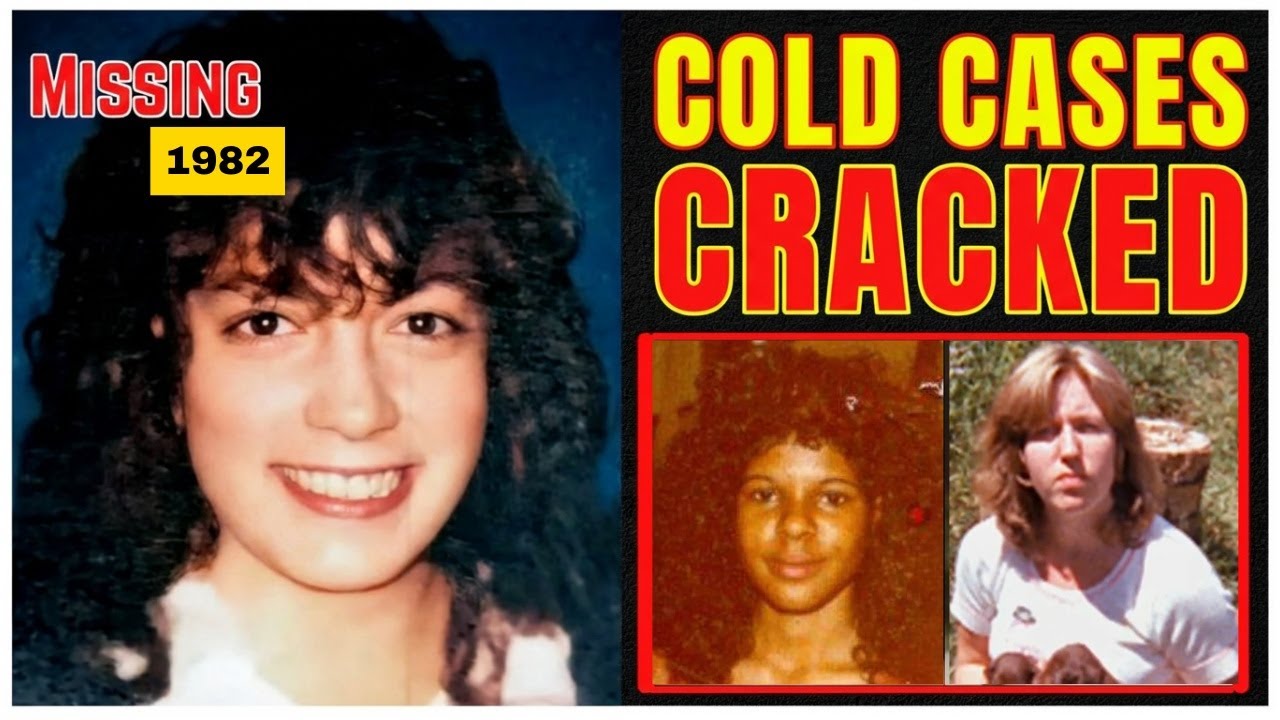
Later that day, her body was found at a former citrus grove in Fontana. She had been sexually assaulted and murdered. Investigators moved quickly. The last person Missy had been seen with was a man she had been dating.
He was arrested, questioned, and released when detectives ruled him out. With no cell phones, no cameras, and no digital trail of any kind, the investigation ran out of road. The case went cold and stayed that way for four decades. In 2020, Detective Katherine Clark was assigned to the Cold Case Homicide Task Force, a unit built around a single idea: go back, look again, and find the doors in old case files that nobody had opened.
When Clark went through the Missy Jones file, she found exactly that. A door nobody had ever touched. A man named Leonard Nash, the boyfriend of one of Missy’s sisters at the time of the murder. He was connected to the family, present in Missy’s world, and he had never been questioned or tested.
Clark tracked Nash to Las Vegas and obtained his DNA. The laboratory results came back with a number almost impossible to hold in the mind: it was 26 septillion times more likely that the DNA belonged to Leonard Nash than to an unknown person. Clark had spent months on the case. When she read the result, she was elated, and then she cried because of how many years it had taken to reach that single line on a page.
Nash was arrested, stood trial, and was found guilty. Missy’s family had celebrated her birthday every year since she was taken, forty-five years of gatherings without her. Now, at last, they had something they had never had before: an answer. The second case began with a body that had no name at all.
On July 15th, 1982, a gravedigger at Cedar Ridge Cemetery in Blairstown, New Jersey, was making his way to the rear section of the grounds near a steep bank that dropped toward a small creek. At first, all he could see were feet sticking out from behind the slope. Moving closer, he found a young girl lying on her back, partially clothed. Her face had been beaten with such force that not a single feature remained recognizable.
She wore a red shirt and a skirt with a peacock print. A small golden cross necklace was tangled in her hair. Red nail polish was on her right hand only. On both arms and hands were defensive wounds.
This girl had fought back, raised her hands against whatever was coming. It had not been enough. Police arrived to find almost nothing. No identification, no wallet, no matching fingerprints.
No one called to claim her. The investigating officer gave her a name: Princess Doe, because she deserved dignity. She had no face and no identity, but she would have a name. Princess Doe became the first unidentified person in American history to be entered into the FBI’s national crime database, a decision made by one officer in a small New Jersey town that changed how the country handles unidentified victims.
Despite national coverage, sketches, and the database entry, silence stretched for decades. While investigators chased dead ends across the country, the man who allegedly killed Princess Doe was already sitting in a prison cell. In 1999, a woman named Donna Kinlaw was arrested in California for welfare fraud. What she said during questioning went far beyond the charges.
Arthur Kinlaw, her husband, had been running a criminal network that exploited young women across Long Island, runaways and teenagers with nowhere to go. In the summer of 1982, Arthur had brought home a teenage girl. He tried to fold her into his operation. She refused, and one night he left the house with her and came back alone, shaken and nervous.
He burned his clothes, scrubbed his car clean from the inside out, and made one thing clear to Donna: if she breathed a word of what she knew, he would do to her exactly what he had done to that girl. Donna also remembered the moment roughly two weeks later when she was reading a newspaper to Arthur. The article described a body found in a New Jersey cemetery, a girl authorities were calling Princess Doe. As she read, Arthur became frantic.
He demanded to know what the article said, whether it identified her. He was panicking, and Donna understood exactly why. Investigators found Donna’s account credible, but they faced a wall they could not get past. Without confirming Princess Doe’s identity, they could not place her in the locations where Kinlaw operated.
In 2005, Arthur Kinlaw, already imprisoned at Sullivan Correctional Facility in New York, wrote a letter to authorities. He wanted to be interviewed. He was ready to confess to the killing of Princess Doe. The letter was received.
The confession was offered. And nothing happened. For years. A man serving time for two separate murder convictions had offered to close a decades-old case, and the system did not follow through.
In November 2020, Princess Doe’s body was exhumed for the second time. With grant funding, remains that had been in the ground for nearly four decades went to a lab specializing in pulling genetic material from samples so degraded that most labs turned them away. From a single molar and an eyelash, they extracted hundreds of millions of unique human DNA fragments, reconstructing a complete genome profile from almost nothing. Forensic genealogists cross-referenced public DNA databases, built out a family tree, and on February 22nd, 2022, found a candidate.
Investigators traveled to West Babylon, New York, and knocked on a door. The man on the other side was Robert Olen Jr. , Dawn’s brother. He had not seen or heard from his sister since 1982.
Dawn’s sister provided a DNA sample, and two independent laboratories confirmed the profile. On April 29th, 2022, Princess Doe was identified as Dawn Rita Olenik, seventeen years old, from Bohemia, New York, missing since June 24th, 1982. The formal announcement came on July 15th, 2022, exactly forty years to the day her body had been discovered. With Dawn’s name confirmed, everything Donna Kinlaw had described fell into place.
Investigators could now place Dawn in the locations where Kinlaw operated. The timeline held, the witness statements held, and the confession offered in 2005 could finally be acted on. Arthur Kinlaw was formally charged with one count of homicide in the death of Dawn Rita Olenik, added on top of the two first-degree murder convictions he was already serving. As of 2026, that charge stands, and Kinlaw remains imprisoned.
The third case started on a couch on an ordinary afternoon with a television on in the background. In July 1980, the same summer Missy Jones was killed in California, a woman named Julie Hill was reported missing in Duluth, Minnesota. Her family settled on the simplest explanation: she ran away. It was easier than asking questions nobody seemed to want to answer.
The name that came up in private conversations when people finally spoke openly was always the same: Donald Bloomer, Julie’s boyfriend. Controlling, volatile, the kind of man who made it clear that the idea of Julie leaving him was not something he would accept. Bloomer had been seen digging in the backyard of his home on West 9th Street just before Julie disappeared. When her mother came to check on him, the hole was already filled in.
No investigation. No charges. The case was never truly started, and it sat untouched for twenty-four years. In February 2004, Christine Hickman was at home in Las Vegas flipping through channels.
She stopped on a true crime documentary about a serial killer case, and somewhere in the middle of watching, a name surfaced in her mind: Julie Hill. Christine had spent most of her life believing Julie ran away, but in recent years, things had come out at family gatherings, fragments of conversation, rumors that had circulated quietly for decades. The family had started comparing what each person knew, and what they were assembling did not look like a runaway. It looked like something that had been buried.
Christine picked up the phone and called the Las Vegas Metropolitan Police Department. She laid out everything she had. The detective gave her an instruction she would not forget: contact the Duluth police, tell them you want an investigation, and do not take no for an answer. Christine called and reached Detective Bob Erz.
Within days, a homicide team had opened the file. The picture came together fast: the digging before Julie disappeared, the filled hole, a relationship multiple sources described as deeply controlling. If Julie had tried to leave, that was not something Bloomer would have allowed quietly. Detectives confronted him directly.
Bloomer was unmoved. He had a story and he stuck to it. Julie had gone to Las Vegas. He was calm, practiced, and gave nothing away.
Investigators brought in a backhoe and descended on the West 9th Street property. They searched the house, which was in such a state that the city building commissioner eventually ordered it demolished. Three days later, the earth underneath was laid bare. They found almost nothing.
Detectives brought Bloomer in for one more interview. Within twenty minutes, he broke his story. He said they had been loading a new handgun, a . 41 Smith and Wesson revolver never used before, getting ready for a camping trip the next day.
His finger slipped. He pulled the trigger by accident. The bullet struck her between the eyes. Detective Erz was watching from another room, and his assessment was immediate.
A shot between the eyes is not an accident. That is where someone aims. That is intent. Donald Bloomer was arrested on a murder charge.
He told police Julie’s body was wrapped in a carpet and left in the woods. A search found nothing. Without a body, the district attorney accepted a plea of second-degree manslaughter. Donald Bloomer received three years.
Christine Hickman’s response was the response of someone who had spent years learning to hold grief and gratitude in the same breath. She would have liked him to receive the same sentence Julie received. But Bloomer was behind bars, and that was what she had to be grateful for. As of 2026, Julie Hill’s body has never been recovered.
The case remains open, and investigators have said that if a tip comes in, they will go looking immediately. Christine Hickman was not a detective or a forensic scientist. She had no database, no laboratory, no badge. She was a woman watching television on a Tuesday afternoon who paid attention to something in the back of her mind that most people would have let go.
Because of that one phone call, a man who had walked free for twenty-four years had to stand in a courtroom and answer for what he did to Julie Hill.
