In the spring of 1911, in a stretch of Cumberland hills since drowned beneath the waters of two reservoirs, a survey was ordered of government assessment records to settle a discrepancy that had been quietly growing over the previous eleven years. The county was called Beauregard. The parish, if that word could be used for a Baptist and Methodist district that had never known one, was called Ledlow. The discrepancy was in the number of adult women registered as heads of households.
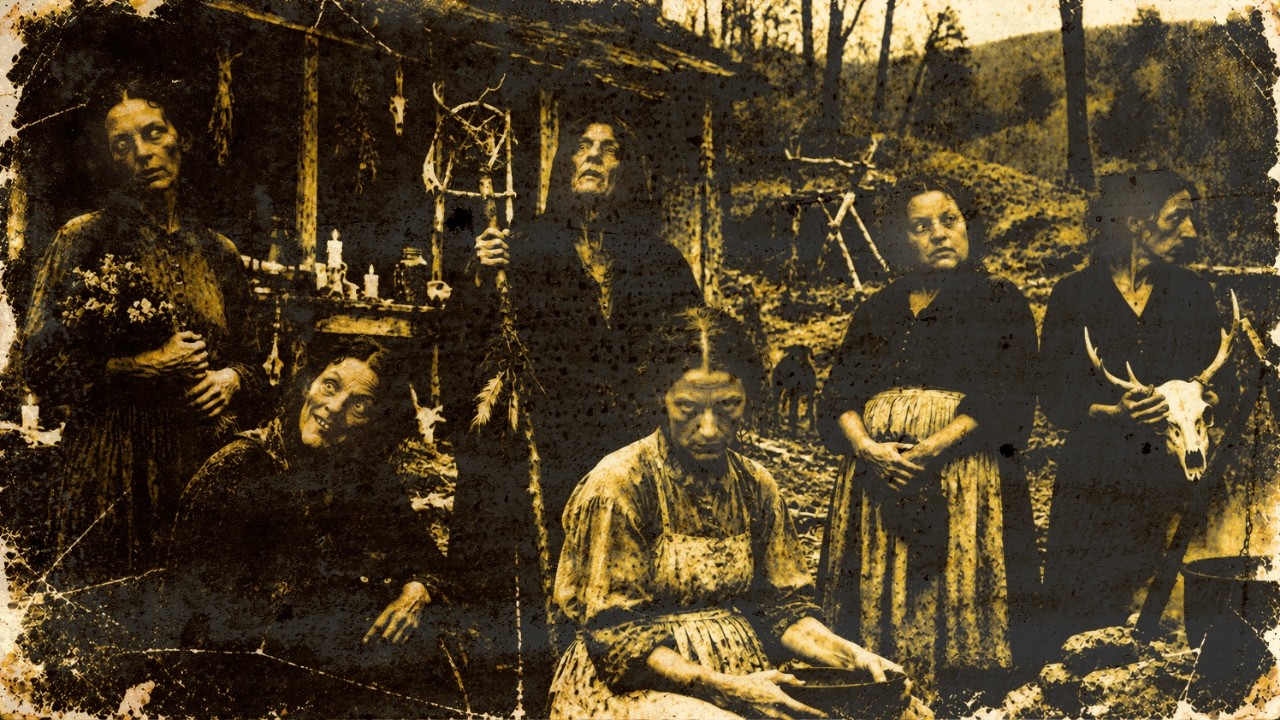
In the 1900 census, that number in Ledlow Parish was eight women. By the 1910 census, it had reached forty-seven. The parish’s population had grown by less than four percent over the same decade. The assessor sent from Frankfort to make sense of it, a middle-aged bureaucrat named Wendell Torville Faye, rented a room at a boarding house in Beauregard Springs, opened his ledger on the evening of April 3, and set to work.
He never completed the survey. What he sent to Frankfort in the second week of May was not an assessment but a letter, folded twice and sealed with wax he had melted himself over a candle, addressed to the Governor and written in his precise hand: “Not for the Archives. ” The letter survives. It has been photographed.
Its text is in the hands of a small circle of historians who have referred to it in passing in footnotes over the past century without ever quoting it in full. Its opening sentence reads: “Your Excellency, I regret to inform you that Ledlow Parish is not, in any sense, a parish that the state can safely govern. It is a coven. It has been for at least thirty years.
And what I have seen within it during the past six weeks will not permit me to complete the survey I was sent to conduct. ”
What Wendell Torville Faye saw in Ledlow Parish is the reason his letter was received in Frankfort and quietly buried. And what has since been recovered of the private papers of the men and women who lived in that district, and from interviews conducted with the children who grew up there, many of whom are still alive in care homes across three states, is the reason this narrative can be assembled at all. Ledlow was not a magical sect in the ordinary sense of the phrase.
It was not a revival of folklore. It was not a fit of hysteria. It was a working community with an economy, a leadership, and a public face that deceived the census taker, the tax collector, and the itinerant preacher. And a private face that gathered on nights the calendar did not mention, in a hollow beneath a hill that appears on no modern map under any name.
On those nights, according to the accounts that have survived, they did things the county recognized as dangerous, and things the county permitted them to do anyway, for reasons that would become clear later. To understand what Wendell Torville Faye walked into, it is necessary to understand what Ledlow Parish was and how it had become what it was. And why the census discrepancy that brought him there was not, in the eyes of anyone who actually lived in the parish, a discrepancy at all. The parish lay in the northwestern quarter of Beauregard County, along the Little Barrow River, since dammed to become the eastern arm of what is now called Lake Cumberland Reserve.
In 1890, when the area was first settled in an organized fashion, the parish contained about four hundred adults spread across sixty-two households. It had been founded by a group of families who came from northern Alabama in the wake of a bank failure and a series of legal disputes that made their continued residence in their birthplace impractical. They were not, as a group, unusual people. They were farmers, blacksmiths, one carpenter, one doctor, one Baptist preacher, one Methodist preacher, and a number of hunters and trappers.
They had among them, according to the family papers that survived the migration, no more than the ordinary superstitions of the period. They read the Bible. They kept the Sabbath. They did not, as a rule, discuss the old beliefs they had brought with them from the Alabama river country, because everyone in the group understood that the old beliefs were a private matter not to be boasted about before strangers.
The old beliefs had reached them from Scotland through Carolina and the Alabama river country. They were not, in the strict sense, remnants of any recognizable European tradition. They had passed through too many hands, too many cabins, too many generations, to be traceable to any origin in anything. Nevertheless, they retained a set of features that would have been familiar in outline to any reader of old writings on rural Scottish belief: they concerned the calendar, they concerned water, and they concerned what the first family to record anything of this tradition called “the still hours.
” And they involved, most importantly, the observance of certain nights in certain places by certain people who had been chosen from an early age for that purpose. The person who chose them, in every generation of this tradition, was a woman. She was not called a witch in the parish. That word, in the country of origin, was considered an insult used by outsiders, and it had never been adopted by the families who maintained the tradition.
She was referred to in parish records, if mentioned at all, by the title “Elder,” though the word had a special meaning in this tradition distinct from its ordinary usage among Baptists or Methodists. The Elder was the woman who kept the calendar. She was the woman who knew which nights fell within the still hours and which did not, and what had to be done on each of them. She was the woman who chose from among the children of the parish those who would be trained to succeed her, and she was the one who at her death passed the calendar and the training to whichever of her daughters, by blood or by spirit, she had selected and who was ready to receive it.
In the year of the migration from Alabama, the Elder was a woman named Verity Ledlow. When the parish was surveyed and named a few years later by a government official who knew nothing of any of this, it was named for her family because her family had contributed the largest single share to the migration fund and had settled on the best bottomland in the valley. Verity Ledlow was forty-three years old at the time of the migration. She had inherited the calendar and the training from her mother in Alabama about eleven years before.
At her mother’s death, she had presented five girls of her generation whom her mother had chosen and trained. All five came with her to Kentucky. All five married men during the migration, each established her own household in the new parish, and by the 1890s all five were raising daughters and granddaughters whom Verity Ledlow, as Elder, was quietly evaluating for the purpose of the calendar and the training. By 1895, when Verity Ledlow was forty-eight, the “assembly,” if that word could be used, consisted of twenty-three women.
All twenty-three were related to Verity Ledlow by blood or by marriage. All twenty-three lived within the boundaries of the parish. All twenty-three had been selected at some point in their childhood and trained over years by Verity Ledlow or one of the original five daughters. And all twenty-three had been taken at some point in late adolescence or early adulthood to the hollow beneath the hills, shown the work the assembly did, and given the choice by Verity Ledlow herself to accept the work or refuse it.
Twenty-two of the twenty-three accepted. The twenty-third refused. She was not punished for her refusal. She was permitted to marry, raise children, and live an ordinary life in the parish on the single condition that she never speak to anyone outside the assembly about what she had seen in the hollow.
She kept that condition her entire life, which ran until 1931, and she went to her grave without breaking it. The 1900 census, when it was taken in Ledlow Parish, recorded eight women as heads of households. This was, according to the survey records, an accurate reflection of the number of women in the parish who were then living without husbands, either widowed or never married. The other twenty-three women who by that year were part of the assembly were listed as married women in their husbands’ households and therefore were not heads of households in the usual census sense.
Between 1900 and 1910, something happened in Ledlow Parish that was reflected in the 1910 census but not explained by it. The number of women listed as heads of households rose from eight to forty-seven. The parish had not grown noticeably. The women concerned had not, in most cases, been widowed.
The men concerned were in most cases still present in the parish, but they were no longer listed as heads of their households. According to the census official who conducted the 1910 enumeration, the households themselves had named the women as their heads. He noted in his own marginal comments that this was unusual. He noted in particular that in a number of the houses he visited, the husband was present during the enumeration, and when asked to give his name as head of the household, chose silence and deferred to his wife without comment, allowing her to give her name in that place.
The census official did not press the matter. He accepted the numbers as they were given to him. It was this shift, from eight to forty-seven, that brought Wendell Torville Faye to Beauregard Springs in the spring of 1911. He had been sent to determine the cause of this sharp rise in number, whether the households concerned were being taxed correctly under the change, and whether there was any evidence of a pattern of false reporting that would justify the state in reopening the assessment.
He was not a folklorist. He was not a religious historian. He was a second-grade state assessor, forty-two years old, married with three children, sober in temperament, precise in method, and in the estimation of his superiors in Frankfort, a reliable man who could be trusted with a delicate matter. He arrived in Beauregard Springs on April 2.
He rented a room in a boarding house run by a widow named Selena Cormack. He introduced himself to the county clerk, a man named Roland Burnell, and requested access to the parish records for Ledlow. Burnell produced the records without hesitation, though he noted, in a manner Faye recorded in his field notebook that evening, that Faye was the first official from the state to request the Ledlow records in the eleven years since the discrepancy had first appeared. Faye asked whether there had been previous inquiries from the state.
Burnell said there had not. Faye asked whether the county itself had noticed the discrepancy. Burnell said the county was aware of it. Faye asked why the county had not acted.
Burnell was silent for a long moment. Then he said, in words Faye recorded verbatim in his diary, that the county had not acted because it had at some point in the past decade come to a special understanding with the parish, that this understanding was not written down anywhere, that there was no one in the county in a position to explain it to a state official, and that if the state wished to act, it would have to act on what it could determine for itself, because Beauregard County would offer no voluntary explanation of a matter the county had decided, over many years, not to explain. Faye did not press further at that time. He accepted the records.
He returned to his boarding house. He spent the next three days reading the parish register, the county tax records, the property deeds, and the marriage licenses. He compiled an initial list of the names of the forty-seven women classified as heads of households in the 1910 census. Then, on the morning of April 7, he hired a horse from the livery and rode out to Ledlow Parish for the first time.
The parish lay about eleven miles northwest of Beauregard Springs, along a road that followed the north bank of the Little Barrow. Faye reached the first houses of the parish around noon. He stopped at the first house he came to, a two-story frame house on a hill above the river, and knocked. The door was opened by a woman of about sixty-five, in a simple gray dress and a white apron.
She looked at him without any surprise. She said, before he introduced himself, that she had been expecting him, asked him in, and told him she had coffee ready. Her name was Mara Ledlow Hallbeen. She was the eldest surviving daughter of Verity Ledlow, who had died in 1908 at the age of sixty-one.
She was, at the time of Faye’s visit, the current Elder of the parish, having held the position for two and a half years since her mother’s death. She knew Faye was coming because the county clerk in Beauregard Springs was married to her cousin. Her cousin had told her on the morning of Faye’s first request for the records that a state assessor had arrived and begun work. She had spent the following four days thinking about what she would say to him when he came.
By the morning of April 7, she had reached a decision. She would tell him nothing that was untrue. She would answer everything he asked to the extent her tradition permitted her to answer. And she would allow him to see whatever he wished to see on the condition that he photograph nothing, that he take no object from the parish, and that he give her his word each evening before he left that he would return the following morning, so that the parish could enter him properly in the calendar while he was away.
Faye accepted these conditions. He did not realize at the time what he was accepting. He would come to understand over the next six weeks that his agreement to have his name entered in the calendar during his absences was the most significant of the three conditions, and that it was the condition that ultimately made possible the writing of the letter he sent to the Governor in the second week of May. Without it, according to what he learned in the last week of his stay in the parish, he would have been able to write nothing at all.
Mara Ledlow Hallbeen took Faye on a tour of the parish over the next two days. She showed him the houses. She introduced him individually to the forty-seven women registered as heads of households in the census. She showed him the churches, of which there were two, one Baptist and one Methodist, in which services were held regularly on Sundays and attended by the majority of the parish’s residents.
She showed him the school, which had thirty-one children enrolled. She showed him the mill, which had been in continuous operation since the migration and was run at the time of Faye’s visit by a man married to one of the forty-seven women, who deferred to his wife in all matters concerning the mill’s accounts. She showed him the cemetery behind the Baptist church, which contained, by a count Faye made himself, one hundred and forty-two graves, fifty-eight of them of people who had died in the years since the migration, and the rest of people who had died in the country of origin and whose remains had been brought from Alabama by the migrating families, in observance of a tradition that was considered non-negotiable. The parish, as Faye observed during his first two days, was in its outward appearance no different from any other rural parish in Kentucky at that time.
The houses were maintained, the gardens were planted, the children were clean and well-behaved, the livestock was well cared for, the men worked their fields, and the women tended their kitchens. The two churches held Sunday services and Wednesday meetings, and the sermons preached in them, by Faye’s assessment when he attended a Baptist service on his second Sunday in the parish, were no different from sermons he had heard in any rural Baptist church before. There was nothing in the visible life of the parish to suggest to any passing observer that it was, in any sense, different from any other parish in the state. The difference lay entirely in what happened at night.
On the evening of his second day in the parish, Mara Ledlow Hallbeen invited Faye to stay for supper and to sit with her afterward on the porch, to hear from her in her own words what the parish was and what it did. Faye accepted the invitation. He was, by his own admission in his diary, curious. He was also at that point unsure how much credence to give what Roland Burnell had told him.
He suspected the parish might simply be an ordinary parish with an unusual demographic pattern, misunderstood by outsiders over the years. He suspected Mara Ledlow Hallbeen might be a competent widow who had quietly managed her family affairs for many years and had simply come to be regarded by her neighbors as someone worthy of accustomed respect. His suspicion was wrong. Mara Ledlow Hallbeen spoke to him on the porch for nearly four hours, from shortly after seven in the evening until a little after eleven.
She spoke slowly, in complete sentences, with pauses at appropriate points to allow him to ask questions if he wished. She began with the migration from Alabama and the settlement of the parish. She went on to the founding of the assembly, its expansion over the following two decades, its relationship to the two churches, its relationship to the county authorities, and its relationship to the ordinary daily life of the parish. She described the calendar and its function.
She described the still hours and what happened during them. She described the hollow beneath the hills and what was kept there. And in the last hour of her account she described what the assembly had done and continued to do, and why the parish had over the years come to accept that the assembly’s work was necessary. Faye recorded her account in shorthand in his diary as she spoke.
Then, in his room at the boarding house on the morning of April 9, he transcribed the shorthand into a long narrative kept in a separate notebook, sealed and marked “Personal,” which he kept in his bag for the remainder of his stay in the parish. That notebook is the primary source for what is now known about the Ledlow Parish assembly. This narrative rests primarily on that notebook. According to Mara Ledlow Hallbeen, the calendar was of a kind her family had maintained for at least seven generations.
It was not an ordinary calendar. It did not correspond to any published yearly calendar. It was based on a set of observations of the moon, the stars, and certain seasonal features taught to her by her mother, who had in turn learned them from her grandmother, knowledge that had been brought from Scotland by an ancestor whose name Faye noted but which does not appear in any documentary source consulted since. The calendar identified a small number of nights in each year known in the tradition as “the still hours.
” Faye asked what a still hour was. Mara said it was a period of time during which certain properties of the ordinary world became, briefly, less fixed than usual, and during which people trained to observe that change could act on it if they chose. She said the still hours were not dangerous in the literal sense of the word. But they were nonetheless occasions on which a person who was not aware of what he was doing could make a mistake that would be very difficult to undo.
She said the coven existed to identify the still hours in advance, to prepare for them, to perform the necessary ceremonies during them, and to correct, so far as possible, any mistakes made in still hours by previous generations that had not been attended to at the time. Faye asked what the necessary ceremonies were. Mara said they varied from still hour to still hour, and that she was not permitted to describe them in detail to a person not trained in the tradition. She said they generally involved three things.
They involved the marking of certain places in the parish so that the still hour would find its proper course and not extend into unwanted places. They involved the preparation of certain conditions in specific households so that the members of those households would pass through the still hour in safety. And they involved, in the hollow of the hill, the performance of a specific work that could not be described to Faye directly, but which had over decades of the assembly’s activity in the parish produced a small number of tangible results that the parish had come to rely upon. Faye asked what those tangible results were.
Mara said there were three main ones. The first was that the parish had not, in the memory of anyone then living, experienced a single death in childbirth. Faye, as a state assessor who had seen many parish records in his career, recognized this as an extraordinary claim. Nevertheless, he noted that it was consistent with the record he had examined.
The Ledlow parish register recorded no maternal deaths during the twenty-year period he studied. Not one. In a rural parish of that era and population, six or seven such deaths would normally have been expected in the same period. Mara said this was not mere coincidence.
It was one of the results of the assembly’s work. She said she would not explain how it was achieved, because the explanation required training Faye did not possess, but it was a fact that could be verified against the record, and she welcomed him to do so. If he wished to verify it further, he could go and speak to any of the mothers in the parish, who would all confirm that they had borne all their children safely, and that they understood this was, in some way, a result of what the assembly had done. The second result, Mara said, was that the parish had not, in the memory of anyone then living, experienced a serious fire.
Faye was again familiar with the pattern of rural fires in that period and recognized this as an extraordinary claim. He noted that the parish had been inhabited for twenty-five years, consisted of sixty-two households, two churches, a school, and a mill, and that under ordinary circumstances a rural parish of that size would have experienced at least four or five serious fires during that period. Mara said this too was not coincidence. It was a second result of the assembly’s work.
She repeated that she would not explain how it was achieved, but Faye could verify it against the county fire records, which he did later that week, and the records confirmed that within the twenty-five years since the founding of the parish, no fire from any house or building in Ledlow had ever been reported to any county authority. Mara said the third result was harder to describe than the other two, and she asked Faye to be patient while she tried to put it into words. She said that in the years since the founding of the parish, there had been no case in Ledlow of what she called the wandering child. Faye asked what the wandering child was.
Mara said that in her experience, and in the experience of every other rural parish she had heard of, there occurred from time to time a case in which a small child, usually between the ages of three and seven, left the house and upon returning could not explain where he had been. Sometimes the child was found in the woods, lost, hours or days after disappearing. Sometimes the child was never found. Sometimes a stranger returned the child to the home after finding him far from home, in a place he could not have reached on foot, with no clear explanation of how he had gotten there.
Mara said these cases were part of the assembly’s tradition and were understood as a specific kind of event, and that the assembly’s work in the hollow was intended, among other things, to prevent them from occurring in Ledlow Parish. She said she would not explain what she thought these cases were. She said only that in the twenty-five years since the founding of the parish, no child had ever gone missing from Ledlow, and that Faye could verify this through the parish register and through interviews with any resident of the parish he wished to speak to. Faye did verify it.
He spent the next three days talking to the parishioners at Mara’s suggestion, asking each of them the same set of questions about maternal deaths, fires, and missing children. In every case, the answers he received confirmed Mara’s account. There had been no maternal deaths. There had been no fires.
There had been no missing children. Many of those he spoke to also volunteered that there had been no cases of what one elderly woman called “the sickness that creeps into the well,” meaning, in the old regional vocabulary, outbreaks of typhoid, cholera, or any similar waterborne disease. This too was consistent with the county records. In twenty-five years, Ledlow had reported no such outbreak, while neighboring parishes had reported eleven cases in total during the same period.
Wendell Torville Faye returned to his boarding house in Beauregard Springs on the evening of April 11, having verified to his satisfaction the three results Mara had described. He sat down at the small desk in his room. He opened his personal notebook. He recorded the numbers he had confirmed.
Then he wrote, in a new paragraph below the numbers, the following sentence, still preserved in the notebook exactly as he drafted it: “If the assembly achieves these results by means the state can identify, the state must ask how. If the assembly has achieved these results by means the state cannot identify, the state must ask what is paid, and by whom, for their achievement. ” Then he went to bed. He slept, according to a note he added in the morning, badly.
The morning of the next day, April 12, was the beginning of Faye’s second week in the parish. It was also the morning Mara Ledlow Hallbeen took him for the first time to the hollow beneath the hills. The hills lay about two miles northwest of the last house in the parish. At the southern end of the hills there was a hollow running back into the limestone for about six hundred feet, narrowing as it went until it ended in a small open level space perhaps thirty feet across, floored with grass and enclosed by stone walls on three sides.
The open space was not visible from any point outside the hollow. The path inward was narrow and required a person to walk in single file. The hollow was, in Faye’s estimation, a place chosen for its privacy. Mara took Faye to the mouth of the hollow but did not lead him inside.
She said he was not permitted, as an untrained man, to enter the open level space at the far end. She said he was permitted to walk into the hollow as far as the first narrowing of the walls, about two-thirds of the way in. And he was permitted to observe what he could see of the space beyond that point. She said if he attempted to walk further, he would be stopped, and that this stopping would not be gentle, and that she preferred he not test the arrangement.
Faye accepted the condition. He walked alone from the mouth of the hollow to the first narrowing point, stood there, and looked at what he could see. What he could see in the open level space at the end of the hollow was a circle of stones. There were twenty-three of them.
They were arranged in a circle about fifteen feet in diameter, each stone roughly the size of a large loaf of bread. Each stone was set upright in the earth, and the surface of each stone facing the center of the circle had been dressed smooth. This dressing consisted of a set of markings. The markings were not letters.
They were not numbers. They were, in Faye’s estimation as he looked at them from a distance of perhaps forty feet, a set of symbols corresponding to no writing system he had ever seen, carved carefully into the stones by a hand practiced at carving. In the center of the circle, in the very heart of the open level space, there was a shallow depression in the earth. The depression was about three feet in diameter and about six inches deep.
Its inner surface was smooth, and it contained at its bottom a small amount of water. The water did not, in Faye’s estimation, come from any spring or from any rainwater that might have collected in the depression. The weather had been dry for the previous ten days. The water was there.
It was clear. It reflected the sky above the hollow, which was overcast that morning, and it did not evaporate during the approximately fifteen minutes Faye stood at the first narrowing point watching it. He noticed another feature as well. Around the circumference of the circle of stones, at intervals of perhaps three feet, on the ground between the stones and the edge of the enclosed space, there were small objects.
Faye could not make them out clearly from his position. They appeared roughly uniform in size and shape, and were arranged with the same care as the stones. He estimated there were perhaps fifty of them. He was not able from his position to determine what they were.
He withdrew from the hollow and returned to join Mara at the mouth. He asked her what the objects were. She said they were remembrances. He asked what the remembrances were made of.
She said they were made of what the tradition required, and that she would not describe them in more specific terms to a man who had not received the necessary training. He asked whether the remembrances were what he thought they were. Mara looked at him steadily for a long moment. Then she said, in a voice Faye described as not unkind, that she did not know what he thought of them, and that she would not help him think one thing or another about them, because his thinking about them was not the assembly’s business, and the assembly’s business with those remembrances was between the assembly and what the remembrances remembered, and that no government official could be useful in that matter, and no government official needed to know more than she had already told him.
Faye did not press his question. He recorded in his diary that evening that on his return to his boarding house he had revised his initial assumptions regarding the parish. Until his visit to the hollow, he had been working on the assumption that the assembly was a remnant of folk belief, perhaps eccentric or unfamiliar, but ultimately harmless. He was now beginning to suspect it was more than that.
He wrote, in the final entry of his diary dated April 12, the following sentence: “The remembrances in the hollow are not made of the usual materials of rural ritual. They look, or appear at a distance to look, like a kind of inventory. I do not yet know what it is these items are an inventory of. ” He would learn in his third week in the parish what that inventory was.
On April 20, the beginning of Faye’s third week in the parish, Mara Ledlow Hallbeen told him a still hour was approaching. She said it would arrive on the night of April 22 at approximately two-thirty in the morning and would last, according to the calendar, for about forty minutes. She said the assembly would gather in the hollow that night, that the ceremony would be held, and that Faye was permitted to attend from a distance under the same conditions that had governed his previous visit. He was to walk into the hollow as far as the first narrowing point.
He was to remain there throughout the ceremony and to leave when it ended. He was not to speak to anyone during the ceremony. He was not to attempt to see anything more than he could see from the first narrowing point. Faye accepted.
He asked Mara a question that had been in his mind since his first visit to the hollow. He asked what the remembrances were. Mara said he would see what they were when the ceremony was held. She said she would not tell him in advance because his knowledge of them would affect his ability to observe the ceremony calmly, and his calm observation of the ceremony was in his own interest from her point of view.
She said that if he arrived at the hollow on the night of the twenty-second, saw what the remembrances were, and chose to withdraw before the ceremony began, he would be permitted to leave without any consequences. She said the decision was his. The night of April 22, 1911, according to Faye’s diary, was cold, clear, and moonless. He noted that the stars were sharp and bright.
There was no wind. He recorded the temperature at midnight as approximately forty-two degrees Fahrenheit. He left the boarding house at around eleven in the evening, having hired a horse from the livery by prior arrangement with the owner, and rode toward the parish. He reached the mouth of the hollow at about one-thirty in the morning.
He was met there by Mara Ledlow Hallbeen and two other women he did not know. The women were dressed in ordinary clothes, simple gray dresses, wool shawls, and sturdy shoes. They were not, in any way Faye could see, dressed for a ritual. He wrote in his diary that they looked exactly like a delegation of respectable rural women attending a midnight birth.
Mara took Faye into the hollow. She walked him to the first narrowing point and indicated where he was to stand. Then she walked alone to the open level space at the end of the hollow. The other two women followed at intervals of about thirty seconds.
Behind them, at similar intervals, other women arrived at the mouth of the hollow, walked in single file to the first narrowing point, passed Faye without speaking or looking at him, and continued toward the open space. Faye counted them as they passed. He counted twenty-three women in total, including Mara. He noted that all twenty-three women were dressed in ordinary rural clothing, and none of them, as far as he could tell, carried any implement or object.
Their hands were empty. In the open level space at the end of the hollow, the twenty-three women arranged themselves. They took positions around the outside of the circle of stones, standing behind the stones so that each woman was aligned with one of the twenty-three stones of the circle. They stood in silence.
They did not speak. They did not engage in any form of preliminary ritual that Faye could observe from his position. They simply stood behind their stones, facing the center of the circle, waiting. At approximately two-thirty in the morning, according to the small pocket watch Faye consulted, the ceremony began.
It began, in Faye’s description, with a subtle change in the nature of the air within the hollow. He could not describe the change precisely. He wrote in his diary that afternoon that the air became, in his phrase, more attentive. It was not colder.
It was not warmer. It was not stiller. It was, in a way he could not identify, more present. He said he became aware at that moment of the smell of the stones in the walls of the hollow, the smell of the grass in the open level space, the smell of his own coat, the smell of his own breath, in a way he had not been aware of any of them a minute before.
He said his hearing became sharper, and he could hear sounds from what he estimated to be a great distance, like the call of a night bird over the hill, and the sound of water moving somewhere underground, and the sound of horses in a distant pasture cropping the spring grass. He said all of this occurred, in his estimation, within about five seconds. Then the women in the circle spoke. They spoke together in one voice, a short phrase.
Faye did not understand the phrase. It was not English, and it was not, as far as he could determine, any language he had ever heard. The phrase was perhaps ten syllables long. It was spoken quietly, in a conversational tone, without emphasis.
It was spoken once. Then the women fell silent again. In the center of the circle, the shallow depression in the earth, which had contained the small amount of water Faye had noted on his first visit, was now empty, as far as he could see in the starlight. The water was gone.
Faye was certain it had not evaporated in the moments since his arrival. It had been used, in a way he could not identify. The women in the circle then began to speak, one after another, in a direction Faye recorded as clockwise. Each spoke a short phrase in the same language he did not recognize.
Each phrase was perhaps three to five syllables long. As each woman spoke her phrase, she reached down to the ground beside her and picked up one of the small objects Faye had noted from a distance on his previous visit. She held the object in her open palm for a moment, then returned it to the ground where she had picked it up. Faye now saw, at close range, what the objects were.
They were teeth. They were human teeth. Each of the twenty-three women in turn held a small bundle of teeth tied together in a loose packet by a piece of copper wire. Each bundle was slightly different in size, and Faye estimated in his notes the next morning that each was roughly the size of a complete set of adult teeth extracted from a single mouth.
There were twenty-three bundles. Along the circumference of the circle in the spaces between the bundles were other, smaller objects that Faye now recognized as bundles of baby teeth, of the kind that fall from children in ordinary childhood. He estimated the number of these smaller bundles at about thirty. And in the space between the circle of stones and the wall of the hollow, further out from the center, was another set of objects that Faye had not been able to see on his first visit, and which he could now, his eyes accustomed to the starlight and his attention focused, count.
He counted about twelve small heaps of what he could only describe as bones arranged in configurations he did not understand. Each heap was, in his estimation, about the size consistent with the skeleton of a small mammal. Although the shapes of the individual bones, as far as he could distinguish from that distance, did not resemble the shapes of any small mammal he was familiar with. The ceremony in the hollow continued for about thirty minutes after the moment Faye first identified those remains.
During that time, each of the twenty-three women in the circle spoke in turn a short phrase in the language Faye did not understand. Each of them touched the bundle of teeth beside her. Then each of them, in a specific order, handled one or more of the small bundles of baby teeth between them. Then one or more of the small heaps of bones.
The order in which they handled the objects, as far as Faye could observe from his position, was not random. There was a pattern. He could not at the time understand the pattern, but he could see that it existed. At the end of the thirty minutes, at approximately three in the morning, Mara Ledlow Hallbeen spoke a single word in an ordinary, natural voice, which Faye later transcribed as best he could as “ah candra.
” The word was not repeated. Then the women in the circle took, all together, a single step back from their positions behind their stones. They stood for about ten seconds. Then they all turned at once, left the open space at the end of the hollow, walked back through the narrow passage toward the mouth, passed Faye at the first narrowing point, and emerged from the hollow into the countryside beyond, dispersing, each to her own home.
Mara was the last of the twenty-three to leave. She paused briefly at the first narrowing point where Faye was standing. She looked at him in the starlight. She said quietly that he had done well, that he had stood as asked, and that he had not spoken during the ceremony.
She said he was now to leave the hollow, return to his boarding house, sleep for as long as he could, and when he woke, he was to write down what he had seen, and then come to her house the next day, where they would discuss what he had written. Faye did as she asked. He left the hollow. He rode his horse back to Beauregard Springs.
He arrived at the boarding house at about five in the morning. He slept until noon. He then spent the afternoon writing a detailed account in his personal notebook of what he had seen in the hollow, some twelve pages in length, which is preserved and is the source of the description just given. In the evening, he rode back to Ledlow Parish and presented himself at Mara’s house, sat with her on the porch, and asked the questions he had formulated by that time.
His first question was where the teeth had come from. Mara said the twenty-three larger bundles were the teeth of the twenty-three women who took part in the ceremony. She said that each woman, upon acceptance into the assembly, had undergone the extraction of all of her adult teeth, one by one over the course of about six months, by a member of the assembly trained for that purpose. Each extracted tooth had been preserved and eventually tied with the others to form the bundle that the woman herself carried in ceremonies for the rest of her life.
Mara said the extraction was performed using a combination of herbs she did not name, which the tradition held to reduce the pain to a tolerable level, though she acknowledged that even with that combination, the extraction was an arduous task, and that the six months the process took were considered in the tradition a form of preparation as much as extraction, in the sense that the woman was expected to spend those months meditating on the nature of the work she had agreed to do. Faye asked whether the women wore false teeth. Mara said they did. She said the false teeth were made for each woman by a member of the sect who had trained as a dentist during her years of study in Louisville, and that the teeth were of a quality that allowed the woman to eat, speak, and laugh naturally, and that no visitor to the parish in the long years since this practice began had ever noticed that any of the twenty-three women wore false teeth.
Faye admitted he had not noticed. He had spoken to all twenty-three women. He had eaten with many of them. In a few cases, he had embraced them in the customary hospitality.
He had noticed nothing unusual. His second question was about the source of the children’s baby teeth. Mara said the baby teeth were those of the parish’s children, collected over many years, one tooth from each child at the time of its first loss, kept by the child’s mother until the child reached adulthood, at which point the mother placed the tooth in the hollow during an appropriate still hour. She said the baby teeth were not, in the tradition, a price or an offering.
They were, in her phrase, an acknowledgment. They were an acknowledgment that the child had been born safely, that it had grown, that it had reached adulthood under the protection of the work the sect performed. She said this practice was, in her understanding, one of the oldest elements of the tradition, and that every generation of this tradition had maintained it in one form or another in every country to which it had spread. She added that she did not know whether this practice had any effect on the results she had described to Faye, or whether it was merely a form of remembrance.
And that she considered this question, in her own view, unanswerable. His third question was about the source of the bones. Mara paused for a long time before answering. Then she said quietly that the bones were the reason he had been permitted to see the ceremony at all, and that she would tell him the truth about them because in her estimation he had earned the right to know it, and because the parish, in her judgment, had reached a point where the truth of the bones could no longer be hidden from any careful observer.
She said the bones were not the bones of any animal Faye would recognize. She said they were the bones of beings that the tradition called, in its own vocabulary, “those who come during the still hours. ” She said that during a still hour, if the ceremonies were not performed correctly, they could enter the ordinary world through the hollow in the ground at the center of the circle. One or more of those who come.
She said these entities were considered by the tradition to be dangerous, and that they had at various times in the history of the tradition caused specific harm to specific people. She said the work of the assembly in the hollow during the still hours was to perform the ceremonies so that those who come were prevented from entering, or received, if they entered, in a manner that allowed them to be dismissed without harm. She said the small heaps of bones in the hollow were the remains of those who had entered during past still hours and been dismissed by the assembly, but who had not, according to the tradition, been able to return through the hollow from which they came, and had therefore been left in the hollow in the arrangement she had shown Faye as a reminder of what had happened, and as a form of continuing watch over the entities themselves, in a sense she said she could not explain to a person who had not received the training. Faye asked whether those who come were alive, in the tradition’s view.
Mara said this was not a question the tradition considered meaningful. She said those who come were not alive in the ordinary sense and not dead in the ordinary sense, and that the tradition did not use either word to describe them. She said the tradition described them as coming, being received, being dismissed, and being remembered. She said any question about them that could not be framed in one of those four terms was, in her experience, a question that had not been well asked.
Faye asked what those who come looked like. Mara said she had never seen one of them clearly, and that no member of the coven, in any generation of this tradition she knew of, had ever seen one clearly. She said those who come had no fixed appearance, as far as the tradition knew. They took, upon arrival, the appearance of the last person the observer had been thinking of, or the appearance of a person the observer expected, or the appearance of a person whose absence from the observer’s life weighed on them at that particular moment.
She said this was why the ceremonies were conducted by women who had been trained over many years to hold their attention in a specific state during the still hours. So that if those who came arrived, they would find in the observers’ minds no face they could easily assume. She said this part, in her estimation, was the hardest part of the training. Faye asked what those who came did if they were not properly received.
Mara said they did what they had come to do. They assumed the appearance they had taken, left the hollow, walked toward the parish, did whatever the person whose appearance they had taken usually did, and lived that person’s life for the duration of the still hour. She said the still hour lasted forty minutes at most. She said that if one of those who came remained in the parish at the end of the still hour, it did not return to the hollow.
It remained. It continued to live the life of the person whose appearance it had taken. And it did this, according to the tradition’s assessment, poorly, because it was not that person and did not know how to be that person. And this imperfect performance, over the days and weeks following its arrival, was noticeable to the family and neighbors of the person whose appearance it had taken.
She said the usual result of an unreceived one who came remaining in the parish was that the family of the person whose appearance had been taken would realize, within days or weeks, that the person was no longer the person they had known, and they would come quietly to the coven, and the coven would then attempt to deal with the situation. Faye asked what the coven did in such cases. Mara said she would not tell him. She said there were three things the coven could do, and the choice among them was made by the Elder on the advice of the training, and the choice depended on considerations that could not be usefully summarized to a person outside the tradition.
She said she would leave the question there. She said Faye could consider her refusal to answer as an answer if he wished. She said he should also understand that the situation she described had occurred four times in the twenty-five years since the founding of the parish. She said in all four cases, the situation had been handled.
She said the person whose appearance had been taken was, in each of the four cases, recorded in the parish register as having died on a certain date, that the death had in each case been recorded in the usual manner with a cause accepted by the coroner from Beauregard Springs, and that in each case the burial had taken place in the Ledlow Parish cemetery in the usual manner. And that no one outside the coven, except Faye now, had ever been told the truth about what was actually buried. Faye asked about the four graves in the cemetery that corresponded to these four cases. Mara said she would not tell him that either.
She said the coven considered the identity of the four to be a matter of respect for the families concerned, and that the families themselves knew what they knew. And that the state had no reason for further inquiry. She said Faye should understand from what she had told him that the coven’s work was not easy work from the tradition’s own point of view. It was necessary, it was performed carefully, and it had been on the whole successful.
But it had also been, in the four cases she had acknowledged, occasionally unsuccessful. And that the results of the unsuccessful cases were carried in the coven’s memory as a permanent responsibility. She said this was part of what the remembrances in the hollow were for. They reminded the coven not only of the entities that had entered, but of the people whose lives had been ended so that those entities could be expelled.
Faye sat with Mara on her porch for nearly an hour after this conversation without speaking further. Then he thanked her for her time and rode back to the boarding house. He arrived at about eleven in the evening. He did not sleep that night.
He sat at the desk in his room and wrote at length in his personal notebook. What he wrote in that notebook was not a summary of what Mara had told him. It was a series of reflections on what he had come to believe, on what he now understood himself to be facing, and on the question of what his duty as a state official required of him under these circumstances. He wrote in one passage, which has been cautiously quoted in the limited historical literature on this matter, the following: I have received over the past three weeks an account of a set of practices that I am not, by the ordinary standards of my profession, at liberty to ignore.
These practices have produced in this parish a set of results that can be verified against the official records of the state. They have also produced, according to the account, a set of results that cannot be verified in that manner, but which represent, in the internal understanding of the practitioners, the primary purpose of these rituals. If I report what I have seen and what I have been told, the state will send more officials. Those officials will do one of two things.
Either they will fail to see what I have seen, and they will submit a report classifying the parish as an eccentric but harmless folk community. And the coven will continue its work undisturbed. Or they will see what I have seen, and they will not know how to deal with it, and they will attempt some form of intervention. Any intervention I can imagine, given what I now know of these rites, will result in their suspension.
The suspension of these rites will result, if the tradition’s own assessment of them is correct, in the return, at the next still hour, of what the rites had for many years prevented. I do not feel qualified in my own person to make that decision on behalf of the parish. Nor do I believe, as a representative of the state, that the state is qualified to make it either. Wendell Torville Faye remained in Beauregard County for three more weeks after the night of the ceremony.
During those three weeks, he continued to visit Ledlow Parish, though he did not visit the hollow again. He spoke with a number of the women of the assembly privately. He spoke with a number of the men of the parish. He spoke with the two preachers, the schoolteacher, the miller, and the county officials.
In each of these conversations, he asked a small set of questions about the assembly. In each case, he received answers consistent with what Mara had told him. And in the case of the county officials, the answers were strikingly candid. Roland Burnell told him that the county had at some point in the mid-1890s reached an informal understanding with Verity Ledlow regarding the affairs of the parish.
He said this understanding had never been written down, that it had been passed down through generations of county officials by verbal agreement, and that it was renewed in each generation based on the county’s continuing observation that the parish was, in every measurable respect, an orderly community that generated no complaints and required no county resources. He said the county had in effect agreed to look the other way in exchange for the parish’s continued good conduct, and that the county considered the arrangement successful for both parties. He acknowledged that the arrangement was, in strict legal terms, irregular. He said he had no intention of disturbing it.
Silas Carrow, the county coroner, told Faye that during his years of service he had been called to Ledlow Parish on approximately forty occasions to certify deaths. He said in each case the deceased person was dead in the ordinary sense. He said that in four of those cases he had felt, upon entering the house, that the deceased was somehow not the person he had known in life. He said he had not been able at the time of those four cases to articulate what he meant by that feeling.
He said he had certified the deaths in the usual manner, the people had been buried in the usual manner, and he had left the house in each case with the feeling that he had performed a service for the family, though he was not entirely sure what that service was. He said he had never discussed those four cases with anyone until the day of Faye’s visit, and he was discussing them now because Faye had asked a specific question, and because he had come to trust over the years that the parish knew what it was doing, and because in his own view he did not wish to disturb an arrangement that had been, as far as he knew, successful. Mead Hooker, the sheriff, told Faye that during his years of service he had never received a single formal complaint from Ledlow Parish and had never had cause to enter the parish in any official capacity. He said he was aware that there were unusual practices in the parish.
He said he did not know what they were, that he did not wish to know what they were, and that he intended to remain ignorant of them for as long as the parish caused no trouble to any of its neighbors. Faye recorded each of these conversations in his personal notebook. On May 8, he began drafting the letter he would ultimately send to the Governor. He worked on the letter for four days.
He wrote several drafts. He destroyed the earlier drafts by burning them in the small stove in his room. On May 12, he completed the final version. On May 13, he sealed the letter, addressed it, and handed it to the postmaster in Beauregard Springs for dispatch to Frankfort.
On May 14, he paid his account at the boarding house, returned the horse to the livery, and took a train to Frankfort himself. He arrived in Frankfort on May 15. He presented his report to his superiors. He submitted his official record, which contained only the preliminary work he had done in the first two days in Beauregard Springs.
He submitted no report of any subsequent findings. The letter arrived at the Governor’s office on May 20. The Governor’s chief of staff read it. The Governor himself read it after that.
It is said that the Governor, whose name remains in the state records of that period but whose connection to the letter has never been publicly acknowledged, read the letter twice in silence, then placed it in the document file he kept in his personal office rather than in the official archives. At the end of the Governor’s term, the relevant file was transferred to his private papers, and after his death years later it was deposited in the archives of a state historical society, where it remained unfiled and largely unread until the mid-1960s, when a graduate student researching the administrative history of that period found it and read the letter for the first time in over fifty years. The letter, in its present form in the archives, runs to eleven pages in Faye’s small, precise handwriting. It describes the parish in the terms Faye had come to understand it.
It summarizes the three results he had verified. It describes the ceremony he witnessed in the hollow. It describes the four cases Mara had acknowledged. And in its concluding paragraph, it recommends that the state take no action in regard to the parish, and that the informal understanding between the county and the coven be permitted to continue on its current terms.
Faye writes in that concluding paragraph that he is aware his recommendation is unusual, and that in the strict sense it is not the kind of recommendation a clerk of his grade is permitted to make. He writes that he offers it in the conviction that any other recommendation would produce in the parish a result the state could not afford, and that no lesser recommendation would be honest. He asks the Governor to consider his letter in the spirit in which it was offered, and to keep it, if he chose to keep it, in a place that would protect it from casual inspection. The Governor kept it accordingly.
He took no action on it. He did not refer to it in any of his subsequent correspondence. Wendell Torville Faye was never disciplined. He was never promoted.
He remained at his current grade in the state assessment office, where he served for another eighteen years until his retirement in 1929 at the age of sixty. He did not, in his remaining years of service, request or accept any assignment that would have returned him to the western part of the state. He died of complications from pneumonia in 1937 at the age of sixty-eight. His widow kept his personal papers, including the notebook containing his transcriptions of Mara’s account and his own reflections on the practice, and eventually deposited them at her death in 1952 in the same state historical society archive that held the letter.
The papers were not linked to the letter at that time. They were not connected until the mid-1960s, when the graduate student who had discovered the letter traced the author’s name, found the notebook in the same archive in a separate collection, and read the two documents together for the first time. Ledlow Parish continued to exist in the form it had taken by 1911 for another thirty-two years. Mara Ledlow Hallbeen died in 1923 at the age of seventy-seven.
She was succeeded as Elder by her daughter Ira Hallbeen Kettle. Ira held the office for eleven years, and was succeeded in 1934 by her cousin Lavaday Ledlow Trent. Lavaday held the office until the parish’s closure in 1943. At that point, Lavaday formally dissolved the coven, which had by then shrunk to nineteen members due to deaths and the emigration of several younger women, at a special meeting in the hollow on the night of the last still hour before the flood.
The flood was not, in this case, a natural disaster. It was caused by the impoundment of the Cumberland Reserve, authorized by the state and the federal government in the late 1930s as part of a hydroelectric project, which required the acquisition of the entire Little Barrow River valley, including Ledlow Parish. The parish families were notified in the summer of 1942 that they were required to vacate their homes by the summer of 1943, and that their properties would be purchased at fair market value as determined by state appraisers. According to a family history compiled years later by a grandson of Ira Hallbeen Kettle, the parish studied its options carefully over the following months, and at a meeting attended by the full membership of the coven and the heads of households in the winter of 1942, they made the decision to accept the purchase offer and disperse.
This decision, according to the family history, was made without dissent and on the basis of a specific assessment by Lavaday Trent that the rites could not be safely continued once the valley was under water, that no suitable alternative site could be found within a reasonable distance, and that the tradition would therefore cease for the first time in its recorded history. The dispersal took place over the spring and summer of 1943. The parish families scattered to destinations across Kentucky, Tennessee, Ohio, and Illinois. The reservoir was filled in the autumn of that year.
The waters covered the valley, and with it the circle of stones and the remembrances that had accumulated there over the fifty-three years of the parish’s existence. Under an agreement between the parish and the state, the two churches, Baptist and Methodist, were dismantled before the flood, their materials sold at a local auction, and the proceeds distributed among the departing families. The cemetery, however, was not moved. In one of the most surprising decisions of the parish’s final year of existence, the parish petitioned the state to allow the graves to remain where they were, on the grounds that the remains of those buried there had been consecrated according to practices that could not be replicated at any other site, and that exhuming the graves would result, in the Elder’s assessment, in consequences from which neither the state nor the parish would benefit.
The petition was granted. The cemetery was left in place. It now lies, at the parish’s request, at the bottom of the eastern arm of Lake Cumberland Reserve, at a depth that varies with the seasonal level of the reservoir but is in most years more than eighty feet below the surface. Or at least it ended in the form that Wendell Torville Faye documented.
Whether it has reappeared in another form is a question the surviving records do not allow anyone to answer with confidence. There are, in the family histories of a few of the descendants, references to certain practices quietly maintained by mothers and grandmothers in the decades following the dispersal. Practices involving the calendar, the identification of certain days, the observance of certain restrictions on those days, and in one case the keeping of a small locked box containing a set of teeth that had been passed down through the family with instructions not to open it, photograph it, or describe it to anyone outside the immediate family. The box, according to the account of the great-great-granddaughter who inherited it in 2001, is still in her possession.
She has not opened it. She has not photographed it. She has adhered to the inherited instructions, and she did not tell anyone outside her immediate family of its existence until she was interviewed at length in 2011 by a historian who had been quietly working on the Ledlow case for more than a decade, and who had traced her through genealogical research whose purpose she did not initially recognize, and who had become, in her estimation, someone who could be trusted with the secret. The historian in question requested that his name not be included in any published account of the case.
He provided, on condition of that confidentiality, the materials that permitted the reconstruction just presented. He confirmed that Faye’s letter and Faye’s notebook are in the archive in which they were deposited. He provided photographs of both documents to a small number of colleagues, and he was present on one occasion during an interview with a woman who is the great-great-granddaughter of one of the twenty-three women who stood in the circle in the hollow on the night of April 22, 1911. The interview took place in 2019 in the woman’s home in a small town in central Indiana.
She was ninety-one years old at the time. She was the great-great-granddaughter of one of the women of that coven, and she had been raised in her great-grandmother’s home during the last years of the older woman’s life. She had, at the ages of six and seven, sat on the floor of her great-grandmother’s kitchen and listened to her tell stories that she was told not to repeat to anyone outside the family. The great-great-granddaughter kept those instructions, as children who are told they are trusted do, throughout her long life.
She had nevertheless come to the conviction over the course of that long life that the instructions were of limited duration, and that at some point after her death the stories should be allowed, in whatever form was appropriate, to enter the ordinary historical record. She had prepared herself, in the years before the interview, to give an account of what she had been told. She gave that account over two afternoons. She spoke slowly, in complete sentences, with pauses at appropriate points to allow the interviewer to ask questions.
She confirmed the outline of the tradition as Mara had described it to Faye over a century before. She confirmed the existence of the rites, the calendar, the tooth extractions, the collection of baby teeth, and the presence of the remembrances in the hollow. She confirmed, with some hesitation, the details of the four cases in which the rites had failed. She added, from her great-grandmother’s testimony, that the number had in fact been five.
The fifth case, which had occurred late in the tradition’s history in the parish, in the summer of 1939, had not been publicly acknowledged even by the coven, because it concerned a member of the coven herself, whose appearance had been assumed during a still hour that had not been perfectly observed. Her death had been recorded in the parish register in the usual manner, she had been buried in the usual manner, and her family had been quietly told by Lavaday Trent that the case had been handled, and the family had accepted that assurance without further inquiry. The great-great-granddaughter said her great-grandmother had known which graves in the cemetery belonged to the fifth case. She said this information had been passed down through the family for generations.
She said she knew it herself. She said she would not share it with the historian or anyone else because it belonged, in her estimation, to the family who owned the grave, and not to the historical record. The interview was recorded with the consent of the interviewee, audio only. The recording is held in a private archive, and access is currently restricted at the request of the interviewee’s family.
It will be released under the terms of a will she left shortly before her death in the winter of 2022, in 2047, on the twenty-fifth anniversary of her death, when the recording will be made available with a transcript to qualified researchers under terms to be specified in the will. Until then, the surviving evidence of the Ledlow coven consists of Wendell Torville Faye’s letter, Wendell Torville Faye’s notebook, the family histories kept by a small number of descendants, and the physical objects left in the hollow at the time of the parish’s dispersal, lying undisturbed about seventy feet below the surface of Lake Cumberland Reservoir. No diving attempt has ever been made to recover them. No photograph has been taken of them since the flood.
They are, in the ordinary sense of the word, gone. They are also, in the sense the tradition might understand the word, still present. The still hours continue, as far as can be determined, on their usual schedule. They come on nights the modern calendar does not mention.
They last, when they occur, for about forty minutes. They are, in the strict sense, unobservable, because no one now living knows how to identify them in advance, and no one now living stands in a circle of stones in a hollow beneath an unnamed ridge to receive what arrives during them. What arrives during them, if anything arrives, now arrives into a country that has forgotten how to receive it, and does what it does in a country that has forgotten how to record what was done. The results that were once verified against the parish register are no longer verified.
Maternal deaths occur. Fires occur. Children are lost. This is not evidence of anything on the ordinary reading of history.
It is simply the ordinary condition of a country in which the rites are no longer practiced. Whether that condition is better than the condition of the parish that Wendell Torville Faye described is a question Faye himself declined to answer in the final pages of his notebook. He wrote, in the entry that concludes his account of the case: “I have seen work being done well. I have seen the cost of the work, and I have seen the cost of not doing the work.
I was not asked to choose between them, and I am glad I was not asked. I would not have known how to choose. ”
Sleep, and the eastern curtain is drawn.
