He braked at a crossroads he had stopped at a thousand times before. A man stepped off the pavement. The window shattered with the first shot. August 18, 1994, around three in the afternoon, at the corner of Oxford Road and Charleston Road in Ranelagh, a quiet residential district of south Dublin.
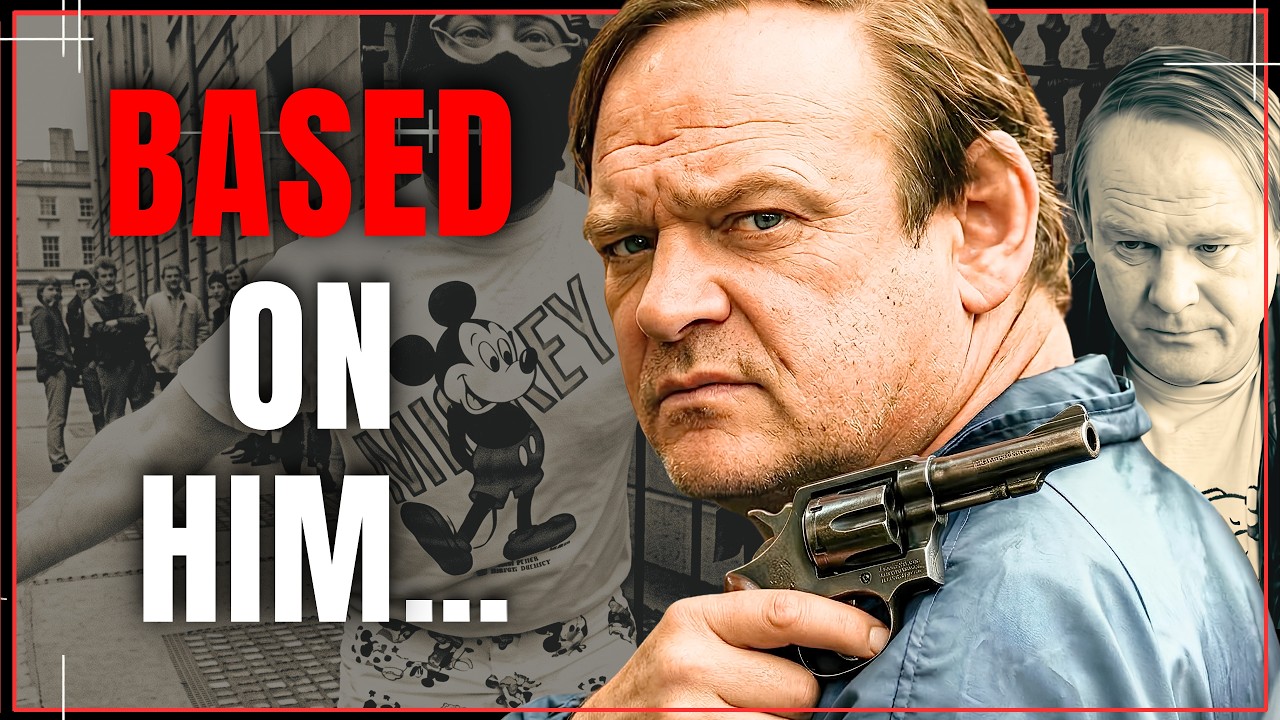
Martin Cahill was behind the wheel of his car, on his way to return a video cassette, when a gunman approached the driver’s door and emptied a . 357 Magnum into his face and body, again and again, until the man the Irish press had called “The General” for a decade drew his last breath in his seat. The gunman climbed onto a motorcycle that was waiting for him and left the scene. Within hours, the Provisional IRA claimed responsibility for the killing.
Martin Cahill was 45 years old. He had never been convicted of a serious crime as an adult. But according to the accounts of the Irish police and every journalist who covered him, he was the mastermind behind the largest jewelry robbery in the country’s history, and the theft of one of the most valuable private art collections in Europe. He had bombed the car of the country’s chief forensic scientist.
He collected unemployment benefit weekly while living in a house he had bought for £80,000 in cash. And he had done all of it while hiding his face behind his spread fingers every time a camera came near. This is the story of how a boy from Dublin’s poor neighborhoods became the most wanted man in Ireland, and how the only enemy he could not rob or bomb or outwit finally caught up with him at a stop sign. Because the question that was never fully answered is this.
The IRA said it killed him for dealing with loyalist paramilitaries. But many people in Dublin believe the IRA was paid to do it by men who had once worked for him. Martin Joseph Cahill was born on May 23, 1949, in Dublin, the second of twelve surviving children. His father, Patrick, was a lighthouse keeper.
The family lived in the Hollyfield Buildings in Rathmines, a housing complex that was, by every account, one of the worst addresses in the city. In 1960, the family was moved in a slum clearance program to Captain’s Road in Crumlin. Cahill later said the move did them no good at all, except to take them away from anything worth stealing. At fifteen, he tried to join the Royal Navy and was rejected.
At sixteen, he was convicted of two burglaries and sent to an industrial school in Daingean, County Offaly. These were the Irish reform schools, run by religious orders, and what happened inside them has been the subject of government inquiries ever since. Cahill never spoke about it in detail. What he said years later was relayed like this: “The reform school was his primary school, St.
Patrick’s Institution was his secondary school, and Mountjoy Prison was his university. ” “They taught him everything he knew. ” Here is the truth about that phrase. It is a joke, and at the same time it is his entire worldview.
Cahill emerged from the system believing the state was a hostile organization, and that everything it owned or protected was a legitimate target. He never changed his mind. On March 16, 1968, he married Frances Lawless, a girl from Rathmines. They had ten children.
Later, with Frances’s consent according to every account, including the memoir of their daughter, he was also involved with her younger sister Tina, and had four more children with her. He supported two families. This arrangement appears in every film about him, and for once, the films did not have to exaggerate. He served two prison terms during the 1970s: from 1970 to 1973 for receiving stolen goods, and from 1977 to 1980 for receiving a stolen car.
Small matters. But somewhere during those years, according to the accounts of the detectives who later hunted him, he stopped being a thief and became a planner. He formed a gang from Hollyfield and Crumlin, men who had known him since childhood, and more importantly, who had learned the same lesson he had about talking to the police. No one talked.
Not once in twenty years. By 1981, he was charged with armed robbery and did something that told the police exactly who they were dealing with. He broke into the District Court and the Four Courts, the seat of the Irish legal system, and stole files, his own files, and according to some accounts, others as well. The cases collapsed.
Then came the man who could have put him away without needing a witness. Dr. James Donovan was the head of the government forensic laboratory. He was the reason theft and robbery cases in Ireland began to be proven without confessions.
In January 1982, a bomb was placed under his car. It exploded. Donovan survived, but was left partially disabled for life. Cahill was never convicted of it.
The police, journalists, and a 1988 television investigation pointed to him as the man behind it. He denied it the way he denied everything, by saying nothing and covering his face. That was the end of the beginnings. A poor neighborhood, a reform school, a gang that did not talk, and a bomb under a scientist’s car.
Everything that followed grew out of those four things. Now, the rise. And it begins with the largest robbery in the history of the Irish state. July 1983, the O’Connor jewelry factory in Harold’s Cross, Dublin.
The opportunity was simple. O’Connor’s manufactured jewelry, which meant the raw materials, gold and cut diamonds, were kept on site rather than in a bank. No inside link was ever proven publicly, and the court records and reports leave the execution unclear. Cahill’s gang broke in armed, took control of the staff, and emptied the safes.
The haul was gold and diamonds worth over £2 million Irish, which today would be more than €6 million. It was the largest robbery Ireland had ever seen. This is where the money part got complicated. The diamonds and gold had to be sold, and Ireland was too small to sell them in.
According to the accounts, a large part of the haul went abroad through middlemen, and the exact path was never fully traced. What is documented is the problem. O’Connor’s could not survive the loss. The company closed.
More than 100 people lost their jobs. Cahill was tried and acquitted in 1984 on a legal technicality. The same year, with no paid employment record since 1969, he bought a house in the Cowper Downs complex in Rathmines for £80,000 in cash. He continued to collect unemployment benefit.
But that is not the crazy part. The crazy part is what he did next, because a man with £2 million in diamonds and a house bought in cash decided that what he really needed was eighteen old master paintings. May 21, 1986, Russborough House, County Wicklow, the country home of Sir Alfred and Lady Beit. The Beit collection was one of the finest private art collections in Europe.
Paintings by Vermeer, Goya, Gainsborough, Rubens, and Metsu. Cahill’s gang broke in at night. Reports say they deliberately triggered the alarm on first approach, waited to see what the response would be, then actually entered once the police had left the site. Some accounts describe it a little differently.
What is undisputed is the result. Eighteen paintings were stolen, valued at the time at around £30 million. Seven of them were disposed of, according to most accounts, within hours, either because they were too large to move or because Cahill’s men could not tell which were most valuable. Eleven paintings were kept.
Now Martin Cahill faced the same problem the Brink’s-Mat robbers in London had faced three years earlier. He was holding something worth a fortune that no one could buy. You cannot sell a Vermeer. Every dealer in the world knows what it looks like.
So the paintings disappeared, buried in the Wicklow mountains according to some accounts, and Cahill began looking for buyers who did not care where they came from. He tried dealing with the underworld in Holland. He is said to have tried using them as collateral for drug deals. According to the IRA’s later statement and the intelligence of the Irish police, the Gardaí, between 1988 and 1990 he negotiated with the Ulster Volunteer Force, a loyalist paramilitary group in Northern Ireland, specifically its Mid-Ulster Brigade led by Billy Wright, known as “King Rat.
” Remember that name well. It is the name that would cost him his life. The paintings began to come back gradually over the years. In 1992 and 1993, seven of the eleven paintings were recovered, including the Vermeer, in an operation that ended in Antwerp.
Three paintings were never found. Cahill gained no great material profit from any of it. It was the largest art theft in Irish history, and according to the accounts, it brought him nothing but enemies. And that decision was what changed everything.
Not the robbery. The buyers. Here is where things become intense, because in 1988, the state finally decided to stop trying to convict Martin Cahill and start making his life impossible. On February 10, 1988, the RTÉ program “Today Tonight” broadcast an investigation that did something the Irish media had never dared to do before.
They named him outright. The footage showed him collecting unemployment benefit while owning two houses. The program aired the details of the Donovan bombing, the O’Connor’s robbery, and the Russborough operation, and linked his name to all three. Up until then, the press had called him “The General” precisely out of fear of libel cases.
Now the name and the face were paired. The Gardaí followed this with a new move. A dedicated surveillance unit, the Special Surveillance Unit, which everyone in Dublin called “the Tango Squad. ” Its job was to watch Cahill, 24 hours a day, 7 days a week.
His radio call sign was “Tango One. ” Detectives followed him by car and on foot, sat outside his house, walked into shops behind him. The goal was not to catch him in the act of a crime. The goal was to make sure he could not do anything.
Cahill’s reaction was typical of his character. On February 26, 1988, his men went out at night and slashed the tires of 197 cars. 90 of them belonged to his neighbors in Cowper Downs, whom he blamed for tolerating the police presence. In response, someone smashed up his Mercedes.
That summer, from June to September, he spent three months in Spike Island prison in Cork harbor, an old prison fortress, on a minor charge. That was the longest period the state managed to hold him during the entire decade. And this pressure produced something else too. It made him paranoid about his own men inside his gang.
There is a story, repeated in Paul Williams’s book and in the films, about a gang member suspected of stealing from him who was nailed to the floor. The details and the name are disputed, so it is enough to say the story is widely told, and no one who worked for Cahill ever denied its general outline. And it made him reckless about who he fought. In 1989, it was reported that a social welfare officer investigating his unemployment claim had been shot in the legs at his home.
Cahill was never charged, and the matter is only described as “reported. ” But if you are counting enemies, you have a forensic scientist, a welfare inspector, his own neighbors, plus the police and the press and the paramilitaries. He had run out of people who did not want him gone. Then came the plan that, according to the accounts, finally broke the gang.
In early 1993, a gang member named John Traynor, known as “The Coach,” brought Cahill inside information about the head office of the National Irish Bank on College Green in Dublin. The plan was a “Tiger” kidnapping. Kidnap the bank’s executive, Jim Lacey, and his family, hold them, and send him to empty the vault. The scheme was that one of Cahill’s men, Joe Joe Kavanagh, would pretend to be a fellow hostage so he could accompany Lacey to the bank without raising suspicion.
On November 1, 1993, Lacey and his wife were kidnapped outside their home in Blackrock. The next morning, Kavanagh drove Lacey to College Green. What they got was £300,000 through an ATM, a fraction of what they had expected from the vault. Then everything collapsed in the stupidest possible way.
Kavanagh, the fake hostage, went to claim his children’s allowance for the days he was supposed to have been held captive. The gang was arrested. That was Cahill’s last major operation. “The General” had planned to rob the biggest bank in the country, and a social welfare form ruined it.
Now, the fall. You have to understand two things that were happening at the same time in 1994, because the answer to who killed Martin Cahill lies between them. The first thing was the paintings. On May 21, 1994, a unit of the UVF from Northern Ireland tried to bomb a pub in south Dublin that was hosting a fundraising event for Sinn Féin.
They were confronted by an IRA volunteer named Martin Doherty, who they shot dead. The IRA decided, according to their later statement, that anyone in Dublin dealing with the UVF was now a target. And the man who had been trying to sell a Vermeer to Billy Wright was Martin Cahill. The second thing was drugs.
Two men who had appeared around Cahill, John Gilligan and John Traynor, the same Traynor from the bank robbery, had by that time established a large cannabis importation operation. The theory put forward by Paul Williams and the cold case investigators of the Gardaí goes like this. Cahill, who had long claimed to hate the drug trade, tried to extort protection money from Gilligan and Traynor. They did not want to pay a man who could not protect himself from the Tango Squad.
So they went to the IRA and told them Cahill was importing heroin, which the IRA had spent a decade violently opposing in Dublin, and they paid. Some say the IRA killed him over his connection to the loyalist UVF. Others say Gilligan and Traynor paid for the assassination and the UVF story was just a convenient cover. Cahill’s daughter, Frances, insists in her memoir that her father despised drugs, though his brother Peter was imprisoned for heroin smuggling.
What happened in the room where that decision was made has never been publicly revealed. What is certain is the timing of the afternoon of August 18, 1994. Cahill left his house in Rathmines in his car. He was, according to the accounts, on his way to return a video cassette.
He drove to Ranelagh and slowed at the junction of Oxford Road and Charleston Road. A man who was waiting on the pavement, dressed as a council worker according to some reports, walked toward the driver’s window. He fired a . 357 Magnum through the glass at Cahill’s face and chest and kept firing.
Cahill’s car lunged forward and stopped. The gunman ran to a motorcycle, climbed on behind a second man, and disappeared. Cahill was dead in his seat. No one on the street moved.
Within hours, the Provisional IRA issued a statement claiming responsibility for the killing. The statement referred to Cahill’s dealings with what it called British loyalist death squads, and it mentioned the Vermeer. No one was ever charged with the murder of Martin Cahill. What happened next shocked even those who had wanted him gone, because the death of Martin Cahill ended nothing.
It was the beginning of the worst two years in modern Irish crime history. With Cahill gone, John Gilligan’s operation had no rival. It grew, according to the records of later trials, into the largest drug importation trade Ireland had ever seen. And the journalist who pursued Gilligan most relentlessly was the crime correspondent of the Sunday Independent, Veronica Guerin.
On June 26, 1996, she was shot dead in her car at a traffic light on the Naas Road, less than two years after Cahill had been killed the same way. Her murder changed Irish law. Within months, the state established the Criminal Assets Bureau with the power to seize any property that could not be justified by legitimate income. In 2005, the bureau seized the Cowper Downs house and sold it, the house Cahill had bought in cash for £80,000, under an agreement with his widow.
Gilligan was acquitted of Guerin’s murder, but was convicted of drug offenses and spent years in prison. Traynor fled abroad. Billy Wright, the UVF commander who had wanted the paintings, was shot dead inside the Maze Prison in 1997 by republican prisoners. Then came the films.
John Boorman’s “The General” in 1998, starring Brendan Gleeson as Cahill, won Boorman the Best Director prize at Cannes. Boorman had a personal interest. Cahill had robbed his house years before and stolen the Golden Reel Boorman had won for the music of “Deliverance. ” That robbery is in the film.
“A Love Divided,” a BBC drama starring Ken Stott, came the following year. And in 2000 came “Ordinary Decent Criminal,” directed by Thaddeus O’Sullivan and starring Kevin Spacey as a Dublin crime boss named Michael Lynch. The film changed the name, changed the crimes, but kept the two sisters, kept the covered face, and kept the charm. It is a film about a robbery.
Lynch outwits the police, steals the paintings, humiliates the establishment, and, according to most accounts, gets away with it. It is the version of Martin Cahill that Martin Cahill himself would have loved. Here is what the film got right. The face behind the fingers is real.
The two houses are real. The contempt for the state, the theatrical mockery of the police, and the sense of a man who believed the entire country was a bank he had a right to rob, all of it is documented. And here is what the film left out. A forensic scientist who could no longer walk normally, a hundred people at O’Connor’s who lost their jobs, a welfare officer shot in the legs for doing his job, a gang member nailed to the floor, and a crew that, after his death, became a drug empire that killed Veronica Guerin.
“Ordinary Decent Criminal” is a film about a beloved rogue. The real record is the story of a man whose ability to avoid conviction is precisely what made everyone around him more dangerous. Martin Cahill spent 25 years as an adult without a serious conviction. That was not luck, and it was not charm.
It was a crew that did not talk, files stolen from a courthouse, and a bomb under the one man who could prove things without a witness. The state could not beat that. What beat him was simpler. He tried to sell a painting to people he should not have dealt with, and he levied taxes on those he should not have, and in the end those two mistakes met at a stop sign in Ranelagh.
The films remember the fingers that covered his face. Dublin remembers who was standing behind him.
