She raised him in the shadow of the most famous death in American public life, and she did it well. John Fitzgerald Kennedy Jr. was born on November 25, 1960, seventeen days after his father was elected president of the United States and three weeks before the family moved into the White House. He was three years old when his father was killed in Dallas.
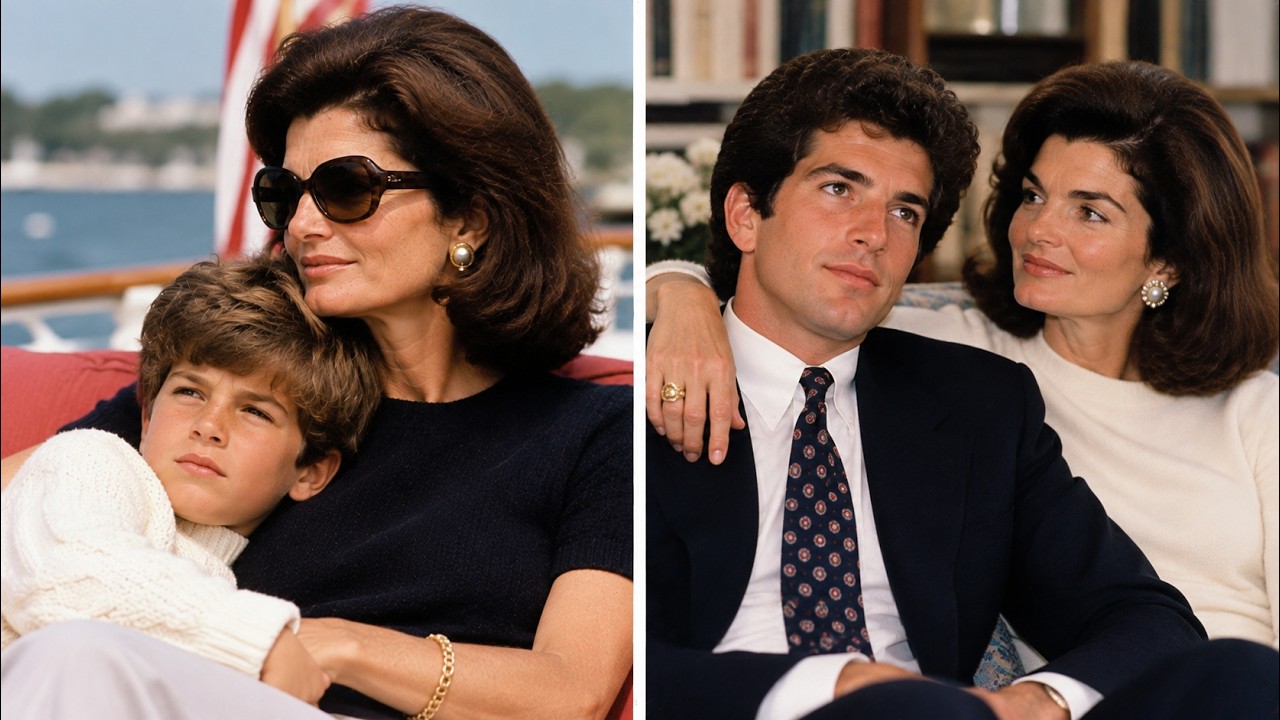
He was thirty-eight when he died in the ocean off Martha’s Vineyard in July 1999, five years after his mother’s death. The relationship between Jacqueline Kennedy and her son was one of the most private and most carefully tended of her adult life. From the moment of his birth into the most watched family in America, she decided that the quality of the man he would become would be her greatest contribution to the world—greater than the restoration of the White House, greater than the Camelot narrative, greater than anything the role of first lady had asked of her. She succeeded.
The man John Kennedy Jr. became, with the warmth and nobility and the singular, authentic qualities of character that those who knew him always described as genuinely extraordinary, was the product of the most deliberate and sustained project of child-rearing of the twentieth century. Here are fifteen of the most important facts about the relationship between Jackie Kennedy and the son she raised in the shadow of the most famous death in American history. The first fact is that she refused to let that salute define him.
The photograph of John Kennedy Jr. saluting his father’s casket on November 25, 1963, his third birthday, is one of the most famous images in the history of American photojournalism. It has been reproduced millions of times. It appears in history books, documentaries, and museum exhibits.
It is the image the world attached to his entire life. Jackie Kennedy did not arrange that salute. The moment was spontaneous. A military aide showed the three-year-old how to perform the salute, and the boy did it at the precise instant the cameras were ready to capture it.
The result was one of the most powerful images of grief, innocence, and the weight of history the twentieth century produced. She spent the following decades making sure that image never became the central truth by which her son defined himself. She spoke to him about his father in the definite present tense, as someone trying to keep a person alive in a child’s imagination—not as a martyr in a photograph, but as the father who played with him under the Oval Office desk, who called out to him through the day, who was present in the simple, daily details of his life. She could not stop the image from becoming what it became in the eyes of the world.
But she could give her son something greater than that image to carry with him. The second fact is that she organized his entire childhood around protecting his privacy. Protecting John Kennedy Jr. ’s privacy was one of the most sustained and precisely managed projects of Jackie Kennedy’s life after Dallas.
She set the rules from the first weeks in the White House. No unauthorized photographs of the children. No press access to their personal lives. An absolute ban on making the children’s private world available to the press.
She maintained those rules through the Kennedy years, through the New York years, and across John’s entire childhood. She succeeded partially, which was the only form of success possible under those circumstances. The boy was the son of the most famous assassinated president in American history and the most famous woman in America. The press would never leave him entirely alone, no matter what his mother arranged.
What she organized was a precise management of access: the photographs that were allowed versus those that were denied, the occasions where his presence was permitted versus those where it was not, the careful control of what information reached the press and what remained in the private sphere she built around the family. That management produced a childhood that, according to the testimony of those around the family in those years, was more private than any outside observer would have believed. She protected him. Not perfectly—complete protection was not available to the son of John and Jackie Kennedy—but with essential and constant protection, with all the force of insistence she devoted to anything she considered worth guarding.
The third fact is that she made sure there were male mentors in his life because she understood what she could not provide. Jackie Kennedy recognized this in the early years after Dallas, when John Jr. was very young. She understood something that the particular circumstances of their family required her to address directly.
She was a woman raising a boy who had lost his father at age three. The specific dimensions of what the boy needed from adult men were dimensions she could not supply alone. She organized the male presence in his life with the same deliberateness she applied to everything else. She relied on Robert Kennedy in the years before his death.
In 1968, he was the uncle who showed up and stayed, who brought the distinctive energy of the Kennedy male world into the children’s lives in ways that Bobby’s genuine affection for them allowed. After Bobby’s death, she relied on a succession of male figures who could provide what John needed: family friends, teachers, and specific individuals she identified as capable of giving her son the models, guidance, and companionship she decided were as essential as the education she was also providing him. She was not naive about what she could and could not give him. That understanding was the organizing principle of her approach to raising him.
She gave him everything she could, and she organized the provision of what she could not give him with equal comprehensiveness. The fourth fact is that she enrolled him in a public school alongside children whose parents were not presidents. The decision to send John Kennedy Jr. to an ordinary school, rather than the exclusive private institutions that would have been the obvious choice for the children of a wealthy former first lady of extraordinary social standing, was one of the most egalitarian child-rearing decisions Jackie Kennedy made deliberately.
She enrolled him at Saint David’s School in New York, a Catholic school with a mix of families from different economic backgrounds, specifically because she wanted his daily social world to include children whose parents were not presidents or prominent social figures of special historical significance. She understood, from observing the culture of the Kennedy compound and its specific effects on the children who grew up inside it, that a child who grows up surrounded exclusively by the children of the powerful develops a distorted picture of what the world really is. She wanted John to know what the world actually was. The decision required managing security realities, the Secret Service presence at Saint David’s, and the specific complications of a child of his status in an ordinary school environment.
She handled those complications. She kept him in the ordinary environment. He grew up, in the most practical and daily sense, among ordinary children in an ordinary school. That ordinary foundation produced something truly extraordinary in the adult he became.
The fifth fact is that she told him stories about his father. Every night, and the stories were specific and human. The continuous transmission of his father’s memory to John Kennedy Jr. , the specific and sustained daily effort to keep JFK present in his son’s imagination as a human being rather than a historical symbol, was one of the most important and least documented things Jackie Kennedy did in the years after Dallas.
She told him stories. Every night during the sleeping hours of his early childhood, she told him stories about his father—specific stories, centered on the qualities she loved and the moments she treasured, designed to give her son the father his father really was, not the martyr of the history books. Those stories were not hagiography. She did not decide that her son should know his father as a saint.
She decided that her son should know his father as a specific, complex, brilliant, funny, sometimes difficult man. The man who told grim jokes about Lincoln, read history in bed, called her from the Oval Office during the day, and wept in their bedroom in Virginia after the Bay of Pigs. She gave John the human father instead of the mythical one. The human father was the gift she could give.
The mythical father, the world provided without her help. The sixth fact is that she let him be himself, even when he surprised her with who he was. John Kennedy Jr. , by the testimony of everyone who knew him throughout his adult life, was not the person that the cultural expectations of the Kennedy legacy had prepared the world to receive.
He was warm where a Kennedy heir was expected to be ambitious. He was interested in the arts where the expected path was politics. He founded a political magazine instead of running for office. He was, in the specific and authentic way of a person who was allowed to be himself rather than forced to be the person history expected, entirely his own person.
Jackie allowed that. More than allowed it—she organized his childhood and youth specifically to create the conditions in which the true self could emerge rather than the expected self being imposed. When he showed an interest in acting in his early youth, a direction that drew considerable press comment and might have drawn a different parental reaction, she did not discourage him in the definitive way a Kennedy family instinct might have suggested. She engaged with his interest, its reasons, and her own assessment of what it would yield for him.
She let him be himself. That permission was the most important thing she did for him. The seventh fact is that she feared for his safety every day, but she never let him see that fear. The specific and rational fear Jackie Kennedy carried since Dallas—the fear for the physical safety of her children in a country that had killed two Kennedy brothers in public places within five years—was a fear she managed every day of John Kennedy Jr.
’s life without making that management an evident fact in his daily existence. The fear was real. He was the son of the most famous assassinated president in American history. He carried a name that the culture had made symbolic, and his status as a public figure made him the target of specific forms of attention that the culture focused on the Kennedy legacy.
She organized the protection, the security team, the management of his public image, and the specific decisions about what access to allow and what to refuse, with all the care of a person whose fear was justified and who was doing everything in her power to address its causes. She did not let him live inside that fear. She carried the fear for him. That carrying was private and comprehensive, and it was one of the most sustained forms of maternal protection.
She provided him the security of a child’s sense of safety in the world, from the justified and specific terror of a mother who knew what the world had done to his father. He grew up with security arrangements without knowing their full extent. He grew up free of the fear that she managed. That freedom was the most complete gift she gave him.
The eighth fact is that she was strict about manners and directness in a way that surprised people. The parenting style Jacqueline Kennedy applied to John Kennedy Jr. was not the permissive style that cultural expectations might have predicted from a grieving widow raising the son of an assassinated president. She was strict about specific things, and she was consistent in her strictness.
She was strict about manners—the specific and sincere courtesy toward others that she always valued and considered not merely social convention but an expression of genuine respect for others that she wanted her son to possess. She was strict about directness. She raised him to say what he meant and mean what he said. The specific and honest quality of communication she taught him was rare, and therefore worth cultivating deliberately in the people she was responsible for shaping.
She was strict about the Kennedy family’s culture of entitlement, the specific and accumulated sense of exceptionalism that the Kennedy world could produce in the people who grew up inside it. She did not want her son to be someone who expected exceptions. She wanted him to be someone who deserved what he received. People who knew John Kennedy Jr.
in adulthood described a person of exceptional kindness, unusual directness, and a unique absence of the sense of entitlement that his background might have produced. Those unusual qualities were the product of the specific and consistent upbringing Jackie applied from his earliest years. The ninth fact is that she supported his desire to become a lawyer, even though she had hoped for something different. John Kennedy Jr.
failed the New York bar exam twice before passing it on his third attempt in the summer of 1990. The failures were publicly reported, most notably in a tabloid headline that described his failure in terms that would have been painful for anyone to see their professional pursuits described that way. Jackie was supportive throughout. It was not performative support; it was genuine support, in a practical and specific way, from a mother who understood that the process of learning something difficult, failing at it, and trying again is itself valuable.
And that the specific public humiliation caused by the press coverage was a feature of his life she could not protect him from. She had not pushed him toward the law. She had not pushed him toward any specific direction. She organized his childhood and education to create the conditions in which he could discover what was truly his own, and the law was what he found first.
The law did not turn out to be his deepest interest. He eventually left the district attorney’s office where he worked and founded George, the political magazine that became the most distinctive expression of his professional personality. But while he was pursuing the law, she supported that pursuit with the steadiness she applied to everything she decided he had the right to pursue. The tenth fact is that she taught him to sail, and the sea was the most honestly shared thing between them.
Of the specific and private pleasures Jackie Kennedy shared with her son, the water was the most authentic. She had loved the sea since her childhood, the Hyannis Port summers, sailing, and the specific quality of the ocean as a physical environment associated with the private self in its warmest expressions. She taught him to sail. Not from an organized distance, with a lesson arranged by an instructor, but in the boat with him, in the direct and specific way of a mother teaching her child something she genuinely loved by sharing her true love of it with him.
He loved the water. His love of it was something he inherited from her, transmitted in the specific way parents transmit their true passions—not through indoctrination, but through shared experience that makes the passion available by making it real. The summers on the Vineyard were the context of the most private and honestly free expression of Jackie’s relationship with John. Mornings on the water, evenings on the porch, that particular quality of Martha’s Vineyard that they both found more restorative than anywhere else they could have been.
He died in the ocean. She had died five years earlier. The sea that was the most honestly shared thing between them was the sea that took him. The eleventh fact is that she was his most honest critic.
He said so himself. People who knew John Kennedy Jr. in his adult years, in the accounts they gave of knowing him, described a particular quality of his relationship with his mother that distinguished it from the relationships many adult sons maintain with parents who hesitate to be honestly critical. She was honest with him, directly and specifically, with the precision of a person who had strong opinions and trusted him enough to say what those opinions were, rather than managing the relationship toward harmony at the expense of honesty.
He said so himself, in the specific and loving accounts he gave of his mother in the years after her death. The consistent feature was honesty. She told him what she thought about his choices, his work, and his directions, with the candor that genuine appreciation generates from a parent who respects her son enough to be honest with him. Honesty was the proof of respect.
She would not soften her assessment because softening it would have been easier, more comfortable, or would have produced a warmer response in the short term. She gave him the honest version because the honest version was what he deserved from her, the person who knew him better than anyone else. He valued that. He said so.
His appreciation of his mother’s honest assessment of him was one of the consistent features of how he described her. The twelfth fact is that she never pressured him to enter politics, and she never did. The pressure itself was a choice. The specific and sustained decision Jacqueline Kennedy made not to pressure John Kennedy Jr.
toward a political career was itself one of the most deliberate child-rearing decisions she made. She made the explicit decision not to impose the political Kennedy legacy on the son who carried the name most associated with it. The gravitational pull of the Kennedy family toward political life was strong and specific, and it had organized the adult paths of Kennedy cousins in ways that were a natural expression of the family culture Joseph Kennedy Sr. had built.
The expectation that John Kennedy Jr. would eventually enter politics was present in public commentary about him from the beginning of his adulthood. The assumption that the most famous Kennedy name would produce the most famous Kennedy political career. Jackie did not encourage that expectation.
She did not discourage it in any definitive way. She organized his upbringing around building his true self rather than preparing him for an expected role. And she trusted that the true self would find its own way. He founded a political magazine.
He was deeply engaged in the political world. Most observers believed he was considering a political career in the years before his death. But the consideration was his personal decision, organized according to his own timing and judgment rather than the pressures of family legacy. She gave him the space to decide for himself.
Granting that space was the most important political gift she gave him. The thirteenth fact is that she was prouder of his character than his achievements, and she said so. The specific quality of John Kennedy Jr. ’s character—the warmth, the genuine interest in others, the tangible kindness that those who knew him described as one of his most consistent traits—was what Jackie Kennedy was proud of in her son.
Not the Yale degree. Not passing the New York bar on the third attempt. Not founding George. Not his public status as one of the most eligible bachelors in America, a label the press had attached to him since his early twenties.
Character. The specific and genuine quality of the person he became. She said this in private conversations with people she trusted, with the pride of a mother who understood that the most important thing she was making was not an achievement but a human being. She organized his entire childhood around building that human being.
That human being was what he represented in the fabric of his daily life, the way he treated those who worked with him at George, how he moved through the world without the haughtiness his status might have produced. The specific and genuine warmth that every account of him described as one of his most distinctive and authentic qualities. She raised him for that character. Character was what she was most proud of.
She told people so. The fourteenth fact is that his death, five years after hers, was the loss she feared, and she prepared him not to fear it. In the early hours of July 17, 1999, the small plane John Kennedy Jr. was piloting disappeared over the Atlantic Ocean off the coast of Martha’s Vineyard.
He was thirty-eight. His wife, Carolyn Bessette Kennedy, and her sister Lauren Bessette were with him. None of them survived. Jackie Kennedy had died five years earlier, in May 1994.
She did not know that the child she had raised in the shadow of the most famous death in American history would die in the ocean she had taught him to love, at age thirty-eight, five years after her own passing. She had spent his entire childhood managing the fear that something would take him—the fear that the Kennedy family’s specific vulnerabilities to the forms of violence and tragedy that had accumulated across two generations would reach her son. She handled the fear by protecting him from it, rather than teaching him to live within it. She raised him to be free of the fear she carried.
That freedom was the gift. That gift did not protect him from the ocean. He was buried at sea, as she was buried at Arlington. Both were gone.
The distance between the two losses was five years. She had feared losing him. She did not know it would happen in the specific and irreversible form it took. She died without knowing what was coming, which was itself the final form of the protection she had always given him.
The fifteenth fact is that what she built inside him was more lasting than anything else she built in her life. The White House restoration still exists. The Rose Garden is still on Bunny Mellon’s design. The Camelot narrative is still the dominant frame of the Kennedy presidency.
The eternal flame still burns at Arlington. These are the things Jacqueline Kennedy built that the world can see, measure, and evaluate. John Kennedy Jr. was the thing she built that was the most honest to her and the most extraordinary of all.
He grew up as the most watched child in America, in the shadow of the most famous death in American history, under the harshest public scrutiny any child endured in the twentieth century. He grew up to become a man of genuine warmth, genuine nobility, and genuine interest in others. A man whose specific traits of character those who knew him described with the consistent precision of people describing someone truly extraordinary. She did that.
Not alone—he was an independent person in the deepest sense, as all well-raised people eventually become their own independent selves. But the conditions she arranged, the protection she provided, the stories she told, the male mentors she assembled, the ordinary school, the sea, the honest criticism, and the space to become himself rather than the figure the myth expected—all of it produced the man he was. She was his mother. She was magnificent at it.
And he was the proof. He died before the evidence fully unfolded into everything it could have been. She died before she knew how that unfolding would end. What she built inside him was real and it was right.
That building was the most important work of her life. And that work was worth the effort. She always knew it would be.
