By the end of 1944, Roza Shanina had begun to keep a different kind of diary. Where once she had described the landscape of Belorussia and the details of her daily routine, now she wrote about the faces that appeared in her sleep. The nightmares came almost every night, always the same: the men she had killed, visible through the scope of her rifle in the instant before she fired. She was twenty years old, and she had spent sixteen months as a sniper on the Eastern Front.
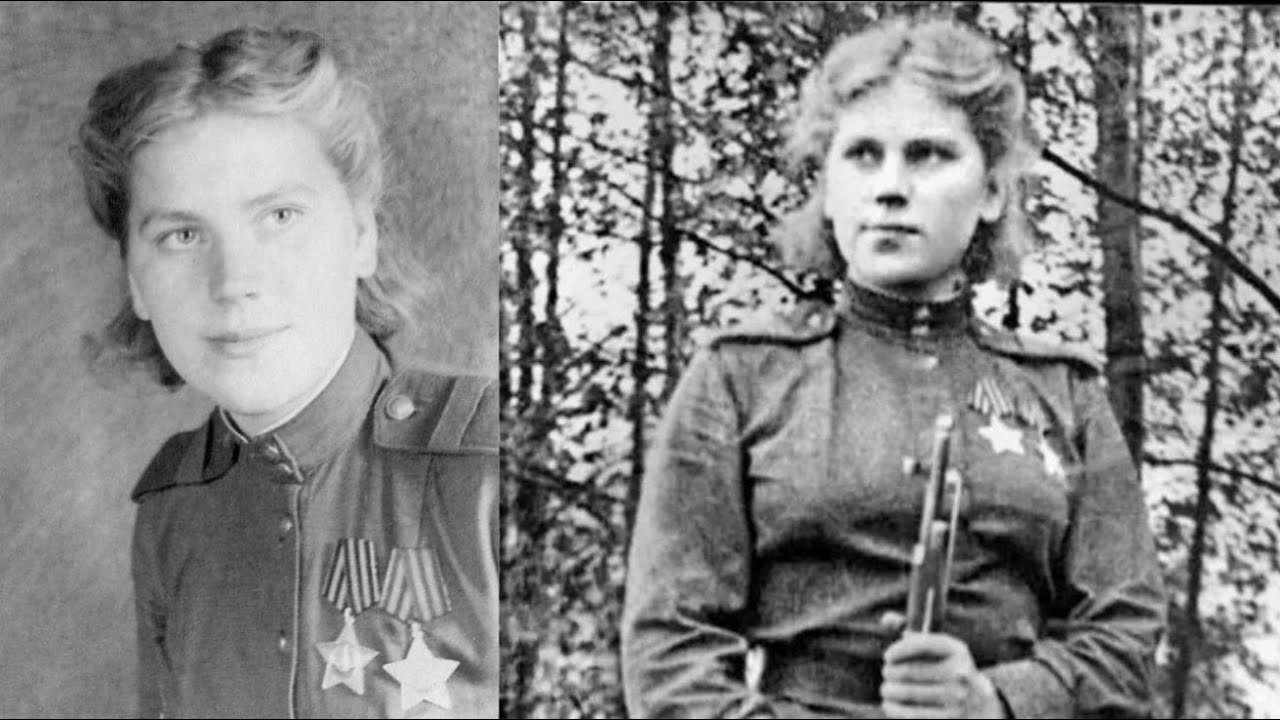
In that time she had eliminated fifty-nine German soldiers, a figure verified by the officers who witnessed each kill. She had become one of the most effective marksmen in the Soviet Red Army, and she was not certain she could survive the war with her mind intact. She had not set out to be a soldier. Roza Shanina was born on April 3rd, 1924, in the Arkhangelsk region of the Soviet Union, in the remote northern village of Edma.
Her family was working class, her childhood shaped by the harsh climate and the modest circumstances of rural life. The family home was heated by a traditional Russian stove, and education was valued even though resources were scarce. By 1941 she had moved to Arkhangelsk city to study at a pedagogical school, training to become a kindergarten teacher. She excelled in her studies and showed a particular gift for working with children.
Her diary from this period records a young woman devoted to education and her community, with no indication that military service had ever crossed her mind. June 22nd, 1941 changed everything. Germany launched Operation Barbarossa, and the Soviet Union was suddenly at war. Radio broadcasts crackled through Arkhangelsk with news of the invasion.
Citizens gathered in public squares to hear Stalin’s address on July 3rd, calling for total mobilization. The initial German advances were catastrophic. Soviet forces suffered approximately 400,000 casualties in the first weeks alone, according to Soviet military archives. Entire armies were encircled and destroyed.
By 1942 the war had reached a critical phase. The Battle of Stalingrad, which lasted from August 1942 to February 1943, became a turning point; Soviet casualties during that single battle exceeded one million soldiers. The nation faced an existential threat, and every available resource was needed. Women began volunteering for military service in unprecedented numbers.
Soviet records show that approximately 800,000 women served in the Red Army during World War II, many of them in combat roles. It was in this context that Shanina made her decision. In December 1941, at seventeen years old, she attempted to enlist. Military commissariats initially rejected female volunteers for combat roles, directing them instead to auxiliary positions in medical services, communications, or administration.
Shanina persisted. She wrote multiple letters to military authorities arguing for her right to serve in combat. Her persistence, documented in Soviet military recruitment files, reflected a broader pattern among Soviet women who sought active roles in defending their homeland. Finally, in 1943, as Soviet losses mounted and the need for skilled marksmen grew acute, her application was accepted.
She was assigned to the Central Women’s Sniper Training School, established specifically to train female snipers. The school, located near Podolsk, operated under the command of the Soviet Main Directorate of Combat Training. Historical records indicate that over 1,000 women graduated from this institution during the war. The training regimen was intensive and brief.
Soviet sniper schools operated on accelerated schedules driven by wartime necessity. Standard training lasted approximately six months, covering marksmanship fundamentals, fieldcraft, camouflage techniques, range estimation, and tactical employment. Instructors emphasized patience, discipline, and the psychological preparation required for the sniper’s solitary role. The primary weapon was the Mosin-Nagant Model 1891/30, a bolt-action rifle that had served the Russian military since the late nineteenth century.
The sniper variant featured a PU telescopic sight with 3. 5 times magnification. The rifle fired the 7. 62×54 mm rimmed cartridge, effective at ranges up to 800 meters in skilled hands, and measured 1,232 mm in length.
Its reliability in extreme cold made it ideal for Eastern Front conditions. Training records preserved in Soviet military archives show that Shanina demonstrated exceptional aptitude. She consistently scored in the top tier during marksmanship evaluations. Her instructors noted her calm demeanor under pressure and her ability to calculate windage and elevation adjustments quickly.
By October 1943 she had completed her training and received her assignment to the 3rd Belorussian Front. The Eastern Front in early 1943 stretched over 2,000 km from the Baltic Sea to the Black Sea. Soviet forces were beginning their westward push after the victories at Stalingrad and Kursk. The 3rd Belorussian Front, commanded by Army General Ivan Chernyakhovsky, operated in the northern sector, with objectives that included the liberation of Belorussia and the eventual push into East Prussia.
Shanina arrived at the front in November 1943 and was assigned to the 184th Rifle Division’s sniper platoon. Her first impressions, recorded in her diary, reveal the shock of transitioning from training to actual combat. The sound of artillery, the sight of destroyed villages, the smell of burning timber and cordite, the presence of wounded soldiers, all created an overwhelming sensory environment. She wrote that the reality of war exceeded anything she had imagined during training.
Conditions on the Eastern Front were extraordinarily harsh. Winter temperatures regularly dropped below minus 30 degrees Celsius. Soldiers lived in dugouts and trenches, often without adequate heating. Supply lines struggled to deliver sufficient food, ammunition, and winter clothing.
Frostbite casualties were common; Soviet medical reports document thousands of cold-weather injuries during each winter campaign. Snipers faced additional challenges, spending hours motionless in freezing conditions while waiting for targets. Shanina’s first confirmed kill came in December 1943 near the town of Vitebsk. Her diary entry from that day is brief but significant.
She wrote that pulling the trigger felt different from training. The weight of taking a human life, even an enemy soldier, affected her deeply. But she also noted her sense of duty and the knowledge that every German soldier eliminated potentially saved Soviet lives. This internal conflict between personal morality and military necessity would characterize her diary entries throughout her service.
During the early months of 1944, Shanina’s diary provided extraordinary insight into the mental landscape of a combat sniper. Unlike official military reports that focus on tactical outcomes and casualty statistics, her personal writings revealed the emotional cost of precision killing. One entry from February 1944 reads, in translation, “I have become a soldier and must do what is necessary. ” The brevity of the statement belies its significance.
Shanina was grappling with the fundamental transformation required of anyone who takes human life systematically. Soviet military psychology research from the period, limited though it was, acknowledged that snipers faced unique psychological pressures compared to regular infantry. The sniper sees the face of the enemy through magnified optics, making the act of killing intensely personal. Despite these psychological burdens, Shanina’s combat effectiveness steadily increased.
By March 1944 she had recorded twelve confirmed kills. Each kill required verification, typically through observation by a spotter or officer. Soviet sniper doctrine emphasized confirmed kills over claimed kills, maintaining rigorous standards that distinguished actual eliminations from suppressive fire. This verification process, documented in unit combat logs, provides reliable historical evidence of sniper effectiveness.
Her tactical approach evolved through experience. Early in her deployment she operated primarily in defensive positions, targeting German soldiers during attempted advances. As she gained confidence, she began conducting more aggressive reconnaissance missions, moving ahead of Soviet lines to identify and eliminate high-value targets. Her preferred technique involved establishing concealed positions with clear fields of fire, then waiting patiently for officers, machine gunners, or artillery observers to expose themselves.
The Mosin-Nagant’s bolt-action design enforced shot discipline, preventing the wasteful rapid fire that revealed positions. The PU scope’s modest magnification actually aided rapid target acquisition at the typical engagement ranges of 200 to 400 meters. Shanina became proficient at estimating range without instruments, using visual cues such as the apparent size of human figures and terrain features. Official army reports from the 184th Rifle Division praised Shanina’s development as a disciplined and skilled marksman.
Her company commander’s evaluation, dated March 1944, noted her ability to remain calm under fire and her initiative in identifying tactical opportunities. She earned the respect of her comrades and commanders alike. Yet her diary continued to reflect inner turmoil. She wrote about dreams where the faces of killed German soldiers appeared.
She questioned whether her actions, however militarily justified, would affect her ability to return to normal life after the war. These reflections demonstrate a level of self-awareness and moral sensitivity that contradicts simplified narratives of ideological warriors. She remained fundamentally human despite the dehumanizing nature of her work. The Soviet sniper program itself had not emerged fully formed at the war’s beginning.
Its evolution reflected hard-won tactical lessons and desperate necessity. In 1941 and early 1942, Soviet forces faced catastrophic defeats. German infantry, supported by superior tactics and coordination, repeatedly overwhelmed Soviet defenses. Traditional massed infantry assaults proved suicidal against German machine gun positions and artillery.
Soviet military leadership, analyzing these failures, recognized the need for asymmetric responses. Snipers offered a cost-effective method of degrading German combat power. A single well-trained marksman, equipped with a rifle costing minimal resources, could eliminate multiple high-value targets. German officers, identifiable by their distinctive uniforms and binoculars, became priority targets.
Machine gun crews, artillery spotters, and radio operators followed. Each elimination disrupted German tactical coordination. The program was formalized in 1942, when the Soviet Main Directorate of Combat Training established dedicated sniper schools. Curriculum development drew on lessons from the Winter War against Finland, where Finnish snipers had inflicted disproportionate casualties on Soviet forces.
Soviet planners studied these tactics and adapted them. The resulting training program emphasized individual initiative, patience, fieldcraft, and psychological resilience. By 1943 the program had produced thousands of trained snipers. Soviet military records document the establishment of sniper companies within rifle divisions.
Each company typically contained twenty to thirty snipers organized into two-person teams. The spotter, using binoculars, identified targets and estimated range. The shooter engaged targets based on the spotter’s information. This team structure reduced individual psychological burden while improving effectiveness.
Tactical employment evolved throughout the war. Initially, snipers operated primarily in defensive positions covering approaches to Soviet trenches. As Soviet forces transitioned to offensive operations in 1943 and 1944, sniper tactics adapted. Forward reconnaissance missions became common.
Snipers infiltrated German rear areas, targeting supply convoys, command posts, and communication nodes. The psychological impact of snipers exceeded their numerical casualties. German soldiers learned to fear exposed movement. Officers concealed their rank insignia.
Radio operators avoided extended transmissions. Artillery observers worked from covered positions. This behavioral change degraded German operational effectiveness across entire sectors. Statistics from Soviet military archives reveal the program’s scale: by war’s end, Soviet snipers had accounted for over 36,000 confirmed German casualties.
This figure represents verified kills only; actual German losses to Soviet snipers likely exceeded this number significantly. Soviet arms factories manufactured approximately 53,000 sniper rifles during the war, a small fraction of total rifle production, roughly one sniper rifle per 200 standard infantry rifles, reflecting the specialized nature of the weapon. In June through August 1944, Shanina’s unit participated in the summer offensive known as Operation Bagration, the largest Soviet operation of the war. Over 2.
3 million Soviet soldiers, supported by 4,000 tanks and 6,000 aircraft, smashed through German Army Group Center. The offensive aimed to liberate Belorussia and create conditions for the subsequent push into Poland and Germany. Shanina’s 184th Rifle Division participated in the Vitebsk-Orsha offensive operation, a subsidiary component of Bagration. The operation began on June 23rd, 1944.
Soviet forces encircled German forces in Vitebsk, trapping approximately five German divisions. The encirclement battle lasted five days, resulting in the destruction or capture of over 30,000 German soldiers. During this operation Shanina demonstrated the tactical skills that would define her reputation. Official Red Army reports from the battle, preserved in the Central Archives of the Ministry of Defense, document her contributions.
She operated ahead of advancing Soviet infantry, identifying German strongpoints and eliminating key personnel. One documented engagement occurred on June 25th. German forces had established a defensive position centered on a fortified farmhouse. Machine gun nests covered the approaches, preventing Soviet infantry from advancing.
Shanina, working with her spotter, infiltrated to within 300 meters of the position. Over the course of six hours, she eliminated the machine gun crew, two officers coordinating the defense, and a radio operator. The elimination of these key personnel disrupted German coordination. Soviet infantry subsequently overran the position with minimal casualties.
Each shot served a tactical purpose beyond simple casualty infliction: the machine gun crew’s destruction removed offensive firepower, the officers’ deaths disrupted command and control, and the radio operator’s elimination severed communication with higher headquarters. By August 1944, Shanina’s confirmed kill count reached forty-five. In that same month she received the Order of Glory, third class, a decoration established in 1943 specifically for enlisted personnel who demonstrated exceptional courage in combat. The medal came with increased rations and modest monetary compensation.
More significantly, it represented official acknowledgement of her contributions. She cleaned and maintained her rifle daily, a ritual she described in her diary as meditative. The weapon became an extension of herself, familiar and trusted. As Soviet forces pushed westward following Operation Bagration’s success, they approached the borders of Germany itself.
This phase of the war carried enormous psychological significance. For the first time since Napoleon’s invasion, a foreign army threatened German territory. German resistance stiffened accordingly. The 3rd Belorussian Front, including Shanina’s division, participated in preliminary operations aimed at penetrating German border defenses.
These battles, fought in October 1944, encountered heavily fortified positions. The Germans had constructed extensive defensive works, including concrete bunkers, anti-tank obstacles, and minefields. Soviet casualties increased sharply. The easy advances of summer gave way to grinding attritional warfare.
Shanina’s role adapted to these new conditions. Urban and fortified position fighting reduced the effective range for sniper operations. Instead of the open terrain of Belorussia, where engagements occurred at 300 to 500 meters, East Prussian combat took place at closer ranges amid destroyed buildings and defensive works. Shanina adjusted her tactics, focusing on shorter range precision shooting and closer coordination with infantry assault groups.
Her diary entries from this period reflect the campaign’s increased intensity. She wrote about the psychological difference between fighting on Soviet or occupied territory versus entering Germany proper. Several entries mentioned bullets passing close by, artillery shells landing nearby, and comrades killed or wounded. Despite these dangers, her effectiveness continued.
By November her confirmed kill count reached fifty-four. This represented an average of approximately three confirmed kills per month over sixteen months of frontline service. Only a small percentage of trained snipers achieved comparable results. Soviet propaganda began featuring Shanina more prominently during this period.
Her youth, gender, and attractive appearance made her an ideal propaganda subject. Photographs of Shanina, rifle in hand, appeared in Soviet newspapers and magazines. Radio broadcasts described her exploits. The propaganda served multiple purposes: it demonstrated Soviet women’s contributions to the war effort, provided heroic role models, and conveyed to the enemy that even young Soviet women could effectively combat German forces.
Shanina’s diary reveals mixed feelings about her public profile. She appreciated the recognition of her service but felt uncomfortable being singled out when thousands of Soviet soldiers fought and died without acknowledgement. By late 1944, the psychological toll of prolonged combat operations was manifesting in various ways. Shanina’s diary entries reveal increasing psychological strain.
She wrote about persistent nightmares featuring combat scenes and killed German soldiers. Sleep became difficult despite physical exhaustion. Her writing style, previously detailed and reflective, became more fragmented and abbreviated. The sniper role imposed unique psychological burdens.
Unlike infantrymen who engaged targets at distance or in the confusion of close combat, snipers observed their targets through magnified optics before killing them. This intimate view of the enemy as individual human beings, visible in their final moments, created intense psychological pressure. Soviet sniper training included minimal psychological preparation for this aspect of the work. Additional stress came from isolation.
Snipers often operated alone or in two-person teams, separated from the social support of larger units. Hours or days passed in solitary observation and waiting. Shanina’s diary entries increasingly expressed feelings of loneliness despite being surrounded by other soldiers. Soviet medical services maintained limited capacity for treating combat stress.
Resources prioritized physical wounds. The prevailing attitude emphasized willpower and ideological commitment as solutions to stress reactions. Despite these psychological challenges, Shanina continued performing effectively. Her confirmed kill count increased to fifty-nine by early January 1945.
Her diary suggests she found meaning in service to her country and protection of her comrades. Winter conditions compounded all difficulties. Temperatures dropped below minus 20 degrees Celsius regularly. Maintaining weapon function required constant attention.
Frostbite threatened exposed skin within minutes. The final Soviet winter offensive began on January 13th, 1945. Marshal Georgy Zhukov’s 1st Belorussian Front and Marshal Ivan Chernyakhovsky’s 3rd Belorussian Front launched massive coordinated attacks. The strategic objective was to destroy German forces in East Prussia and create conditions for the final assault on Berlin.
Over 1. 6 million Soviet soldiers participated, supported by 3,500 tanks and 28,000 artillery pieces. German resistance reached desperate intensity. Fighting now on German soil, Wehrmacht and SS units contested every position.
Shanina’s unit, the 184th Rifle Division, fought in the Vilkaviskis-Konigsberg operation, which aimed to penetrate German defenses west of the Neman River. The offensive began on January 13th and immediately encountered fierce resistance. On January 27th, 1945, Shanina participated in an assault near the village of Richau in East Prussia. Soviet forces attempted to break through entrenched German positions.
The attack began at dawn with artillery preparation. Soviet infantry advanced through snow-covered fields toward German trenches. German defensive fire from machine guns and mortars caused immediate casualties. The assault stalled under heavy fire.
Shanina, functioning as part of a reconnaissance and fire support element, moved with the assault troops. Her role involved identifying German strongpoints and providing precision fire to suppress defensive positions. Soviet combat reports from the engagement indicate she successfully eliminated several German soldiers, including a machine gun crew that had been causing heavy casualties among advancing infantry. During the engagement, German artillery began targeting the advancing Soviet troops.
High explosive shells bracketed the attack formations. Shanina sustained severe wounds from shell fragments. The exact circumstances remain unclear from available documentation, but Soviet medical records indicate she received multiple shrapnel wounds to the abdomen and chest. Fellow soldiers carried her to a field medical station approximately one kilometer behind the front lines.
Soviet military medicine faced overwhelming demands during the final offensive operations. Field hospitals treated thousands of wounded soldiers daily. Medical personnel worked continuous shifts performing triage, surgery, and basic wound care. Antibiotics were scarce.
Blood transfusions were often unavailable. Surgical capacity was insufficient for casualty volumes. Many wounded soldiers died from treatable injuries due to resource constraints. Shanina received initial treatment at the field station.
Medical officers assessed her wounds as critical. Internal injuries from shell fragments caused severe bleeding. Without immediate surgical intervention, her chances of survival were minimal. However, surgical facilities lay several hours away by ambulance over damaged roads.
The medical staff did what they could with available resources, administering pain medication and attempting to stabilize her condition for transport. Roza Shanina died on January 28th, 1945, at approximately 1100 hours. She was 20 years, 9 months, and 25 days old. Her final confirmed kill count stood at 59 German soldiers.
Her service duration totaled sixteen months of frontline combat. Following her death, she received posthumous recognition from Soviet authorities. In February 1945 she was awarded the Order of Glory, second class, following her earlier third class award. Soviet military regulations specified that the Order of Glory, awarded in three classes, honored enlisted personnel for exceptional courage in combat; recipients of all three classes received recognition equivalent to Hero of the Soviet Union, though Shanina’s death prevented her from achieving this distinction.
Soviet propaganda utilized Shanina’s story extensively in the months following her death. Pravda, the Communist Party newspaper, published a lengthy obituary in early February. The article emphasized her youth, her dedication to defending the motherland, and her effectiveness as a sniper. Photographs of Shanina appeared in military newspapers and magazines throughout the spring of 1945.
Radio broadcasts described her exploits to audiences across the Soviet Union. Her gender added particular propaganda value. Soviet ideology emphasized women’s equality and their contribution to socialist construction. The war provided opportunities to demonstrate these principles practically.
Women served throughout the Soviet military, from anti-aircraft units to pilots to snipers. Their service validated Soviet claims about gender equality while simultaneously demonstrating the total nature of Soviet mobilization. Shanina was buried initially in a military cemetery near the location of her death in East Prussia. The grave, like thousands of others, received a simple wooden marker with her name, rank, and dates.
Her family in distant Arkhangelsk received official notification of her death weeks later through standard military channels. Post-war Soviet authorities eventually relocated her remains to a formal military cemetery. A proper gravestone replaced the wooden marker. The inscription identified her as Senior Sergeant Roza Shanina, sniper, Hero of the Soviet Union, though the latter designation was technically inaccurate, as she received the Order of Glory, not the Hero title.
Her hometown of Edma erected a memorial in the local school, consisting of a plaque with her photograph and biographical information. Schoolchildren studied her example during history lessons. Youth organizations used her story to illustrate Soviet values of duty, courage, and sacrifice. The school eventually received her name, becoming Edma Secondary School, named after Roza Shanina.
Her diary, preserved through unknown circumstances during wartime chaos, eventually reached Soviet military archives. Portions were published in Soviet magazines during the 1960s, introducing her story to broader audiences. Post-war, Shanina’s story continued circulating. Soviet military histories of the Great Patriotic War included her among notable snipers.
Streets in several Soviet cities received her name. However, the propaganda narrative simplified Shanina’s actual experience. Official accounts emphasized heroism and dedication while minimizing or ignoring the psychological costs she documented in her diary. The internal conflicts, doubts, and emotional struggles received little attention.
Shanina’s actual story, as revealed in her diary, proved more nuanced than the official version. Western awareness of Shanina remained limited during the Cold War. Language barriers prevented access to Russian-language sources. The end of the Cold War and subsequent opening of Soviet archives enabled more comprehensive research.
Western historians gained access to previously restricted documents, including military records, propaganda materials, and personal papers. Shanina’s diary, fully published in Russian, became available to international researchers. English-language publications about Soviet snipers increasingly include her story. Academic research into gender and warfare analyzes Soviet women snipers with Shanina frequently cited as a primary example.
The Soviet sniper program’s aggregate impact exceeded the sum of individual contributions. By May 1945, Soviet snipers had eliminated over 36,000 German soldiers in confirmed kills. These casualties inflicted disproportionate impact on German combat effectiveness. Snipers systematically targeted officers, non-commissioned officers, specialists, and key weapons operators.
Each elimination degraded German unit capabilities beyond simple numerical reduction. The cost-effectiveness analysis demonstrates the program’s efficiency: a trained sniper equipped with a rifle costing approximately 300 rubles in contemporary Soviet currency could eliminate dozens of enemy soldiers over a service career. The exchange ratio heavily favored the Soviets. The program influenced post-war Soviet military doctrine.
Cold War era Soviet military organization included dedicated sniper positions within motorized rifle companies. Division-level sniper platoons provided specialized capabilities for reconnaissance and precision engagement. Training infrastructure established during World War II continued operating. International military establishments studied Soviet sniper employment.
Western armies, recognizing the tactical advantages demonstrated during World War II, developed their own enhanced sniper programs. The United States Marine Corps, for example, expanded its sniper training and integration following analysis of Soviet experiences. The role of women snipers specifically generated particular interest. Approximately 2,000 women completed Soviet sniper training during the war.
Their collective performance validated the concept of female combat personnel in this specialized role. Post-war debates regarding women in combat frequently referenced Soviet sniper programs as practical demonstration of female combat effectiveness. Roza Shanina’s life spanned 20 years, 9 months, and 25 days. Her military service lasted 16 months.
She eliminated 59 enemy soldiers in documented engagements. Her story illuminates broader patterns. The Soviet Union mobilized every available resource for survival and victory. Approximately 34 million Soviet citizens died during the war, roughly half military personnel and half civilian, a death toll that exceeded all other combatants combined.
Individual stories like Shanina’s provide human dimension to otherwise abstract statistics. Her diary provides insight unavailable from official sources. Military records document tactical actions and outcomes. Propaganda emphasizes heroism and ideological commitment.
Shanina’s personal writings reveal internal conflict, moral questioning, and psychological cost alongside dedication and courage. This authentic voice reminds readers that soldiers remain complex human beings, not simplified symbols or propaganda figures. Her legacy persists in military doctrine, historical memory, and continued examination of the costs of conflict.
