In 1958, a recruit on Parris Island had ninety seconds to eat a meal that had taken the mess cooks four hours to prepare. He ate standing, eyes forward, fork moving like a piston, while a drill instructor breathed down his neck. Certain dishes made grown men gag on their first morning. One tasted like home.
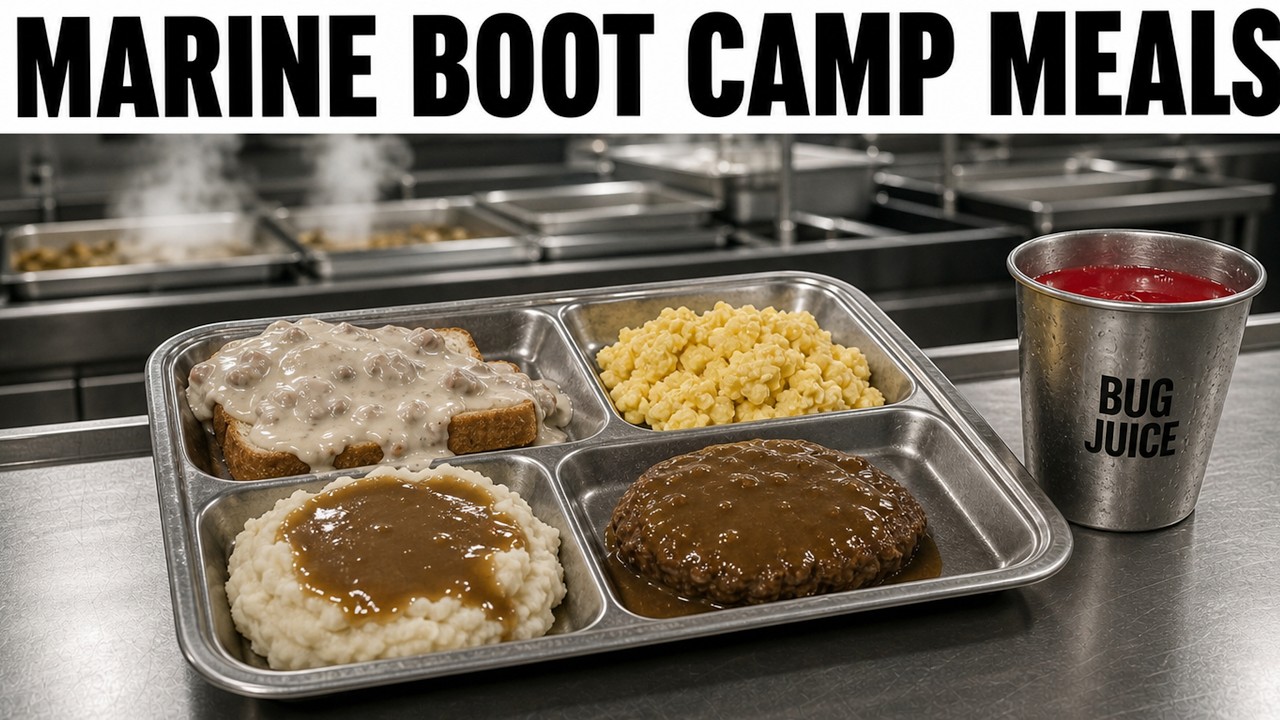
And one, every Marine who came through the sixties remembers, whether he wants to or not. Number twenty-five was SOS, chipped beef on toast. Every recruit who ever stood in a Marine Corps chow line before dawn knew this dish, and almost none of them called it by its polite name. Thin slices of dried, salted beef were torn into strips and folded into a thick white gravy of flour, butter, and reconstituted milk, then ladled hot over two slabs of toasted white bread.
The Marines called it a lot of things, most of them unprintable, but the initials always came out to the same three letters. It was cheap, it was fast, and it fed a battalion of hungry teenagers before the sun came up. A cook could stretch a few pounds of dried beef across two hundred trays. The gravy soaked into the toast until the bottom turned to paste, and men who claimed to hate it went back for seconds every single time.
Veterans who came home from Korea made it in their own kitchens for the rest of their lives. They complained the whole time they were cooking it, and they never stopped making it. Number twenty-four was bug juice. It was not food, and half the recruits swore it was not really a drink either.
But no meal in a 1950s mess hall was complete without a metal pitcher of bug juice sweating on the table. This was powdered fruit punch mixed by the gallon in aluminum cans, a color that did not exist anywhere in nature, somewhere between red and orange and warning label. It was sweet enough to make your teeth ache and strong enough that recruits joked you could strip paint with it. The story passed down through every platoon was that the cooks used the same stuff to clean the deck when they ran low on solvent.
Nobody ever proved it. Nobody ever disproved it either. But when you had ninety seconds to eat and a throat full of dust from the drill field, that sugary chemical punch tasted like the best thing you ever had. Men remember the exact shade of it fifty years later.
Number twenty-three was powdered scrambled eggs. Before a base could refrigerate fresh eggs for thousands of men, the answer came in a sack. Dehydrated egg powder was reconstituted with water, whisked into a thin yellow slurry, and cooked on a flat top griddle the size of a door until it set into something the shape of scrambled eggs. The texture was the problem.
They came out rubbery, a little bouncy, faintly gray at the edges, and they held their shape in a way that real eggs never do. Recruits described the smell as sulfur and cardboard. But at 0500, after a night of almost no sleep, protein was protein, and you ate what was on the tray or you went hungry until noon. A cook could feed an entire company from a few large tins of powder that cost the government pennies per serving.
The men who ate them for thirteen weeks straight say they still cannot look at a buffet chafing dish the same way. Number twenty-two was creamed corn on toast. When the mess needed something hot, filling, and nearly free, canned creamed corn came to the rescue, and it landed on toast more often than anyone wants to admit. The cooks heated the corn in vats, seasoned it with salt and whatever margarine was on hand, and poured it thick and steaming over slices of toasted bread.
It was sweet, it was starchy, and it stuck to your ribs through a morning of physical training. The corn liquid soaked down into the toast and turned the bottom half custardy. It was not a meal anyone bragged about. It was a meal that got you from breakfast to the next chance to eat, which on the drill field was the only thing that mattered.
Canned corn kept for years in a supply locker, which made it a quartermaster’s dream. Recruits ate it without complaint because complaint was not on the menu. Number twenty-one was Navy bean soup. The Marines are part of the Naval Service, and the galley tradition of Navy bean soup followed recruits right into boot camp.
Dried white Navy beans simmered for hours with a ham bone, diced onion, and salt until the beans burst open and thickened the broth into a creamy, pale, deeply savory pot that could feed hundreds. It was the cheapest hot meal a mess could produce, and it was almost impossible to ruin. A one-hundred-pound sack of dried beans cost the government a few dollars and stretched across days. The broth pulled every last bit of smoke and salt out of the bone.
Served with a chunk of bread for dragging through the bowl, it filled a young man up and kept him full through an afternoon of close order drill. The same soup had fed sailors and Marines for generations. It tasted like the institution itself, plain and enduring and built to last. Number twenty was mess hall cornbread, baked in enormous sheet pans and cut into squares with a putty knife.
It was the workhorse bread of the southern bases, and Parris Island turned it out by the hundreds of pounds. It was denser than the cornbread your grandmother made, a little dry, sometimes just this side of crumbly, but it did its job. It sopped up bean broth. It carried gravy.
It filled the corner of a tray that needed filling. The cooks mixed cornmeal, flour, a little sugar, powdered milk, and eggs into batter by the bucket and baked it in ovens big enough to walk into. A single sheet cost almost nothing and stretched a meal further than anything else in the galley. Recruits grabbed extra squares when the drill instructor was not looking and stashed them for later.
Because in boot camp, you never knew when the next real chance to eat would come. That cornbread was insurance you could hold in your fist. Number nineteen was liver and onions, the meal that made grown men gag on their first morning. Beef liver was one of the cheapest, most nutritious things the government could put on a tray, packed with iron and protein and costing next to nothing per pound.
So it showed up on the menu regularly, whether the recruits wanted it or not. And most of them did not. The cooks dredged thin slices in flour and fried them fast on the griddle, piling caramelized onions over the top. Done right, liver is mild and rich.
Done in a military galley for two thousand men at once, it usually came out tough, gray, and faintly metallic, cooked long past the two minutes a side that liver actually needs. Recruits learned to eat it anyway because leaving food on your tray in front of a drill instructor was a mistake you made exactly once. A whole generation of Marines walked away from boot camp convinced they hated liver forever. Most of them were right.
Here is what nobody tells you about eating in Marine Corps boot camp. The food was never really the point. A recruit did not sit down to a meal. He performed a meal.
In the fifties and sixties, recruits ate what was called a square meal, and it was exactly as strange as it sounds. You sat at rigid attention, back straight, eyes locked on some invisible point ahead of you. You lifted your fork straight up from the tray, moved it in a perfect right angle to your mouth, and brought it straight back down, over and over, like a machine assembling itself. You did not look at your food.
You did not talk. You did not linger. Some drill instructors gave a platoon minutes to eat an entire meal, and the men learned to shovel calories into their bodies with a speed that horrified their families when they came home on leave. This is why the food itself blurred together in memory, but the eating never did.
The dish was forgettable; the pressure was not. Every man who came through remembers the fork moving, the eyes forward, and the terrible silence of two hundred hungry teenagers not allowed to make a sound. Number eighteen was Salisbury steak, the mess hall’s answer to a hamburger that needed to feed a thousand men and look like something more respectable than mystery meat. Ground beef was mixed with breadcrumbs, onion, and egg, formed into oval patties, baked in sheet pans, and drowned in a brown gravy thickened with flour and beef base.
The gravy did the heavy lifting. It covered whatever the meat lacked and gave the whole tray a smell that actually made a hungry recruit’s mouth water. Served over mashed potatoes or a slice of bread, it was one of the meals men actually looked forward to. It stretched cheap ground beef with filler until a little meat fed a lot of Marines, which was the entire economic logic of the galley.
Recruits nicknamed it a dozen things depending on the base and the decade. But under the gravy, it was the closest thing to a homecooked dinner that a boot camp mess ever managed. And the men knew it. Number seventeen was beef stew.
When the galley needed to clean out the walk-in and feed a battalion in one pot, beef stew was the answer, and it was a good one. Cheap cuts of beef, the tough, chewy pieces that needed hours to break down, went into enormous kettles with potatoes, carrots, onions, and celery, and simmered until the meat surrendered and the broth turned thick and dark. Time did the work that quality could not afford. By the time it hit the tray, the cheapest beef in the supply chain tasted rich and savory, and the vegetables had melted into something hearty enough to carry a man through an afternoon on the obstacle course.
A single kettle fed a company. Nothing went to waste, because in a military galley, waste was a word that got a cook in trouble. Recruits mopped up the last of the broth with cornbread and bread heels. On a cold day at Parris Island in January, a tray of hot stew was as close to comfort as boot camp ever came.
Number sixteen was franks and beans. Cheap, fast, filling, and nearly impossible to mess up, it appeared on the mess hall menu with a reliability recruits could set a watch by. Canned baked beans, sweet and thick with molasses and a little mustard, were heated in vats and studded with sliced frankfurters cut into coins. The whole thing cost the government almost nothing per serving and delivered a wallop of calories and protein that a growing recruit burning four thousand calories a day desperately needed.
The beans were sweet, the franks were salty and smoky. Together on a tray with a square of cornbread, it was a meal that even the pickiest eater cleaned up without a fight. Men who grew up poor recognized it immediately as the same dinner their mothers made on hard weeks. Men who grew up comfortable learned to love it out of pure hunger.
Either way, the tray came back empty, which in boot camp was the only review that counted. Number fifteen was chicken à la king. Every so often, the galley reached for something that sounded fancy, and chicken à la king was as fancy as boot camp got. Diced chicken, usually the cheaper dark meat and whatever was pulled from the bone, was folded into a creamy white sauce with peas and bits of pimento, then ladled over toast, biscuits, or rice.
The name was borrowed from hotel dining rooms and diner menus, but the mess hall version was pure economy, stretching a little chicken across an ocean of cream sauce so that every man got a taste of meat. The pimento gave it flecks of red that made it look almost elegant on the tray. It was rich, it was warm, and after weeks of beans and gravy, it felt like a small luxury. Recruits joked that the à la king part meant they finally got to eat like royalty.
The truth was it was one of the cheapest ways in the galley to make chicken feed a thousand men, and it worked every time. Number fourteen was fried bologna and cold cuts. Not every meal came hot, and the mess hall kept a rotation of cold cuts and fried bologna for the days when speed mattered more than ceremony. Thick slices of bologna were laid on the griddle until the edges curled and blistered and the centers swelled, filling the galley with a smell that brought recruits down the passageway at a jog.
Slapped on white bread with mustard, it was a proper hot meal for the cost of pennies. On other days, the cold cuts came out plain, bologna and processed cheese and maybe a slice of ham, stacked on trays for men who had ninety seconds to build a sandwich and get moving. It was humble beyond words, but a fried bologna sandwich after a morning in the sand pits tasted like something a young man would remember for the rest of his life. And plenty of them did.
Here is something the recruiting posters never showed. The Marine Corps was not trying to feed these young men well. It was trying to feed them completely, cheaply, and fast, and those three goals shaped every single thing that ended up on a tray. A recruit in boot camp burns an enormous amount of energy: running, marching, climbing, drilling.
From before dawn until after dark, the galley had to shovel four thousand calories a day into each of those bodies on a budget that would make a school cafeteria blush. That is why the food leaned so hard on the cheapest possible sources of calories and protein: dried beans, powdered eggs, organ meat, fillers stretched with breadcrumbs and gravy, canned everything. There was no advertising budget behind a hundred-pound sack of navy beans, no brand loyalty in a tin of creamed corn, and that was exactly the point. The government could not buy expensive convenience because the government was feeding two thousand men at a time three times a day.
So it fed them the way poor families had always fed themselves, with the humble, forgotten, penny-stretching foods that nobody could mark up. The Marines ate poverty cooking on an industrial scale, and it turned boys into Marines just fine. Number thirteen was grits. On the southern bases, and especially at Parris Island, grits were not optional and they were not a side dish.
They were breakfast. Morning after morning, a great steaming vat of ground hominy cooked with water and salt until it thickened into a hot, bland, filling porridge that stuck to a man’s insides and did not let go. Northern recruits who had never seen grits in their lives stared at the pale mound on their tray with genuine suspicion. Southern boys ladled butter and salt into theirs and ate happy.
Either way, you ate them, because they were cheap, they were hot, and they filled you up for almost nothing. A sack of grits cost the galley next to nothing and fed a company. The men who hated them on day one were usually eating them without complaint by week six, because hunger is the best teacher there is. Some of those northern boys went home three months later asking their mothers to buy grits.
Number twelve was oatmeal and cream of wheat. When it was not grits, it was oatmeal, and the galley cooked it by the kettle. Rolled oats boiled down into a thick gray porridge that filled a bowl and a stomach for pennies a serving. Cream of wheat did the same job with a smoother texture, ground wheat cooked into a hot cereal that recruits sweetened with whatever sugar was on the table.
It was the definition of humble. But at 0500, when a recruit had a long, cold morning ahead of him, a bowl of hot cereal was ballast, slow-burning fuel that kept the hunger at bay until the next chance to eat. The cook stirred in powdered milk and served it in scoops onto the tray. Nobody remembered oatmeal fondly the way they remembered fried chicken.
But nobody forgot it either, because for thirteen weeks it was there almost every morning, warm and gray and dependable. It was the quiet floor of the boot camp diet. Number eleven was corned beef hash, the galley’s secret weapon on mornings when speed was everything. The cooks dumped it out of institutional cans onto the flat top griddle and pressed it down hard, letting it fry until a brown crust formed on the bottom and the whole thing crisped into salty, savory shreds of beef and potato.
Served with a scoop of those rubbery powdered eggs and a slice of toast, it was one of the more genuinely satisfying breakfasts a recruit could hope for. The crust was the whole point. Where the hash touched the hot metal, it turned crunchy and deeply flavored, transforming a cheap can of processed beef into something a hungry man actually wanted. It came readymade, which meant a cook could feed hundreds without a single fresh ingredient.
Recruits scraped their trays clean and wished for more. In a boot camp mess hall, wishing for more of something was about the highest praise a dish could earn. Number ten was Spam and luncheon meat. No account of military food in this era is complete without the pink brick that fed the armed forces through the war and never left.
Canned luncheon meat, Spam and its government-issue cousins, showed up on Marine Corps trays fried, baked, cubed into casseroles, and layered into sandwiches. It was salty, it was fatty, it kept in a supply locker for years, and it delivered protein and calories in a form that no amount of jungle heat or galley chaos could spoil. The cooks sliced it thick and fried it until the edges caramelized and crisped, which was honestly the best way to eat it. Recruits had complicated feelings about Spam.
Their fathers had lived on it during the war, and many of them came to boot camp already sick of it. But hunger has a way of settling old arguments, and a fried slab of luncheon meat on white bread went down easy after a day in the sun. It was the taste of the entire midcentury military, and the Marines ate their share. Number nine was bread pudding, the delicious afterlife of every stale heel and leftover slice that piled up over a week of feeding thousands.
The cooks tore old bread into chunks, soaked it in a custard of powdered milk, eggs, sugar, and cinnamon, and baked it in sheet pans until the top browned and the inside set into something soft, sweet, and warm. Sometimes raisins went in. Sometimes a thin, sweet sauce went over the top. Either way, it turned garbage into dessert, and dessert was rare enough in boot camp that a square of bread pudding felt like a genuine reward.
It was thrifty cooking at its finest. The same logic that ran every poor kitchen in America applied to an institution feeding two thousand men. Recruits who could not remember a single lunch could remember the days bread pudding showed up, because sweetness in that place was something you did not forget. Number eight was yellow sheet cake.
When the mess hall wanted to give recruits something to look forward to, it baked sheet cake: enormous flat pans of plain yellow cake cut into squares and topped with a thin layer of chocolate or vanilla frosting. It was not fancy. The cake was a little dry, the frosting was a little thin, and the squares were cut with military precision into portions calculated to the calorie. But to a young man who had been eating beans and gravy and grits for weeks, a square of sweet frosted cake at the end of a meal was close to a miracle.
It cost the galley almost nothing to make from flour, sugar, powdered eggs, and shortening, and it stretched across an entire company. Recruits eyed the dessert line the way they eyed the mail call. That plain yellow cake was a small mercy in a place designed to have very few of them, and every man who got a square remembered exactly how it tasted. Here is the part that surprises people.
Most of these men, when you ask them decades later, do not talk about the food being bad. They talk about it being the best they ever had. And they are not entirely joking. There is a reason for that, and it is not the cooking.
When you are eighteen years old and your body is being pushed harder than it has ever been pushed, when you are burning every calorie the moment you swallow it, when you have been screamed at and drilled and denied sleep and worked to the edge of collapse, food stops being about flavor. It becomes about survival. And survival tastes incredible. A recruit who could barely choke down powdered eggs in week one was fighting for the last square of cornbread by week ten.
The hunger the Corps built into those young men rewrote their entire relationship with food. That is why a man who ate the same monotonous menu for thirteen weeks in 1962 can still describe the exact taste of the coffee and the exact color of the bug juice. The meals were plain. The circumstances made them unforgettable.
Boot camp did not just teach these men to be Marines. It taught them permanently what it feels like to be truly hungry and then finally, gratefully fed. Number seven was Sunday fried chicken. If there was one meal that recruits genuinely counted the days toward, it was Sunday fried chicken.
On the day the training schedule eased, if only a little, the galley pulled out the big fryers and turned out pan after pan of chicken, dredged in seasoned flour and fried until the skin went golden and crackling. It was the closest thing to a real family dinner that boot camp ever offered, and men who spent the week choking down mystery meat under the gaze of a drill instructor savored every bite of it. Served with mashed potatoes and a vegetable, maybe a roll, it felt like a reward for surviving another week. Chicken was cheaper than beef, which is why the galley could afford to fry it in quantity.
But to a recruit, it tasted like the good life returning for one afternoon. Veterans remember Sunday chicken with a warmth they never gave the weekday meals. It was proof that the week was over and they had made it through. Number six was meatloaf, the mess hall’s masterpiece of stretching a little meat into a lot of dinner, and it appeared on the menu with comforting regularity.
Ground beef was mixed with breadcrumbs, onion, egg, and a little seasoning, packed into long loaf pans, and baked until firm, then sliced and served under a tomato glaze or a ladle of brown gravy. The breadcrumbs doubled the volume of the meat for almost nothing, which was the whole reason it existed in a galley feeding thousands on a budget. But it worked. Sliced thick and covered in gravy, it looked and tasted like something a mother would make, and that resemblance was worth more than any ingredient.
Recruits who were homesick, and every one of them was homesick, found something steadying in a slice of meatloaf. It was ordinary in the best possible way. In a place engineered to strip away everything familiar, meatloaf was a small piece of home that made it onto the tray, and the men were grateful for it. Number five was Boston baked beans.
Slow-baked Navy beans, sweet with molasses and brown sugar and studded with bits of salt pork, were a galley staple that traced straight back to the Navy tradition the Marines shared. The beans cooked low and long until they went soft and the sauce turned thick and dark and sweet, clinging to every bean. A hundred-pound sack of dried beans cost almost nothing and fed a battalion, which made this one of the most economical proteins in the entire supply chain. But cheap did not mean bad.
These beans were genuinely good, sweet and savory and hearty, the kind of thing a working man had eaten in this country for two hundred years. Served alongside cornbread or franks or just piled on a tray on their own, they filled a recruit up and kept him going. The sweetness was a rare and welcome thing in the boot camp diet. Men who claimed to be sick of beans by week eight still cleaned their trays when the baked beans came around.
Number four was pancakes, the one that tasted like home. On the mornings the galley made pancakes, a strange quiet gratitude moved through the ranks of recruits who had been surviving on powdered eggs and grits. Flapjacks came off the flat top griddle by the hundreds, stacked on trays and drowned in a thin sweet syrup that was probably more corn syrup than maple. But nobody cared.
They were warm. They were sweet. They filled you up. And more than any of that, they tasted like a Saturday morning in a kitchen a thousand miles away, before any of this, when a young man was still just a kid and his mother was still cooking breakfast.
Pancakes cost the galley almost nothing, flour and powdered milk and eggs and a griddle. But their real value could not be measured in cents. In a place built to break a man down and rebuild him, a stack of pancakes was a taste of the boy he used to be. Recruits remember them with an ache that has nothing to do with flavor.
Number three was hot roast beef and gravy over bread. When the galley had beef to serve and a battalion to feed, it cooked the cheap roasts long and slow, sliced them thin, and laid them over slices of white bread swimming in brown gravy. This was the open-faced hot roast beef sandwich, a diner classic scaled up to feed two thousand men, and it was one of the meals recruits actually looked forward to. The slow cooking broke down the tough, cheap cuts into something tender, and the gravy tied the whole tray together, soaking into the bread until it went soft and rich.
Served with a scoop of mashed potatoes drowned in the same gravy, it was hearty, hot, and deeply satisfying. After a long day of training, it was poverty cooking dressed up just enough to feel like a real dinner. The cheapest beef in the supply chain, stretched with bread and gravy, became a meal a hungry Marine remembered. That was the galley’s entire genius, and this was it at its best.
Number two was the coffee. Marines ran on coffee, and they learned to run on it in boot camp. The mess hall brewed it by the urn, strong enough that recruits swore it could dissolve a spoon. Bitter, black, hot, and endless, it was not good coffee by any standard a civilian would recognize.
It was fuel. On mornings after almost no sleep, with a brutal day of training ahead, that thick mess hall coffee was the difference between a man who could function and one who could not. Recruits who had never touched coffee in their lives before boot camp came out of it hooked for the rest of their days, and most of them stayed that way. The taste of it, harsh and burnt and impossibly strong, became permanently welded to the memory of those cold, dark mornings in formation.
A veteran can be seventy years old and still taste that coffee the moment he thinks about it. It was ritual. It was medicine. And it was the one thing on the menu no Marine ever refused.
Number one was mashed potatoes and gravy, the plainest, most unglamorous thing the galley ever served. And every Marine who came through those years remembers it whether he wants to or not. Mashed potatoes whipped up from real potatoes on the good days and from flakes and powder on the ordinary ones, piled in a soft mound and buried under a ladle of brown gravy. That was it.
There was nothing fancy about it, nothing to brag about, nothing anyone would put on a poster. But it appeared on tray after tray, meal after meal, the constant beneath everything else, the thing that filled the empty corner and stretched a little meat into a full stomach. It was cheap beyond measure, and it fed a battalion for pennies. And it was comfort, real comfort, in a place designed to have almost none.
A mound of hot mashed potatoes under gravy was warm and soft and filling, and to a homesick, exhausted, half-starved recruit, it tasted like the closest thing to being taken care of that boot camp allowed. That is why it is number one. It was not the best food these men ever ate. It was the food that got them through, spoonful by spoonful, until the day they finally earned the title.
And a Marine never forgets what got him through. Ask a Marine who came through boot camp in those years what they ate, and watch their face change. Ask about the SOS, the bug juice, the Sunday chicken, the coffee that could strip paint. They will remember it better than they remember last week.
These were not just meals. They were the taste of becoming something, one crowded tray at a time.
