The mahogany doors swung open with all the ceremony Newport reserved for visiting royalty, and a liveried footman stepped forward to announce the evening’s guest of honor. The assembled tycoons and their wives, dressed in their finest French couture, turned toward the entrance in anticipation. What they saw was a fully dressed chimpanzee, wearing a tailor-made evening suit, a top hat, and a glittering diamond ring, being led to the seat of honor at the head of the table, directly beside the most powerful industrialists in America. The animal, introduced as Prince Del Drago, promptly began sipping champagne from a crystal goblet, spilling food across the tablecloth, and screeching at the liveried staff.
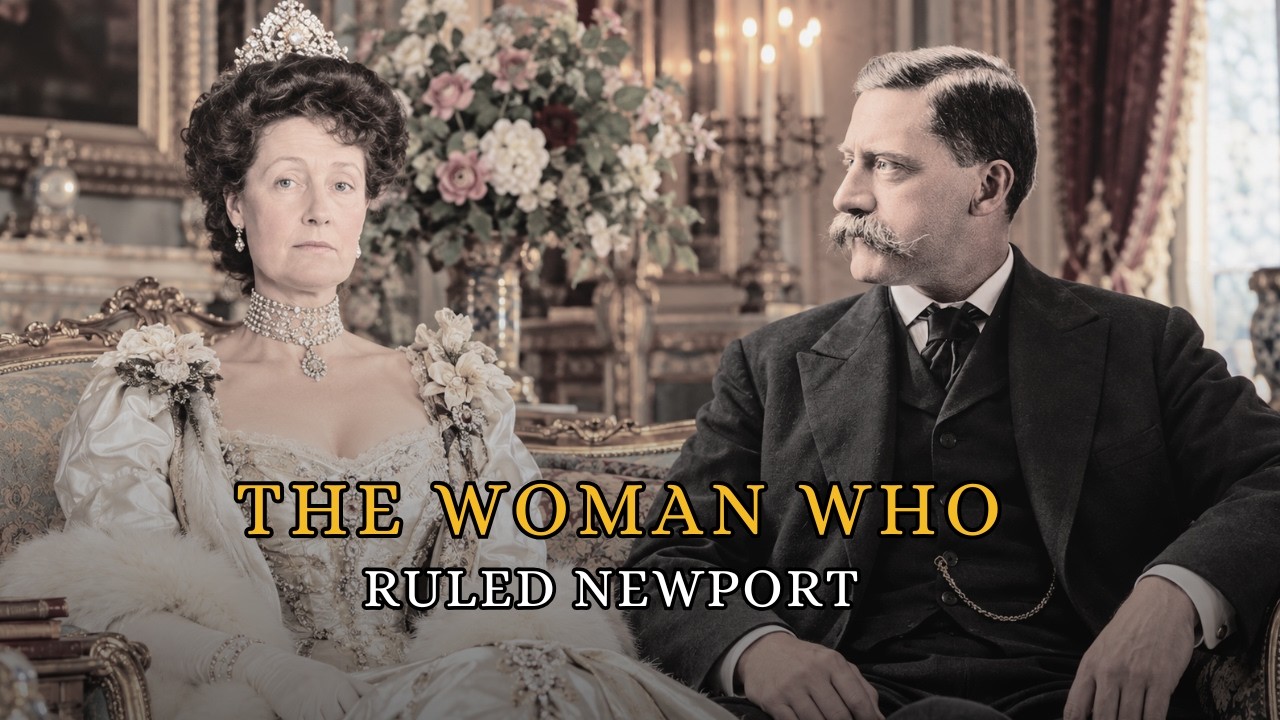
Marian “Mamie” Fish, the hostess, engaged the creature in polite, high-minded conversation, nodding enthusiastically at its wild gibberish as though it were delivering profound insights. The socialites around the table, terrified of breaking decorum or appearing foolish in front of their hostess, smiled politely, bowed toward the ape, and carried on their formal dinner as if nothing out of the ordinary were happening. To the suffocating, tradition-bound elite of Victorian high society, it was an act of social treason. To Mamie Fish, it was a brilliant, calculated declaration of war against an era of insufferable boredom.
To step into Newport, Rhode Island, during the final decades of the nineteenth century was to enter a fortress of unimaginable wealth, calcified snobbery, and oppressive social performance. Perched along the rugged Atlantic coastline, this quiet summer colony had been transformed by Manhattan’s industrial elite into a breathtaking showcase of gilded opulence, where robber barons, railroad magnates, and banking dynasties erected colossal marble palaces known modestly as summer cottages. Yet beneath the glittering surface of diamond tiaras, liveried servants, and pristine oceanfront lawns lay a social climate so suffocatingly rigid and monotonous that it stifled the very life out of its aristocratic residents. High society was governed by an unyielding set of Victorian rules, enforced by a self-appointed tribunal of guardians who viewed laughter as vulgar, spontaneity as a moral failure, and entertainment as a solemn four-hour endurance test designed to prove one’s genealogical purity.
Into this stifling citadel of elite conformity stepped Mamie Fish, a woman who possessed neither the desire to conform nor the patience to endure the lifeless pageantry of her peers. While other grand dames of Newport spent their summers obsessing over delicate pedigree charts and practicing solemn queenly postures, Mamie approached the grand stage of American high society with the mischievous, destructive instincts of a theatrical jester. She recognized with lethal clarity that the sprawling fortunes of the Gilded Age had produced an elite class that was profoundly, incurably bored, trapped inside magnificent marble mausoleums, terrified of social faux pas, and suffocating under the weight of their own unearned grandeur. Rather than bowing before the altar of Victorian decorum, Mamie resolved to shatter it entirely, unleashing an era of fast-paced, irreverent, and utterly chaotic spectacle that would permanently rewrite the rules of social power.
Where traditional hostesses demanded hushed reverence and endless, agonizing multicourse banquets, Mamie brought electric speed, biting satire, and an absolute refusal to take the Gilded Age seriously. When guests arrived at her oceanfront estate, they were thrust into a whirlwind of theatrical stunts, razor-sharp insults, and wildly unpredictable dinner parties where monkeys wore tuxedos, footmen danced on tables, and formal dinners were executed with the mechanical precision of a high-speed train schedule. Yet behind her reputation for chaotic hilarity sat a brilliant, calculating mind that understood the mechanics of social leverage better than any politician in Washington. In a society overflowing with sudden industrial fortunes, traditional exclusivity was a failing currency that could no longer keep the modern world at bay.
By transforming her ballroom into an unpredictable arena of spectacle and satire, she offered the bored elite something far more valuable than status: genuine, unfiltered exhilaration. Socialites who lived in terror of her sharp tongue scrambled desperately for invitations to her estate, willing to endure her legendary cutting insults just to be part of the vibrant, electric inner circle that was rapidly replacing the cold, dying dynasty of the old guard. To understand the magnitude of Mamie Fish’s social rebellion, one must first confront the formidable icy fortress of the old guard that ruled American high society throughout the late nineteenth century. At the absolute summit of this hierarchy sat Caroline Schermerhorn Astor, known universally across Manhattan and Newport simply as Mrs.
Astor. Guarded by her conservative social strategist Ward McAllister, Mrs. Astor operated an unyielding autocracy designed to insulate ancestral New York wealth from the aggressive, vulgar tidal wave of new industrial fortunes created by railroads, steel mills, and western silver mines. McAllister famously codified this exclusive circle as the Four Hundred, the exact number of individuals who could fit comfortably inside Mrs.
Astor’s grand Fifth Avenue ballroom, asserting that anyone outside this list was simply not a true gentleman or lady. Under Mrs. Astor’s stern matriarchal rule, high society was transformed into an exhausting, somber religion governed by endless, agonizing rituals. A summer afternoon in Newport under the old guard was a masterclass in psychological suppression and physical endurance.
Social calls required ladies to leave precisely calibrated numbers of engraved calling cards at specific doors during rigid hours, while formal dinners were dark four-hour endurance tests consisting of up to fourteen separate courses. Guests sat in stiff, silence-filled dining rooms served by liveried footmen, forced to engage in subdued, practiced conversation limited strictly to European genealogy, classical opera, and polite weather reports. Spontaneity was viewed as a dangerous moral flaw. Laughter was considered vulgar, and any display of genuine emotion was treated as an unpardonable social crime that resulted in immediate permanent exile from the ballroom.
Mrs. Astor’s Newport mansion, Beechwood, served as the supreme temple of this Victorian orthodoxy. Surrounded by manicured lawns and ocean cliffs, Beechwood hosted annual summer receptions that were as rehearsed and predictable as a royal coronation. Mrs.
Astor would stand beneath her own oil portrait, draped in dark velvet and wearing her famous blinding stomacher of diamonds, extending a white-gloved hand to guests who bowed in hushed reverence before proceeding through silent gilded corridors. To the younger generation of Astors and ambitious new-money families flooding into Newport at the turn of the century, Mrs. Astor’s realm felt less like an exclusive paradise and more like a gilded mausoleum. The industrial fortunes of the late Gilded Age had produced a class of individuals who possessed vast sums of wealth, unlimited leisure time, and an insatiable desire for excitement.
They found no joy in sitting through four-hour dinners listening to elderly gentlemen discuss railroad bond yields, nor did they wish to spend their summer afternoons practicing Victorian posture in silent drawing rooms. The grand, solemn machinery of the old guard was grinding to a halt, weighed down by its own insufferable boredom, waiting for someone bold enough to strike a match and burn the entire structure to the ground. Mamie Fish recognized that Mrs. Astor’s power rested entirely on an illusion of fear and reverence.
She saw that the Four Hundred were terrified of social ostracization only because they had allowed a single aging matriarch to dictate what was fashionable. Where others saw an imposing, unbreakable dynasty, Mamie saw a fragile, outdated facade held together by anxiety and bad conversation. She realized that if someone offered the younger elite an alternative, a world where parties were fast, funny, unpredictably chaotic, and completely free of Victorian moralizing, Mrs. Astor’s reign would evaporate overnight.
Mamie did not waste time writing angry manifestos or arguing with traditionalists. She simply began hosting her own parties, designing them as the direct satirical antithesis to everything Beechwood represented. Where Mrs. Astor demanded four hours for dinner, Mamie declared that no meal should ever exceed fifty minutes, ordering her footmen to clear plates the moment a guest stopped eating.
Where Mrs. Astor insisted on quiet, dignified chamber music, Mamie hired vibrant ragtime bands, cabaret singers, and theatrical performers to transform her dining rooms into wild, roaring nightspots. She openly mocked McAllister’s list of the Four Hundred, declaring that she would rather entertain a room full of interesting criminals than sit through another dinner with traditional gentlemen. To understand how Marian Anthon grew into the sharpest, most iconoclastic force in Gilded Age high society, one must look past the glittering ballrooms of Newport to her untraditional upbringing in Manhattan.
Born in 1853 to Sarah Arnold and William Henry Anthon, a prominent New York trial lawyer and Republican politician, Marian, known from childhood as Mamie, was raised in an environment that prioritized sharp intellectual debate over delicate Victorian passivity. Her father’s home was a constant gathering place for influential legal minds, journalists, and political strategists who debated the turbulent events of the American Civil War and Reconstruction around the dinner table. Growing up surrounded by quick-witted, articulate adults, young Mamie quickly absorbed the power of spoken language, mastering the art of sharp retort, incisive observation, and fearless opinion in a domestic culture that encouraged women to think critically rather than sit silently as decorative ornaments. Unlike her female peers who were funneled into strict finishing schools designed to mold them into submissive, soft-spoken hostesses for wealthy husbands, Mamie displayed a fierce, almost unruly independence of mind.
From a young age, she possessed an innate, razor-sharp sense of irony and a total intolerance for pretension, hypocrisy, or boring social formality. She observed the rigid posturing world of Manhattan’s elite with cool, detached cynicism, recognizing that much of high society’s elaborate etiquette was merely a theatrical performance designed to mask deep personal insecurity and intellectual vacuity. Rather than attempting to suppress her quick, acerbic tongue to fit the quiet, demure ideal of Victorian womanhood, Mamie polished her wit into a lethal weapon, discovering that a well-placed, devastating insult could dismantle the pomposity of any arrogant socialite far faster than any logical argument. In 1899, her social position was permanently cemented through her marriage to Stuyvesant Fish, a scion of one of New York’s oldest and most prestigious Knickerbocker families.
Stuyvesant was an imposing, quiet, and immensely wealthy figure who served as the powerful president of the Illinois Central Railroad, wielding vast corporate and financial influence across the nation. Where many Gilded Age marriages were icy business alliances characterized by separate lives and quiet resentment, the partnership between Mamie and Stuyvesant was built on mutual respect, deep affection, and a shared appreciation for her extraordinary personality. Stuyvesant was utterly enchanted by his wife’s chaotic energy, sharp intellect, and total disregard for traditional social decorum, granting her complete freedom and unlimited financial backing to run their household and social calendar exactly as she saw fit. Her husband’s vast railroad fortune provided Mamie with an astronomical financial engine.
But more importantly, his impeccable ancestral lineage granted her absolute social immunity. Because Stuyvesant Fish belonged to the absolute inner circle of traditional New York aristocracy, no self-appointed social guardian like Ward McAllister or Mrs. Astor could easily exclude or ruin Mamie without risking open warfare with one of the most powerful financial dynasties in the country. Possessing total financial security, unassailable social standing, and a husband who chuckled at her outrageous antics, Mamie found herself in a position of rare absolute freedom.
She was entirely insulated from the fear of social exile that kept other women subservient, allowing her to step onto the grand stage of Newport not as a tentative supplicant seeking approval, but as an unstoppable, independent force determined to remake society in her own image. As the twentieth century dawned over the craggy Atlantic cliffs of Rhode Island, Mamie Fish realized that dethroning the entrenched dynasty of Mrs. Astor required more than isolated skirmishes of wit. It demanded a coordinated, high-stakes alliance to shatter the monopoly of the old guard.
She forged an extraordinary coalition with two equally ambitious, fabulously wealthy socialites: Alva Vanderbilt Belmont and Tessie Oelrichs. Known across Manhattan and Newport as the Triumvirate, these three women formed an unstoppable social cabal that systematically dismantled the icy traditions of the nineteenth century, effectively seizing control of American high society and dividing its kingdom among themselves. Each brought a distinct lethal weapon to the alliance. Alva possessed ruthless architectural grandeur and political ambition.
Tessie commanded staggering silver-mine wealth and organizational drive. And Mamie supplied the razor-sharp wit, irreverent humor, and chaotic energy that made their inner circle the absolute epicenter of fashion. Together, the three hostesses launched a total war against the agonizing, slow-paced boredom that had defined Mrs. Astor’s reign at Beechwood.
They recognized that the younger generation of wealthy Americans was exhausted by silent four-hour formal dinners and solemn Victorian posture. The Triumvirate offered an intoxicating, fast-paced alternative, transforming Newport from a sleepy conservative summer retreat into a glittering, high-octane playground of spectacular entertainment. If Alva’s palace, Marble House, was designed to awe guests with towering stone columns and royal splendor, and Tessie’s estate, Rosecliff, was built to host romantic fairy-tale dinners with artificial clouds floating across grand ceilings, Mamie’s home was the electric, unpredictable heart of the operation, where guests went to laugh, drink, and experience the thrill of the unexpected. The genius of the Triumvirate lay in their complete, calculated division of social labor.
They coordinated their summer calendars with military precision, ensuring that their grand parties never overlapped, effectively forcing every prominent socialite, industrialist, and visiting European aristocrat to cycle continuously through their three ballrooms. An invitation from any member of the Triumvirate became the ultimate gold standard of modern social status, while a rejection meant total exclusion from the vibrant, exciting new world they had created. Mrs. Astor, aging, increasingly fragile, and firmly anchored to her outdated nineteenth-century ideals, watched in helpless dismay as the center of gravity in Newport shifted permanently away from Beechwood toward the brilliant, loud, and revolutionary court managed by Mamie and her allies.
Mamie played her role within this powerful triad with exquisite mastery, positioning herself as the fearless jester who could speak forbidden truths that others only dared to whisper. While Alva and Tessie maintained a degree of aristocratic posturing, Mamie openly mocked the very concept of social superiority, routinely teasing her guests, insulting their vanity, and lampooning their desperate struggles for prestige. This irreverence, far from alienating the elite, made her infinitely more irresistible. Industrialists who commanded massive corporate empires and socialites who spent millions on French couture lined up at her door, eager to be roasted by the sharpest tongue in Manhattan.
To fully stage her revolution against Victorian slowness, Mamie Fish required an architectural sanctuary engineered specifically around her personal philosophy of rapid, high-intensity entertaining. In 1897, she and Stuyvesant commissioned the renowned architectural firm McKim, Mead & White to construct Crossways, a majestic Colonial Revival mansion set atop an elevated parcel of land along Newport’s Bellevue Avenue. Unlike the dark, cavernous Gothic piles or suffocating French châteaux built by her peers, Crossways was deliberately designed to feel luminous, open, and dynamic. Featuring towering white Georgian columns, broad airy porches, and massive windows that swept in the cool ocean breezes, the residence rejected the heavy velvet draperies and dim, gloomy decorum of the old guard in favor of bright, sunlit rooms designed for seamless movement, high-speed socializing, and exuberant theatricality.
The interior layout of Crossways was an operational masterpiece of social engineering, meticulously structured to eliminate the physical and emotional friction of traditional Gilded Age dinner parties. The grand ballroom, decorated in soft ivory, gold, and pale green, featured polished hardwood floors engineered for fast-paced dancing and flexible table arrangements rather than rigid, immovable formal dining setups. Mamie recognized that long walks between reception rooms killed conversational momentum, so she insisted on open, flowing floor plans where guests could drift effortlessly from cocktail receptions to dinner tables and then onto broad terraces overlooking sweeping manicured lawns. Every square foot of Crossways was optimized to keep energy levels high, guest movement fluid, and the atmosphere charged with anticipation, establishing a completely new standard for modern American resort architecture.
At Crossways, Mamie instituted her legendary operational protocols that revolutionized formal entertaining and sent shock waves through the conservative elite. Primary among these was her absolute, non-negotiable fifty-minute limit on formal dinners. While Mrs. Astor’s traditional fourteen-course feasts dragged on for four exhausting hours in heavy silence, Mamie streamlined her menus into four or five exquisite, beautifully presented courses served in rapid succession.
She placed strict timers in her pantries and ordered her liveried footmen to clear plates the exact second a guest paused, indifferent to whether they had finished eating. If a guest arrived late, they were not quietly slipped into the dining room with an apology. Instead, they were forced to join whichever course was currently on the table, instantly transforming punctuality into an essential survival skill for Newport society. This high-speed dining style was accompanied by an equally radical transformation in table conversation and social etiquette.
Mamie banished long, tedious political speeches and heavy family histories from her dining room, replacing them with fast, razor-sharp banter, impromptu toasts, and lively debates. She famously kept a mental clock ticking during every meal. The moment fifty minutes elapsed, regardless of whether coffee had been served or a lord was mid-sentence, Mamie would stand up, signal the musicians, and lead her guests directly into the ballroom or out onto the illuminated lawns for music and dancing. This breathtaking velocity prevented the intellectual stasis that plagued traditional gatherings, leaving her guests feeling energized, intoxicated, and constantly wanting more rather than exhausted and eager to escape.
With Crossways established as the unchallenged temple of high-speed entertainment, Mamie Fish turned her ferocious creative energy toward inventing a brand of theatrical spectacle that Newport had never before witnessed. She recognized that her ultra-wealthy peers, despite their immense fortunes and glittering diamonds, were trapped inside a gilded cage of absurd self-importance. To shatter their pomposity, Mamie began hosting a series of outrageous, surrealist theme parties that functioned as brilliant subconscious parodies of the very class to which she belonged. Rather than presenting subtle satire, she leaned directly into the absurd, staging lavish galas that forced the most powerful industrialists and socialites in America to participate in ridiculous, hilarious stunts, effectively turning the grandest ballrooms of Newport into a raucous high-society circus.
The most notorious of these spectacles occurred during the summer of 1902, when Mamie issued formal engraved invitations announcing a grand dinner party held in honor of a visiting European nobleman identified as Prince Del Drago. Newport’s socialites, desperate to ingratiate themselves with foreign royalty and eager to assert their global status, spent weeks purchasing exquisite French gowns, hiring tailors, and practicing their aristocratic bows. On the evening of the event, guests gathered in the grand dining room at Crossways, awaiting the grand entry of the distinguished guest. The mahogany doors swung open with great ceremony, and a liveried footman formally announced the prince, who was revealed to be a fully dressed chimpanzee.
Not content with a single triumph of absurdism, Mamie continued to push the boundaries of social satire with equal brilliance and audacity. On another occasion, she hosted the legendary dogs’ dinner party, where thirty of Newport’s most pampered pedigreed canines were invited alongside their wealthy owners. The dogs were seated in velvet-upholstered chairs around a low-slung banquet table and served a three-course meal consisting of stewed chicken, bone marrow, and sweet biscuits, all served on delicate gold-rimmed porcelain plates by footmen wearing white gloves. While the dogs barked, fought over bones, and knocked over crystal glassware, their owners sat quietly along the perimeter of the room, dressed in full evening attire, watching the surreal spectacle unfold under Mamie’s delighted, triumphant gaze.
These absurdist balls were far more than mere eccentric pranks played by a bored millionaire. They were masterclasses in psychological power and social critique. By forcing her wealthy contemporaries to participate in such absurd rituals, Mamie was laying bare the total meaninglessness of their competitive social posturing. While conservative critics in New York newspapers denounced her parties as decadent, wasteful, and insane, the elite class fought even harder for invitations to her next event.
If her grand absurdist galas served as the visual theater of her social conquest, Mamie Fish’s legendary unvarnished wit was the lethal weapon that maintained her absolute dominance over American high society. In a world where aristocratic women were expected to communicate exclusively in soft, agreeable platitudes and polite, scripted compliments, Mamie operated with a total, ruthless lack of verbal filter. She possessed an uncanny ability to instantly identify a person’s deepest insecurities, vain pretensions, or social desperation, delivering sharp, razor-edged observations that left victims stunned into silent submission. Her verbal assault on the pomposity of her class spared no one, regardless of their wealth, social title, or political influence.
When an arrogant, newly rich socialite arrived at Crossways and began boasting at length about the astronomical cost of her new European diamond necklace, Mamie examined the jewels with cool detachment before remarking dryly to the surrounding room that she had seen far better stones worn by common barmaids in Manhattan. On another famous occasion, when welcoming a crowd of prominent guests into her ballroom who had spent hours primping in front of mirrors, Mamie greeted them at the door with a loud, theatrical sigh, announcing to her footmen that she was utterly exhausted by the sight of so many old, familiar faces and desperately wished someone interesting would cross her threshold. What made Mamie’s insults so uniquely effective was that they were never delivered with petty malice or quiet, cowardly gossip, but with open, hilarious triumph directly to her victim’s face. When greeting guests at her grand receptions, she routinely announced their arrival with cheerful, shocking declarations, famously shouting across crowded drawing rooms that she was delighted someone had finally invited them because nobody else could stand their company.
When a notoriously dull, elderly gentleman approached her at a dinner party to complain that he was feeling terribly unwell and feared he was dying, Mamie patted his arm warmly and suggested that he die as quickly and quietly as possible so as not to ruin the evening’s dancing. Beyond her individual quips, Mamie developed a comprehensive social philosophy that actively weaponized blunt honesty against the hypocrisies of the upper class. She openly mocked the desperate, sycophantic pursuit of European titles that consumed wealthy American mothers, famously declaring that American heiresses who bought broke European dukes were simply purchasing expensive, useless pets that required constant feeding. When asked by reporters why she refused to host traditional charitable events or support solemn moral causes like her contemporaries, Mamie replied with typical brutal transparency that she entertained solely to amuse herself, finding the performative piety of society philanthropists far more dishonest than her own pursuit of pleasure.
While Mamie Fish reigned supreme over the glittering ballrooms of Newport, the massive financial engine that sustained her empire was suddenly dragged into a brutal, destructive corporate war that threatened to ruin her family. By the early 1900s, her husband, Stuyvesant Fish, found himself locked in a ruthless, high-stakes battle for control of the Illinois Central Railroad against Edward H. Harriman, one of the most aggressive, predatory railroad tycoons in American history. Harriman, backed by the colossal financial power of Union Pacific and Wall Street banking dynasties, launched a systematic, covert campaign to wrest control of the railroad away from Stuyvesant, viewing the conservative, principled executive as an obstacle to his dream of a national railroad monopoly.
The conflict quickly escalated beyond boardrooms and stock exchanges, spilling out into public courtrooms, hostile proxy fights, and vicious newspaper smear campaigns that shook the American financial establishment. The corporate war reached a devastating climax in 1906 when Harriman successfully orchestrated a boardroom coup, ousting Stuyvesant Fish from the presidency of the Illinois Central after decades of dedicated service. The betrayal was deeply personal and financially devastating, cutting the Fish family off from their primary source of executive power and threatening to destabilize their standing in high society. Wall Street analysts and social commentators eagerly watched the scandal unfold, expecting the proud aristocratic Fish family to retreat from the public eye in embarrassment, nursing their wounds in quiet seclusion.
Rival hostesses who had long envied Mamie’s supreme dominance over Newport whispered that her era of reckless extravagance, sharp insults, and absurd spectacles was finally coming to an end. Those who anticipated a quiet retreat failed to comprehend the fierce, invincible spirit of Marian Fish. Recognizing that social standing in the Gilded Age was entirely a game of perception, Mamie refused to show a single crack in her armor or allow the corporate betrayal to dim her public brilliance. Rather than retreating into the shadows, she doubled down on her social presence, transforming her ballrooms at Crossways and her Manhattan townhouse into public fortresses of unshakable confidence.
While financial reporters wrote gloomy columns detailing her husband’s corporate setback, Mamie threw open her mahogany doors, hosting the most lavish, loud, and defiant parties of her career, projecting an aura of total financial immunity that completely neutralized her husband’s public defeat. During the height of the crisis, she used her razor-sharp wit as a public shield, openly mocking Harriman and his Wall Street allies in front of journalists and high society guests. While Harriman won control of the steel rails, Mamie retained total ownership of the cultural landscape. As the first decade of the twentieth century drew to a close, the glittering, untouchable world of Gilded Age Newport began to experience a profound, irreversible shift.
The icy matriarch who had once defined American high society, Caroline Schermerhorn Astor, passed away quietly in 1908, her health having steadily declined alongside her influence. Her death signaled far more than the passing of a single prominent socialite. It marked the definitive end of the nineteenth-century social order that had held Victorian decorum as a sacred, unyielding law. Outside the gilded gates of Bellevue Avenue, the Progressive Era was unleashing a tidal wave of political, social, and economic reforms that directly challenged the unchecked power of industrial dynasties.
Journalists, reformers, and labor leaders exposed the dark, exploitative realities behind robber baron fortunes, turning public opinion sharply against the extravagant, ostentatious displays of wealth that had defined Newport for decades. The federal government, eager to curb corporate monopolies and address staggering income inequality, instituted the Sixteenth Amendment in 1913, establishing a permanent federal income tax that permanently altered the financial calculus of America’s elite. Suddenly, building marble palaces that sat empty for ten months of the year and throwing hundred-thousand-dollar dinner parties for pampered lap dogs were no longer viewed as glamorous eccentricities, but as dangerous, vulgar provocations during an era of labor unrest. Mamie Fish, possessing her typical sharp intuition and unvarnished realism, sensed the shifting political winds far earlier than her contemporaries.
She watched as the younger generation of wealthy Americans abandoned the insular, competitive social games of Newport in favor of European travel, sports cars, jazz clubs, and modern pop culture. The rigid, highly organized social machinery that she had worked so hard to subvert was losing its cultural relevance entirely. While Alva Vanderbilt pivoted her immense fortune and social leverage toward the militant fight for women’s suffrage, and Tessie Oelrichs clung desperately to the grand traditions of Rosecliff, Mamie observed the decline of her era with a characteristic mixture of sharp amusement and quiet detachment. On May 25, 1915, Marian Mamie Fish passed away at her country home, Glen Cliffe, in Garrison, New York, following a brief battle with cerebral hemorrhage.
Her death sent a profound shockwave through the national consciousness, officially closing the final brilliant chapter of Gilded Age high society. Obituaries across the country celebrated her not merely as a wealthy socialite or the wife of a railroad magnate, but as an extraordinary, irrepressible force of nature who had single-handedly liberated American society from the suffocating Victorian tyranny of Mrs. Astor. She was buried in the quiet historic churchyard of St.
Philip’s Church in the Highlands, surrounded by the quiet hills of the Hudson Valley, a peaceful, unpretentious resting place far removed from the grand, competitive marble mausoleums of Newport. The world Mamie left behind was transforming at a staggering, relentless pace that soon rendered the extravagant excesses of Bellevue Avenue entirely obsolete. As the brutal slaughter of World War I consumed Europe and the United States mobilized its industrial capacity for total conflict, the grand summer palaces of Newport were quietly shuttered, their liveried footmen drafted into military service and their vast gardens neglected. In the decades that followed, high inheritance taxes, federal income levies, and the catastrophic economic crash of 1929 dismantled the staggering personal fortunes that had fueled the Gilded Age.
Crossways, the luminous palace of speed where Mamie staged her grandest, most absurdist triumphs, was eventually subdivided, sold, and converted into private apartments, a quiet domestic fate for a home that had once been the electric beating heart of American nightlife. Yet despite the physical decay of the marble cottages and the total collapse of the Four Hundred, the cultural legacy of Mamie Fish endures as a masterclass in social disruption, intellectual independence, and subversion. Long before modern satirists and media strategists understood the power of absurdist humor to expose institutional hypocrisy, Mamie recognized that the surest way to conquer a world built on snobbery, fear, and artificial grandeur was to turn its most sacred rituals into an irresistible, hilarious circus.
She took an elite class that was suffocating under the weight of its own self-importance and forced it to laugh at its own absurdities, proving that true power belongs not to those who build the highest walls, but to those who possess the courage and quick intelligence to dance upon them.
