On paper, it was a royal fairy tale. On the morning of July 29th, 1981, a global television audience of roughly 750 million people watched as Lady Diana Spencer, just 20 years old, married Charles, Prince of Wales, at St. Paul’s Cathedral. The ceremony was a pinnacle of royal pageantry, a real-life fairy tale designed to capture the world’s imagination.
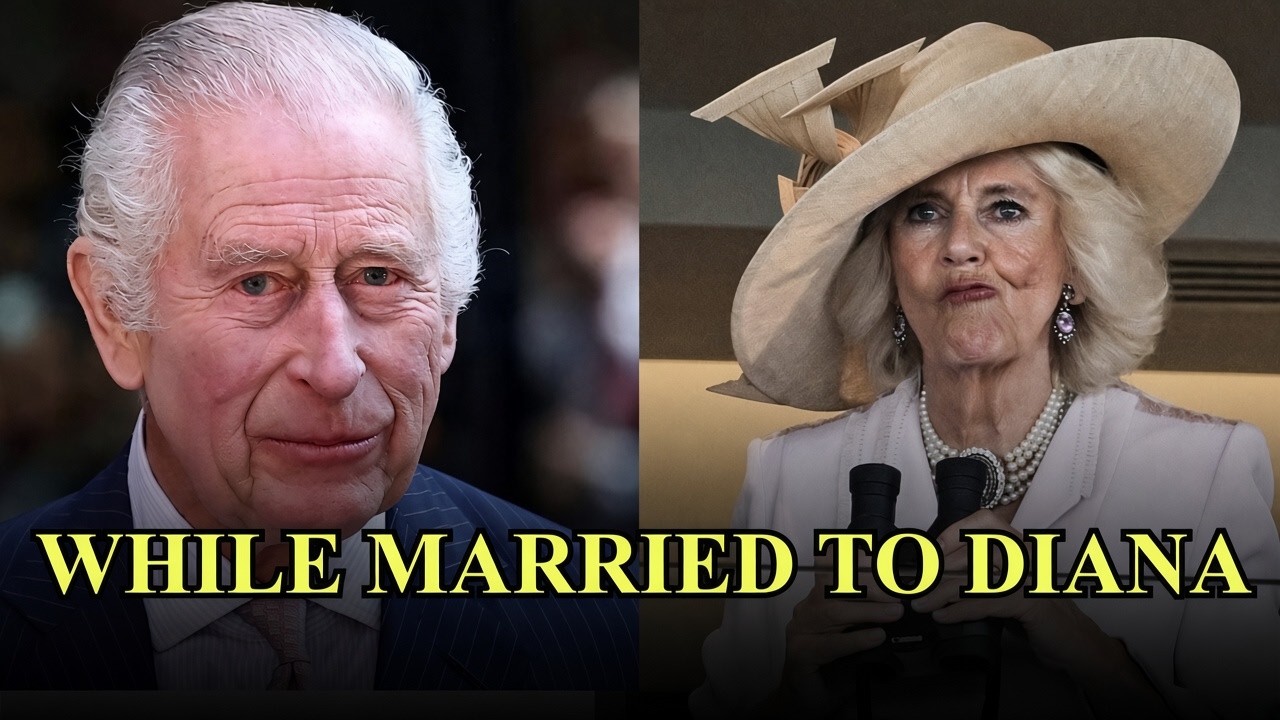
The palace projected an image of a perfect union, a necessary step in securing the future of the monarchy. Yet from the very beginning, this portrait clashed with private reality. Charles, at 32, was a man of settled habits, while Diana was plunged into the rigid protocols of royal life with little preparation. The intense scrutiny magnified every strain.
But long before those vows were made, there was another woman in Charles’s life. Camilla Shand, later Camilla Parker Bowles, was a figure from his past who never truly left his present. They had met at a polo match in 1971, a connection forged over a shared sense of humor and a love for the countryside. By many accounts, theirs was an immediate and deep rapport.
Yet the relationship faced early obstacles. The young Prince of Wales embarked on his naval service, and Camilla, reportedly sensing the royal family’s disapproval, married cavalry officer Andrew Parker Bowles in 1973. This marriage, however, did not sever the bond. Charles and Camilla remained in the same social circles, their friendship a constant.
When Prince Charles began his search for a suitable bride in the early 1980s, Camilla was already a wife and a mother. Yet she remained a trusted confidant. As the courtship with Lady Diana Spencer progressed, this enduring friendship from his bachelor days cast a subtle, complicating shadow over the new romance. For Diana Spencer, the fairy tale quickly encountered a cold reality.
Her new life was one of intense scrutiny, yet profound isolation. She was living inside a system that had long accepted Camilla Parker Bowles as a fixed part of Prince Charles’s private world. Diana’s own suspicions began to form early, a quiet dread growing amid the public spectacle. The distress came from the silence, from the feeling that she was the outsider in her own marriage.
Her awareness sharpened through small, painful details: a glance, a phone call, a familiar intimacy in his voice. While the public saw a princess, Diana felt like an impostor in a story that had been written long before she arrived. A poignant description of this pressure came from Diana herself. She famously called it a crowded marriage, telling the BBC in 1995, “There were three of us in this marriage, so it was a bit crowded.
” That single devastating quote crystallized her lived reality. It was an official confirmation of the open secret that had tormented her for years. The third person was, of course, Camilla Parker Bowles. Diana felt she was competing with a ghost from her husband’s past, a rival who held an emotional claim the palace and the public could not or would not challenge.
While Prince Charles and Princess Diana fulfilled hundreds of official engagements as a couple, their personal relationship was fracturing irreparably behind palace doors. They stood together for national ceremonies and undertook grueling overseas tours, presenting a united front as future monarch and queen. But the return to their private apartments revealed a starkly different reality. Diana often spoke of the crushing loneliness within the marriage, a feeling of being trapped in an institution that seemed indifferent to her emotional distress.
Charles, bound by duty and tradition, continued his own pattern of life, one that reportedly included his long-term connection to Camilla Parker Bowles. Every joint appearance became an act of performance. Each photograph was analyzed for the slightest hint of distance or coldness. In the silence of her private quarters, Diana began to make her own record.
She secretly taped a series of confessions, a raw and private audio diary detailing the profound unhappiness of her marriage and her growing suspicions. These recordings, made roughly between 1992 and 1993, were not for public consumption but for a biographer, a desperate attempt to tell her side of a story she felt was being controlled by the palace. In them, she spoke of her isolation, her struggles with bulimia, and her despair over a third party in her marriage. When excerpts were eventually broadcast, they scandalized the nation, not just for their content, but for their method.
This was the Princess of Wales herself in her own voice, meticulously documenting a profound and lonely betrayal. While the Wales marriage crumbled, the public narrative was about to receive a shocking reciprocal twist. In late 1992, a different set of clandestine recordings exploded into the headlines: the so-called Squidgygate tapes. These were intimate and illegally recorded telephone conversations between Diana and a close male friend.
The content was devastatingly personal, revealing a princess equally starved for affection and companionship, engaging in her own emotional straying. The tapes provided a raw, unvarnished counterpoint to the Camilla narrative, laying bare the profound loneliness and mutual betrayal at the heart of the royal union. Diana’s own voice, pleading for love and using affectionate nicknames, made her plight heartbreakingly human. She was no longer just a wronged wife, but a complex young woman trapped in a deeply dysfunctional arrangement.
The private grief was now overshadowed by a very public scandal. In 1992, the British press obtained and published the transcript of a phone call recorded in 1989, a private conversation between Charles and Camilla. The tabloids dubbed it Camillagate. The content was intimate, painfully so, laying bare a relationship that was far more than a friendship.
Charles famously told Camilla he wished to live inside her trousers. The conversation was laced with longing and a starkly unroyal vulnerability. The call proved the core allegation. The conversation’s timing was critical: it was recorded in December 1989, while Charles was very much married to Diana, and while their two young sons, William and Harry, were small children.
The tape transformed a persistent rumor into a confirmed audible reality for millions. Public sympathy swung overwhelmingly toward Princess Diana, who was now seen incontrovertibly as the wronged wife. It cemented a global narrative of Charles as an unfaithful husband and Camilla as the other woman. While the world watched, the formal separation of the Prince and Princess of Wales was announced in December of 1992.
This was not a divorce, but a legal agreement to live apart. They remained married, a technicality that did little to mask the profound rupture. The separation agreement covered future living arrangements and the ongoing care of their two young sons. This period saw Diana living at Kensington Palace and Charles primarily at Highgrove House, their geographic distance a physical echo of their emotional chasm.
The move did not stop the intense media scrutiny. If anything, it intensified it. Diana, now stripped of the official title Her Royal Highness, was not retreating. In November of 1995, she took control of her own story in a seismic television interview for the BBC’s Panorama, speaking directly to millions.
She presented her side of the marriage’s collapse with devastating clarity. She spoke of her struggles with bulimia and depression, and she addressed the central painful truth of her rival directly. When asked about Camilla Parker Bowles, Diana famously stated, “There were three of us in this marriage, so it was a bit crowded. ” It was a breathtaking public confirmation of the affair that the palace had long downplayed.
Prince William would later reflect that the deceitful way the interview was obtained substantially influenced what his mother said. Within weeks, Queen Elizabeth II, after consulting with both Charles and Diana, formally wrote to the couple, urging them to divorce. In December of that year, after consultations with the Archbishop of Canterbury and the Prime Minister, Queen Elizabeth II formally wrote to both Charles and Diana, instructing them to divorce. Her decree was a stark, unprecedented intervention, a move to contain the damage and protect the crown.
The legal process then began, navigating complex issues of title, finances, and custody. It would take nearly a full year. The divorce was finally granted and made absolute on the 28th of August 1996, formally ending a royal fairy tale that had long since shattered. But for Diana, the divorce was a liberation.
Stripped of the title Her Royal Highness, she was now simply Diana, Princess of Wales, forging a path entirely her own. She moved out of Kensington Palace, her marital home, and into apartments within the same complex. She threw herself into her humanitarian work with a renewed, formidable focus, traveling the world as a global icon. Her campaigns against landmines, particularly her visceral walk through a live minefield in Angola in 1997, brought unprecedented attention to the cause.
She visited hospices, holding the hands of AIDS patients, using her unique brand of compassion to challenge stigma and fear. Yet this global fame existed alongside a profound personal loneliness. Her two young sons remained largely in the care of their father and the royal household during the school term. She spoke of wanting a peaceful life and of finding a true partner.
On the night of August 31st, 1997, a black Mercedes sedan carrying Diana, Princess of Wales, entered the Pont de l’Alma tunnel in Paris shortly after midnight. The car was being pursued by photographers on motorcycles. At roughly half past midnight, the driver lost control. The vehicle struck a concrete pillar in the tunnel and then spun to a brutal stop.
Initial news reports, fragmented and chaotic, began to trickle out from Paris. The world learned that Dodi Fayed and the driver, Henri Paul, were pronounced dead at the scene. Diana was extracted from the wreckage alive but with severe injuries. Rushed to the Pitié-Salpêtrière Hospital, she received hours of emergency surgery for internal bleeding.
The early bulletins held a fragile hope. But just after 4 in the morning Paris time, that hope collapsed. Official word came from the hospital. Despite the efforts of the surgical team, Diana, Princess of Wales, was dead.
In London, it was before dawn. Prince Charles, the estranged husband, was informed. He would soon make the grim journey to Paris to accompany her body home. In London, outside the gates of Kensington Palace, the sea of flowers grew deeper each hour.
Similar scenes unfolded spontaneously across the globe. Millions who felt they knew her were united in a profound, disbelieving sorrow. Roughly a million people would eventually line the route of her funeral procession in London. Within the private confines of the royal household, a protocol was already snapping into place.
The news reached Prince Charles at Balmoral, the Scottish estate where he was staying with his sons, William and Harry. He would need to travel to Paris to bring Diana’s body back to Britain. Arrangements were made with the British embassy in Paris and the French authorities. Charles was to be accompanied by Diana’s two sisters, Lady Sarah McCorquodale and Lady Jane Fellowes, who would formally identify their sister’s body.
The Royal Air Force BAe 146 jet landed at RAF Northolt just before 6:00 in the evening on that Sunday. The coffin, draped in the Royal Standard, was carried from the aircraft by a bearer party of the Queen’s Colour Squadron. Charles walked slowly behind, his head bowed. On the tarmac, he was met by a solemn delegation that included the Prime Minister, Tony Blair, and the Archbishop of Canterbury.
But the man accompanying the coffin held another title: Diana’s brother. Earl Charles Spencer was not just a mourner. He was the head of her family, and he had taken firm control of the final arrangements. The Spencer family had decided Diana would not be laid to rest among the royals in the Windsor vault.
Instead, she would be brought home. Her final journey would end at the Spencer ancestral estate, Althorp, a place spanning 13,000 acres in the Northamptonshire countryside. The family planned a burial that was, in their words, a deeply private affair. The chosen site was a secluded island within a lake on the grounds, a place called the Round Oval.
This would be her sanctuary, far from the cameras. Within this private family sphere, a separate, more personal storm was brewing. In his memoir, Diana’s brother, Earl Spencer, would claim that in the aftermath of her death, then Prince Charles told him the public would soon forget Diana. Buckingham Palace has firmly denied King Charles ever made such a comment, specifically rejecting a version phrased as, “Norfolk’s princess would soon be forgotten.
” This contested claim highlights the deep lingering fractures. For the Spencers, guarding her final resting place on that secluded island at Althorp wasn’t just about privacy. It felt perhaps like a final act of protection from those they believed never truly valued her. The funeral for Diana, Princess of Wales, was set for September 6th, 1997 at Westminster Abbey in London.
The procession began at Kensington Palace on the morning of September 6th. Her coffin, draped in the Royal Standard, was placed on a gun carriage drawn by horses of the King’s Troop. It was a short journey to Westminster Abbey, less than two miles, but it moved through a city utterly transformed. The streets were lined, ten deep in places, with people who had come in their hundreds of thousands.
Yet the crowds were almost completely silent, a profound and heavy quiet broken only by the slow clip of hooves and the rumble of the carriage wheels. The sons, Prince William and Prince Harry, walked behind their mother’s coffin, two young boys in suits, their heads bowed. The funeral service at Westminster Abbey began precisely at 11:00 on the morning of September 6th, 1997. Inside the historic Gothic church, a congregation of 2,000 gathered.
They included members of the British royal family led by Queen Elizabeth II and dignitaries from across the globe representing nearly 100 nations. Outside, an estimated 2 million people lined the procession route through London, while a television audience of over two and a half billion watched worldwide. The abbey was filled with the scent of white lilies, Diana’s favorite flower. Elton John performed a reworked version of “Candle in the Wind.
”
As Diana’s coffin rested in the abbey, her younger brother, Charles Spencer, the ninth Earl Spencer, rose to deliver the eulogy. He celebrated Diana as “the very essence of compassion, of duty, of style, of beauty. ” He honored her as a source of strength who proved that she needed no royal title to continue to generate her particular brand of magic. Then his tone shifted.
He made a pointed vow to her sons: “that we, your blood family, will do all we can to continue the imaginative and loving way in which you were steering these two exceptional young men, so that their souls are not simply immersed by duty and tradition, but can sing openly as you had planned. ”
After the historic service, Diana’s coffin was placed back onto the gun carriage, and the procession left the abbey for the long drive to Northamptonshire. The coffin arrived at Althorp on the evening of September 6th. The burial itself, held the following day, was a deeply private affair.
The family released no details about the ceremony. Diana was interred on a small island within a lake on the grounds known as the Round Oval. This secluded spot, away from public view, became her permanent sanctuary. The island grave is physically separate, surrounded by water, a literal and figurative moat protecting her from the world that had chased her in life.
It is a place of silence and reflection, accessible only by a small footbridge. The Althorp Estate is a place of immense scale and deep history. It encompasses roughly 13,000 acres of Northamptonshire countryside. For centuries, this land has been the home of the Spencer family, a dynasty with a lineage that stretches back over 500 years.
The house itself, a grand Grade I listed manor, has stood since the 16th century, filled with a world-renowned collection of art and furniture. This was the backdrop of Diana’s childhood. The estate’s sheer size offered a natural privacy, a buffer from the outside world. This vast domain, managed today by her brother Earl Spencer, ensures her grave remains protected within the enduring embrace of Spencer history.
As the funeral motorcade departed Kensington Palace, a nation saw a grieving prince and his two young sons. Prince Charles, now a single father to William, 15, and Harry, 12, faced the impossible task of guiding his boys through a very public loss. William would soon return to the relative sanctuary of Eton College, where he lived in a private manor house, a world away from the flashing cameras. At Eton, Prince William carried a burden no other student shared, crystallized in a brutal two-word nickname whispered in the corridors.
While the exact epithet remains private, its reported existence speaks volumes. His home at Eton, a secluded manor house known as Manor House, was deliberately kept as a sanctuary from the press. Yet even within that refuge, the weight of his name followed him. While the king carried the weight of a fractured history, the woman at the center of the story retreated.
Camilla Parker Bowles maintained an extremely low profile in the aftermath of Diana’s death. There were no statements, no appearances, and no attempts to defend herself. Her silence was absolute. This period cemented her role as the hidden figure, the third person in a marriage that had played out so devastatingly in public.
But the story of Camilla Parker Bowles did not end there. A long and deliberate campaign of rehabilitation was quietly underway. For years after Diana’s death, Camilla remained largely out of view. Her public appearances with Charles were rare and carefully choreographed.
The strategy was one of gradual, softened exposure. Roughly two years after the funeral, in the summer of 1999, Charles and Camilla stepped into a new uncharted phase of their long relationship. At the Ritz Hotel in London, they made their first official public appearance together as a couple. The event was a birthday party for Camilla’s sister.
Photographers were waiting. This was not an accident. It was a carefully staged introduction to the world. For the first time, Charles and Camilla presented a united front, walking side by side, acknowledging the cameras.
The relationship between Prince Charles and Camilla Parker Bowles had long been a source of profound personal and institutional discomfort for the monarchy. For years, the Queen reportedly viewed Camilla as an unsuitable and unwelcome figure. Yet over time, a gradual pragmatic shift occurred. The turning point was a deliberate orchestrated gesture.
In 2000, following a private family lunch at Highgrove, the Queen was photographed alongside Camilla for the first time in public. This was not an accident. It was a signal. It conveyed a reluctant royal blessing.
Finally, on April 9th, 2005, Charles and Camilla were married in a civil ceremony at Windsor Guildhall. It was a subdued event, a stark contrast to the grand spectacle of his first wedding. There were no crowds lining the streets, no global television audience of hundreds of millions. Only a small number of guests attended, including the couple’s children.
Camilla wore a simple pale blue outfit and a hat, not a wedding gown. The ceremony lasted roughly 20 minutes. Immediately afterward, a service of prayer and dedication was held at St. George’s Chapel, Windsor Castle, where the Queen and the Duke of Edinburgh were present.
Following the wedding, Camilla would not be known as Princess of Wales. That title remained indelibly linked to Diana. Instead, she would use one of Charles’s subsidiary titles, becoming the Duchess of Cornwall. This was a deliberate and carefully negotiated decision aimed at sparing public feeling and avoiding direct comparison.
On September the 8th, 2022, Charles Philip Arthur George Windsor became King Charles III. The central unspoken figure in the room was the woman now standing beside him, his wife of over 17 years, Camilla. Upon Charles’s accession, she was to be styled as queen consort. It was a title the palace had once indicated she would never use.
And so on the 6th of May 2023 in Westminster Abbey, Camilla Parker Bowles was crowned queen consort beside King Charles III. It was the ultimate normalization of her position, a transformation from the most controversial figure in the royal story into a crowned queen. The coronation, steeped in ancient ritual, formalized a relationship that had endured for decades in the shadows of the palace and the headlines of the tabloids. The journey from mistress to monarch was complete.
But the grand narrative of a single unbroken 34-year affair is a simplification. The timeline is messier, punctuated by separations, public duties, and the undeniable reality of two marriages. While the emotional bond between Charles and Camilla remained a constant thread for decades, claiming he slept with her through every night of his marriage to Diana is a dramatic assertion nearly impossible to verify. Their physical relationship, by multiple accounts, was interrupted by Charles’s naval service, Camilla’s first marriage, and the intense scrutiny that followed his engagement.
The affair, as described in biographies, was not a seamless continuum, but a series of reconnections and clandestine meetings. The most infamous piece of evidence is the Camillagate tape: a recorded 1989 phone call between Charles and Camilla. Its intimate and to many shocking content seemed to provide irrefutable proof of an ongoing affair roughly six years into his marriage. Yet a single tape, while damning, is just that: a single moment.
It proves a point of connection, but not necessarily an unbroken 34-year continuum of physical intimacy. Other claims come from biographies, from friends and staff speaking anonymously. But these are often secondhand accounts, memories filtered through time and loyalty. The testimony of the principals themselves in any official capacity is virtually non-existent for that entire period.
This creates a historical gray area. We have the stark, vulgar poetry of the tape, and we have a mountain of reports, rumors, and reconstructions that fill in the years around it. The awareness of senior courtiers and family members remains one of the affair’s most closely guarded aspects. It is difficult to believe that senior aides whose job was to manage the prince’s life and image were entirely unaware of the persistent strain within the Wales marriage.
Yet there is no documented evidence of any formal intervention. Within the royal household and the wider circles of the aristocracy, a culture of silence prevailed. It was an unspoken rule. The private life of the heir to the throne was considered sovereign territory, insulated from direct intervention.
Courtiers, advisers, even family members were bound by loyalty, tradition, and a fear of destabilizing the monarchy itself. The system’s priority was containment, not confrontation. The silence was not neutral. It was a choice, and its consequence was a very public unraveling.
That unraveling began with the books. In 1992, Andrew Morton’s biography, Diana: Her True Story, detailed her profound unhappiness and hinted at the third person in her marriage. Then came the tapes. In 1992, the Camillagate transcript removed all doubt.
Finally, Diana herself spoke. Her famous 1995 Panorama interview, viewed by roughly 23 million people in Britain alone, laid bare the emotional reality. “There were three of us in this marriage, so it was a bit crowded. ” Each exposure chipped away at the old decorum.
The press, once complicit in the silence, became the engine of exposure. In the years following his mother’s death, Prince William was largely silent about the private turmoil of his parents’ marriage. But decades later, he would offer a rare and pointed personal reflection. In May of 2025, William addressed the seismic 1995 Panorama interview, stating his belief that “the deceitful way the interview was obtained substantially influenced what my mother said.
” His comment was widely interpreted as an assertion that the interview itself was a primary catalyst for his parents’ divorce. This perspective was not met without controversy. He was swiftly called out by commentators and sections of the public who felt his remarks unfairly shifted blame onto Diana for the marriage’s collapse rather than on the broader circumstances of infidelity and institutional pressure. William’s candid moment during a television appearance that October, where he spoke of his childhood and his parents’ tumultuous relationship, highlighted the enduring and complex legacy of that broadcast.
He also reflected that he did not want to make the same mistakes. Other allegations surfaced from within the family. In a 2025 memoir serialized by the Daily Mail, Earl Spencer alleged that in 1997, then Prince Charles told him the public would soon forget Diana. Buckingham Palace firmly denied the king ever said Norfolk’s princess would soon be forgotten.
This was not a passing scandal. It was a decades-long fracture in the very foundation of the monarchy. The saga of Charles, Diana, and Camilla transformed the royal family from a distant, revered institution into a subject of relentless global scrutiny. Trust eroded.
The mystique shattered. The monarchy was forced to modernize, to become more transparent, or at least appear to be, in a new media age it could not control. The evidence solidifies the tragic aftermath: a princess buried privately on an island in a lake, her sons navigating a boarding school sanctuary under the world’s gaze, and a lifetime of disputed words. What the documentation does not provide is concrete proof of the affair’s daily reality or a clear account of who knew what and when.
There is no evidence establishing institutional knowledge or a deliberate failure to intervene. This gap is the core of the enduring mystery. The systemic failure, if one existed, was perhaps one of silence and discretion, a palace culture that prioritized image over personal truth. The personal tragedy is indisputable: a fractured family, public heartbreak, and a legacy of pain that echoes through decades.
The power of the story endures precisely because of these unresolved tensions between the solid facts of a funeral and a schoolboy’s nickname, and the shadowy, contested narrative of a lifelong romance that played out behind closed doors. It is a tale defined as much by what we cannot confirm as by what we can.
