On a rooftop in Marrakesh, in 1969, a photograph captured a woman who seemed to have stepped out of a dream. She sat adorned in silver and silk, her eyes dark and searching, not looking at the horizon but looking for an escape. The image would become famous, an icon of bohemian glamour, but it was also a document of an ending. Within two years, the woman in that photograph would be dead on the floor of a Roman apartment at the age of thirty.
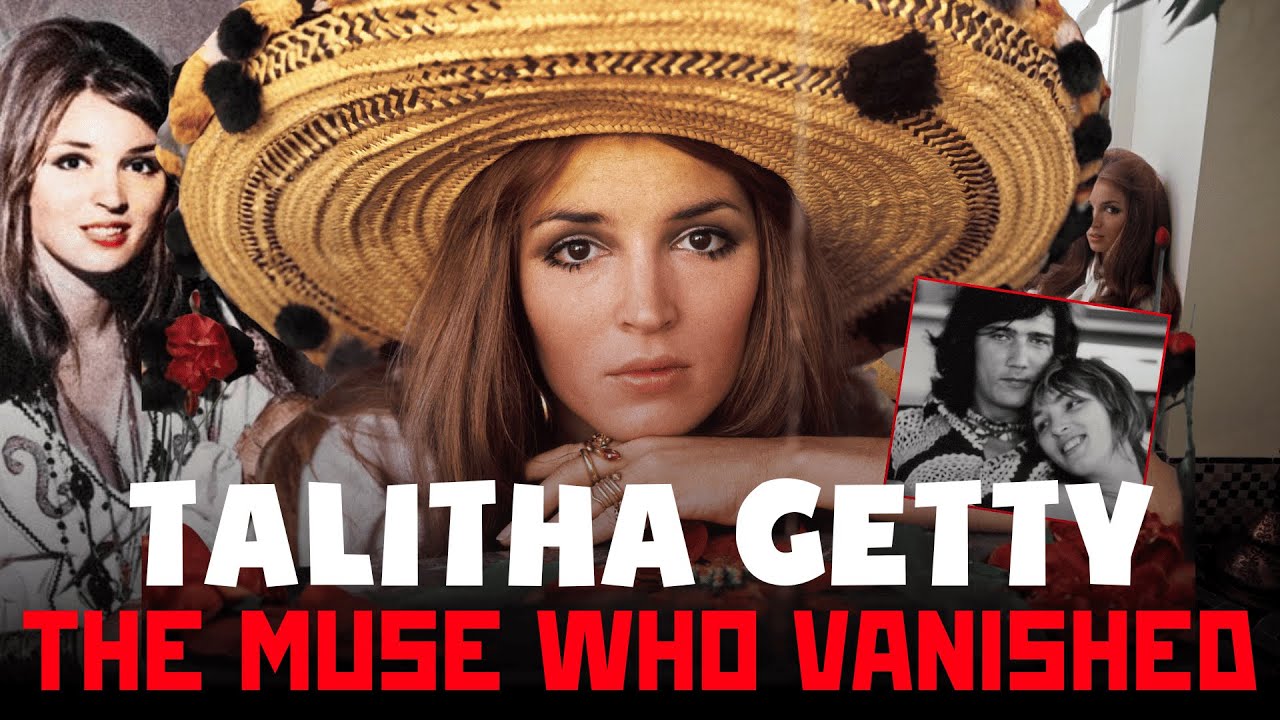
Her name was Talitha Getty, and her story was not one of effortless beauty, but of a desperate flight from a childhood shadow that never stopped chasing her. She was born Talitha Pol in 1940 on the island of Java, part of the Dutch East Indies. Her father was a painter, her mother the daughter of a famous architect, and her early life was one of colonial privilege. That world was shattered before she could form her first memories.
The Japanese invasion of the island swept her family, along with thousands of other Dutch nationals, into internment camps. For the first five formative years of her life, Talitha lived behind barbed wire. Her childhood memories were of heat, hunger, and a constant, unspoken terror. She learned before she could speak in full sentences that safety was an illusion.
This was the wound that shaped everything that followed. When the war ended in 1945, the family moved to London, but the marriage of her parents, exhausted by trauma, collapsed. Her father remarried, and his new wife was the daughter of the legendary artist Augustus John. This marriage was Talitha’s entry into the highest circles of British bohemian aristocracy.
She was transplanted from the trauma of the camps into the smoky, vibrant artistic world of Chelsea, where money was considered vulgar but elegance was the only currency. She learned that to be loved, she had to be interesting, to be entertaining. Her striking Eurasian features and intense energy made her a magnet. By the 1960s, she was at the center of the cultural revolution, a pioneer of a wealthy hippie aesthetic years before it had a name.
She attracted the most dangerous and magnetic men of the era, including the dancer Rudolf Nureyev and the designer Yves Saint Laurent. But beneath the layers of silk and the dazzling smile remained the fear born in the camp. Friends remembered a girl terrified of solitude, needing constant stimulation and admiration to feel alive. When the music stopped and the party ended, she would collapse into a deep, frightening depression.
In 1965, at a London dinner party, fate entered the room in the form of Paul Getty Jr. On paper, he was the least likely man to capture her heart. He was the third son of J. Paul Getty, then the richest man in the world, but the Getty name was a curse written in oil and cold money.
The elder Getty was a notorious miser, a man who loved money more than his children and famously installed a payphone in his English mansion so guests would not raise his phone bill. Paul Jr. grew up in this icy shadow, a shy, damaged man who moved through life as if expecting to be struck. By 1965, he was a wealthy, directionless man, divorced and isolated, searching for a way out of his gray existence.
When he saw Talitha across the table, it was as if a light had been switched on in a tomb. She was everything he was not: vibrant, confident, artistic, and utterly unimpressed by his family’s wealth. She saw a soul in him. He saw a means of escape.
Their courtship was a whirlwind of private planes, luxury hotel suites, and nights that blurred into days. Paul shed his gray suits for velvet jackets and purple trousers. They married in Rome in December 1966, an event dubbed the wedding of the new jet age. Talitha wore a daring short white dress trimmed with white mink, and the press instantly crowned them the golden couple.
They were attractive, wealthy, and stylish, moving between London, Rome, and the Mediterranean like celestial bodies. They had a son, whom they named Tara Gabriel Galaxy Gramophone Getty, a name that seemed to suggest a child born not into a family but into a concept. Their quest for a paradise beyond the rules of the Western world led them to Marrakesh. In the late 1960s, Morocco was the spiritual home of the counterculture elite, a place of sensual explosion where Westerners could reinvent themselves.
Paul bought a dilapidated palace in the old city, the Palais de Zahya, and Talitha was given absolute freedom to rebuild it. She poured her soul into the space, overseeing every detail with obsessive precision, filling rooms with silk cushions, low tables, and hammered brass lamps. It became a vision out of the Arabian Nights. The Rolling Stones came to stay, Cecil Beaton came to photograph, and Yves Saint Laurent bought a house nearby.
Days were spent recovering from the night before, lounging by the pool or wandering the souks. The nights were long candlelit feasts that dissolved into clouds of smoke and music. Talitha abandoned Western dress almost entirely, wearing elaborate kaftans and heavy Berber silver jewelry. She looked like a Berber princess, an eternal icon of exotic beauty.
But the paradise they built was fueled by a staggering consumption of drugs. What began as hashish and opium, part of the romantic Moroccan experience, slowly curdled into something darker. A contemporary described Talitha as a mixture of Scheherazade and a heroin addict. She used drugs to control her old anxiety, the camp terror that still whispered in her ear.
Paul used them to drown out the voice of his father. The balance tipped. The gentle haze of hashish gave way to the harsh edge of heroin. The beautiful, vibrant friends began to look more haggard, their laughter more manic.
The Rolling Stones, a sensitive barometer of decay, eventually fled. Keith Richards reportedly found the atmosphere too heavy, feeling the party had turned into a funeral. By 1969, when that famous rooftop photograph was taken, the rot had set in. Talitha looked at the camera with a vulnerable awareness, as if asking for help.
Paul looked away, already half gone. They were beautiful ghosts haunting their own palace, trapped in a paradise that was killing them. As the calendar turned, the optimistic fog of the sixties evaporated, revealing a colder decade. The palace became less a refuge and more a besieged fortress.
The gates they closed to the world did not keep the darkness out; they locked it in. Paul’s decline was the most painful aspect of the fall. He became paranoid, isolated, spending his days in a dark, shuttered room, lost in a chemical haze. Talitha, a creature who existed only through her relationships with others, was devastated.
She had cast herself as the muse, the healer, the Scheherazade who could charm the beast. But what happens when the beast stops listening? By 1970, the atmosphere was toxic. Visitors returned from Marrakesh with disturbing stories of a frantic, fragile Talitha and a Paul who could barely speak.
Talitha, the survivor of the internment camp, recognized the cage. She saw clearly that she was dying, her spirit extinguishing. She looked at her small son and knew she had to leave. In early 1971, she moved back to London, to a house in Cheyne Walk, Chelsea.
On the surface, it was a triumph. She threw herself into the social world, appearing at the best restaurants and galleries, telling everyone who would listen that she was done with drugs and madness. She had a new lover, the Count Jean de Breteuil, an aristocrat with his own notorious drug habit. But the boredom of sobriety was a physical pain.
Without the chemical buffer, the old fears returned. And her bond with Paul remained unbroken. He called constantly from Rome or Marrakesh, weeping, pleading, threatening, manipulating her guilt and her rescuer complex. They were beautiful, broken souls who reacted chemically with each other, loving each other with a desperate passion that demanded mutual destruction to survive.
In the summer of 1971, Talitha made a decision. She would go to Rome. Her friends begged her not to, warning that she was walking back into the fire. She insisted she would be fine, telling some she would ask for a divorce to marry de Breteuil, and others that she would try to convince Paul to enter treatment.
Perhaps it was both. Perhaps she was drawn to him like a moth to the flame. She flew to Rome on July 10, 1971, thinking she was going for a weekend. She was going for good.
The apartment at the Piazza Darchi was a mirror of Paul’s soul: luxurious, filled with art and antiques, but neglected, dark, and stifling. The reunion was emotional, with tears and accusations, and inevitably, drugs. In the presence of Paul, the old habits returned instantly. They used heroin together, seeking the familiar warm darkness where the pain of their separation faded.
In the early hours of July 11, the chemistry took control. The dose that might have been tolerable a year earlier in Marrakesh proved fatal. Talitha’s body, that beautiful vessel, finally surrendered. Her breathing slowed.
Her heart, which had beaten so frantically in search of love and acceptance, faltered and stopped. Paul survived. He woke in the morning, confused, emerging from his own haze, and found her on the floor. The panic must have been unimaginable.
He tried to wake her, but she was cold. The reality of his life crashed down on him. He had killed the only thing he had ever loved. An ambulance was called.
The police arrived. The news spread like a shockwave. Talitha Getty was dead. The official autopsy found massive amounts of alcohol, barbiturates, and heroin.
The coroner ruled it a misadventure, a polite British euphemism for a chaotic, avoidable tragedy. But her death seemed less an accident than an inevitability, the final line of a poem that had been writing itself since she was a child in a camp. She had spent her life running from the cage, from the silence, from the dark. In Rome, she finally stopped running.
The aftermath was brutal. The Italian police considered charging Paul with manslaughter. His father’s response was iceberg cold. From his mansion in England, J.
Paul Getty issued a statement of regret but was privately furious, feeling the scandal was a stain on the family name. He offered no comfort, only a glacial I told you so. Talitha’s body was flown to London. The funeral was a strange, fractured event.
The elite came in mourning clothes, weeping not just for Talitha but for the end of an era. They looked at the coffin and saw the death of the sixties, the dream of freedom and aesthetic perfection. Talitha Getty was gone. Paul would spend the next decade in isolation, trying to wash the blood of the past from his hands.
Their son would grow up with the orphan’s memory of a mother who smelled of expensive perfume and smoke. The story, however, did not end at the grave. It is a story of interlocking tragedies, where one fall precipitates another. In July 1973, two years after Talitha’s death, Paul’s eldest son from his first marriage, John Paul Getty III, was kidnapped in Rome.
He was a sixteen-year-old golden-haired boy, a youthful male version of Talitha, with the same reckless charm and dangerous innocence. He was seized by the Ndrangheta, the Calabrian mafia. The kidnappers demanded a ransom of seventeen million dollars. Paul Getty Jr.
was unable to act. He was shattered, and, more importantly, he was broke. His father had cut him off from the family fortune because of his drug addiction, the addiction that had spiraled out of control during his life with Talitha. The old man in his fortress refused to pay a single cent, telling the press, “I have 14 other grandchildren.
If I pay one penny, then I shall have 14 kidnapped grandchildren. ” For months, the boy withered in a cave in the Calabrian mountains. His father wept over the phone, helpless. In November, a package arrived at a Roman newspaper office.
Inside was a lock of red hair and a human ear. It was the ear of John Paul Getty III. The accompanying message was terrifying. Finally, a deal was reached.
J. Paul Getty agreed to pay about 2. 2 million dollars, and loaned the rest to his son at four percent interest. Even to save his grandson’s life, the old man had to make a profit.
The boy was released, but he never recovered. He descended into his own addiction and was later left paralyzed and blind by a massive stroke. He was another victim of the Getty curse, another beautiful bird broken by the cage. For Paul Getty Jr.
, the kidnapping was the nadir. He had lost his wife to an overdose and nearly lost his son to a gang of murderers. He was isolated, vilified by the press, and in debt to a father who despised him. He remained in Cheyne Walk, a recluse, living among the wreckage of the party.
The story, however, does not end in darkness. In the late 1970s, Paul began a slow, painful crawl toward the light. His father’s death in 1976 changed the dynamic. He inherited a vast fortune, this time with no strings attached.
He checked himself into a clinic in London, undergoing the humiliating and exhausting process of detoxification. During his recovery, he met Victoria Holdsworth, a woman who was his antithesis. She was stable, compassionate, and grounded. She didn’t want to drag him to Marrakesh to smoke opium.
She gave him the quiet, normal life he had never known. With her support, Paul remained clean. He began to give his money away. The transformation of Paul Getty Jr.
from a reclusive addict into the man they called “Saint Paul” is one of the most remarkable in British social history. He realized that the money that had cursed his family needed to be cleansed. He became the greatest philanthropist of his generation, donating millions to the National Gallery, saving the British Film Institute, protecting Canova’s sculpture of the Three Graces from being sold abroad. He gave with a desperation that suggested he was trying to buy back his soul.
Every check he wrote was, in a way, a tribute to Talitha. She loved art and beauty. By preserving it, he was building a monument to her more durable than a drug palace in Morocco. He was trying to ensure that beauty survived in a harsh world, the very thing Talitha had failed to do.
Even as Paul found peace, Talitha’s image took on a life of its own. In the 1990s, a revival of sixties style swept through fashion. Designers like Tom Ford at Gucci began using that famous rooftop photograph as a reference for their collections. The term boho-chic was coined, and Talitha was its patron saint.
Models like Kate Moss and Sienna Miller began dressing in her image. Talitha was stripped of her tragedy, leaving only the surface, the silk, the kohl, the sparkle. For Paul, seeing his dead wife’s face staring at him from magazine covers was a surreal and painful experience. The world saw an icon of style.
He saw the woman he had held as she wept, the woman whose cold hand he had grasped on a Roman morning. The culture celebrated the costume while ignoring the corpse within. It was a final cruel irony. Talitha, who felt such a void inside, had become an empty vessel for the world’s fantasies.
Yet there is a certain justice in her resurrection. Talitha Getty wanted so desperately to matter, to be a legend. She treated her life as a performance, terrified that when the curtain fell, she would be forgotten. That did not happen.
She achieved the immortality she craved, but the price was her life. In his final years, Sir Paul Getty lived quietly at Wormsley Park, his country estate, surrounded by friends and respected by the elite. He had beaten the family curse. He had survived the fire.
We can imagine that on quiet evenings, when the cricket match was over and the library was silent, his mind returned to a rooftop in Marrakesh. He remembered the smell of jasmine and hashish, the sound of jangling silver bracelets, the girl with the dark eyes who taught him how to live. Then showed him how to die. Sir Paul Getty died in 2003 at the age of seventy.
He was mourned as a hero of the arts, but the first paragraph of his obituary always mentioned her. He was the man who survived Talitha. Her story is more than a celebrity biography. It is a modern fable about the seduction of the abyss, a warning about the price of our obsession with aesthetics.
We look at that rooftop photograph and sigh. We want the clothes, the setting, the romance. But we forget that the image captures the exact moment before the fall. The people in the photograph are not gods.
They are lost children acting out roles on the edge of a volcano. Talitha Getty remains the swan that died at the height of her beauty, frozen forever in 1969, waiting for a future that never came. The lesson is stark: trauma cannot be concealed by ornament. Any amount of silk or silver cannot fill the void left by a childhood spent behind barbed wire.
Love, when mixed with addiction, ceases to be love and becomes a form of custody. And the pursuit of a purely aesthetic life, a life lived for beauty alone, is a death sentence. The party must always end. The music must stop.
And when the lights come up, we must be able to live with who we are in the silence. Talitha Getty could not withstand the silence, so she became a song that never fades, a beauty that never ages, and a tragedy that never ends. The swan folded its wings.
The legend remains.
