The old man on the porch did not look up for a long time after Ambrose Teague asked the way to the Sorrel Fork. He sat in his chair, chewing on nothing, staring out at the green folds of the mountain as if he could see through them to something on the other side. Finally, he said, “You don’t want the Sorrel Fork. ”
Ambrose said he did.
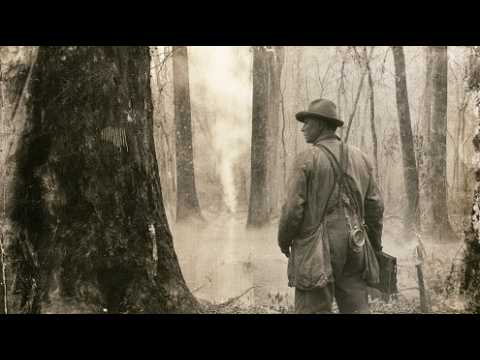
He told the old man that the Ashkom Land and Lumber Concern wanted the old growth in the head of that water, some of the biggest poplar and chestnut still standing in the state, and that he’d be up and back in four days, five at the outside. The old man looked at him a while longer. Then he said, “Up at the head of that water there’s a hollow. We don’t call it by the survey.
We call it the Want. ”
Ambrose asked why. “Because it wants. ”
That was the whole of the answer.
The old man turned his face back to the mountain and did not speak again. Ambrose wrote it down. That was the thing about him. He was forty-three years old, better at his work than any man the company had on its books, and his work was turning forests into figures.
A timber cruiser walks into a stand of trees nobody has ever measured and comes back out with numbers: board feet, grade, cost to get it down the mountain and onto a rail car. He was good at it because he had no imagination to speak of. A man who imagines things in the deep woods does not last. A counting man comes home.
In his notebook, in his small square hand, he wrote: *Hollow at head of Sorrel Fork. Local name: the Want. *
Then he added a comma and the words *superstition, discount. * He filed the warning under mountain folk being mountain folk, slept well in the loft of a widow’s barn in the last settlement before the road gave out, and in the gray of the next morning, he shouldered his kit and went up.
The trail followed the water, the oldest rule of walking in these mountains. Water knows the way down, so a man who wants to go up puts it on his left hand and climbs against it. For the first few hours it was ordinary, beautiful. The poplars came up around him tall and straight and silver-barked, and the light came down through them in long slants full of drifting things, and the water talked to itself over the stones the way water does.
He measured as he went. He was pleased. The company had not oversold it. There was money standing in that hollow, more than most men would see in a lifetime, waiting to be counted and cut.
He had been married once. His wife died of a fever in the spring of 1888, eleven years back, and afterward he did what a certain kind of man does with grief. He folded it up small and put it away in the same buttoned pocket where he kept his notebook, and gave himself over to work that had rules. Numbers do not die on you.
A board foot is a board foot in any weather. He took the jobs nobody else wanted, the far tracks, the long walks, the weeks alone, and he was glad of them. Nobody thought to worry about a man who never complained and always came home. For the first hours the walking was ordinary, and he was happy in the plain way a man is happy doing the one thing he is wholly good at.
He tapped the big poplars with the back of his hatchet and read the grade off the ring of the sound. He noted a spring. He noted a deadfall. He noted, without giving it any weight, that he had not had to cross the water once, though by the lay of the land he ought to have crossed it twice by now.
He wrote that down as a small thing to be squared up later. He never did square it up. The first thing that was wrong, he did not register as wrong. He only noticed, the way you notice a clock has stopped, that the water had gone quiet.
It was still moving. He could see it moving. But it had stopped making sound. The whole talking, chattering voice of it went out like a lamp turned down, and the woods around him held the kind of silence that has weight to it, that presses on the small bones behind your ears.
He stopped. He listened. That night he wrote in his notebook: *No birds since the second bend. *
Then, because he was a careful man and careful men correct their own records, he crossed out *second bend* and wrote beneath it: *cannot say since when.
*
He could not find the moment when the birds had stopped. There should have been a moment. There is always a moment. It was as if the silence had always been there, and he was only now turning around to see how far back it went.
He went on. He had four days and money to count. The compass was next. A cruiser checks his bearing the way you or I breathe.
Along about what his watch called eleven in the morning, he glanced down and the needle was moving. Not spinning. Just drifting slow and steady, swinging a few degrees off and then a few degrees back, like the mountain underneath him was breathing and the needle rode on the breath. There is iron in these hills.
He knew that. Ore bodies pull a compass. He had seen it before. So he did the sensible thing: he stopped, sighted a line by the sun and his watch instead, wrote the deviation in his book so he could correct for it, and went on.
But he noticed, and he wrote this down too, that the drift did not behave like ore. Ore pulls you steady in one direction, and once you learn the pull you can trust it. This did not pull one way. It pulled toward wherever he was going.
Whichever way he turned his face, the needle wanted to ease around and point him deeper in, as if the deep of the hollow were the true north of that place around, and everything else were only a suggestion. He stopped trusting the compass. He put it away. Nothing had jumped out at him.
Nobody had laid a hand on him. That was the whole trick of a place like the Want, and it was why the sheriffs could always find a tidy word for it afterward. It never does anything you could put in a report. It only very patiently unmakes the ways you have of knowing where you are: the sound, the birds, the needle, the hour.
It takes them one at a time, so gently you correct for each one and keep walking, until you look up and realize you have corrected your way clean off the map of the world. He had just seen the smoke. Thin and blue, rising from somewhere higher in the hollow above him and to the left, in ground the plat said was empty. A single line of wood smoke going straight up in air with no wind in it.
Ambrose Teague was glad to see it. Smoke means a fire, a fire means a hearth, a hearth means a person. After a morning of silence and a drifting needle, a person sounded like the most reasonable thing in the world. The cabin, when he came on it, was old past reckoning, but not falling down.
That was the strange part. Every other homestead he had ever found abandoned up a hollow had gone back to the ground in the usual way: roof caved, chimney leaning, briars in the doorway. This one stood square. The chinking was fresh.
The roof was sound. There was a woodpile stacked with a care that spoke of a man who had all the time in the world and nothing to spend it on but stacking wood. And there was a smell coming off the place he could not at first name. Under the wood smoke, something mineral and cold, like the breath that comes up out of a deep well, or the inside of a springhouse, or a coin held too long in the mouth.
An old man sat on the step. He was very old. That was the first impression, and it never got more specific, because when Ambrose tried later to write down the man’s age, he found he could not. Old the way the cabin was old.
He was whittling nothing in particular, pairing a stick down smaller and smaller, a small pile of pale shavings between his boots. He did not look up until Ambrose was close enough to speak. Then he said, before Ambrose could offer his name, “You’re the one they sent to count it. ”
Ambrose allowed that he was.
He gave his name and his company and his business: the poplar and chestnut in the head of the hollow. The old man listened with his eyes back on his whittling, nodding a little, the way you nod at a child telling you something you have known your whole life. When Ambrose was done, the old man said his name was Erastus Kratz, and that his people had kept this hollow going on two hundred years, and that Ambrose was welcome to the fire and the water and to stay the night. But he ought to understand one thing before he went another step up toward the head of it.
“It isn’t the trees the company’s counting,” the old man said. “It’s you. The mountain counts. And it counts slow and it counts careful, and it doesn’t ever lose its place.
”
Ambrose was not a stupid man and he was not a coward. He sat down at that old man’s fire and ate what was offered and asked good level questions, the questions a counting man asks. He asked what the Kratzes kept the hollow from. He asked what had happened to the people the old man was so plainly hinting had gone up and not come down.
He asked whether Kratz was warning him or threatening him. Kratz answered all of it in his slow way, and none of the answers were the kind you could write in a ledger. The Kratzes did not keep the hollow from anything, he said. They kept it fed.
“A thing that lives in a mountain the way this thing lives in this one does not hunt, because it does not need to. It waits, and it wants. And now and again the wanting reaches far enough down the water that somebody feels it as a curiosity: a fine stand of timber, a shortcut, a good place to lie low. And it comes up.
And the mountain takes what comes and keeps it, and the wanting eases for a while. And the Kratzes for two hundred years have done the one small thing a man can do, which is to keep the count, to carve the marks, to tend the fires, so the thing in the mountain will know it has been given its due, and will not in its slow patience start reaching down past the Sorrel Fork, into the gap, into the settlements, into the wide green world where the counting men and their companies live and sleep and think themselves the ones doing the measuring. ”
Ambrose asked for particulars. Names, dates, something a man could carry down the mountain and check against a courthouse ledger.
He expected the whole business to come apart in his hands, the way a fireside tale always does when you ask it what year and what county and what was the fellow’s name. Kratz did not come apart. He fed the fire and gave him particulars one at a time. He started with the drover, 1841.
A man by the name of Coffield, driving a herd of cattle across the gap to the railhead on the far side. A fellow at the store, meaning nothing by it, told him he could save the better part of a day by taking his stock up the Sorrel Fork and over the low saddle at the head of it. Which was a lie, though the man who told it did not know it was a lie. There is no saddle at the head of the Sorrel Fork.
There is only the Want. But the wanting had reached down the water that season, and it had put the notion in the storekeeper’s mouth the way you or I might have an idea, and never think to ask where it came from. Coffield took his herd up. Partway up, Kratz said, the man heard his own cattle lowing ahead of him up the water, where no cattle were, because his cattle were behind him coming on slow the way cattle do.
But he heard them ahead, plain as anything, calling the way a herd calls when it has found good water and wants the rest to come on. And a drover trusts his herd’s voice the way a cruiser trusts his needle. So he went toward it. Up and up, and the sound kept just ahead of him, always just around the next bend, all the way to the top.
Only the dog came down. A good dog that had worked those cattle its whole life. It came down out of the hollow three days later with its tail tucked, and it would not go near running water for the rest of its days. Not a creek, not a trough.
The county sheriff wrote it up as far as the second bend, which is as far as any sheriff has ever gone. He wrote in his book that Coffield and his herd were lost in high water on the Sorrel Fork. Ambrose thought of something and did not want to say it. Kratz said it for him.
There had been no rain in better than a month. Ground was cracking. But high water is a thing a sheriff can write down and go home to his supper. A mountain that keeps is not.
Then Kratz told him about the survey. This one was close to the bone. 1891: four men sent up the Sorrel Fork to do the exact work Ambrose had been sent to do, cruise the timber, count the money standing in the head of the hollow. They came up from a company called Marberry and Field, which Ambrose knew, because Marberry and Field was the outfit that Ashkom had bought out lock, land, and plat.
Ambrose was, in a manner of speaking, walking in those four men’s footprints, doing their unfinished errand, and he had never heard a word about them. Ashkom had bought the land and the maps, and had quietly not bought the story that came with them. They kept a camp journal. Survey men always do.
Kratz got up slow, went to a shelf, took down a thing wrapped in oilcloth, unwrapped it, and handed it across the fire. A real book. Water-stained, swollen, the leather gone soft as skin. Ambrose opened it and read it by the fire.
It started ordinary. Four men’s neat surveyor’s hands taking turns keeping the day’s entry the way a party does. *Camp made. Weather fair.
Timber excellent, better than reported. * The usual. Then the dates began to slip. A Tuesday followed by another Tuesday.
A week that ran eleven days by the entries but covered no more ground than three. And then came a day where two different hands had written the entry. The same day, the same date at the top. Two men in two hands, each writing as though he alone were keeping the book, each unaware of the other, describing the same camp and the same fire, never once mentioning that another man was writing not four inches down the page.
Near the end, a page where all four men had signed their names. Not signed off. Just signed. Four names, one under the other, in a single column down the left of the page, the way a man makes a list of a thing he is afraid he will lose the count of.
And beside the column, small, in a hand that had begun to come apart, someone had drawn the tally. Four strokes. After the fourth name and the fourth stroke, nothing. Blank pages, swollen and stuck all the way to the back cover.
Marberry and Field filed no report on Tract 19. In the company books, four men were set down as *released from their contract*. Released. As pretty a word as *resigned*, and as false.
There was one more, Kratz said, that Ambrose ought to hear, being a man who trades in official words. The revenue man, 1894, a fellow named Lyfe Odum, come up into the district to break up a still that everyone in three counties knew for a fact was hid up the Sorrel Fork. Except there was no still. There never had been.
But the rumor of it was thick and particular and would not die. A still is bait cut to fit a revenue man the way good water is bait cut to fit a herd. Odum went up alone on a good horse with a pistol and a warrant, sure of himself. The horse came down.
The man did not. Because a revenue man is a federal man, his going missing could not be waved off as easy as a drover’s. There was an inquiry, and the inquiry produced the tidiest word of all. The county recorded that Agent Lyfe Odum had *removed himself to parts unknown*.
As if a man in the middle of his duty on a mountain, with a warrant in his coat, simply decided of an afternoon to remove himself forever. Ambrose had spent his whole life in the company of official words, and he knew a lie dressed for church when he saw one. “Three of them,” Kratz said, “out of a great many. Lost in high water.
Released from contract. Removed to parts unknown. And someday there’ll be a word set down for you, too, if you’re not careful with your count. Something clean, something a sheriff can write in a fair hand and close the book on.
And it will be a lie. And only the bark up on that shelf will hold the truth of it. And I will carve the truth of it myself, because that is what my people are for. ”
Ambrose asked to see the marks.
He could have left. Even then, after everything the old man had told him, he could have thanked him and walked back down the water to the widow’s barn and written in his book that Tract 19 was not worth the trouble, and no one at Ashkom would have questioned a cruiser’s judgment on the ground. He had every reason to go. Instead he asked to see the marks, because there was a counting man’s pride in him that could not abide the idea of another man keeping an account he himself did not understand.
Kratz looked at him a long moment, then at the door, at the dark that had come down over the hollow while they talked. “Not tonight,” he said. “You don’t go up onto that shelf in the dark. Nobody does.
In the morning I’ll take you, and you can count till your arm gives out. But tonight you sleep, and you do one thing for me. You keep your count of yourself. Even sleeping, even dreaming.
As long as you know your own number, you’re all right. ”
Ambrose asked what he meant. His own number. “How many you are.
Right now, there’s one of you. Long as you’re sure of that, you can come back down. It’s when you lose track, when you can’t rightly say if it’s one of you lying there, or two. That’s when the mountain’s got you counted instead.
”
Ambrose lay down that night on a tick of dry leaves in the corner of the one room, fire banked low, the old man a still shape on the other side of it. He did not sleep well, and he was not a man who ever had trouble sleeping. It was the smell, partly, that cold mineral breath under the wood smoke, stronger at night, coming up through the very floor. And it was the quiet, the same weighted quiet as the water when it had stopped talking, only now it was inside a house, inside walls.
He woke deep in the night. The other side of the fire was empty. The door stood open, just off the latch, a black seam of colder dark in the dark. Out among the nearer trees below the cabin, a light was moving.
A lantern, held low, going tree to tree. Ambrose got up and went to the door, because a counting man goes and looks. It was Kratz, out among the trees in the dead middle of the night. Ambrose watched him and understood slowly that the old man was not carving.
He was laying his hand flat against the bark of each tree, palm open, the way you’d lay a hand on the flank of a horse to gentle it, leaning his head close, saying something too low to make out. It was the cadence of a man counting, reading a tally by lantern light and touch, running the count, making sure the mountain had not in the night taken more than its due. And once, the old man stopped. Stopped at a tree, hand flat on the bark, and went still.
Then he turned his head slowly away from the tree, up the slope, toward the cabin, toward the open door, toward Ambrose standing in it in the pitch dark, where there was no earthly way the old man could have seen him or heard him. Kratz looked straight at him across all that darkness and said one thing, just loud enough to carry up the slope. A number. Ambrose could never afterward say what number it was, but he knew, the way you know a thing in a dream and cannot argue with it, that the number was his.
The old man had been going through the count and had come to a mark and had looked up to match the mark to the man, the way a clerk looks up from a name to the face at his window. Ambrose went back inside and lay down and did not sleep at all. In the morning, the old man was banking the fire as though nothing had happened. He handed Ambrose a tin cup of something hot and bitter and said, “Come on, then.
”
They went up. It was not a long climb, and that was the first wrong thing about it. By everything Ambrose knew of that country, the head of the hollow should have been a hard hour above the cabin, a real pull up broken ground. It took them a few minutes.
The slope rose steep behind the woodpile and then simply gave out onto level ground too soon, the way a stair in a dream delivers you to a floor that has no business being there. The light changed as they came up. Down at the cabin it had been an ordinary gray autumn morning. Up on the shelf it was that even, sourceless light again, the light with no sun behind it, the light that does not come from any particular part of the sky and does not throw a shadow you can trust.
Ambrose noticed that his own shadow lay wrong. Not much, a few degrees off from where the light said it ought to be, as though he were standing a little to one side of himself. The trees on that shelf were the oldest he had ever seen. Poplars ten feet through.
Chestnuts that had somehow never taken the blight that was killing every other chestnut in the mountains that very decade. They stood in the strange even light with a stillness that was not peace. Every one of them had been marked. Cut into the bark of each tree at about the height of a man’s chest was a tally.
Not a name. A count. Little vertical strokes grouped in fives, the fifth stroke laid crossways over the other four. Some trees had a few strokes, some had dozens.
The bark had grown around the oldest of them until they were just seams, silver scars healed nearly shut. The newest were still pale and weeping sap. The grove was arranged. That was the thing that reached him first, before he had counted a single stroke.
It was not a wild stand of timber that happened to have been marked. The trees stood in an order. Not rows, nothing so plain as rows, but an order all the same, the way stones in an old burying ground stand in an order even when the grass has swallowed them. A man raised to read the woods knew he was standing in a made place.
Someone over a very long time had been keeping this ground the way you keep a churchyard. Kratz did not come in among the trees. He stopped at the edge of the shelf, at the last tree, put his hand flat on it, and let Ambrose go in alone. Ambrose walked among them and did what a counting man does.
He counted the counts. Tree to tree with his notebook out. The marks were not random in their number. The oldest trees, back at the head of the shelf, carried the most, dozens of strokes healed nearly to nothing, so old the bark had closed over them like water closing over a stone.
The younger trees nearer the front carried fewer. It was a ledger. He was walking through a ledger written in living wood, oldest accounts at the back. And the whole arrangement told a single patient story two hundred years long.
The story was always the same word, written over and over. *Kept. Kept. Kept.
*
Then he came to a poplar near the front. A younger tree. It had one mark on it. Just one.
A single stroke, fresh cut, so fresh the sap still stood in it in a bright bead that had not yet run. And beside that stroke there was room. Bare bark, smoothed, prepared, waiting, the way a clerk rules a fresh line in a book before he writes the name that goes on it. Ambrose stood in front of that tree a long time.
He did not write anything about it in his notebook. Behind him, at the edge of the grove, with his hand flat on the last tree, he could hear very low counting. The entry in his notebook is the one that made the first researcher start pulling the old ledgers. In that small, square, untroubled hand he wrote: *Est.
400 trees, marks total 3,000+. Local belief: no known losses. This region: 1, 1800–present. *
Below it, a single line added later, in a hand that had begun just barely to lose its squareness: *They are not losses.
They are here. *
He understood. Standing in that grove, counting man that he was, he finally understood what he was counting. Every stroke on every tree was somebody who had come up the Sorrel Fork over two hundred years and never come down.
The drover who lost his herd in 1841. The survey party of Ashkom’s own predecessor, four men, in 1891, whose report was never filed. The revenue agent the county recorded as *removed to parts unknown*. Every one of them not gone.
Kept. Counted. Standing there in the bark, in the cold even light, where the mountain could go on wanting them without ever quite being satisfied. Kratz, watching him understand, said the truest and worst thing in the whole account.
“You counted it right, son. That’s the trouble with your kind. You always count it right, right up to the end. You just never once stop to wonder if the counting is the door.
”
Ambrose did not scream and bolt. He was a counting man to the end. He thanked Kratz. He said he had seen enough to make his report.
He said the company would not be cutting on Tract 19, which was true. He shook the old man’s dry, cold hand, walked back down past the square standing cabin, put the silent water on his right hand, and started for the gap. That was when he found out how long he had been in the hollow. His watch said late afternoon.
The same afternoon he had climbed up in. But the light coming through the poplars was wrong for late afternoon. It was low and thin and gold in a way that belongs to a different season entirely. The poplar leaves, full and green when he came up, were turning, yellowing at the edges, a few coming down through the still air, turning slow circles as they came.
He took out his watch and wound it, which was foolish, because a wound watch tells you the time it thinks it is, not the time that has actually passed. He put it away. He looked at the leaves. He looked at the ferns along the water, green when he came up, now gone to rust and brown.
He had been in the Want for weeks. He had eaten one meal, asked a few questions, walked up onto a shelf, and counted some marks on some trees. Out in the real world, where the seasons kept their ledger honestly, weeks had gone by. Maybe more.
He did not run yet. He took out his notebook, because a counting man faced with the ground falling out from under everything he trusts reaches for the one thing that has never failed him. He wanted to write it down. He opened the book to the page with the tally on it, uncapped his pencil, and went to write the date.
He could not remember the date. Not the day. Not the month. He had walked up the Sorrel Fork on a certain morning in autumn, and he knew he knew what morning it had been, the way you know a word that will not come.
It was simply gone. There was a smooth place in his mind where the date should have been, healed over like the oldest of those marks on the oldest of those trees, silver and shut. That was when he ran. He ran down the water with his kit banging his ribs, notebook clutched against them, yellow leaves coming down around him faster now.
Behind him, or above him, or inside the hollow in some direction that was not any of the directions a compass knows, he could hear the old man’s voice. Not calling him back. Not angry. Only patient, the way you’d speak to a number you were quite sure would come round again.
*As long as you know your own number, you’re all right. *
Ambrose, running, made himself say it out loud. “One. There’s one of me.
One. ”
He said it the way a drowning man says a prayer he stopped believing years ago. He did not stop saying it. Down near the second bend, where the birds had first gone quiet, he was no longer sure.
The effort of running, the wrongness of the light, the smooth shut place where the date used to be, all came together. If you had stopped him and asked, he could not have told you whether it was one man going down that water or two men keeping close step. He felt the second one. Felt it the way you feel someone behind you on a stair.
It was wearing his stride. It was breathing his breath. It wanted very gently for him to stop counting, so it could take over the count. The wanting was not loud.
It was not a horror rushing at his back. It was gentle. It was reasonable. It came to him in the middle of that run in the shape of the most sensible thought in the world.
Why keep counting? What a tiresome thing, to hold a number in your head and say it over and over like a fool. You are tired. Your legs are giving.
Just stop the count for a moment, only a moment, and rest, and let the other one carry it a while. He’ll keep it for you. He’s been so patient. He only wants to help you carry it.
Ambrose understood in that moment exactly what the offer was. He had spent his whole life knowing that the man who lets someone else keep his count is the man who wakes up owing a debt he never saw taken on. The mountain did not want to run him down. It wanted him to agree.
So he did not stop. He said the number until it stopped meaning anything, until it was just a sound his mouth made, and somehow that was better, because a sound cannot be argued out of you the way a thought can. One. One.
One. He fell once hard over a root that had not been there. On his hands and knees in the leaves, he lost it. Lost the count.
There was a silence in his own head where the number should have been, and in that silence he felt the other one lean in close and take a breath to speak. Ambrose said it before it could. “One. There is one of me.
”
He got up. He ran. He said it until the water found its voice again. That was how he knew he was getting out.
The sound came back first, the whole chattering talking rush of the Sorrel Fork returning all at once like a held breath let go. Then a bird, one bird, somewhere off in the real trees. Then the smell of the world, wet leaves and cold stone, and far off, woodsmoke that was only woodsmoke. He came out of the mouth of that hollow into an evening in a season that was not the season he had gone in.
He did not stop. He did not look back. He came down into the gap in the full dark and hammered on the widow’s door like a man with the mountain’s own hand on his collar. The widow opened it holding a lamp.
She looked at him a long moment. “They gave you up six weeks now,” she said. “The company sent two men up after you, and they wouldn’t go past the second bend. The sheriff wrote you off.
”
She told him the word the sheriff had used. He had written that Ambrose Teague had *resigned his position and removed himself from the district*. Resigned. As if a man could resign from being counted.
As if you could hand in your number and walk away. Ambrose Teague did walk away. That much the record allows him. He never cruised timber again.
He never went up a hollow again, nor into any deep woods. Men who knew him in his later years said he would not so much as walk uphill if there was a way around, and that he kept to open ground and level roads, to rooms with more than one door. He took work in a mill office down in the valley, close counting of a safe and ordinary kind, columns of figures that stayed where you put them, and never once in thirty years tallied up to anything but what he wrote. He did that quiet, honest work for the rest of a long life, and by every account he was a decent, unremarkable old man who did not talk about the mountains.
The notebook survived him. The company kept it because a cruiser’s notebook says *company property*, and it passed through a warehouse and a fire and a sale, and came down in the end to the same box of forgotten paper where the sheriff’s ledger and the widow’s deposition and the swollen survey journal of 1891 were found. Ambrose’s last field entry is the one about the marks: *3,000+. They are not losses.
They are here. *
After that, the pages are blank, as blank as the back of that other journal, save for one thing. On the very last leaf, over and over, small and square and patient, in the hand of a man testing that he still had it, he had written a single word again and again, all the way down the page. *One.
One. One. One. *
Nothing else.
Just that. A man keeping his count long after there was any forest to keep it in. But here is where the ledger closes. Every year when the poplars turned, when the light came low and thin and gold and the leaves began to yellow at the edges and come down turning through still air, Ambrose Teague would go quiet.
His family learned not to speak to him in that season. Late in those nights, along about three in the morning, he would get up out of his bed in the dark and stand at the window that faced the mountains, and he would not be able to say, if you woke and found him there and asked him, quite how long he had been standing. If you stood near him at that window in one of those nights, in the dark before he thought to speak, you could hear him very low, just under his breath, saying it like a man who has to check: “One. There’s one of me.
One. ”
A kept place does not need you to stay. It only needs you counted. Once your mark is in the bark, once the mountain has your number, you can go down the water and take a mill job and grow old and gentle and safe.
And every autumn for the rest of your days, the count will come due. Some cold hour before dawn you will stand at a dark window with your family sleeping behind you, and you will feel the old patient wanting reach all the way down out of the high hollow to find you. And you will start to count yourself out loud, just to be sure. Most nights the answer will be one.
But you will go on checking, for the rest of your life, because somewhere up at the head of the Sorrel Fork, on a shelf that is not on the plat, bark grown nearly shut, there is a mark with your name behind it. And the mountain has never once in two hundred years lost its place in the count. They never cut Tract 19. The square is still blank on the plat to this day, a hole in the middle of the map where the ground should be.
The Ashkom company is long gone. The gap is empty now, the store fallen in, the three old men on the porch dead these many years. But the smoke, they say, still goes up thin and blue and straight from somewhere above the Sorrel Fork in still air, in ground that every map insists is empty. Somebody is still keeping the count.
And now and again, when the wanting reaches far enough down the water, somebody still feels it as a curiosity: a fine stand of timber nobody has ever cut, a shortcut, a good quiet place to be alone. And they go up.
