Elvis Aaron Presley was born on January 8, 1935, in Tupelo, Mississippi, the only surviving child of Vernon and Gladys Presley. His twin brother, Jesse Garon, was stillborn, a loss that shadowed him for the rest of his life. The family was poor and deeply religious, living in a tiny two-room house his father had built. At the local Assembly of God church, young Elvis first felt the emotional force of gospel music, an intensity he could not yet name.
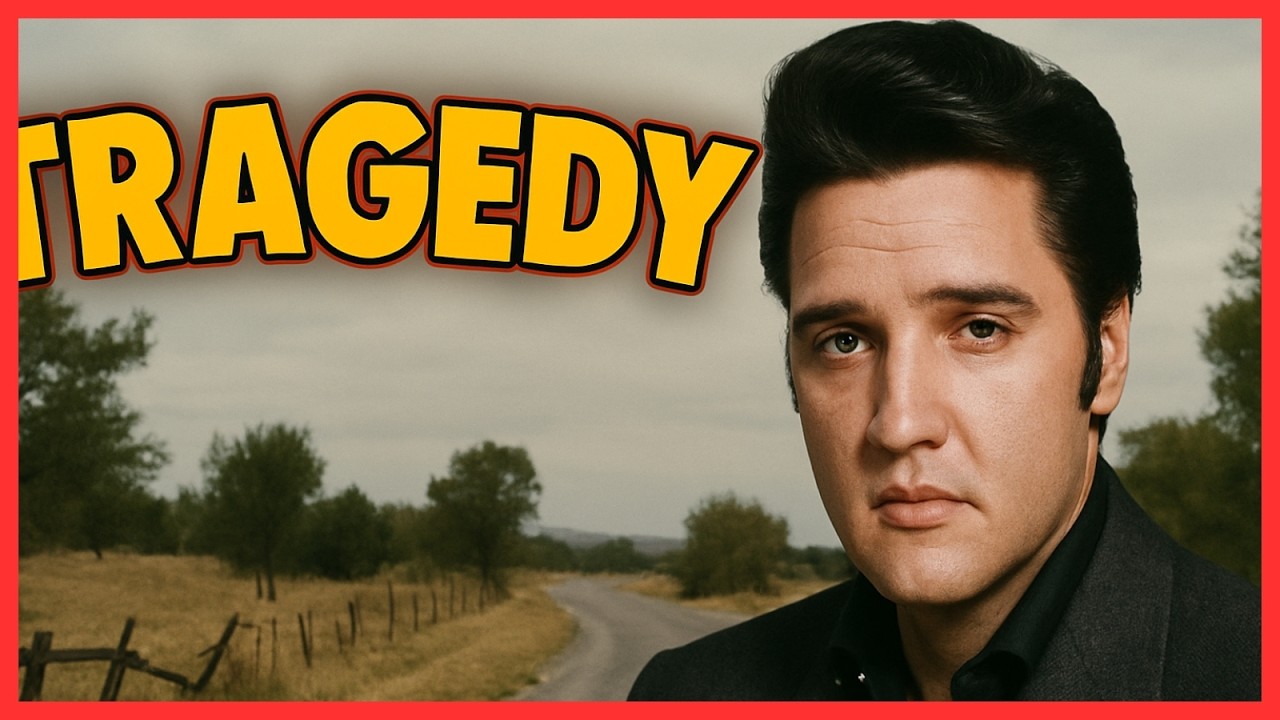
As a boy, he was shy and awkward, but something restless was forming inside him. In 1948, the Presleys moved to Memphis, Tennessee, a city alive with musical crosscurrents. On Beale Street, Elvis absorbed rhythm and blues, country, and gospel, the ingredients that would later fuse into a new sound. By his teenage years, he was already different, wearing flashy clothes and carrying his guitar everywhere, earning odd looks from his neighbors.
In 1953, at eighteen, Elvis walked into a small Memphis recording service to cut a record for his mother. The owner, Sam Phillips of Sun Records, heard something extraordinary in the young man’s voice, a blend of black rhythm and blues with white country soul. When Elvis began recording with guitarist Scotty Moore and bassist Bill Black, something electric happened. Their 1954 version of Arthur Crudup’s “That’s All Right” exploded onto local radio.
It sounded like nothing else. Within weeks, the South was on fire with the new sound. Elvis moved differently, sang differently, looked different. When he performed, audiences, especially women, screamed as if possessed.
Television appearances followed, each more controversial than the last. The way he shook his hips and smiled at the camera outraged parents and preachers but thrilled a generation. What they called sinful, millions of young people called liberation. By 1956, Elvis had signed with RCA Records, released “Heartbreak Hotel,” and sold over a million copies in weeks.
The same year, he appeared on the Ed Sullivan Show, and more than sixty million Americans tuned in. Overnight, he became the most famous man in America. His combination of charm, sensuality, and raw emotion redefined what a performer could be. He was not just making music; he was breaking cultural walls.
Then came Hollywood. Movies like Love Me Tender and Jailhouse Rock made him a box-office sensation. His face was everywhere, on posters, lunchboxes, and magazines. In just a few years, the boy from Tupelo had become a global icon.
Yet he remained humble in interviews, shyly thanking fans and clutching his mother’s hand backstage. To the world, he was unstoppable. To those close to him, the pressure was beginning to show. In 1958, just as he stood at the top of the world, Elvis was drafted into the US Army.
For two years, the king of rock and roll traded rhinestones for khakis, serving in Germany as an ordinary soldier. During that period, tragedy struck. His mother, Gladys, died suddenly of heart failure. Her death broke something inside him.
Those close to him said he never truly recovered. When he returned to America in 1960, Elvis was greeted like a hero. He resumed recording, releasing hits such as “It’s Now or Never” and “Are You Lonesome Tonight? ” His voice was more mature, his style smoother.
But Hollywood soon consumed him. Through the 1960s, he made more than two dozen films, lightweight musicals filled with songs and scenery but little soul. The money poured in, but his artistry stagnated. He was rich, handsome, adored, yet creatively trapped in a formula that dulled his fire.
By the late 1960s, rock music had changed. The Beatles, Bob Dylan, and the Rolling Stones had taken the rebellion he started and pushed it further. Elvis seemed like a relic of another era. But in 1968, he reminded the world who he was.
The ’68 Comeback Special, filmed in a small TV studio with just a black leather outfit and raw energy, reignited his legend. His voice was powerful again, his charisma undeniable. The king was back. That momentum carried him to Las Vegas.
In 1969, his residency at the International Hotel redefined live performance, complete with an orchestra, a full choir, dazzling lights, and Elvis in white jumpsuits. Night after night, the world’s biggest names came to see him. Once again, he ruled the stage. But beneath the rhinestones and applause, a different rhythm had begun, the slow, quiet beat of exhaustion and isolation.
By the early 1970s, the image of Elvis Presley was larger than life, but the man behind it was beginning to crumble. His manager, Colonel Tom Parker, pushed for endless performances and merchandise deals, while Elvis’s personal world shrank behind the neon lights of the Strip. He was performing twice a night, seven days a week for crowds that worshiped him. But when the curtain fell, he returned to empty hotel suites and prescription bottles lined across the dresser.
His marriage to Priscilla Presley, which had begun as a fairy tale, was disintegrating. Years of separation, infidelity, and the strain of fame tore them apart. In 1973, they divorced, and Elvis was devastated. He adored his daughter, Lisa Marie, but even fatherhood could not fill the growing void.
The once vibrant man now spent nights alone, numbing himself with pills to sleep and pills to wake. Creatively, he was at war with himself. While the world moved into a new age of rock, funk, and disco, Elvis remained bound by the expectations of a nostalgia-driven audience. His manager refused to let him tour internationally, fearing loss of control, and forced him to recycle old hits in endless American circuits.
The man who had once redefined music now performed as a reflection of his former glory. His body began to betray him. The weight gain, the erratic behavior, the slurred speech, all signs of dependence and decline. Yet on stage, the voice remained powerful.
Even at his lowest, he could command a room with a single note. To fans, he was eternal. To himself, he was fading. By 1976, Elvis Presley was living inside the ruins of his own empire.
Graceland, once the symbol of triumph and youth, had become a fortress of isolation. The gates were locked, the curtains drawn, and only a handful of trusted aides were allowed inside. He barely left the property except to perform, and even those performances were a shadow of what they once were. His once slim frame had swollen, his eyes were often glassy, and his movements sluggish.
The king of rock and roll looked tired, sick, and lost. His addiction to prescription drugs had deepened. Doctors enabled his habits, writing endless prescriptions for sedatives, painkillers, and stimulants. He carried vials of pills and briefcases wherever he went, convinced he needed them just to function.
Friends later said he was trapped in a cycle of exhaustion, depression, and paranoia. Still, he kept touring. Between 1966 and 1977, Elvis performed over a hundred shows, many of them barely coherent. At times he slurred lyrics, forgot lines, or collapsed backstage.
But the audiences refused to see the decline. On August 16, 1977, Elvis Presley was found unconscious in the bathroom of Graceland. The official cause of death was cardiac arrest brought on by an overdose of prescription drugs. He was forty-two years old.
The news stunned the world. Crowds flooded the gates of Graceland, sobbing and singing his songs through the night. The media called it the death of the American dream. Elvis Presley’s death did not silence him; it immortalized him.
Radios played his songs non-stop, newspapers printed special editions, and tens of thousands gathered outside Graceland as his body lay in repose. His funeral drew crowds that stretched for miles. In the months that followed, the myths began. Sightings of Elvis were reported everywhere, at gas stations, diners, airports.
For many, it was easier to believe he was alive than to accept that the king was gone. Meanwhile, the industry that had both made and consumed him wasted no time. Reissues of his albums flooded stores, documentaries were produced, and Graceland became a shrine. By the 1980s, it had become one of the most visited homes in America, second only to the White House.
Elvis had become more than a musician. He was a symbol of America itself, brilliant, flawed, excessive, and endlessly mythologized. As time passed, a clearer truth emerged. Elvis’s story was not just about fame; it was about fragility.
He had carried the burden of being first, of inventing what it meant to be a modern superstar with no road map and no escape. He opened doors for generations of artists, black and white, rich and poor, yet never found freedom for himself. Behind the glamour and glory was a man who longed for simplicity, for love, for peace of mind. His voice, deep, trembling, and alive, continues to echo through history, but his life stands as both a miracle and a warning that greatness achieved without balance becomes its own destruction.
Elvis Presley didn’t just change music. He revealed the human cost of being adored by the world.
