The news reached Washington in fragments, and the fragments did not agree. On the afternoon of August 2, 1964, the destroyer USS Maddox was on a routine patrol in the Gulf of Tonkin when the calm of the day broke. The captain reported that three North Vietnamese torpedo boats had opened fire on his ship. Then came a second report, quieter and far more damaging: the first report had been a mistake, the product of bad weather and jittery sonar, not an attack at all.
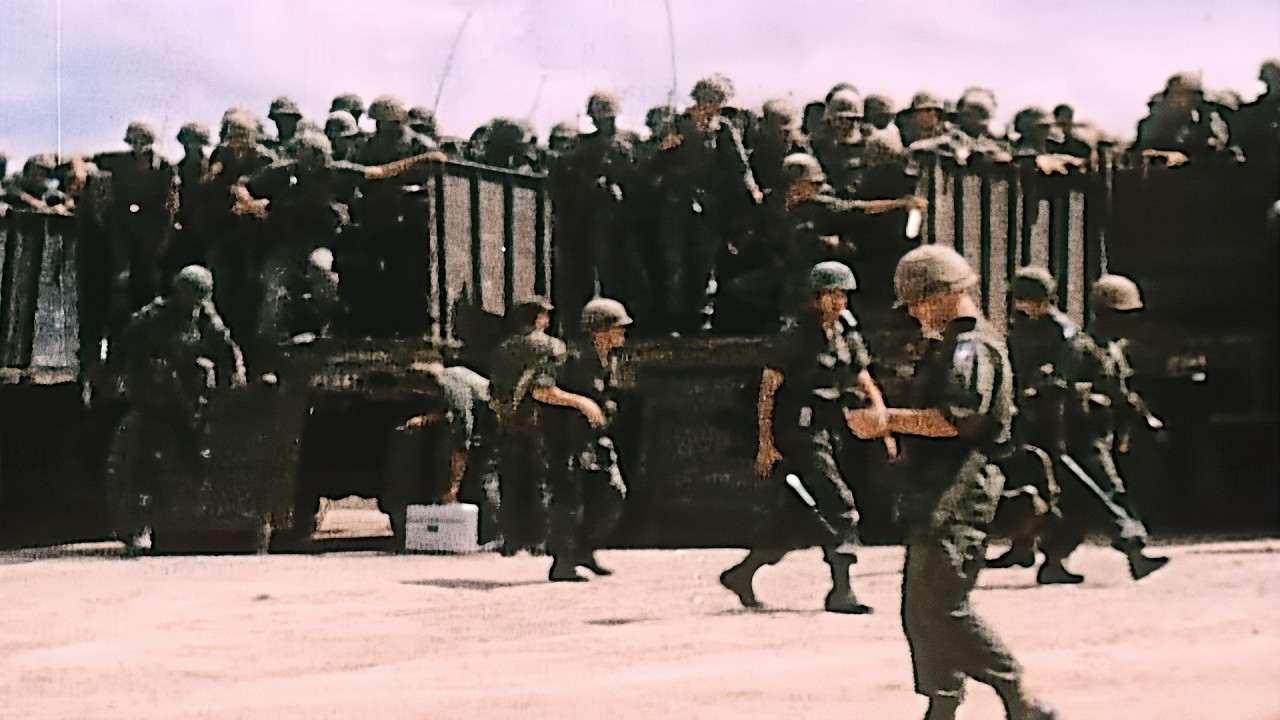
President Lyndon B. Johnson chose to ignore the retraction. He ordered airstrikes against torpedo boat bases and a petroleum depot along the North Vietnamese coast. Congress handed him the Gulf of Tonkin Resolution, which one senator said covered everything like his grandmother’s nightgown.
It gave Johnson the freedom to fight as he saw fit. The bombs fell on the North. The Viet Cong answered with a bombing attack on an American air base. The full-scale American war in Vietnam had begun, and it would run for twenty years, leaving scars that still echo.
How did the United States, a nation of such confident and intelligent men, come to this? The answer begins long before Johnson, before Kennedy, before the cold war itself. Vietnam’s history is a history of great dynastic struggles that fragmented the country over the centuries and left it heir to many overlapping cultures. The very idea that a single people called the Vietnamese existed over the past two thousand years is a relatively modern invention.
The land itself is the story of two great river deltas: the Red River delta in the north and the Mekong Delta in the south. These three geographical regions were first settled, so far as archaeology can tell, by three different ethnic groups. The Vietnamese lived in the north. The Cham people occupied the central coastal strip, a collection of kingdoms known as Champa.
The Cambodians settled the Mekong Delta early on. The Cham had come from across the sea, most likely from the northern coast of Borneo. They were great sailors and traders, speaking a language related to Malay, and they built their own civilization in central Vietnam, shaped heavily by Hinduism and to some extent Buddhism from India. For five or six centuries, Champa was the dominant maritime power in the South China Sea, controlling its trade.
Then trade expanded from Europe to China, bringing Western merchants alongside Muslim traders from India and the Middle East. Slowly, Champa converted largely to Islam, while Christianity gained real importance in the central and northern regions. Full-scale war broke out between the north and the southern Vietnamese kingdoms. The combatants armed themselves through trade with the West: the Dutch supplied weapons to the Trinh people in the north, while Portuguese ships carried arms from Macau, near Hong Kong, to the Nguyen family in the southern kingdom.
These were the first European contacts, quickly followed by the Dutch, then the British and the French. Before the Europeans arrived, and throughout this whole period, flourishing local civilizations existed, highly developed societies that borrowed elements of religion, royal governance, and political organization from India more than from China. Catholic missionaries, especially the Portuguese, arrived with the traders. But it was not until the French missionaries of the mid-seventeenth century that their influence was felt across all of Vietnam.
The most prominent was Alexandre de Rhodes. He studied the Vietnamese language and composed a French dictionary, opening the language to foreign influences. A growing number of Vietnamese converted from Confucianism to Roman Catholicism. The emperor grew angry and ordered many missionaries executed.
That was the turning point from friendly trade relations to aggressive behavior. The French seemed almost to use the executions of their missionaries as a pretext for invasion. Unlike the British in India, the Portuguese in the Philippines, or the Dutch in Indonesia, the French had no territory in the region, so they decided to seize Vietnam and establish a colony. There was constant tension between the different regions of Vietnam, and the French arrived in that context.
Around 1860, they captured the area near Saigon, and over the following two decades they moved through central and northern Vietnam, expanding control over all six provinces of the Mekong Delta. They formed a colony known as Cochinchina, and for the first time in its history, the country was divided into three regions. France controlled all of Vietnam. French Indochina was established in October 1887, with Cambodia and Laos added in 1893.
The French were eager to subject Vietnam to French law, and their culture soon spread throughout the country. The conquest actually won support from some Vietnamese, including Catholics and others who believed French language could bring modernization. Some sided with the French for economic gain, receiving land in the south, especially in the Mekong Delta, creating a new class of landowners. The French quickly built a bureaucracy and city structures, erecting municipal buildings, courts, and schools.
The education system was developed for expatriates but soon became fashionable for wealthy locals. In Hue, the capital of the Annam region, the old trappings of imperial rule were carefully preserved by the colonial administration. In a modern house built by the French in Dalat, the empress of Annam raised three charming children in an atmosphere of genuine royalty, accepting with Eastern resignation the clear facts of the situation. Parents understood that if their sons wanted to rise in the bureaucracy and gain positions, they had to learn the newly adopted Latin alphabet, known as Quoc Ngu, the national script.
Vietnamese culture became cosmopolitan in a way it had never been before, and with that came familiarity with Western political ideologies, including communism. It was in this climate of French education that Ho Chi Minh grew up, the man who would change the history of Vietnam forever. As a young man, he yearned to see the world and went to work on ships as a sailor. He traveled to America, lived in London for a time where rumor had it he worked as a cook, and lived in Paris.
While in Paris, he petitioned for independence and civil rights for the Vietnamese people under French rule. When that failed before President Woodrow Wilson at the Versailles peace talks in 1919, Ho Chi Minh was left disillusioned, which deepened his communist fervor. He spent time in Russia and China before being imprisoned by Chiang Kai-shek. His reputation at home was growing, and when he returned in 1941, he had almost achieved the status of a hero.
He was a man seasoned by life, educated by the French, traveled around the world as a sailor. He had been a member of the French Socialist Party, and when that party split in 1919, he joined the communist faction that founded the French Communist Party. During World War II, France fell to Nazi Germany in June 1940, and the Vichy government in Paris immediately ceded control of Saigon and Hanoi to Japan. Japan claimed the right to land troops in Vietnam to prevent war materials from moving through the country to the Allies.
When Ho Chi Minh was released from prison in China, he returned to Vietnam to lead the independence movement known as the Viet Minh. They fought against the Vichy French forces and the Japanese. In 1945, they took control of the northern part of Vietnam. The British liberated the south, and to justify restoring their own colonies in the Far East, they rearmed the Japanese to control the country until the French arrived to reoccupy southern Vietnam.
Ho Chi Minh and the Vietnamese communists refused both the Japanese and the French, and they were the only major political party in Vietnam to oppose both. When both groups lost the war, the communists under Ho Chi Minh were in the strongest position to take over. People at the time spoke of him as Uncle Ho. Everyone assumed he was somewhere out there, fighting like hell, but he was also clearly a man with his own ambitions.
The Vietnamese respected him as a great patriot and were willing to support him. They were tired of French domination, and now Japanese, and they fought for their freedom. Ho Chi Minh oversaw many successful military operations against the French and then the Japanese occupation during World War II, with secret support from the United States Office of Strategic Services. He had formed an alliance with America, rescuing French and American pilots shot down by the Japanese and delivering them to American forces in southern China.
He built an army with some American support, and he was in a position to take power once the Japanese were defeated. Meanwhile, the country was in the grip of a massive famine. The peasants blamed the French and the Japanese, who monopolized rice to feed their own forces and even exported it to Japan. After the Japanese surrendered Vietnam to the Viet Minh in 1945, an estimated two million Vietnamese had died.
One of the problems at the end of the Second World War was that it led to a variety of other wars, especially in Indochina. The Vietnam War that the United States fought was inherited from the French, who had lost, and in fact it was inherited from Ho Chi Minh himself when he was an ally of the United States. The fundamental problem was that Ho Chi Minh was a nationalist first and foremost, not a communist. Since 1945, American foreign policy had been built on containing communism.
There was the famous domino theory: if South Vietnam fell to the communists, then Laos, Cambodia, Thailand would fall, and it would spread down the Malay Peninsula until Australia became a communist state. One senator put it memorably: we do not want to start fighting them when they land on Waikiki Beach. The clever men in Washington, men like McNamara and Rusk, genuinely believed this was the beginning of a communist takeover of the world. They believed the domino theory completely, and it was a profound error.
One of the most remarkable things about the war is that such intelligent men could be so completely wrong. In December 1946, Ho Chi Minh and the Viet Minh in the north decided to resist, attacking the French in Hanoi. The war that began then lasted until 1954. The situation in French Indochina grew worse as fighting intensified, leaving misery and destruction.
French forces moved into the countryside to engage the well-equipped forces of the Democratic Republic of Vietnam, which made a desperate but failed attempt to wipe out the entire French population of the city. Ho Chi Minh was exceptionally able at rallying his forces, securing Soviet aid, and preventing the Chinese from panicking about it while also requesting their help. He was a brilliant general. President Eisenhower refused to help the French with airstrikes at that time.
The fighting continued, with French pilots flying American planes as the weapons stopped working and bombs fell on communist divisions that had slipped into French positions in the Hanoi delta. For the first four years of that war, the United States paid about eighty percent of the French military budget. The Chinese, meanwhile, supported the Vietnamese independence movement, which was led mostly by communists and fought most of its battles in the north. Many southerners, like everyone in Vietnam at that time, joined the Viet Minh out of a sincere desire for resistance.
The war spread to the peaceful rice paddies. From the far waters of the war came the helpless victims of aggression: women, children, the elderly, the sick. Communism had swept through their path, leaving them only a spark of life driving them toward escape and refuge behind French lines. People on all sides were fighting for different reasons.
The Americans fought to stop the communist tide from sweeping through the region, from China through Vietnam to the rest of Indochina and Southeast Asia. Some Vietnamese thought they were part of an international movement, but many fought for personal reasons: to liberate the country from foreign occupation or to rid themselves of the power of the landlords. The war that began in 1946 lasted eight years and culminated in the Battle of Dien Bien Phu in 1954. The French army’s bold move turned out to be a complete mistake.
They were outmaneuvered and outsmarted by guerrilla fighters under the brilliant command of General Giap. The First Indochina War ended with a total French defeat. France agreed to withdraw its forces from all its colonies, and at a conference in Geneva it was decided to divide Vietnam. The north was given to the Viet Minh as the Democratic Republic of Vietnam under Ho Chi Minh, and the south became the State of Vietnam, nominally under Emperor Bao Dai.
This prevented Ho Chi Minh from taking control of the whole country. After the division, the United States saw the north as a communist threat. The Prime Minister of South Vietnam, Ngo Dinh Diem, was given two years to hold a vote on reunification, but the United States feared Diem might not win. In the north, the Viet Minh formed the National Liberation Front, known as the Viet Cong, led by Ho Chi Minh, and began a guerrilla war in the south in an attempt to gain control.
Diem had returned to Vietnam with the acceptance of the last emperor, Bao Dai, and in a referendum he deposed Bao Dai, exiled him to France, and became president. The south was still administered from Saigon until elections would be held that would unify the country. When the Americans realized they would not win any election against the communists, they supported Prime Minister Diem in establishing an independent state in the south. It would serve as a shield, like South Korea.
Because of the Korean War’s influence on American thinking, when the French lost at Dien Bien Phu, Eisenhower had to decide what to do. He chose to support the South Vietnamese government and backed that unpleasant man, Diem. Diem was something like a South American dictator. One American general supposedly said of him: he’s a son of a bitch, but he’s our son of a bitch.
That mindset prevailed in the American government when it looked at its allies around the world, and it was a mistake. Half the villages were under communist control in 1954, and it was not clear who would ultimately win. In fact, the United States and other political groups expected the communists to win. It was not some great American conspiracy for world domination.
They simply did not want the Russians to seize power. When they saw Soviet communism as a threat, which it truly was, it would affect other parts of the world they believed they could reach. So Vietnam, after the French defeat at Dien Bien Phu, was a prime candidate for American aid. Diem turned his attention to the religious and political sects in the Mekong Delta and attacked them first.
Battles broke out in the streets of Saigon in 1954 and 1955, spreading into the delta. There was a kind of civil war in the early days of the South Vietnamese state. The divisions and unrest continued. The people of Vietnam continued to see Ho Chi Minh and the National Liberation Front as a way to restore their independence.
America watched closely, worried about the rapid rise of communism in Vietnam, which it considered a direct threat. This mood pushed President Kennedy to send aid, eventually leading to more than half a million American soldiers and a bloody war lasting twenty years. The Viet Minh had been able to recruit across the south, center, and north, while the religious groups in the south could not recruit members elsewhere. The Vietnamese Nationalist Party was more concentrated in the north, and Ngo Dinh Diem’s followers were mainly among Vietnamese Catholics, especially in his stronghold in central Vietnam.
Thus the Viet Minh built the largest political organization, recruiting peasants while most other groups showed little interest. It was a communist party, disciplined, with a large membership, capable of taking power from the top down to the villages and mobilizing huge numbers of people. By the early 1960s, Hanoi’s policy had shifted again toward supporting the guerrilla war rapidly developing in the south. Meanwhile, the United States built up its own forces, exceeding the limit set by Geneva on foreign troops in South Vietnam.
President Kennedy committed aid to Diem. America had recently failed to defeat the communists in North Korea, and they were determined not to lose to them again in Vietnam. In 1961, four hundred special forces advisers, the Green Berets, were sent to train soldiers in fighting against the Viet Cong fighters led by Ho Chi Minh. In October of that year, General Maxwell Taylor reported to the president and advised Kennedy to increase the number of American military advisers and send eight thousand combat troops.
The number of troops Kennedy sent would eventually exceed sixteen thousand by 1963. It was a grave mistake for Kennedy to intervene as he did with American forces in that part of the world, believing a great homogeneous Soviet communism would prevail when he could have fought it more shrewdly. The most important word the Vietnam War gave us is escalation. It began with Kennedy sending just four hundred advisers, actually special forces organizing and controlling the operation, and then more came, and then more.
South Vietnam was already under attack, sometimes by a single assassin, sometimes by a group of fighters, and recently by entire battalions. The peaceful borders of Burma, Cambodia, and India had been repeatedly violated, and the peaceful people of Laos risked losing the independence they had recently gained. The final result was that the United States decided the south would be lost very quickly if policy did not change, and that America needed to intervene with regular forces on a large scale. Kennedy was hesitant about Vietnam.
He understood he could not abandon the region, but by July he faced a crisis. Despite increased American support, the South Vietnamese army was making no progress against the Viet Cong. The regime of South Vietnam’s president, Ngo Dinh Diem, came to an end in a wave of violence. Days before an army revolt, photographs showed a man with no premonition of the horrible death that awaited him.
The situation in Saigon was getting worse as the Viet Cong fought against Diem, eventually leading to his death. Fire was concentrated on the tanks and armored personnel carriers blocking the road to the palace. They were delayed only to die in an armored car taking them to prison. Three weeks later, the nation was about to be shocked by the tragic assassination of President Kennedy on November 22, 1963.
He was shot in Dallas, Texas, and died at two in the afternoon Central time. Vice President Lyndon Johnson left the hospital and soon took the oath of office, becoming the thirty-sixth president of the United States. The country was in turmoil, and the situation in Vietnam was the most urgent problem Kennedy had faced. Johnson inherited America’s commitment to Vietnam and to defeating communism.
For all his great virtues, Johnson was not very strong in foreign policy. He had served in the Navy during the Pacific war. He believed, first, that overwhelming force was militarily effective, and second, he was a shrewd Texas trader. He thought if he waved the big stick, he could negotiate with Ho Chi Minh.
But Ho Chi Minh did not want to negotiate with anyone. He knew that in the end he would win. He could control his casualties, and all he had to do was keep his losses below his birth rate. In August 1964, the incident occurred off the Gulf of Tonkin, and President Johnson reacted.
All Americans were determined to fulfill their full commitment to the people and government of South Vietnam. This reaction would eventually lead to the beginning of the Vietnam War, a war whose echoes still resonate, and whose justifications are still questioned today. The destroyers of the United States Navy were assigned routine patrols. On Sunday, August 2, 1964, the Maddox was on such a patrol.
Johnson had the nearly unanimous approval of Congress to escalate the war. Everyone in the Capitol knew he could get anything he wanted. They gave him the Gulf of Tonkin Resolution, which covered everything, granting him absolute freedom to fight as he pleased. He announced to the American people the renewed hostilities against United States ships on the high seas, and ordered military forces to take action and respond.
The Viet Cong responded to the full-scale military action with a bombing attack on an American air base. One of the most important effects of the American ground force buildup in South Vietnam was that the communist fighters in the south began recruiting at an increased rate themselves. From 1964 to 1965, the communists quadrupled their fighting force. Meanwhile, the United States was strengthening its forces even faster, in the hundreds of thousands.
American troop numbers in South Vietnam rose from twelve thousand to two hundred thousand. Johnson’s attack on Vietnam enjoyed great support in the United States, and his popularity rose, winning him a landslide victory to become president. Within a year, he ordered the start of Operation Rolling Thunder. North Vietnam also contributed regular forces to the fight.
The destruction inflicted on South Vietnamese villages, especially the populated areas where the impact was greatest, but also in forested regions, escalated enormously from the mid-1960s onward. It had a huge effect on the Vietnamese people’s livelihoods, driving them from the countryside where the war was most intense into the cities. The cities began to fill with rural refugees, and protest movements arose. The constant arrival of American troops and the massive mobilization of southern forces meant America could inflict heavy losses, not only on the regular northern Vietnamese who moved south, but also on the southern fighters and communist regular forces.
Large-scale riots continued in Saigon. America could not politically invade the north because they had not declared war. This was a police action, so they could not push northward, but they felt able to bomb it. The operation was called Rolling Thunder, and they tried to crush all industry, all supply lines, everything in the north.
Within a month, they would drop more ordnance on North Vietnam than was dropped in the entire Second World War. This aerial bombardment would continue for three years, alongside the use of Agent Orange. It was just the beginning of a war that would last many years, a war that would affect Vietnam and America for decades to come.
