In the autumn of 1864, Dinah Creel watched Confederate soldiers lead away the man she meant to marry. Weeks later, she heard that an enslaved carpenter had been accused of weakening the military defenses outside Macon. By morning, the camp intended to make sure he never sabotaged anything again. Dinah had no pass, no legal standing, and no weapon that could break through a Confederate gate.
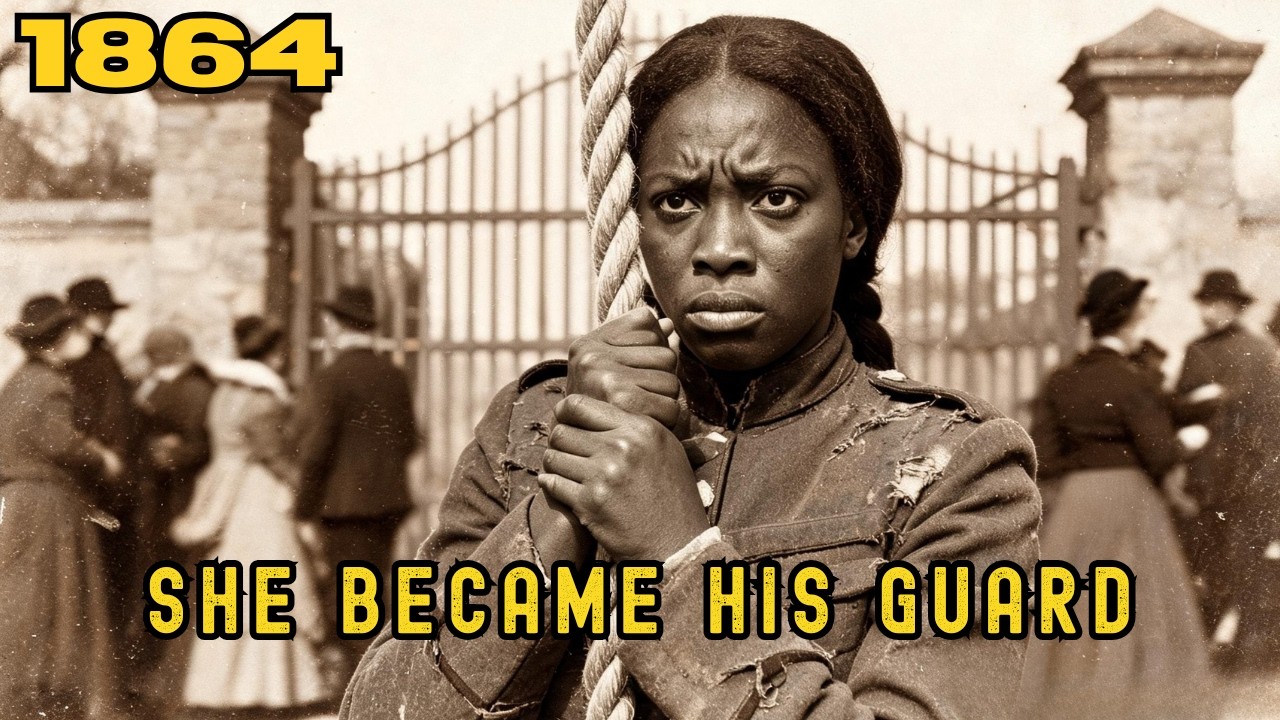
What she had was a gray uniform and years of watching the men who believed only white soldiers could wear it. Georgia in 1864 had become a far more dangerous place for the people the Confederacy considered property. Military pressure tightened around the important roads, rail lines, depots, and defensive positions. Confederate authorities demanded labor wherever they could find it.
Enslaved Black men were taken from farms and workshops and forced into military construction. They cleared land, moved timber, repaired roads, strengthened fortifications, built temporary crossings, and maintained the infrastructure of a government fighting to preserve the system that enslaved them. Micah Barlow was useful to that system because he was a carpenter. He was thirty-five years old, tall and broad-shouldered, with hands hardened by years of shaping wood.
He understood joints, load, balance, moisture, and the difference between a structure that looked strong and one that actually was. That knowledge made him valuable. It also made him dangerous. Dinah Creel knew that before anyone else did.
She was thirty-one and worked in the same world from a different angle. Dinah washed the clothes of the Confederate soldiers passing through the region around Macon. She worked through piles of torn sleeves, missing buttons, split seams, trousers stiff with mud, and coats stained by rain and long marches. The men who wore them rarely paid attention to the Black woman who repaired what they had ruined.
That was their mistake. Dinah listened. She learned which officers were feared and which were mocked the moment they left the room. She learned how enlisted men answered questions when they were tired.
She learned how soldiers carried themselves differently by rank. She watched how they saluted, how they shifted their weapons, how they stood when an officer approached, how they talked when they thought no one important was listening. The Confederacy had forced Dinah into silence. Under that silence, she became a careful student of the men who controlled her movements.
None of that seemed to matter on the morning Micah was taken. An order had come down to assemble a military work detail from the surrounding area. The Confederate defenses near Macon required skilled labor, and carpenters were especially useful. Micah was given no real choice.
A white overseer arrived to carry out the order. There was no negotiation over wages, duration, or safety. Under slavery, expertise belonged to the slaveholder whenever authority required it. Micah was ordered to gather the tools he would need.
Dinah stood near the work yard while he prepared to leave. They had planned to marry when circumstances allowed them to build something like a life together. The very phrase exposed the violence of their situation. Two adults could promise themselves to each other, but the legal system around them recognized claims of property more than it recognized the marriages of Black people.
One sale could separate them. One military order could separate them. One white man with authority could decide that their plans no longer mattered. Micah adjusted the small bundle he was permitted to carry.
Dinah wanted to ask when he would return. She did not. Neither of them believed that anyone present could guarantee the answer. A guard ordered the work detail to move forward.
Micah walked a few steps, then turned. He looked at Dinah. There was no dramatic farewell. There was no chance for one.
Dinah held his gaze. Then he was pushed onward with the others. She went back to the laundry. That was how slavery demanded grief be handled.
The work continued. The next damaged coat still had to be mended. The next shirt still had to be cleaned. The next soldier still expected service from a woman whose government was tearing families apart.
Days turned into weeks. Information came in fragments. Passing soldiers complained about unfinished fortifications. Construction crews were being pressed harder.
Timber arrived late. Defensive works had to be completed quickly because Confederate commanders did not know where the next major pressure would fall. Dinah listened for Micah’s name. At first she heard nothing.
Then she began to hear about failures. A section of defensive construction had to be rebuilt. A wooden brace moved before it should have. Another piece of work was judged badly joined.
The soldiers blamed haste, poor supervision, wet wood, exhaustion. Those explanations were believable because every part of the Confederate war effort was under strain. Dinah heard the complaints and understood something the soldiers did not. Micah was not building carelessly.
If a joint failed under his hands, there was often a reason for it. She remembered a conversation they had before he was taken. Micah had once examined a fence that another worker had repaired badly and quietly corrected the brace. Dinah had said to him, “You make everything sound.
” Micah looked at the repair. “Only what should be. ” At the time, the words seemed ordinary. Now they did not.
Dinah began to suspect that Micah had made his own decision. The Confederacy had taken his skill and ordered him to strengthen military defenses. Perhaps Micah had decided that he could pass inspection while weakening them at the same time. He knew how to set a brace that would pass a look.
A brace that would give way under repeated stress. He knew how moisture affected exposed timber. He knew how much material could be removed before a structure began to look suspicious. The most effective sabotage does not always announce itself.
Sometimes it resembles poor workmanship until someone looks closely. And eventually, someone looked. The information reached Dinah late in the afternoon. She was sewing a gray coat sleeve.
Two Confederate soldiers entered the nearby service area. They had drunk enough to talk carelessly but not enough to ramble. Dinah lowered her eyes and kept sewing. One soldier complained about the delay near the military works.
The other mentioned the carpenter. Dinah’s hand stopped for less than a second. She forced herself to move again. “They finally caught the one causing trouble,” the first said.
The other gave a short laugh. “The carpenter? ” “The same. ” Dinah kept sewing.
The needle went through the wool. She listened. The soldiers discussed the damaged works, the suspicion of deliberate weakening, and an enslaved worker who had been separated from the rest. Then came the sentence that changed everything.
“They’ll deal with him before the army moves. ” Neither soldier explained what that meant. A Black man accused of sabotaging Confederate military installations could not expect any of the protections an ordinary prisoner might receive. Micah had crossed an invisible line.
He had gone from an exploited worker to a suspected enemy. Dinah waited until the soldiers left. Only then did she set the coat aside. For several moments she sat perfectly still.
The obvious options were useless. She could appeal to the farm owner. That would reveal Micah’s actions and make his situation worse. She could run toward the camp as herself.
She would be stopped well before she reached it. She could flee alone. But Micah would still be there when Confederate authorities decided to settle the matter. Dinah looked across the room.
Several damaged uniforms were set aside for repair or salvage. Gray wool, brass buttons, soldiers’ coats, trousers, and caps. Things she had handled hundreds of times. She had always known what those uniforms meant.
Authority. Movement. Access. The right to carry a weapon openly.
The right to approach a checkpoint and expect to be questioned as a soldier rather than seized as property. Dinah stood. She walked toward the uniforms. Her hands moved among them slowly.
An officer’s coat would be impossible. It would attract too much attention and carry too many expectations. She chose an ordinary soldier’s clothes. Old enough not to look freshly issued.
Dirty enough to suggest hard service. Ordinary enough to disappear among exhausted men. Dinah held the gray coat against her body. The idea should have looked absurd.
Instead, it looked dangerously practical. For years, Confederate soldiers had come into the place where she worked. They assumed she was too insignificant to matter. They talked in front of her, complained in front of her, revealed their habits in front of her.
They had trained her without knowing it. Dinah laid the uniform on the table. Then she found a pair of scissors. She touched her hair once.
Micah had only hours before the camp decided his fate. There would be no rescue party, no official intervention, no law coming to protect them. If Dinah wanted to reach him, she would have to enter the machine designed to control them both. She raised the scissors.
The first lock of hair fell onto the table beside the Confederate coat. The scissors did not make Dinah a soldier. They only removed the first obvious thing that could give her away. She worked quickly after that.
The cut hair was gathered and hidden. Nothing in the room suggested preparation for escape. The disappearance of a military uniform could be explained for a few hours. A woman who suddenly changed her appearance could not.
Dinah chose the clothes carefully. The gray coat was worn at the elbows and darkened by old rain. One sleeve had been repaired twice. The trousers were too large, but that was useful.
She could adjust them without making them look fitted to her body. She rejected anything decorated. No polished buttons. No officer’s trim.
No coat that indicated rank. Rank brought questions. An ordinary soldier could be ignored. That was what she needed.
Dinah had spent years being ignored and passed over because she was Black, female, and enslaved. Now she intended to exploit a different kind of invisibility: the anonymity of an exhausted Confederate soldier among thousands of others. She began fitting the clothes. The coat was too wide at the shoulders.
She adjusted the lining from the inside while leaving the outer seams untouched. She cut nothing that would make the clothes look recently altered. Instead, she changed the way she wore them on her body. Then she bound her torso beneath the coarse shirt.
The pressure made breathing harder. That was acceptable. She would not run once she entered the camp. Running drew attention.
She had to walk. Her shoes were a bigger problem. The available pair was for a larger foot. Dinah stuffed the toe with cloth and pulled the laces as tight as she could.
The result was uncomfortable but convincing. The pain was less dangerous than an uneven gait. She stood, took three steps, and stopped. Something was wrong.
Not with the clothes, but with her. Dinah had dressed correctly, but her body still moved like someone who had spent years surviving under white authority. She stepped aside too quickly. She lowered her eyes without thinking.
Those habits had protected her before. Now they could kill her. A soldier in the Confederate army did not step aside for every white man who approached. He did not flinch automatically when spoken to.
He did not wait for permission to occupy ordinary space. Dinah faced the wall and began to practice. She set her feet slightly apart, straightened her back, changed the way she moved her shoulders. She walked from one end of the room to the other.
Again. And again. Each repetition forced her to violate an instinct that slavery had planted in her body. That mattered more than the uniform.
A disguise could survive imperfect features. It could not survive submissive behavior in the wrong social role. Dinah realized a brutal truth in that room. The system around her had not only determined where Black people could go.
It had trained movement itself. Who steps aside? Who looks down? Who waits?
Who speaks first? Who expects obedience? Those rules were enforced so strictly that a person revealed their place in the racial order by the way they moved without saying a word. Dinah would have to break those rules for one night without letting anyone see how strange it was.
She moved again. This time she did not lower her eyes. She imagined a white soldier entering. She looked straight ahead.
The change felt dangerous even with the room empty. That was exactly why she knew it was necessary. Her voice was next. She had no intention of attempting a theatrical impression.
A fake deep voice would attract attention faster than a quiet one. Dinah had heard soldiers talk after long marches and sleepless nights. Men with raw throats answering in short phrases. Some barely opened their mouths.
She decided to become one of them. Hoarse, annoyed, and uninterested in conversation, she practiced simple answers. “Arrived yesterday. ” “Orders changed.
” “Don’t know. ” “Ask the lieutenant. ” Short phrases were safer than complex lies. Every additional detail created another point where she could contradict herself.
Dinah avoided inventing a full history. She did not need to become a real man. She needed others to decide that she was one before they examined the evidence. That distinction shaped everything.
She rubbed ash and dirt lightly along her jaw and neck. Not enough to look deliberate. Just enough to break the clear lines of her face. She darkened the inside of the collar where sweat would naturally gather.
She roughened the coat a little at one shoulder. The uniform had to look used, not prepared. Then she studied her hands. They were a problem.
Her fingers carried the fine marks of needlework. Small punctures. Scars in places that did not match the hard labor of infantry. She could not change them.
So she changed how visible they were. One hand would stay close to her coat or equipment whenever possible. The other would appear dirty enough to discourage examination. She rubbed dirt into the creases of her fingers.
Then she stopped. Too much would look deliberate. She wiped some off. The disguise depended on imperfection.
A person trying to look exactly like a soldier might be more suspicious than someone who simply looked tired, dirty, and ordinary. Dinah tested the cap again. She picked up an old one and set it low enough to shade part of her forehead without hiding her eyes. Then she faced the small piece of reflective metal used near the worktable.
She was convincing because there was nothing to warrant a second look. That was enough. She stood still for several minutes. She thought of Micah.
Not sentimentally, but practically. Where would he be held? Which side of the camp would use the carpenters? Would he be confined near the unfinished works or separated from the work entirely?
Would he recognize her? Could he recognize her without showing a reaction? Every question produced another risk. Dinah did not have answers to most of them.
What she had was access to the behavioral world of Confederate soldiers. That was the only advantage available to her. Over the years, the soldiers had brought more than clothing to the wash area. They brought information.
They complained about commanders, discussed the roads, mentioned units moving through the county, and repeated phrases used at checkpoints. They thought Dinah heard without understanding. That assumption was now being used against them. She remembered how soldiers reacted to junior officers they disliked.
Not with fear, but with controlled resentment. A slow acknowledgment, a guarded answer, a look held just long enough to show displeasure without becoming insubordination. Dinah practiced that too. It was harder than walking.
As an enslaved woman, showing displeasure before a white man with authority could bring punishment. As a white soldier, showing excessive obedience could bring suspicion. The same expressions could mean survival in one identity and exposure in another. She had to choose correctly every time.
Dinah tested herself with imagined questions. “Where are you attached? ” She answered. “Where did you come from?
” She answered. “Who sent you? ” She hesitated too long. She tried again.
Better. She carefully rehearsed several ways to end conversations rather than continue them. A cough, a muttered complaint, a look toward duty. The performance was not about convincing someone for ten minutes.
It was about preventing ten minutes of scrutiny from happening at all. Before leaving, she checked the uniform one last time. Gray wool, mud, rough stitching, worn leather. Nothing heroic, nothing striking.
And yet, the clothes carried a form of authority Dinah had never been allowed to possess. A Confederate soldier could approach roads she could not reach, pass checkpoints she could not pass, carry equipment she could not carry, demand answers from people who would demand answers from her. The transformation revealed how arbitrary that authority was. The man did not have to be brave.
He did not have to be intelligent. He only had to be recognized as belonging to the right category. Dinah intended to fake that recognition. She wrapped the clothes she could not wear immediately.
She removed every trace of preparation from the room. No loose thread. No obvious alterations. No hair left behind.
Then she dressed completely. She tightened the boots, closed the coat, adjusted the cap. The binding around her chest made every breath a little shallower. She accepted that.
Dinah opened the door and stopped. Her body tried to angle aside as if making room for someone who was not there. She straightened. Walk tall.
Take up space. Do not apologize for existing. It was a harsh lesson. The Confederacy had made the rules.
Dinah was only learning how to use them. She left before daylight covered the road. In the first distance, she avoided everyone. Not because the disguise had failed, but because she needed time to get used to it.
When she finally heard horses behind her, she did not hide. That would have destroyed everything. She kept walking. Two Confederate soldiers passed.
One glanced at her. Dinah gave a brief nod. Nothing more. The soldier returned the nod.
They rode on. Dinah did not turn to watch them. Only after the sound of the horses faded did she allow herself one slow breath. The disguise had passed its first human test.
That did not mean it was good. It meant the assumptions around her were doing part of the work. By mid-morning, the signs of military activity were too clear to miss. Wagon tracks, freshly cut timber, men moving supplies, and paths deepened by heavy traffic.
Dinah kept the same pace. A tired soldier with somewhere to go. Nothing more. Then the view opened enough for her to see the outer fortifications.
Timber barriers, earthworks, smoke from campfires, movement behind the perimeter, and armed guards at the entrance. Dinah slowed slightly so she would not look eager. Her preparation was over. From this moment on, she would not practice behind empty walls.
One wrong gesture could expose her. One unnecessary sentence could betray her. One man looking too closely could destroy the entire deception before she reached Micah. Dinah adjusted her cap, squared her shoulders, and walked straight toward the Confederate gate.
She reached the gate in full daylight. That was deliberate. Darkness would have made concealment easier, but it would have made every guard suspicious. Men approaching military positions at night were challenged more aggressively.
Men arriving under the sun, covered in road dust, and wearing Confederate gray were expected to belong somewhere. Dinah needed expectations more than shadows. The outer works were unfinished and crowded with movement. Wagons rushed across the rutted ground.
Men hauled timber toward new fortifications. Horses stood tied beside supply carts. Smoke rose from cooking fires and work areas. Orders were shouted, ignored, and repeated.
The disorder helped her. An organized camp would have had more time to examine strangers. This one was under pressure. Dinah joined the flow of men moving toward the entrance and held her pace.
A guard stepped forward. “Where are you going? ” Dinah did not stop suddenly. “Inside.
” The guard looked annoyed. “That I can see. ” Dinah coughed into her hand to give him the hoarse voice she had practiced. “Sent back from the southern road.
Attached to—” She named the unit she had heard often enough to say without hesitation. The guard looked past her at another wagon trying to enter. It should have ended there. Then a voice came from several yards away.
Dinah felt the words before she allowed herself to turn. A Confederate lieutenant was walking toward the gate. He was not large, but he moved with the economy of someone accustomed to being obeyed. His uniform was in better condition than the men around him.
His face was lean. His expression was controlled, his gaze direct. Lieutenant Blrike. Dinah did not know his name yet.
But she understood his type immediately. Some officers enforced their authority through volume. Blrike did not need that. He only looked.
That was worse. His attention went first to Dinah’s boots, then to her trousers. Then to the coat. Then to her hands.
Dinah resisted the instinct to close her fingers. The lieutenant stopped in front of her. “You came from the southern road. ” “Yes, sir.
” “Which section? ” Dinah named a location she had heard soldiers complain about two days earlier. Blrike showed no reaction. “Which company?
” She answered. “Who commands it? ” That was the first dangerous question. Dinah knew the family name, but she did not know whether command had changed.
She gave the name. Blrike kept watching her. Dinah knew what was happening now. These questions were not designed only to verify facts.
They were designed to measure hesitation. A liar often searches for the answer before speaking. Dinah had spent years watching white men interrogate enslaved workers after a tool went missing, food disappeared, or work slowed unexpectedly. The technique was familiar even if the uniform was different.
Blrike moved his gaze to her face. “When did you leave yesterday? ” “Morning, sir. ” “Why?
” “Orders changed. ” “Orders from whom? ” Dinah coughed again. “The captain’s orders.
” Blrike waited. Dinah did not fill the silence. That was important. An anxious person often explains too much.
A tired soldier does not owe a lieutenant a story unless asked. Blrike seemed to notice the discomfort on her face. For one second, Dinah feared she had overdone it. Then the lieutenant looked back toward the road.
“Move. ” That was all. Dinah passed him. She did not speed up.
She did not look over her shoulder. The gate closed behind a wagon. For the first time in her life, Confederate guards allowed Dinah Creel into a restricted military position because they believed she was a white man. There was no triumph in that.
The system had already decided who could cross that line, and Dinah had only provided the appearance. The danger inside was different. At the gate, she had to survive inspection. Now she had to find Micah without looking like she was searching for him.
She moved first toward the construction area. That was the logical place. Micah was a carpenter. He would be near timber tools, bridge frames, stacks of cut planks, or any unfinished defensive work requiring carpentry.
Dinah did not scan faces openly. Instead, she watched the work. Men were digging. Others were moving cut logs.
A carpentry crew was shaping heavy braces beside a half-finished barrier. Micah was not among them. She kept moving. Every few minutes she stopped near something that gave her an excuse to stand still.
A water barrel. A wagon. A pile of equipment. From those positions, she could observe the camp without having to turn her head too often.
She saw enslaved workers carrying timber under armed guard. Some moved slowly from sheer exhaustion. Others worked quickly because the guards stood close. Men who talked constantly about defending their freedom forced Black men to build the defenses that protected slavery.
Dinah had no time to reflect on that hypocrisy. She needed Micah. Near a tool station, she noticed a carpenter repairing a damaged brace. She approached as if inspecting the work.
“Did you see the man they pulled off this detail? ” The carpenter looked at her. Dinah kept her expression neutral. “Which man?
” “The one they blamed for the bad braces. ” The worker hesitated. A nearby guard turned his head. Dinah changed her tone instantly.
“The lieutenant wants him kept separate. ” It was a risk. The carpenter lowered his voice. “They took him toward the inner fortifications.
” Dinah nodded once and walked away. She had learned the destination without mentioning Micah’s name. That was important. A Confederate soldier could ask about a suspected saboteur.
But a soldier who kept asking about one enslaved man would linger in someone’s memory. Dinah moved toward the inner fortifications. The camp became more disciplined there. Less spontaneous movement, more guards, fewer workers.
She began to understand what had changed. Micah was no longer being treated as part of a labor force. He was being treated as a security problem. That made rescuing him much harder.
Dinah passed an earthwork where men were reinforcing timber supports. She stopped near a pile of cut wood and pretended to examine a cracked plank. A voice came from behind her. “Are you looking for something?
” Dinah turned. Blrike. Again, the lieutenant had appeared without announcing himself. “Work detail,” Dinah said.
“Who told you the carpenters were short? ” Blrike looked toward the timber. “They are. ” Dinah said nothing.
He stepped closer. For the second time, his attention settled on her hands. Dinah kept her hands visible. Blrike gestured toward a damaged beam.
“You know something about that, do you? ” “No, sir. ” “Then why are you standing over it? ” Dinah showed a trace of annoyance.
“Because I was ordered to wait here. ” “By whom? ” Dinah named a non-commissioned officer she had heard called out earlier. Blrike looked toward another section of the camp.
The name was real. That was enough. “Then wait somewhere useful. ” Dinah moved.
She understood the warning now. Blrike had not discovered her identity, but he had noticed her presence twice. That was already too much. The safest disguise depended on being someone unmemorable.
Blrike was beginning to remember. Dinah changed direction after a few minutes. She avoided the inner works for a while. She needed another approach.
Near a supply depot, two Confederate soldiers were discussing the damaged defenses. One complained that the suspected carpenter had cost them another day of work. Dinah slowed. The other man said, “He won’t touch another beam.
” “He’s still breathing for now. ” Dinah kept walking before either man noticed her listening. The phrase confirmed what she feared. Micah had been removed from construction entirely.
She found the likely holding area later that evening. It was not a formal prison. The camp did not need one. A work enclosure beside the unfinished defenses had been closed off to hold workers considered dangerous or troublesome.
Dinah could not approach directly. She passed once and saw only the guards. She looped through another work area and passed again from a greater distance. Nothing.
On the third attempt, she stopped behind a wagon while men unloaded tools. Then movement appeared inside the enclosure. A Black man was being led out under heavy guard. His hands held no tools.
That alone told Dinah what his situation had become. He stepped into the open, thinner than when she had last seen him. His shirt hung loose around shoulders that were still broad, but exhaustion had changed the way he carried them. There was dirt on one side of his face and a visible stiffness in his movement.
Dinah knew him before she saw his eyes. Micah. For several seconds she forgot the camp around her. Then her composure returned.
She could not move toward him. She could not call his name. She could not show relief. Dinah stayed by the wagon and watched the guard bring Micah to a more open space.
Micah lifted his head. His gaze moved across the yard. It passed the soldiers. It passed the timber.
It passed Dinah. Then it stopped. Their eyes met. Dinah saw recognition on his face immediately.
Micah knew exactly who was standing inside the Confederate uniform. And from the way his expression vanished after a fraction of a second, Dinah understood something else. He already knew that acknowledging her could cost both of them their lives. Micah looked away first.
That was what saved them. Dinah understood that almost immediately. A communication had passed between them, but only for a fleeting moment. Nothing had stayed on his face long enough to become evidence.
The guard beside him noticed movement near the wagon and turned. Dinah directed her attention toward the tools being unloaded. She did not leave. Leaving too quickly would look like a retreat.
She waited until the guard’s attention moved elsewhere. Then she crossed the yard with the calm steps of a soldier with no urgent duty. Micah was led toward a work area near the inner defenses. Dinah followed indirectly.
She moved between scattered groups, stopped beside an ammunition cart she had no reason to inspect, then changed direction again. Every step had to look spontaneous. The problem was no longer finding Micah. The problem was reaching him without showing that she had come for him.
Late in the afternoon, the opportunity came by accident rather than by planning. A support beam near one of the unfinished works split. Several men were ordered to move tools from a nearby storehouse. Micah was brought out briefly because the guards still valued his carpentry expertise, despite considering him a suspect.
That contradiction was common in slave systems under pressure. A man could be considered dangerous and still be forced to be useful. The Confederacy suspected Micah of weakening its structures and still wanted him to explain why another structure had failed. Dinah approached with two soldiers carrying equipment.
No one stopped her. Micah knelt near the damaged support while a sergeant demanded an answer. “Bad wood,” Micah said. The sergeant looked unconvinced.
“You built it? ” “No. ” The answer was calm. Calmer than the sergeant would have liked.
He stepped closer. “You know something about it. ” Micah looked at the split timber. “I know it won’t hold.
” That was all. The sergeant cursed and ordered another carpenter brought. Then he noticed Dinah standing nearby. “You.
” Dinah turned. “Take this toolbox inside. ” That was the opportunity she had been waiting for. She lifted the box and carried it toward the tool storehouse.
Micah was brought in moments later under guard. He was to identify replacement braces. Dinah kept her eyes forward. The interior was cramped, stacked with saws, hammers, coils of rope, stakes, and timber supplies.
The guard remained near the entrance. Dinah set down the box. Micah passed her. Neither spoke.
The guard turned toward the yard when someone shouted for help. Only then did Dinah move. She reached for a coil of rope on a shelf and said quietly, without turning toward Micah, “How long? ” Micah’s answer came just as quietly.
“Tomorrow. ” Dinah tightened her hand around the rope. “In the morning? ” “Yes.
” There was no need for further explanation. The soldiers were not exaggerating. Whatever formal procedure the camp intended to use, Micah believed he would not survive to see the next day. Dinah looked toward the entrance.
The guard was still distracted. “What did you do? ” Micah hesitated, not from guilt but from calculation. “Made some things weaker than they look.
” Dinah said nothing. Micah continued. “Not all at once. Enough to disrupt them.
Enough to give way under weight. ” It was a deliberate confession. He had not acted recklessly. That was what made the sabotage more serious.
Micah understood construction well enough that he did not destroy anything dramatically enough to expose himself. Instead, he exploited the difference between appearance and strength. A brace could look sound but be poorly seated. A joint could look solid but carry less load than expected.
A piece of timber exposed to water might weaken at the most critical point. They had forced him into military labor. He responded by making their obedience unreliable. Dinah finally looked at him.
“You knew they would find out eventually. ” “I stayed anyway. ” That was the truth. An enslaved Black man under armed guard could not simply walk away from a Confederate military position because he had decided to resist.
Micah had known sabotage carried consequences. He did it anyway. The guard turned back toward the entrance. Dinah lifted the rope as if inspecting it and moved away from Micah.
The opportunity closed. For a few minutes they did not speak. Micah was led back outside. Dinah stayed long enough to avoid connecting her departure with his.
When she came out, Lieutenant Blrike was standing on the far side of the yard. His attention moved from Micah to Dinah. The distance between them mattered. Dinah kept walking.
Blrike did not call out. That was more troubling than if he had. He was still watching. The camp settled into evening without real calm.
Work continued under dim light. Repairs were hurried. Guards changed positions. Men ate quickly.
Horses were watered. Dinah used the activity to study the holding area. She abandoned the first plan she had formed on the road. There would be no easy gap.
Micah was not sleeping with the ordinary workers. He was isolated. A guard stayed close. Another position overlooked the space between the enclosure and the outer fortifications.
Trying to slip him out through the dark would require crossing too much watched ground. Dinah studied the gate from a distance. Workers entering or leaving drew attention. Black workers especially.
Every movement involving an enslaved man had to be accounted for because the entire system depended on restricting Black movement. Then Dinah noticed something else. A prisoner was brought through another section of the camp under guard. The guard barely looked up.
A single soldier walked behind him. No discussion. No prolonged check. The scene lasted seconds.
Dinah watched until they disappeared among the works. There was a reason for that. A Black man walking alone meant unauthorized movement. A Black man walking under armed guard meant order.
The same person could cross the same ground and provoke completely different reactions depending on who appeared to control him. That was the weakness. Dinah began to think it through. If Micah tried to leave as a worker, the guards would question him.
If he tried to escape, they would chase him. If he walked beside Dinah as though they were traveling together, the relationship between them would look suspicious. But if Dinah took him through the camp as a prisoner, it would confirm what the guards expected. Authority on one side, submission on the other.
The idea was grotesque because it worked. Dinah found Micah again after dark. Not inside the storehouse. That path had become too dangerous.
Instead, she waited near a damaged section of the fence where prisoners were briefly brought to fetch water. Micah appeared under guard. Dinah passed behind the guard and deliberately dropped a small piece of wood from her pocket. Micah saw it fall.
He bent as if adjusting his shoe. The guard shouted at him to move. Dinah slowed slightly. “I can’t take you out as a free man,” she muttered.
Micah’s expression did not change. Dinah continued. “They watch the workers, not the prisoners. ” Micah understood.
His eyes moved once toward the guard, then back to the ground. “You mean to walk me out. ” Dinah did not answer directly. “Tomorrow will be too late.
” Micah kept his voice low. “They will be watching you. ” “They already are. ” “Blrike is.
” Dinah paused for half a second. Micah had noticed him too. That was important. Blrike was not just suspicious of Dinah.
His attention had become obvious enough that Micah had seen it from under guard. Micah spoke again. “Go tonight. ” Dinah looked at him.
“No. ” “Dinah. ” It was the first time he had said her name. Barely audible.
“It’s still too dangerous. ” She moved forward as if ordering him to move. “I didn’t come all this way to watch you die. ” Micah’s jaw tightened.
There was no time to argue. A guard turned toward them. Dinah raised her voice. “Move.
” Micah obeyed immediately. The guard looked away. For one second, Dinah felt how ugly what she had just done really was. A single word spoken in the voice of Confederate authority had made the scene believable.
Micah understood that too. Later, near the fence, a soldier asked Dinah casually whether she knew the carpenter being held. The question came without warning. Micah was close enough to hear.
Dinah felt Blrike’s presence behind the exchange before she even saw him. The soldier gestured toward Micah. “This man. ” Dinah kept her features still.
Before she could answer, the soldier turned to Micah. “Do you know her? ” Micah looked directly at Dinah. There was no warmth in his face.
No sign of recognition. No hesitation. “I never saw him before. ” The words were harsher than Dinah had expected.
For one second, out of context, they seemed like abandonment. Then she saw Blrike behind the soldier, watching. Micah had seen him first. His denial was not a rejection of her.
It was another act of resistance. He was protecting her disguise while she was trying to protect his life. Dinah gave Micah a dismissive look, the look of a soldier examining a prisoner he did not know. Then she walked away.
Only after she passed the corner of a work building did she allow herself to breathe normally. The plan was now clear. There would be no hidden passage, no concealed exit, no waiting for the camp to fall asleep. Dinah would take Micah through the same gate she had entered, in public, with his hands bound.
She would not leave the camp beside the man she intended to marry. She would leave it pretending to be the man who had arrested him. Dinah waited until the camp began its morning movement. That was the moment she needed.
Too early, and every guard would notice anyone moving before the full day’s orders began. Too late, and Micah’s custody would become someone else’s immediate responsibility. She needed the gap between the two. Work details formed.
Guards changed positions. Men carried tools toward the unfinished defenses. Wagons began moving along the outer road. Nothing in the camp was quiet.
Everything seemed organized enough that a confident soldier could exploit the gaps between one man’s orders and another man’s assumptions. Dinah had no written authorization. She meant that entirely. A document could be verified.
A signature could be questioned. A name could be presented to an officer. Instead, she chose to imitate what the Confederate army depended on daily: incomplete communications and verbal orders. Men were being redirected.
Prisoners were being moved. Tasks were changing. In a camp under pressure, soldiers often obeyed what looked routine because stopping every movement would paralyze the entire position. Dinah intended to become part of that routine.
She waited near the holding area until the guard responsible for Micah was occupied with another work detail. Then she approached. Not cautiously. Caution would invite scrutiny.
She walked straight toward him. He noticed the gray coat before he looked at her face. “What? ” Dinah kept her voice rough.
“I’m taking the carpenter. ” The guard frowned. “Where? ” “To the outer position.
” “Why? ” “For questioning. ” The answer was deliberately incomplete. The guard glanced at Micah.
“He’s not authorized for work. ” “I didn’t say he was working. ” Dinah let annoyance show in the last word. The guard looked at her again.
She knew the scale of the risk. If any officer asked about the transfer order, the plan would collapse. Instead, another soldier called from the far side of the fence. A supply wagon had arrived at the wrong place.
The guard cursed. Dinah did not move. The moment depended on her not looking tense. Finally, he gestured toward a set of restraints.
“Keep him bound. ” Dinah reached for them. The guard turned away. That was the opening.
Micah stepped forward. Neither of them looked at the other. Dinah tightened the restraints around his wrists. Her hands stayed steady.
Inside, the act carried a different weight. The Confederate camp had already put Micah in irons. Now Dinah had to imitate that violence convincingly enough to walk him out of it. There was no room for emotion.
No whispered apology. No secret sign. The guard could turn at any moment. Micah lowered his head.
Dinah pulled the bindings tight enough to look secure. Then she took hold of the rope attached to them. “Move. ” Micah obeyed.
They began to walk. The first thirty yards were the most dangerous. If anyone from the holding area challenged the transfer immediately, Dinah had no second answer ready. She did not want one.
Too many explanations meant more chances to fail. They passed a work crew hauling timber. A soldier looked at Micah, then at Dinah, then looked away. The scene satisfied him.
That was the mechanism Dinah had understood the night before. A Black man moving through camp in chains did not look like an escape. He looked like authority working correctly. The Confederate system was now hiding the escape from itself.
Dinah kept Micah slightly ahead of her, not beside her. Walking beside him might suggest familiarity. Walking too far back might suggest weak control. She had watched enough prisoners being moved through the camp to understand the required distance.
Micah understood it too. He did not turn his head, did not slow, did not give her any reason to correct his path. They crossed between two unfinished earthworks. A sergeant emerged from one of them.
Dinah felt Micah’s stride shift almost imperceptibly. The sergeant looked straight at them. “Where are you taking him? ” Dinah did not stop until he repeated the question.
The delay made the movement look like annoyance rather than fear. She turned. “Outer detachment. ” The sergeant looked at Micah.
“Why? ” “Questions about the braces. ” The answer was close enough to the truth to survive a passing glance. The sergeant spat into the dirt.
“They know he did it. ” Dinah shrugged slightly. “Not my concern. ” That response worked better than certainty would have.
A soldier claiming full knowledge might invite debate. A soldier carrying out an unpleasant task had no reason to care. The sergeant waved them on. Dinah turned back immediately.
No relief. No change in pace. Micah kept walking. They were about halfway to the gate.
The outer road was visible now. So were the guards. Dinah could see wagons entering and leaving. A horseman arguing with a driver.
A soldier carrying a damaged saddle. Ordinary military movement. That was what she needed. Then Micah stumbled.
Not badly. But enough to draw the attention of two men near a water barrel. Dinah reacted before she had time to think. “Keep walking.
” Her voice came out harsher than she intended. Micah straightened. One of the men grinned. “Giving you trouble?
” Dinah did not return the smile. “Not yet. ” The man laughed. The exchange lasted seconds.
Dinah hated how easily it worked. She had spent years learning that the safest response to white authority was restraint, silence, and calculation. Now the same system rewarded her for pretending to exercise that authority over Micah. It was no longer just a disguise.
It was a performance of ownership. That was what made it believable. They reached the final approach to the gate. Dinah saw the same guard who had questioned her when she entered.
He looked at her at first without recognition. That was good. Then his eyes narrowed. Dinah kept walking.
The guard looked at Micah. “What’s this transfer? ” “Outer position. ” The guard looked toward another guard.
“Who ordered it? ” Dinah answered with a rank, not a full name. “The lieutenant. ” The guard frowned.
“Which lieutenant? ” There it was, the first question she could not safely answer. Dinah coughed into her hand. “Blrike.
” She had chosen the name because everyone at the gate already knew it. The risk was obvious. If Blrike was nearby, the lie could be exposed instantly. But the guard seemed unconvinced.
Dinah felt Micah still beside her. Not moving. Not reacting. The guard reached toward the rope between them.
Then a voice came from behind him. “I gave no such order. ”
Everything stopped. Dinah did not turn immediately.
She already knew the voice. Blrike came into view. His expression had not changed. That was worse than anger.
He looked first at Micah, then at Dinah, then at the restraints. The guard stepped back. Dinah had no room left for another vague explanation. Blrike moved closer.
“You said I ordered this. ” Dinah held his gaze. “I was told the carpenter was needed at the outer works. ” “By whom, soldier?
” “Near the inner fortifications. ” “The name. ” Dinah named the first family name she had heard called that morning. Blrike watched her.
No reaction. No confirmation. Just pressure. Then he turned to Micah.
“Do you know where you’re going? ” Micah remained silent. Blrike looked back at Dinah. “Why won’t he answer?
” She tightened her grip on the rope. “He wasn’t asked to. ”
For the first time, something changed in Blrike’s face. Not surprise.
Interest. He stepped closer to Micah. Then closer to Dinah. The distance between them was now small enough that Blrike could study details he had only seen from several feet away.
The worn coat. The cap. The dirt on Dinah’s face. Her hands.
The pace of her breathing. Dinah kept her shoulders level. Blrike looked down at the restraints, then at the distance between Dinah and Micah. “You’re walking him too close.
” Dinah said nothing. “Too close. ” Micah lowered his head. Dinah gave the rope a short tug.
Blrike watched that too. The guards had stopped paying attention to the road. The silence around them at the gate was complete. Dinah understood the danger with perfect clarity.
Blrike did not yet know who she was. He had no idea that Micah knew her. He did not know that the prisoner was being led toward freedom. But he knew the entire scene was not natural.
Men like Blrike did not wait for certainty before acting on suspicion. He gestured toward Micah. “This man is accused of sabotaging military installations. ” Dinah said nothing.
“Do you know what that means? ” “Yes, sir. ” Blrike’s eyes stayed on her. “Then why are you treating him like a hired hand?
”
The question was no longer about procedure. It was about behavior. Dinah had worked so hard to avoid the habits of an enslaved woman that she had nearly made another mistake. She was still treating Micah with too much human care.
A Confederate guard was expected to show distance, contempt, and clear control. Blrike had seen the absence of all three. He stepped aside from the gate. He did not open the way.
Then he looked directly at Dinah. “Make him understand who holds the rope. ” No one moved. Dinah felt Micah’s eyes rise toward her, just slightly.
Enough. He understood before she did what Blrike was demanding. The gate was only a few yards away. Freedom was behind it.
And now Dinah had to prove she was a Confederate soldier by treating the man she had come to save as the kind of prisoner the Confederacy expected. Bound. Humiliated. Obedient.
Dinah understood what Blrike wanted. Not an explanation. A performance. The lieutenant had tested her answers.
Now he was testing whether she behaved like the kind of man she claimed to be. Micah stood a few feet in front of her, his wrists bound. The gate remained open behind Blrike. A few yards beyond it ran the road.
Dinah could see sunlight on the tracks. That distance had become more dangerous than the entire camp behind them. Blrike waited. The guards waited.
Micah raised his eyes. There was no panic in them. No accusation. Only understanding.
He knew that Dinah had reached the point where saving him required something neither of them had prepared to bear. His chin moved once. Barely anything. A signal.
Do it. Dinah tightened her grip on the rope. Then she stepped forward and shoved Micah hard between the shoulder blades. He fell to one knee.
The movement was controlled enough to avoid serious injury. It was violent enough to satisfy the watching men. Dinah heard one of the guards shift his stance. No one intervened.
That was important. The camp had been built around exactly this kind of hierarchy. A white soldier humiliating a Black prisoner required no explanation. Compassion would have.
Dinah deliberately lowered her voice. “Get up. ” Micah stayed on the ground half a second longer than necessary. That helped.
It made the scene look real. Dinah yanked the binding sharply. “Move. ” Micah stood.
There was dust on one knee of his trousers. Blrike was watching Dinah, not Micah. That told her the test was not over. “You were told what he is accused of?
” Blrike asked. “Yes, sir. ” “And you still walk him at your shoulder? ” Dinah looked at Micah with deliberate contempt.
The expression felt wrong to her, obviously false. But Blrike was asking for proof of the social order, not military competence. Dinah understood that now. She moved Micah further ahead.
“Keep your distance. ” Micah obeyed. Blrike’s attention shifted. Not entirely, but enough.
The performance had worked. The truth of it was itself an indictment. Dinah had not become more convincing by improving her uniform. She had become more convincing by reproducing the cruelty the Confederacy expected from a white guard toward a Black prisoner.
Blrike stepped aside. The guard looked at him. The lieutenant gave a short nod. The gate opened fully.
Dinah did not move immediately. Any haste could undo what she had just gained. She waited the length of one breath, then pulled the rope. “Move.
” Micah walked. Dinah followed. They passed Blrike. She felt his gaze on her back.
The urge to turn around was overwhelming. She did not. They crossed through the gate. No shout followed.
No weapon was raised. No horse moved behind them. Not yet. The first fifty yards outside the camp were no different from the last fifty yards inside it.
That was deliberate. Dinah kept Micah bound. They stayed on the road. A real transfer would not head straight into the woods.
A real guard would not start unbinding his prisoner the moment the gate disappeared behind him. The disguise still had to hold for a greater distance. They passed a wagon heading toward the camp. The driver glanced at them once, then continued.
Another soldier approached on foot. Dinah shifted slightly so Micah remained between them. The man barely looked at them. The same pattern repeated.
People saw what they expected to see. A soldier, a prisoner, control. Nothing more. Only after the camp disappeared behind a bend in the road did Dinah change direction.
She led Micah toward a narrow line of trees bordering low ground. They walked several more minutes before Dinah stopped. No sounds. No movement behind them.
She worked at the restraints. Her fingers were trembling now. They had not trembled at the gate. Micah noticed.
“Leave them. ” Dinah looked at him. “They’ll slow you down. Make us look natural if we meet anyone.
” He was right. She loosened them instead of removing them entirely. Enough to relieve the pressure. Not enough to destroy the illusion from a distance.
There were marks around his wrists. Dinah saw them. Micah did too. Neither spoke about them.
What had happened at the gate was too immediate to absorb. Micah looked at her face. “You had to. ” Dinah turned away.
“That doesn’t change what I did. ” “It changes why. ” “Maybe that’s not enough. ” Micah did not answer.
There was no pure moral outcome available to them. That was another cruelty of this system. It forced enslaved people into choices designed to stain even resistance with humiliation. They moved again.
Micah kept the restraints loose. Dinah stayed in the uniform. For now, both parts of the deception were still useful. In the camp, Blrike had not raised the alarm immediately.
Suspicion had not yet hardened into certainty. He walked back toward the inner installations. That transfer troubled him. Not because such transfers were unusual, but because Dinah’s explanation had been slightly off.
He replayed the details of the exchange in his mind. The outer position. The questioning. A sergeant near the inner works.
The use of his own name as authority. None of it was impossible. That was exactly what made it difficult. Then another detail returned to him.
The condition of Dinah’s uniform. The coat was worn. The boots were worn. But the signs of wear did not match.
A soldier who had spent enough time on the road to damage that coat should have behaved differently during questioning. That alone proved nothing. Blrike continued. He found the sergeant whose name Dinah had used.
“Did you order the transfer of the carpenter? ” The sergeant looked confused. “No, sir. ” “Did you send anyone for him?
” “No. ” Blrike stopped. That was enough to turn suspicion into action. He returned to the holding area.
The guard there expected criticism about the transfer. Instead, Blrike asked one question. “Who took him? ” The guard described the same tired soldier.
Gray coat, low cap, hoarse voice. The description was almost useless. That was exactly what made Blrike’s expression harden. The guard did not know which company the soldier belonged to.
Blrike asked whether he had shown a pass. No. Whether anyone had confirmed the order. No.
The answer was now obvious. The carpenter had not been transferred. He had been smuggled out. Blrike turned toward the gate.
The false soldier had walked through the camp in front of everyone. He had used ordinary procedures against the men responsible for security and left with the most dangerous worker on the site. The insult of that fact meant as much to Blrike as the escape itself. He ordered horses prepared.
Not panic across the whole camp. Not yet. Too much noise would expose the failure before he understood it. Blrike wanted the fugitives recovered quickly and quietly.
By that time, Dinah and Micah had reached a part of rough woodland where the road split. Micah studied the ground. “South takes us back toward patrols. ” Dinah looked west.
“West is longer. Safer. ” “Maybe. ” That was enough.
They went west. For the first time since leaving the camp, Micah removed the restraints completely. Dinah hid them under the gray coat. The relationship between them changed instantly.
He no longer walked ahead as a prisoner. He walked beside her. That small change was more dangerous than any restraint. Two people traveling as equals could reveal everything.
They had to leave the main road soon. Then they heard hoofbeats. Distant. Fast.
Micah stopped. They both knew. The escape had been discovered. Micah looked toward rougher ground ahead.
“We split up. ” “No. ” “They’ll follow one of us. ” “No.
” “If I draw them east—” Dinah turned sharply to face him. “I did not break into that camp so you could choose to die somewhere else. ” Micah held her gaze. The argument ended there.
They walked together. The terrain narrowed around them. Through the trees ahead, another road appeared. And with it, a new problem.
Confederate soldiers were approaching from the opposite direction. Men walking at a relaxed pace. They had not heard Blrike’s alarm yet. Dinah saw them first.
Micah looked toward the woods. Dinah grabbed his arm. “No. ” He stared at her.
She put the Confederate cap back on, smoothed the gray coat, then handed Micah the restraints. “Put them back on. ” Micah understood. That method had almost exposed them once.
Now Dinah would use the same lie again. But this time she would not wait to be questioned. She stepped onto the road and walked directly toward the Confederate soldiers. Micah followed a few steps ahead of her, the restraints loose around his wrists.
There was no time to perfect the plan. It only had to survive one more glance. The approaching soldiers slowed when they saw them. One looked at Micah, then at Dinah.
“What happened? ” Dinah answered before they could ask more. “A man ran from a work detail east of here. ” She gestured toward the road she and Micah had deliberately avoided.
“White, yes. ” That detail was important. A report of a runaway Black worker would have raised suspicion about Micah. A Confederate deserter gave the soldiers a different target and a reason to move quickly.
One of the men looked toward the eastern road. “How long ago? ” “No more than ten minutes. ” “Is he armed?
” Dinah shook her head. “Left his rifle behind. ” The soldier cursed. Another looked at Micah.
“And who’s this you’ve already caught? ” Dinah kept walking as she answered. Her answer was curt. It meant what it said.
Stopping meant opening a conversation. The soldiers accepted the scene because nothing in it contradicted the world they expected to see. A Confederate soldier escorting a bound Black man did not invite investigation. A white deserter fleeing military duty did.
The men turned east. Dinah and Micah continued west. Neither looked back. Only after the soldiers disappeared behind the trees did Micah speak.
“You sent them the wrong way. ” Dinah kept walking. “They just wanted a direction. That’s all.
” The uniform trick had worked again. But that advantage was shrinking. Those soldiers had never seen Dinah before. Blrike had.
Strangers saw the coat first. Blrike now saw the person inside it. That distinction was what determined what happened next. They left the road within minutes.
Micah removed the restraints again. The terrain dipped into wetter ground where the trees converged and wagon movement became difficult. That slowed them, but it would slow the horses too. Behind them, Blrike reached the fork in the road.
The soldiers Dinah had redirected were already gone. He paused long enough to study the ground. He did not need formal tracking experience to see the problem. The false soldier understood Confederate behavior well enough to deceive armed men twice.
Blrike no longer believed he was chasing an ordinary accomplice. He was chasing someone who understood the assumptions of his own institution. That made him more cautious. He did not follow the false report east.
He continued west. Dinah and Micah heard the horses again before they saw anyone. Closer now. Micah looked toward the low ground ahead.
“We need something they can’t cross quickly. ” Dinah looked at him. “You know this country. ” “Not all of it.
” “That’s not an answer. ” “I know what military builders do with wet ground. ” That was enough. They pressed on until the trees opened around a narrow stream swollen by recent rain.
A temporary timber crossing carried the road over the water. It was not a large bridge. That was what made it useful. The structure had been built quickly from available timber.
Simple supports driven into unstable ground. Wagon traffic had already worn the entrance unevenly. Micah slowed the moment he saw it. Dinah noticed.
“You know it. ” “I know how it was built. ” He stepped onto the first section and looked down between the timbers. The bridge shifted slightly under his weight.
Not dangerously. Not yet. Micah crossed further. Dinah followed.
Halfway across, he stopped beside one of the supports and examined the joint. “Keep moving. ” Dinah looked behind them. Nothing yet.
Micah crossed to the far side. Then he moved immediately under the edge of the structure where the bank allowed access to the supports. Dinah followed him down. “What are you doing?
” Micah gestured toward a diagonal brace. “Remove what they trust. ” That sentence described more than the bridge. Micah examined the joint.
The structure had been assembled hastily. One of the braces was carrying more lateral load than it should. Another beam had already shifted slightly where wet soil had loosened the footing. He did not need to destroy the bridge.
He needed to make it unreliable under sudden weight. Micah found a discarded piece of timber near the bank and used it as a lever. Dinah watched the road. The sound of horses returned.
“Micah. ” “I know. ” He worked on the brace. Nothing happened.
He shifted position and tried again. The contact point moved. Not much. But enough.
Micah removed a single wooden pin. Then he loosened another point where the brace met the lower frame. Dinah saw riders between the trees. “Now.
” Micah climbed back up to the road. They moved away from the bridge. Blrike appeared at the opposite entrance with several men behind him. He saw Dinah.
This time there was no doubt. The uniform no longer protected her. Blrike shouted for them to stop. Dinah did not.
Micah moved beside her. Blrike pushed his horse forward. The first animal stepped onto the bridge. The structure held.
For seconds, Dinah feared Micah’s estimate had been wrong. Then another horse came behind the first. The weakened brace shifted. One side of the crossing dropped several inches with a sound of splitting timber.
The lead horse pulled back violently. Blrike was forced to haul his horse backward. Another brace twisted under the unbalanced weight. The bridge did not collapse into the stream.
It did not need to. The crossing had become unsafe for a mounted pursuit. Blrike dismounted. He looked across the damaged structure.
Dinah and Micah were already moving away. He could send men through the water. He could try another crossing. He could continue later.
What he could not do was maintain the speed that had nearly caught them. Micah had used the same knowledge the Confederate army had tried to exploit. The army had forced him to understand temporary structures because it needed his labor. Now that knowledge had stopped the officer who tried to return him to bondage.
That was the final reversal. Not a miraculous rescue. Not superior weapons. But skill.
Observation. The pursuit had faltered because the system itself was fragile. Dinah and Micah did not stop to watch Blrike. They kept walking.
For hours they moved through back roads and low ground, avoiding main roads whenever possible. Dinah removed the Confederate cap but kept the coat. If they met another patrol from a distance, the uniform might still cause hesitation. By late afternoon, the sounds behind them were gone.
That meant they had gained time. Micah’s pace slowed. The accumulated exhaustion of confinement, forced labor, and escape had become visible. Dinah slowed with him.
He noticed. “Stop. You’re barely keeping pace. ” “I’m keeping pace.
” “You’re proving the opposite. ” For the first time since the camp, they exchanged a kind of ordinary annoyance. That mattered. The Confederate system had forced them to play guard and prisoner.
Now those roles were fading. They moved until darkness made travel more dangerous than stopping. Near a wooded rise, they found enough cover to rest briefly. Micah sat against a tree.
Dinah removed the gray coat. For several seconds she held it in both hands. Without the coat, nothing about her resembled the soldier who had crossed the Confederate gate. Micah looked at his wrists.
The restraints had left visible marks around the skin. Dinah saw them. Her expression changed. Micah noticed immediately.
“It wasn’t you. ” Dinah looked at him. “My hands put them there. ” “You were getting me out of there.
” “I pushed you to the ground. ” “You got me out the gate. ” Neither statement erased the other. That was the point.
The escape had not allowed either of them a clean version of what happened. Dinah had been forced to imitate the system’s behavior in order to leave it. Micah had been forced to act submissive toward the woman he loved because their survival depended on white observers believing it. Slavery was not just control of bodies.
It forced people into roles designed to corrupt relationships even in moments of resistance. Dinah looked at the coat again. Micah nodded toward it. “Burn it.
” Dinah considered the suggestion. The gray wool had nearly cost them their lives. But it had also opened the gate. Destroying it made sense.
Instead, Dinah took a small knife and cut a narrow piece from the inner hem. She kept the small scrap. Micah watched her. He said nothing.
There was no sentiment in her decision. The piece was not a trophy. It was proof of what had happened. The uniform held no magic.
Its power came from the men who saw it and obeyed what they believed it represented. Confederate guards had looked at Dinah and stopped asking the most important question because the answer seemed impossible to them. They could imagine a white soldier escorting a Black prisoner. They could imagine an enslaved person being punished.
They could imagine authority moving in one direction and obedience in the other. What they could not imagine was an enslaved Black woman studying those assumptions closely enough to use them as a weapon. Micah had done the same with wood. The Confederacy looked at his work and saw obedience because the structures appeared complete.
He had learned where strength could be removed without immediately changing appearance. Dinah did it socially. Micah did it physically. Both had attacked structures from within.
The bridge behind them was only the most literal example. When they began moving again the next morning, Dinah left the Confederate coat behind. She kept only the small strip of gray cloth. Micah walked beside her.
No restraints. No distance between guard and prisoner. No performance for observers. The system had spent years teaching them where they were supposed to stand.
For the first time, neither of them obeyed. Dinah had not defeated Confederate power by becoming stronger than it. She had survived by learning what that power expected to see and turning those expectations against it.
