The gunshot echoed through the tenth-floor corridor just after midnight. A guest on the same floor reported hearing it, and a security man came up with a master key. Inside they found the woman who had registered two days earlier under an obviously false name, dead on the floor, a revolver still lying near her right hand. The desk clerk had noticed her agitation when she checked in carrying one small bag, but he had said nothing, because saying nothing was part of the job.
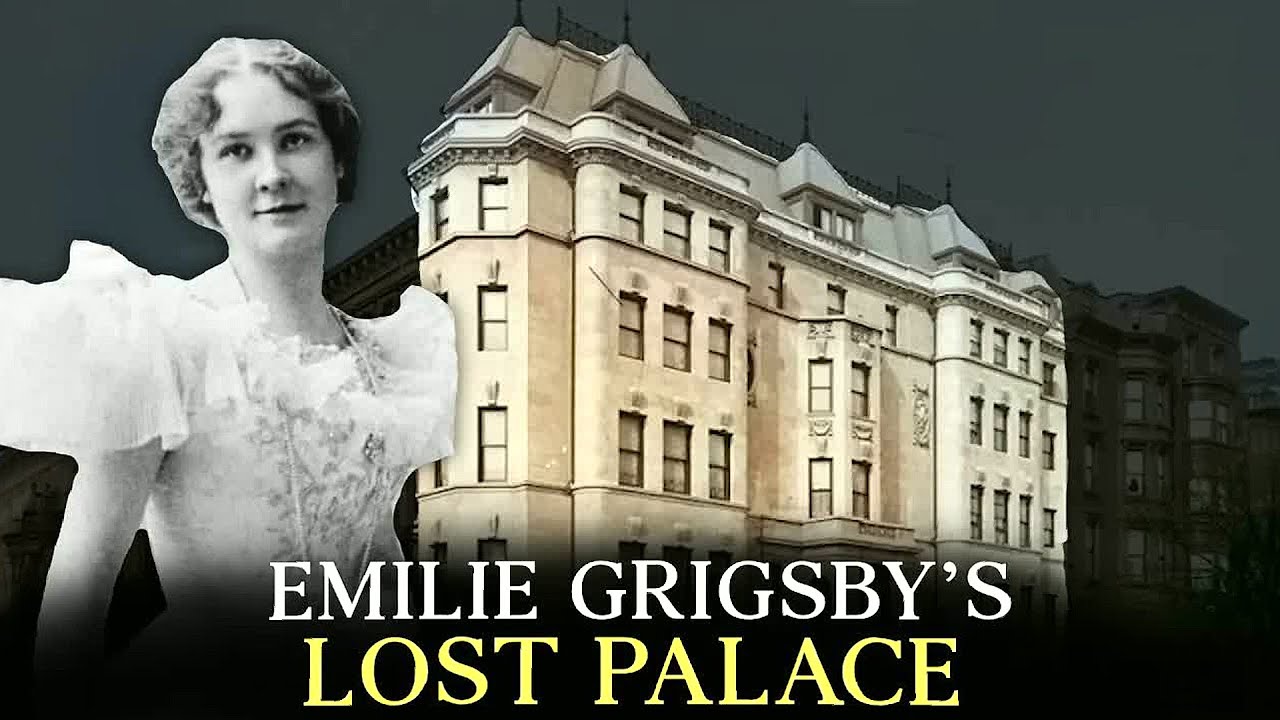
The police investigation lasted less than an hour. The body was removed, the room was cleaned, and normal operations resumed before morning. The hotel where this happened stood on the corner of Fifth Avenue and 33rd Street in Manhattan, and at its peak it was the largest hotel in the world. Seventeen stories of German Renaissance grandeur containing over a thousand rooms, with Peacock Alley stretching three hundred feet to connect two towers that had been built not from cooperation but from spite.
Millionaires paraded through the marble corridors. Presidents signed legislation in private suites. European royalty dined beneath crystal chandeliers imported from Prague. The hotel represented everything the Gilded Age promised: wealth, innovation, and limitless ambition.
Behind the gold leaf and Vermont marble there was a darker story. Worker deaths during construction were never acknowledged. Guest suicides were quietly erased from the records. Labor strikes were brutally suppressed.
The grandest hotel in America was built on family vengeance and maintained through exploitation. Fifth Avenue in the 1880s was the apex of American wealth. The stretch between Washington Square and Central Park housed the nation’s most powerful families in mansions that occupied entire blocks. Brownstone facades lined both sides of the street, and private carriages filled the roadway during calling hours.
The neighborhood functioned as an exclusive enclave where admission required not just money but the correct ancestry and social connections. The Astor family dominated this world. Their fortune originated with John Jacob Astor, a German immigrant who arrived in America in 1784 with seven flutes and forty dollars. He traded furs.
He invested in Manhattan real estate when the island was mostly farmland. He died in 1848 as the wealthiest person in the United States. His grandson, William Backhouse Astor Sr. , inherited the largest share and expanded it further.
By the time of his death in 1875, the Astor holdings included hundreds of buildings across Manhattan. The family collected rent from thousands of tenants, many living in tenements that generated steady income while offering minimal maintenance. William Backhouse Astor Sr. left two sons.
John Jacob Astor III received the bulk of the fortune. William Waldorf Astor, his younger brother, inherited substantial wealth but less control. Both married into established families. Both produced heirs who would continue the dynasty.
The social hierarchy of 1880s New York operated according to rules more rigid than legal code. Mrs. Caroline Schermerhorn Astor, wife of William Backhouse Astor Sr. , appointed herself the final arbiter of who belonged in society and who did not.
She was known universally as Mrs. Astor. No first name was necessary. To be invited to her annual ball meant acceptance into the inner circle.
To be excluded meant social death. Ward McAllister served as her adviser and gatekeeper. Together they created the concept of the Four Hundred, the precise number of people who mattered in New York society, a figure supposedly corresponding to the capacity of Mrs. Astor’s ballroom, though the actual number fluctuated.
McAllister published the list in 1892. Banking families appeared alongside railroad magnates. Old Dutch names mixed with newer fortunes. But inclusion required more than wealth.
Behavior mattered. Lineage mattered. Most importantly, Mrs. Astor’s approval mattered.
Her nephew by marriage, William Waldorf Astor, never forgave her for claiming the title Mrs. Astor. His own wife had an equal right to the name. Caroline had married the elder brother.
William Waldorf’s wife had married the heir to the larger fortune. The dispute seemed petty to outsiders, but within the family it represented a fundamental question of precedence and power. William Waldorf Astor was born in 1848 into unimaginable privilege. He attended Columbia Law School.
He traveled extensively through Europe. He developed tastes that ran toward Italian art and English literature. His father pushed him toward public service, and he served briefly in the New York State Assembly and later as United States Minister to Italy under President Arthur. The diplomatic posting suited him.
Rome offered culture and history that New York lacked. When he returned to Manhattan in 1885, he found the city increasingly distasteful. New immigrants crowded the streets. The social scene revolved around parties he found tedious.
Worst of all, his aunt Caroline continued to present herself as the Mrs. Astor, the unquestioned queen of New York society. She lived next door to him in a mansion at 350 Fifth Avenue. His own residence sat at 338 Fifth Avenue in the shadow of her social dominance.
Every day he witnessed her carriages arriving with visitors seeking her approval. Every season he watched her orchestrate the social calendar while his own wife remained secondary in status. The feud began quietly. William Waldorf made remarks about the vulgarity of American society.
He spoke increasingly about the superiority of European culture. He invested in English properties and spent longer periods abroad. By 1890, he had made a decision. He would leave New York permanently and establish himself in England, where titles and ancestry mattered more than Caroline Astor’s guest lists.
But before departing, he would deliver a message. His mansion at 338 Fifth Avenue sat on valuable land. The neighborhood was changing. Commerce was creeping north from lower Manhattan, and property values reflected not residential prestige but commercial potential.
William Waldorf announced his intention to demolish his family home and construct a hotel on the site. Not a small establishment for travelers, but a massive commercial venture that would fundamentally alter the character of Fifth Avenue. The decision was calculated vandalism against everything Caroline Astor represented. She had built her power on exclusivity, on maintaining Fifth Avenue as a residential sanctuary for the elect.
A hotel would bring strangers, commerce, and publicity to the block. Guests would come and go without proper introduction. The wrong sort of people would occupy rooms overlooking her garden. Her carefully constructed world would be invaded by anyone who could afford the room rate.
Caroline protested privately. William Waldorf proceeded publicly. He hired architect Henry Janeway Hardenbergh, who had designed the Dakota apartment building on the Upper West Side. The Dakota had proven that well-designed residential structures could attract wealthy tenants even in previously unfashionable locations.
Hardenbergh would now create something far more ambitious: a hotel that would cater to the same class Caroline claimed to represent, but on commercial terms that made her residential exclusivity obsolete. Construction began in 1891. Caroline watched workers excavate the foundation next to her home. She endured the noise, the disruption, and the symbolic destruction of her neighborhood’s character.
By 1892, the walls were rising. The building would be called the Waldorf, named after the German town from which the first American Astor had immigrated. It would open in March of 1893. Caroline Astor faced a choice.
She could remain in her mansion living next to a commercial establishment that contradicted everything her social position represented, or she could admit defeat and relocate. In 1893, she moved uptown to a new mansion at 65th Street and Fifth Avenue, far from the hotel that had driven her away. The move was framed as a natural progression, a preference for quieter surroundings. Everyone understood the truth.
William Waldorf had won. But Caroline’s son, John Jacob Astor IV, was not finished with the family war. If his cousin could build a hotel, he could build a larger one. The mansion his mother had abandoned sat on a valuable lot adjacent to the Waldorf.
Rather than sell to an outsider, John Jacob Astor announced his own hotel project. The Astoria would rise next to the Waldorf, taller and more ornate. Two family members, both named Astor, would compete for guests and prestige on the same block. The architectural competition began before ground was broken.
John Jacob Astor IV hired the same architect his cousin had employed. Henry Janeway Hardenbergh would design both towers, ensuring stylistic continuity even as the family members competed for dominance. The Astoria would occupy the lot where Caroline Astor’s mansion stood at 350 Fifth Avenue. Demolition crews reduced the residence to rubble in 1895.
The woman who had ruled New York society watched from uptown as her former home vanished. Hardenbergh chose German Renaissance Revival as the architectural language for both structures. The style had gained popularity in Manhattan during the 1880s and 1890s. It projected solidity and European sophistication, suggesting centuries of tradition even when applied to brand new construction.
The Waldorf rose thirteen stories. The Astoria would be taller at seventeen stories, deliberately overshadowing its predecessor. The facades would feature rusticated limestone on the lower floors, creating a fortress-like base. Above, smooth ashlar stone and decorative terracotta panels would lighten the appearance while maintaining grandeur.
Copper cornices, eventually oxidizing to green, would cap the buildings. Bay windows and balconies would break up the vertical lines. From the street, the two towers would read as related but distinct, like rival siblings. The question of connection troubled both Astor cousins.
William Waldorf, now permanently residing in England, managed his investment from London through intermediaries. John Jacob Astor IV remained in New York, overseeing construction directly. Neither wanted the buildings to merge completely. Their competition was the point.
But from a business perspective, separation made no sense. Guests could be shared. Services could be consolidated. Operating expenses could be reduced if the hotels functioned as a single property.
The solution was a corridor. Peacock Alley would connect the two buildings at ground level, running three hundred feet from the Waldorf through to the Astoria. The name derived from the social ritual it would enable. Each evening during the season, society guests would parade through the marble hallway, displaying their clothing and jewels for mutual inspection.
The design ensured that anyone entering either building would pass through this shared space, making separation impossible in practice, even while maintaining it in name. Construction of the Waldorf had proceeded with remarkable speed. Ground was broken in 1891. The steel frame rose throughout 1892.
By early 1893, exterior walls were complete and interior finishing was underway. Hotels typically took years to build. Hardenbergh and the construction managers compressed the timeline through aggressive scheduling and large labor forces. The workforce consisted primarily of immigrant laborers.
Irish stonemasons shaped the limestone blocks. Italian tile workers installed decorative elements. German carpenters crafted interior woodwork. Polish laborers hauled materials and excavated foundations.
The ethnic divisions reflected broader patterns in Manhattan construction. Certain crafts belonged to certain nationalities, with unions and contractors maintaining informal but strictly enforced boundaries. Working conditions followed the standards of the era, which is to say they prioritized speed over safety. Scaffolding rose along the exterior walls.
Wooden platforms hung from rope and pulley systems. Men worked at heights exceeding one hundred feet with no safety equipment beyond their own balance and caution. Falls happened with grim regularity. When a worker plummeted from the twelfth floor in August of 1892, construction paused for less than an hour.
The body was removed. The crew returned to work. No official record documented the death. His family, if he had one, received no compensation.
The interior work proved equally dangerous in different ways. Plasterers mixed lime-based compounds that burned exposed skin. Painters worked with lead-based products that caused tremors and cognitive decline after prolonged exposure. Electricians installed new wiring systems while the technology was still experimental, occasionally suffering shocks that proved fatal.
The hotel would pioneer modern conveniences. The workers who installed those conveniences paid the cost in their bodies. Materials arrived from across the world. Vermont marble lined the public corridors, quarried from the same source that supplied the Library of Congress.
Mahogany from Honduras covered walls in private dining rooms. Oak flooring came from forests in Pennsylvania and upstate New York. The scale of material consumption was extraordinary. Over five million bricks formed interior walls and load-bearing structures.
Twenty thousand cubic feet of marble adorned public spaces. Three hundred tons of structural steel framed the building, allowing a height that masonry construction alone could never achieve. The Waldorf opened on March 14, 1893. Five hundred guests attended the inaugural banquet.
The menu featured sixteen courses, starting with oysters and progressing through fish, meat, game, and elaborate desserts. Wines from France and Germany accompanied each course. The affair lasted five hours and cost the equivalent of two hundred fifty thousand dollars in modern currency. Newspapers devoted full pages to describing the event.
The New York Times called it the most brilliant social function ever held in an American hotel. The public spaces announced the building’s ambitions immediately. The main entrance hall rose two stories with a grand staircase ascending to the reception rooms above. Columns and polished marble supported arched ceilings decorated with gold leaf and intricate plaster work.
Crystal chandeliers, each weighing over a thousand pounds, hung from ceiling mounts reinforced to support the massive fixtures. Guest rooms occupied the upper floors, each decorated according to period styles. Louis XIV suites featured gilded furniture and silk wall coverings. English Tudor rooms displayed dark wood paneling and leaded glass windows.
The theming extended to bathroom fixtures, which were custom made to match the historical aesthetic of each room. Every guest room included its own bathroom, a luxury almost unheard of in 1893. Most hotels still relied on shared facilities down the hall. The Waldorf made private bathrooms standard.
Electric lighting throughout the building represented another innovation. Most Manhattan residences still used gas lamps. In 1893, the Waldorf installed Edison’s incandescent system, providing brighter, safer illumination. Each room had its own light switch.
The hotel’s generator sat in the basement, producing enough electricity to power two thousand bulbs. Elevators made the upper floors accessible. Four hydraulic lifts carried guests from the lobby to the top floor in under a minute. The elevator cars featured upholstered seating and mirrored walls.
Uniformed operators managed the controls, greeting passengers and announcing each floor. The technology was still new enough that riding the elevator counted as an attraction in itself. The hotel employed over four hundred staff members when fully operational. Desk clerks, bellhops, maids, cooks, waiters, doormen, maintenance workers, elevator operators, and dozens of specialized positions kept the establishment running.
The hierarchy was rigid. Department heads reported to managers who reported to the general director. Staff members wore uniforms that identified their rank and function. The goal was seamless service that appeared effortless while requiring constant coordination behind the scenes.
The Waldorf proved immediately profitable. Room rates started at three dollars per night, approximately ninety dollars in modern currency for a standard single room. Suites commanded substantially more. The restaurant and bar generated additional revenue.
Special events and private functions added further income. Within six months of opening, the hotel was operating at near capacity during the winter season. John Jacob Astor IV watched the Waldorf’s success and accelerated his own plans. Construction on the Astoria began in 1895.
The design deliberately exceeded the Waldorf in every measurable way. More rooms, taller ceilings, larger public spaces. Where the Waldorf had been impressive, the Astoria would be overwhelming. The Astoria rose alongside its predecessor throughout 1896 and into 1897.
The two towers dominated the block, visible from miles away. Hardenbergh coordinated construction so that the connector corridor could be built simultaneously with the Astoria’s foundation. When the Astoria opened in November of 1897, Peacock Alley was ready to link them. The hyphen transformed two competitive hotels into a single massive operation.
The Waldorf-Astoria, as it became known, was the largest hotel in the world. The combined operation required management structures that neither building had needed independently. George Boldt assumed control as proprietor in 1893, overseeing both towers. Before the Astoria’s completion, Boldt had managed the Bellevue Hotel in Philadelphia, earning a reputation for exacting standards and innovative service.
He brought both qualities to the Waldorf-Astoria, transforming it from an impressive facility into an institution that defined luxury hospitality for a generation. Staff expansion accompanied the merger. The workforce grew to over one thousand employees by 1898. Each department operated according to detailed protocols documented in manuals that specified everything from how to fold napkins to the precise angle at which bellhops should tilt their caps when greeting guests.
Boldt believed consistency created the illusion of effortlessness. If every interaction followed scripted patterns, guests would experience seamless service without recognizing the rigid systems producing it. The kitchen staff alone numbered over one hundred. Cooks, sous chefs, pastry specialists, butchers, vegetable preparers, dishwashers, and runners worked in basement kitchens that occupied nearly an acre of space.
Industrial ovens lined one wall. Refrigeration units, still a novelty in 1897, preserved meats and dairy products. Separate prep stations handled different cuisines. French dishes were prepared in one area, German in another, American regional cooking in a third.
The organization reflected both practical efficiency and social hierarchy. French cuisine occupied the highest status. The chefs who prepared it earned the most respect and the best wages. But the labor conditions remained brutal.
Kitchen workers began shifts at five in the morning and often worked past midnight during busy periods. Temperatures near the ovens exceeded one hundred degrees Fahrenheit, even in winter. Burns were common. Cuts from knives and slicers happened daily.
Workers who complained about conditions found themselves replaced within hours. The front-of-house staff endured different pressures. Waiters and porters worked twelve to fourteen-hour shifts, standing for nearly the entire duration. Breaks were irregular and brief.
Meals consisted of kitchen scraps eaten standing up in service corridors. Wages barely covered rent in the crowded tenements where most staff lived. Tips from wealthy guests provided essential supplemental income, creating a dynamic where workers competed desperately for assignments serving the most generous patrons. The racial composition of the staff reflected the segregation of the era.
Black workers were confined to positions as porters, cleaners, and kitchen assistants. They could not serve as waiters in the main dining rooms or work at the front desk, where they would interact directly with white guests. Asian workers faced similar restrictions. The hotel’s employment practices codified the social boundaries that wealthy white guests expected to encounter everywhere in their lives.
Women worked primarily as maids and laundresses, occupations considered appropriate for their gender. Female staff earned roughly half what male employees in comparable positions received. They faced additional hazards. Sexual harassment by male guests and male staff members was common and rarely punished.
Women who reported such incidents often found themselves dismissed rather than protected. The power imbalance made complaint essentially futile. Despite these conditions, employment at the Waldorf-Astoria carried prestige within immigrant communities. The hotel’s reputation meant that workers could claim association with an elite institution.
Experience there improved prospects for advancement to better positions elsewhere. The Waldorf-Astoria served as a training ground for hotel workers across the country. Managers recruited employees who had learned service standards on Fifth Avenue, knowing they brought skills refined under demanding conditions. The technical systems supporting the hotel’s operation were equally impressive and equally dependent on exploited labor.
The heating plant in the sub-basement consumed ten tons of coal daily during winter. Stokers worked in temperatures exceeding one hundred twenty degrees, shoveling fuel into furnaces that heated water pumped through radiators on every floor. The work destroyed lungs and joints within a few years. Men aged rapidly in the boiler room.
Most left the position either by finding other work or through disability. A few died on the job, collapsing from heat exhaustion or respiratory failure. The laundry operation processed thousands of sheets, towels, and tablecloths daily. Women worked over steaming wash tubs and pressing irons in rooms deliberately located in the building’s least desirable spaces.
The humidity approached one hundred percent. The heat rivaled the boiler room. Women fainted regularly. Management kept smelling salts on hand to revive them so work could continue.
The laundry operated around the clock with workers rotating through eight-hour shifts that felt endless. Elevators required constant staffing. Operators worked six-day weeks, riding the cars up and down hundreds of times per shift. The monotony was numbing.
The confined space became oppressive during summer heat. The operators stood for entire shifts, developing leg and back problems that became chronic. The position paid slightly better than most service jobs but destroyed bodies at a predictable rate. Young men took the work.
Within five years, most had moved on or were unable to continue. The hotel’s infrastructure included its own power generation, water pumping, refrigeration, and waste removal systems. Each required dedicated crews working in spaces guests never witnessed. These workers were invisible by design.
The Waldorf-Astoria presented an image of effortless luxury. That image required an army of laborers whose presence would have contradicted the fantasy. They worked in basements and sub-basements, entering and leaving through service entrances on side streets, never using the Fifth Avenue doors that admitted guests. Room construction had proceeded with equal disregard for worker safety.
The Astoria reached seventeen stories at a time when such height remained unusual. Workers building the upper floors labored on scaffolding that swayed in the wind. Safety equipment was non-existent. Men carried bricks and mortar up ladders, balancing loads that weighed fifty pounds or more.
Falls from upper floors were inevitably fatal. The exact number of workers who died during construction was never officially recorded. Contemporary newspaper accounts mention at least four deaths, suggesting the actual total was higher. Bodies were removed quickly.
Work resumed immediately. The dead were replaced from the constant stream of men seeking employment. The materials themselves presented hazards. Asbestos insulation, considered a miracle product for its fire-resistant properties, was installed throughout both buildings.
Workers handled it with bare hands, breathing fibers that would cause lung disease decades later. Lead paint covered walls in every room. Painters developed tremors and cognitive impairment after months of exposure. Mercury-based products were used in mirror silvering, exposing craftsmen to neurotoxic vapors.
When the Astoria opened in November of 1897, the event surpassed even the Waldorf’s spectacular debut four years earlier. Over eight hundred guests attended the inaugural banquet. John Jacob Astor IV hosted personally, moving through the crowd with his wife, Ava. The menu featured twenty courses and required six hours to complete.
The wine list included vintages dating back to the 1840s. The hyphen connecting the two buildings, Peacock Alley, became operational immediately. The marble corridor featured its own decorative scheme with coffered ceilings and walls lined with mirrors that multiplied the space visually. Gas lamps and ornate fixtures provided illumination, creating a warm glow that flattered the complexions of society women parading through.
The ritual began at seven each evening. Guests staying in either tower would dress in evening clothes and walk slowly through the corridor, pausing to greet acquaintances and be seen by others. The architectural merger created operational efficiencies that justified the initial awkwardness of the family competition. Guests could be directed to whichever building had availability.
Services could be shared between the towers, reducing redundant staff. The combined property offered over fourteen hundred rooms, making it capable of hosting conventions and large events that no competing hotel could accommodate. The Waldorf-Astoria was not merely the largest hotel in America. It was the largest hotel in the world, a distinction it would maintain until 1909.
The first documented suicide occurred in June of 1898, seven months after the Astoria opened. A textile merchant from Philadelphia checked into a seventh-floor room under his own name. He paid in advance for three nights. On the second day, a maid found him dead on the bed.
An empty bottle of laudanum sat on the nightstand. The coroner ruled the death accidental, concluding the guest had miscalculated his dose. No investigation followed. The room was cleaned.
The body was removed through a service entrance. A new guest checked in that evening. The incident established a pattern. Over the following three decades, at least forty guests died in Waldorf-Astoria rooms under circumstances suggesting self-inflicted death.
The actual number was almost certainly higher. Many deaths were attributed to natural causes or accidents. Hotel management had strong incentives to minimize publicity around suicides. Newspaper reporters could be persuaded to omit certain details.
Coroners could be convinced to issue ambiguous rulings. Families desperate to avoid scandal cooperated in maintaining fictions. The hotel’s reputation as a location for suicide grew quietly among those who paid attention to such things. It offered advantages to anyone contemplating such an act.
Privacy was absolute. No one questioned a wealthy guest who wanted to be left alone. Room service could be declined. Do-not-disturb signs were honored.
A guest could remain undiscovered for days if they chose. The height of the building provided options. Windows opened onto air shafts and the street below. The rooms contained furniture suitable for hanging.
Gas lines before the full conversion to electricity offered another method. In October of 1903, a woman registered under an obviously false name checked into a tenth-floor room. She carried a single small bag. The desk clerk noted her agitation but said nothing.
Two days later, another guest reported hearing a gunshot. Security staff entered the room with a master key and found the woman dead on the floor. A revolver lay near her right hand. No note explained her presence or her decision.
The police investigation lasted less than an hour. The body was removed. The room was cleaned. Normal operations resumed.
Some suicides involved notable figures, though newspapers rarely identified them as such. In 1907, a former congressman from a Midwestern state spent his final night in a Waldorf-Astoria suite before throwing himself from a twelfth-floor window. The newspapers reported an accidental fall. His family claimed he had been leaning out for fresh air when he lost his balance.
The window in question had a waist-high sill and opened inward, making such an accident nearly impossible. Everyone involved accepted the official story because the alternative was unthinkable for a man of his position. The hotel witnessed a different kind of violence in January of 1911. A stock broker named Edward Stone checked in with a woman who was not his wife.
His actual wife, having suspected the affair for months, hired a private detective who tracked the couple to the hotel. She arrived unannounced, confronted her husband in the corridor outside his room, and shot him three times with a pistol she had purchased that morning. Stone died in the hallway. His wife was arrested immediately.
The trial became a sensation. The wife’s attorney argued temporary insanity brought on by her husband’s betrayal. The prosecution sought a murder conviction. The jury deliberated for six hours before finding her not guilty by reason of insanity.
She was committed to an asylum for eighteen months, then released. The Waldorf-Astoria appeared throughout the trial testimony. The hotel’s role as a location for extramarital affairs was discussed extensively. Management found the publicity deeply unwelcome.
The murder highlighted something everyone already knew but rarely acknowledged publicly. The hotel served as a discreet location for relationships that could not be conducted openly. Married men brought mistresses. Married women met lovers.
The staff was trained to notice nothing and remember nothing. Room service waiters knocked once and left trays in the hall if no one answered. Housekeeping cleaned rooms only when guests had definitively departed. Privacy was a service the hotel sold alongside lodging and meals.
Oscar Tschirky arrived at the Waldorf in 1893 and remained for four decades. Known universally as Oscar of the Waldorf, he served as maître d’hôtel, controlling access to the most exclusive dining rooms. He decided where guests sat, which tables received the best service, and who received personal attention from senior staff. His power derived from his ability to make or break social reputations.
Being recognized by Oscar and seated prominently signaled status. Being ignored by Oscar and placed near the kitchen suggested irrelevance. He created several dishes that became permanently associated with the hotel. The Waldorf salad combined apples, celery, and walnuts with mayonnaise, served on a bed of lettuce.
Eggs Benedict, poached eggs on toast with ham and hollandaise sauce, reportedly originated from a conversation between Oscar and a hungover guest seeking breakfast. Thousand Island dressing and several other preparations carried his name or the hotel’s. But Oscar also managed a kitchen culture that bordered on abusive. Cooks who failed to meet his standards were dismissed immediately.
Waiters who displeased him found their shifts reduced or eliminated. He enforced a rigid hierarchy that placed French-trained chefs at the top and immigrant workers at the bottom. The kitchen staff feared him. That fear produced the consistency he demanded.
It also produced a workplace where errors could end careers and complaints brought retaliation. The hotel’s main dining room seated four hundred guests. During peak season, two seatings occurred each evening. The logistics of serving eight hundred meals within a four-hour window required military precision.
Food moved from kitchen to table on a carefully choreographed schedule. Waiters carried multiple plates simultaneously, weaving between tables without ever appearing rushed. Waiters earned minimal base wages, depending on tips to survive. The most desirable tables went to senior staff with years of experience.
New waiters received assignments serving guests known to be poor tippers or parties likely to be difficult. The competition for better tables created a ruthless internal culture. Waiters sabotaged each other subtly, positioning themselves for advancement while undermining colleagues. Oscar encouraged the competition, believing it motivated better performance.
Gender segregation defined the dining experience. Women dining without male escorts were seated in a separate ladies’ dining room. They could not eat in the main dining room or the grill room. The restriction supposedly protected their reputations, though in practice it enforced social control.
Unaccompanied women were presumed to be either servants or prostitutes. The hotel maintained its exclusivity partly by policing who could occupy which spaces. Racial exclusions were even more absolute. Black guests were turned away regardless of wealth or status.
Asian guests faced similar treatment. The policy was unofficial but consistently enforced. Desk clerks would claim no rooms were available. Restaurant hosts would suggest the party might be more comfortable dining elsewhere.
The message was clear without being legally actionable. The Waldorf-Astoria served white guests exclusively. The hotel hosted significant political events. Presidential candidates held fundraising dinners in the ballrooms.
Senators and congressmen maintained semi-permanent suites. Foreign diplomats stayed at the Waldorf-Astoria when visiting New York. The concentration of political power made the hotel a center of influence. Decisions affecting millions were discussed over meals in private dining rooms.
The waiters serving those meals heard conversations they were expected to forget immediately. Theodore Roosevelt stayed at the hotel regularly before and after his presidency. He hosted dinners for political allies and conducted negotiations in suites maintained for his use. William Howard Taft followed the same pattern.
Woodrow Wilson preferred other accommodations but attended events at the Waldorf-Astoria throughout his political career. The hotel’s connection to political power reinforced its status as the most important hotel in America. Corporate leaders used the hotel similarly. J.
P. Morgan dined there weekly. John D. Rockefeller maintained a suite.
Andrew Carnegie hosted charity events in the ballrooms. The concentration of wealth in the building on any given evening was extraordinary. Fortunes were made and lost in conversations at Waldorf-Astoria tables. Mergers were negotiated.
Partnerships formed. The hotel functioned as an unofficial stock exchange where deals happened over brandy and cigars rather than on trading floors. The social calendar revolved around the hotel during the winter season. Debutante balls introduced young women to society in the grand ballroom.
Charity galas raised money for approved causes. Private dinner parties allowed the wealthy to gather without encountering anyone they deemed unsuitable. The Waldorf-Astoria provided a controlled environment where social boundaries were maintained and reinforced. Everyone present belonged.
Everyone excluded knew they did not. The staff who made the hotel function lived lives invisible to the guests they served. Most resided in tenements on the Lower East Side or in the packed neighborhoods west of Eighth Avenue. They traveled to work on elevated trains or walked when they could not afford the fare.
Shifts began early, often before sunrise. Many workers left home in darkness and returned in darkness, seeing their families only on rare days off. The pay structure ensured that workers remained dependent and desperate. Base wages covered rent and little else.
Tips provided essential income for front-of-house staff, creating competition that management exploited. Kitchen workers and maintenance staff received no tips at all. They relied entirely on wages that barely reached subsistence level. Workers borrowed money constantly from family members, from loan sharks who charged extortionate rates, from anyone willing to extend credit.
Debt became a permanent condition. The immigrant communities that provided most of the hotel’s workforce developed their own internal hierarchies. Irish workers dominated certain departments. Italian workers controlled others.
German craftsmen held skilled positions that paid slightly better than common labor. The ethnic divisions created tension that occasionally erupted into violence. Fights broke out in service corridors and basement workrooms. Management tolerated the conflicts as long as they did not disrupt operations or become visible to guests.
Housing conditions for hotel workers were grim. Tenement apartments housed multiple families in spaces designed for one. Children slept in shifts using beds still warm from previous occupants. Sanitation was primitive.
Water came from shared pumps in courtyards. Toilets served dozens of families. Disease spread rapidly in such conditions. Tuberculosis, typhoid, and dysentery killed workers regularly.
The hotel kept no record of employee deaths from illness. Workers who became too sick to continue were simply replaced. The women who worked as maids faced particular hardships. They cleaned ten to fifteen rooms per shift, hauling water, carrying linens, emptying chamber pots before the full conversion to modern plumbing, and scrubbing floors on their hands and knees.
The work destroyed backs and joints within a few years. Women in their thirties moved like people decades older, hands cracked and bleeding from constant exposure to harsh cleaning chemicals. The hotel provided no gloves, no protective equipment, no compensation for injuries sustained on the job. Sexual exploitation was systematic rather than incidental.
Male guests propositioned maids regularly. Some women accepted such propositions out of financial desperation. Others refused and faced retaliation from guests who complained to management. Supervisors sided with guests almost automatically.
A maid accused of rudeness or incompetence would be dismissed immediately regardless of the truth of the accusation. The power imbalance made resistance nearly impossible. Male staff members also exploited female workers. Department heads demanded sexual favors in exchange for better shifts or job security.
Women who refused found their hours reduced or their positions eliminated. Those who complied discovered the compliance guaranteed nothing. They could still be fired when their usefulness ended or when a younger woman arrived seeking work. The hotel’s employment practices created conditions where sexual coercion was routine and largely invisible to anyone who chose not to look closely.
Children worked in the hotel despite laws supposedly prohibiting child labor. They worked as bootblacks, shining shoes in the lobby and corridors. They ran errands for guests, carrying messages and packages for tips. They assisted in the kitchens, peeling vegetables and washing dishes.
The youngest were perhaps ten years old. They worked long hours for pennies. Many attended school irregularly or not at all. Their wages often made the difference between their families eating or going hungry.
The hotel’s success rested on this foundation of exploited labor. Every gleaming surface, every perfectly pressed tablecloth, every meal served on fine china represented hours of work performed by people paid as little as management could get away with. The luxury the guests experienced was made possible by the systematic extraction of value from workers who had no alternatives and no power to demand better treatment. Labor organizing arrived at the Waldorf-Astoria in 1908.
Waiters held a meeting to discuss forming a union. Management learned of the meeting and fired the organizers immediately. Other workers watched and took note. Organizing meant losing your job.
For the next several years, no one tried again. The lesson was clear, but conditions continued deteriorating. In 1912, the hotel reduced base wages for kitchen staff while increasing required shift lengths. The combination pushed workers past their breaking point.
A small group began meeting in secret, planning a strike. They contacted the hotel workers’ union, which had recently organized several smaller establishments. The union sent representatives to advise the workers and helped coordinate action. The strike began on a Friday morning in March of 1912.
Sixty kitchen workers failed to report for their shifts. Picket lines formed outside the Fifth Avenue entrance. The strikers demanded a return to previous wage levels, eight-hour shifts instead of twelve, and recognition of their union. Management responded by hiring replacement workers immediately.
Strikebreakers, many of them desperate men willing to work for any wage, crossed the picket lines while strikers shouted at them. The strike lasted eleven days. Police arrested picketers on charges of disturbing the peace. Newspapers covered the story unfavorably, portraying the strikers as ungrateful immigrants threatening a beloved institution.
Prominent guests wrote letters supporting management. On the eleventh day, the union acknowledged defeat. The strikers returned to work under the same conditions they had been protesting. Several organizers were never rehired.
The hotel demonstrated that workers were replaceable and resistance was futile. The message reinforced management’s control for years afterward. Workers understood that collective action brought nothing but retaliation. Complaints about conditions stopped.
Workers endured whatever they faced rather than risk their positions. The Waldorf-Astoria continued operating as it always had, presenting a facade of effortless luxury while depending on coerced labor to maintain it. The years leading to World War I represented the hotel’s peak influence. Every president from Theodore Roosevelt to Woodrow Wilson stayed at the Waldorf-Astoria.
Foreign dignitaries visiting New York regarded it as the only acceptable accommodation. The social season revolved around events held in its ballrooms. The hotel was not simply successful. It was synonymous with luxury in America.
But beneath the success, the darkness accumulated. The suicides continued. The labor exploitation intensified. The racial exclusions remained absolute.
The hotel was magnificent and monstrous simultaneously. The two qualities were inseparable. The magnificence required the monstrousness. Every chandelier, every marble column, every perfectly executed meal represented not just wealth and taste, but suffering and injustice.
John Jacob Astor IV died on the Titanic in April of 1912. He had been traveling with his pregnant second wife, whom he had married after a scandalous divorce. When the ship struck the iceberg, Astor helped his wife into a lifeboat, then stepped back to allow women and children to board. He was last seen on deck as the ship went down.
His body was recovered weeks later. He was forty-seven years old. His death marked a symbolic ending. The Gilded Age aristocracy that had built the Waldorf-Astoria was passing.
The hotel would continue for nearly two more decades, but the world that created it was fading. New fortunes were being made through different means. Social hierarchies were shifting. The absolute confidence that allowed the Astors to build competing hotels on Fifth Avenue was eroding.
The hotel adapted. It remained profitable throughout the 1910s. But the cultural moment had changed. The Waldorf-Astoria represented a particular vision of American wealth, one that celebrated excess and accepted inequality as natural.
That vision was becoming harder to maintain without questioning. Prohibition transformed the Waldorf-Astoria’s operations in ways that surprised no one familiar with how wealth operated in America. The Eighteenth Amendment took effect in January of 1920, banning the manufacture, sale, and transportation of alcoholic beverages. The hotel’s bars closed officially.
The wine cellars containing vintages worth millions in modern currency were supposedly sealed. The restaurant menus no longer listed alcohol. Everything appeared compliant with the new law. In practice, nothing changed except the mechanisms.
The hotel became a center of illegal alcohol distribution within weeks of Prohibition taking effect. Guests who knew how to ask received what they wanted. The trick was knowing the correct phrasing, the right staff member to approach, and having enough money to pay the inflated prices that illegal commerce demanded. The Men’s Café, previously the hotel’s most prominent bar, officially served only coffee and soft drinks after January 1920, but regulars knew that certain waiters could provide stronger beverages.
Orders were placed using coded language. A request for special coffee meant whiskey. Tea with extra sugar indicated gin. The drinks arrived in teacups and coffee mugs, indistinguishable from legal beverages to any observer who was not actively investigating.
Enforcement agents visited occasionally. They found nothing actionable. The hotel had lawyers who ensured that operations remained just within the boundaries of plausible deniability. The basement spaces, previously used for storage and mechanical systems, took on new purposes.
Small private dining rooms appeared in areas guests had never accessed before. These rooms could be reserved for parties willing to pay substantial premiums. Alcohol flowed freely in these spaces. Management maintained that they had no knowledge of what guests brought with them.
The guests, of course, brought nothing. The hotel provided everything and charged accordingly. The liquor supply came from organized crime networks that controlled bootlegging in New York. The hotel’s management negotiated with these networks directly.
Protection payments ensured that competitors did not attempt to supply the hotel and that law enforcement looked elsewhere during raids. The amounts involved were substantial. The hotel paid approximately ten thousand dollars monthly to various criminal organizations, equivalent to over one hundred fifty thousand dollars in modern currency. That expense was passed to guests through drink prices that far exceeded pre-Prohibition costs.
The criminal connections created new kinds of violence. In October of 1923, a liquor supplier was found dead in a service corridor. He had been stabbed multiple times. The murder occurred after midnight when guest traffic was minimal and staff was reduced.
The body was discovered by a night porter who immediately notified management. The police were called several hours later, after the body had been moved and the scene cleaned. The investigation concluded that the victim had been killed elsewhere and his body dumped at the hotel. No arrest followed.
Everyone understood the real story. The supplier had been killed for reasons related to bootlegging operations. The location sent a message to anyone else involved in the business. The hotel’s guests included the very people who made Prohibition possible and the very people who profited from violating it.
Congressmen who had voted for the Eighteenth Amendment dined at the Waldorf-Astoria and drank illegal whiskey with their meals. Judges who sentenced bootleggers attended parties where alcohol was served openly. The hypocrisy was absolute and entirely accepted. Prohibition was meant for the poor, for immigrants, for people without social standing.
It was never intended to inconvenience anyone who mattered. The staff witnessed all of this and said nothing. Speaking about what happened at the hotel meant immediate dismissal and possible physical harm. The criminal organizations that supplied the alcohol had long memories and little tolerance for informants.
Workers kept quiet because survival required it. They served illegal drinks, cleaned rooms where illegal activity occurred, and pretended to know nothing about what they saw daily. The suicides continued throughout the 1920s. The hotel’s management developed efficient protocols for handling them.
When a guest was found dead, a doctor would be summoned to certify death. If the circumstances suggested suicide, the family would be contacted immediately. Hotel staff would offer assistance with arrangements, helping to move the body discreetly and dispose of any evidence that might complicate matters for the survivors. The service was presented as compassionate care for grieving families.
In practice, it minimized publicity and protected the hotel’s reputation. In March of 1925, a prominent banker shot himself in his suite on the fourteenth floor. He left a detailed note explaining that financial losses had made his position untenable. The note also documented fraudulent activities at his bank, suggesting that investigation and prosecution were imminent.
The hotel’s management retrieved the note before police arrived. It was delivered to the banker’s law firm, which destroyed it. The official cause of death was listed as accidental discharge of a firearm. The banker’s reputation remained intact.
His family avoided scandal. The bank continued operating under new management. Everyone involved understood that discretion served mutual interests. The stock market speculation of the late 1920s created a particular culture at the Waldorf-Astoria.
Traders gathered in the hotel’s public spaces to discuss positions and share information. Insider trading, illegal but rarely prosecuted, happened constantly. Men with advanced knowledge of corporate developments shared that information with favored associates over lunch. Fortunes were made through access to information that was supposed to be confidential.
The hotel became an informal trading floor where deals happened through conversation rather than formal transactions. The bar that was not officially a bar became a center for this activity. Men gathered there each afternoon, drinking illegal alcohol and exchanging market intelligence. The atmosphere was festive, almost giddy.
Stock prices rose month after month, year after year. Everyone involved believed the growth would continue indefinitely. The possibility of collapse was dismissed as impossible. The market had entered a new era where old rules no longer applied.
Wealth would expand forever. The crash began on October 24, 1929, Black Thursday. Stock prices dropped catastrophically. Panic selling overwhelmed the exchanges.
Fortunes evaporated in hours. The men who had gathered at the Waldorf-Astoria to celebrate their wealth watched it disappear. Some left immediately, trying to salvage what they could. Others remained drinking heavily, unable to process what was happening.
The festive atmosphere vanished. It was replaced by shock and then despair. The following Tuesday, October 29, was worse. More selling, more losses, more devastation.
The hotel’s guests included men who had been worth millions the previous week and were now bankrupt. Some checked out immediately, unable to afford the room rates. Others remained, either refusing to acknowledge reality or having nowhere else to go. The staff watched wealthy men transform into broken figures within days.
Rooms that had been occupied by confident industrialists now housed men who sat alone, staring at walls, barely eating. The suicides increased immediately. In November of 1929, four guests killed themselves at the hotel. Three more died in December.
The methods varied. Gunshots, overdoses, leaps from windows. The hotel’s management handled each death with practiced efficiency. Bodies were removed discreetly.
Rooms were cleaned and made ready for new guests. The deaths were reported as accidents or natural causes whenever possible. Newspapers cooperated, omitting details that would harm the hotel’s reputation or make the financial crisis seem worse than it already was. The crash destroyed the economic foundation that had supported the Waldorf-Astoria for three decades.
The wealthy guests who had filled the rooms during the winter season could no longer afford such accommodations. Corporate expense accounts disappeared. Conventions were cancelled. Restaurant traffic declined sharply.
By early 1930, occupancy rates had fallen below fifty percent for the first time in the hotel’s history. Revenue dropped proportionally. The operating costs, however, remained essentially fixed. The hotel cut wages in March of 1930.
All employees received ten percent reductions. The workers, desperate to keep their positions during a time when unemployment was rising toward twenty-five percent nationally, accepted without protest. Management cut wages again in July, another ten percent. Workers who had been barely surviving on their previous income now faced genuine destitution.
Many relied on charity to feed their families. The hotel that had made millions in profits during the boom years now extracted those savings from its workers to minimize losses. The criminal organizations that had supplied illegal alcohol during Prohibition shifted their operations as the hotel’s business declined. Less customer traffic meant less alcohol consumption.
The protection payments continued, but the volumes decreased. The organized crime networks began looking elsewhere for revenue. The Waldorf-Astoria remained connected to these networks, but it was no longer their most important client. The property itself became a problem.
The Waldorf-Astoria occupied an entire city block in Midtown Manhattan. That land had value far exceeding what the hotel could generate in revenue, especially during a depression. Real estate developers and corporations looked at the site and saw opportunity. The hotel represented obsolete use of premium real estate.
The building was old by 1930 standards, designed in the 1890s according to principles that were now outdated. Modern hotels used steel frame construction that allowed greater height and more efficient layouts. The Waldorf-Astoria’s German Renaissance design, spectacular in 1897, appeared dated three decades later. The neighborhood had changed dramatically since the hotel opened.
Fifth Avenue below 59th Street was increasingly commercial rather than residential. Department stores occupied former mansion sites. Office buildings rose where private homes once stood. The transformation was complete.
The Waldorf-Astoria stood as a remnant of an earlier era, surrounded by structures that represented newer patterns of urban development. The anachronism became more obvious with each passing year. The Astor family interests that controlled the property began considering a sale in late 1928, before the crash. The hotel was profitable then, but the real estate had appreciated far more than the building’s earning potential.
Selling the land would generate enormous capital that could be invested elsewhere. The crash made the decision more complicated but also more urgent. The family needed liquidity. The land represented their most valuable asset.
In early 1929, before the October crash, the Bethlehem Engineering Corporation approached the Astor interests about purchasing the site. Bethlehem wanted to construct the world’s tallest building, surpassing the Woolworth Building’s height of 792 feet. The proposed structure would reach approximately one thousand feet, an extraordinary height that would require pioneering construction techniques. The location at Fifth Avenue and 34th Street was ideal.
Central location, excellent transportation access, and a site large enough to accommodate the necessary foundation. The negotiations proceeded slowly. The crash in October created uncertainty. Bethlehem’s financing became questionable as credit markets froze.
By early 1930, the deal appeared dead. But another buyer emerged. A syndicate of investors led by former General Motors executive John J. Raskob and former New York Governor Al Smith announced plans to construct an even taller building.
Their structure would exceed twelve hundred feet, claiming the title of world’s tallest building definitively. They had financing arranged through a combination of private investment and commercial loans. They needed the Waldorf-Astoria site. The Astor family accepted the offer in August of 1929, months before the crash.
The final price was approximately sixteen million dollars for the land and buildings, equivalent to roughly two hundred eighty million dollars in modern currency. The deal included provisions allowing the hotel to continue operating until the buyers were ready to begin construction. That date was set for October of 1929. The crash delayed everything.
The buyers needed time to secure final financing. The hotel remained operational through late 1929 and into 1930 while financial arrangements were finalized. The announcement that the Waldorf-Astoria would close generated substantial press coverage. The hotel had become an institution.
Every significant social event for three decades had occurred within its walls. The guest register included every president since Grover Cleveland, countless foreign dignitaries, and virtually everyone who mattered in American business and society. The building represented not just luxury, but an entire era of American life. Its demolition meant that era was definitively ending.
The final season proceeded with melancholic awareness. Guests knew they were experiencing something that would not exist much longer. The hotel scheduled a closing date of May 3, 1930. That date was extended twice as the buyers finalized their plans.
The actual closing occurred on May 1, 1930. The final dinner was held on April 30. Over fifteen hundred guests attended a farewell gala. The mood combined nostalgia with resignation.
Speakers praised the hotel’s history. Attendees reminisced about events they had witnessed. Everyone understood they were mourning not just a building, but the social world it represented. The staff faced unemployment in the worst economy in American history.
Over one thousand workers would lose their positions. Most had no prospects for other employment. The hotel industry across New York was contracting as occupancy rates fell. Other establishments were laying off staff, not hiring.
The workers who had maintained the Waldorf-Astoria faced destitution. The hotel offered no severance beyond final wages. Workers who had given years or decades of service received nothing extra when dismissed. Management expressed regret but cited financial constraints.
Some staff members found positions at the new Waldorf-Astoria that was being constructed on Park Avenue between 49th and 50th Streets. That hotel would open in October of 1931, retaining the name but occupying a completely different structure in a different location. The new building would be modern, taller, designed according to Art Deco principles rather than German Renaissance. It would be corporate rather than family owned.
The connection to the original would be entirely nominal. Most of the old staff did not transition to the new hotel. Different management meant different hiring decisions. Most workers simply lost their jobs.
The demolition contract went to the Charles T. Wills Company, which specialized in dismantling large structures. Work began on October 1, 1930, the day after the hotel officially closed. Crews moved through the building systematically, removing anything salvageable before the wrecking began.
Chandeliers were carefully dismantled and sold at auction. The fixtures brought substantial sums despite the Depression. Marble paneling was removed and warehoused for resale. Mahogany woodwork came out in sections.
Bronze fixtures, decorative plaster work, anything with value was stripped from the building before demolition proper commenced. The salvage operation revealed aspects of the hotel that had remained hidden during operation. Workers found sealed rooms that had not appeared on any floor plan. One contained furniture and personal effects from decades earlier, suggesting a guest who had never checked out.
Another held bootlegging equipment from the Prohibition era, hidden behind false walls. Letters and documents turned up in spaces that had supposedly been empty. The building yielded secrets as it was dismantled, offering glimpses of activities that management had kept carefully invisible. The actual demolition began in January of 1931.
Wrecking crews started at the top floors and worked downward. The German Renaissance towers that had dominated Fifth Avenue for over three decades began disappearing. Exterior walls came down floor by floor. The marble facades were reduced to rubble.
The process took months. Crews worked carefully, aware that surrounding buildings sat close to the demolition site. Dust from the wrecking covered nearby structures. Residents complained about noise and debris.
The city essentially ignored the complaints. Some of the demolition workers were the sons and nephews of men who had built the original structure. The construction trades passed from father to son in immigrant communities. Young men who heard stories about building the Waldorf-Astoria now found themselves tearing it down.
The irony was not lost on them. They spoke about it during breaks, noting that their families had been involved at both the beginning and the end. The observation was fatalistic rather than bitter. This was simply how things worked.
Buildings rose and fell. Workers did what was necessary to survive. By May of 1931, the Waldorf-Astoria was gone. The site was cleared to ground level.
The marble, the steel, the decorative elements, everything that had made it the grandest hotel in America had been reduced to debris or sold for salvage. Only the foundations remained, soon to be excavated to make way for the Empire State Building’s deeper basement. The lot sat empty briefly, a void in the Manhattan streetscape where a landmark had stood for thirty-three years. The Empire State Building rose with remarkable speed.
Construction began in March of 1931 on the cleared site. Steel framework proceeded at a rate of four and a half stories per week. The height was achieved through innovative techniques and aggressive scheduling. The building was designed to be completed in record time, a demonstration that American enterprise could still achieve extraordinary things despite economic collapse.
By November of 1931, the steel frame reached its full height of 1250 feet. The limestone and granite exterior followed. The building opened on May 1, 1931, exactly one year after the Waldorf-Astoria closed. The new tower stood on the same footprint where the Waldorf-Astoria had occupied space for thirty-three years.
The Empire State Building reached higher than any structure previously built. At 1250 feet to the roof and 1454 feet to the tip of the antenna, it claimed the title of world’s tallest building. The achievement was remarkable. The timing was catastrophic.
The building opened during the worst phase of the Great Depression. Occupancy rates never exceeded twenty-five percent during the 1930s. The upper floors remained largely empty for years. New Yorkers called it the Empty State Building.
The contrast between the two structures revealed how completely the world had changed. The Waldorf-Astoria had been built by family wealth to serve family interests and social ambition. The Empire State Building was a corporate venture designed to generate rental income through maximum use of valuable real estate. One represented personal grandeur.
The other represented rational capitalism. One had been a stage for social performance. The other was commercial space measured in square feet and rental rates. The new Waldorf-Astoria that opened on Park Avenue in October of 1931 bore no meaningful connection to its predecessor beyond the name.
The building rose forty-seven stories, dwarfing the original. The architecture was Art Deco, reflecting contemporary tastes rather than the German Renaissance style of the 1890s. The hotel was designed by Schultz and Weaver, who specialized in modern hotel construction. Their approach prioritized efficiency and functionality over the theatrical spaces that had defined the original building.
The Park Avenue hotel succeeded commercially where the Fifth Avenue property would have failed. The new structure incorporated lessons learned over three decades of hotel operation. Room layouts were standardized for easier maintenance. Mechanical systems were centralized and accessible.
The kitchens occupied dedicated floors with modern equipment. Staff areas were designed for efficiency rather than added as afterthoughts. Everything reflected professional hotel management rather than family vanity. But something was lost in the transition.
The original Waldorf-Astoria had been excessive, impractical, and built according to principles that made no economic sense. That excess was precisely what made it remarkable. The new hotel was merely excellent. It provided superior accommodations and service.
It was profitable during years when most hotels struggled. It succeeded by every measurable standard. Yet it lacked the character that had made its predecessor legendary. The people who built and maintained the original hotel disappeared from historical record almost entirely.
The workers who died during construction were never counted. The staff who endured exploitation while creating the illusion of effortless luxury left no memoirs. The maids, kitchen workers, porters, and maintenance crews who made the hotel function were systematically excluded from the narratives that celebrated the building. The histories that were written focused on the wealthy guests, the social events, and the architectural achievement.
The human cost was erased. The suicides were forgotten with similar efficiency. The forty-plus guests who killed themselves at the hotel were rarely mentioned in published histories. The families who covered up those deaths succeeded in protecting reputations.
The hotel’s cooperation in maintaining those fictions meant that the deaths vanished from public memory. Later generations had no access to the truth. The hotel’s dark history was buried beneath celebrations of its glamour. The labor exploitation that sustained the hotel’s operations became invisible in retrospect.
The strikes that failed, the workers who were fired for organizing, the women who endured sexual harassment, the children who worked illegally, all were omitted from official accounts. The Waldorf-Astoria was remembered as magnificent, and magnificence requires forgetting the suffering that produces it. The organized crime connections were similarly obscured. The Prohibition-era bootlegging operations, the protection payments to criminal organizations, the violence that occasionally erupted were all treated as minor footnotes, if mentioned at all.
The hotel’s cooperation with illegal networks was reframed as colorful period detail rather than systematic corruption. The murder in 1923 became an anecdote rather than evidence of the hotel’s participation in criminal enterprise. What remained in cultural memory was selective and sanitized. The Waldorf-Astoria became a symbol of elegance and sophistication.
It represented the Gilded Age at its finest, a time when America produced architectural wonders and hosted society gatherings of unprecedented splendor. The nostalgia was genuine but incomplete. The hotel had indeed been spectacular. It had also been built on family spite, maintained through worker exploitation, and used by guests who assumed their comfort mattered more than other people’s suffering.
The building that rose on the same site inherited none of that history. The Empire State Building had its own identity, its own meaning. It represented American technological achievement and determination during crisis. The connection to what preceded it was rarely acknowledged.
The two structures occupy the same physical location but existed in completely different worlds. One belonged to the nineteenth century’s vision of wealth and power. The other belonged to the twentieth century’s vision of efficiency and commerce. The physical remnants of the original Waldorf-Astoria were scattered across the city and country.
Chandeliers were installed in restaurants and private homes. Marble paneling appeared in lobbies of other buildings. Decorative elements were sold to collectors and incorporated into new structures. The hotel was dismantled and dispersed.
Pieces of it survive in contexts completely removed from their original purpose. A chandelier that once hung in the Grand Ballroom now illuminates a dining room in Connecticut. Marble that lined Peacock Alley became part of a bank lobby in Philadelphia. The stories persisted as well, though distorted by time and selective memory.
Old New Yorkers told their children about attending events at the Waldorf-Astoria. The tales emphasized glamour and excitement. They described the famous guests, the elaborate meals, the sense of being present at the center of American society. These memories were accurate as far as they went.
They simply omitted everything that made the glamour possible. The hotel’s legacy is complicated and contradictory. It represented extraordinary achievement in architecture, hospitality, and social organization. The construction demonstrated technical skill and artistic vision.
The operation required sophisticated management of complex systems. The social function it served was historically significant. All of that was real. But the achievement rested on exploitation, exclusion, and inequality.
Workers died building it. Staff endured brutal conditions maintaining it. Guests experienced luxury precisely because others were denied basic dignity. The exclusion of Black Americans, the subordination of women, the exploitation of immigrant labor were not incidental to the hotel’s success.
They were foundational. The magnificence and the monstrousness were inseparable. The Waldorf-Astoria stood for thirty-three years. It represented a particular vision of American life, one where wealth justified itself through display and excess.
That vision produced something genuinely beautiful. It also produced suffering that was systematic and deliberate. The hotel was both things simultaneously. Forgetting either aspect distorts the truth.
The building is gone. The people who worked there are dead. The guests who stayed there have passed. The social world it served has vanished.
What remains is memory, contested and incomplete. Some remember grandeur, others remember cost. Both are correct. The Waldorf-Astoria was America’s greatest hotel.
It was also a monument to everything wrong with the Gilded Age. History holds both truths. The challenge is acknowledging them together rather than choosing one and pretending the other never existed. The marble and gold leaf have long since been scattered or destroyed.
But the questions the hotel raised about wealth, labor, and justice remain unresolved. They persist in every luxury establishment, every gilded lobby, every space where comfort is purchased at someone else’s expense. The grandest hotel in America is gone, but the bargain it represented, that splendor for some requires suffering for others, was never demolished.
It was only relocated.
