Joseph Durst stepped off a steamship at Ellis Island in 1902 with three dollars in his pocket and a tailor’s skill in his hands. The twenty-year-old from the Austro-Hungarian Empire spoke no English, yet within thirteen years he had pivoted from making dresses in the Lower East Side garment district to buying his first New York property. That purchase, the Century Building on West 34th Street, marked the birth of a real estate dynasty that would eventually control more than thirteen million square feet of Manhattan office space and billions in assets. The family philosophy was forged early.
In 1927, Joseph purchased Temple Emanuel, a Moorish Romanesque landmark on Fifth Avenue, and demolished it to build a commercial tower. The past was irrelevant; the highest and best use of land was the one that generated the most rent. This cold calculus carried the Dursts through the Great Depression, when Joseph bought distressed assets while rivals collapsed. His son Seymour, who joined the business in 1940, refined the strategy into an art form.
Seymour spent decades quietly assembling city blocks, using shell companies and anonymous lawyers to hide his identity, waiting out holdouts until he owned the air rights necessary to build his monuments. By the 1970s, when New York teetered on bankruptcy and the wealthy fled, Seymour doubled down, betting that Manhattan would always be the center of the world. It was a bet that secured the family’s place as landlords to the establishment. But the same relentless standards Seymour applied to his buildings he applied to his children.
The eldest, Robert Durst, born in 1943, was the heir apparent. He was intellectually gifted, earning a degree in economics, and he possessed the name, the face, and the money. But Seymour saw in the boy a structural weakness: Robert was disconnected, prone to bizarre behavior, and lacked the discipline required to survive New York real estate. The money that should have nurtured him became a wall insulating him from consequences, teaching him that the rules of society did not apply.
The psychological fracture occurred on a rainy night in November 1950, when Robert was seven years old, in the family’s stone mansion in Scarsdale. His mother, Bernice, had been unraveling under the pressures of marriage to a cold, demanding tycoon, sinking into depression and dependence on pills. That night, she climbed out a window onto the roof of the three-story house. What happened next became the defining trauma of Robert’s life.
According to Robert’s account, his father woke him and led him to the window, telling him to look at his mother on the roof. Robert saw her in her white nightgown, and then he saw her fall. She did not die instantly but lingered on the ground before succumbing at the hospital. The family never spoke of it.
There was no therapy, no explanation, no comfort. The subject of Bernice was simply deleted. Seymour buried his wife and returned to work. Robert was left alone with the image of his mother falling, and the silence transformed the trauma into something monstrous.
He came to see his father as a murderer and, by extension, the order of the world as a lie. He learned that reality could be edited, that with enough power you could write your own script. His behavior deteriorated immediately. He ran away from school, fought with other children, and displayed a frightening intensity.
He tormented his younger brother Douglas, terrorizing him in ways that went far beyond sibling rivalry. Seymour’s response was to throw money at the problem, sending Robert to psychiatrists who managed behavior but never healed the wound. When Robert married Kathy McCormack in 1973, a young dental assistant from a working-class Catholic family, the dysfunction continued. The marriage was a hostage situation from the start.
Robert was controlling, abusive, and increasingly violent. Kathy, who was studying medicine, arrived at school with bruises. By January 1982, she was preparing to leave. On the night of January 30, 1982, after a party in Connecticut where she told a friend, “If something happens to me, don’t let Bobby get away with it,” Kathy drove back to the couple’s cottage in South Salem.
She was never seen alive again. Robert told police they had argued, that he drove her to a train station, and that she later called from their Manhattan apartment. The story was accepted. The doorman at the Riverside Drive building said he saw Kathy arrive; the medical school received a call that she was sick.
But investigators later found a list in Robert’s trash with words like “town dump” and “shovel. ” The cottage was scrubbed clean. The Durst family hired a criminal defense attorney for Robert instead of private investigators to search for Kathy. Her body was never found.
Robert divorced her in absentia and moved on. The machinery of wealth protected him for nearly two decades. Then, in 2000, the district attorney of Westchester County quietly reopened the investigation into Kathy’s disappearance. Investigators focused on Susan Berman, the daughter of a Las Vegas mobster who had been Robert’s closest friend and his fiercest defender.
She had fielded press calls after Kathy vanished, and she was widely believed to have made that call to the medical school pretending to be Kathy. Investigators requested an interview with her in October 2000. Susan told friends she had information that would blow the case open. Weeks later, on December 23, Robert flew to California and drove to her home in Benedict Canyon.
There was no forced entry. Susan let him in. A single 9mm shot to the back of her head killed her instantly. Robert did not flee immediately.
He drove to a mailbox and mailed a note to the Beverly Hills Police Department. Written in block letters was Susan’s address and the single word: “cadaver. ” The note contained a distinctive misspelling of Beverly that matched a letter Robert had written to Susan years earlier. But in 2000, no one connected the dots.
Police chased theories about a mafia hit, and Robert vanished into the life of a fugitive. His disguise was absurd. He rented a cheap apartment in Galveston, Texas, posing as a mute woman named Dorothy Ciner. He shaved his body hair, wore a blonde wig, and communicated through handwritten notes.
Across the hall lived Morris Black, a seventy-one-year-old loner as volatile as himself. The two formed a strange kinship, watching television and going target shooting. On September 30, 2001, the violence snapped. Robert would later claim self-defense, that Black grabbed his pistol and was shot in a struggle.
But after the bullet struck, Robert did not call for help. He dragged the body into the bathroom and spent days dismembering it with a bow saw and paring knife. He packed the parts into garbage bags and threw them into Galveston Bay. He did not weigh the bags down.
The next day, a boy fishing found them floating. The head was never recovered, which would become crucial. Robert fled, but not far. In November 2001, he was arrested in Pennsylvania for shoplifting a chicken salad sandwich and a Band-Aid.
Inside his car, police found $37,000 in cash, two guns, and marijuana. Extradition to Texas followed, and in 2003 he stood trial for the murder of Morris Black. The defense was audacious. Robert hired a legendary Texas attorney who admitted everything.
Yes, Robert killed Black. Yes, Robert dismembered him. But it was self-defense, the lawyer argued; the dismemberment was a panic reaction from a traumatized man who believed no one would believe his innocence. Without the head, the prosecution could not prove the shot was an execution.
The jury returned a verdict of not guilty. Robert was convicted only of bail jumping and evidence tampering, and he walked out of prison in 2005. The acquittal convinced him he was untouchable. He craved an audience.
In 2010, after watching a fictional film based on his life, he contacted the director and agreed to sit for a series of interviews. The resulting documentary series gave him the platform he wanted, but the filmmakers did what the police never had. They found a letter Robert had written to Susan in 1999 with the same exact misspelling of Beverly that appeared on the cadaver note. Confronted with the evidence, Robert denied nothing.
During a bathroom break, still wearing a live microphone, he was recorded talking to himself. The words were unmistakable: “What the hell did I do? Killed them all, of course. ”
The day before the recording aired, on March 14, 2015, FBI agents arrested Robert in a New Orleans hotel room.
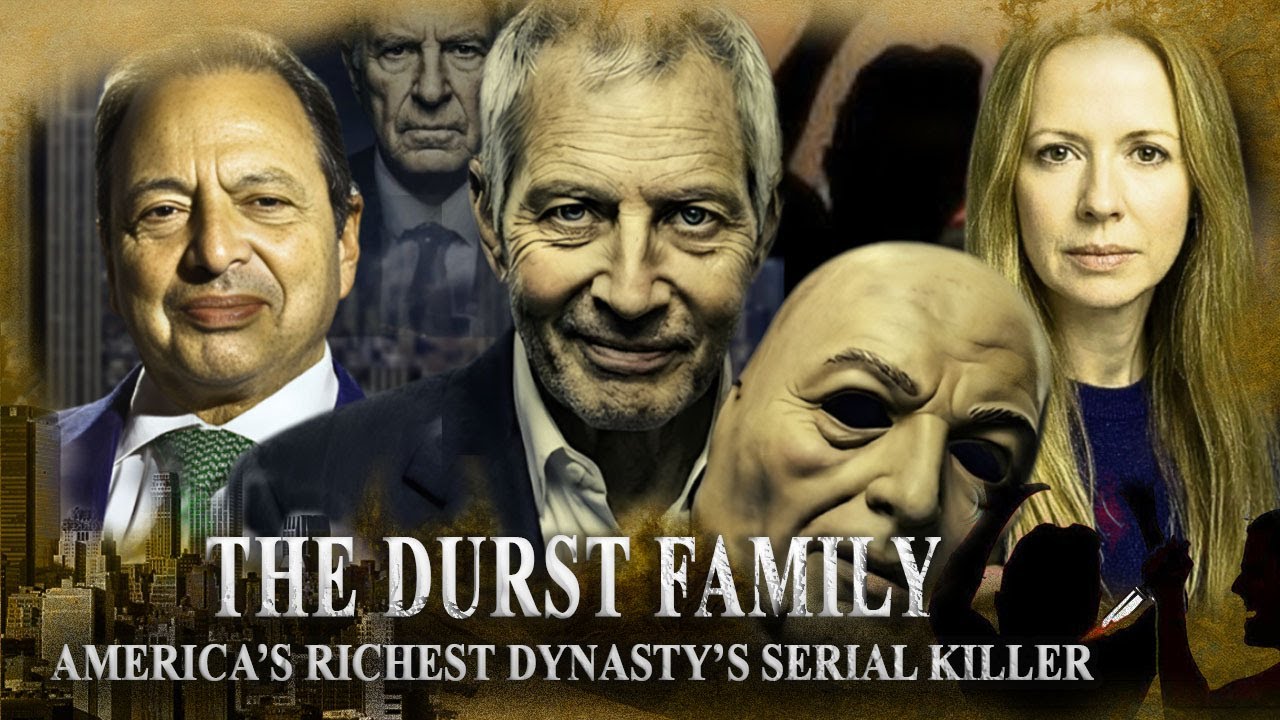
They found a revolver, more than $40,000 in cash, marijuana, a map of Cuba, and a realistic latex mask designed to alter his appearance. He was planning to vanish again. Instead, he was extradited to Los Angeles to stand trial for the murder of Susan Berman. The trial was delayed for years by illness and litigation.
When it finally began, Robert was confined to a wheelchair, skeletal, his head shaved to accommodate a shunt draining fluid from his brain. His own brother, Douglas, testified against him, describing decades of terror and the armed guards he had hired to protect his family. Robert took the stand and withered under cross-examination. On September 17, 2021, the jury convicted him of first-degree murder with special circumstances: killing a witness.
He was sentenced to life without parole. Less than four months later, on January 10, 2022, Robert Durst died in a hospital. He was seventy-eight years old. The cause was cardiac arrest, complicated by cancer and other ailments, including COVID.
Because his lawyers had filed an appeal before his death, a California legal precedent known as abatement ab initio vacated his conviction. Legally, he died a man not convicted of murder. The families of his victims were left with the knowledge that he had slipped through the cracks one final time. The search for Kathy Durst’s body continues.
Her family has filed wrongful death lawsuits against Robert’s estate, arguing that the Durst family helped cover up the crime. The Durst organization itself, under Douglas’s leadership, has thrived, developing One World Trade Center and some of New York’s most prominent green towers. But the name is forever divided. There is the Durst of the day, the builders of the skyline.
And there is the Durst of the night, the murderer who used his family’s fortune as a weapon. The money did not make him a killer. But it bought the silence, the lawyers, the masks, and the time. It built the walls that hid the screams.
And in the end, it could not bury the truth that followed him from a rooftop in Scarsdale to a bathroom with a live microphone.
