Edward Moore was said to be handsome from one angle and cursed from the other. Behind his good face, another stared back. It smiled when he cried, whispered when he slept, and seemed alive in all the wrong ways. Doctors refused to touch it.
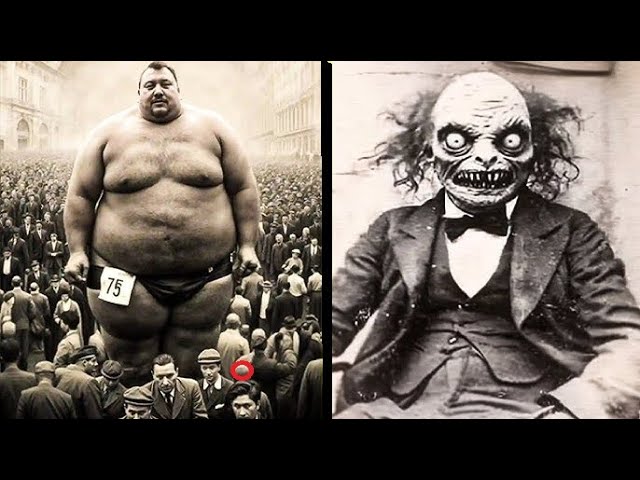
To them, he was a curiosity. To Edward, it was torment. He came from wealth and talent, played instruments beautifully, studied fine art, and avoided attention whenever possible. But that second face would not let him be.
He claimed it whispered hateful things, mocking him through sleepless nights. Some swore they saw its lips move. Others said it only did when he was in pain. Edward begged surgeons to remove it.
They refused. The story goes that he took poison soon after. No one ever confirmed his true identity, only that his story outlived him. In every retelling, his tragedy stays the same: a man of beauty destroyed by the face that would not let him rest.
His was the most unsettling entry in a long and strange tradition. Freak shows first emerged in England during the 16th century, when people with unusual physical traits were displayed as bizarre spectacles. At the time, deformities were often viewed as signs of the supernatural, fueling folklore and public fear. Showmen like Barnum exploited those beliefs, turning physical differences into enormously profitable entertainment.
Today these shows are outlawed, but they were once pathways to fame and fortune. Alice Bounds was born in Kolkata with limbs that did not follow conventional design. Her elbows aligned where wrists normally form, her knees where ankles should be. She moved more fluidly on all fours than upright, and embraced it.
In 1880, Bounds traveled the globe to perform at Dreamland Circus Sideshow in Coney Island, where spectators knew her as the She Bear, or sometimes Ursa the Bear Girl. Her movement already echoed animal traits, but she leaned into the role. She wore fur, walked on all fours, and allowed the audience to see what they chose to believe. Into the early 1900s, she remained on stage.
Though little is documented about her life away from performance, Bounds’s act became one of Sideshow’s enduring images, where a real physical condition fused with theatrical invention. In a space built on illusion and perception, Alice never masked her difference. She shaped it into identity and etched herself into the fabric of American freak show history. Daniel Lambert did not merely grow heavy.
He turned it into a livelihood. He was born in Leicester in 1770 and grew into a massive, strong boy. Physically active, he swam carrying full-grown men and later served as a prison keeper. By 23, he weighed over 450 pounds.
When the prison closed, Lambert retained his pension and gained curiosity. Strangers kept arriving. One visitor faked a conversation to get inside, and Lambert responded, “Tell him I’m a shy cock. ” Eventually, he accepted the attention and moved to London in 1806.
People paid not only to look, but to converse. He was clever, sharp, and never tolerated insults. When a man mocked his coat, Lambert replied, “If I knew what part your shilling paid for, I’d cut it out. ” He died in 1809 at 39.
His coffin required wheels. A wax figure of him toured America before ending up in Barnum’s Museum, where it melted during the fire of 1865. Stone eaters date back over a millennium. One of the earliest known cases appeared in Prague around 106, a man who claimed he could consume rocks unharmed.
In the 1600s, Thomas Gobsul was advised to swallow pebbles to ease stomach gas. It worked until he began walking around with 200 stones inside him. He could not digest food yet continued swallowing more. His physicians were no help.
Others made it a livelihood. Francis Batalia, performing at London’s Bartholomew Fair in the same century, claimed to have rejected milk in infancy and craved stones. He swallowed handfuls with beer and passed sand weeks later. Dr.
Bullworth insisted that was all he required, plus tobacco. By the 1700s, regurgitation tricks were exposed. Houdini himself learned the method in 1895: swallow coins or stones, then return them on cue. Mshub Norton included frogs.
The great Waldo used mice. Today, Stevie Star carries the act further, swallowing everything from billiard balls to live goldfish. Thomas Weders had a face no one forgot, mostly due to his nose. Born in Yorkshire in the early 1700s, Weders was said to have a nose measuring 7½ inches, 19 centimeters of solid cartilage.
He supported himself by displaying it across Yorkshire. Medical oddities records from the late 1800s described him as fascinating yet intellectually lacking. The Strand magazine joked that nature spent so much time shaping his nose, it forgot to add a brain, or perhaps ran out of space. Despite ridicule, Weders left one of Sideshow’s most striking facial legacies.
His wax likeness, massive nose and all, still appears in Ripley’s Believe It or Not museums worldwide. Visitors stare, debate the truth, and leave wondering: was it really that long? Authentic or embellished, Weders’s presence remains fixed in circus history, one unforgettable feature at a time. Dave Ballard, also known as Tobe the Robot, the Texas Giant, and even Santa Claus, was born in 1905 in Texas.
At birth, he weighed just 10 pounds. By adulthood, he stood 7’7” and weighed over 350. He finished high school, began college in Austin, then withdrew when funds dried up. He took jobs in shops, movie houses, and eventually found the stage.
Ballard’s size made him a natural for vaudeville. He played pirates, Keystone Cops, and even a robotic spaceman called Tabore on early television. One of his oddest gigs was the World’s Tallest Santa. “Children behaved.
Drunken adults didn’t. ” “Nobody’s ever original,” he once remarked. In the late 1950s, he joined the Christian Brother Circus and then performed under Ward Hall as the Texas Giant. One summer, Hall hired another performer, 7’8”, just to sit outside and provoke crowds into buying tickets to see Dave.
Ballard’s time on stage ended in 1968 when illness took its final toll. Clifford Calberly was not the first man to walk a wire across Niagara, but he made sure people remembered him. On October 12th, 1892, at just 22, he stretched a thick steel cable 200 feet above the river gorge and crossed it in just over 6 minutes. Then he turned around and began to display his control.
He lay flat on the wire, sat in a chair, swung from his toes, his head aimed straight at the rocks below. Some spectators could not even look. The Dundy Courier wrote, “Many turned away, shuddering from the sight. ” The New York Times called him the champion high-wire walker of the world.
But fame does not always bring comfort. Months later, he walked again. This time in baskets, cooked food midair, and even performed at night. A phrenologist once claimed his skull revealed courage.
But no skull reader was needed to know this man had nerve. In 1937, Life magazine ran a feature on Calberly at age 69. He still dreamed of walking the wire one more time. Captain Constantinis claimed to be an Albanian explorer kidnapped in Burma and forcibly tattooed.
That story was fiction. The tattoos were real. Every inch of his body, from his scalp to his fingertips, was covered in Burmese symbols, animals, and mythic designs in red and blue ink. Only the soles of his feet were left untouched.
Born around 1836, he became one of the most famous tattooed men in history, touring under P. T. Barnum and the Great Fini. Scientists examined him at the University of Vienna, amazed by the density and precision of his artwork.
He earned over $1,000 a week, a fortune at the time, and sold fabricated autobiographies to deepen the mystery. Behind the promotion stood a man who understood spectacle better than most. Constantinis did not rely on tricks or danger. He turned his own skin into an exhibition.
When he died, he left behind wealth, mystery, and an unforgettable legacy written permanently across history. Nikolai Kobalof was born in 1851 in Russia with no arms and only partial legs. The 14th child in a farming family, he did not allow his condition to define him. Through determination, he learned to do everything: cut paper, eat with utensils, write, draw, thread needles, and even fire a pistol.
And he did it all with his stumps, cheek, and jaw. He toured across Europe and America, and even performed for royalty like Tsar Alexander III and Queen Wilhelmina. On stage, he was pure precision. Audiences watched in amazement as he opened his watch, fed himself, or extinguished a candle with a pistol shot.
Offstage, he lived just as fully. He married Austrian actress Anna Wilford, fathered six children, and later built a toboggan ride in Vienna’s Wurstelprater Park. In 1900, he even appeared in an early silent film. Kobalof died in 1933, but his life was never small, not in movement, love, or impact.
He turned limitation into spectacle and made it art. Rosa Richter was only 14 when she climbed into a cannon-shaped barrel and made history. The year was 1877, and at London’s Royal Aquarium, she flew through the air as Zazel, the first human cannonball. The launch came not from gunpowder, but from a system of coiled springs and levers created by daredevil William Leonard Hunt.
A cloud of smoke gave the illusion of an explosion as she shot forward into a net stretched below. Crowds roared. 15,000 people came to see her rise above them, a living image of danger and grace. Zazel toured across Britain and America, later joining P.
T. Barnum’s Circus, where her act became a headline attraction. But the danger never faded. In 1891, during a show in New Mexico, she overshot the net and shattered her spine.
She lived, but never performed again. Zazel’s leap turned flight into theater and left every daredevil after her chasing the same impossible moment. Ray Meyers was born without arms in 1911 on a Pennsylvania farm, but he never wanted sympathy, only room to learn. His parents declined early circus offers, allowing him to live like any other child.
Ray taught himself to play trombone in school, then mastered guitar using his feet. He plucked strings with a pick between his toes, added a harmonica held between his face and shoulder, and built his own path forward. In 1933, he joined Robert Ripley’s auditorium at the Chicago World’s Fair, performing alongside sideshow veterans. But one season was enough.
Ray wanted music, not exhibition. So he went home, bought a car, and taught himself to drive, one foot on the wheel, one on the pedals. He toured churches and radio stations, sang country songs, and crossed America for decades. In 1936, he returned to Ripley’s World by radio and later made his way to WWVA and other stations.
Ray kept playing until age 75. The Spiderwoman was never one person, but a shadow shared by many performers. In dim tents and gaslit halls, women appeared with extra limbs constructed from wood, wire, and fabric, bent in ways that suggested something half human, half arachnid. The act relied on fear and fascination, making audiences lean forward in disbelief.
Some spider women painted webs across their skin. Others wore dark outfits stitched with fine silver thread, their arms twitching in rhythm with hidden pulleys. Their legs folded like a nightmare made graceful. It was a deception, but convincing enough to haunt the crowd long after the curtain closed.
They seldom gave interviews or used real names, preferring mystery over fame. No record proves who began it or who ended it, only that for decades, the Spiderwoman reappeared in circuses around the world. She was not real in body, but real in memory. And maybe that was the whole point.
Rose Foster, born Rosena Kate Foster in 1884 in Highfield, England, entered life with four severely malformed limbs. Yet she refused pity. As a child, she taught herself to eat, dress, and even write using her toes. Standing just 26 inches tall, she began appearing on postcards and in sideshows, knitting or smiling proudly for the camera.
By the 1890s, she was performing for crowds. And by 1910, she had completed eight consecutive seasons with the Barnum and Bailey Circus. Her life was full of travel: Europe, North America, even Brazil. Each performance challenged the idea of what was possible.
In 1919, she married Frederick John Wilkinson in Southampton using her full name, Rosina Kate Foster Aral. After retiring in 1937, she lived quietly with her family in Lytham St. Annes. She passed away in 1975 at 91, buried under her married name.
Rose’s story is not about deformity or fame. It is about quiet endurance, self-reliance, and the grace of someone who turned hardship into a career. Mirand Dejo, born Arnold Garrett Henske, did not set out to shock the world, but under the name Mirand Dajo, that is what he did. In post-war Europe, he stepped on stage and calmly ran swords, skewers, and fencing foils straight through his body.
X-rays verified what crowds already believed: they were truly inside him. Dajo said it was not magic, just mind over flesh. He claimed his body could heal itself through spiritual discipline. And he stood motionless while steel passed through his chest.
Doctors could not explain how he survived. Some called it divine, others delusion, but everyone kept watching. He became a sensation across Switzerland and the Netherlands, performing in theaters and hospitals alike. In 1948, he swallowed a steel needle to prove his invulnerability.
The operation to remove it killed him. His death only deepened the mystery. Science still cannot explain how Mirand Dajo lived or how he endured so much without breaking. Rosa and Joseph Blazek were conjoined twins born in 1878 in Bohemia, now part of the Czech Republic.
Exhibited at fairs since infancy, their act became established after doctors in Paris confirmed that separation was impossible. They shared lower vertebrae. Rather than dwell on limitations, the twins built their act around music. They mastered the xylophone, then violin, performing graceful duets that amazed European crowds.
In 1893, they joined the World’s Columbian Exposition in Chicago, earning global attention. Years later, in 1910, Rosa gave birth to a son named Franz, a story surrounded by rumor. Some claimed she married a man who died in World War I, while others believed the child was adopted. Whether true or publicity, it only amplified their fame.
The sisters returned to the US in 1921 for a vaudeville tour, living among Chicago’s Czech community. Sadly, both caught influenza in 1922 and died 12 minutes apart. Their legacy remains among history’s most remarkable twin acts.
