On a summer evening in 1929, an unmarked black saloon car pulled up outside a private clinic near the Bois de Boulogne in Paris. Inside were two senior officers from Special Branch of Scotland Yard, carrying a leather case packed with thousands of pounds in untraceable banknotes. Their mission was not to arrest a dangerous criminal or break up a foreign spy ring. They were executing an urgent, secret cleanup operation under direct orders from Buckingham Palace.
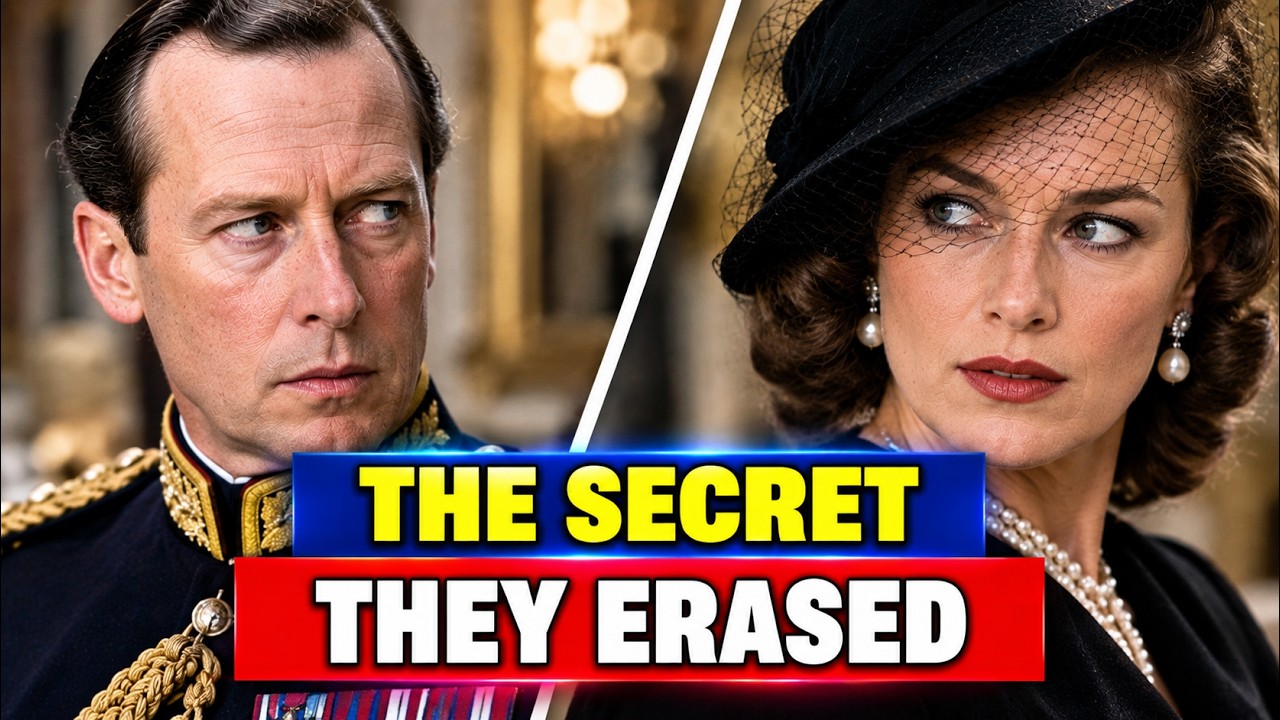
Their target: a cache of intercepted letters, pawnbrokers’ receipts, and silver drug paraphernalia bearing the royal cipher of Prince George, Duke of Kent, the elegant and cultured fourth son of King George V and Queen Mary. To the British public, Prince George was the most charming prince of his generation, a tall, strikingly handsome naval officer who played classical piano, danced the Charleston in Mayfair clubs, and dressed with effortless Savile Row elegance. But behind the gilded doors of royal residences and London’s bohemian salons, George was living a double life that terrified the British establishment. He was severely addicted to morphine and cocaine, indulged in dangerous relationships with both men and women, and had fallen under the spell of an American socialite known in international high society as “the girl with the silver syringe.
” When love letters, blackmail plots, and secret illegitimate children threatened to tear the House of Windsor apart, the palace launched a covert campaign of surveillance, bribery, and institutional erasure. And when Prince George died violently in a mysterious wartime plane crash in 1942, the establishment moved quickly to ensure the darkest secrets of the prodigal prince were buried forever beneath the Scottish mist. Prince George was born at York Cottage on the Sandringham estate in December 1902, the fifth child and fourth son of the future King George V and Queen Mary. From his earliest days in the grim, wood-paneled nursery, it was clear that George was fundamentally different from his older brothers.
Prince Edward was nervous and hyperactive. Prince Albert, the future King George VI, suffered from a debilitating stammer and chronic digestive pain. Prince Henry was a bluff, simple-minded soldier. In contrast, Prince George possessed a natural sharp intelligence.
He was intellectually curious, musically talented, physically graceful, and blessed with chiseled aristocratic features that made him the darling of society photographers. Yet growing up inside the emotionally forbidding fortress of George V came at a devastating psychological cost. The King ran his household with the unyielding iron discipline of a nineteenth-century battleship. He terrorized his sons openly, shouting insults across breakfast tables, demanding absolute conformity in dress and habit, and treating any expression of artistic sensitivity as an unacceptable moral flaw.
Queen Mary, hardened by a debt-burdened childhood, was utterly incapable of providing maternal warmth, regarding tears and spontaneous embraces as vulgar middle-class indulgences. In that cold, harsh Victorian environment, the young Prince George learned to build his own fortress—a secret, hidden inner life operating in complete isolation from the strict expectations of his father’s court. Following family tradition, George was sent at age thirteen to the Royal Naval College at Osborne and then Dartmouth. Unlike his father and older brother Albert, who found comfort in the rigid routine of the sea, George found naval service stifling, monotonous, and emotionally suffocating.
He suffered from chronic, violent seasickness that left him physically debilitated on long voyages. While serving as a midshipman and sub-lieutenant aboard battleships such as HMS Iron Duke and HMS Queen Elizabeth, George turned to literature, classical music, and modern art. He carried silk pajamas in his sea chest, played Chopin in the officers’ wardroom, and developed a refined, discerning eye for antique porcelain and interior decoration. When the First World War ended and the roaring twenties swept through London, Prince George seized the opportunity to escape the naval prison his father had built for him.
Citing chronic, debilitating health problems with his digestive system and recurring ear infections, George quietly pressured senior physicians to declare him unfit for front-line naval service. In 1926, much to King George V’s displeasure, the twenty-four-year-old prince formally retired from active naval duty. He moved into private bachelor quarters at St James’s Palace and briefly took an administrative post at the Foreign Office and then the Home Office, becoming the first son of a British king to work as an ordinary civil servant. But the administrative paperwork of Whitehall was merely a respectable daytime cover.
Prince George’s real life began the moment the streetlights flickered on in Mayfair, Soho, and Chelsea. London in the twenties was in the grip of a hysterical, pleasure-crazed rebellion against the Victorian past. Traumatized by the slaughter of the trenches, an entire generation of brilliant young aristocrats, writers, artists, and heiresses plunged into a whirlwind of cocktail parties, jazz clubs, and licentious bohemian salons. Prince George did not merely observe this glittering world from the outside.
He became its unofficial reigning king. With his tall, slender frame, slicked-back dark hair, and impeccably tailored double-breasted suits that set fashion trends across London society, George possessed a captivating charisma that enchanted men and women alike. He spent his nights moving between fashionable nightclubs like the Embassy Club and Café de Paris, dancing until dawn, sipping vintage champagne, surrounded by the most daring and liberated figures of the Jazz Age. During this period of unbridled exploration, Prince George’s private and emotional life began to diverge radically from the strict moral code imposed by Buckingham Palace.
George was openly and enthusiastically bisexual at a time when homosexual acts were strictly criminalized under British law, carrying harsh prison sentences and total social ruin. His circle included some of the most famous and controversial artistic figures of the era. A deeply intimate friendship developed with the playwright and composer Noël Coward, the two spending weekends at country houses and exchanging witty, flirtatious correspondence that teetered on the edge of public danger. Society diaries and police reports of the era recorded with silent concern that George moved freely through Soho’s secret gay clubs, often accompanied by prominent figures of London’s artistic avant-garde, including the young art historian Anthony Blunt.
But George’s romantic adventures were not confined to London’s elite salons. He was drawn to danger, novelty, and the thrilling rush of crossing forbidden social boundaries. He conducted a scandalous affair with Florence Mills, the famous African-American cabaret star who took London by storm in the show Blackbirds, sneaking into her dressing room backstage to shower her with jewelry and champagne. His name also appeared in secret police files in connection with Jorge Ferrara, the wealthy bisexual son of the Argentine ambassador, with whom he shared luxury hotel suites in Paris and the French Riviera.
For King George V and Queen Mary, watching from the gloomy sanctuary of Buckingham Palace, their fourth son’s lifestyle was a terrifying, absolute nightmare. The King, who took his responsibilities as Supreme Governor of the Church of England with solemn religious gravity, began receiving quiet and deeply alarming briefings from the Commissioner of the Metropolitan Police. Special Branch officers reported seeing the King’s son in suspicious situations, frequenting places known for illegal gambling and prostitution, and leaving a dangerous trail of handwritten love letters, signed photographs, and extravagant gifts in the hands of unpredictable lovers. Palace officials lived in daily terror that an enterprising journalist, jealous rival, or opportunistic criminal would ignite a catastrophic public scandal that would bring down the entire dynasty.
Yet as the twenties drew to their turbulent close, the court realized that George’s sexual indiscretions were merely a prelude to a darker and more deadly crisis. Prince George had crossed the boundaries of bohemian rebellion and fallen directly into the clutches of the international drug trade, captivated by a glamorous and predatory American heiress whose toxic influence would push the young prince to the edge of madness and death. The decline that drove Prince George to the brink of complete psychological and physical collapse began in the smoke-filled, jazz-soaked salons of Paris and the lavish country villas of the French Riviera in the late twenties. London high society had already whispered extensively about George’s wild affairs and bohemian life, but in 1928, the young prince met a figure who shattered whatever fragile boundaries remained between his private rebellion and outright self-destruction.
Her name was Alice “Kiki” Preston, an American socialite and paper-manufacturing heiress, the undisputed queen of the transatlantic “Happy Valley” set. A woman who lived her life at a frantic, predatory pace, she awed and horrified everyone who entered her orbit. Born into the wealthy Whitney family of New York, Kiki Preston belonged entirely to the restless, uprooted diaspora of affluent American expatriates wandering Western Europe and East Africa between the wars. Kiki was stunningly beautiful, razor-sharp intelligent, and utterly contemptuous of conventional morality, famous across three continents for her unbridled pleasure-seeking.
She traveled with a small jeweled silver syringe hidden in her evening bag, earning her the whispered nickname “the girl with the silver syringe” in Parisian ballrooms. Kiki did not merely experiment with drugs; she consumed them with terrifying, compulsive abandon. She injected morphine, smoked opium in private dens in Montmartre, snorted cocaine from seashell boxes at dinner parties, and drew an endless circle of admirers into her drug-fuelled vortex. When Prince George was introduced to Kiki in 1928, the attraction was immediate, volatile, and toxic.
George was already exhausted by the overwhelming expectations of Buckingham Palace and the suffocating surveillance of his father’s household. In Kiki he saw the absolute embodiment of dangerous freedom. She did not treat his royal title with awe or respect but with mocking disdain. She offered him an escape from the cold Victorian judgments of York Cottage into a feverish world where sensation was the only currency that mattered.
Within weeks of their first meeting, Prince George plunged into an obsessive affair that quickly alienated his closest friends and alarmed his own staff. During this period, under Kiki’s direct supervision and influence, Prince George crossed a fatal threshold. What began as recreational cocaine use rapidly transformed into intravenous addiction to morphine and heroin. The prince began accompanying Kiki to private suites at the Ritz in Paris and isolated chalets in Switzerland, disappearing for days while frantic palace officials in London devised cover stories of diplomatic fact-finding missions or sudden attacks of digestive illness.
Under the grip of powerful narcotics, the prince’s physical condition and psychological stability deteriorated with terrifying speed. The tall, bright young naval officer with the carved features and perfect physique began to wither and collapse. His skin took on a translucent gray pallor, his weight dropped sharply, and his dark eyes became bloodshot and glassy. Servants at St James’s Palace reported that the prince suffered violent, erratic mood swings, oscillating unpredictably between manic euphoria where he played fevered jazz improvisations on the piano for hours on end, and paralyzed, paranoid depressions where he locked himself in his bedroom, weeping and refusing food.
The danger escalated dangerously when Kiki Preston gave birth to a son, Michael Temple Canfield, in 1926. While the boy was officially registered as the child of her husband, Cas Canfield, a prominent American publisher, persistent rumors circulated in the velvet underground and the British diplomatic corps that the child’s biological father was none other than Prince George. The possibility of an illegitimate royal child born to a notorious American drug addict was a nightmare with existential consequences for the British Crown. If the child’s parentage were publicly exposed or used as a weapon by blackmailers, it would trigger a moral and constitutional crisis capable of bringing the Windsors to their knees.
By early 1929, the situation had reached a completely catastrophic point. Prince George’s personal funds had run out, drained by his extravagant travels, Kiki’s lavish lifestyle, and the exorbitant prices demanded by Parisian drug dealers. In desperation, the prince began pawning family jewels and silver given to him by Queen Mary, leaving behind a disastrous trail of receipts and pawn tickets across Mayfair and Montmartre. Worse still, George’s addiction had become so severe that he could no longer perform basic public duties.
During a formal dinner at Buckingham Palace, the prince was observed trembling uncontrollably, unable to lift his soup spoon without spilling its contents onto the tablecloth. When King George V issued a demand for an explanation, the prince muttered incoherent words and fled the room, leaving the King in a fury and Queen Mary staring in cold, humiliated horror. At this moment of imminent public scandal, Prince Edward, the Prince of Wales, intervened. While King George V and Queen Mary handled matters with cold, punitive detachment, viewing their fourth son’s condition as an unpardonable moral stain to be hidden and punished, Edward felt genuine, protective affection for his younger brother.
Edward had long lived a life of concealed rebellion, sharing George’s hatred of their father’s autocratic household regime. Recognizing that if the King discovered the full truth about George’s heroin and morphine addiction, George would likely be permanently exiled to a remote colony or imprisoned in a private sanatorium, Edward decided to take matters into his own hands. In the spring of 1929, the Prince of Wales organized a dramatic and secret intervention. Edward arranged for trusted private investigators from Scotland Yard to track George to a hotel in Paris, where the prince was found in a semi-conscious, delirious state beside Kiki Preston.
The investigators quietly separated George from the American socialite, packed his belongings, and escorted the trembling, hallucinating prince across the English Channel on a private, unmarked boat. George was immediately transported to Fort Belvedere, Edward’s secluded country retreat near Sunningdale in Berkshire, and later to a remote private estate in the English countryside, far from the reach of the press or London society. There, behind closed doors and surrounded by a handful of fiercely loyal attendants and a trusted private physician sworn to absolute silence, Prince George underwent a brutal and appalling ordeal: forced, abrupt detoxification. The withdrawal symptoms were agonizing and prolonged.
Deprived of morphine and heroin, Prince George suffered the violent horrors of chemical deprivation in full detail. For nearly six weeks, the royal prince endured violent physical convulsions, continuous vomiting, drenching sweats, and terrifying hallucinations. He screamed in agony, begging his brother and the doctors for a single injection, and at times attempted to claw his way out of the locked bedroom windows. Edward remained by his brother’s bedside for days on end, steadying George through his most violent spasms, wiping his forehead with cold cloths, and administering sedatives to prevent his heart from stopping under the immense physical strain.
Throughout this horrifying ordeal, the palace machine maintained an impenetrable wall of silence. The official Court Circular informed the British public that Prince George had contracted a severe, persistent bout of influenza and was recovering quietly in the countryside on doctor’s orders. No newspaper editor dared question the official bulletin, and the political establishment at Westminster remained utterly ignorant of the life-or-death struggle unfolding inside that fortified country house. By the summer of 1929, the physical agonies of acute withdrawal finally began to subside.
Prince George emerged from the ordeal alive, his body weak and exhausted, but entirely freed from the physical grip of the drugs that had nearly killed him. However, Edward knew that physical detoxification was only half the battle. As long as Kiki Preston remained in Europe, the temptation for George to relapse would hang over his life like a loaded gun. The Prince of Wales used his enormous personal influence and the resources of the British security services to deliver a firm message to the American heiress.
Kiki Preston was officially declared persona non grata. She received a warning that if she attempted to contact Prince George, set foot on British soil, or spoke to the press about their relationship, the full weight of the British state, passport authorities, and international financial institutions would fall upon her and her family. Intimidated by the cold authority of the Crown, Kiki fled to East Africa, joining the notorious Happy Valley colony in Kenya, where her turbulent life ended in 1946 when she jumped to her death from a New York hotel window. Prince George had officially survived an early death, but the ordeal shattered his nervous system and left an indelible scar on his psyche.
More dangerously still, the prince’s reckless years in the bohemian underworld had left behind a time bomb. Dozens of handwritten love letters, intimate telegrams, and signed photographs detailing the prince’s illicit affairs, drug addiction, and secret bisexual encounters lay scattered across bedrooms, private safes, and pawnshops in London and Paris. The physical addiction was broken, but the predators were now circling. As Prince George returned to London’s formal salons, a shadowy network of velvet-society blackmailers and underworld figures prepared to demand their price, forcing Scotland Yard and British intelligence into a desperate secret war to salvage the honor of the House of Windsor.
The suffering of physical detoxification in that country house in the summer of 1929 had cured Prince George of his chemical dependency, but it had done nothing to eliminate the deadly paper trail his reckless years had spread across Western Europe. During his immersion in the roaring bohemian world of the twenties, the prince had acted with catastrophic personal carelessness. Under the influence of cocaine, morphine, and infatuation, George was a compulsive romantic correspondent. He poured his deepest thoughts, drug-induced hallucinations, bisexual liaisons, and profound hatred of the royal court into dozens of handwritten letters, intimate telegrams, signed portrait photographs, and hastily scribbled notes, left behind in hotel suites, nightclubs, and private apartments from Mayfair to Montmartre.
For the underworld of unscrupulous criminals and opportunists in interwar Europe, this correspondence represented a financial empire waiting to be looted. In early twentieth-century Britain, homosexuality was not merely a social taboo. It was a felony under the Criminal Law Amendment Act, carrying harsh sentences of hard labor and total social ostracism. Drug addiction was regarded by the ruling establishment as a mark of criminal degeneracy.
Had a single bundle of Prince George’s letters documenting his intimate relationships with men like Noël Coward and the Argentine playboy Jorge Ferrara, or his drug use with Kiki Preston, been published in a foreign newspaper or read aloud in a London courtroom, the resulting constitutional shock would have brought the House of Windsor to the edge of collapse. King George V had devoted his entire life to building the monarchy as the supreme moral pillar of the British Empire. The exposure of his beloved son as a dissolute, bisexual, drug-addicted royal would have burned that imperial myth to ashes overnight. The blackmail attempts began immediately upon George’s return to London society in the autumn of 1929.
The most dangerous and elaborate blackmail plot was orchestrated by a Mayfair socialite and petty fraudster named Edgar Tetherton. Tetherton had obtained a bundle of highly scandalous letters written by Prince George during his secret affairs with prominent figures of London’s theatre and art world. The letters were explicit, witty, and utterly devastating. Tetherton presented his demands through a third party: either he received a huge sum in cash, or the documents would be sold directly to the Hearst newspaper syndicates in the United States, where British libel laws had no authority and royal reverence did not exist.
Faced with this existential threat, Buckingham Palace did not contact the regular police or involve the Home Office. The King’s private secretary, Lord Stamfordham, mobilized the shadowy, highly secret apparatus of Scotland Yard’s Special Branch and the internal security divisions of British intelligence. The officer in charge of the operation was Chief Inspector Percy Savage, a legendary detective who worked with quiet, clinical caution, reporting directly to the Commissioner of the Metropolitan Police and the palace. Savage’s team operated in the murky grey zone between law enforcement and state-sponsored espionage.
They placed Tetherton and his associates under round-the-clock physical surveillance, tapped telephone lines, and intercepted personal correspondence. Recognizing that arresting Tetherton in a public court would inevitably place the letters in the public record, the establishment chose the path of secret containment. Special Branch intermediaries met Tetherton in private rooms at exclusive London clubs, negotiating with the cold precision of diplomats handling an international hostage crisis. Eventually, a substantial financial settlement was approved.
Thousands of pounds, channeled through secret royal emergency funds and the King’s private purse, were delivered in unmarked banknotes in exchange for the original letters, envelopes, and all photographic negatives. Tetherton then received a terrifying, non-negotiable warning from Special Branch: if he uttered a single word about the transaction, he would face treason charges or disappear silently into the penal colonies. But no sooner had the Tetherton crisis been neutralized than another fire broke out, far more dangerous, across the English Channel. In Paris, underworld figures connected to the Montmartre drug circles began demanding payment for unpaid drug debts accrued by Prince George and Kiki Preston during their riotous parties at the Ritz.
Several pawnshops along the Rue Saint-Germain held old diamond cufflinks, gold cigarette cases bearing Prince George’s royal cipher, and family heirlooms given to the prince by Queen Mary, which George had handed over to secure nighttime shipments of morphine and cocaine. Moreover, private letters written by George to Kiki, detailing their intravenous drug use and containing frantic pleas for narcotics, were circulating among Parisian dealers and notorious private investigators. This crisis prompted an unprecedented international cleanup operation. Special Branch investigators were dispatched to Paris on cross-Channel ferries, carrying diplomatic passports and cash-stuffed envelopes provided by the King’s civil list.
Coordinating with trusted senior officials within the Paris Prefecture of Police who were sympathetic to the British monarchy, the investigators moved systematically through the Parisian underworld. Over several frantic months in 1930 and 1931, British agents tracked down every pawned royal object, bought back scandalous correspondence at exorbitant prices, and seized pawn receipts. Payments were made to Parisian club owners and drug smugglers, who were intimidated by the French police and threatened with deportation if they failed to surrender every scrap of paper bearing the royal cipher. The sheer volume of material recovered during these operations was staggering.
Entire files marked “Top Secret, Duke of Kent” were delivered under armed guard to the private office of the King’s private secretary at Buckingham Palace. Inside those files were hundreds of pages documenting the King’s son’s secret life: descriptions of bohemian drug parties, receipts from dubious European clinics, intercepted telegrams arranging secret homosexual meetings in Venice and Berlin, and intelligence reports tracking potential illegitimate children fathered by the prince during his international travels. Queen Mary, whose entire existence was built on the brutal suppression of human scandal and the absolute preservation of family prestige, took a direct personal interest in eliminating these files. While the Queen refused to discuss the matter with her son, maintaining a cold official silence whenever George entered the reception room, she insisted that evidence of his degeneracy be erased from history entirely.
Documents that could not be legally returned were taken to the furnace rooms in the basement of Buckingham Palace and burned. Their ashes were swept up the palace chimneys so that not a single trace would remain to tempt future historians. The psychological toll on Prince George during this period of constant surveillance and imminent exposure was catastrophic. Although he had given up the hard drugs, he lived in a state of chronic, agonizing paranoia.
He knew that every move he made was followed by Special Branch informants, that his mail was opened and examined before it reached his hands, and that his telephone calls were monitored by palace switchboard operators. The prince felt like a state prisoner inside his own apartment at St James’s Palace. He began drinking heavily to calm his nerves, moving through London dinner parties with the hollow, haunted look of a man waiting for the executioner’s axe. He understood the unspoken truth of his position.
The royal institution had saved him from prison and public humiliation, but their mercy was entirely conditional. His father, King George V, was elderly, failing, and rapidly losing patience with his sons’ moral failures. The King made it brutally clear to senior courtiers that he would not tolerate another scandal from George. If the prince crossed the line again, if another blackmailer emerged, if an indiscreet lover came forward, the palace would not intervene to save him.
He would be stripped of his royal titles, banished from the shores of Great Britain, and exiled to the furthest corner of the British Empire, just as the black sheep of the royal family had been cast out in centuries past. By 1933, the palace inner circle realized that passive containment and continuous bribery payments were no longer a viable long-term strategy. The threat of blackmail would haunt Prince George for the rest of his life as long as he remained an anxious, unpredictable bachelor moving through London’s bohemian circles. The only permanent solution to the crisis, the only way to rebuild the prince’s shattered reputation, silence the whispers of homosexuality, and build an impenetrable wall of public respect around the King’s most dangerous son, was the ultimate instrument of royal governance: a high-level arranged dynastic marriage.
The courtiers began combing the royal courts of Europe for a princess possessing established aristocratic lineage, stunning beauty, and the immense personal fortitude required to tame a wild Jazz Age prince, launching a calculated campaign to forge the perfect royal couple. Saving Prince George institutionally required extraordinary political and biological measures. By late 1933, the palace inner circle recognized that private investigators, secret funds, and document burning in palace basements were merely temporary tactical solutions. The source of vulnerability was structural.
The King’s fourth son was an unmarried, unstable thirty-one-year-old whose liberal tastes and volatile sexual inclinations made him a permanent target for international blackmail. What the House of Windsor needed was not merely a wife for the prince, but an impenetrable heraldic shield: a woman of impeccable lineage, aristocratic charm, and immense personal composure capable of completely neutralizing the poisonous whispers of the past decade. The woman chosen to execute this dynastic rescue was Princess Marina of Greece and Denmark. Born in Athens in December 1906, Marina came from the most distinguished European royal lineages.
She was the youngest daughter of Prince Nicholas of Greece and Denmark and Grand Duchess Elena Vladimirovna of Russia, making her a direct descendant of the Romanov Tsars and the Danish Crown. Marina possessed sophistication, multilingualism, and artistic culture, with a striking, rigorous elegance that caught eyes across European capitals. Unlike the insular English aristocracy, Marina understood the harsh realities of survival at the Continental court. Her family had been forced into impoverished exile by the Greek revolutions, relying on the generosity of foreign courts for their survival.
She understood the price of royal security and harbored no romantic illusions about the commercial nature of imperial marriages. When Prince George was introduced to Princess Marina in Munich in the autumn of 1933, the marriage was coordinated with the cold diplomacy of a peace treaty. George, still suffering from the physical effects of drug withdrawal and the constant surveillance of Special Branch, understood that his margin for error had evaporated. A high-profile marriage was his only remaining path to regain his father’s favor and secure an independent royal duchy.
For her part, Marina found the prince intelligent, cultured, and unquestionably the handsomest royal man in Europe. She was fully aware of his artistic eccentricities and his reputation as a ladies’ man, but in the context of European royal families, a husband’s private, suppressed relationships were accepted as a natural risk of high status, as long as the public facade remained flawless. In August 1934, the engagement was officially announced, and in October of that year, King George V elevated his son to the peerage as Duke of Kent, Earl of St Andrews, and Baron Downpatrick. The British press and public, weary from the economic gloom of the Great Depression, greeted the impending union with frenzied enthusiasm.
Princess Marina instantly became a national obsession. Her elegant Parisian dresses, chic wide-brimmed hats worn at a jaunty angle, and cool, aloof beauty dominated high society news columns. When she arrived in London, thousands lined the streets for a glimpse of the woman who seemed the embodiment of a modern fairy tale of royal romance. The wedding, held at Westminster Abbey on 29 November 1934, was the first royal wedding broadcast live on radio across the British Empire.
It was a breathtaking imperial spectacle by any measure. Crowned heads gathered in the choir stalls while hundreds of thousands cheered outside the Abbey as the new Duke and Duchess of Kent returned in the glass coach to Buckingham Palace. To the global audience listening in New Zealand, Canada, and India, George and Marina were the golden couple of the British monarchy, a dazzling vision of youth, elegance, high culture, and entrenched family virtue that restored the luster of the House of Windsor. But behind the camera flashes and newsreel lenses, the royal institution was managing a complex domestic reality.
This marriage was no fairy tale. It was a fragile truce between public extravagance and the maintenance of a private life. George and Marina established their London residence at 3 Belgrave Square, transforming the grand house into a dazzling cultural salon. George poured his frenetic energy into decorating the interior with luxurious French furniture, rare porcelain, and modern art, while Marina presided over gatherings attended by writers, painters, and foreign diplomats.
In October 1935, Marina gave birth to their first child, Prince Edward, followed by Princess Alexandra in 1936, providing the dynasty with the biological continuity that reinforced the public narrative of marital happiness. Yet beneath the polished marble and carefully stitched silks, the private life of the Duke of Kent did not entirely conform to the palace’s strict expectations. Prince George could not completely eliminate the complex desires and bohemian impulses that had defined his youth. While he had successfully given up the intravenous drugs that nearly destroyed him, the psychological hunger for forbidden stimulation remained.
Marina, with her intelligence and sharp observational skills, quickly discerned the unconventional standards of her husband’s private world. Rather than collapsing into hysteria or provoking a public scandal, Princess Marina adopted the cold pragmatism traditional to the Russian Grand Duchesses. She understood that her primary roles were to produce heirs, appear magnificent at formal occasions, and defend the public dignity of the Kent family. She granted George broad freedom of personal movement, allowing him to build close, intimate friendships with men and women outside the marriage, on condition of complete secrecy and that no hint of scandal ever leaked beyond the boundaries of their private estates.
George exploited this domestic arrangement to the full. In the late thirties, the Duke of Kent began a highly secret affair with Margaret Whigham, a wealthy and charming society girl who would later become the notorious Duchess of Argyll. Margaret was beautiful and intelligent, moving fluidly through the same raucous aristocratic Mayfair circles George had dominated in the twenties. Their secret meetings took place in private country houses and secluded London apartments, shielded from the press by a circle of loyal aristocratic friends who considered protecting the Duke’s private pleasures a matter of honor.
At the same time, whispers about George’s bisexual relationships continued to spread through intelligence services and high-society diaries. Even after his marriage, the Duke maintained his close, intimate friendship with Noël Coward, spending private hours at the playwright’s country house in Kent. While Coward fiercely protected the Duke’s reputation, burning personal correspondence and speaking of George with complete respect, the friendship remained a source of constant anxiety for palace courtiers, who saw any association with the openly homosexual playwright as a blackmail trap. The fragile balance of the Kent family was violently disrupted in 1936 by the death of King George V and the rapid, catastrophic onset of the abdication crisis.
When King Edward VIII declared his intention to marry Wallis Simpson and then abdicated, the royal family plunged into an existential civil war. Prince George found himself trapped in a painful emotional conflict. He had always been deeply attached to Edward, the older brother who had literally saved his life during the agonizing drug withdrawal at Fort Belvedere. Yet George also understood the terrifying constitutional reality.
The Crown had now passed to his terrified, stammering second brother, King George VI. In that moment of dynastic emergency, the Duke and Duchess of Kent became the most important public assets of the new reign. While King George VI struggled with his speech and health, and Queen Elizabeth, the future Queen Mother, worked tirelessly to project sound domestic stability, George and Marina supplied the glamour and sophistication the monarchy desperately needed to maintain its public relevance. The Duke intensified his official schedule, representing the Crown on grueling overseas tours to Australia and across the British provinces, earning widespread public acclaim for his warmth and charm.
When the Second World War broke out in September 1939, Prince George, eager to escape the stifling atmosphere of London and prove his worth to the nation, abandoned his honorary military titles and insisted on active service. He joined the Royal Air Force as an air commodore in the welfare section of the RAF Inspector General’s department. The prince traveled extensively across Britain, visiting remote airfields, inspecting bomber squadrons, and working to lift the morale of front-line pilots facing the horrors of aerial bombardment. He had transformed from a dissolute, drug-addicted Jazz Age playboy into a dedicated wartime officer, wearing RAF blue with genuine pride.
By the summer of 1942, Princess Marina had given birth to their third child, Prince Michael of Kent, born on 4 July, just seven weeks before fate would claim her husband. The Duke of Kent seemed to have completed the final journey of personal redemption. He had survived addiction, silenced the blackmailers, secured his family’s position, and earned the respect of a nation at war. The carefully constructed facade of respectability had withstood every threat.
Yet as the war entered its darkest phase, the shadows of the Duke’s unconventional relationships and his restless nature would draw him into a final, fateful journey through the misty bogs of northern Scotland. A journey that would end in a catastrophic fireball, igniting the greatest and most enduring conspiracy theories in the modern history of the British royal family. On the damp afternoon of 25 August 1942, a massive four-engine Short Sunderland Mark 3 flying boat of the Royal Air Force, bearing serial number W4026, made its way through the grey, choppy waters of the Cromarty Firth near Invergordon on the northeast coast of Scotland. On board was a crew of veteran RAF airmen under the command of Flight Lieutenant Frank Goyen, an exceptionally experienced Australian pilot who had logged hundreds of hours flying over the North Atlantic.
Seated behind the cockpit was Prince George, Duke of Kent, wearing the dark blue uniform of an air commodore in the RAF, accompanied by his private secretary Lieutenant John Louther, his personal aide, and his own investigator. The official itinerary announced to the Air Ministry was straightforward and routine. The Duke was on an official morale-raising mission to inspect RAF bases, coastal defense installations, and welfare facilities in Reykjavik, Iceland. But from the moment the massive thirty-ton flying boat lifted off the water at 1:10 pm, every element of the flight deviated from standard operating procedure in ways that baffle aviation experts and fuel conspiracy theories eight decades later.
Under wartime flying protocols for the mountainous Scottish Highlands, any flight from the Cromarty Firth to Iceland received strict orders to follow a coastal route. Pilots were required to climb over the open sea of the Moray Firth, turn east around Duncansby Head, and make their entire northern crossing over water. Flying directly over land across Caithness and Sutherland was absolutely forbidden in poor visibility, as the region was dominated by undulating peat bogs and treacherous granite hills rising over 700 feet beneath low cloud cover. On that Tuesday afternoon, visibility across northern Scotland was almost zero.
A dense, impenetrable blanket of coastal sea fog and drizzling rain enveloped the wasteland. Yet instead of heading toward the sea, the Sunderland W4026 made a sudden, inexplicable turn inland toward the west and northwest, flying low beneath the cloud base directly toward the highlands of the Scaraben hills. Only thirty minutes after takeoff, at approximately 1:42 pm, the roar of its four Bristol Pegasus engines echoed over the remote, isolated deer forest of the Duke of Portland’s Langwell estate. Estate shepherds and farmers looked up in alarm as the flying boat’s giant silhouette emerged from the swirling grey mist, flying barely fifty feet above the heather.
Seconds later, the aircraft struck the eastern summit of Eagle’s Rock, a bleak, boulder-strewn hillside near Dunbeath. The impact was catastrophic. The Sunderland’s wings sheared off as they hit the rocky ground, rupturing fuel tanks containing thousands of gallons of high-octane aviation fuel. The aircraft disintegrated and turned into a massive fireball that scorched the hillside for hundreds of meters, scattering metal fragments, burning wreckage, and human remains across the wasteland.
Of the fifteen men on board, fourteen were killed instantly. Their bodies were burned and mutilated beyond recognition. Prince George, Duke of Kent, died at the age of thirty-nine, becoming the first member of the British royal family killed on active military service in over four centuries. But miraculously, the wreckage yielded a single survivor: Sergeant Andrew Jack, the flight’s rear gunner.
Thrown clear of the burning tail section into a deep peat bog, Jack survived with severe burns and shock. Wandering dazed through the smoking wreckage, Jack walked for miles across the misty moors until he reached an isolated cottage where he raised the alarm before collapsing unconscious. The moment news of the disaster reached London, an iron curtain of wartime secrecy descended on the Caithness region. Senior intelligence officials from MI5, Scotland Yard’s Special Branch, and armed RAF police arrived at the crash site.
Local police officers and civil defense workers who had rushed to the hill to recover bodies were dismissed by military authorities and ordered, under the Official Secrets Act, never to speak of what they had seen on the wasteland. The subsequent official inquiry, held behind closed doors with astonishing speed, issued a terse and detail-free verdict: the crash was the result of pilot error. The inquiry concluded that the Sunderland had been flying on an unauthorized course at an unsafe altitude, and that the pilot, having failed to account for wind drift, had flown into high ground while attempting to navigate beneath low cloud. Blame was posthumously attributed to Squadron Leader Goyen, a pilot of impeccable record who had flown the same route dozens of times without incident.
But to those who knew Prince George and the military personnel stationed at Invergordon, the official explanation looked like a desperate, orchestrated cover-up obscuring a resounding truth. The irregularities began with the aircraft’s controls. Prince George was a licensed and passionate pilot, known for his love of taking command of military aircraft, despite official regulations prohibiting members of the royal family from piloting front-line RAF planes. Rumors circulated through the RAF that the Prince had insisted on piloting the Sunderland himself that evening, and that Goyen, overawed by royal rank, had allowed George to sit in the commander’s seat, leading to a fatal error of judgment in the dense fog.
Even more astonishing were the questions about who was actually on board. When civilian estate workers reached the burning wreckage before the military arrived, they reported finding sixteen bodies on the hill, not the fifteen officially listed on the RAF flight manifest. Among the dead, local witnesses claimed to have discovered the body of a young woman and a mysterious, charred leather briefcase that was handcuffed to one of the officers. Decades later, researchers discovered that while Sergeant Andrew Jack was recovering in a military hospital, senior government officials visited him and forced him to sign a strict official secrecy affidavit.
In his final years, Jack confided to close family members that there had indeed been a woman on the flight, that Prince George had been at the controls when the aircraft struck the hillside, and that the plane was not carrying routine inspection papers but secret diplomatic documents. The most enduring and sensational theory linking Prince George’s final flight to his death involves the highest levels of wartime secret diplomacy. In May 1941, Rudolf Hess, Adolf Hitler’s deputy, made his bizarre solo flight to Scotland, parachuting onto the Duke of Hamilton’s estate in a desperate, renegade attempt to negotiate a peace treaty between Great Britain and Nazi Germany. Prince George had long moved in Anglo-German aristocratic circles that favored a negotiated settlement with Germany to prevent the destruction of the British Empire and the rise of Soviet communism.
Rumors persisted throughout the war that George’s flight was never destined for Iceland at all, but was on a highly secret, unauthorized peace mission through back channels to neutral Sweden to meet German emissaries. According to this theory, the flight plan to Reykjavik was an elaborate cover story, and the aircraft’s mysterious deviation inland was part of a rendezvous that ended catastrophically. Whatever the absolute truth behind the crash on Eagle’s Rock, the British establishment ensured the details were buried forever. The inquiry files remained sealed for a century.
Personal letters and diaries found in the Duke’s private safe at 3 Belgrave Square were confiscated and transferred to the closed archives of Windsor Castle, while Princess Marina was granted a modest government pension. The palace united to protect the legend of the prince who fell as a hero in the field. In St George’s Chapel at Windsor, Prince George was laid to rest with full military honors, remembered by the nation as a brave patriot who sacrificed his life for King and Country. The public was never told about the tormented rebel and genius who spent the roaring twenties dancing on the edge; nor about the cocaine-addicted prince who survived a brutal recovery in a closed country house; nor about the bisexual royal whose scandalous letters cost thousands of pounds to recover from Mayfair blackmailers; nor about the father of secret children who lived a double life in the shadows of the throne.
Prince George, Duke of Kent, was the first black sheep prince of the royal family, a man of immense charisma, profound intelligence, and ungovernable passions whose very existence threatened to demolish the moral facade of the British monarchy. The Empire loved him, his parents feared him, his brothers saved him, and he vanished into the Scottish mist at the height of his redemption, leaving behind a mystery that still haunts the dark and secret history of the Windsors.
