In November 2003, a teenager stumbled back to his grandmother’s home in Pingyu County, barely able to speak. His eyes were bloodshot, his neck bore marks, his abdomen was covered in puncture wounds, and he was burning with fever. His grandmother first assumed he had been beaten. Then he began to tell her where he had actually been.
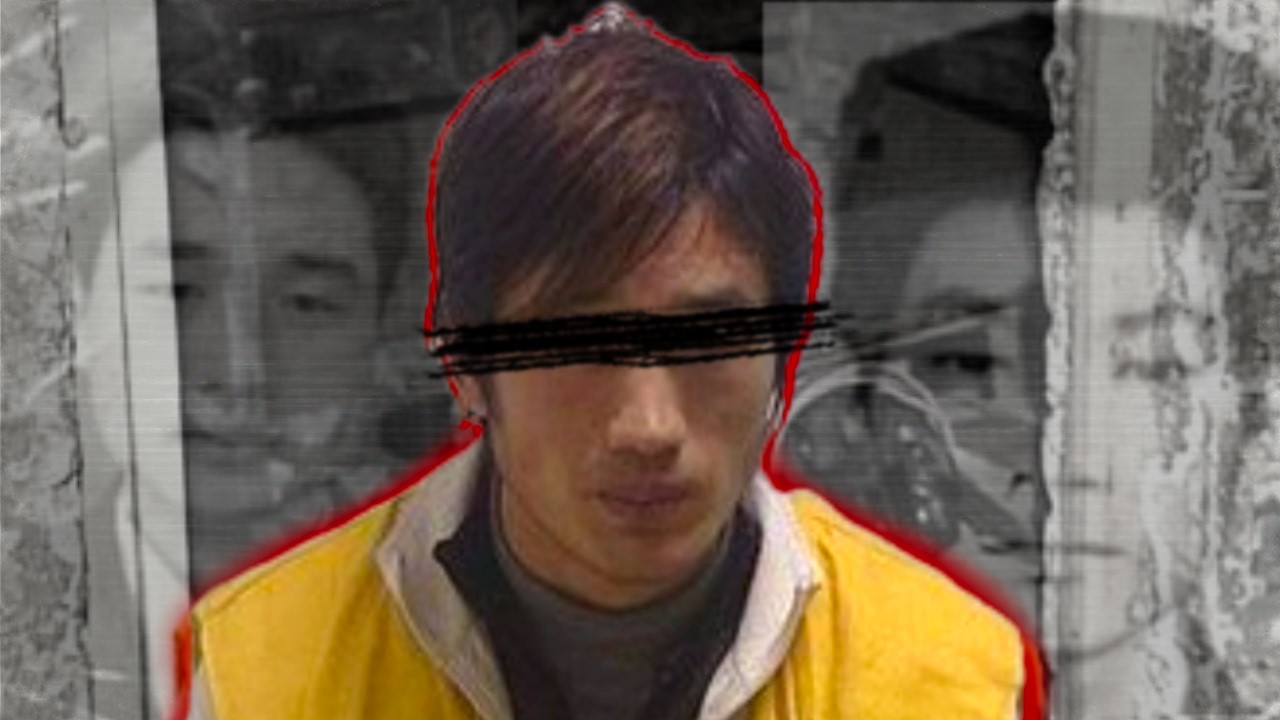
A man he met at an internet cafe had taken him to a house in a village. Inside stood a homemade wooden machine. The man persuaded him to climb onto it, restrained him, choked him unconscious, and attacked him repeatedly over several days. Somehow, the teenager talked the man into letting him go.
During that captivity, the man told him something that sounded impossible: that he had killed more than twenty people. On November 12th, the family reported what had happened. Police went to the address the boy remembered and arrested twenty-eight-year-old Huang Yang. When investigators began excavating the dirt floor and courtyard of his house, they uncovered what could only be described as a nightmare.
Seventeen murders would ultimately be proven in court. Many of the victims were teenage students. Some had been dismembered. Their families had searched for months or years, never knowing their sons lay buried in a house only a short distance from where they had last been seen.
To understand how all this came to pass, the story must go back two years, to a young man whose house looked ordinary from the road, and to the families who believed their missing children might still come home. Pingyu County sits in Henan Province, an agricultural region. In the early 2000s, many parents worked away from home while their teenagers stayed with relatives, attended school, or rented rooms near town. Video parlors, game arcades, and internet cafes were growing in popularity, and they were places where young people met friends and passed the time.
Huang Yang knew these places well. He also understood that when a teenager failed to come home, a parent would first search the usual game rooms, then ask classmates, then work through the possibility that the child had simply gone elsewhere. When someone goes missing in a place like this, especially a teenager, the last thing on anyone’s mind is a serial murderer. Born on November 18th, 1974, Huang was the eldest of three brothers.
His childhood, as far as reliable reporting shows, was unremarkable. As a young adult he moved between construction work, farming, an electronics school, and work operating sound equipment at a dance hall. He liked drawing and video games. His parents described him as withdrawn, a man who rarely talked to them.
His father said Huang seemed more comfortable around boys younger than himself. After his arrest, Huang claimed a film he watched as a child made him fascinated with the idea of a solitary assassin. That was his explanation. By 2001, much of his family was working at a pig farm elsewhere, and Huang was often alone in their village home in Duangzong.
Journalists later photographed a modest row of brick rooms, a small courtyard, and a small room with an earth floor. Neighbors lived close by. His family sometimes visited. His father said the western room was locked and he never entered it.
The setting was nothing like the elaborate lair people sometimes imagine. His isolation was a closed door and the assumption that what went on inside belonged to the family. But inside that ordinary house, Huang had altered the frame of a noodle-making machine into a green-painted wooden contraption. He called it the intelligent wooden horse.
It could hold a person’s neck, arms, and legs in place. He told prospective victims it was a game, an aptitude test, or a test of their reflexes. He offered help with school, money, or employment first, whatever made the invitation sound worthwhile. Once a boy trusted him enough to lie down, Huang had complete control.
The first court-confirmed victim was Lu Ningba, a fifteen-year-old student. His father remembered September 23rd, 2001, because Lu went out expecting to return later that day and never did. Lu was serious about his education. His father described hopes of getting into a good university and the sacrifices the family was making to help him get there.
When the school confirmed his absence, his parents began searching: police stations, missing person notices, hundreds of flyers, trips to other towns where someone thought they had seen him. Over time, the search drained their savings. They followed leads, traveled, asked strangers to look at photographs, and kept thinking one more person might recognize their boy. They did the exhausting work of refusing to let him disappear from public memory, long before they understood what had already happened.
Huang had met Lu at a cinema video parlor and persuaded him to come home for a supposed game. He later described a somewhat different promise. Both accounts end at the same wooden machine. He restrained Lu and strangled him to death with a cloth.
What happened afterward is among the most disturbing details of the entire case. Huang told a journalist he used a kitchen cleaver to divide the body into seven sections, then buried the remains near the outside toilet. He claimed he chose that place because its existing smell might hide another. While working inside, he said, he could hear a television variety show playing in the neighboring house.
These were Huang’s post-arrest recollections, not verified recordings of that night, but they remain deeply disturbing. A normal television playing just across the wall, a family nearby finishing its evening, and Lu’s parents beginning a search that would last more than two years. For months, the killing stopped. But for Lu’s family, nothing stopped.
Every day their son was missing, and every day passed with no answer. A birthday passed, then a school term, then another holiday, always with the same question unanswered: where was he, and what had happened to him? The second victim was Wang Yaoong, seventeen years old in 2002. Huang met him near an arcade and offered to help him find a job.
He said there was a test to take first at his house. Wang was restrained and strangled. The indictment says Huang dismembered the body, buried it in the yard, and burned the clothing. Wang’s family joined the growing search for missing sons with no reason to know the job offer had been a trap.
In January 2003, the third victim, Wang Leang, disappeared. He was also seventeen, but the promise this time was different. Wang liked drawing. Huang was an artist himself and invited him to see his pictures.
Prosecutors say he killed Wang and concealed his dismembered remains beneath the western room’s dirt floor. Wang’s mother went from place to place looking for him. February brought Wei Li, an eighteen-year-old student who was offered money for school. He followed Huang to the village house and was killed there.
Prosecutors say Wei’s body was dismembered and buried in the courtyard. His classmates went on with school. His family was left asking why he hadn’t returned. Huang was growing comfortable.
A month later, two boys vanished together. Chen Mangm was fifteen. Hanpang was fourteen. They had been at an arcade when Huang approached them, offering a chance to get more money and more game tokens.
This time, the indictment says, Huang gave the boys alcohol. He waited until they were intoxicated, then strangled them separately. In Huang’s later account, he set out peanuts, beer, and leftover holiday liquor, staying sober while they drank. Prosecutors said Chen’s body was dismembered, and both boys’ remains were hidden in the yard.
Then Huang did something staggering. He put Chen’s severed hands in a bag with a threatening note and left it outside a telephone business, demanding five hundred yuan. Huang later said the note was connected to a personal grudge. Prosecutors treated it as attempted extortion.
Either way, he had deliberately left physical evidence of a murder in a public place, and he still wasn’t caught. He had gone from concealing remains beneath his own home to putting part of a victim’s body where a stranger could find it. But the criminal investigation did not slow him down, and it did not interrupt the disappearances. Soon afterward, more boys would be invited back to the same house.
By the end of February 2003, six young lives had already been lost. Huang had started with gaps between killings. Now the intervals were shrinking. March 2003 is where the case becomes almost impossible to comprehend.
As separate families kept searching, Huang continued visiting the same cafes and video parlors, looking for boys who might believe him. The searches overlapped. One mother could be asking about her son while another family was only beginning to realize theirs had vanished. Huang’s victims were disappearing faster than their relatives could piece together a pattern.
The seventh victim, Zong Kung, was twenty years old. Huang met him at a cultural center video parlor, and he said he needed to go home for money, so Zong came with him. At the house, Huang introduced the wooden horse test. Zong was killed and buried under the western room’s floor.
The next incident involved two more students: seventeen-year-old Lua Leming and fifteen-year-old Hua Hongai, victims eight and nine. Huang met them at an internet cafe and suggested a trip. First, he said, he had to collect some money. He took them to the house, gave them alcohol, and killed them separately.
Both were buried beneath the floor. Victim ten was fifteen-year-old Han Guang Ming. Huang offered to help him find work, claiming a test was necessary. Han entered the house and never left alive.
The indictment says his body was buried under the western room. It does not say he was dismembered. The eleventh victim, sixteen-year-old Zhao Ling, met Huang at another internet cafe. This time the offer was a loan, but the money was supposedly at home, and there was supposedly another test to pass.
Zhao was killed and concealed beneath the same floor. By then, the western room was covering the remains of several people. Huang’s father later said family members occasionally stayed in another section of the house. While the western room remained locked, the building still looked like a family home, even though it had become a house of horrors.
Huang’s normal routine apparently went on. He didn’t flee town after each killing. He returned to the venues where his victims had last been seen, sat among other people, and offered the next person some small, believable opportunity. To everyone else, he was just another young guy waiting to play video games, go on the internet, or read books and make friends.
Huang later described an encounter that, if true, is almost unbearable. He claimed that while walking with someone he intended to kill, a woman approached and asked whether he had seen her missing son. Huang said she was the mother of one of his earlier victims. He denied knowing anything.
That account is his retrospective story, not independently confirmed, but it is consistent with the desperate searches documented throughout the county. At the end of March, Leang Zangi, victim twelve, went missing. He was at lunch with classmates before a visit to a gaming venue. At the time, his parents were out of town for work.
Huang offered money for school, lured him to the house, and murdered him. In April came seventeen-year-old Zai Kung Xiao, victim thirteen. His family found clues as small as a bicycle left near a video parlor and an umbrella reportedly inside that belonged to him. Huang had offered to fetch money before going to a gathering.
Zai was killed and buried in the courtyard. His name would matter again at the end of the story, because his family would later learn the first excavation had not recovered all of his remains. The fourteenth victim was Zho Mingua, a factory worker. He also went to the cultural center video parlor and was offered help finding employment.
Huang brought him home, killed him, and buried him beneath the western room. One detail about this murder added a humiliating final touch: Huang sold Zho’s bicycle for one hundred and ten yuan and spent the money. By the end of April, fourteen people were dead. They had been students, job seekers, or friends on a day out.
All were lured with a promise: drawings, games, loans, school money, work, whatever. They all led back to the same address, and they all had the same ending. In July, Huang met nineteen-year-old Chen Hai Hong, victim fifteen, at an internet cafe. Prosecutors say he offered to improve Chen’s examination results.
For a student facing the pressure of important exams, that promise was enough to start a conversation. Huang claimed the wooden horse measured reaction speed. Chen was killed and buried in the courtyard. In September, Fang Shang, victim sixteen, disappeared while returning to school.
His father had recently been caring for him when he was ill and had prepared medicine for him. When Fang failed to arrive, his father contacted teachers, police, and everyone listed in his son’s notebooks. Huang had lured him away by offering to get him a game card. Fang was killed and buried beneath the western room’s floor.
Finally, in October, seventeen-year-old Quinn Jifi became the seventeenth court-confirmed victim. He was a student living away from home. Huang had offered to lend him money and took him to the house. After killing him, he kept the boy’s shoes and belt and sold his bicycle for fifty yuan.
One strange detail marked that killing. Afterward, Huang said, another young man visited and needed dry shoes. Huang claimed he handed him a pair belonging to Quinn. If Huang’s account is accurate, that visitor wore a dead boy’s shoes without knowing their owner was buried right there on the property, within a few feet of where he had knocked on the door.
By the end of October 2003, seventeen people had been murdered in fifteen separate fatal incidents. Yet Huang still went to internet cafes, still spoke to teenagers, and still lived in the same village house. Until, in November, he met another teenager in an internet cafe. Published sources use conflicting names for this survivor, so he will be called Zang.
Zang had been helping his parents with a food business and had come to Pingyu to visit family. At the cafe, Huang approached him casually, asking how to type Chinese characters. They talked about games. Huang said he needed to collect money from home and asked Zang to accompany him.
They took a bus and walked along rural roads. Zang later remembered neighbors greeting Huang along the way. Whatever he might have felt about going somewhere unfamiliar, this was clearly a man people in the village knew. They ate some food at the house, and then Huang showed him the green wooden machine.
He presented it as a game, and Zang climbed onto it. Huang secured his limbs and neck, and by the time the boy understood what the machine was for, he could not get away. Zang later described being choked unconscious repeatedly and attacked with some type of medical needle. The sources disagree on the number of attacks and the exact date of release, but they agree on the essential story: he endured a prolonged assault over several days.
Huang had the opportunity to kill him many times, but he was deriving pleasure from it. At one point, Zang tried to make Huang think about his own parents. How would they feel if their son were murdered? What would Zang’s parents feel if he simply disappeared?
Huang later insisted he had been contemplating stopping his crimes and surrendering. Whether that was remorse or self-presentation cannot be known. At some point, Huang wrote a note apologizing to the teenager, implying that he intended to die. That note was displayed at trial.
Eventually, he released him. It is tempting to read the release as a sudden conversion or an act of mercy, but it comes from a man who had murdered seventeen people and knew the police would eventually close in. When Zang made it back to his family, he was visibly injured. Relatives got him medical attention, listened to what he had endured, and reported Huang to the police on November 12th.
For two years, families had been asking authorities where their sons were. This time, a victim had survived to tell investigators exactly where to go. Police arrived at Huang’s home on November 12th. There was the wooden restraint device, the household objects, the courtyard, and the western room, whose earth floor had been disturbed time and time again.
Officers excavated the property and recovered remains. Photographs showed the plain rooms torn apart by the search. A journalist later described a disgusting smell in the excavated western room. Other reporting described the odor of decomposed remains during recovery and identification.
One has to wonder how the neighbors, the family, or anyone else near that place had not been experiencing the horrendous smell of decomposing bodies just feet away. The police collected relatives’ blood for comparison to identify the bodies. Some parents arrived carrying photographs, having spent months posting them wherever they could. Imagine being asked for a sample of your blood, not because your son had come home, but because the police needed to compare it against human remains found beneath somebody’s floor.
The excavation answered where some of the missing had gone. It also ended the hope their families had held onto, that they would somehow come home. Huang went on trial on December 9th, 2003. Families and journalists crowded near the courthouse.
The homemade device was presented as evidence. Huang did not deny the murders charged against him. His defense raised arguments about his decision to release Zang, but the court sentenced him to death, and he was executed on December 26th. There was also an investigation into the earlier police response, and several officials were removed or disciplined.
Family members of the deceased believed authorities had too readily written off missing students as young people who had run away or gone looking for work. The complicated reality of parents living away from home and students moving between relatives, classrooms, and dormitories may have made coordination harder, but it did not make the missed opportunities any less devastating for the families. Even the execution did not mean the story was finished. In the spring of 2004, some parents returned to Huang’s property.
They wanted to stand where their sons had been found. There, amid the disturbed soil, they discovered what appeared to be fragments of bone and other remains. More digging followed, and investigators returned and recovered additional material. Han Pang’s family had already received and cremated what authorities said were his remains.
If the newly recovered material also belonged to Han, what exactly had they been given the first time? DNA testing identified the later remains as belonging to two victims already counted in the case: Han Pang and Zai Kung Xiao. An indictment explains how seventeen people died, but much less is known about everything they might have gone on to do. Huang was not some impossible monster living apart from society.
He was a man who frequented cafes and arcades, walked past the same neighbors, and lived an ordinary life behind an ordinary door. All while seventeen families waited for someone they loved to come home.
