At thirty-nine years old, Toben Criswell had spent most of his life enslaved. He understood horses, wagons, river crossings, forest trails, and the narrow back roads that connected farms across the Missouri countryside. That knowledge had been taken from him through years of hard labor. He had driven loaded wagons while others rode.
He had walked roads that officers only saw from horseback. He knew which creek beds flooded and where wagon wheels sank after heavy rain. He knew which abandoned farm paths still connected to county roads and which ended at broken fences. Captain Harlan Voss saw only the military value.
That was his first mistake. His second was assuming Toben did not understand what he heard. In 1861, Toben served Confederate officers who believed he was useful for his knowledge of the roads. It never occurred to them that he was also listening.
Every road they discussed, every crossing they mentioned, every movement they revealed, became part of a private map in his head. Toben was not trying to win their war. He was trying to reach his wife. He had finally heard the name of the estate where she was still enslaved.
The knowledge that made him valuable had become the reason he was ready to disappear. Missouri in 1861 was not a battlefield with clear lines. There was no reliable dividing line between safety and danger, loyalty and betrayal, slavery and freedom. Union forces controlled some towns while Confederate-sympathizing forces operated through others.
Local militias ran patrols, and irregular fighters and armed civilians moved among them. Roads changed control without warning. Farms that supplied one side on Monday might be searched by the other on Thursday. For enslaved Black people, this turmoil did not erase the system that controlled their lives.
It often made that system more dangerous. Voss commanded a cavalry detachment loyal to the Confederacy operating across contested territory. Toben was ordered to accompany them and care for the horses. He transported equipment and guided the men through areas where traditional maps were unreliable.
To Voss, Toben was useful property, not a soldier, not a political actor, not a man whose loyalties might lie entirely outside the war. That assumption gave Toben access. Officers spoke in his presence because they did not believe they were speaking to him. A map might be spread on a table while Toben stood near the entrance holding a bridle.
A lieutenant might complain about a damaged bridge while Toben carried water. A courier might mention a Union patrol crossing a northern road while Toben tightened a saddle strap five feet away. No one asked what he remembered. That did not mean he remembered nothing.
Toben developed a disciplined method. He never stared at maps for too long. He never interrupted military conversations. He never asked for any place name to be repeated.
If he heard the name of a road once, he connected it to terrain he already knew. If officers spoke of a water crossing, he pictured the nearest high ground. If they mentioned a farm, he located it in relation to a road, a stream, or a town. That knowledge remained entirely in his head.
That mattered. A stolen paper could be found. A written note could be used as evidence. Memory left nothing to confiscate.
At first, Toben’s goal was not espionage. It was Esther. Esther Criswell was thirty-seven years old. She was Toben’s wife.
Missouri law had never treated their marriage as something the system was obligated to respect. Years earlier, they had made vows before their community. Those vows meant everything to them. The law that denied their marriage was never neutral.
It was part of the same structure that allowed one of them to be moved away from the other without consent. Esther had been taken north. No appeal. No negotiation.
No acknowledgment that a marriage was being torn apart. Toben remained behind. For years, he received fragments of information. A place name from a passerby.
A reference to a large estate. A rumor that Esther was still alive. Eventually, one location name repeated enough times to matter. Dean Hollow, northern Missouri, near territory increasingly occupied by Union forces.
That was all Toben had. No address he could safely carry. No legal claim he could file. No authority he could petition.
Just a name. Dean Hollow. From that moment on, every military conversation mattered. Toben listened for counties, river bends, road junctions, ferry points, anything heading north.
He was not thinking like an officer planning an operation. He was thinking like a man making his way toward someone taken from him. Voss never saw that private map forming. He only saw Toben growing more useful.
During one mounted movement, heavy rain had destroyed the main wagon road ahead of the detachment. The officers wanted to continue. Toben warned them the road narrowed toward low ground and would become nearly impassable. Voss looked at him.
“How do you know? Have you been there? ” Voss studied the road. “Do you know another way?
” Toben nodded. There was a smaller crossing west of the main road. It would require slowing the horses and moving equipment over uneven ground. But it avoided the mud entirely.
Voss ordered the detachment to follow Toben. They reached the crossing. It was passable. Hours were saved.
That incident changed Toben’s position. Not legally, not morally. He remained enslaved, but practically, Voss’s confidence in him grew. And confidence within a military command meant proximity.
Toben was sent farther, asked which roads were good for horses, where water was, what route Union scouts might take. Every correct answer increased Voss’s trust. Every successful movement increased the amount of information Toben could hear. That arrangement revealed slavery’s logic with unusual clarity.
Toben’s intelligence was valued. His judgment was valued. His memory was valued. His freedom was not.
The system found no problem in appreciating Black skills as long as they served white authority. It simply refused to acknowledge the person who possessed them as an independent being. Toben understood that contradiction. He also understood that anger alone would not bring him to Esther, so he kept his temper controlled.
He watched. He answered only what was asked. He gave Voss no reason to suspect that every northern mission was measured against a private goal. Then, during an evening meeting, the name appeared.
Toben was outside a small farmhouse where Voss had set up a temporary headquarters. Several officers were inside. The door stood ajar. Toben was repairing a saddle girth.
He heard an officer mention a planned movement along a northern corridor. Another wondered whether the cavalry could reach the area before Union patrols reinforced the road. Then Voss answered: “Dean Hollow gives us our approach route. ”
Toben’s hand stopped, for just a second.
He forced himself to move again. Inside, the conversation continued. A road west of the property. A crossing.
A possible Union position. Toben listened without changing his expression. Dean Hollow was no longer a distant rumor. It had become part of Voss’s military planning.
That meant Toben was finally close enough to move. It also meant Esther was close enough to the war to be endangered by it. Until that night, patience had protected him. Now patience might cost him the only chance he had.
Toben finished repairing the saddle girth and stood. No one inside called his name. No one realized what had just happened. The men around the table thought they were discussing a military operation.
Toben had heard something else. A location. A deadline. A possible route to his wife.
From that moment on, the question was no longer whether he would try to reach Esther. The question was how much information he could take with him. How long before Harlan Voss realized that the man he trusted to find roads was building his own path. Toben did not flee immediately after hearing “Dean Hollow.
” Immediate flight would have satisfied fear, not strategy. He had a single location. He had no safe route. No reliable understanding of Union troop positions.
No guarantee Esther would still be there when he arrived. Crossing contested Missouri with nothing but a place name might end the search before it began. So he stayed. That decision required discipline.
Every day spent with Voss increased the risk. It also increased his chances of gathering information. Toben understood that trust was now more valuable than speed. He began giving Voss exactly what he expected.
Useful answers. Disciplined behavior. No visible curiosity. Several mornings after the “Dean Hollow” discussion, the cavalry moved toward a wooded hill north of their temporary position.
Voss intended to use the hill to observe a road believed to be used by Union forces. The direct approach passed through open ground. Toben noticed fresh hoofprints heading toward the trees. They were not Confederate.
He stopped beside Voss. Someone had passed through here recently. Voss looked down. The prints were shallow.
How long ago? Did the ground dry yesterday? Those appeared after Voss ordered the column to halt. Two riders were sent to scout the route through the tree line.
They returned confirming that Union cavalry had crossed the hill earlier that morning. The exposed route was abandoned. Voss used another path. No confrontation.
No dramatic exchange of fire. Just another correct judgment from Toben. That was enough. Military trust rarely came through declarations.
It accumulated through results. After that morning, Voss began asking Toben about terrain before issuing movement orders. If two roads existed, Toben was asked which would let the horses move faster. If a stream appeared, Toben was asked where the ground was firm.
If a wagon path disappeared into the woods, Toben was sent to confirm whether it came out somewhere useful. Every mission expanded his knowledge. Toben did not sabotage these missions. A guide who caused problems repeatedly would be watched.
A guide who solved problems repeatedly would be brought closer. Toben chose the second position. The contradiction was brutal. He was helping men whose cause protected the system that had separated him from Esther.
But every successful movement gave him more information. He treated cooperation as a temporary tool. The cavalry crossed another swollen stream several days later. A young officer suggested taking the downstream route where the banks looked lower.
Toben objected. The bottom drops there. The officer ignored him. Voss did not.
I’ve crossed it twice. Where Toben crossed upstream. They followed his direction. The crossing succeeded.
That evening, Voss spoke to him differently. Not as an equal. Nothing close to that. But with the practical respect given to a tool that had proven reliable.
“Do you remember every road you’ve ever walked? ” “No. ” “Seems like it. ” Toben said nothing.
Voss studied him for a moment, then returned to his meal. The exchange lasted seconds. Its effect lasted longer. The next day, Toben was allowed to accompany a scout mission farther north than before.
It brought him closer to Dean Hollow. He did not know how much closer. But the terrain gave him clues. He recognized a tributary feeding into a larger river system he had heard described years ago.
He saw road signs pointing to settlements that had appeared in rumors about Esther’s location. The distance was shrinking. So was the war. Union patrols began probing farther south.
Confederate cavalry changed their routes more frequently. Couriers arrived at irregular hours. Men who had spoken freely now lowered their voices when discussing troop numbers. Toben adapted.
He stopped relying on complete conversations. Fragments were enough. A ferry temporarily unusable. A bridge under observation.
A Union company moving west. A cavalry squadron expected from the south. He pieced it together in his head. What mattered was not every military detail.
What mattered was movement. Which roads had become dangerous. Which direction patrols were heading. Where Voss intended to go next.
And whether any of it brought him closer to Esther. Then Toben heard “Dean Hollow” again. Not at an officers’ meeting. In the stable.
Two Confederate riders returned late from a reconnaissance mission. One was covered in dried mud to his knees. Their horses were exhausted. Toben was ordered to take the bridles.
One rider complained that the western road had become nearly useless. The other replied that Voss would have to change the approach route toward Dean Hollow if the rains continued. Toben kept his eyes on the horse. “Are there Union men?
” the first rider asked. “Close enough. ” “Does Dean still cooperate with them? ” “That’s what they say.
” Toben tightened his grip on the bridle slightly. That was new information. Dean Hollow was not just an area near Union control. The owner himself appeared to have connections to Union forces.
For years, Toben had built a simple hypothesis. Reach the north. Cross Union lines. Find Esther.
Leave. Now this information complicated the plan. If Union soldiers were protecting Dean Hollow or using it, Toben might find it harder to reach Esther without being discovered. At the same time, the Union presence might offer him protection from Voss.
He could not know which possibility mattered more. The ambiguity forced him to remain patient. Voss continued to use him. Toben continued to prove useful.
But something changed in Voss. At first it was nearly invisible. A question asked twice. A pause after Toben’s answer.
A look that lasted too long. One afternoon, Voss deliberately gave Toben a wrong road name while discussing a patrol route. Toben recognized the error immediately. He did not correct it.
Voss watched him. Toben showed no reaction. Later, the same road was mentioned correctly by another officer. Again, Toben remained silent.
The test ended, and Toben never knew for certain it was a test. But Voss’s suspicions did not fade. The commander had spent months treating Toben as useful, precisely because Toben noticed details others missed. Eventually, that ability created its own problem.
A man capable of remembering every useful road might also remember every useful conversation. Voss began controlling access more carefully. Some meetings moved indoors. Orders were no longer discussed openly around the horses.
Toben noticed the change. It frightened him more than a direct accusation would have. It meant Voss was thinking. Toben responded by becoming less visible.
He stopped lingering after completing his tasks. He avoided looking toward officers when they spoke. He never asked where the cavalry was heading. When ordered north, he went north.
When ordered back, he returned. For several days, nothing important happened. Then a Confederate courier arrived just before sunset. His horse was soaked with sweat.
Voss met him outside the farmhouse. The two men spoke briefly. Toben was too far away to hear. The courier handed Voss a message.
Voss carried it inside. That night, Toben was ordered to repair a damaged bridle in the adjoining room. Voss’s door stood partially open. Toben focused on the leather.
Minutes passed. Voss stepped out to speak with someone. Toben heard his boots recede. He did not raise his head immediately.
Then he saw it. The message. It rested on the edge of a small table inside Voss’s room, partially unfolded. Toben could read only part of it from where he stood.
A road. A northern approach. A reference to cavalry movements. And one name.
Dean Hollow. Toben remained still. For weeks, he had waited for something concrete enough to justify leaving. Now it was in front of him.
He looked toward the doorway. No footsteps. He looked back at the message. The route appeared to lead directly to the estate.
For the first time, waiting did not feel like caution. It felt like the risk of arriving too late. Toben did not touch the message. He did not need to.
The route had already settled in his mind. North along the narrow road behind the creek. West toward the hills. Then through the pass leading to Dean Hollow.
He read just enough to confirm the sequence. Then he returned to the bridle. When Voss returned, Toben was still working. No question was asked.
No accusation followed. That silence mattered. If Voss had suspected him openly, Toben would have known the nature of the danger had changed. Instead, the room remained ordinary.
That was worse. By morning, Toben had made his decision. He would leave before the cavalry moved north. The message indicated Dean Hollow was about to become part of a military operation.
Whatever chance Toben had of reaching Esther quietly was shrinking. He could no longer assume she would stay where she was. The war moved people without warning. Owners moved enslaved workers away from threatened properties.
Military forces seized buildings. Roads were cut. Communication disappeared. A place name useful today might be worthless within a week.
Toben waited through the day. He behaved exactly as he had the day before. Fed the horses. Carried water.
Repaired gear. Answered Voss when addressed. Avoided every sign of urgency. That evening, Voss ordered the detachment to prepare to move before dawn.
The timing confirmed Toben’s fears. He would not wait another night. The opportunity came later than he wanted. A cavalry patrol returned after dark with reports of gunfire miles to the east.
No one knew whether the shots came from Union scouts, irregular fighters, or frightened civilians. Voss sent men to investigate the disturbance. The camp became active. Horses were saddled, orders changed, two riders departed south, another group moved toward the eastern road.
For the first time that night, attention was divided. Toben used it. He did not take one of Voss’s best horses. That would have made pursuit immediate.
He did not leave via the road heading north. That would be the first place anyone searched. Instead, he walked west, carrying only a little food and a blanket. He took a knife used for ordinary camp work.
He crossed a drainage ditch behind the farmhouse. Then he entered the woods. His first goal was not distance. It was disappearance.
Toben knew how mounted men searched. They looked for obvious tracks. They expected a fugitive to move directly toward safety. They expected panic.
He gave them none of those things. For nearly an hour, he walked southwest. Away from Dean Hollow. Away from Union territory.
Away from the direction anyone who knew his goal might expect. Then he turned north through rough ground where horses would struggle to maintain speed. He used the terrain against the men who had once relied on him to understand it. By midnight, the camp was miles behind him.
Toben did not know whether his absence had been discovered. He assumed it had. That assumption kept him moving. At Voss’s temporary headquarters, the discovery came quickly.
Toben was called for to prepare a horse. There was no answer. Another man checked the stable. It was empty.
The blanket usually kept near Toben’s sleeping place was gone. Voss was informed. He did not look surprised. That was the first sign Toben had misjudged the situation.
Voss walked directly to the room where the message had been left. He picked it up. The paper was still there. Nothing had been stolen.
He checked its position. Changed slightly. Enough. One of his officers asked whether they should send cavalry north.
Voss looked toward the dark road. Not north. The officer hesitated. Voss knew Toben well enough for this.
He would expect the north to be watched. Search parties were ordered west and northwest. Only then did the larger truth become clear. The message Toben had seen was not the real operations order.
It had been prepared to be discovered. For days, Voss had suspected information was leaking from his command. Union patrols appeared too quickly after several Confederate movements. Supply routes were avoided.
Reconnaissance parties met resistance where secrecy should have protected them. Voss did not know where the leak was. He suspected more than one person. Toben became a possibility.
Not because Voss suddenly considered him a worthy intellectual opponent, but because he finally realized the same memory he valued could be used against him. Voss designed the test based on that. The false route near Dean Hollow was convincing enough to believe. It pointed toward terrain cavalry could use.
It included details Toben might recognize. And it promised something Voss already suspected Toben cared about. Dean Hollow. Voss had noticed Toben’s reaction to the name weeks earlier.
A brief pause. A shift in attention. Nothing dramatic, but Voss remembered. The estate became a useful lure.
He did not know why Toben cared about it. He only knew he did. That was enough. The false message served two purposes.
If it reached Union command, Union forces might shift their attention toward the wrong pass. If someone tried to carry it there, Voss would identify the source of the leak. Toben was now doing exactly what the trap required. He had fled.
But Voss still misunderstood one essential fact. Toben was not running to serve the Union. He was running for Esther. That difference meant nothing to the search parties.
By sunrise, riders were moving across the countryside. Toben heard the first group before he saw them. Hooves on hard ground, at speed. He dropped behind a fallen log and waited.
Three riders passed along a road less than a hundred yards away. He recognized one voice, a man from Voss’s detachment. They were not searching randomly. They were ahead of where Toben expected to be, and that worried him.
He had assumed his route would give him more time. It had not. Someone had predicted his movements. He waited until the riders disappeared.
Then he changed direction again. The next hours became a contest between his knowledge and his exhaustion. Toben avoided crossings where mud might hold clear footprints. He moved over rocks whenever possible.
At one stream, he stepped into the water and walked with the current before climbing a rocky bank. At another point, he crossed a road only after hiding long enough to hear whether riders were approaching. He did not know how large the search was. He only knew Voss was taking it seriously.
That raised another question. Why would Toben’s disappearance before the cavalry moved matter so much? He had taken no horse, no weapon, no visible military equipment. To Voss, losing one enslaved guide should have been costly but minor.
This pursuit seemed larger than recovering labor. Toben began to suspect Voss believed he had taken something more important. Information. That possibility changed the meaning of the message.
For the first time, Toben questioned what he had seen. The route had been too available. The door had been left open. Voss had left the room at exactly the right moment.
Toben replayed the scene in his head. No one had interrupted him. No one had returned unexpectedly. The opportunity had been nearly perfect.
Too perfect. He stopped under a grove of trees. The conclusion came slowly, then all at once. Voss wanted him to see it.
Toben did not yet know if every detail was false, but he understood enough. He had not stolen an advantage. He had carried something designed specifically for him. That realization did not change his destination.
Esther was still in Dean Hollow. If anything, reaching her had become more urgent. But the information in his head could no longer be trusted. He had escaped one form of control.
He discovered Voss was still trying to direct his movements from miles away. Toben continued north. By late afternoon, he found evidence the search was narrowing. A horse had crossed a muddy road ahead of him, then another.
Boot prints marked the road’s edge. Voss’s men were moving parallel to his path. Toben could not outrun riders forever. He needed distance.
He needed misdirection. Above all, he needed to cross into territory where Voss’s authority weakened. That night, distant gunfire gave him his opening. A few shots, then a longer burst.
Not close enough to identify which side. But enough to disrupt movement. Toben turned toward the sound. Most fugitives moved away from armed conflict.
Toben moved closer. His pursuers expected him to avoid danger. He intended to use it as cover. Through the darkness, riders began moving toward the noise.
Orders rose from a road ahead. Toben stayed low. He moved between two groups traveling in opposite directions. For several minutes, neither side noticed him.
By the time the confusion subsided, Toben had crossed the road Voss’s men were trying to control. He did not stop. Somewhere ahead were Union positions. Somewhere beyond them lay Dean Hollow.
Behind him, Voss now knew Toben had swallowed the bait. Toben still did not know that the false route in his memory had been designed to mislead an army. He knew only one thing with certainty. The men pursuing him were no longer just trying to bring him back.
They were trying to stop whatever they believed he was about to deliver. When Toben saw Union soldiers, he was too exhausted to mistake them for salvation. He saw the rifles first, then the blue coats, then the order to stop. Toben raised both hands.
He had crossed miles of contested ground and evaded Voss’s search parties. He had moved through gunfire without knowing which side controlled the road ahead. Now the men he had been trying to reach were pointing weapons at him. The nearest soldier demanded his name.
Toben Criswell. Where did you come from? Toben looked back toward the tree line. Voss’s cavalry.
That answer changed everything. The soldiers surrounded him. One searched his clothes. Another examined the blanket and food he carried.
He had only a small knife, no written orders, no pass, no proof of identity. He was just a Black man arriving alone from Confederate-held territory, carrying information about a cavalry command. To Toben, that information was the product of forced service. To the soldiers holding him, it meant something else.
Spy. Scout. Courier. Bait.
The categories mattered because war did not reward ambiguity. Toben was led away from the road. He expected questions. He did not expect detention.
A Union lieutenant arrived about an hour later. He was older than most of the soldiers, quiet, and immediately wary. You served under Voss. Forced to travel with him.
In what capacity? Guide. Stable work. Whatever was needed.
Do you know his position? Some of it. The lieutenant watched him carefully. Then tell me.
Toben hesitated, not because he wanted to protect Voss, but because information was now the only thing preventing him from being classified as just another fugitive with no military value. He had already learned what the powerful did with those they considered useful. The Confederate command had exploited his knowledge. He had no reason to assume the Union would behave differently just because the uniform was different.
So Toben did not tell them everything at once. He started with something verifiable. A Confederate cavalry detachment had used a wooded approach south of the Union position. There was a temporary camp near a stream, and a bridge Voss had stopped using after Union patrols were discovered nearby.
Toben answered precise questions. Distances. Direction. Terrain.
How long ago. Whether wagons could cross. How many roads connected the position to the north. He avoided claims he could not prove.
The tone of the interrogation changed. At first, the lieutenant was trying to expose a lie. Now he was comparing Toben’s answers to reports he had already received. One detail matched.
Then another. A sergeant entered and spoke quietly to him. The lieutenant turned back to Toben. You said the bridge is no longer used.
Yes. Why are two scouts missing? How did you know Voss changed his route after scouts reported movement nearby? The lieutenant said nothing.
That silence told Toben the detail had been important. A second officer was brought in. The same questions came from different angles. Toben recognized the method.
They were checking for consistency. He had lived under interrogation without calling it interrogation. Slave owners, overseers, traders, patrols, armed white men had regularly demanded explanations from Black people they believed they controlled. This room differed in uniform, not in authority.
Toben remained cautious. One of the officers asked why he had fled. “My wife. ” The answer seemed to surprise them.
“Where is she? In Dean Hollow? ” The name caused a reaction. Not concern.
Recognition. Toben noticed it immediately. The lieutenant leaned back. “You’re trying to reach Dean Hollow.
” “Yes. ” “Why? ” “My wife is there. ” The lieutenant exchanged a look with the second officer.
Toben understood that Dean Hollow was known to them. That should have reassured him. It did not. He asked the question that mattered.
“Is it inside your lines, close enough? ” “Then I need to go there. ” The lieutenant ignored the request. “First tell us what Voss is planning.
”
That was the bargain. The mask was gone. Toben’s freedom of movement depended on his ability to provide intelligence. He started with real information.
He described the roads Voss had used in recent weeks. He identified a crossing Confederate cavalry preferred when floods covered the main road. He explained how Voss separated scouts from the main force to avoid revealing their movements. He described the directions of several recent patrols.
The officers listened. Then they asked what Voss intended to do next. Toben stopped speaking. This was the information he no longer trusted.
The message. The route to Dean Hollow. The bait. He knew Voss wanted him to see it.
He did not know which parts were fabricated. If he said nothing, the Union officers might decide he had exhausted his usefulness. If he repeated the route, he would deliver Voss’s deception exactly where it was meant to go. Toben chose the only option available.
He told them the truth about his uncertainty. I saw a route. A route toward Dean Hollow? The lieutenant sat up.
When? Before I left. Did you see orders? I saw enough.
What did they say? Toben described the sequence. North, the hill, the western approach, the movement toward the estate. The lieutenant called for another man.
Within minutes, the information had left the room. Toben watched what happened. Then the full danger became clear. Voss did not need Toben to believe the message forever.
He only needed Toben to repeat it once. Toben spoke immediately. I think he wanted me to see it. The lieutenant looked at him.
Why? The room was open. He left it where I could read it. After I fled, his men came too fast.
You’re saying it was false. I’m saying I don’t trust it. The officers’ expressions hardened. From their perspective, Toben had just provided military information and then questioned its credibility.
That made him less useful. And more suspect. The second officer spoke. A suspicious order.
Toben met his eyes. I crossed their checkpoints to tell you. I don’t know if it’s true. You crossed because you were running.
Yes. He did not try to deny it, and that answer carried more weight than any argument. Toben was not pretending to be a Union agent. He was not claiming a loyalty he did not feel.
He was a man escaping slavery. He possessed military information because the men exploiting him had been careless enough to talk in his presence. That distinction made the officers uncomfortable. It did not fit their categories.
They wanted an informant or a spy. Toben was neither. He had his own purpose. The lieutenant finally asked, “Why Dean Hollow?
” Toben’s answer did not change. My wife. The lieutenant stood. He ordered Toben detained while the information was verified.
Detention. The word landed with a controlled harshness. Toben had escaped men who claimed ownership of his movements. He had entered a military camp where other men still decided whether he could leave.
The circumstances differed. The structure of authority was familiar. Several hours passed. Then a soldier returned with news that one of Toben’s earlier details had been confirmed.
The Confederate cavalry had indeed abandoned the exposed bridge. Another report matched his description of the stream camp. The lieutenant returned. His suspicions had not vanished.
But the verification had changed Toben’s position. Do you know the ground north of here? Some. You know Voss, don’t you?
How does he operate? When he expects pursuit, he divides his men. He sends one group where he wants you to look. The lieutenant stared at him.
That answer landed harder than Toben intended. He had described Voss’s methods. He had also described the message. For the first time, the officer seemed to consider that Toben’s warning about false information might be genuine.
Toben pressed the advantage. Where is Dean Hollow? The lieutenant did not answer immediately. Toben leaned forward, not aggressively, but enough to make the question impossible to ignore.
I gave you what I know. Where is it? The lieutenant turned toward the open door. Then he gestured north.
A few miles behind the next road. Toben looked in that direction. Close. After years of uncertainty, Esther was not somewhere in northern Missouri.
She was a few miles away. The lieutenant added another detail. The Dean farm is under Union protection. Toben turned back.
Protection? He supports the Union. For a moment, Toben thought that solved the problem. A Union-sympathizing owner.
Union soldiers nearby. Esther inside. The line he had been trying to cross finally seemed to mean something. By the time he was allowed to leave under guard, Toben had almost convinced himself.
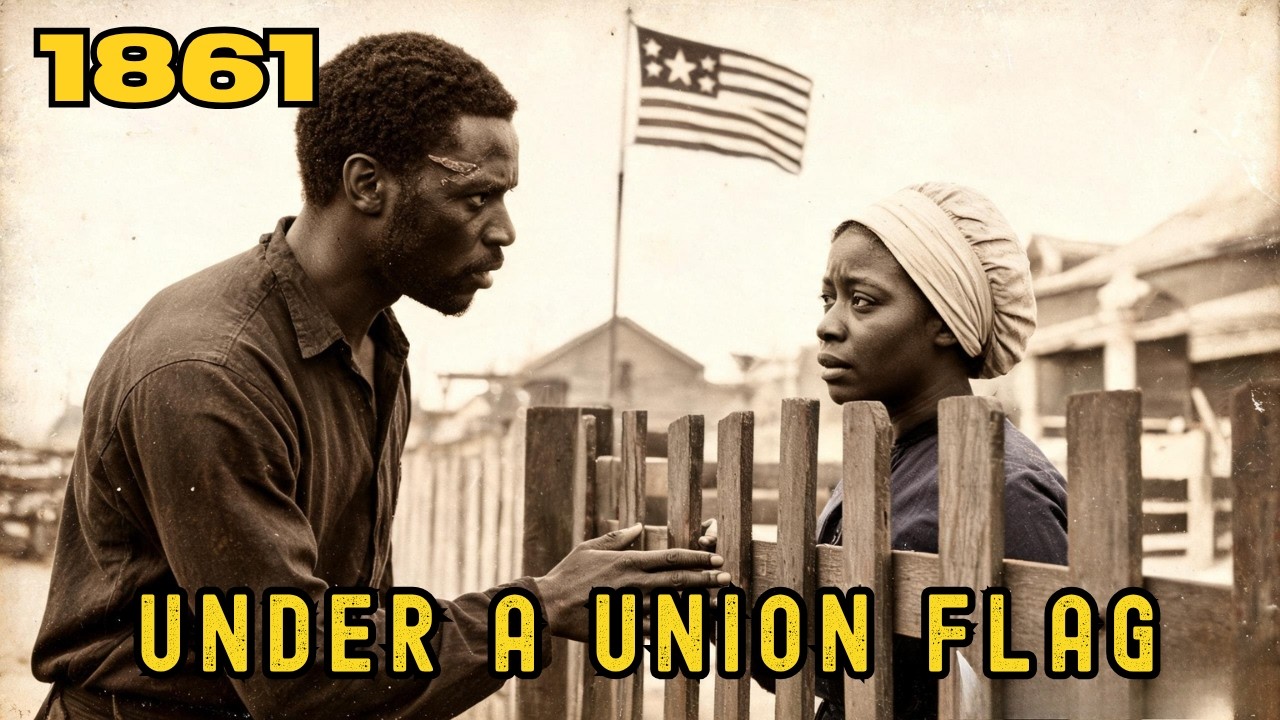
He thought the hardest part was over. Then Dean Hollow appeared on the horizon. A Union flag hung near the property. Soldiers in blue moved along the road.
Crossing the yard carrying a stack of laundry as if the war had changed nothing, Toben saw Esther. She was still working under Prescott Dean’s control. Toben recognized Esther before she recognized him. She crossed the yard holding folded linen.
She moved between the main house and a smaller service building. Her steps were measured. Her clothes were plain. Nothing about the scene suggested freedom.
A Union soldier stood less than thirty yards away. That was the first fact Toben had to absorb. The second was harsher. Esther was still working under orders.
Prescott Dean emerged from the side of the house moments later. He was in his fifties and neatly dressed. He moved with the confidence of a man who had survived political chaos by making himself useful to whatever authority controlled the road. He was not hiding from Union troops.
He was talking to them. One officer shook his hand. Another accepted water brought from the property. The contradiction was complete.
Toben had crossed Confederate-held territory expecting the Union line to change Esther’s position. Instead, he had arrived at a protected estate because her enslaver supported the Union. The war had changed the uniform around the farm. It had not ended the farm’s control over Esther.
The soldier escorting Toben told him to wait near the road. Toben did not. He stepped several paces toward the yard. The soldier blocked his path.
Stay there. My wife is there. The soldier looked toward Esther, then back at Toben. That doesn’t change anything.
It was a simple exchange. Its meaning was not simple. Toben had reached the place he had risked everything to find. He still needed permission to approach his own wife.
Esther finally looked toward the road. She stopped. The cloth shifted slightly in her hands. For one second, discipline broke on her face.
Then it returned. She did not call his name. She did not run to him. Years of oppression had taught her the price of visible emotion before those who controlled her movement.
Toben understood. He stayed where he was. Their reunion was measured in the distance between them. Prescott Dean noticed.
He followed Esther’s gaze and saw Toben. His expression changed immediately. Who is this? A Union soldier answered before Toben could.
Came from the south. Says he has information. Dean studied Toben more closely. Then he looked at Esther.
The connection became clear. You know him. Esther did not answer. Dean stepped toward her.
I asked you a question. Toben moved forward. The soldier stopped him again. Esther answered before the confrontation could escalate.
He’s my husband. Dean’s reaction was not surprise at the marriage. It was annoyance at the claim. Not here.
The words were deliberate. Not here. Not under his authority. Not in any form bound to respect it.
Toben stared at him. Dean turned toward the Union officer approaching the road. This man cannot stay on my property. The officer was the same lieutenant who had interrogated Toben earlier.
He’s not under your authority. Dean looked at him. He’s a runaway slave. He’s also providing military intelligence.
There it was. Not freedom. Usefulness. Again.
Toben had been protected from Voss because he knew roads. Now he was protected from Dean because he knew troop movements. His position had changed only insofar as his information made him valuable. Dean understood that too.
He lowered his voice. I have supported the Union in this county from the beginning. I know. My barns have been open to your men.
I know. My horses have been used. I know. My roads have been made available.
I know that too. Then you know I expect respect for my property. The officer’s face stiffened slightly. Toben watched the exchange without a word.
Dean was not pleading. He was negotiating from loyalty. He had assumed political support had bought him protection for his control over Esther. That belief was not absurd in 1861.
That was what made the scene so damning. One could oppose secession and still defend slavery. A Union flag could fly over a property where Black people were denied the right to leave. Toben had spent years imagining a line across Missouri.
South of the line, danger. North of the line, safety. Dean Hollow destroyed that illusion in minutes. The lieutenant ordered Toben taken to an outbuilding temporarily used by Union personnel.
Not arrested. Not free. Held close. Available for further questioning.
Esther returned to her work. Toben watched her disappear behind the doorway. He had crossed miles to find her. Their reunion had lasted less than a minute.
That evening, Dean tried again. He spoke privately with the lieutenant. Toben could not hear the full conversation, but he understood its purpose. Dean wanted Toben gone.
The lieutenant wanted more information about Voss. Neither man discussed what Esther wanted. She had been excluded from the decision. Toben waited.
As evening fell, the lieutenant returned. You said Voss is moving toward this area. I said I saw a route. Then you said you think it might be false.
Yes. That leaves us with a problem. It leaves me with one too. The lieutenant did not answer.
Tell me exactly what you remember. Toben repeated the route again. The hill. The western approach.
The road leading to Dean Hollow. The officer questioned the timing. Toben answered. Then he asked his own question.
Can Esther come with me? The lieutenant’s expression changed. That’s not what we’re dealing with right now. It’s what I’m discussing.
The room fell silent. The officer expected cooperation. Toben was beginning to understand that unconditional cooperation would leave him with nothing. The lieutenant answered cautiously.
Dean is a Union man. He enslaves my wife. I know who Dean is. Then answer me.
I can’t give you the answer you want tonight. That was enough. Toben knew what delay meant. No one wanted to take responsibility.
No one wanted to anger Dean. No one wanted to release Esther just because her husband had crossed half the state. Military orders moved faster than conscience. Toben was learning the difference.
After dark, Esther came to the outbuilding. She did not enter immediately. She waited until the soldier stationed nearby moved toward the road. Then she stepped inside.
For a few seconds, neither spoke. Toben had imagined this moment for years. The reality was quieter. Esther looked older.
So did he. Separation had changed them both. Toben reached for her. She allowed it briefly.
Then she stepped back. We don’t have much time. Her composure surprised him. Not because he expected weakness, but because he had spent years imagining that finding her would end the hardest part.
Esther already understood it had not. Toben explained about Voss, the cavalry, the search, the false message. He told her he had come because Dean Hollow had appeared on the route. Esther listened without interrupting.
When he finished, she asked him to repeat the sequence. He did. She asked where the cavalry was supposed to head after the hill. He told her.
She asked about the water crossing. He answered. She frowned. Say that again.
Toben repeated it. Esther looked toward the door, then back at him. That road won’t carry them fast. How do you know?
Because it hasn’t been good for wagons since the last rains. Toben stared at her. She continued. Union men stopped using that road days ago.
Toben said nothing. Esther’s voice stayed low. If Voss needs speed, he won’t come by that road. The conclusion reached Toben slowly.
He had suspected the message was planted. Esther was doing something more dangerous. She was proving the route itself made no sense. “What are you saying?
” Esther looked directly at him. “That’s not the road they’ll come by. ”
Esther had not reached this conclusion from instinct. She had reached it from repetition.
For weeks, Union officers had moved through Dean Hollow. The estate sat near roads they wanted to use and ground they did not want to lose. They ate in Dean’s rooms. They rested their horses near his barns.
They argued about roads within earshot of enslaved workers. They rarely lowered their voices around Esther. They had made the same mistake Voss made with Toben. They assumed forced labor made a person invisible.
But Esther was listening. Not because she expected to become part of a military operation, but because information mattered wherever freedom was restricted. She knew when soldiers arrived. She knew when they left.
She knew which roads were still passable. She knew which crossings had become unsafe after rain. She knew when mounted patrols returned late and which direction their horses faced when they came back. Nothing was written down.
Nothing needed to be. Toben looked at her across the dark outbuilding. Are you sure about the road? Yes.
The message says it. That doesn’t mean it’s passable. He remained silent. Esther continued.
Two supply wagons tried that western approach last week. One turned back. The other lost half a day. Toben’s expression changed.
Voss’s supposed route required speed. A cavalry movement depending on surprise would not deliberately choose a road known for slowing wagons and delaying horses. Esther had exposed the first contradiction. Then she gave him another.
The creek crossing near the hills is worse. I crossed near it months ago, not now. She explained what the rains had done. The bank was muddy and soft.
The approach was narrow. Union riders had stopped using it except in small numbers. A larger mounted force could attempt the crossing, but it would compress the column and ruin the timing of any quick attack. Toben began rebuilding the route in his mind.
Not as he had seen it before. But as it actually existed. The hills. The flooded low ground.
The damaged crossing. The western road. The more he examined it, the less the message made sense. Voss had not just left information where Toben could see it.
He had designed information Toben was likely to believe because the name “Dean Hollow” was in it. Toben said it finally. He knew the name mattered to us. Esther looked at him.
How did you react in the past? That was enough. For Voss, perhaps. The answer carried no admiration, only recognition.
Voss had watched Toben the same way Toben had watched him. The difference was power. Voss was free to set traps. Toben was forced to survive them.
Esther stepped closer. So he expected you to carry it. Toben nodded. To the Union forces.
Yes. That changed the problem. The false route was no longer just a personal betrayal. It was an active military deception.
Union command had already heard it. Troops might move because of it. Roads might be reinforced unnecessarily. Other approaches could be left exposed.
Voss had used Toben’s escape as part of the plan. Toben turned away. For the first time since arriving at Dean Hollow, anger broke through his control. It was not loud.
It was not theatrical. A hand pressed against the rough wall. A long silence. I brought it here.
Esther did not comfort him with a lie. Yes. He looked back at her. If they move on it, we’ll correct it.
We don’t know the real route. Not yet. That answer stopped him. Esther had not spent the evening merely dismantling what Toben had carried.
She had already begun looking for what remained. She asked him where Voss had placed his scouts before his escape. Toben told her. She asked which roads Voss preferred when he expected Union observation.
He described a pattern, one visible movement, another hidden farther out. She asked where Voss changed horses during long rides. Toben identified two possible locations. Then Esther added what she knew about Dean Hollow.
Union patrols had recently concentrated in the east. A bridge south of the estate was being watched. The western road was slow. The northern approach exposed riders for too long.
Each fact eliminated a possibility. A smaller group remained. Toben knelt, but he drew nothing. He did not need marks in the dirt or written signs.
He spoke through terrain instead. If he avoids the east, he has to come from behind the hill. Esther answered. Then he still needs water.
There’s a stream. Too deep where it meets the road. Not everywhere. Toben stopped.
He remembered a water crossing. Not on the road, but farther west. Hidden behind low ground and trees. He had crossed it once while guiding Voss months earlier.
It was narrow but solid. A cavalry force could cross there. More importantly, it emerged behind the main approaches Union patrols watched. Toben looked toward Esther.
There’s another crossing. Where? Behind Dean Hollow. Her expression froze.
Now the picture was complete. The estate was not just a location near the operation. It sat near the pass Voss could actually use. Esther reviewed recent activity in her mind.
Confederate scouts had been reported near the property. At the time, Union officers had dismissed them as random movements. Now the sightings looked different. Not random.
Preparation. Toben asked, “How many times? More than once? ” “In the same direction?
” “Yes. ” That was enough. The false message had directed attention east and north. The real route likely ran west, crossed behind Dean Hollow, and approached the Union position from terrain considered secondary.
Voss’s deception was simple. Good deception usually was. Show the enemy a threat they already feared. Make them reinforce it.
Then strike where movement seemed impractical. Toben had been chosen to deliver it because his story made the information credible. An enslaved guide fleeing Confederate service. A man with knowledge of Voss.
A husband desperate to reach his wife. The truth of Toben’s life had been used as a weapon against him. That was the cruelty of the scheme. Voss did not need Toben’s consent.
He only needed Toben’s desperation to act predictably. Esther understood before Toben finished speaking. He thought you’d run here. Yes.
He thought you’d tell them. Yes. Then he thought they’d believe you. Toben looked at her.
They did. For several seconds, no one spoke. The danger was immediate now. If Union officers had already begun moving men toward the wrong route, Voss could move before dawn.
Toben turned toward the door. Esther caught his arm. Wait. We have to tell them.
And then what? She looked at him. She did not need to explain. The moment Toben admitted the information was false, his value to the army might collapse.
The Union officer might believe the correction, or he might decide Toben was unreliable. Dean was already demanding Esther remain under his control. If Toben surrendered the last useful thing he knew without securing anything in return, they would both be left waiting again. Powerful men deciding their fate.
Toben understood the calculation. He did not like it. That did not make it wrong. Esther had survived by understanding that truth and timing were different things.
Truth could be correct but useless if offered to the wrong person at the wrong moment. She lowered her voice. You crossed everything because they wanted what was in your head. Toben said nothing.
Now they need what’s in both our heads. That statement changed the balance between them. Toben had arrived believing his information would help free Esther. Now Esther possessed the analysis that made his information valuable again.
Neither could complete the picture alone. That was the real turning point. Their marriage had survived separation. Their survival now depended on cooperation.
Movement outside cut the conversation short. Boots crossing the yard. A Union soldier calling for Toben. The lieutenant wanted him again.
Esther stepped back into the shadows. Before leaving, Toben looked at her. If they don’t believe us, they’ll believe you when you make them choose. Choose what?
Esther answered without hesitation. Their position or Dean’s claim on me. Toben stared at her. The meaning was clear.
They would not offer the correct route as a gesture of gratitude. They would use it as leverage. For years, others had decided the value of what Toben knew. Others had decided the value of Esther’s labor.
Now both possessed something Union command could not ignore. The real approach route. The hidden crossing. The timing Voss needed.
And before they revealed it, they intended to make one demand. They would leave Dean Hollow together. The lieutenant expected Toben to enter alone. Toben refused.
Esther is coming with me. The officer looked toward the doorway. Esther stood beside Toben, quiet and still. For a moment, the lieutenant seemed ready to order her out.
Then distant hoofbeats sounded from the road outside Dean Hollow. A cavalry patrol returning at speed. That changed the atmosphere in the room. Time was becoming important.
The lieutenant gestured for them to enter. Toben did not begin with the false route. That had been discussed enough. He began with what Voss needed.
Speed. Surprise. A concealed approach. Then he eliminated the roads that did not provide it.
The western road would slow his movement. Esther confirmed it. The crossing near the hills was damaged. Again, Esther confirmed it.
The lieutenant looked between them. How do you know that? Esther answered for herself. Your wagons stopped using it.
The officer’s face tightened. She continued before he could silence her. Your cavalry changed its return route after the rain. Men from this farm were sent to pull a wagon off the lower road.
The ground hasn’t dried since. These were not rumors. They were observations. The lieutenant recognized that.
Toben moved to the next point. If Voss wants you occupied with the east, he needs another crossing. But Toben did not answer. The lieutenant leaned forward.
Toben remained standing. He had spent most of his life answering questions. Refusal was always dangerous. This time, refusal was the only power he had.
Esther leaves with me. Silence filled the room. The lieutenant’s face hardened. You’re not in a position to bargain.
Toben looked toward the road. I know where Voss can cross. That doesn’t make you an officer. No.
Toben’s voice stayed calm. It makes me the man who knows where he’ll come from. That distinction was enough. Before the lieutenant could respond, Prescott Dean entered.
He had heard Esther was inside. His anger was immediate. She has work. No one moved.
Dean looked directly at Esther. Go back to the house. Esther remained beside Toben. Dean turned to the lieutenant.
Are you permitting this now? We’re discussing a military threat. You’re allowing a person under my authority to interfere in military affairs. That statement revealed the entire conflict.
Dean still believed Esther’s presence required his permission. The lieutenant did not correct the premise. He corrected the timing. She may know something useful.
Dean stared at her. Useful? That word governed everything. Toben had been useful to Voss.
Dean had been useful to the Union. Esther had been useful when her labor served the estate. Now her knowledge was useful to the army. No one in the room had arrived at justice.
They had arrived at competing interests. Toben understood that clearly. Dean stepped toward the lieutenant. My support for your forces has never been in question.
I know. My property has provisioned your patrols. I know. Then my property rights should not become negotiable because this man appeared out of the woods.
Toben ignored the insult. The lieutenant asked again, “Where is the crossing? ” Toben answered with the same condition. Safe passage for me and Esther.
Dean turned to him. You have no authority to make that demand. Esther spoke finally. He has what they need.
Dean looked at her. Then his confidence wavered. Not because Esther raised her voice. She had not.
But because she had stepped outside the role he had assigned her in public. Dean had spent years controlling where she worked and when she moved. He had even decided what she was allowed to claim. Now she was participating in a negotiation he could not fully control.
He ordered her out. She did not move. The lieutenant interrupted. Enough.
Then he looked at Toben. If your information is wrong, time will be wasted. If it’s right, Voss loses the element of surprise. The lieutenant turned to Esther.
What makes you think the crossing is still usable? She described recent movements west of Dean Hollow. Mounted scouts appearing briefly. Hoofprints on firmer ground after rain.
Confederate riders avoiding roads watched by Union patrols. Then she added the detail that changed everything. Two nights ago, I heard horses behind the western tree line. That was after the main Union patrol had already passed to the east.
No exchange of fire. No visible movement toward the estate. The riders were watching. Preparing.
The lieutenant called for a sergeant. Then orders came quickly. A patrol would check the western road. Riders would be directed toward the hidden crossing.
Men watching the false pass would be warned. Dean realized what was happening. You’re taking their word over mine. The lieutenant answered without looking at him.
This isn’t about your word anymore. Dean’s political loyalties had protected his position for months. They could not bring cavalry over an impassable road. Military facts had finally outweighed his claim of ownership.
Toben pressed again. Esther leaves with me. The lieutenant hesitated. That hesitation mattered.
A Union officer would act on information from Black people long before he accepted their independence. Toben did not allow him to separate the two. No passage, no precise location of the ford. The lieutenant stared at him.
Outside, another rider arrived. This one carried confirmation. Movements had been reported west of the property. That pressure ended the argument.
The lieutenant issued his order. Toben and Esther were allowed passage through Union positions toward the west. Dean protested immediately. The lieutenant did not reverse his decision.
There was no moral speech. No declaration that slavery was wrong. No change of conviction. Just necessity.
That was more honest and more revealing. The army needed Toben and Esther’s information more urgently than it needed to placate Dean. For once, the calculation worked in their favor. Toben gave the exact location of the ford.
Union riders departed within minutes. The response came before dawn. Voss’s approach had been detected. His cavalry did not reach the position with the surprise he had expected.
The false message had failed. But Dean Hollow did not escape the consequences. Confusion spread along the roads around the estate as mounted units changed direction. An exchange of fire occurred outside the property’s borders.
Workers were ordered to move between buildings. Horses were relocated. Men with no power in the war were forced to stand in its path again. Toben and Esther prepared to leave under temporary military protection.
Then Esther noticed a partially repaired gate beside one of the outbuildings. A broken gate that had been partly fixed. Tools remained beside it. The man who had been working there was gone.
He had been a Black adult worker from Dean Hollow. He had quietly helped conceal Toben’s presence the previous night by keeping the stable hand away from the outbuilding. He had taken a small risk. Without words, without promises.
Just one deliberate act that gave Toben and Esther more time. Esther asked where he was. No one answered at first. She learned later he had been taken near the western road during the confusion surrounding the advancing troops.
He did not survive. There was no justice in that exchange. Toben and Esther received passage. Another man paid the price for circumstances he did not create.
The unfinished gate remained behind them. Esther looked at it once before leaving. Then she turned west. Toben did not stay to watch what happened to Voss.
That mattered. He had spent enough time watching other men determine the course of his life. Voss had tried to use him as a guide, then as bait. The Union had tried to use him for intelligence.
Dean had tried to reduce Esther to a claim protected by loyalty and interest. Toben and Esther had finally used the only leverage available to them. They left before another authority could redefine the agreement. They headed toward Kansas.
Not toward certainty. Not toward a clear ending. They had no reason to believe the danger had vanished just because Dean Hollow was behind them. But they were together, and for the first time, no officer had chosen their road.
No slave owner had determined their direction. No military plan had decided which way they would go. Toben had crossed Missouri believing freedom existed on the other side of a military line. Esther taught him the harsher truth.
A flag could change while oppression remained the same. An army could oppose rebellion without abolishing slavery immediately. A man’s intelligence could be valued while he was denied control of his own life. And a woman treated as invisible could understand the battlefield better than the men who spoke over her.
Toben went to Dean Hollow believing he would save his wife. Instead, Esther exposed the deception that threatened them both. Neither had saved the other alone. They survived because the knowledge the powerful had underestimated became the one thing they could not ignore.
Freedom had not begun when an army allowed them passage. It began when Toben and Esther made their own decision impossible to disregard.
