The candle stub had burned down to a pool of wax when Lieutenant Toshihiro Ura opened his leather notebook for what he knew would be the last time. His hands trembled, not from fear but from starvation, fever, and the accumulation of everything he had witnessed on this island. Drops of condensation slid along the bunker walls, and somewhere beyond the thatch an American shell thumped into the jungle. Ura dipped his pen and wrote.
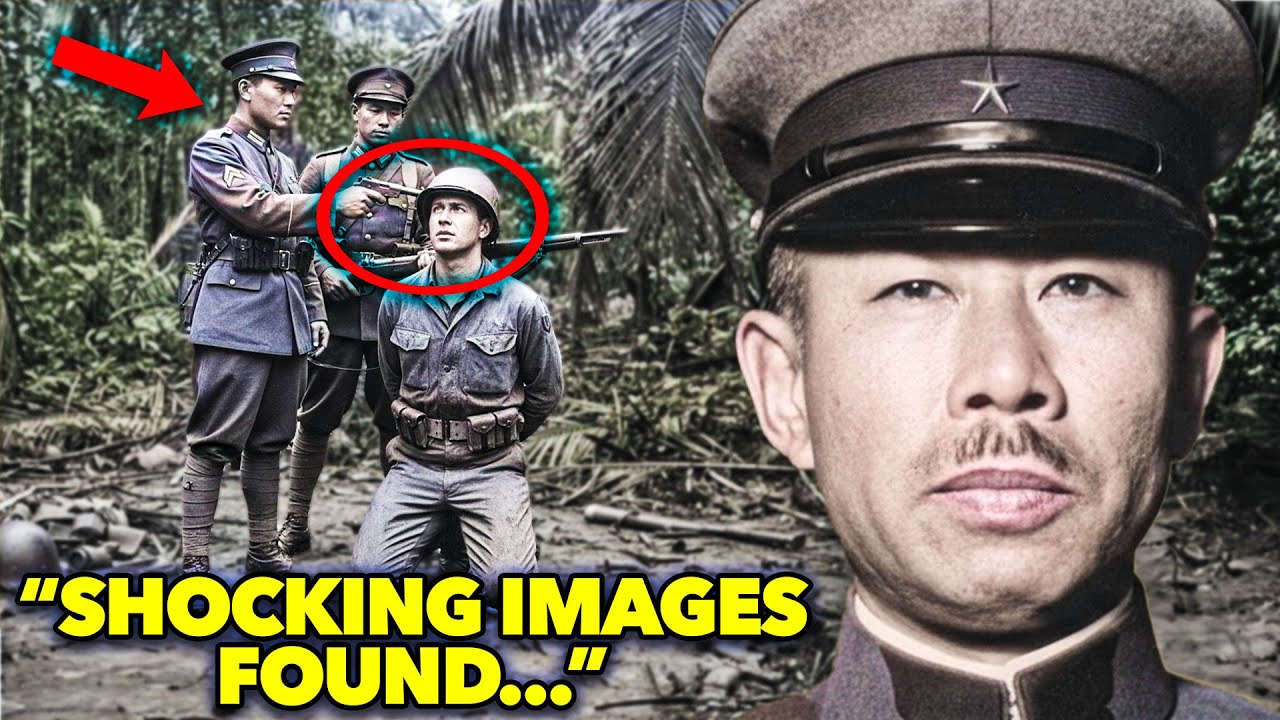
For decades, those final pages vanished into American intelligence archives, unread by the public. When historians finally unearthed them, they found something that shattered the myths held by both sides of the Pacific War: a Japanese officer, loyal to his emperor, documenting in quiet, clinical prose the collapse of an empire from within. Courage and loyalty, he wrote, were no match for disease, hunger, and cold arithmetic. Munda Point began as another dot on Japan’s expanding defensive map.
By July 1943, it had become something far grimmer: a place where the Imperial dream went to die quietly under the jungle canopy. Ura and his battered platoon held the western approaches to Munda airfield, a runway carved out months earlier and now held together with mud, crushed coral, and desperation. His eighty-five men had dug fighting pits in soil that seemed alive, crawling with insects. Leeches slipped into boots at night.
Humidity was so heavy that rifles rusted between patrols and helmets grew a film of mold within days. The jungle swallowed sound, light, and courage alike. Ura’s diary described the terrain as a maze designed by a hostile god. Vines snatched at uniforms, thorns tore through sleeves, and every footstep risked alerting American scouts hidden beyond the tree line.
His unit had been sent from Kolombangara with promises of reinforcements, ammunition, and fresh supplies. Those assurances evaporated the moment they arrived. There were no fortified bunkers, no stockpiled food. Only shallow foxholes dug by exhausted men who had long since abandoned hope that help was coming.
The strategic importance of Munda airfield could not be overstated. Whoever controlled it controlled the air routes over New Georgia and the sea lanes toward Guadalcanal. Tokyo believed it would anchor their defensive perimeter. Ura believed it was already a tomb.
Every night he recorded the same dread: the distant thump of American artillery creeping closer, the rumble of engines from landing craft edging along the coast, the rising fever that spread through his platoon like a curse. The war he had studied in textbooks—clean maneuvers, bold tactics, heroic charges—had been replaced by something more primitive. A slow, suffocating erosion of men trapped in a jungle that refused to let them live or die quickly. Here, at the edge of a shrinking empire, Ura watched the facade of Japanese invincibility rot away day by day, replaced by a truth no officer dared speak aloud.
Munda was already lost. Lieutenant Ura spent long hours peering through fogged field glasses, studying the American troops advancing toward the airfield. What he saw contradicted everything he had been taught since officer school. The Japanese Army had drilled into its officers an image of the American soldier as undisciplined, impulsive, careless with weapons, sloppy in formation.
But the men moving through the jungle below were nothing like that. They worked like a single organism. Squads advanced in coordinated bounds, never rushing, never separating. When one fire team halted, another moved.
When they moved, mortars followed. When mortars fired, artillery landed moments later, as if summoned by invisible wires. Ura wrote that the Americans seemed to flow around obstacles instead of dying on them. His translators later highlighted that phrase.
He noticed how often officers consulted maps, how many men carried radios, how stretcher teams appeared instantly whenever someone fell. The idea that US troops lacked discipline shattered completely the day he watched an entire American platoon halt because one man’s canteen had gone missing. They reorganized, redistributed water, and resumed their advance as if nothing unusual had happened. To a Japanese officer trained to push men until they broke, such attention to detail was shocking.
He also noted the rhythm of their logistics. Boats unloaded ammunition at dusk. Engineers cut paths with machetes before infantry arrived. Medics established treatment points miles ahead of the fighting.
To Ura, this was the most terrifying thing of all. The Americans did not just fight; they prepared. Every movement seemed supported by a deeper system he could not see but always felt. Japanese doctrine insisted that ferocity would offset any material disadvantage.
Through his field glasses, Ura saw the flaw in that belief. The Americans did not rely on bravery. They relied on structure. Every advance was cushioned by firepower, every risk minimized by planning, every casualty replaced within hours.
Watching them, he wrote, “They do not fear us. They fear failing the system that protects them. ”
For the first time, Ura understood that the enemy was not merely another army. It was an industrial engine disguised as foot soldiers, grinding steadily toward Munda with unstoppable patience.
By early July, his platoon was no longer a fighting unit. It was a group of men dissolving in real time. His diary painted a portrait of a force dying more from nature than from bullets. Malaria struck first, burning through the platoon like wildfire.
Fevers rose so high that men shook uncontrollably through the night, their blankets soaked with sweat before sunrise. Some hallucinated, hearing voices calling them deeper into the jungle. Others wandered from their posts in confusion and returned covered in leeches. Ura recorded that more than half his men could not walk unaided, yet were still expected to carry rifles, ammunition, and rations that barely existed.
Food was the next enemy. The promised supply convoys—the legendary Tokyo Express runs—had simply stopped arriving. American aircraft patrolled the waters so aggressively that any ship approaching New Georgia risked instant destruction. By July 3rd, Ura wrote that rations had been cut to a handful of rice twice a day.
By the 7th, rice was gone entirely. Men boiled roots and scraped moss off trees to survive. The jungle, dense and vibrant, might have fed them under different circumstances, but starvation saps the will to forage. Men too weak to stand could hardly hunt for edible plants.
Wounds, even minor ones, became death sentences. Without quinine, infected insect bites turned into swollen, oozing sores. A single scratch could lead to fever and collapse. One soldier slipped while digging a trench, cutting his leg on a rock.
Four days later, gangrene had climbed to his knee. Ura wrote helplessly, “The jungle rewards every mistake with death. ”
The diary also revealed a slow psychological deterioration. Men stopped talking during daylight, saving energy for night watch.
Jokes faded, then conversation, then small rituals like cleaning rifles. One morning, roll call revealed only thirty-one men capable of standing, and even those wobbled like sleepwalkers. The war they had been trained for—bold charges, heroic last stands—was nowhere to be found here. They were trapped in a slow-moving collapse, left to rot in a jungle that seemed determined to outlive them.
Ura understood the truth his superiors refused to admit. His platoon was not losing a battle. It was losing a war of biology, hunger, and exhaustion long before American forces ever reached their line. On the evening of July 12th, a lone courier stumbled into Ura’s bunker, drenched in sweat, clutching a message tube.
The man collapsed before he could speak, and Ura had to pry the cylinder from his trembling hands. Inside was the order that extinguished the last fragile thread of hope in his platoon. Headquarters was evacuating to Kolombangara. Ura and his men were to hold their current position for forty-eight hours at all costs.
The phrase was official code. Everyone knew what it meant: you will die here so others may escape. Ura gathered his surviving soldiers—barely thirty still capable of standing—and read the message aloud. No one shouted.
No one argued. The silence that followed was worse than panic. A few men stared blankly at the ground. One smiled faintly, as if the cruelty of the situation had finally become too absurd to fear.
In his diary, Ura recorded that moment with a single sentence: “They understood that their lives had been traded for time. ” Yet there was no bitterness in his writing. Resignation had settled too deeply. He wrote that expecting reinforcements had been a luxury of the naive.
Supplies had not arrived in weeks. Medical help was nonexistent. Even ammunition had to be counted by the individual cartridge. The new order simply confirmed what every man had quietly realized.
No one was coming to save them. Ura moved methodically through the rest of the day. He redistributed ammunition, though most men lacked the strength to carry full loads. He organized one final meal: scraps of dried fish and a spoonful of rice each, the last of their stores.
Some soldiers tried to savor it, swallowing slowly with sunken cheeks. Others vomited from hunger’s cruel grip. Several asked Ura to write letters home for them. Too weak to lift pencils, they dictated final messages: farewells to wives, apologies to parents, reminders to keep family shrines tended.
Ura wrote each note carefully on scraps torn from his map case, knowing none would ever reach Japan. That night, under the flickering glow of a candle stub, he wrote that the order to hold the line had no tactical purpose. His men could not delay the Americans for two days—at best, a few hours. “We will die fulfilling a plan that does not exist,” he wrote.
The empire demanded sacrifice, even when sacrifice achieved nothing. As the jungle hummed around them, Ura realized the truth most officers never dared admit aloud. In this war, death was no longer a means to victory. It was simply the only option left.
Lieutenant Ura had been shaped by the Imperial Army Academy, an institution that worshipped bravery, discipline, and offensive spirit. From his earliest training, he was taught that a Japanese soldier’s willpower was a weapon equal to any rifle, and that ferocity in battle could overcome any technological or logistical disadvantage. But in the suffocating jungle around Munda, those teachings were collapsing one by one. In his diary, Ura began writing something no officer was ever meant to think, let alone document.
Japan was losing not because its soldiers lacked courage, but because the very structure of its war machine was broken. What struck him most was how the Americans operated as a unified system. Every advance was calculated. Every movement supported by engineers, medics, radio operators, and artillery observers.
When an American platoon advanced, they did so with the confidence that water, ammunition, medical support, and aerial reconnaissance were already flowing behind them like an invisible tide. Ura compared it to watching an entire nation walk in step through the jungle. Japanese combat doctrine looked very different. Officers were told to rely on spirit, aggression, and the emotional fervor of the charge.
But Ura’s diary showed how painfully outdated that belief had become. His men were expected to hold ground without food, to fight without medicine, to endure disease without treatment. “We have slogans,” he wrote, “but they have systems. ” It was a line intelligence analysts later circled in red.
In one entry, he described how American forces used firepower like a carpenter uses tools. Each strike deliberate. Each bombardment tied to a plan. Japanese forces, by contrast, waited for orders that no longer made sense, issued by commanders who had not seen the front in weeks.
His battalion headquarters spoke endlessly about honor and duty, yet sent forward troops who could barely lift their weapons. Ura saw the truth with startling clarity: bravery could win a skirmish, but infrastructure won a war. The Americans replaced every fallen soldier within days. Japan could not even replace its malaria-ravaged rank and file.
The Americans treated wounded with plasma and penicillin. Ura’s men died from infected scrapes. Japan still taught that spirit could overcome steel. Ura now understood that steel, when organized, supplied, and coordinated, crushed spirit every time.
His diary entries in mid-July read like a quiet rebellion against everything he had been taught. And yet he wrote them not with anger, but with sorrow, because for the first time he realized that no matter how bravely his men fought, the outcome had already been decided long before they ever reached Munda. By the second week of July, the platoon no longer resembled a fighting force. It had become a collection of walking ghosts: skeletal, feverish men clinging to rifles they no longer had the strength to fire.
Ura described the transformation with almost scientific detachment, as if observing the final stage of an ecosystem’s breakdown rather than the destruction of human lives. “Our decline,” he wrote, “began long before the Americans fired a shot. ”
Malaria raged on. Men shook uncontrollably through the night, teeth chattering while tropical rain dripped through the thatch overhead.
The unit’s medic, lacking quinine, chloroquine, or even aspirin, had become little more than a witness to suffering. Ura recorded how the sick grew delirious, whispering to trees, forgetting where they stood, sometimes collapsing in the mud with no attempt to stand again. Their uniforms hung loose over shrinking frames. Their eyes carried that distant, unfocused stare of men already halfway gone.
Food was no longer a daily necessity. It was a memory. The last proper ration had arrived weeks earlier. What remained were crumbs of rice, jungle leaves boiled into tasteless slush, and whatever insects the strongest men could scavenge.
Ura wrote that hunger had become a physical presence, like a creature sitting on each man’s chest. Even those still capable of walking were too weak to dig proper foxholes or maintain defensive positions. The jungle, once thought to offer sustenance, now offered only obstacles. Wounds that should have healed in a week instead festered into fatal infections.
A small shrapnel cut would swell, turn purple, and begin to rot. Men begged Ura for antibiotics that did not exist. They begged for water when the rain refused to fall. They begged for strength when their bodies could no longer obey.
On July 8th, the unit’s single medic took his own life. Ura documented the moment with chilling precision. The medic had spent days watching preventable deaths pile up. He left a small note that Ura copied into his diary: “I cannot stand powerless as they suffer.
” His suicide was the clearest sign that the unit had crossed a threshold from deterioration into collapse. By July 10th, Ura estimated that fewer than thirty of his eighty-five men were still capable of holding their rifles. The rest lay in shallow pits or leaned against tree trunks, too feeble to rise when artillery thundered in the distance. The jungle itself seemed to press in on them, vines curling over abandoned gear, insects feeding off the sweat of men too exhausted to swat them away.
Yet through all this, headquarters continued sending orders that bore no resemblance to reality: commands to hold positions, launch counterattacks, prepare for maneuvers no dying unit could execute. Ura knew with total certainty that the final American assault would not be a battle. It would be a sweep, a clean removal of resistance that had already ceased to exist. His platoon was no longer fighting a war.
It was fighting time. The afternoon of July 12th brought the message that sealed the fate of every man under his command. It arrived by runner, an exhausted corporal from battalion staff, uniform streaked with mud, hands shaking as he delivered the folded slip of paper. The order was deceptively simple: hold current position for forty-eight hours, delay enemy advance, headquarters withdrawing.
No elaboration. No justification. Just a timetable that meant certain death. Ura gathered the remaining capable soldiers beneath a cluster of mangrove roots, where humid shadows concealed their meeting from American aerial observers.
As he read the order aloud, he watched the men’s faces: the hollow cheeks, the sunken eyes, the quiet resignation settling into them like falling ash. No one protested. No one cursed. They simply understood.
Their lives would buy time for higher officers to evacuate by night barge to Kolombangara. Their sacrifice was not for victory, but for paperwork. An administrative delay written in blood. In his diary, Ura did not rage against the decision.
He stripped emotion from his writing, analyzing the order with the same clarity he used when describing artillery timings or casualty rates. The command was tactically meaningless, he wrote. His platoon lacked the strength to resist an organized American assault for more than a brief skirmish, let alone two full days. Their defensive line was a facade held together by habit more than capability.
Even the healthy men could barely stand upright after hours of guarding in the sweltering heat. But what struck him most was the psychological shift that followed the announcement. Some soldiers attempted to straighten their uniforms, as if clinging to dignity might shield them from fate. Others whispered quiet farewells or scratched goodbyes onto scraps of paper they knew would never reach home.
One young private asked Ura if he believed spirits lingered on battlefields, confessing he feared dying far from his family shrine. Ura told him gently that courage could consecrate any place. He later recorded that he was not sure he believed it himself. That night, he distributed the last of the rice, an amount barely enough to fill a single mess tin, and divided ammunition into neat piles, even though he knew most rifles would never fire again.
Men too weak to lift weapons begged to have them placed beside them so they could die as soldiers. Ura wrote letters for those unable to hold a pencil, pressing his thumbprint beneath their signatures, promising he would deliver them if he survived. A promise he already understood was impossible. The jungle outside vibrated with distant artillery.
Each rumble reminded them that the Americans were closing in with unstoppable precision. As darkness enveloped the bunker complex, Ura penned what would become one of the most haunting lines in his diary: “We have not been ordered to fight, only to remain alive long enough to die in the correct place. ” It was the clearest acknowledgement yet of a truth no slogan or doctrine could obscure. Their battle was already lost.
Now they were being asked to die quietly, on schedule, so someone else could live. July 14th opened with a sky the color of tarnished steel as American artillery began its final barrage on the Munda defenses. Inside the collapsing bunker complex, the last remnants of the platoon waited in silence, broken only by coughing fits, whispered prayers, and the distant rumble of approaching shells. Most men could no longer stand.
Some drifted between fever dreams and consciousness, their bodies hollowed by malaria and starvation. Ura tried to maintain military formality, but even his voice betrayed the knowledge that this day would end everything. The American 43rd Infantry Division advanced with slow, methodical precision. Riflemen swept through the jungle while flamethrower teams followed in measured steps.
They expected ambushes. Instead, they found soldiers too weak to lift their rifles. When the barrage lifted, Ura ordered a final volley, more symbolic than tactical. A handful of scattered shots cracked through the air before the Americans answered with grenades and jets of fire that smothered the bunker’s entrance in flame.
Ura never saw the enemy. A fragment from the opening barrage killed him instantly, leaving his diary untouched in a waterproof pouch beneath his field desk. The surviving Japanese soldiers were captured hours later: skeletal, dehydrated, barely able to speak. American medics were stunned.
These were not the unstoppable warriors propaganda had described. They were victims of a system that had abandoned them long before the fighting reached its peak. When the diary reached American intelligence officers, it created an immediate stir. Some believed it was defeatist fiction.
Others recognized it as something rarer: a clear-eyed analysis from a Japanese officer who understood the true reason his nation was losing the war. Ura had written that Japan’s strategy relied on courage, while America relied on systems. In modern warfare, systems always won. History proved him right.
Every major battle after Munda followed the pattern he predicted: American logistics grinding forward, Japanese forces collapsing not from lack of bravery, but from lack of food, medicine, and support. Ura’s final entry—his belief that courage cannot overcome starvation, disease, and broken supply lines—became one of the most important captured documents of the entire Solomon Islands campaign. In the end, his platoon died as victims of a military machine that valued slogans over sustainability.
But his diary survived, offering one of the clearest, most haunting insights into how the Pacific War was truly lost: not in dramatic last charges, but in the slow, systematic failure of a nation that could not sustain the men fighting in its name.
