The call came on October 3rd, and Detective Sergeant Tim Brawn of the Somerset County Prosecutor’s Office knew immediately that something was off. The county prosecutor himself was on the line, requesting that a detective be assigned to investigate the death of a patient at Somerset Medical Center. The patient had died from what appeared to be an adverse diabetic reaction, which was unusual in itself. There was no indication of foul play, no reason for the prosecutor to be personally involved, and yet there he was, making the call.
Brawn assigned his top and most experienced homicide detective, Danny Baldwin, to the case. It was the kind of assignment that seemed routine on the surface, but the involvement of the county prosecutor hinted at something deeper. Four days later, Brawn was directed to attend a high-level meeting at Somerset Medical Center, and the picture began to shift. Hospital administrators and an attorney were present, and they revealed that the death of that single patient was not an isolated incident.
For roughly five to six months, the hospital had been conducting its own internal investigation into the deaths of six patients in the intensive care unit. The deaths were attributed to adverse diabetic reactions, but two patients in particular had suffered adverse reactions to a drug called digoxin. The hospital had a suspicion, but no answers. When Brawn asked if their investigation had identified anyone who could have harmed the patients, two names came up: Charles Cullen, a nurse, and a phlebotomist.
The administrators were quick to say they did not believe either one had done it, but if they had to point a finger, those were the two they would name. Brawn and Baldwin split the background checks. Baldwin looked into the phlebotomist while Brawn took Cullen. On the surface, Cullen seemed unremarkable.
A registered nurse with a minor trespassing charge from ten years earlier in a town in Pennsylvania. It was a small thing, not the kind of red flag that would give an investigator pause. But when Brawn contacted the Palmer Police Department records room, the clerk who pulled the arrest report offered an unexpected detail. Two or three months earlier, the Pennsylvania State Police had been asking similar questions about Charles Cullen.
There was a sticky note on the incident report with the date, the time, and the name of the state police detective who had made the inquiry. Brawn had Baldwin call that detective to find out why they were looking into Cullen. The answer was chilling. They were investigating Cullen as a potential suspect in the harming of patients at two hospitals in Pennsylvania, again involving digoxin.
That was the second time Brawn had heard the word digoxin, and he had never heard it before in his life. Neither had Baldwin. They knew they had found their suspect. Charles Cullen was a loner.
He was divorced, had two children, and had no friends to speak of. As Brawn and Baldwin dug deeper, visiting hospitals where Cullen had worked in the past, a disturbing pattern emerged. Misused medications. Unprofessional interactions with patients.
Things of that nature. At least six of the ten hospitals where Cullen had worked strongly suspected that he was harming and killing patients in their facilities. And yet, they chose to let him move on. They allowed him to leave without reporting him to state nursing boards or law enforcement.
The trail of death stretched back sixteen years, and the hospitals had simply passed him along. Brawn’s first direct encounter with Charles Cullen came a week before his arrest. The detectives had executed a search warrant on Cullen’s home in Pennsylvania, looking for physical evidence: syringes, medication vials, perhaps news articles or obituaries he had clipped of his victims. Cullen was exiting his property carrying a can of garbage to the curb when a team of about a dozen detectives from New Jersey and Pennsylvania arrived.
If there was an image of a killer, Brawn thought, Cullen did not fit it. He was quiet, unassuming, ordinary. The detectives invited him to come to their homicide squad in New Jersey for an interview, and Cullen accepted. He was not under arrest.
They drove him back to the office and spoke to him for about five or six hours. He did not admit to harming or killing anyone, but he did not deny it either. That stuck with both Brawn and Baldwin. The refusal to deny involvement was its own kind of confession.
Cullen’s life, as Brawn would learn, was shaped by severe depression. His childhood was marked by dysfunction. He was the youngest of several children, raised by a single mother in the 1960s and 1970s. He suffered both physical and emotional abuse.
He was bullied for his shyness and meekness, taken advantage of by other children. He attempted suicide as many as twenty times throughout his life. Outside of work, his life was mundane. He sat at home watching television.
There was alcohol abuse. He lived to work. Without the familiar hallmarks of murder, Brawn and Baldwin were in uncharted territory, but they were convinced Cullen was a serial killer. They just needed to prove it.
They found an unexpected ally in Amy, a registered nurse in the intensive care unit at Somerset Medical Center. She was a single mother of two daughters, and her work shifts often put her in close contact with Cullen, probably three or four days a week. At first, Amy was a supporter and defender of Cullen. She felt he was being singled out for no reason, and she was hostile and vocal about it.
By the time Baldwin got to her, the word had spread through the hospital about why the detectives were there and who they were looking at, and she had built up a considerable amount of anger toward them. But the case was not built on physical evidence. There was no smoking gun, no syringe with poison still in it. The evidence was paper.
Computer records. Medical records. Documents. Syringes and medication vials from sixteen years of deaths had long since been disposed of.
The turning point came with the Pyxis records. The Pyxis unit was a computerized, automated medication dispensing device commonly found on hospital medical floors. To access it, a person had to input their personal ID, their employee ID, and the patient’s name, along with the medications they wished to withdraw. The machine would then pop open with the specific medication requested.
Brawn and Baldwin were unfamiliar with these records, and it was part of their learning curve. But once Baldwin gained Amy’s confidence, she looked at the Pyxis records for Cullen’s medication requests. The first thing she said was, “He’s killing people. I know he’s killing people.
” The medications he requested and the number of times he requested them were alarming. Amy agreed to help. She lured Cullen from his home in Pennsylvania to New Jersey for dinner at a local restaurant. While they were there, she was asked to try to get him to confess on tape.
The dinner did not yield a confession, and after they parted ways, the arrest was made. Cullen was brought back to the homicide unit, where Brawn and Baldwin began their interview. For six hours, he would not say he did it, but he would not say he did not. The interview went back and forth until they were ordered to end it and return Cullen to the county jail to await his arraignment.
Brawn and Baldwin decided to make one more attempt. They asked Amy if she would be willing to stand by nearby. Their plan was to have her speak to Cullen one-on-one and let him know that they were also looking at her involvement in the deaths at the hospital. It was a bluff, but it worked.
In her way, Amy delivered the message, and Cullen decided to accept responsibility for his actions, not only at Somerset Medical Center but throughout his entire career. He began to open up to her about how many people he had killed over the years. It was shortly after that when Brawn and Baldwin stepped in. The case against Cullen was circumstantial, but it was strong circumstantial evidence.
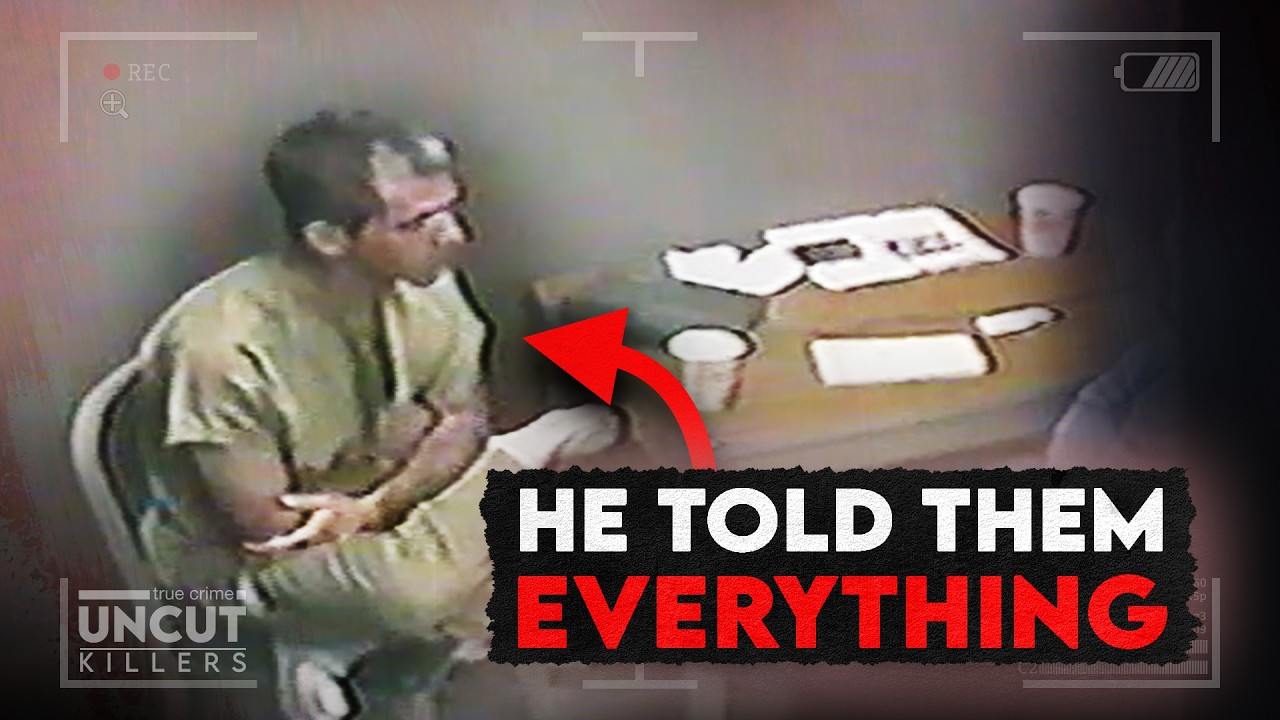
A trail of paper, documents, medical records, and computer records that placed Cullen at certain times, in certain places, with certain people, with access to certain medications. The ultimate piece of evidence they wanted was a confession. Brawn had brought a tape recorder to capture the conversation. It was himself, Baldwin, and Cullen in the room.
Cullen was uncuffed. They usually kept people in handcuffs, but on this occasion, they felt they had control over his physical being. Cullen curled up on his chair, wrapping his arms around his legs, holding his knees to his chest. It was a classic sign of someone holding information in, holding something close that they did not want to talk about.
Both detectives honed in on that and started talking to Cullen with reassurance about his safety and well-being, trying to gain a little trust and confidence before questioning him about the deaths. It did not take long. Cullen allowed himself to relax. He let go of his legs, dropped them to the floor.
His shoulders, his whole body, seemed to almost relax. He opened up and finally spoke to Detective Baldwin. “Can you tell us in total, throughout your entire, I think it’s approximately 15-year career, is that correct? As a registered nurse?
” Baldwin asked. “15, 16 years,” Cullen said. “How many patients have you held to their death as a result of your actions? ”
“Possibly 30 to 40 patients.
”
The constant telltale signature of Cullen’s acts was the injection of lethal medications into a patient’s IV. His victims were extremely vulnerable because of their physical condition and the setting they were in. They were unable to care for themselves, relying on others to take care of them, trusting that nurses, technicians, and hospital staff were doing right by them. “I would go long periods of time with nothing,” Cullen said.
“But then I would find myself getting back feeling overwhelmed, feeling like I couldn’t watch people hurt, die, be treated like nonhumans. And at times, the only thing I could feel like I could do was to try and end their suffering. ”
He selected his victims at random, as best as the detectives could tell. His youngest victim was 21.
Several of his older victims were in their 90s. Men and women, young and old. It appeared to depend on the type of day Cullen was feeling when he came to work. It was no secret what Cullen was doing.
People did suspect him. Nine hospitals buried it for many years. It was at the tenth hospital, Somerset, that he was finally caught. Cullen pleaded guilty to killing 29 patients across six hospitals in two states.
He was sentenced to 18 consecutive life sentences, a combined total of 382 years in prison.
