On the afternoon of June 25, 1876, the men of the Seventh Cavalry under Lieutenant Colonel George Armstrong Custer were dying in swarms on the grassy ridges above the Little Bighorn River. The attack they had launched hours earlier had not been a surprise. The village they struck was far larger than anything Custer had been led to expect, and it did not scatter in panic. It fought back, and it cut his battalion to pieces.
The disaster at the Little Bighorn was not a sudden stroke of bad luck. It was the product of a long chain of decisions, warnings, and misjudgments that had begun days earlier, and in many ways, it had been predicted by the very men who rode toward it. Custer’s orders were written on June 22, 1876, at the mouth of the Rosebud River in Montana Territory and signed by Captain E. W.
Smith, acting assistant adjutant general, on behalf of Brigadier General Alfred Terry. The instructions were careful and specific. Custer was to proceed up the Rosebud in pursuit of the trail discovered by Major Marcus Reno a few days earlier. If the trail turned toward the Little Bighorn, as appeared likely, Terry recommended that Custer continue southward, possibly as far as the headwaters of the Tongue River, then turn toward the Little Bighorn while constantly feeling to his left to prevent the Indians from escaping to the south or southeast.
Terry noted that Colonel John Gibbon’s column was already moving toward the mouth of the Big Horn and would advance up the river to at least the forks of the Big and Little Horns. The hope was that the two columns, converging from different directions, would nearly encircle the Indians and make escape impossible. There is a common misconception that Terry’s orders expected Custer’s command to link up with Gibbon at the Little Bighorn on June 26. In fact, Terry’s instructions never fixed a date for that rendezvous.
Custer’s troops were rationed for fifteen days, and the expectation was that he would not arrive before July 5 or 6. Custer was given wide latitude, and Terry expressed complete confidence in his judgment. At noon on June 22, the regiment marched out of camp in column of fours, each troop followed by its pack mules. Generals Terry, Gibbon, and Custer reviewed the command as it passed.
The pack trains were troublesome at first, with cargoes falling off and mules straggling, but after Lieutenant Edward Mathey took charge, the trains improved considerably. That evening, Custer called his officers together at his bivouac. The gathering was somber, with little conversation. Custer spoke in an unusual tone.
He announced that trumpet calls would only be sounded in emergencies and that marches would begin at 5:00 a. m. He told his troop commanders that they were experienced officers and that he would only regulate the time of departing and arriving at camp. Everything else, including reveille, stables, watering, and grazing, would be left to their judgment.
He stressed that they must maintain supporting distance, not advance ahead of the scouts, and not fall behind the column. Custer estimated that the enemy might number around one thousand warriors, possibly supplemented by young men from the agencies, bringing the total to about fifteen hundred. He had consulted reports from the Commissioner of Indian Affairs and officials in Washington to reach this figure. He was confident the opposing force would not exceed that number.
Terry had offered additional troops from the Second Cavalry, but Custer declined, believing the Seventh Cavalry could defeat any force that might combine against them. He also declined the offer of Gatling guns, fearing they would slow him down due to inferior horses and difficult terrain. The address was uncharacteristic of Custer, who rarely shared his thoughts so openly. His manner was conciliatory and subdued, almost appealing, and it left a deep impression on the officers present.
As they dispersed, Lieutenants Donald McIntosh, George Wallace, and Edward Godfrey walked back to their bivouac in silence. Wallace finally spoke. “Godfrey, I believe General Custer is going to be killed. ” Asked why, Wallace replied, “Because I have never heard Custer talk in that way before.
”
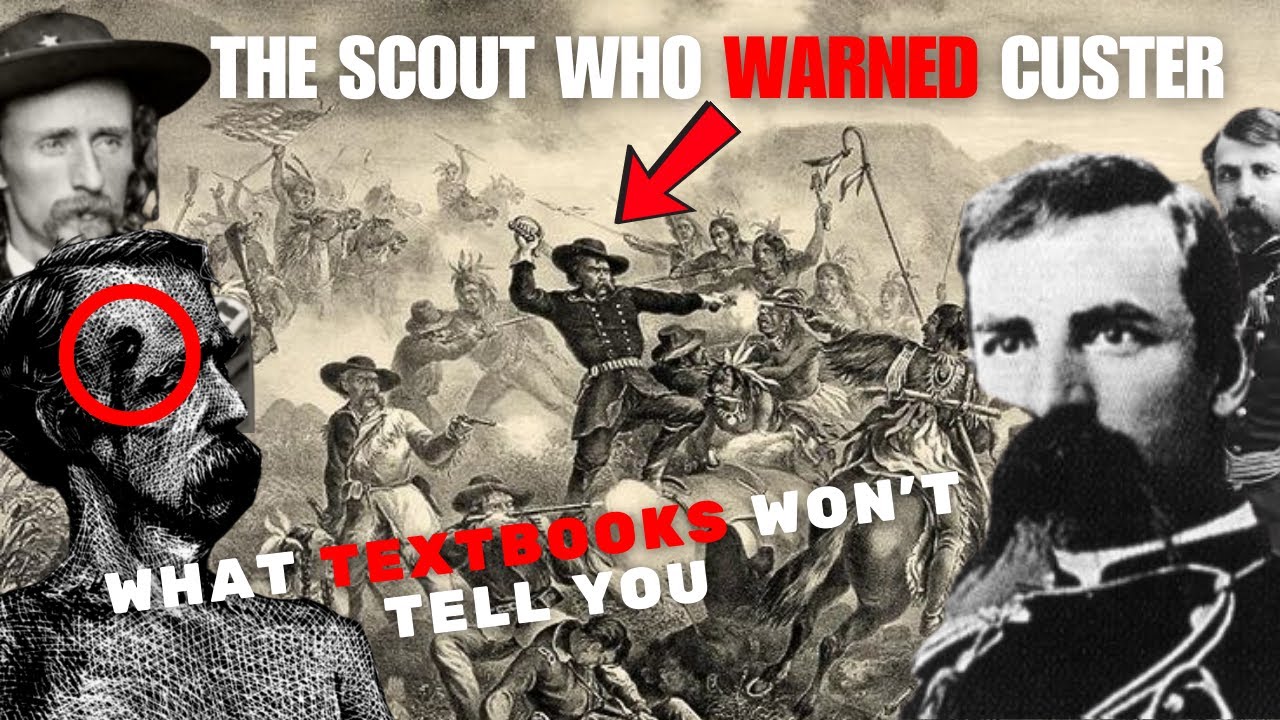
That night, Godfrey came upon the Indian scouts’ bivouac, where Mitch Bouyer, Bloody Knife, Half Yellow Face, and others were talking. Bouyer asked if Godfrey thought they could defeat the Sioux. Godfrey said he guessed so. After interpreting the conversation, Bouyer replied, “Well, I can’t tell you we’re going to have a damned big fight.
”
On June 23, the regiment marched up the Rosebud. They passed through three Indian campsites, and the men studied pony droppings, tracks, and lodge trails to estimate the size of the village. On June 24, they passed through larger camps and found the frame of a Sun Dance lodge with a white man’s scalp inside. The Crow scouts had discovered fresh signs, including pony tracks and an Indian on foot.
At one halt, Custer’s headquarters flag blew down twice. Lieutenant Wallace later mentioned it as a bad omen. The command camped under a bluff that night, hiding as much as possible, and prepared to march again at 11:30 p. m.
The officers were roused and told that the trail led to the Little Bighorn. Custer planned to march overnight, conceal the command near the divide before daylight, study the terrain, locate the village, and attack on the 26th. The night march was difficult, filled with dust and noise. At 2:00 a.
m. on June 25, the command halted and waited for news from the scouts. Before 8:00 a. m.
, Custer rode bareback to each troop with information about the location of the Indian villages. Godfrey observed Custer in a serious conversation with Bloody Knife and the scouts, who appeared nervous. Bloody Knife said they would find enough Sioux to fight for two or three days. Custer smiled and replied, “I guess we’ll get through with them in one day.
”
The column resumed marching at 8:00 a. m. and halted around 10:30 a. m.
in a ravine, where the men were ordered to remain silent and concealed. From the divide between the Little Bighorn and the Rosebud, the scouts had spotted smoke rising above the village and pony herds grazing in the valley, roughly twelve to fifteen miles away. The element of surprise had already been lost. Several young men had left the hostile camp that morning to visit an agency in Nebraska, saw the dust raised by the troops, and returned to warn the village.
Meanwhile, a pack of hard bread had been lost during the night march, and the detail sent back to recover it found an Indian opening a box with his tomahawk. The Indian fled. When this was reported to Custer, he sounded officer’s call. The scouts had also seen Indians observing their movements.
Custer concluded that further concealment was pointless and decided to attack the village immediately, rather than wait until the next morning and risk the village scattering. The regiment was divided into battalions. Major Reno commanded Troops M, A, and G, accompanied by the Indian scouts. Captain Frederick Benteen commanded Troops H, D, and K.
The pack train under Lieutenant Mathey was escorted by Troop B under Captain Thomas McDougall. Reno’s battalion marched down a valley that became Reno’s Creek. Custer’s column followed closely to the right and rear. Benteen’s battalion was ordered to the left and front, toward a line of high bluffs, with instructions to send word to Custer if he encountered anything and to engage any enemy he came across.
Benteen’s march was arduous, crossing rough, steep hills and deep valleys. The terrain forced the battalion to the right, and many horses were greatly fatigued. Benteen eventually joined the trail of the rest of the command, just ahead of the pack train. They heard cheering and a few shots from Custer’s direction but could not see what was happening.
After watering their horses, Benteen heard firing ahead. Captain Thomas Weir grew impatient and started off with his troop, taking the advance. Reno’s battalion followed the Indian trail, crossed a ford, and moved up the valley. Reno watered his horses and sent word to Custer that he had the enemy in front and that they were strong.
He formed his battalion into line of battle and deployed skirmishers. The hostiles fell back, firing occasionally, but when two men’s horses became unmanageable and carried them into the Indian camp, the Indians developed in great force and opened a brisk fire. Reno realized he was being drawn into a trap. He dismounted his command to fight on foot defensive in the timber.
The position was strong, but Reno’s men were soon nearly surrounded. After one man was killed close to him, Reno gave the order to mount and get to the bluffs. The order was not widely heard, and the retreat became a confused, straggling scramble. The men jammed in a funnel-shaped ravine as they climbed into the bluffs.
Lieutenant McIntosh was killed shortly after leaving the timber. Dr. James DeWolf was shot while ascending a bluff. Lieutenant Benjamin Hodgson’s horse was killed, and Hodgson, wounded in the leg, cried out, “For God’s sake, don’t abandon me.
” He grasped a comrade’s stirrup strap and was taken across the stream, but was shot and killed shortly afterward. Reno’s losses during the fighting in the valley were three officers and twenty-nine enlisted men and scouts killed, seven wounded, and one officer, one interpreter, and fourteen soldiers and scouts missing. Nearly all the casualties occurred during the retreat. Benteen’s battalion, moving forward, was met by a message from Custer’s adjutant, Lieutenant William Cooke: “Benteen.
Come on. Big village. Be quick. Bring packs.
” The note added a postscript: “Bring packs. ” The column pushed forward at a gallop, expecting to meet the enemy they assumed Custer was driving before him. Instead, they crested a rise and came into full view of the Little Bighorn Valley. The valley was filled with mounted men riding back and forth through dust and smoke, with the grass burning.
On the bluffs to their right, a body of troops was engaged. They soon joined Reno’s battalion, which was still holding a position on the bluffs. Reno had lost his hat and had a handkerchief tied around his head. Custer’s battalion, including Troops C, E, F, I, and L, had advanced north along the ridgeline and was annihilated.
No one under his immediate command survived. The question of whether Custer ignored direct orders that could have saved his men remains a matter of historical debate, but the evidence from the officers who survived, including Edward Godfrey, makes clear that the disaster was not inevitable. It was the result of misjudgment, overconfidence, and a chain of decisions made under the pressure of a fast-moving situation.
The village was far larger than Custer believed, the attack was not a surprise, and the converging columns that Terry had hoped would encircle the Indians never arrived in time to save the Seventh Cavalry.
