On the morning of April 30, 1970, Inger Stevens was discovered on the floor of her kitchen by her housekeeper. She was pronounced dead at Hollywood Hospital. The cause of death was listed as acute barbiturate intoxication. She was thirty-five years old.
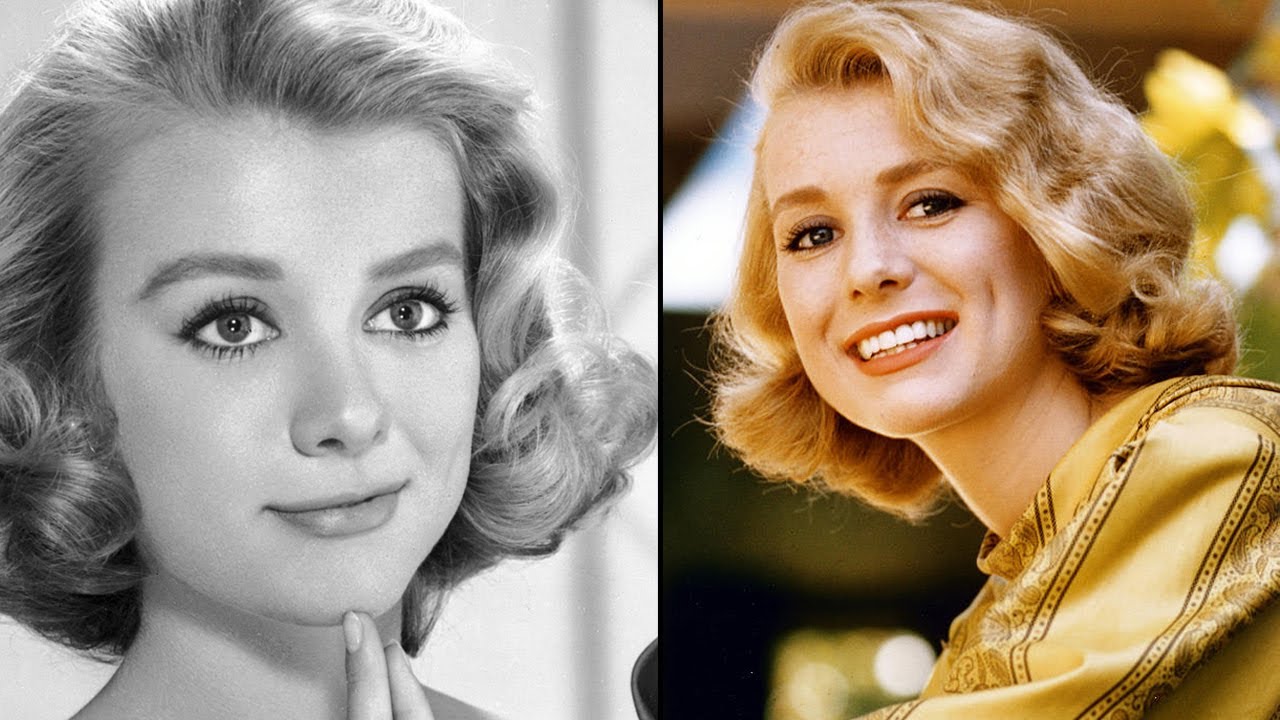
To the public, the news was nearly incomprehensible. Stevens had seemed to be at the peak of her career. A radiant blonde with the cool classic glamour of a Grace Kelly and a warmer, more approachable screen presence, she had become a household name through a popular mid-1960s television sitcom. Her career appeared to be climbing toward new heights.
She had recently finished filming a television movie opposite Burt Reynolds, with whom she was sharing an off-screen relationship, and producer Aaron Spelling had cast her without hesitation in his new dramatic series, Zigzag, set to air that fall. Yet behind the sunny disposition and megawatt smile lay a deep-rooted personal unhappiness that had been building for years. The source of that unhappiness could be traced back to her childhood. She was born Inger Stensland in Stockholm on October 18, 1934, named in honor of Ingeborg, a Norse princess.
Her father, Gustav, was a high school teacher, and her mother, Lisbet, had married him just six months before Inger’s birth. Two brothers, Ola and Peter, followed within the next few years. Inger was a shy, introverted girl, first drawn to acting after watching her father perform in local amateur theater productions. But within two years of that discovery, her mother abandoned the family for another man, eventually remarrying and moving back to Stockholm with the youngest son, Peter.
A confused and distraught Inger and her brother Ola were left with their stern, emotionally distant father. When the outbreak of World War II prompted their father to move to the United States in late 1940, the children were left behind to fend for themselves, with only a family maid providing any real parenting. Eventually they moved in with a loving aunt, stage actress Karen Stensland Junker, who lived near Stockholm. Their father, officially divorced from his wife by mail years later, finally summoned his two eldest children in 1944 after taking an American bride and finding steady work as a teacher at Columbia University in New York City.
Traveling alone on the freighter SS Margaret Johnson from Sweden to the United States, the children arrived in New Orleans to find that their father was not there to greet them. Too busy with his own work, he had arranged for a Salvation Army man to accompany the anxious youngsters to New York. Inger felt painfully out of place at her new school, but she was an excellent student and quickly picked up the English language to appear less conspicuous. In 1948, a teaching position opened up for her father at Kansas State University, triggering a move to Manhattan, Kansas.
This only aggravated Inger’s acute sense of displacement. Unable to cope with her cold and strict father and stepmother, her home life became unbearable. At age fifteen, she ran away, winding up in a Kansas City burlesque chorus line, earning sixty dollars a week under the alias K. Palmer.
Her father eventually discovered her and brought his underage daughter home. Returning to school, Inger involved herself in plays and the glee club, the only creative outlets she was permitted to enjoy. After her 1952 graduation, she left home as quickly as she could pack her bags and never looked back, maintaining only weak, unemotional ties with her entire family. She found menial jobs in town at first, selling fabric at a department store and records at a music store, then decided to return to New York in 1953 to actively pursue her dreams of acting.
Having outgrown her teenage awkwardness, she developed into a graceful and strikingly beautiful young woman. She secured early work as a New York model, but quickly grew bored and disenchanted with what she called empty modeling assignments. She then secured an assertive agent, Anthony Salio, who Americanized her last name and helped her book her first professional job, a detergent commercial in November 1954. Soon after, she and another aspiring actress, Carol Baker, auditioned for and were accepted into Lee Strasberg’s renowned Actors Studio, whose members at the time included James Dean, Marlon Brando, Paul Newman, Robert Redford, and Jane Fonda.
Her first break on television came in a 1954 Studio One presentation, and she began appearing opposite the fast-rising Paul Newman in dramatic productions. Inger and her agent Tony Salio quickly became a romantic couple and impulsively married in Connecticut on July 9, 1955. Soon, however, the young actress realized she had made a horrible mistake. Tony’s extreme jealousy and abusive tendencies doomed the marriage almost before it began, and the couple separated in January 1956.
The divorce was not finalized until August 1958, with Tony receiving five percent of her earnings for the next seven years. Inger took her first Broadway curtain call on February 22, 1956, as the leading lady of a new three-act comedy called Debut. The play received less than inspiring reviews, but Inger’s performance was highly praised, though the show closed after only five performances. A powerful friendship with columnist Louella Parsons helped her through some personal and professional stumbles during this period.
Her film career began when producer Saul C. Siegel discovered her in a minor role and put her under a personal seven-picture contract at Paramount at the enviable rate of six hundred dollars per week. He introduced the twenty-two-year-old to the film world with the MGM family drama Man on Fire in 1957, starring Bing Crosby in a rare dramatic role. On only her second day of shooting, however, her life and career were briefly placed in jeopardy when she was rushed to the hospital with an acute attack of appendicitis.
The company had to shoot around her until she could return. During the shoot, Inger fell into an affair with Crosby, who was thirty years her senior. Her second film was MGM’s Cry Terror, in which she shined as the wife of electronics expert James Mason. During the shooting of an underground subway chase scene, she and co-star Rod Steiger, along with a number of the crew, were overcome by carbon monoxide fumes triggered by a defective gasoline generator.
A dangerously ill Inger had to be placed in an oxygen tent for two days before recovering. Her third film was the epic costumer The Buccaneer in 1958, in which she filled out period costumes beautifully as the frilly daughter of the Louisiana governor. Her latest affair, this time with the married Harry Belafonte, ran its usual torrid course. But now it was all starting to catch up with her.
What followed was a near-fatal suicide attempt from which she was not expected to recover. Shortly after New Year’s Day in 1959, Inger swallowed an overdose of pills. She was found in time only because a friend at NBC, concerned after she failed to show up at a dinner engagement and could not be reached the entire next day, went to check on her. It was clear that her addiction to on-set affairs had become extremely destructive.
Such promiscuous relationships with people who cared little for her were all too common among those like Inger who had suffered a lack of emotional nurturing from their parents in childhood. These affairs were especially dangerous because after a film wrapped and the actors went their separate ways, Inger was once again faced with reliving the painful feelings of the breakup of her family in childhood. It was as if the solution to her emotional problems was instead building toward a deadly explosion of all the pain she had suffered as a child. Following her recovery, the actress began an intense period of self-examination with a new drive, refocusing intently on her career.
She returned actively to television, starring in what would become one of The Twilight Zone’s more famous episodes, The Hitch-Hiker, in 1960, in which she played a young motorist stalked and terrified by the same hitchhiker wherever she goes. She shared touching scenes with sensitive Dan Blocker on the first season of Bonanza and went on to appear in episodes of Route 66 and Zane Grey Theater. Another close call with death occurred in June 1961 while on an extended European vacation. While attempting to land in Lisbon, her plane bounced off the runway and skidded, its nose gear collapsing and sparking a fire that quickly spread to the passenger cabin.
Inger was one of the last passengers to exit the plane before it exploded minutes later. Back on the comedic stage, she earned the best Broadway reviews of her career in Mary, Mary, and television audiences adored her. Her popularity soared, and she became the pitch woman for Clairol hair products. It was a joyous and productive time for her despite the hectic scheduling and admitted lack of privacy.
Her film output, however, was a different matter. At odds with Paramount years back after she turned down the female lead in the 1960 film Key Witness, Inger bought out her contract in an expensive settlement agreement. She had earlier lost out to Marilyn Monroe for the lead in The Misfits and to Audrey Hepburn for the coveted role of Holly Golightly in Breakfast at Tiffany’s, a particular disappointment. After a five-year big-screen absence, she finally returned with Columbia’s hospital drama The New Interns in 1964.
Her sitcom completely relied upon the relaxed charm and chemistry of its two stars, and expectations of romance between her character and the congressman kept loyal viewers glued to the set. As a famous television star, Inger was now in a position to raise awareness for her various humanitarian causes. She sponsored art exhibitions to benefit special-needs children, did volunteer work for various health centers, and served as chairman of the California Council for Children. Her long-dormant film career began to rev back up, and in an effort to break away from her wholesome image, she consciously sought out roles that would emphasize her maturing sensuality.
She starred in the comedy A Guide for the Married Man in 1967, a joyous change of pace that showed off her flair for the lighter side. She unwisely turned down Jane Fonda’s Oscar-nominated role in They Shoot Horses, Don’t They? , but wisely turned down the lead in Song of Norway, a movie musical mistake that eventually starred singer Florence Henderson. Near the end, she began entertaining thoughts of broadening her horizons with ideas of directing or screenwriting.
She also wished to devote more of herself to outside interests, particularly her work with special-needs children. On that same track, she went into a decorating and antique business venture with a friend. Following her work in the adventure film The Mask of Sheba in 1970, she began filming the television movie Run, Simon, Run, starring Burt Reynolds as a formerly imprisoned Papago Indian. An ensuing whirlwind affair with the handsome Reynolds occurred during filming, running hot and intense.
On the morning of April 30, 1970, it ended. Inger Stevens was found dead in her Hollywood home, the cause listed as acute barbiturate intoxication. The public, suddenly curious about the stranger behind the radiant image, began trying to make sense of her life. Her contributions to Hollywood were so much more than the personal tragedy that befell her.
A strong and consummate dramatic player as well as a light comedienne, Inger Stevens deserved to be remembered in a better and more encouraging light.
