
A Currency at the Crossroads: The UAE’s Quiet Test of Dollar Dominance
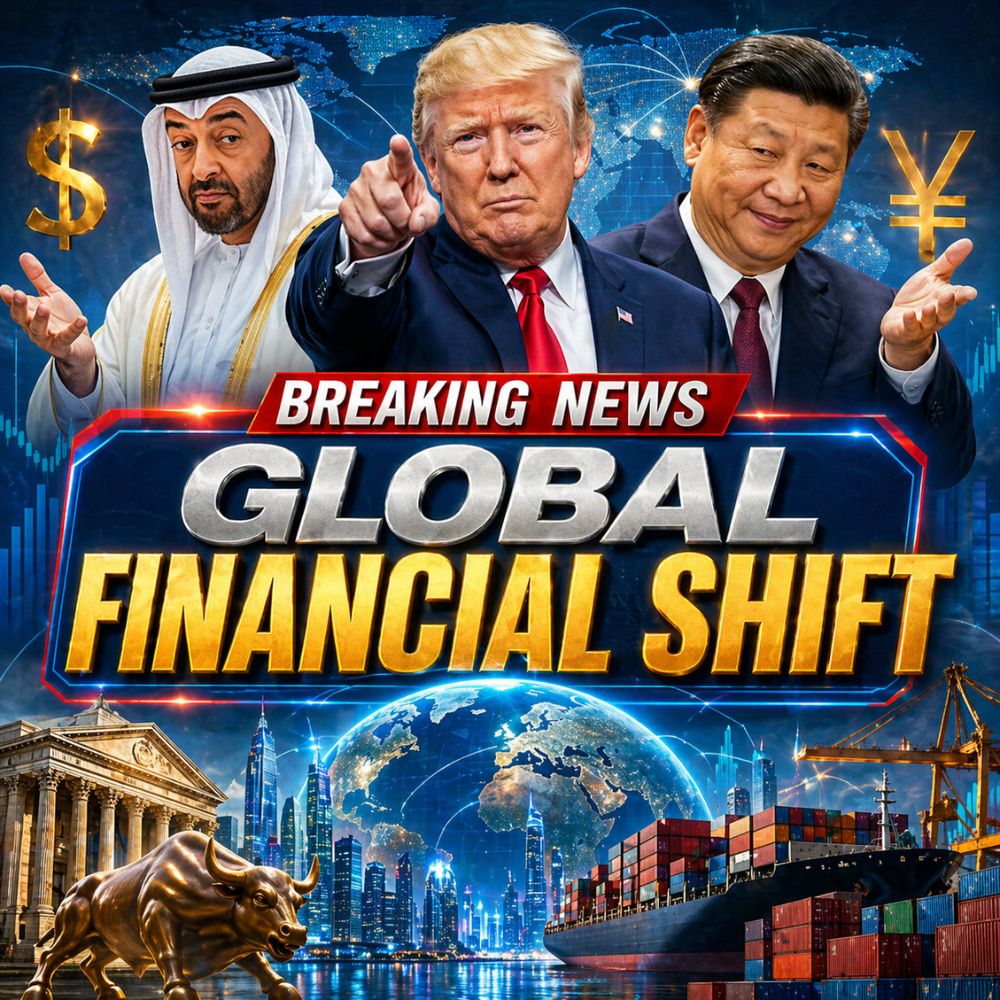
The United Arab Emirates has not issued a formal ultimatum, nor has it declared a pivot away from the dollar. Instead, it has done something more revealing. It has asked a practical question: what happens when access to dollars disappears in the middle of a crisis?
Behind that question lies a deeper tension in the global financial system. Emirati officials, in recent discussions with U.S. counterparts, have explored the possibility of securing a dollar swap line — a mechanism typically reserved for America’s closest financial allies. The request, described as preliminary, reflects not defiance but urgency.
For nearly three decades, the Emirati dirham has been pegged to the U.S. dollar, a policy that has provided stability and predictability. But currency pegs are not sustained by confidence alone. They require steady inflows of the anchor currency — in this case, dollars generated largely through oil exports.
That system is now under strain. Regional conflict has disrupted key shipping routes, limiting the UAE’s ability to export النفط and, by extension, earn dollars. Without those inflows, maintaining the peg becomes an increasingly delicate exercise in reserve management.
On paper, the country appears well-positioned. Its foreign currency reserves are substantial, offering a buffer against short-term shocks. But reserves are not static. In a prolonged الأزمة, they can erode quickly, especially when paired with declining export revenues and rising borrowing costs.
The request for a swap line, then, is less about leverage than about liquidity. It is an attempt to secure access to dollars before markets begin to question whether that access can be guaranteed. In global finance, perception often moves faster than reality.
What complicates the picture is the presence of a viable alternative. China has spent more than a decade building a parallel financial architecture, complete with bilateral currency swap agreements and a cross-border payment system capable of handling large transaction volumes. These systems are not theoretical; they are increasingly in use.
For the UAE, turning to yuan-based settlement would not represent a radical departure but an incremental shift. China is already a major buyer of Gulf oil, and a growing share of global trade is being conducted in currencies other than the dollar. The infrastructure for such a transition exists.
This is where the geopolitical narrative begins to diverge from the economic one. The United States has long benefited from the الدولار’s central role in global trade, a position reinforced by deep capital markets and institutional trust. But that dominance also depends on reliability — the assumption that access to the dollar system will remain available in times of stress.
Recent history has complicated that assumption. The freezing of central bank reserves and the use of financial sanctions have demonstrated the strategic power of the dollar. They have also, perhaps unintentionally, encouraged countries to consider contingencies.
The UAE’s situation illustrates this dynamic with unusual clarity. It is not seeking to challenge the dollar’s role. It is responding to a scenario in which that role becomes difficult to access precisely when it is most needed.
Washington now faces a choice that extends beyond a single bilateral request. Approving a swap line would stabilize a partner but could set a precedent for broader expectations. Denying it could preserve institutional boundaries but risk nudging allies toward alternative systems.
Neither outcome signals an immediate end to dollar dominance. The greenback remains deeply embedded in global finance, and no rival yet matches its scale or liquidity. But shifts in the system rarely begin with declarations. They begin with adjustments — small, practical decisions made under pressure.
If the UAE begins settling even a portion of its oil trade in yuan, it will not be a dramatic rupture. It will be a quiet acknowledgment that redundancy, once optional, has become necessary.
In that sense, the story unfolding is not one of sudden collapse but of gradual recalibration. The architecture of global finance is being tested not by ideology, but by circumstance. And in moments like this, the most consequential changes are often the least visible.