On January 30, 1985, Farrah Fawcett gave birth to her only child, Redmond James Fawcett O’Neal. By then, she had already conquered the entertainment world. Her years on Charlie’s Angels in the mid-1970s had made her a household name. Her red swimsuit poster, first shot as a simple promotional photo, had sold more than twelve million copies, making it the bestselling pinup of all time.
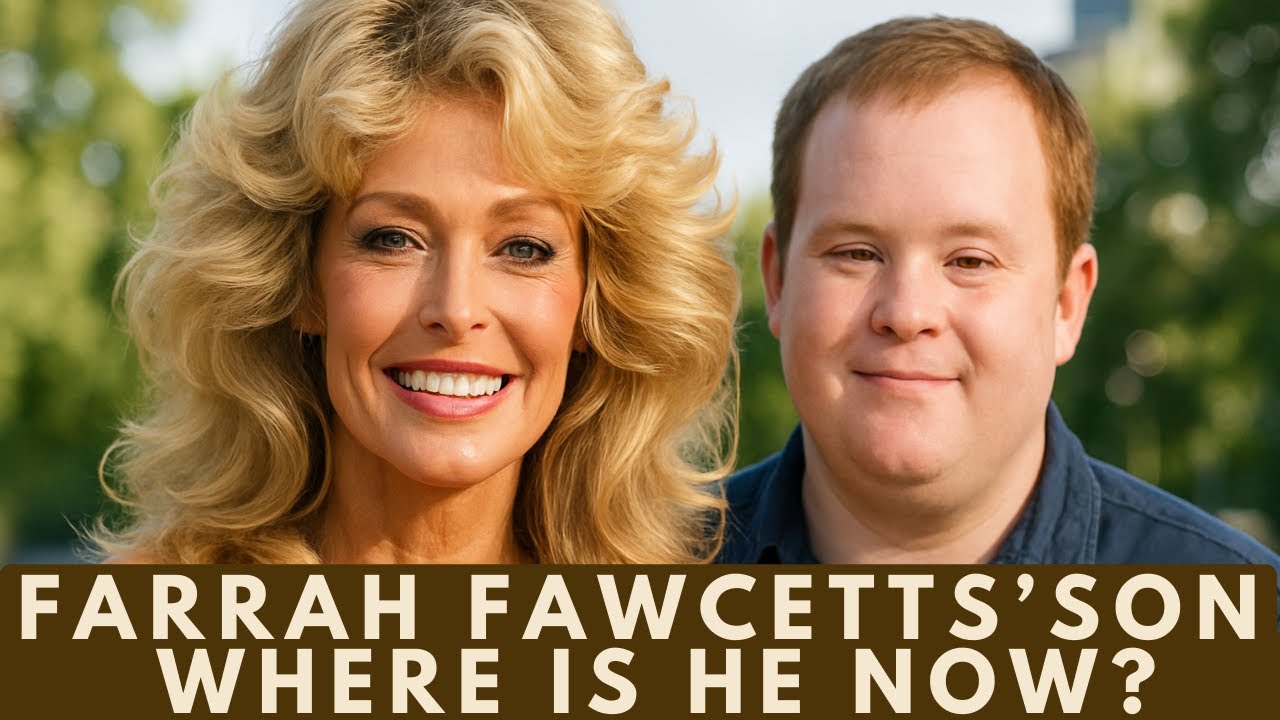
And in 1984, her dramatic performance in The Burning Bed had earned her Emmy and Golden Globe nominations, proof that she was more than a pretty face. She had gone from a pop culture icon to a respected actress, admired for taking on roles filled with grit and vulnerability. But when she held Redmond for the first time, her priorities shifted. In interviews, she admitted that being a mother was her real role, and everything else was just work.
Friends recalled how she lit up when speaking about him, describing him as the love of her life. She was often photographed with him at her side, dressed casually, far from the glamour of Hollywood. Just a mom with her little boy. Life at home, however, was far from simple.
Her relationship with Redmond’s father, actor Ryan O’Neal, star of Love Story, had always been turbulent. Their romance stretched across decades and was marked by breakups and reconciliations. Ryan later admitted that Farrah was the love of his life, but that they had fought too much. Redmond grew up in the middle of all that.
Despite the chaos, Farrah tried to be Redmond’s anchor. She shielded him from Hollywood whenever she could, often choosing to live quietly in Los Angeles. At times, she turned down projects to spend more time with him. Though her career remained strong, with roles in Extremities in 1986 and acclaimed work on stage, her attention was increasingly on her son.
By his teenage years, Redmond was already struggling with substance abuse. Ryan O’Neal later said that Redmond never really had a chance, that he was born with addiction in his veins. Farrah’s friends often said his struggles weighed heavily on her heart. She was protective and fiercely loyal, visiting him during his legal troubles and standing by him through every relapse.
Farrah Fawcett passed away in June 2009 at the age of sixty-two, after a long, public battle with cancer. The world mourned a woman who had been more than a star. She was remembered for her courage in the face of illness and for her legacy as one of the most iconic figures of her generation. In her final years, she had documented her fight with cancer in the television special Farrah’s Story, which earned an Emmy nomination and showed audiences a raw honesty that reminded everyone she was not just a star, but a fighter.
For Redmond, her death left a wound that never healed. His struggles had begun years before, but after her passing, his life spiraled further. Headlines no longer mentioned him as the son of a beloved actress. Instead, they reported arrests and court appearances.
Charges of drug possession, probation violations, and theft painted a picture of a young man unable to escape the pull of addiction. His father admitted with deep regret that Redmond had never had a chance. The instability and addiction that ran through the family had marked him from the start. In 2018, Redmond’s troubles reached a tragic peak.
Police in Los Angeles arrested him after a violent spree of unprovoked attacks on strangers. He was charged with attempted murder and several counts of assault. For the son of Farrah Fawcett, it was a heartbreaking fall from grace. In the years since, Redmond has been declared mentally unfit to stand trial.
He has spent time in state psychiatric care, where he continues to receive treatment. Friends of Farrah often wonder what she would have thought, and many say she would never have given up on him. Despite everything, Redmond has spoken tenderly about his mother. In a rare moment of vulnerability, he said she was everything to him and that he missed her every day.
His words offered a glimpse into the bond that still connects him to her, even as his own life has taken a painful and destructive course. Those closest to Farrah insist that her love for Redmond never wavered. Even in her final days, her greatest fear was not her illness, but what would become of him once she was gone. Farrah Fawcett’s legacy continues to shine through her work, her beauty, and her courage.
She will forever be remembered as Jill Monroe, the dazzling angel who captured television audiences in the 1970s, and as the woman whose red swimsuit poster became a symbol of an entire generation. Through films like The Burning Bed and Extremities, she proved herself a serious actress, tackling roles that confronted domestic violence and trauma long before Hollywood was ready to face them. Her personal legacy, however, is more complex. Redmond’s story is often framed by the media as one of Hollywood’s darkest legacies, the troubled child of two famous parents overwhelmed by addiction and mental illness.
Some see his struggles as a reminder of the difficulties faced by children of fame, growing up in the shadow of Hollywood with pressure, instability, and expectations too heavy to bear. But to those who knew Farrah, his story is also a reminder of her devotion as a mother. Imperfect, complicated, but unconditional. She was an actress who broke barriers and a woman who fought her battles in public with courage.
Above all, she was a mother who never stopped loving her son. That devotion remains an essential part of her legacy, the quiet counterpart to the dazzling image the world knew.
