On a July morning in 2026, a king who had just inherited the most famous residence on earth made a decision that two centuries of his predecessors had never dared to make final. Charles III looked at Buckingham Palace—renewed, rewired, its systems at last made sound after years of construction—and chose not to live in it. He and Queen Camilla would keep Clarence House, their nearby London home, for the rest of his reign. They would work at the palace.
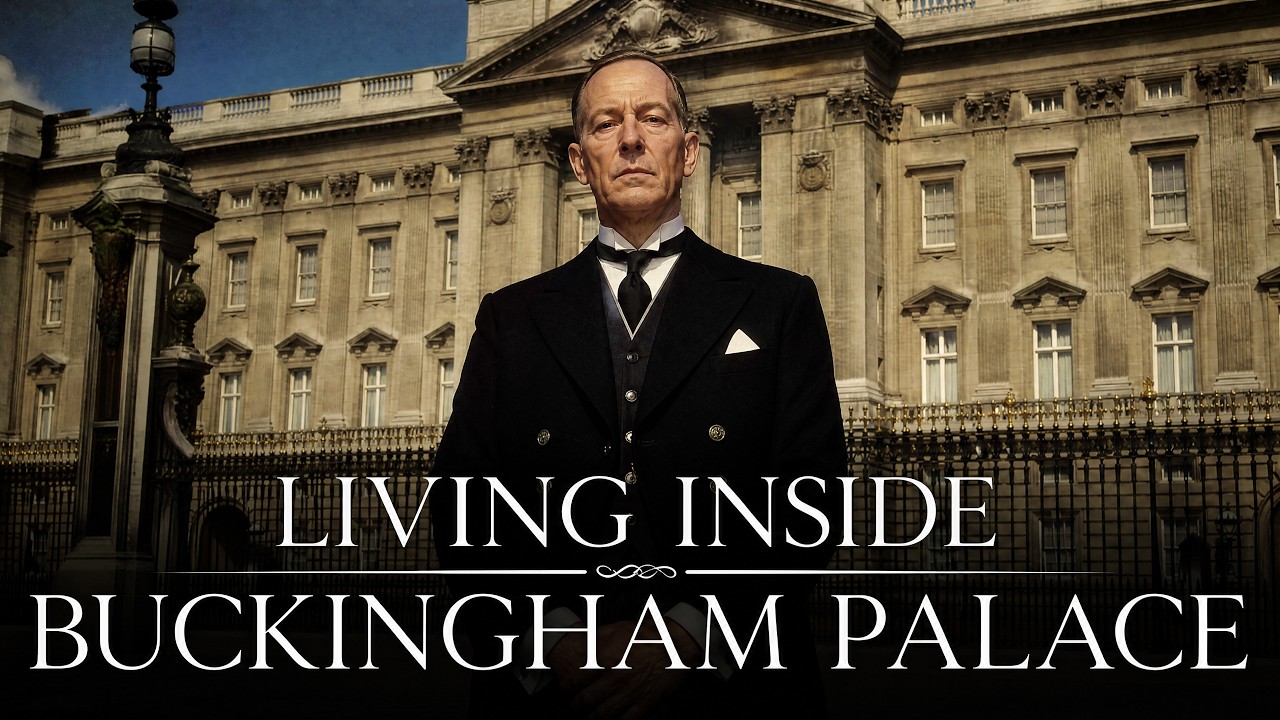
They would receive prime ministers there, host the banquets, step onto the balcony at the great national moments. But when the working day ended, they would go home elsewhere. After 200 years in which every British sovereign had kept Buckingham Palace as a residence, the reigning monarch had deliberately and openly decided to live somewhere else. The official language of the palace’s future made the break unmistakable.
A senior royal official, James Chalmers, described Buckingham Palace as “monarchy headquarters,” the “crown jewel of the national buildings. ” It would remain the ceremonial and operational center of the monarchy—not the home of the sovereign. In a single phrase, an official had described what the building had spent two centuries becoming: an office and a symbol, a place of work and display, and no longer anywhere anyone was expected to live. It was, in its way, the most honest thing the monarchy had ever said about its own most famous building.
For two centuries, the family had left the palace quietly—by preference or by grief—slipping away to warmer houses whenever the work allowed, all the while keeping up the gentle fiction that the palace was the royal home. Charles ended the fiction. He looked at the vast, renewed, enormously expensive building and said in effect what all of them had felt across the ages: that it is a wonderful place to work and a poor place to live, and that the time for pretending otherwise had passed. The story of how the grandest house in the world reached that moment begins not in splendor but in the modest wish of a king for a comfortable home.
The building started as a private townhouse at the western end of a London park, a large red brick house purchased in 1761 by George III for his young queen, Charlotte. It became known as the Queen’s House. It was not a seat of state. It was a home.
Most of the couple’s fifteen children were born within its walls. The rooms rang with the noise of a large family, and the house sat quietly in its gardens—grand by the standards of a private family, but modest beside the palaces of Europe. The change came with the next generation, and with a very different kind of king. George IV had spent his whole life turning buildings into spectacles.
From the 1820s, he set out to transform the plain family house of his parents into a palace worthy of the greatest empire on earth. He turned to the architect John Nash, the most fashionable designer of the age. Nash refaced and enlarged the old house around three sides of a central courtyard, clad it in warm golden stone from the quarries near Bath, raised grand state rooms and a sweeping approach. What had been a home was being rebuilt as a stage.
The cost climbed year after year, past every estimate, until Parliament demanded answers. The overspend helped ruin Nash. The architect was removed from the work, his reputation stained by the very building that should have crowned his career. The palace claimed its first victim before a single monarch had even moved in.
George IV died in 1830 with the transformation still incomplete. William IV never warmed to the place. When the old Houses of Parliament burned in 1834, he offered the unfinished palace to the government as a home for Parliament. The offer was politely declined.
When William died in 1837, the palace was still a building site dressed in gold. The state rooms glittered. The services behind them—the kitchens, the drains, the heating, the servants’ quarters—were unfinished or barely begun. It was a house of two halves that would never quite be reconciled.
The front was built to be seen by the world. The rest was an afterthought. Waiting in the wings was a girl of eighteen who had never in her life been allowed a room that was truly her own. She was about to inherit the throne and with it this vast and awkward golden house.
Victoria had grown up at Kensington Palace under a suffocating regime known as the Kensington System, rules devised by her mother, the Duchess of Kent, and her mother’s adviser, Sir John Conroy. The young princess was never allowed to be alone. She slept every night in her mother’s bedroom. She was watched at every hour, her time controlled, her conduct recorded.
She hated it with a quiet iron resentment that never entirely left her. In the small hours of 20 June 1837, her uncle King William IV died. She was woken before dawn and told she was queen. One of her first orders was small and enormous at once: she asked to be moved that very day out of her mother’s room.
For the first time in eighteen years, she would sleep alone. Within weeks she moved into Buckingham Palace, the first sovereign ever to live there. The building that had defeated two kings and a great architect was hers, and to the young queen escaping the prison of her childhood, its very size felt like liberation. Here were rooms without number.
Here were corridors where no one held her hand. She housed her mother in distant apartments, as far from her own rooms as the vast building allowed. The Duchess of Kent, who had once made her daughter sleep in her bedroom every single night, now found herself kept at the far end of a palace of seven hundred rooms. For Victoria, that distance was the whole point.
The scale of what she inherited was staggering. She was mistress of a household that reached across several great royal residences and employed more than a thousand domestic servants. Three vast court departments ran the machinery of royal life. The Lord Chamberlain’s department alone could number up to nine hundred staff.
The Lord Steward’s department reached up to three hundred and fifty. The Master of the Horse commanded up to one hundred and seventy more. She was eighteen years old and sat suddenly at the head of all of it, in a palace still ringing with the hammers of unfinished work. Her early journals from those first months are full of a plain and touching happiness.
The place that later monarchs would find oppressive struck the young Victoria as the opposite of oppression. She was too newly free to care that the chimneys smoked or that the great rooms were hard to heat. She was eighteen. She was queen.
And she had her own bedroom. The delight of 1837 was built on solitude turned into freedom. The moment her life filled with other people—with a husband, with children, with the crowded, demanding warmth of a family—the palace would have to become something else entirely. And for a while, astonishingly, it did.
The change came from the serious, anxious, brilliant young man she married on 10 February 1840: her first cousin, Prince Albert of Saxe-Coburg and Gotha. Albert changed the palace as profoundly as Nash had. Where Nash had reshaped its face, Albert reshaped its life. He arrived to find a household in near chaos, its management split between rival court departments with no single person in charge.
The result was waste, confusion, and cold. The often-told story that a fire might go unlit because one department was permitted to lay it and another to light it should be treated as the famous account rather than proven fact—popularized long afterward by the writer Lytton Strachey—but it captures a real and documented problem. The palace did not work. Advised by the shrewd German court adviser Baron Christian Friedrich von Stockmar, Albert drove through a thorough reform of the household around the middle of the 1840s.
He abolished sinecures. He ended the overlapping duties of the rival departments. He gave real power to a single officer, the Master of the Household, so that the whole vast establishment answered to one clear chain of command. It was unglamorous work, but it turned a dysfunctional monument into a running home.
Behind that order, a family could finally settle into something like an ordinary domestic life. Victoria and Albert had nine children. The palace built for spectacle now rang with the noise of a large family. Albert brought the customs of his German boyhood into its cold English rooms.
He set up decorated Christmas trees, a fashion the royal family did much to make popular across Britain. There was music, painting, drawing. The private rooms for this one bright generation were genuinely lived in and genuinely loved. The family grew so fast that the palace had to grow to hold it.
By 1847, the Queen and Albert had decided the building was simply too small for a court and a nursery of nine. They commissioned the architect Edward Blore to close off the open eastern side with a new range, a fourth wing facing down the Mall, built by the master builder Thomas Cubitt and finished around 1850. That new east front carried at its center a balcony. Victoria herself is generally recorded as the first sovereign to step out onto it before the crowds, around the time of the opening of the Great Exhibition in 1851.
From then on, the balcony became the monarchy’s stage, the place where the family would greet the nation at weddings, jubilees, and victories for more than a century to come. The numbers of this expansion tell their own story. The palace already stretched roughly 108 meters across its front, some 120 meters deep, and rose about 24 meters high, enclosing well over 800,000 square feet of floor space. To that vast footprint Blore’s wing added a whole new public face, because nine royal children and the machinery of a great court had outgrown even a palace.
It is a strange kind of overcrowding—to be short of room in a building of 775 rooms—but it is exactly the overcrowding this story keeps returning to. The public grandeur ate the space, and the family were left to fit around it. The whole warm world of the palace in those years rested on Albert’s energy and presence. No one yet understood how completely.
A home built around one person can be unmade by the loss of that one person. On 14 December 1861, at the age of just forty-two, Prince Albert died at Windsor of an illness recorded at the time as typhoid fever. Victoria’s grief was total and lasted the rest of her life. She had lost not only a husband but the maker and manager of her entire domestic world.
Without him, the rooms they had shared became unbearable. She withdrew from Buckingham Palace almost completely, retreating to Windsor Castle, to Osborne House on the Isle of Wight, and above all to Balmoral in the Scottish Highlands. The palace stood shuttered and quiet for long stretches, its private apartments dark, its state rooms unused. The queen who had once thrilled to its freedom could now hardly bring herself to enter it.
For much of the decade after Albert’s death, Victoria all but vanished from London. She wore black for the remaining forty years of her life. The country noticed, and the country did not like it. Criticism grew in the press and in Parliament.
Pamphlets asked aloud what the queen was even for. In some quarters the murmur swelled into the one question no palace ever once asked: whether the nation needed a monarch at all. For a time in the 1860s, the grandeur at the end of the Mall had curdled into something like a public grievance—a golden house standing dark while the country wondered what it was paying for. Victoria did not flee the palace because it had failed as a building.
She fled it because it had succeeded once as a home, and that success was bound up entirely with the man she had lost. The building that had been made whole by love was emptied by grief. And in that grief, a template was set that would outlast Victoria by more than a century. From this point on, the residents’ real homes would be elsewhere—in the warmer, smaller, more private houses where a family could actually live.
The palace would be the place of duty, and the family would retreat from it whenever they could. The palace would not stay dark forever. Victoria’s long reign ended in 1901, and the throne passed to a son who had waited almost his whole life for it. Edward VII came to the throne at the age of fifty-nine after decades kept from real work by a mother who never trusted him with it, a prince famous for pleasure, for society, for the racecourse and the dinner table and the company of beautiful people.
All the worldliness Victoria had shunned, her son adored. Where she had drawn the blinds, he pulled them up. Where she had fled to the country, he stayed in town and threw parties. He began by clearing out the past: the palace had sat as a kind of shrine to Albert, its rooms heavy with the relics of his mother’s long grief.
Edward had the building cleaned, brightened, and modernized, its plumbing and lighting improved. Electricity had first crept into the palace as early as 1883 in the ballroom; under Edward, the new light spread through the great rooms in earnest. Under Edward and his beautiful, popular queen, Alexandra, the palace became once more the glittering center of society—the scene of state balls and banquets, the full theater of a confident monarchy at the height of its empire. For a decade, from 1901 to 1910, Buckingham Palace was the most glamorous address on earth.
The ballroom blazed with electric light. The great dining table stretched glittering down its room. Footmen in full livery moved through corridors that had stood dark through all the long years of Victoria’s mourning. The palace had been built to dazzle the world, and for one brief Edwardian decade it did exactly that.
Edward loved the palace precisely because he loved everything the building demanded—being on show, the ceremony, the society, the endless company, the sense of living at the center of the world’s attention. The very things that had oppressed his mother and would oppress his descendants in their turn were the things he relished most. For a man built that way, the palace was no burden at all. It was the perfect house, a stage that never emptied.
But such men are few, and the throne does not choose its holders for their temperament. Edward died in 1910, and the brilliant Edwardian court died with him. Within a few years the world went to war, and then a generation later, war came to the palace itself. In the autumn of 1940, London was burning.
Night after night the German bombers came over the city, and the East End, crowded close to the docks, took the worst of it. The palace standing plainly at the end of the Mall was among the most tempting targets in the country. That September, the bombs found it. The palace was bombed nine times during the war.
The most serious attack came on 13 September 1940, at the height of the Blitz, when German aircraft dropped a stick of high explosive bombs directly onto the palace while King George VI and Queen Elizabeth were in residence. The bombs destroyed the royal chapel and blew in windows close to where the king and queen were standing. They were spared by a narrow margin. Palace workmen were injured in the raids, and one of them later died of his wounds.
In a separate attack on 8 March 1941, a bomb struck the North Lodge and killed a policeman on duty there. The king and queen could have left. Many urged them to retreat to the country, or send the young princesses abroad, even to Canada. They refused.
Night after night, the royal family remained in London, sharing, at least in part, the danger of the city around them. After one of the bombings, Queen Elizabeth, later the beloved Queen Mother, said she was glad the palace had been bombed because now she could look the East End in the face. The bombed-out families of London’s Docklands understood her at once. The grandest house in the country had taken its share of the fire, and its owners had stayed to take it with them.
The war reached into every corner of palace life. To enforce the national rationing of water, black lines were reportedly painted inside the royal baths so that no one, not even the king, could exceed the permitted five inches. There had been a version of this austerity a generation before, in the First World War, when George V had imposed rationing at the palace, locked the wine cellars, and given up alcohol himself for the duration. Now the sacrifice went further and the danger came closer.
For a few years in the early 1940s, Buckingham Palace was more fully a lived-in home than it had been since Albert died, or would be again for the rest of the century. The danger stripped away the ceremony and left the human truth: a family that stayed, a building that took its share of the bombs, a queen who found in the shared suffering of war a reason to stand by the palace rather than flee it. A home in the end is less the place with the most rooms or the most gold than the place you refuse to leave when leaving would be safer. By that measure, for a few years in the early 1940s, Buckingham Palace was truly a home.
When the war ended, the palace bore its scars, and the monarchy had bound itself to the building in a way peacetime grandeur never could. But wars end, and the peace that followed did not restore the palace to what it had been. The great household never returned to its old scale. The world that had filled Edward’s ballroom was gone.
And the next resident to define the palace would be a young woman who came to the throne in 1952, who would reign longer than any monarch in British history, and who would deliver across seventy quiet years the most damning verdict the building ever received. Queen Elizabeth II never truly loved the palace. The clearest testimony comes from those who served inside the private rooms. Her former chef, a man who cooked for her for years, said it plainly: the queen never really liked the palace.
It had always been “the office” to her. She would always be whizzing off back to Windsor Castle, he said, and she could not wait to get back there. That single word, “office,” tells the whole story of the modern palace. To the woman who owned it, the grandest house in the world was a workplace—the London base where the business of monarchy was transacted.
The red boxes arrived and were read. The audiences were held. The prime ministers came week after week, one after another across seventy years. The investitures filled the ballroom.
The garden parties filled the lawn. She did all of it superbly from the palace. And when the working week loosened its grip, she left. Windsor Castle was where she felt most herself.
Balmoral in the Scottish hills was her summer joy, the place she loved above all others. Sandringham in Norfolk was Christmas. Buckingham Palace was the place she went to do the job. In her reign, the palace’s slow drift from home toward institution took its most visible step.
In 1993, for the first time, the state rooms were opened to the paying public. The immediate reason was money: the fire that had gutted a wing of Windsor Castle the year before had cost years and a fortune to put right. To help pay for it, the state rooms would be opened in summer to anyone who bought a ticket. Today the palace draws around 700,000 visitors a year through its summer opening.
Seven hundred thousand strangers a year filing through the state rooms, gazing at the gold and the art—and upstairs, out of sight, a small suite of private rooms in the north wing where a queen who did not much like the place slept when duty kept her in London, and from which she escaped to Windsor whenever she could. In the last years of her reign, that quiet preference became something final. The queen, who had always whizzed back to Windsor, would in the end go to Windsor and simply not return. In 2020, as the country shut down in the pandemic, she withdrew from Buckingham Palace to the greater safety of Windsor Castle.
It was meant at first as a temporary retreat. It became permanent. She would never again live at Buckingham Palace. She died in September 2022 at Balmoral, in the Scottish Highlands she had loved above every other place on earth—not at the palace, not even at Windsor.
The lights in the private apartments of the north wing went dark, not for a season of mourning as in Victoria’s day, but for good. The most famous royal residence in the world was not, in the end, where its most famous resident wished to be. Two queens, given the choice, chose to live and to die anywhere but the palace at the end of the Mall. Victoria fled in grief.
Elizabeth left with no drama at all, simply by preferring year after quiet year to be at Windsor, until the preference became permanent. When she died, the throne passed to her eldest son, who came to it late in his own long life. In October 2022, for the first time as sovereign, he took up official duties at Buckingham Palace. On his first morning there he was woken, as every monarch since Victoria had been woken, by the sound of the piper beneath the window—fifteen minutes of bagpipes carrying up from the forecourt into the private rooms.
The oldest ritual of the palace welcomed its newest king. The tradition reached back unbroken across nearly two centuries, to a young queen who had fallen in love with the sound in a Highland castle in 1843. Now it woke a king late in his own life to a house he had already decided not to live in. Before that decision could be made, the palace itself had to be confronted.
Beneath the gold, the building was rotting. By the 21st century it had become a kind of enormous elderly patient, its systems failing, kept going only by constant effort. In 2016, the government approved a vast repair program known as the Reservicing, to renew the building’s aging services across ten years, from 2017 to a planned completion in 2027. The cost was £369 million.
To pay for it, the Sovereign Grant—the public money that funds the monarchy—was temporarily raised from 15 to 25 percent of the profits of the Crown Estate. What the survey found behind the walls justified the alarm. The electrical systems carried what officials called a “very real risk of fire and failure. ” The boilers were more than thirty-three years old, so obsolete that spare parts could barely be found.
The mechanical and electrical systems were at least forty years old. Miles of aging cable and old lead pipe threaded through the structure, largely unchanged for some sixty years. Officials warned that without the work, the palace faced a potentially catastrophic building failure—a fire or flood that could tear through the state rooms and the priceless art of the royal collection. They compared the risk to the fire that gutted a wing of Windsor Castle in 1992, whose restoration ran beyond five years and cost hundreds of millions.
So the great program began. Wing by wing, the palace was stripped back to its bones. The royal apartments and offices were shuffled from wing to wing as the work advanced. Old cable was pulled out, new cable run in.
Ancient boilers were hauled away. For years the grandest house in the world would be in large part a construction site. The plan was to give the palace another fifty years of life. And as the builders worked their way through the wings, the assumption on which the whole project rested—that the sovereign would in fact live there—was quietly falling apart.
When the work was finished, and the palace stood sound and renewed, who exactly was going to live in it? The answer came in July 2026. Once the reservicing was complete, King Charles would not move into Buckingham Palace as a resident. He and Queen Camilla would keep Clarence House for the rest of his reign.
They would work at the palace. They would not live in it. The palace would open its doors more widely to the public with expanded tours and events. It would host the banquets, the investitures, the balcony moments, the great ceremonial work of the crown.
What it would not be, for the first time in two centuries, was a home. Set that decision against the whole long story, and its meaning comes clear. Charles was not fleeing the palace in grief as Victoria had. He was not quietly preferring another house while keeping the palace as his official residence, as his mother had for most of her reign.
He was doing something more final and more honest than either. He was formally admitting, on behalf of the whole institution, what every resident since Victoria had felt in private: that Buckingham Palace does not work as a home, and never really has. The world gathers at the gates to dream of the life inside. Every day they come in their thousands to press against the railings, photograph the balcony, watch the guard, gaze up at the 775 rooms and imagine what it must be to live there in the one house on earth that seems to hold everything a person could want.
And they have it exactly backwards. The truth of the palace is not written on its golden face. It is hidden in the small private rooms in the corner of the north wing, where a succession of monarchs looked out over the park and longed to be somewhere else. Of the 775 rooms, only 19 are grand state rooms.
52 are royal and guest bedrooms. 92 are offices. 78 are bathrooms. The single largest share of all, 188 rooms, are bedrooms for staff.
The family’s private living quarters are commonly described as around 25 of the palace’s 775 rooms—a small fraction of a single percent. The grand rooms look out over the ceremonial forecourt and the Mall, toward the crowds and the gates, or across the great garden. The private apartments look the other way, over the quiet green of the park, away from it all. The palace is a stage, and you cannot be private on a stage.
You cannot be at ease in a museum. You cannot build a warm family life inside a headquarters. Victoria paid in grief and hid from the rooms that reminded her of love. Edward alone paid gladly, because he wanted the stage more than the quiet.
Elizabeth paid in seventy years of endurance and a lifetime of leaving. Charles declined to pay at all and simply turned away from the house. The world got its symbol. The family got a headquarters.
And tomorrow morning at nine, the piper will march beneath the window and play his fifteen minutes into the London air, as he has since Victoria first fell in love with the sound in 1843. The boxes will arrive. The audiences will begin. The visitors will file through the state rooms, and the crowds will gather at the railings to dream of the life inside.
The great machine of monarchy will turn as it always has, inside the grandest house in the world. It will simply do so now in a palace where no monarch sleeps. A headquarters that is not a home.
A place built to be looked at by everyone, and lived in fully and happily by almost no one at all.
