When Roadhouse hit theaters in May 1989, critics reached for their sharpest knives. The reviews ranged from dismissive to openly hostile, with much of the professional press treating the film as a joke rather than legitimate entertainment. Major publications mocked the plot, the performances, and the central premise of a philosophy-quoting bouncer who cleans up a rowdy small-town bar. The film earned five Golden Raspberry Award nominations, including worst picture, worst actor for Patrick Swayze, worst director, and worst screenplay.
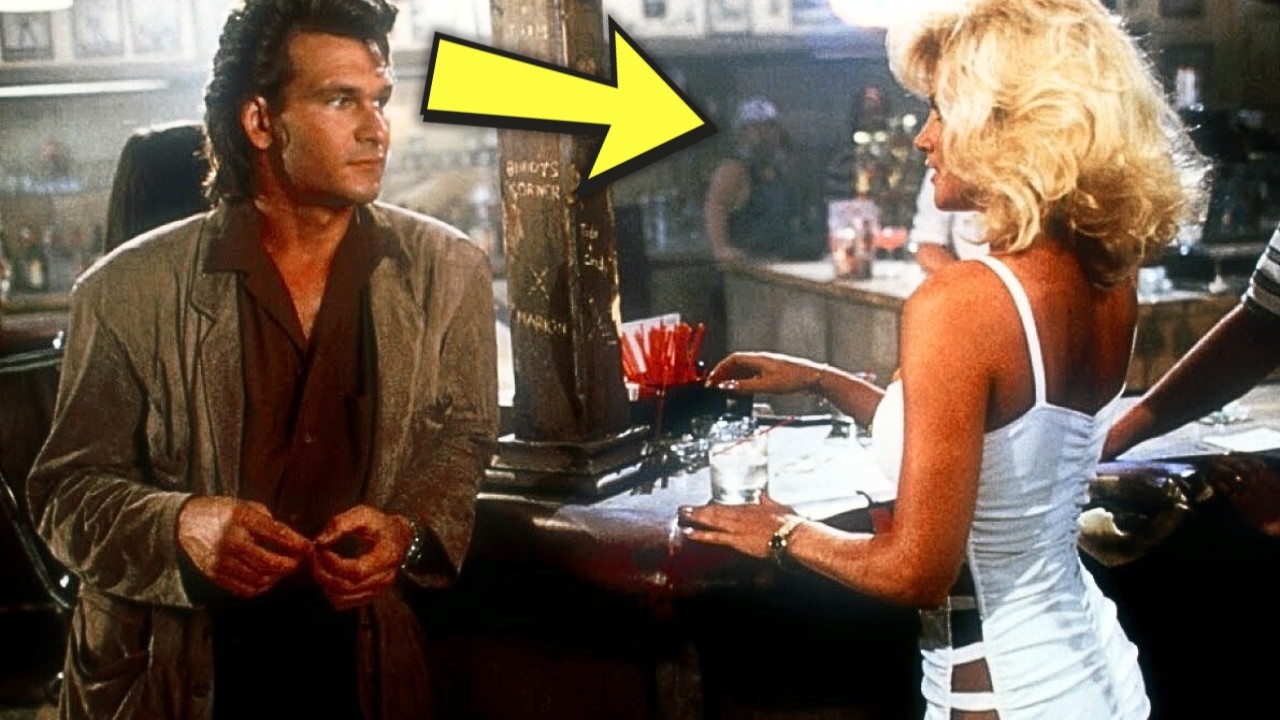
Yet the same movie that critics savaged and awards ceremonies ridiculed would go on to become one of the most beloved action films of its era, a cult classic built on contradictions that audiences could not resist. The character at the center of that contradiction was Dalton, a bouncer who casually mentions that he majored in philosophy at NYU. Screenwriter David Lee Henry made that detail essential to everything about the character. Dalton’s calm demeanor, his famous be nice mantra, and his ability to read people all came from that philosophical foundation.
While other action heroes of the 1980s were defined by muscles and one-liners, Dalton approached violence as a last resort, preferring to deescalate through understanding human nature. He reads books, practices tai chi at sunrise, and speaks in the kind of wisdom that sounds like meditation material. Critics mocked the pretension, but audiences recognized a character who combined intellectual depth with physical prowess, and that combination turned Dalton into an icon. The world he inhabited was just as carefully constructed.
The Double Deuce, the dive bar at the heart of the film, feels so authentically grimy that audiences assumed it was a real honky-tonk filmed on location. In reality, production designer John J. Lloyd built the entire establishment from scratch in California, designing every sticky table and beer-stained wall to create the illusion of decades of hard living. Building from the ground up allowed the filmmakers to choreograph elaborate fight scenes without damaging a real business, using breakaway furniture and reinforced stunt areas.
Once filming wrapped, the set was demolished, leaving no physical trace of what became one of cinema’s most memorable locations. Similarly, the fictional town of Jasper looks convincingly Midwestern on screen with its small-town main street and surrounding countryside, but none of it was filmed in Missouri. The entire production took place in California, chosen for better weather, established infrastructure, and lower costs. Production designers studied Midwestern architecture to recreate the right atmosphere, and the illusion worked so well that few audiences questioned what they were seeing until the credits rolled.
The man at the center of it all was Patrick Swayze, who arrived on set with leading-man good looks already established. Then the hair department gave him one of the most aggressively 1980s mullets ever captured on film. The mullet was not Swayze’s choice. Studio executives made the decision to make Dalton look like he belonged in a rough-and-tumble roadhouse, wanting working-class masculinity and blue-collar toughness.
Swayze felt the hairstyle undermined the character’s sophistication, especially given Dalton’s philosophical leanings, and he made no secret of his distaste for it. History proved him both right and wrong. The mullet gave critics ammunition and contributed to the film’s campy reputation, but it also became inseparable from Roadhouse’s cult appeal, embodying the movie’s contradictions of sincere and absurd, tough and silly. Swayze’s commitment to realism extended far beyond his hair.
During one fight sequence, he was supposed to dodge a prop log swung at him, but he got hit with genuine hardwood, and the cameras kept rolling. The accident happened because of the production’s dedication to practical stunts and minimal safety padding. When the timing went wrong, Swayze took a legitimate hit that left him bruised but determined to continue. His dance and martial arts background allowed him to handle far more physical demands than typical leading men, and he insisted on performing many of his own stunts.
Stunt doubles stepped in only for the most dangerous moments, massive falls or sequences where injury risk was too high, but the production used minimal doubling compared to similar action films. When audiences see Dalton fighting, they are watching Swayze far more often than they might expect, which explains why the action feels so visceral. That martial arts background also created one of the film’s most interesting contradictions. The movie shows Dalton performing graceful tai chi at sunrise, moving through slow, meditative forms.
Then the bar opens, and he deploys brutal hapkido techniques that send bodies flying through windows. This was not an oversight. It was deliberate. Tai chi represented Dalton’s philosophical side, the part that wanted harmony and avoided conflict, while hapkido, a Korean martial art known for joint locks and aggressive defense, represented what happened when peace was no longer an option.
The combination created a character who genuinely tried peaceful solutions before unleashing controlled violence, physically manifesting the film’s central theme of the tension between civilization and chaos. For all its focus on violence, many of the film’s details were carefully chosen. Dalton drives two classic Buick Rivieras throughout the movie, a 1964 model and a 1965 model, selected as symbols of understated elegance with serious power underneath. The choice perfectly matched his philosophy-degree-holding, tai-chi-practicing approach to life.
Sharp-eyed car enthusiasts noticed that the film never acknowledges the switch between the two models, which differ subtly in trim and grill design. Whether a deliberate choice or a continuity error, the Riviera swap became part of the film’s cult appeal, an imperfection that made Roadhouse more endearing. The production also chose authenticity over convenience in smaller ways. Most movies fake musical performances with actors miming to pre-recorded tracks, but Roadhouse put the Jeff Healey Band directly on camera as the Double Deuce’s house musicians.
Jeff Healey was already an acclaimed blues-rock guitarist known for his unique playing style and powerful voice, and hiring his entire band to perform as themselves gave the bar scenes genuine energy. The bartender in several scenes was played by John Doe, co-founder of the legendary Los Angeles punk band X, who brought his own years of experience in rough clubs to the role. Swayze himself contributed a song to the soundtrack, recording a track that fit the film’s late-1980s rock sound, and most viewers never realized they were hearing his voice because the music blended so seamlessly into the atmosphere. Even the film’s literary details carried meaning.
During a quiet moment, Dalton is shown reading Legends of the Fall by Jim Harrison, a novella about masculine codes of honor, family loyalty, and violence in rough environments. The thematic overlap with Dalton’s story was striking, and just five years later, the book became a major Hollywood film starring Brad Pitt, creating an unexpected bridge between two very different movies. Even the casting carried hidden depth. Red Webster, the intimidating enforcer who works for villain Brad Wesley, was played by Red West, a real-life member of Elvis Presley’s inner circle known as the Memphis Mafia.
West had been Elvis’s close friend, bodyguard, and confidant for years, and his casting added authentic toughness to a character who needed to feel genuinely dangerous. Behind the scenes, the production operated with remarkable efficiency. Roadhouse completed production ahead of schedule and came in under its $15 million budget, a minor miracle for an action movie requiring extensive stunt work and practical effects. The production could not afford endless takes or expensive mistakes, so fight choreography was meticulously planned before cameras rolled.
For one of the film’s most explosive moments, the destruction of Red’s Auto Parts, the crew built a complete storefront facade specifically to obliterate it with real pyrotechnics. The practical explosion delivered visceral impact that digital effects of the era could not match, but the crew had only one chance to get it right. Once the store exploded, there was no rebuilding for another take. The editing room, however, brought a more dramatic transformation.
Roadhouse was reportedly cut from a three-hour early version down to its 114-minute theatrical release, meaning nearly half the film’s material disappeared. The studio demanded heavy trimming, likely concerned audiences would not sit through an extended philosophical action film. Whatever was cut remains largely mysterious, but the promotional trailer featured at least five moments that did not appear in the final film, including extended dialogue, alternate takes of fight sequences, and character moments suggesting a longer version once existed. The phantom three-hour cut has become part of Roadhouse mythology, a what-if scenario suggesting the film audiences know is only half of what was originally intended.
One casting decision also shaped the film’s romantic core. Roadhouse originally cast Annette Bening as Doc, the small-town physician who becomes Dalton’s love interest. Bening was talented and on the verge of stardom, but when she shared scenes with Patrick Swayze, something essential was missing. The lack of romantic spark became apparent during early rehearsals, and the filmmakers knew they needed heat and tension, not polite professionalism.
They brought in Kelly Lynch, whose chemistry with Swayze proved immediately compelling. Lynch brought a different energy to Doc, earthier and more sensual, with an edge that matched the film’s raw atmosphere, and the recasting gave Roadhouse the romantic fire the story demanded. At its core, Roadhouse revealed itself as something surprisingly traditional. Strip away the 1980s soundtrack and modern setting, and the film becomes a classic western dressed in contemporary clothes.
Dalton is essentially a wandering cowboy hero, a hired gun brought into a lawless town to restore order. The Double Deuce is the saloon where trouble brews, and Brad Wesley is the corrupt cattle baron controlling the town through intimidation. Even the romance follows western conventions, the respectable local woman who sees beyond the hero’s violent profession. This framework explains why Roadhouse feels oddly timeless despite its dated elements.
The critical savaging and Razzie nominations had an unexpected effect. The harsh reviews created a disconnect between professional opinion and audience enthusiasm. People went to see what the fuss was about and discovered they genuinely enjoyed what critics hated. Home video proved crucial, as VHS and later DVD allowed Roadhouse to bypass theatrical failure and find viewers in their living rooms.
Cable television played it constantly, and each viewing revealed new quotable lines and new reasons to appreciate its sincere commitment to absurdity. Midnight movie culture embraced the film as perfect participatory cinema. The be nice philosophy became the film’s most quotable and surprisingly applicable wisdom, referenced in contexts far beyond bouncer work, from leadership seminars to conflict resolution training. Dalton’s approach was strategic violence management wrapped in politeness, and what began as dialogue in an action movie accidentally became legitimate life advice.
Security professionals have even referenced his methods, minus the throat ripping, as a surprisingly legitimate philosophy for handling aggressive situations. The film’s DNA appears in animated series, comedy sketches, and internet memes, with television shows from Family Guy to How I Met Your Mother treating it as cultural shorthand everyone recognizes. Roadhouse went from box office disappointment and critical punching bag to beloved cult classic because it refused to apologize for itself. From a philosophy degree that rewrote action heroes to a mullet Patrick Swayze despised, from Elvis’s bodyguard sharing scenes with punk rock royalty to real musicians playing fake gigs, the film is built on contradictions.
Critics savaged it while audiences turned it into midnight movie gold, and the journey from mocked failure to enduring cult classic proved that the best entertainment does not always follow the rules.
