On the 9th of January, Major Dick Winters had no need to pause and think. The date came out of his mouth without hesitation, as if it had been waiting there all along. When the interviewer remarked how remarkable that was, how quickly the date had surfaced, Winters answered simply: you live this every day. Not the whole thing, not the entire war in one crushing memory, but segments.
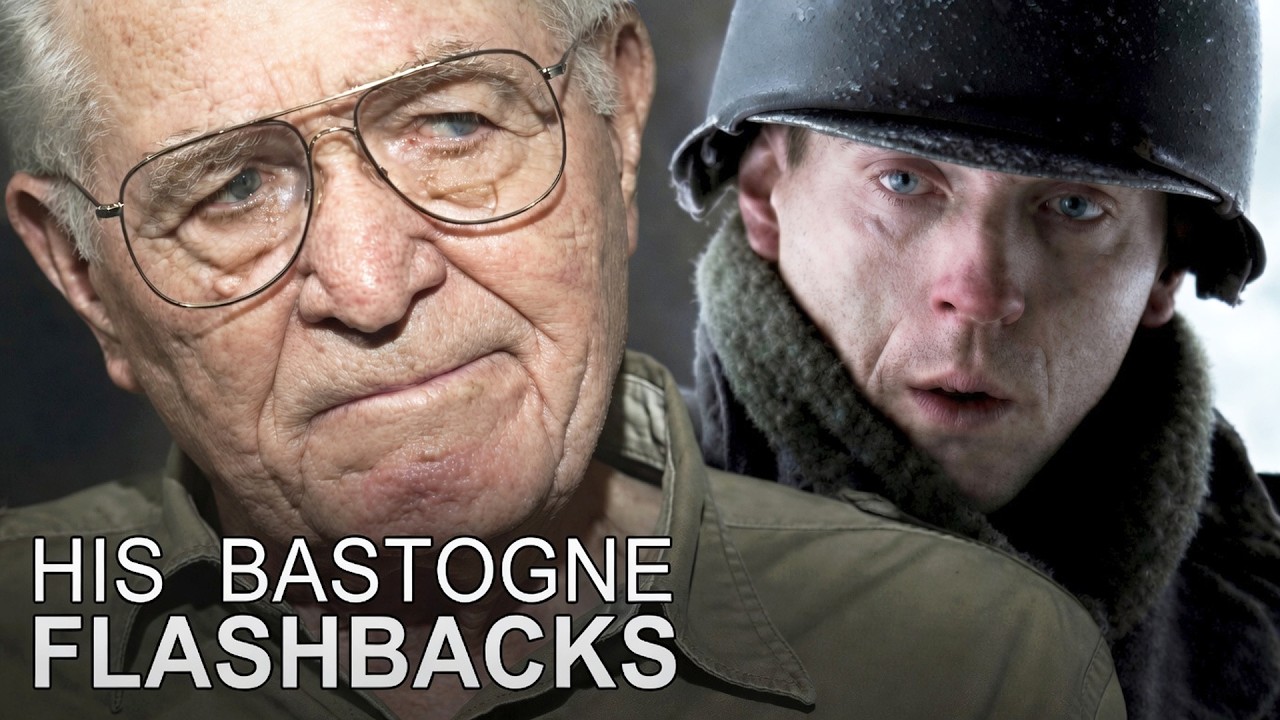
Segments that pop up every day, whether you want them to or not. And then you tell them the day, and you keep the rest to yourself. You are not going around talking about it. Of the thirty days he spent in the Bastogne area during World War II, Winters called that period the worst.
It was brutal. It was by far the worst he ever received, not just for himself but for everybody in the unit. Almost every other Band of Brothers veteran who was there said the same thing. Ask them what their worst experience of the war had been, and nearly all of them answered without hesitation, Bastogne.
For many of those men, what they lived through in the frozen woods and fields around that Belgian crossroads town continued to haunt them long after the war was over. Before they were thrown into the Ardennes, the men of Easy Company had been resting and recovering at Camp Mourmelon in France, fresh from the fighting in Holland during Operation Market Garden. They were expecting a quiet, relaxing Christmas season to close out 1944. A morale-boosting football game had even been planned for Christmas Day, a matchup between the 101st Airborne’s Screaming Eagles team and the Sky Train team, and the men were looking forward to it.
That game never took place. On December 16th, 1944, the Germans launched a massive offensive in the densely forested Ardennes region. Shortly afterward, Easy Company and the rest of the 101st Airborne were rushed to defend the vital crossroads town of Bastogne, Belgium. Little did they realize they were heading straight into the biggest, bloodiest battle in the history of the US Army.
It would become known as the Battle of the Bulge, the last major German offensive campaign on the Western Front of World War II. The men arrived ill-equipped, lacking proper winter clothing, weapons, ammunition, and other supplies. To say it was cold around Bastogne is an enormous understatement. The Ardennes was experiencing its coldest winter in thirty years.
Temperatures plummeted to as low as minus ten to minus twenty degrees Fahrenheit at night. Wind chills made it feel even more extreme, with reports of effective temperatures as low as minus twenty to minus forty degrees in exposed positions. Daytime highs were often only in the teens or even single digits. You can’t describe it, Winters recalled.
The cold was a weapon of its own. Roughly twenty percent of American casualties during the Battle of the Bulge came from cold weather injuries like trench foot, frostbite, pneumonia, and hypothermia, amounting to more than fifteen thousand men. Band of Brothers devoted two episodes to Easy Company’s experiences in the Battle of the Bulge. In the second, titled The Breaking Point, the men not only endured the intense cold but also barrages of intense German shelling.
Those artillery barrages claimed the right legs of both Joe Toye and Bill Garnier. A week later, the same shelling took the lives of Skip Muck and Alex Penkala. Winters tried to put the experience into words in his memoir. It is difficult to describe the effects of an artillery bombardment to someone who has not experienced combat.
If you live through it, you will never forget it, nor will you ever be the same. Artillery doesn’t only kill, it maims and tears the body apart, sending limbs in every direction. The jarring effects of witnessing this firsthand broke Buck Compton in the series and left others, including Don Malarkey, deeply affected. But the series ended before showing how such experiences affected the men after they returned home, including long after the war was over.
I am not sure anyone who lived through Bastogne doesn’t carry the scars of that ferocious campaign, Winters wrote. The interview with Winters, conducted in the early 2000s by Pennsylvania State Representative John Payne, drew out just what those scars looked like decades later. Winters pointed to the map, the one showing the German units that had the Americans surrounded at Bastogne. If you looked at it, he explained, you could see a lot of artillery among the encircling divisions.
When the Germans demanded the surrender of the American forces around Christmas time, part of the way that demand was worded was effectively surrender, or I’ll shell you off the earth. The Germans had the artillery to do it, or at least they believed they did. And there were times, Winters admitted, that the Americans weren’t too sure the Germans were wrong. When the enemy concentrated that artillery on the area, as they did on Second Battalion, Easy Company’s battalion, on the 9th of January, it was brutal.
Looking at the photograph from Band of Brothers, Winters said the picture spoke for itself and that the series did a very good job of having the viewer share the feelings of that time. The interviewer, picking up on a detail from his own military experience, noted how Winters had said the 9th of January without the hesitation most civilians would show. A civilian would say January the 9th, but someone who had served in the military would say the 9th of January. Winters confirmed it mattered.
There was no question about it. He remembered that date like it was yesterday. The interviewer asked the question so many people wonder about. What was the transition like?
How difficult was it to go from those combat conditions and readjust to civilian life? Winters looked him straight in the eye. Do you think this guy you’re looking at today has adjusted to this day? He didn’t wait for an answer.
It’s a slow process. As they had shared earlier in the conversation, you relive this with flashbacks. Even then, decades after the war, he was still making that adjustment. His life every day was a slow process of living with what had happened.
He was far from alone in that. The other Band of Brothers veterans carried similar burdens. After Don Malarkey returned to college at the University of Oregon, his grades began to slip. I couldn’t concentrate like before the war, he said in his memoir.
Like Winters, flashbacks would instantly take him back to places like Bastogne. He would thrash in his sleep from nightmares and wake up drenched in sweat. Decades later, he could still say, I still shiver because of the Battle of the Bulge. One more day there, he admitted, and he honestly thought he would have gotten hypothermia.
Throughout his book, Malarkey described Bastogne as a wave constantly building over his shoulder and closing in. Like a lot of other guys in Easy Company, he tried to drink away the memories. There wasn’t a glass of scotch he brought to his lips that he wasn’t back in Bastogne, where the Americans were surrounded for eight straight days, every time. The full scale of what these men carried is staggering.
Winters and Malarkey were just two of more than five hundred thousand US soldiers who participated in the Battle of the Bulge, the largest battle ever fought by the American Army, to this day. There were more than seventy-five thousand American casualties, including approximately nineteen thousand soldiers killed and more than twenty-three thousand taken prisoner. Each soldier who survived that battle had to carry the weight of what he experienced for the rest of his life. These men went home and became the country’s mailmen, construction workers, teachers, factory workers, electricians, and bus drivers.
People routinely encountered them without ever knowing the battles they continued to fight, or the price they never stopped paying to secure the freedom of others. Winters asked no sympathy, only that the country always remember them and never take their sacrifice for granted, no matter how much time passed. He himself never expected to be free of Bastogne, and he never was.
It stayed with him, in the dates that came to mind without hesitation, in the segments that popped up every day, in the slow process of adjustment he was still making long after the guns had fallen silent.
