In the summer of 1979, on a white sand beach in the Bahamas, Lady Amanda Knatchbull looked at the most eligible bachelor in the world and did not say yes. Prince Charles had raised the question of marriage, the culmination of a plan years in the making, and the young woman at the center of it all hesitated. She asked for time. She told him she was too young.
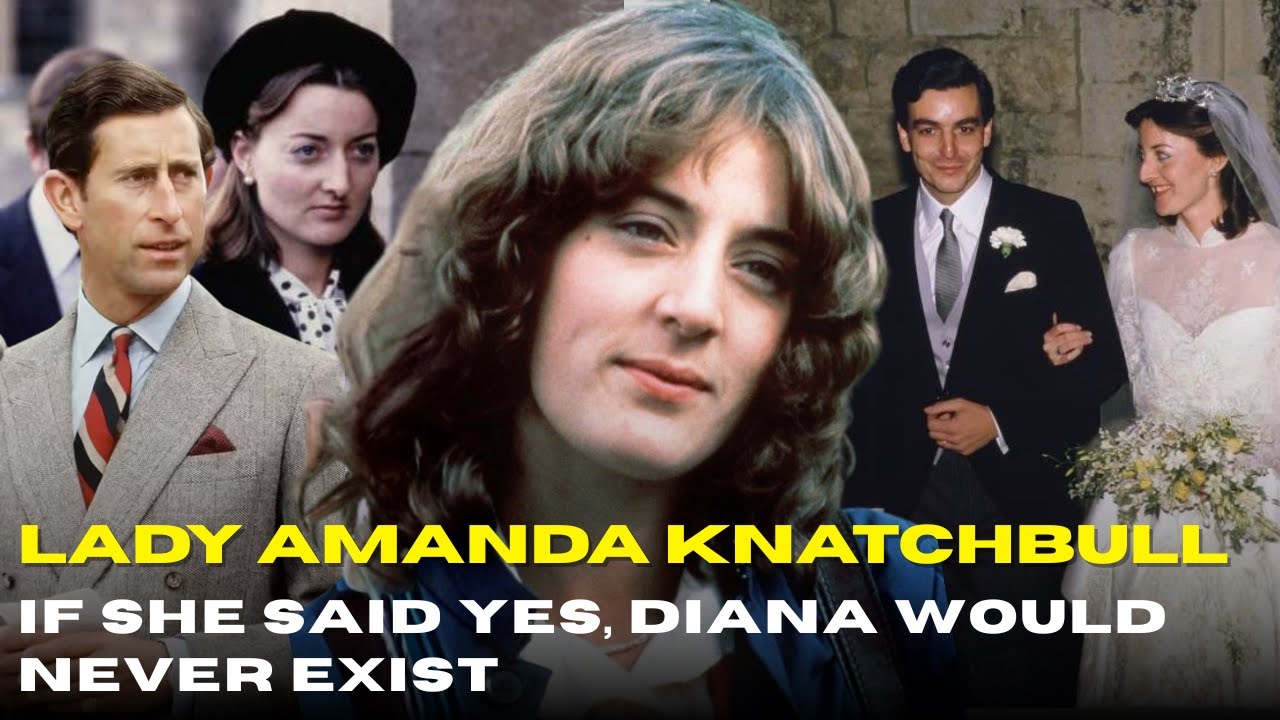
The door, they agreed, remained open. For Lord Mountbatten, the architect of the match, the hesitation was a mere postponement. He remained confident it was only a matter of time. But within weeks, the plan would be shattered forever, and Amanda would face a choice no one could have predicted.
The answer she eventually gave would alter the course of the British monarchy. Amanda’s road to the throne had been paved by one man, her grandfather, Louis Mountbatten, the first Earl Mountbatten of Burma. To the royal family he was “Uncle Dickie. ” To the world, he was a titan: the last Viceroy of India, the Supreme Allied Commander in Southeast Asia during World War II, and a man of overwhelming charisma and colossal vanity.
Mountbatten was not merely a member of the royal circle; he was its director. Obsessed with lineage and legacy, he had already secured his greatest victory in 1947 by guiding his exiled, impoverished Greek nephew, Prince Philip, into the orbit of the future Queen Elizabeth II. Philip married the heir to the throne, and Mountbatten’s blood entered the House of Windsor. But one victory was never enough.
He wanted to secure the succession for generations, to make his DNA the dominant strain of the British monarchy. As the Queen and Prince Philip raised their children, Uncle Dickie turned his intense focus to the next generation: the sensitive, awkward, deeply impressionable heir, Prince Charles. Mountbatten became Charles’s honorary grandfather. In the cold, emotionally distant nurseries of Buckingham Palace, where the Queen was often occupied with red state boxes and Prince Philip was harsh and demanding, Mountbatten was a refuge.
He was warm, loving, and listened. He wrote Charles countless letters of advice on everything from naval tactics to leadership and, most importantly, love. His counsel on women was famously pragmatic. He urged the prince to enjoy his youth, but to choose a wife with the calculation of a horse breeder: young, malleable, of suitable lineage.
And in his view, there was no better lineage than his own. Born on June 26, 1957, Amanda was the daughter of Patricia, Mountbatten’s eldest child, and John Knatchbull, the seventh Baron Brabourne. From birth, she was woven into the royal fabric. She grew up roaming the halls of Broadlands, Mountbatten’s Palladian mansion in Hampshire, the same house where the Queen and Prince Philip had spent their honeymoon.
Unlike the aristocratic girls who would later chase Charles for the title, Amanda was different. She was intelligent, educated at Benenden, then took a gap year to travel. She was balanced, possessed a dry wit, and a strong sense of self. She was also beautiful, not in a flashy cinematic way, but with a quiet, classic English elegance.
For the anxious, neurotic Prince Charles, she promised stability. Mountbatten began his campaign early. In 1974, when Amanda was seventeen and Charles was twenty-five, he wrote to Charles to plant the idea, suggesting she was becoming a remarkable young woman and would be a “loving and supportive friend. ” Charles, who worshipped his great-uncle, was receptive.
He was lonely, exhausted by the London dating scene of the 1970s, hounded by photographers, wary of girls selling stories to the tabloids. Amanda represented safety. She knew the rules. She wouldn’t run to the press.
He genuinely liked her. They shared the same jokes, a love of the outdoors, and the quiet rural life Charles craved. The courtship developed slowly, carefully orchestrated by Mountbatten. By the late 1970s, the plan was an open secret within the inner circle.
The Queen and Prince Philip approved; Philip was, after all, Amanda’s cousin, and it would keep the throne firmly within the family. The court liked that Amanda was sensible. By 1979, with Charles at thirty-one and the press demanding a royal wedding, Mountbatten urged him to act. That year, a fateful trip was arranged to Eleuthera in the Bahamas.
Charles and Amanda accompanied Mountbatten and some friends on a holiday of white sands and turquoise waters. They swam, water-skied, and picnicked on deserted beaches. During the trip, Charles raised the subject of marriage. Amanda, at twenty-one, did not say yes, but she did not say no.
She saw the proposal not as a fairytale but as a terrifying job, one that meant the death of her private life. She was also perceptive enough to see the ghost in the machine: Camilla Parker Bowles. She told Charles she was still too young, not ready for a lifelong commitment. He, to his credit, was patient and respected her honesty.
He agreed to wait. As the summer of 1979 wore on, the Mountbattens prepared for their annual pilgrimage to Classiebawn Castle, a stark, romantic fortress on a cliff edge in County Sligo on Ireland’s west coast. It was Mountbatten’s sanctuary, but it was also a place of danger. Northern Ireland was at war, and the shadow of the Troubles stretched long across the border.
The Provisional IRA was active and deadly. Mountbatten, a former Chief of the Defence Staff and a close relative of the Queen, was a prized target. Security services in London and Dublin warned him repeatedly that Classiebawn was unsafe. They pleaded with him not to go.
Mountbatten ignored them. He was an old sailor who had survived torpedo attacks in World War II. “Who would want to kill an old man like me? ” he famously asked.
In August 1979, the family gathered at Classiebawn: Lord Mountbatten; his daughter Patricia, Amanda’s mother; her husband John; their fourteen-year-old twin sons, Nicholas and Timothy; and the elderly, formidable Dowager Lady Brabourne, John’s mother. Amanda was there too. It was a happy, noisy family holiday. Mountbatten had a small 30-foot wooden boat called the Shadow V, a simple vessel for fishing lobster and mackerel.
It was his pride and joy. Charles, serving in the Royal Navy, was in constant contact. He planned to visit later in the holiday. The family whispered that this Irish holiday might be the moment Amanda finally said yes.
But on the evening of August 26, unseen eyes watched the harbor at Mullaghmore. Men driven by a hatred the aristocratic Mountbattens could not comprehend crept to the water’s edge. They saw the Shadow V not as a grandfather’s fishing boat, but as a symbol of British imperialism. They planted a bomb aboard.
As the family slept, Amanda lay in her bed, unaware that the golden cage she dreaded was about to explode. The morning of August 27, a Bank Holiday, was incredibly calm. The Atlantic was still and shining. Inside Classiebawn, the mood was light.
Lord Mountbatten was in high spirits. The plan for the day was a simple, unchanging ritual: go to the harbor, board the Shadow V, sail to the lobster pots, and fish for tea. The family gathered in the courtyard: Mountbatten in old, comfortable fishing clothes; Patricia and John Knatchbull; the twins, Nicholas and Timothy, buzzing with teenage energy; and the 83-year-old Dowager Lady Brabourne. One person was missing: Amanda.
The reasons given in accounts vary. Perhaps she wanted to read. Perhaps she was simply tired. Whatever the small reason, it was a decision of monstrous consequence.
She watched the cars pull away from the castle gates, unaware she was watching her former life drive away for the last time. At the harbor, the scene was idyllic. Paul Maxwell, a fifteen-year-old local boy hired as a boat boy for the summer, was already aboard, cleaning the deck. The family boarded with their usual efficiency.
Mountbatten took the helm. He loved this boat, a working boat, modest and sturdy. He turned the engine over. The twins rushed to the bow.
The adults settled in the stern. The ropes were cast off. The Shadow V motored out of the harbor, leaving a clean white wake. The bomb was detonated remotely from the shore by IRA members who had a clear line of sight.
As the boat passed about 200 yards from the harbor wall, just clearing the breakwater, the world ended. The sound was not just a bang but a physical assault. A gelignite bomb ripped the wooden hull apart, exploding upwards and outwards. Witnesses on the shore described a huge cloud of grey smoke, a fountain of water, and a hail of splintered wood.
The Shadow V had vanished. The blast was heard for miles. In the castle, Amanda heard it. It was the sound of a hammer striking the water’s heart.
The explosion, aimed at the engine block where Mountbatten stood, killed the great earl instantly. His grandson Nicholas, fourteen, was also killed instantly. Paul Maxwell, the happy boat boy, was dead too. The survivors struggled in a sea of debris and oil.
Patricia Knatchbull, Amanda’s mother, was conscious but horribly injured, her face torn by shrapnel, legs broken. Her husband John floated nearby, his legs shattered. The other twin, Timothy, was screaming, blinded and burned. The Dowager Lady Brabourne was still alive, struggling in the wreckage.
Local fishermen, overcoming their shock, raced their boats to the smoke. They pulled the living and the dead from the water, laying bodies on the floors of their fishing boats. When the news reached Classiebawn, the first reports were confused: an accident, an engine failure. But Amanda knew the truth.
When the confirmation came that it was an IRA bombing, her world collapsed. She was twenty-two years old. In a heartbeat, her grandfather was dead. Her brother was dead.
Her grandmother was dying, succumbing the next day in the hospital. Her parents were critically injured. At Sligo General Hospital, she entered a waking nightmare. She saw her elegant mother, now unrecognizable behind a mask of blood and bandages.
She saw her father broken and sedated. She saw her surviving brother, Timothy, in shock and pain. She had to identify the bodies. The man who had engineered her future, who had guided her hand toward the crown, was now a shattered wreck.
The brother she had played with hours earlier was gone. The psychological impact on Amanda was immeasurable. This was not just grief; it was trauma, political violence directed personally at her family. She understood with terrifying clarity why they had died.
They were killed because they were royalty. They were killed because Mountbatten was a symbol of the British crown. The proximity to the throne, the very thing Charles was offering her, had killed her brother. In a statement days later, the IRA claimed responsibility, calling it an execution.
For Amanda, the message was clear: the crown is a death sentence. In the days that followed, Amanda displayed a composure that was frightening in its resolve. She became the pillar of the family, managing the press, dealing with the police, drawing strength for her surviving brother. But something fundamental had changed inside her.
The romantic haze of the Caribbean holiday, the warmth with Charles, the glitter of the palaces, all turned to ashes. She looked at the engagement ring Charles had not yet given her and saw not a diamond, but a target. Prince Charles received the news while fishing in Iceland. He was devastated, writing in his diary that life would never be the same.
He rushed back to Britain, wanting to see Amanda, to comfort her, believing their shared grief would bind them together. He was wrong. When they finally met, he found a different woman. She was compassionate, but there was a wall.
She had seen the price of the game he was asking her to play. At Lord Mountbatten’s funeral in Westminster Abbey, kings and queens from across Europe attended. Charles walked behind the coffin, looking destroyed. Amanda walked with her family, a mask of solemn grief on her face.
But as the world watched the ceremony, she looked at the security snipers on the rooftops, at the bulletproof glass. She realized that if she married Charles, this would be her life forever. Every car ride, every holiday, every public appearance would be a search for a gunman. She would wonder if her children would become the next victims, like Nicholas.
The bomb had shattered the illusion of royal immunity. In the quiet, painful months that followed, Charles pressed again for her hand. He was desperate, lonely, needing her now more than ever. He thought marrying her would be the highest tribute to Mountbatten’s memory, a victory for love over terror.
He formally proposed again, asking her to be his wife and Princess of Wales. Amanda looked at the man she loved as a cousin and friend, and at the institution that had just cost her half her family. She made the decision that would change the course of history. In late 1979 or early 1980, she said no.
It was not a hesitant “no,” not a “not yet,” but a final, absolute rejection. She explained herself with the brutal honesty Charles had always admired. She told him the self-abnegation required by royalty was absolute, and she was not prepared to make that sacrifice. She told him the shadows of the bomb were too long.
She chose freedom over duty. Charles was stunned. He was the most eligible bachelor in the world. The idea that the one woman he truly wanted, the perfect woman for the role, would refuse him was inconceivable.
The rejection broke something inside him. Mountbatten’s plan was dead. His life plan was in tatters. He was thirty-one, heir to the throne, and alone.
The pressure from his father and the press was unbearable. The palace was in a state of emergency. They needed a replacement, and they needed her fast. They could no longer look for an equal; Amanda had proven she would refuse.
They needed someone younger, more naive, someone who didn’t understand the price. They needed a blank canvas. Here entered Lady Diana Spencer. The contrast could not have been starker.
Amanda was twenty-two, worldly, realistic, and cynical about royal life. Diana was nineteen, a nursery assistant, romantic, and utterly dazzled by the idea of a prince. Where Amanda saw a target, Diana saw a fairytale. Diana was a solution, an aristocrat, a virgin, and, most importantly, willing.
When Charles proposed to Diana in the nursery at Windsor Castle in February 1981, he was not searching for his soulmate; he was making a business deal because his preferred candidate had withdrawn. Diana, young and deceived by the romance novels she loved, said yes instantly. She did not know she was the second choice. The wedding of Charles and Diana on July 29, 1981, was the wedding of the century.
But for those who knew the truth, it was a tragedy in an expensive dress. Amanda was present at St. Paul’s Cathedral, watching the scene unfold. She must have felt a deep, terrifying relief.
She saw the Archbishop, the 25-foot train, the crowds crying for joy. She must have thought, “That could have been me. ” As Diana stumbled over Charles’s names during the vows, Amanda knew the truth. Diana was not marrying a man; she was marrying an institution that devours people.
Amanda had stepped out of the line of fire. Diana had walked straight into it. The years that followed confirmed Amanda’s fears. The marriage of Charles and Diana disintegrated with a speed and violence that shocked the world.
The press intrusion was relentless. The “War of the Waleses” turned the monarchy into a soap opera. Amanda, having rejected the crown and the dangers it carried, retreated completely from the royal spotlight. She did not become a royal rebel.
She simply went to work, later in social care and charitable roles, far from the limelight. The woman who could not save her brother from violence dedicated her career to saving other children from harm. In 1987, eight years after the bomb, Amanda married. Not a duke or a prince, but Charles Ellingworth, a writer and property developer.
It was a private, respected marriage, with a traditional wedding but no state occasion, no television cameras, no crowds. They had three sons: Luke, Joseph, and Louis. They lived in a comfortable country home. They went on holidays without bodyguards.
She had achieved the one thing Diana never could: a normal life. Yet she remained close to Charles. The bond created by the bomb was stronger than the rejection. They remained friends, keepers of secrets, sharing a history no one else could understand.
When Charles was vilified by the press in the 1990s, Amanda was one of the few who did not judge him. She knew the pressures he was under. She knew he was a man trapped in a role he did not choose, just as she was a woman who had escaped one she did not want. Then came August 31, 1997.
Princess Diana was dead, killed in a car crash in a Paris tunnel. The parallels were sickening: another violent death, another young life ended by proximity to the crown. For Amanda, Diana’s death must have been a terrifying moment of déjà vu, an echo of Sligo. The crown had claimed another victim.
Had Amanda said yes in 1980, would she have been the one in that car? She was unlikely to have been with Dodi Fayed, but she would have been the target. She would have been unhappy. Diana’s death was the final bloody proof that Amanda Knatchbull had been the wisest woman in royal history.
She had seen the future coming and had stepped away before the train derailed. In 2015, after 36 years, Prince Charles returned to Mullaghmore, the very harbor where his great-uncle had been assassinated. Amanda did not join the official visit; her brother Timothy represented the family. But her spirit was undoubtedly on that quay.
Charles walked along the harbor wall under a grey Irish sky. The locals came by the thousands, not to jeer but to cheer. In a speech widely praised, Charles spoke directly of the pain, acknowledging the suffering carried by so many in these islands. He said he had come to understand, through this terrible experience, the suffering endured by many.
It was a gesture of profound empathy. The Mountbatten legacy had evolved. Charles had become the man Mountbatten wanted him to be, not through marrying the perfect bride, but by showing perfect humanity. Amanda’s absence allowed the focus to remain on the victims and reconciliation, not a royal photo opportunity.
The “Amanda Knatchbull Rule” also manifested in the next generation. As Prince William courted Catherine Middleton, the lessons of Amanda and Diana were clearly applied. William did not rush. He waited ten years.
He let Kate see the cage before asking her to enter it, subjecting her to the photographers, the pressure, the protocol. He chose Amanda, not Diana. In a strange way, Amanda’s rejection saved the monarchy. It forced the institution to collapse with Diana, to learn harsh lessons in the 80s and 90s, so it could rebuild itself in the 21st century.
The stability of the Wales family today is a direct result of the lessons learned from the refusal of 1980. As the 20th century ended, the House of Windsor stood exhausted and wounded. The fairytale lay in ruins. But in a quiet house in the English countryside, the woman who had refused to write that fairytale flourished.
Amanda had no crowns, no kingdom, no subjects. But she had her life. She had her peace of mind. When she looked in the mirror, she saw herself, not a mask imposed by the world.
In the early 2000s, as Charles slowly rehabilitated his image and finally married Camilla Parker Bowles in 2005, Amanda’s friendship with him deepened. She understood Camilla’s position better than anyone. She knew what it was like to be the woman in the story who was vilified or mocked. Both had chosen survival through silence.
Amanda’s surviving brother, Timothy, the boy blinded and burned on the boat, also began a public journey of recovery, writing a book, From a Clear Sky. Amanda supported him from the shadows, advocating for the family to process their grief rather than bury it under a stiff upper lip. She proved to be a thoroughly modern woman, applying the lessons of therapy and social work to the most rigid family in the world. When Queen Elizabeth II died on September 8, 2022, the world’s attention turned to the new monarch, King Charles III.
As he ascended the throne, the ghosts of his past walked with him. Amanda watched the coronation on television, like everyone else. The contrast between that virtual reality and the actual one was the final justification for her life’s choices. Charles inherited a kingdom in crisis, a family torn apart by the exile of Prince Harry and Meghan Markle.
The media scrutiny was ferocious. Amanda’s sons, Luke, Joseph, and Louis, do not sell secrets to Netflix. They are private citizens living private lives. That normal life is an invaluable legacy.
Ultimately, Amanda’s survival is a quiet victory over the terrorism of 1979. The IRA bomb was meant to break the spirit of the British establishment. It left scars, but it failed to destroy Amanda. She did not let the trauma define her as a victim.
She chose the most radical response to terrorism: she chose to live a happy, productive life. She married, served her community, and endured. In the final analysis, her story is a mirror reflecting our obsession with the royal family. We consume their lives as entertainment, assuming the crown is the ultimate prize.
Amanda shattered that mirror. She showed us that the crown is in fact a burden, a heavy gold hat that comes with a life sentence of scrutiny. She is the uncrowned winner. She won the game by refusing to play.
Amanda’s relationship with King Charles today remains a testament to what could have been. They are friends, survivors. They share a silence louder than words: the silence of the bomb that exploded, and the silence of the life that continued after the smoke cleared. She lived to see her hair turn grey, to see her children grow up.
She lived to turn off the television when the royal drama got too loud, and to walk into her garden, into the quiet and beauty of a life she chose for herself, far from the spotlight. In history books, she will be just a footnote, the girl who said no. But in the reality of human existence, she is the headline. She is the proof that sometimes the bravest thing you can do is to walk away from the fairytale.
The tragedy of the Shadow V in 1979 tore a hole in history. But from the wreckage emerged two distinct paths. One led to St. Paul’s Cathedral, to Diana, to worldwide fame, and ultimately to a pillar in a Paris tunnel.
The other led to a quiet country church in 1987, to social work, to privacy, and to life. Lady Amanda Knatchbull stood at a crossroads of the twentieth century. On one side lay the crown, glittering and deadly. On the other, obscurity, quiet and safe.
She looked at the blood in the water and made her choice. She refused the crown to save her soul. And in doing so, she became the only royal woman of her generation to have a truly happy ending.
