
The relationship between the United States and Canada has entered one of its most uncertain periods in decades following a highly public diplomatic confrontation between U.S. President Donald Trump and Canadian Prime Minister Mark Carney, a moment analysts say could reshape North American economic and political dynamics for years to come.
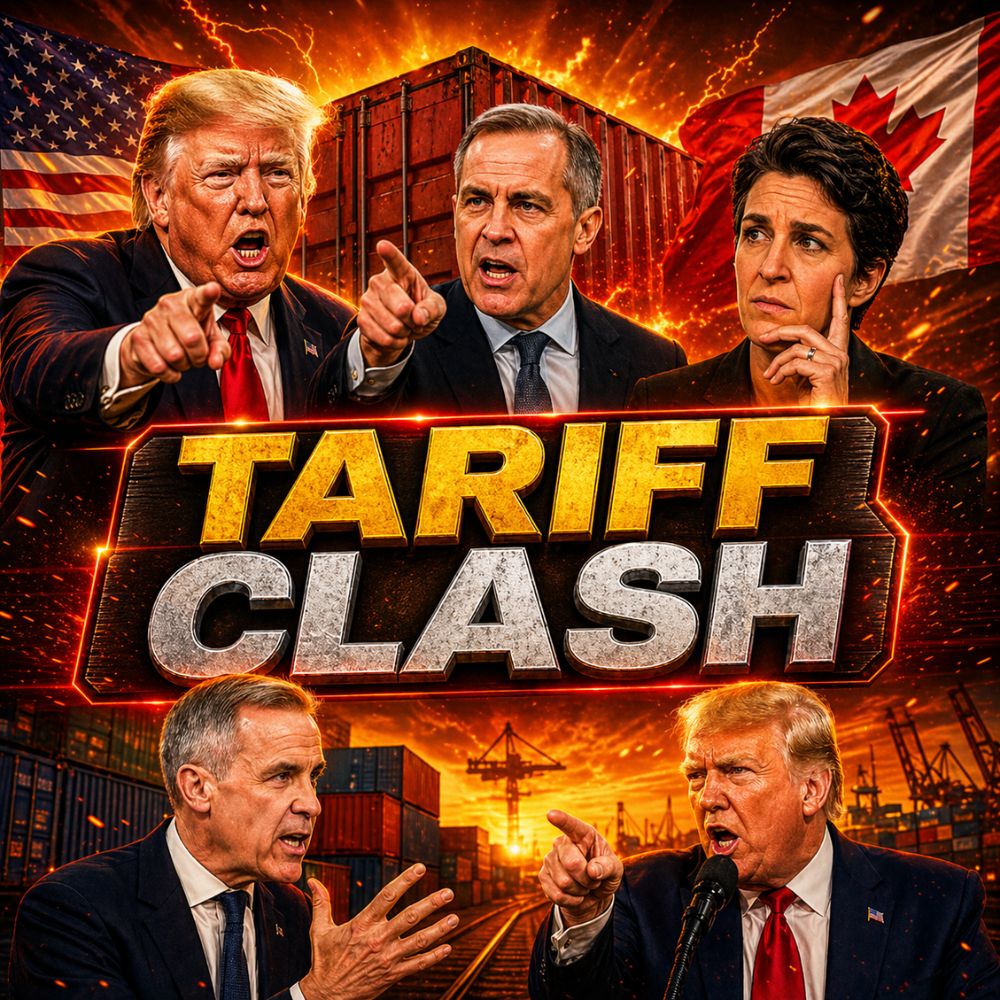
What unfolded was more than a routine disagreement over tariffs or trade balances. Observers across global capitals described the exchange as a symbolic turning point — one that highlighted growing tensions between longtime allies whose partnership has historically been defined by stability, cooperation, and mutual dependence.
For decades, the United States and Canada maintained the world’s largest bilateral trading relationship, with integrated supply chains linking industries across both borders. That framework began with the North American Free Trade Agreement, widely known as NAFTA, signed in 1993, which transformed the continent into a deeply interconnected economic region.
Under NAFTA — and later its successor, the United States–Mexico–Canada Agreement — manufacturers, farmers, and energy companies built systems that relied on uninterrupted cross-border cooperation. Automobiles assembled in the United States often contained Canadian steel, while Canadian energy markets depended heavily on American investment and infrastructure.
That longstanding equilibrium began to strain after Washington imposed new tariffs on Canadian goods in early 2026, citing national security concerns and trade imbalances. Ottawa responded swiftly with retaliatory tariffs targeting billions of dollars in American exports, escalating tensions into what economists increasingly describe as a controlled but serious trade conflict.
The economic effects appeared quickly. American producers dependent on Canadian inputs reported rising costs, while agricultural exporters in several U.S. border states faced shrinking access to Canadian markets. Industry groups warned that supply chains developed over three decades could not easily absorb prolonged disruption.
The diplomatic climax came during a widely watched meeting between Trump and Carney, where the U.S. president publicly called for renewed negotiations aimed at easing trade pressure. Carney responded firmly, emphasizing that Canada would only engage as an equal partner and would not negotiate under perceived economic coercion.
International observers interpreted the exchange as a broader signal about shifting power dynamics among Western allies. Traditionally, American foreign policy relied on institutional negotiation frameworks and multilateral systems rather than public confrontation. The visible disagreement suggested that political messaging had begun to replace quiet diplomacy in managing alliance disputes.

Experts note that applying heavy economic pressure to an ally carries strategic risks. While such tactics may succeed against smaller or isolated partners, they can strengthen domestic political unity within targeted countries. In Canada’s case, public rhetoric questioning Canadian sovereignty reportedly hardened public opinion and strengthened Carney’s negotiating position at home.
The implications extend beyond North America. Governments in Europe and Asia are closely monitoring the dispute as they reassess their own relationships with Washington. Analysts warn that prolonged friction between two of the world’s most closely aligned democracies could encourage rival powers to question the reliability of U.S.-led alliances.
Several possible outcomes now face policymakers. The most optimistic scenario involves gradual tariff reductions and a return to structured negotiations, allowing both leaders to claim political success while restoring economic stability. A second scenario envisions a prolonged standoff, with businesses slowly adapting by diversifying trade routes and supply chains away from traditional partners.
A longer-term concern is structural change. Should Canada deepen trade ties with Europe or Asia to reduce dependence on the United States, the shift could permanently alter North American economic influence — even if political relations later improve.
Beyond diplomacy, the immediate consequences are being felt by workers and businesses on both sides of the border. Auto manufacturers, farmers, logistics companies, and small exporters now face uncertainty over costs, contracts, and future market access. Economists emphasize that trade disputes rarely remain abstract policy debates; they translate directly into prices, jobs, and investment decisions.
Ultimately, the confrontation between Trump and Carney may come to represent more than a bilateral disagreement. It raises larger questions about how global leadership is exercised, how alliances endure political pressure, and whether long-established partnerships can withstand an era increasingly defined by nationalist economic strategies.
Whether this episode becomes a temporary rupture or the beginning of a lasting realignment will depend on decisions made in the coming months. For now, one conclusion appears widely shared among analysts: the U.S.–Canada relationship — once considered politically automatic — is no longer immune to strategic recalculation.