In April 1883, Horace Clemens stood at a creek crossing four miles below the summit of Bald Mountain in the Great Smoky Range of East Tennessee, and understood for the first time in his adult life that he was genuinely afraid. He was not a cowardly man. For eleven years he had served as tax assessor for Cocke County, a profession that had taken him into hollows where men answered the door with rifles and watched him with unblinking eyes. He had navigated the sulfurous politics of Newport and dealt with moonshiners and land deed disputes.
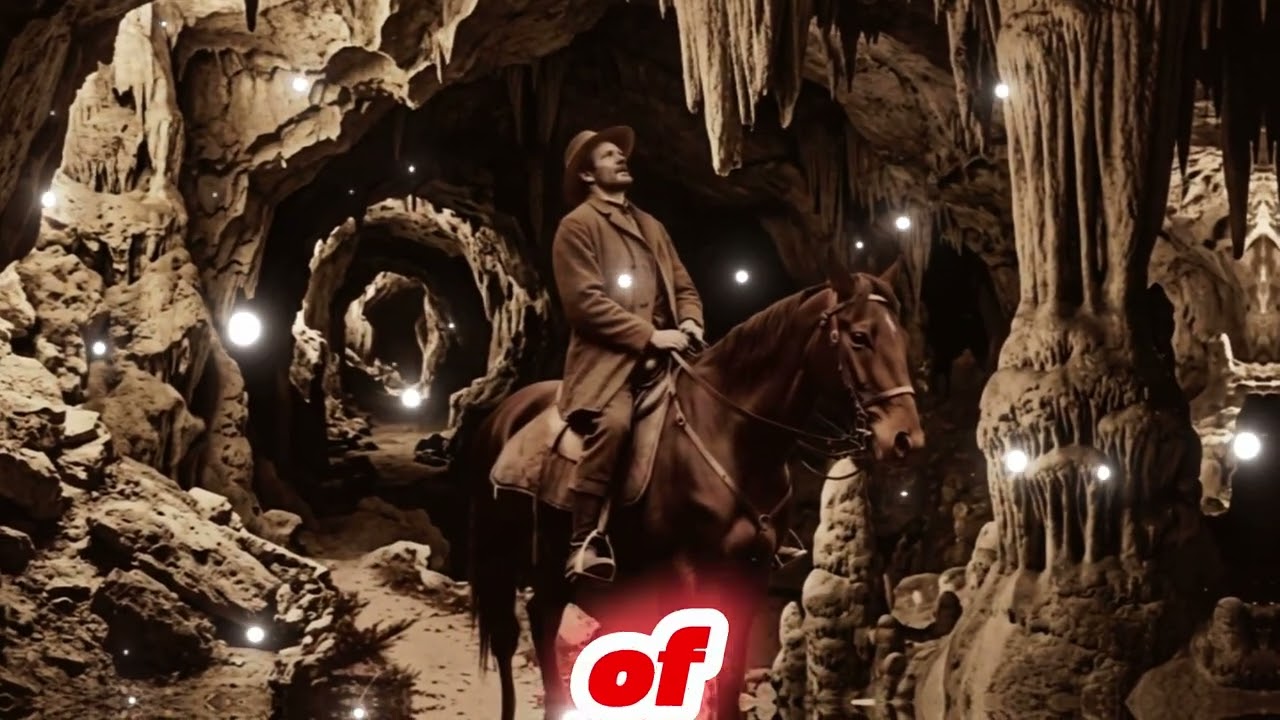
He was forty-one years old, methodical, and careful. But this was Bald Mountain. He was the thirty-seventh man sent there since 1842. Thirty-six had come back without completing their assessment.
Most had returned with nothing. A handful had brought back stories. Two had been turned back by a wall of armed people standing silently in the path. One had reportedly wept.
The official records noted only that the assessment had not been completed due to adverse conditions, the county’s way of filing paperwork on situations it did not fully understand. Clemens had spent three evenings in the county archive reading every report. Stripped of their frustration, the accounts all described the same thing: an organized, functioning human society that had existed on that mountain for better than seventy years and had, with remarkable consistency, declined to participate in the county, the state, or the nation that surrounded it. He told his wife, Margaret, that he thought it might be the most interesting place in Tennessee.
She told him to come home. To understand what he found, it is necessary to go back to the beginning, to a man named Josiah Ramsey. In the spring of 1812, at the age of forty-three, Ramsey decided that the country he had helped create was no longer the country he had fought for. He had been at Cowpens in January 1781, a brutal morning engagement where Daniel Morgan broke Tarleton’s Legion in a South Carolina cow pasture.
Josiah was twenty-two and killed three men. He had read Locke and Paine in a Presbyterian minister’s library, and the ideas had taken root. He had watched in the thirty years since the war as the new American government consolidated itself in ways that seemed to follow the form of what he had fought against while claiming the language of what he had fought for. The trigger was not dramatic.
A neighbor named Carver lost his land to a court proceeding over a debt dispute, a legalized robbery conducted by men in official positions on behalf of men with money. Carver ended up tenant farming land he had once owned. Josiah watched and made a calculation. He had heard about the mountains to the east, about a rounded bald peak in the newly organized Cocke County that white settlers had mostly left alone because it was difficult to reach.
He spent the winter of 1811 to 1812 preparing, converting what he could not sell into tools and seed. In late May of 1812, three families began the ascent of Bald Mountain: nine adults, eleven children, four draft horses, a milk cow, two pigs, and a quantity of tools representing everything they could carry up a mountain with no road. Josiah was not running away. He was trying to get high enough to think clearly.
Over the next forty years, he built something extraordinary. The physical infrastructure came first: a long house, root cellars, smokehouses, a mill on the creek, terraced garden beds on the south-facing slope. They were hungry in the second winter and less hungry in the third, and by the fifth year they were not hungry at all. The social infrastructure took longer.
Josiah designed it against the template of the government he had left. He did not want courts that privileged property over persons, taxation without accountability, or governance by representatives who could be purchased. What he built was a form of direct democracy. Land was communal, assigned by council vote but owned by no one.
Governance was by consensus of all adults, discussion until agreement was reached. Women voted, so far outside the norm of 1812 Tennessee that it barely registered. Trade was managed by a designated trader who exchanged ginseng, honey, and timber for iron, salt, medicines, and books, which Josiah considered as essential as iron. Disputes were mediated by a rotating panel of three elders.
There was no capital punishment. In seventy years there were two expulsions, one for repeated violence against a spouse, one for deliberate theft from communal stores during a winter. Josiah Ramsey died in 1851 at eighty-two. The community was strong, but without him its institutions became tradition rather than deliberate choice.
The person who compensated for this was his daughter-in-law, Esther, who held the community together through the generational tensions of the 1850s as the outside world’s manufactured goods began to exert their pull. She had a saying: Everything the lowlands sell is cheap until you find out what they’re charging for the other thing. The Civil War came to Bald Mountain in pieces. East Tennessee was ambivalent about secession, and the mountain community had no vote in it.
Confederate conscription officers came in the summer of 1861 with a militia escort of eight men. Tobias Ramsey, Thomas and Esther’s eldest son, met them at the halfway point with eleven other people, none threatening, all of them armed in the background way. The exchange lasted three hours. The officer eventually concluded that proceeding would require force and that the men were not worth the cost.
He withdrew. The Union came in the spring of 1862 with a smarter pitch, arguing that the war was about whether men could own other men. The council deliberated for two days and reached a decision of neutrality. Five men defied the council and went down the mountain to enlist in the Third Tennessee Infantry.
The community chose not to stop them. Three years of war followed. Confederate bushwhackers came twice, the second time with fire, and were turned back. The Union came again in 1863 demanding a share of the ginseng trade and was told, with the same calm firmness, that the arrangements were not available for renegotiation.
They did not come back. The war ended in April 1865. Three of the five came back. Warden Ramsey, Tobias’s younger brother, was killed in the Petersburg siege.
His mother walked to the eastern edge of the summit on the evening they received the news and stayed until after dark. Tobias’s return changed things. He had seen the scale of the outside world and understood that the gap between what the mountain could field in its own defense and what the state could field was not abstract anymore. In the fall of 1866 he made what Hannah Ramsey, the community’s self-educated historian and teacher, called the argument that changed the center of the compass.
He asked the council to consider negotiation rather than continued refusal. The council chose to continue as they were, but the argument was now part of the internal conversation. The decade and a half between the end of the war and 1880 was the best period the community ever had. Hannah formalized the school, teaching a curriculum better than anything available in Newport.
A merchant named Robert Gentry began investing in the trade relationship, extending credit and actively seeking their ginseng, honey, and woven goods. For a few years there was a remarkable balance, the benefits of exchange without the loss of autonomy. But the cracks were there. The younger generation was more restless.
The consensus system was becoming harder. And in the winter of 1878, Esther Ramsey died at seventy-six. Hannah wrote: The stone that held the arch was gone. The arch still stands for now but you can feel the change in it.
The 1880 census came with a seriousness no previous census had carried. The first enumerator sent to Bald Mountain came back within a day. Nashville sent a directive noting that unassessed property and un-enumerated population in Cocke County were now a matter of state record, and the county was expected to resolve it. The county assigned the problem to its most competent person available.
That person was Horace Clemens. Clemens reached the first visible structure on the morning of the second day of his ascent. Three people were waiting for him. The woman who spoke first was Hannah Ramsey, fifty-six years old, with dark eyes that he would later describe as possessing an intelligence that made ordinary social performance seem unnecessary.
She asked him three questions. What specific authority did he represent? What were the consequences of non-compliance? And was he willing to hear the community’s position before making any demands?
He said yes to all three. He spent three days on the mountain. He found a community of approximately fifty-five residents organized around seventeen structures, including a library schoolhouse and, at the center, the council house: a thirty-foot circle of stone with no head position, every seat facing the center. Hannah told him her grandfather believed the shape of a room teaches people what to do in it.
A circle teaches equality. He was granted access to the community library and several hours of conversation with Tobias Ramsey, now sixty. Clemens asked him what the community wanted. Tobias said to be left alone, as they had been, but acknowledged that answer was no longer available.
He suggested a transition that preserved the essential things: the communal land arrangement, the school, the council governance. On the third evening, the full community assembled in the council house. Clemens explained what the county and state wanted. A woman asked whether the county had ever provided any service in exchange for the taxes it was proposing to collect.
He said he could not identify one. She said: Yes, exactly. That’s what we’ve been saying for seventy years. He wrote in his report that he did not have a good answer for that.
His report reached the county judge’s desk and was forwarded to Nashville. The state eventually decided to send the Tennessee State Guard, officially for a geographic survey. The party arrived in September 1883. Tobias asked for three days to bring the notice to the council.
The council meeting that followed was close to the worst in the community’s history. The refusal faction was led by Caleb Hensley, who argued that accepting a survey was the first step in a sequence with a predictable end: once private land registration was introduced, the communal system would collapse within a generation. He was right about every one of those things. The vote was thirty-one to twenty-nine to accept Tobias’s proposal and open negotiations.
The survey proceeded in October 1883, the first official government activity on the summit in seventy years. The land registration came in 1884. The communal land was registered in parcels assigned to individual family heads with a recorded covenant that they were to be managed in common. The first census was completed the same year.
The school operated through 1885, though enrollment declined. In 1886 one family relocated to Newport. In 1887 two more followed. The shared labor arrangements began to break down, not because anyone decided to stop, but because the new legal arrangement introduced exactly the incentive structure Caleb had predicted.
The school closed in 1888. Hannah died in 1893, one of the last to remain year-round on the summit. Tobias went to Newport in 1890 and died in 1891. He told an interviewer: We built a thing that worked.
Most things built by people don’t work. That it didn’t last forever is a sorrow, but not a shame. Caleb Hensley was the last to go, staying for thirteen years after the survey, maintaining the council house even when there was no council left to meet in it. When he finally left, he placed a single flat stone in the center of the circle, the seat from which no one presided, a stone that marked the absence of the thing that had been there.
The road through the valley below was built in 1891. By 1900 Bald Mountain itself was empty. The terraced gardens were reclaimed by forest within a decade. The library schoolhouse collapsed under a winter snow load with the books inside it, two hundred volumes soaked and rotted beyond recovery.
The council house foundation stones survive. They are granite, a thirty-foot circle, still without a head position, every stone still facing the center. Clemens resigned his county position three months after returning from the mountain and became a school teacher in Newport. He wrote to his wife from Nashville after his meeting with the governor’s deputy: I went to collect taxes from people who own nothing to a government that has done nothing for them.
I came back wondering which of us is truly governed and which is truly free. He taught for twenty-three years and died in 1912. Former students remembered that he sometimes talked about Locke and Paine in his classes, and that when he did, he had a particular quality of attention, as if he was reporting something he had seen with his own eyes. The last legible line of Hannah Ramsey’s memoir fragment reads: The stones face inward.
All of them. Every stone toward the center. Which was the shape of the thing we were trying to be. Not a line with someone at the head of it, but a circle with everyone at the edge of the same distance from the middle.
The sentence does not complete. The mountain is still there, visible on clear days from the French Broad River Valley. The stones are still on the summit, hard to get to, the old trail grown over, the laurel thick. In April, from the right angle and at the right hour of the morning, it looks like something that is waiting.
The way stone waits, the way a circle waits, the way an unanswered question waits when the people trying to answer it have had to go somewhere else. The conversation they were having is still, technically, unfinished.
